Expanding Ghost Experiment

Young children are naturally curious and passionate about learning. In their pursuit of knowledge, they’re prone to poking, pulling, tasting, pounding, shaking, and experimenting.

20181012_120141_HDR

From birth, children want to learn and they naturally seek out problems to solve.
ghost9

Young children should learn science (and all other areas of study) through active involvement – that is, through first-hand, investigative experiences.
20181012_114906

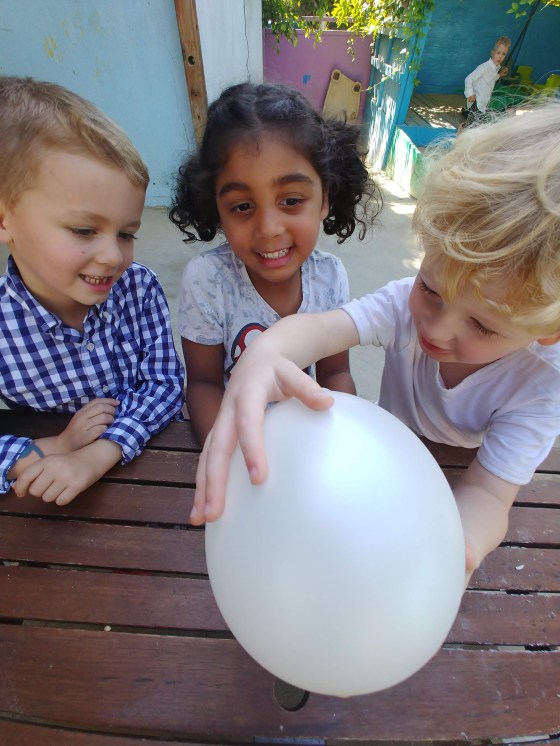
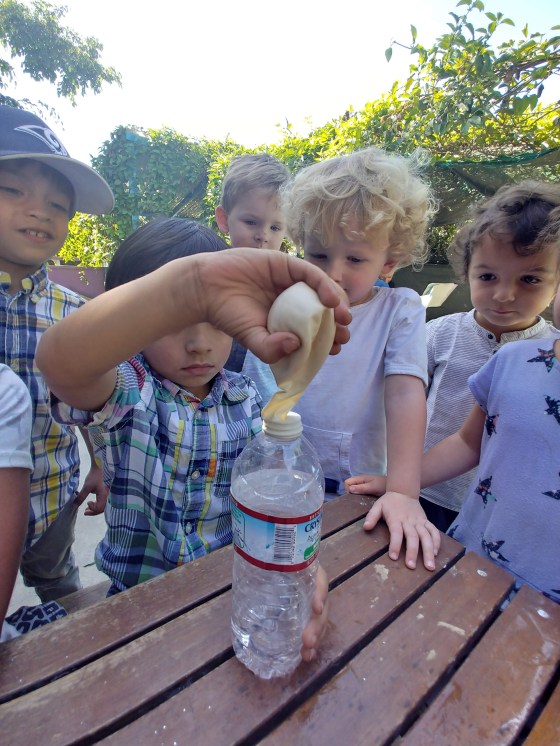
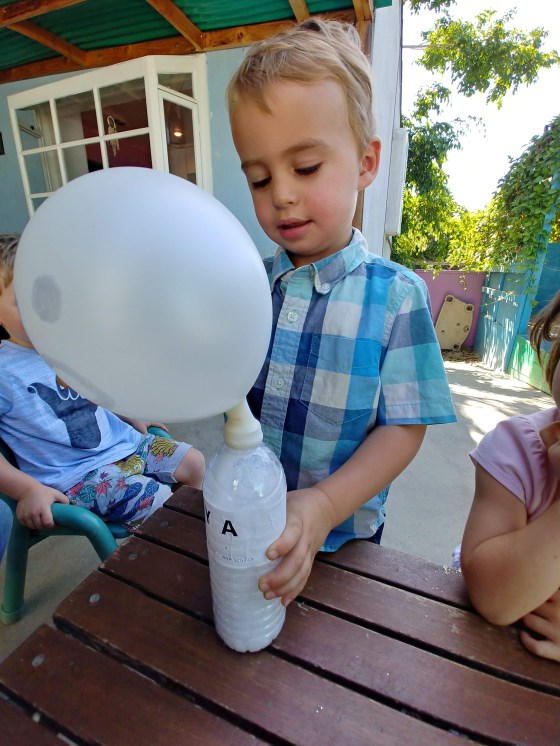
For this activity, we learned about the interaction between carbon dioxide and oxygen. Through our Expanding Ghost experiment, your little ones observed, predicted, and explored the physical properties of these two gases. We began by pouring a half cup of vinegar into an empty water bottle.
20181012_114329

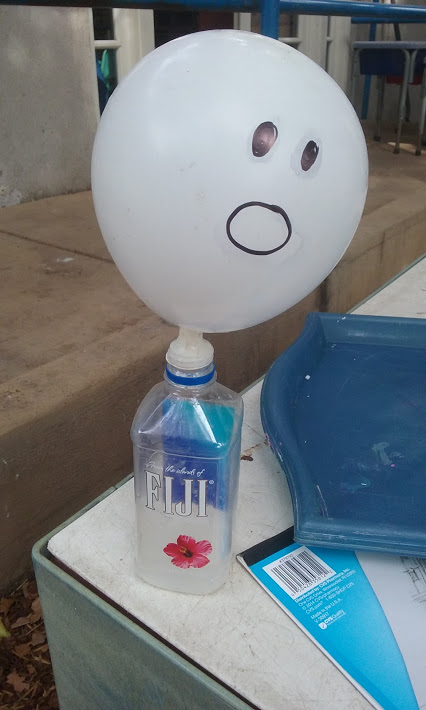
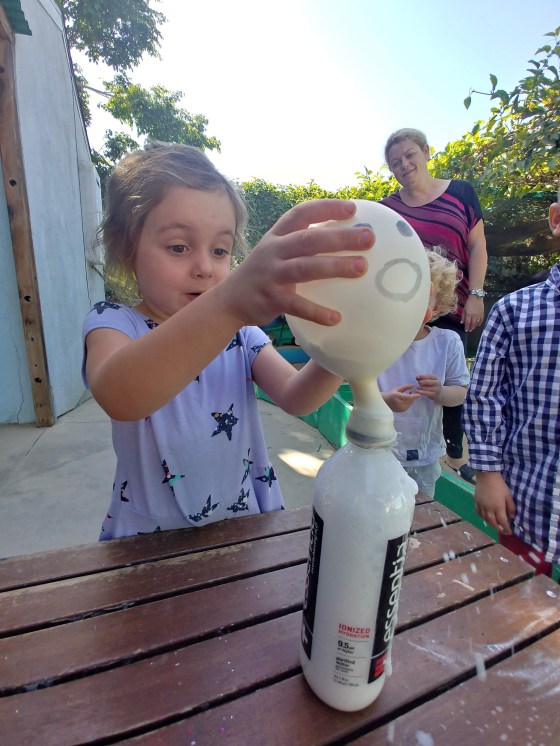
We than drew a face onto our deflated balloons.
20181012_113617_HDR

Next, we placed the funnel into the open end of the deflated balloon and poured in baking soda.
20181012_115704_HDR

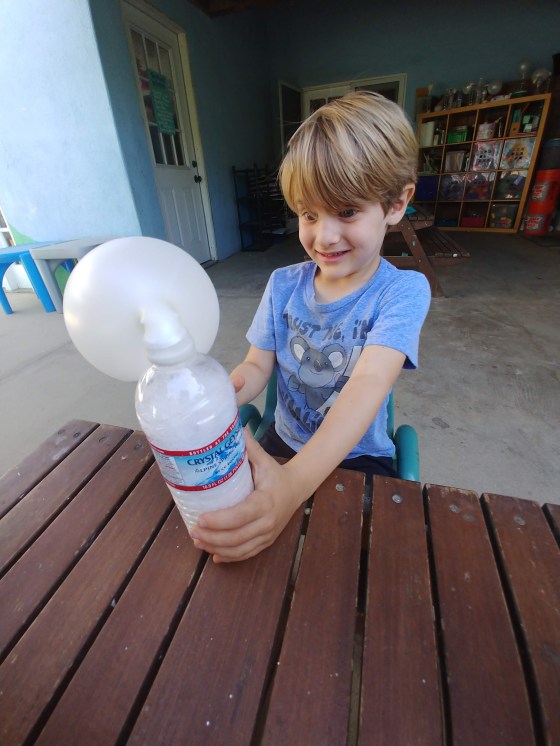
After that, we secured the open end of the balloon onto the top of the bottle, careful not to dump the contents of the balloon into the bottle quite yet. Finally, we held the balloon upright, allowing the baking soda to fall into the bottle and mix with the vinegar. The result is an expanding ghost! How does it work? The product of the vinegar and baking soda is carbon dioxide, a gas present when we breathe out. The carbon dioxide inflates the balloon.
20181012_113157_HDR

Science activities benefit your child in several ways. It involves asking questions, probing for answers, conducting investigations, and collecting data.

20181012_114637_HDR

Science, rather than being viewed as the memorization of facts, becomes a way of thinking and trying to understand the world. This approach allows children to become engaged in the investigative nature of science and to experience the joy of having wonderful ideas.
Circle Color Matching

A lot of activities help in the development of fine motor and writing skills, including weight bearing on the hands, postural control and shoulder stability, and muscle development. There are also many components of fine motor skills, some of which are, development of the arches of the hands, the thumb and its webspace, separation of the two sides of the hand, which helps with in-hand manipulation, bilateral integration, and the development of hand and finger strength.

20141030_101203

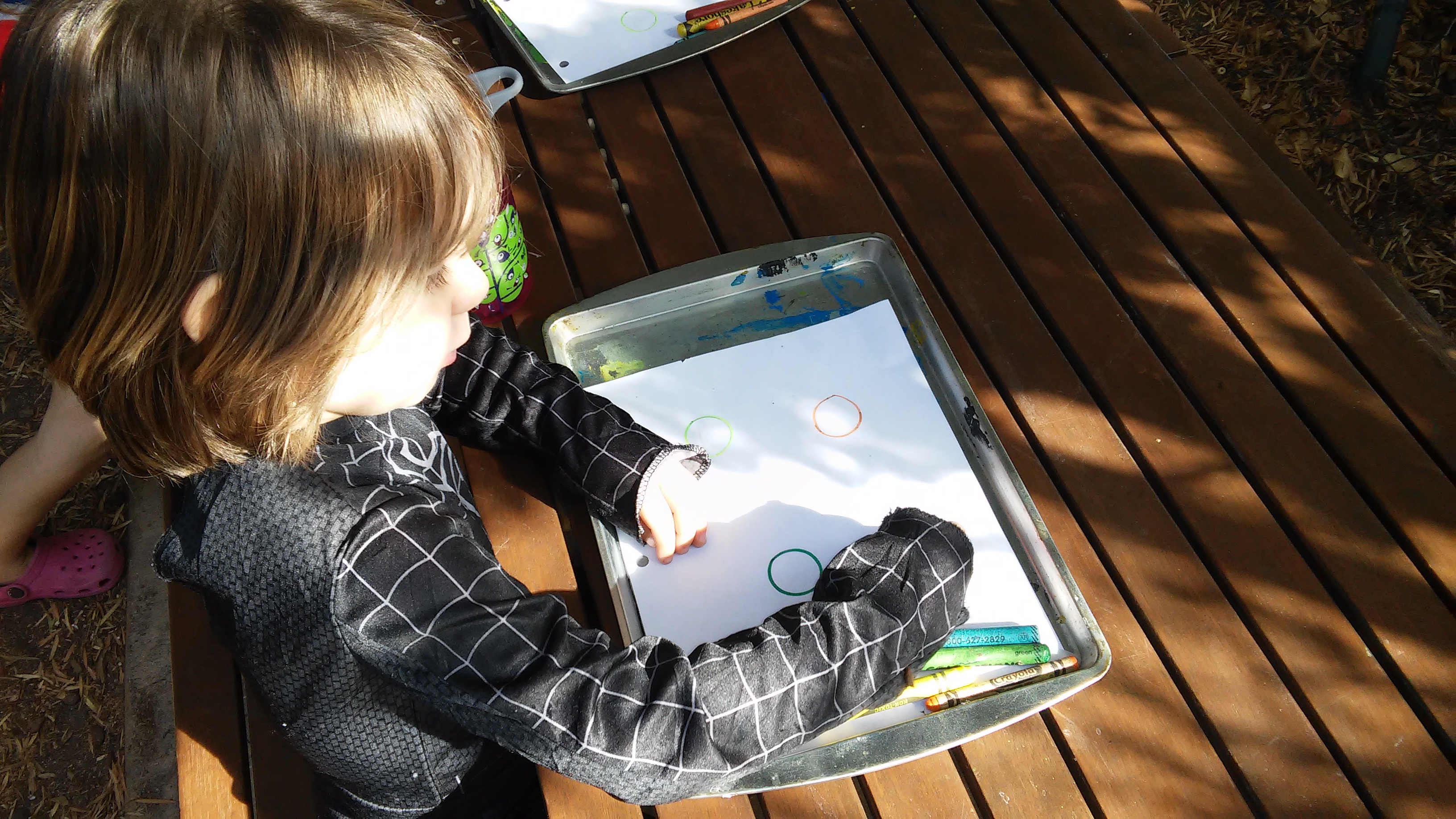
This activity required your budding writers to fill in different colored circles with a crayon. Holding a crayon is self-corrective, which means that there is only one way to grasp it properly, Because we are continuing to promote the tripod grasp, we are constantly doing activities to develop this.

20141030_101358

Your little ones were also directed to form concentric circles, which aided the progression of hand strength and finger grip. Lastly, they were given five different crayons to match the five different circles on their papers, which involved significant pre-math skills, such as recognizing visual patterns, sorting objects, and one-to-one correspondence.

20141030_101151

Playdough Learning: Straws and the Letter L

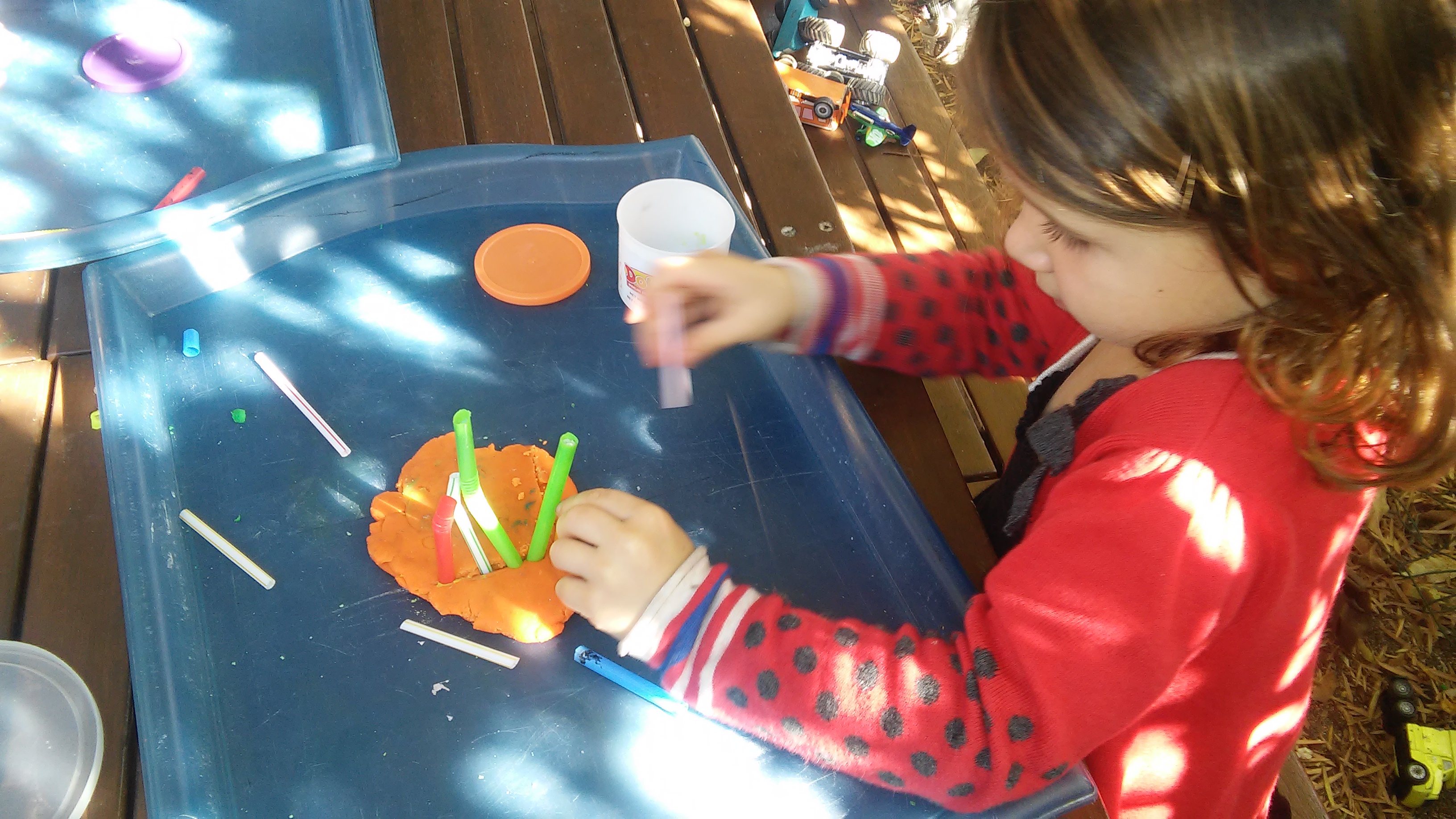
Many children feel that practicing handwriting is a chore, an unwanted burden and something they dislike spending time on. With all the technology and electronic devices we have today, it almost seems like handwriting is becoming irrelevant. In our class, it isn’t. There are several ways to form letters, and in our class, we learn to construct them properly without even using a pencil! As your children are introduced to letter formation, they benefit most from a hands-on approach using manipulatives. Even before children can properly grasp a pencil they can practice this way and get a feel for the way a letter should be formed. Miss Carrie models the correct formation with the children and then lets them explore and in essence “create” letters. For this particular activity, we practiced creating letter Ls with Playdoh and straws. Each child poked straws into the Playdoh to create the letter L.
20141029_100539

Practicing writing doesn’t mean you have to sit at a table. Many younger children are resistant to sitting and practicing. Those same children may delight in writing in dirt with a stick while playing outside. You’d be surprised at how much more fun writing is when you simply do it at a different time or place than expected. Try it!

20141029_100546