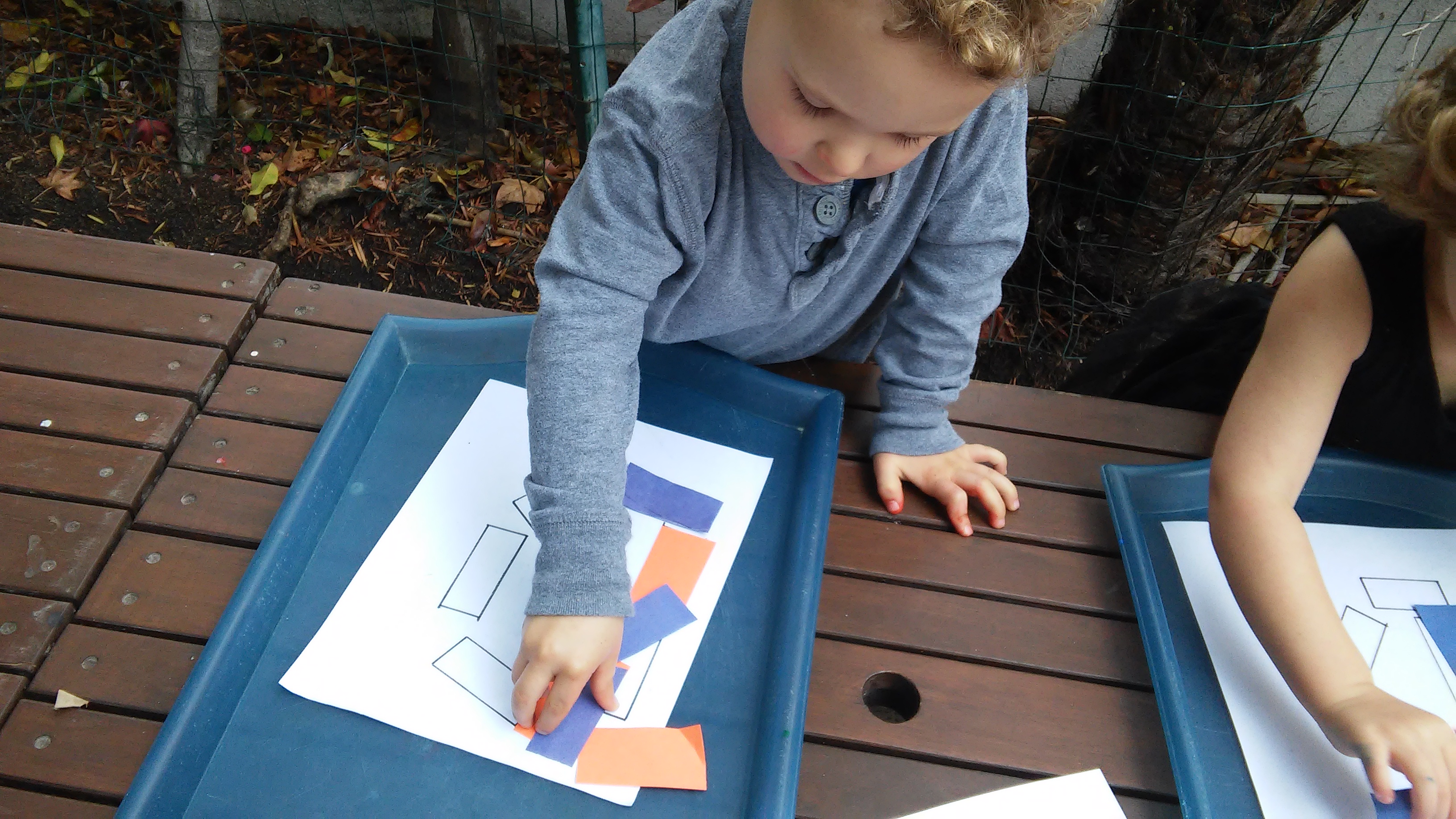
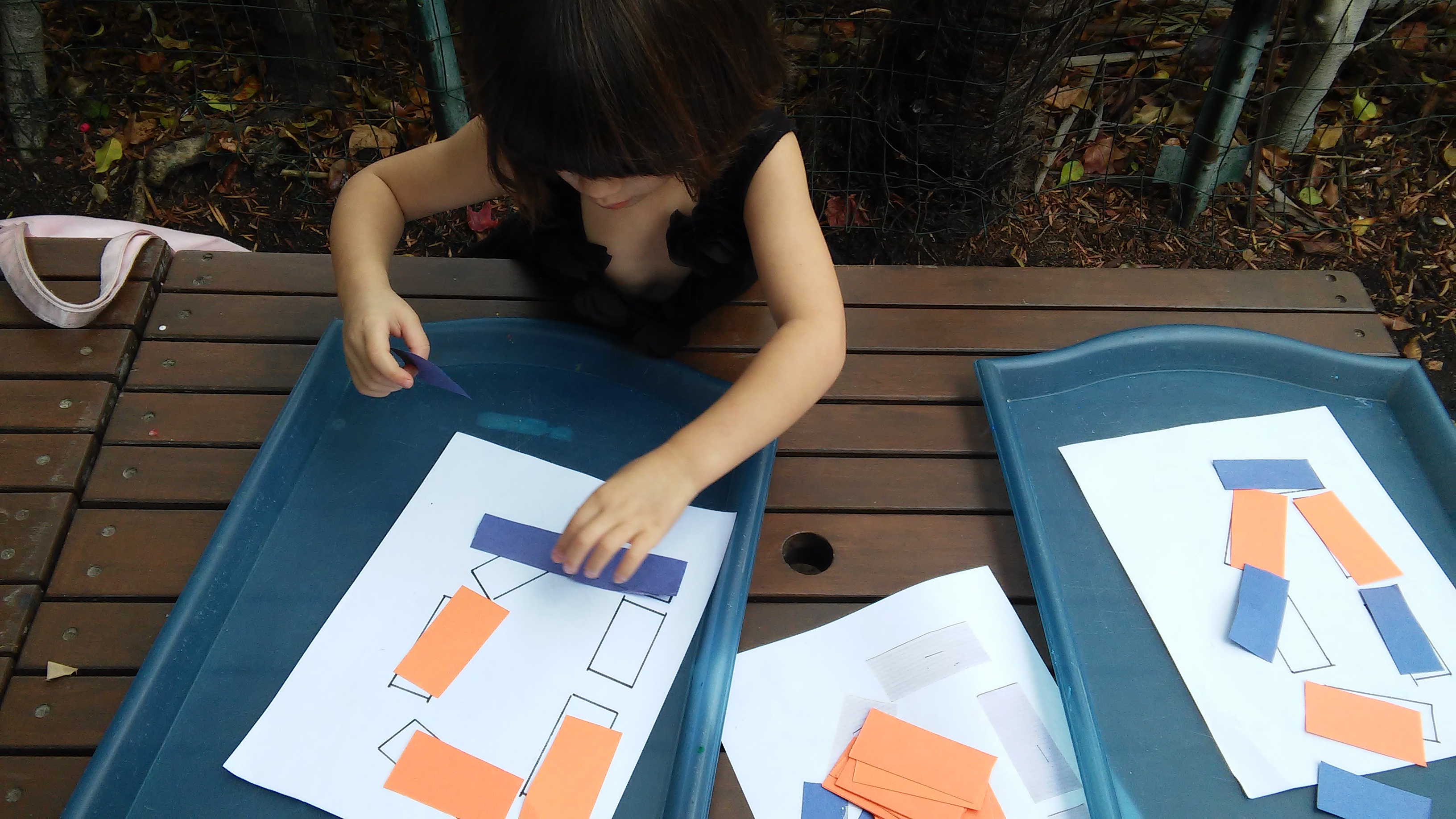
Letter W Flour Tracing

Writing is a skill that most people use every single day, whether it be writing a note to a friend or writing a check to a utility company. Even in the age of technology, the written word is still everywhere. But how do you teach a young child the proper way to write? The first step is simple… pre-writing. Pre-writing is learning the skills necessary to begin writing. Pre-writing is an important step because it teaches children the correct way to hold a pencil, how to use a good, firm grip, and emphasizes the use of fine motor skills. Pre-writing also helps children with the development of hand/eye coordination, learn that words go left to right, and that lines of writing go top to bottom on a page.

20141211_104403

Ideally, the first materials used are not markers and pencils but materials that allow children to strengthen the muscles in their hands needed to properly hold writing implements. We add a tactile (kinesthetic) component when we practice shaping the letters with different materials. Shaping letters with dough, tracing them on textured paper cutouts, and writing in the sand or salt trays all help children internalize the shape of the letter, while developing their fine motor skills.

20141211_104412

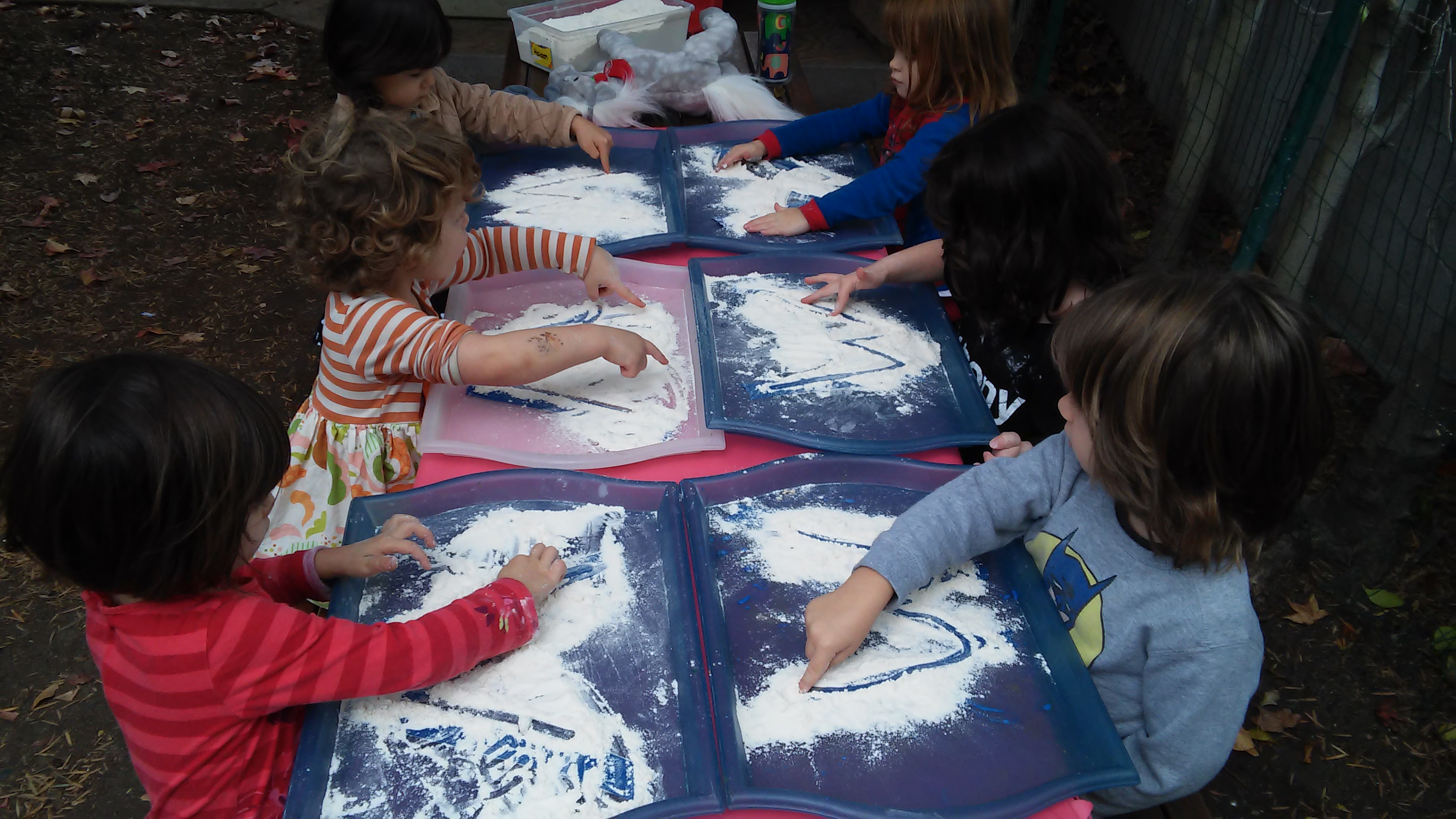
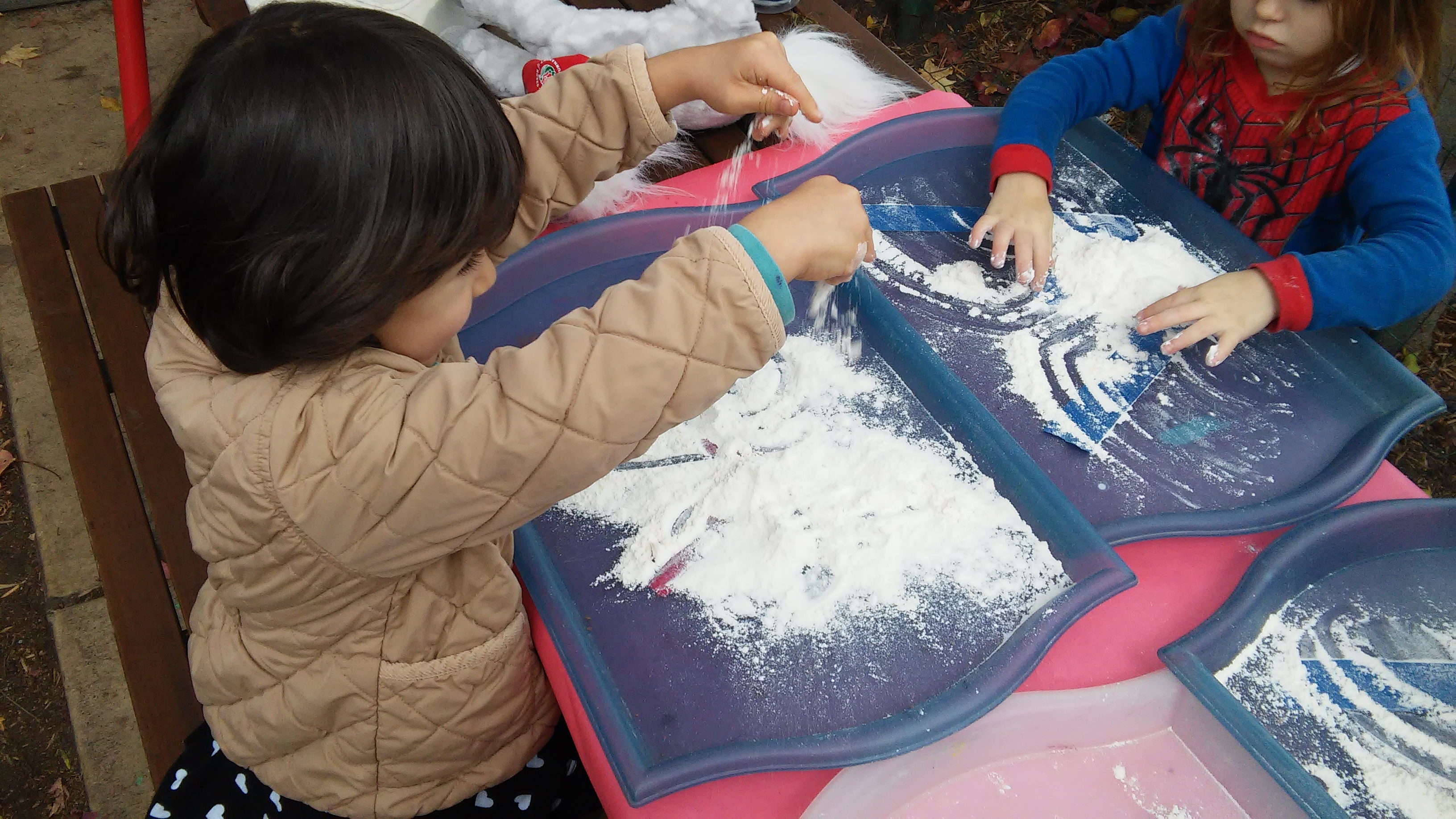
For this activity, we practiced tracing the letter W with flour! Your child was directed to trace the letter W into the flour. Doing so helped your child develop stronger familiarity with the structure of W, integrating the sense of touch to create a visual representation of the letter.

Ice Skating

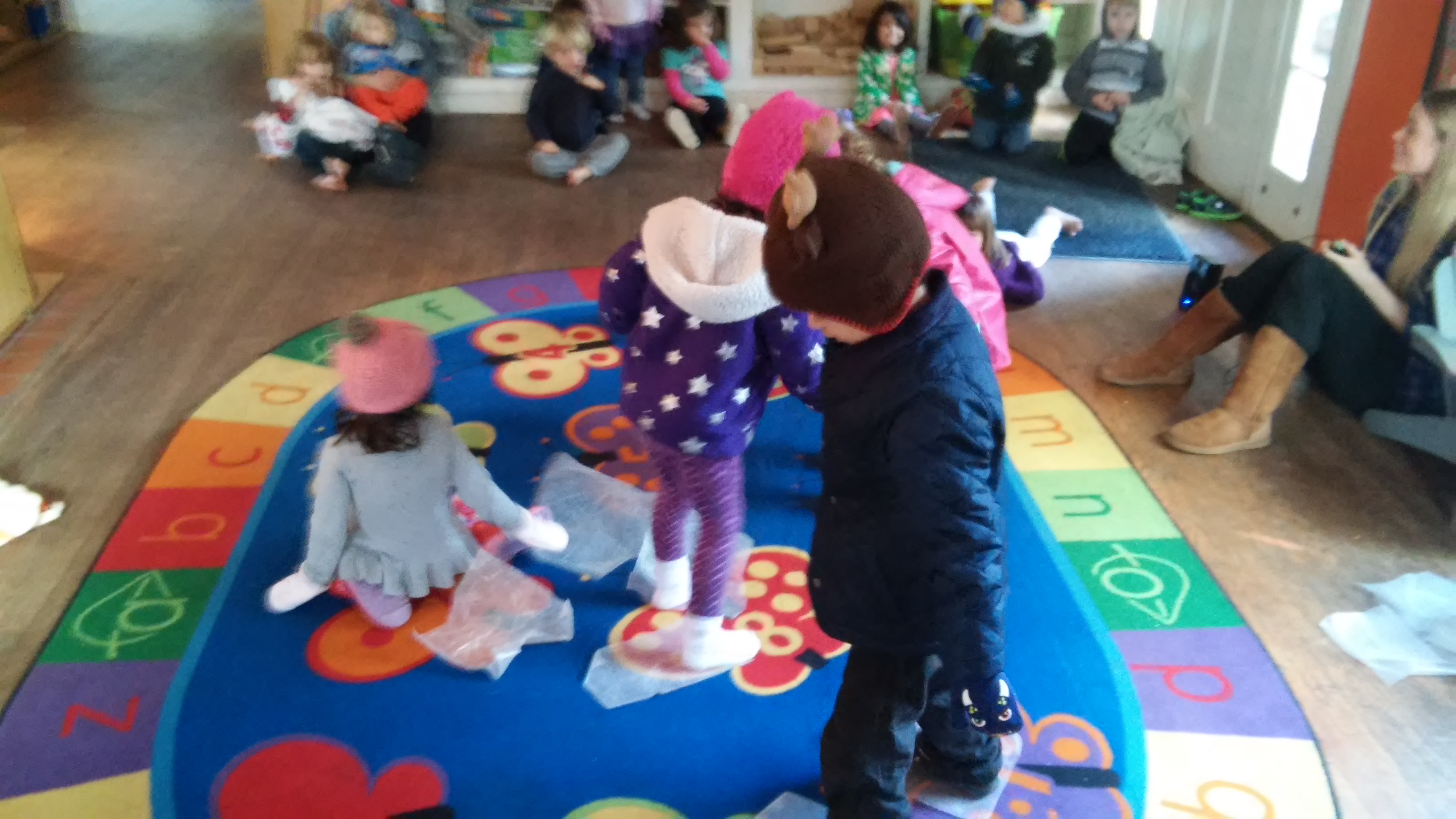
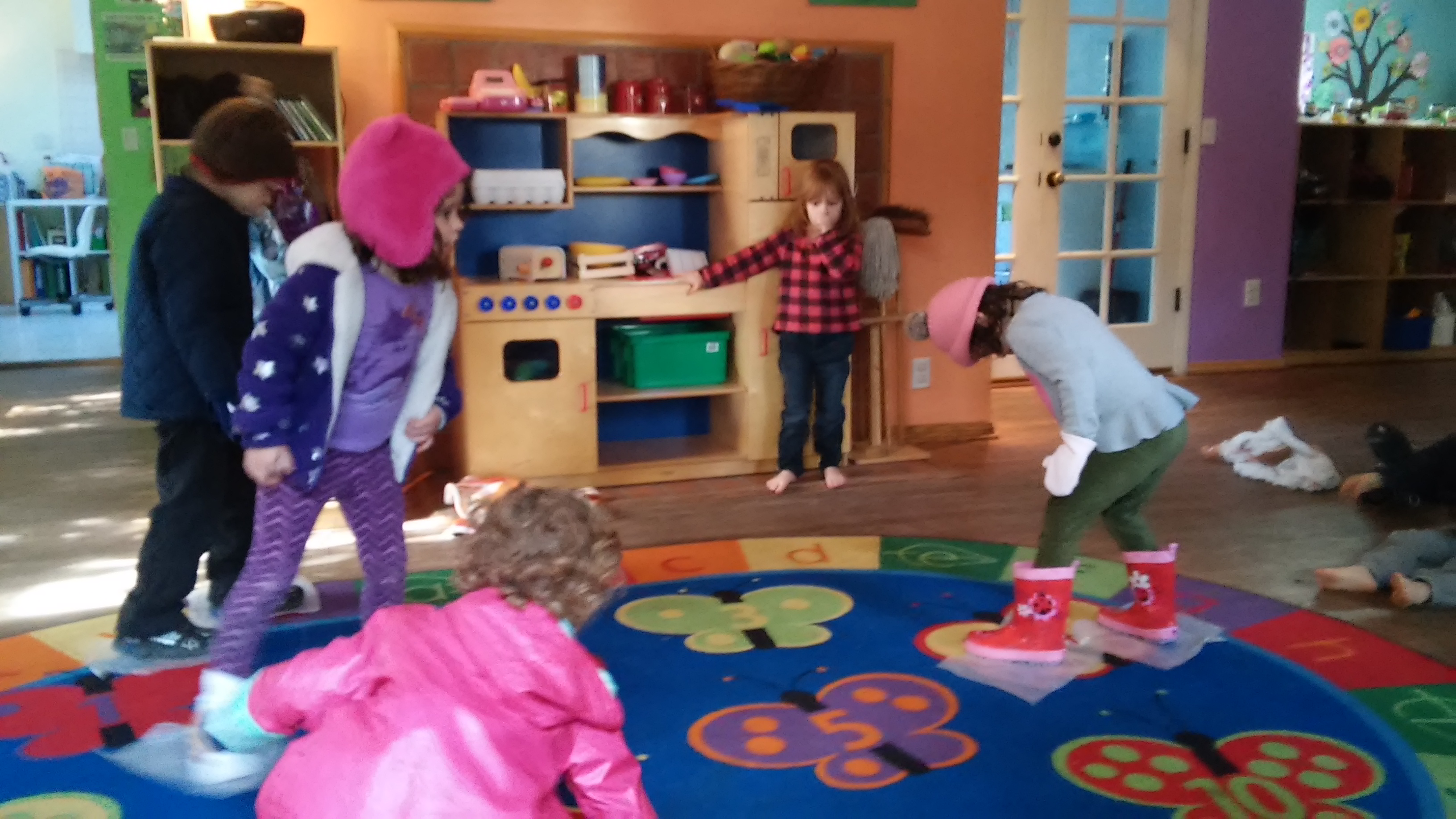
Using wax paper, we ice skated at school!
20141207_222853
We began the activity with a discussion of the weather, the different kinds of weather we see throughout the year, and the different kinds of things we wear for cold weather.
20141207_222847
We then put on our hats, scarves, and mittens, and skated around the room to waltz music!
20141207_222229
Weather activities teach young children about the exciting world that they live in.
20141207_223013
Talking about how weather changes helps your little one to make associations to how the world around them affects their daily lives.
20141207_223531 - Edited

Umoja Around the Rosie

The Kwanzaa holiday was created to introduce and reinforce seven principles which were viewed as core value systems for healthy and thriving families, stable and loving and caring relationships, effective parenting practices, school achievement, and non violent, safe and productive communities. Thus, the seven days of the Kwanzaa holiday is organized around the seven principles of Kwanzaa: Unity, Self-determination, Collective Work and Responsibility, Shared Wealth, Purpose, Creativity and Faith.

The Umoja (unity) principle instructs that each member of the family and by extension the community is constituted by a web of interpersonal relationships. The health and possibilities of the family and community, therefore, is dependent upon the quality of relationship within the family and community.This activity involved your little one playing a group game to reinforce the principle of Umoja.

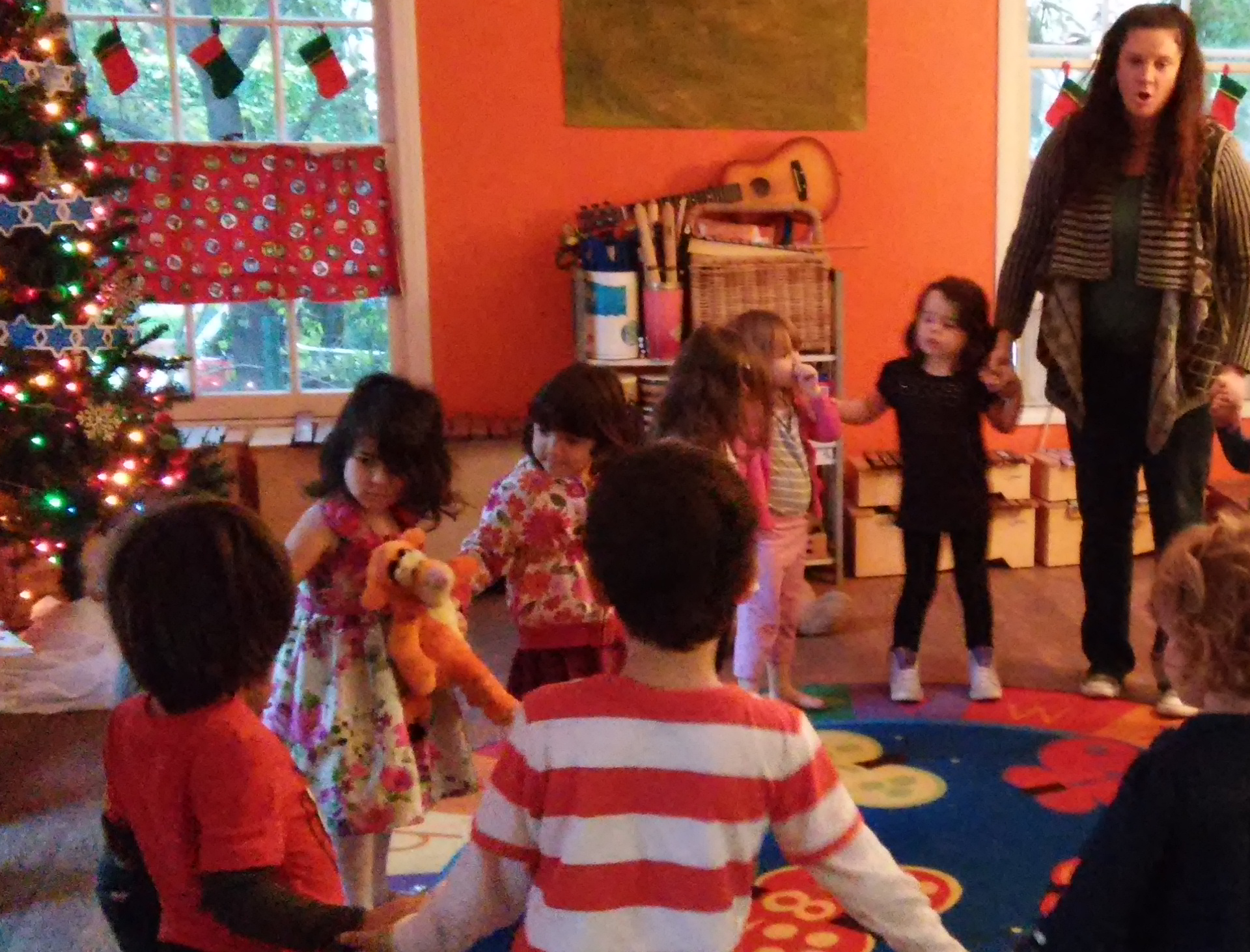
Organized activities can be fun and contribute to children’s learning and development. But many traditional games, such as Musical Chairs and Duck, Duck, Goose focus on competition and eliminate children from the fun. In contrast, cooperative games help preschoolers learn to work together, follow directions, listen, and develop problem-solving and movement skills. For this activity, we played the Kwanzaa version of Ring Around the Rosie. We chanted the following words:

Umoja, Umoja

Let’s light the Kinara

Kwanzaa, Kwanzaa

We all fall down!

Your little ones delighted in this game, as they laughed and giggled with their friends. It added to the excitement of Kwanzaa week!

20141210_163136

Christmas Tree Sewing

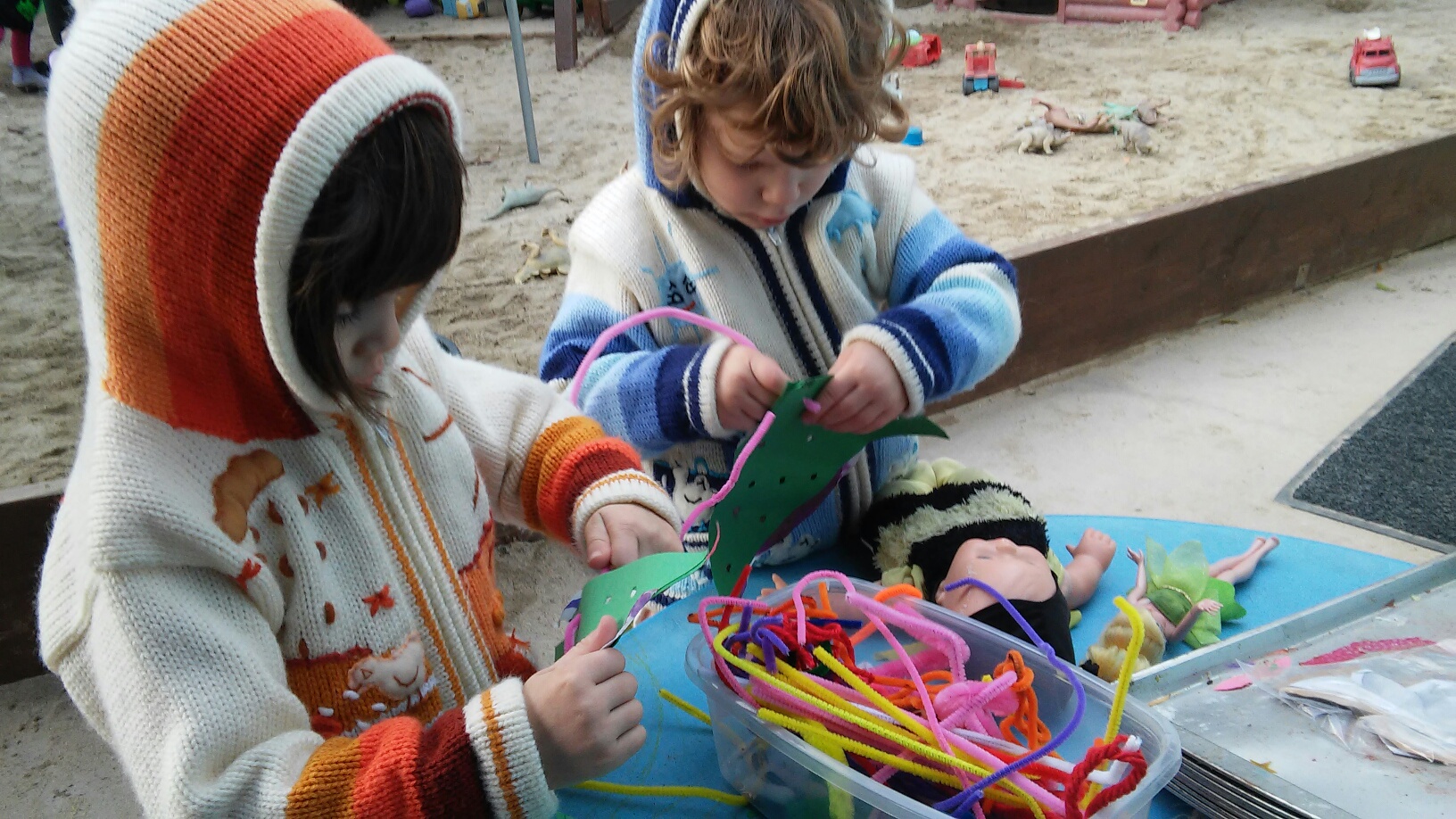
This activity involved lacing a pipe cleaner through a paper Christmas tree. Lacing (or sewing) activities are a great educational and developmental tool for preschoolers.

20141211_155010_resized

As children grasp the tip of the the pipe cleaner, they are building their pincer grip which is crucial for writing skills.  They also learn patterns and develop hand-eye coordination through the act of weaving the string through the holes.  Finally, it is also a lesson in patience as they ever so slowly work their way across the Christmas tree with their string.

20141211_155558_resized

Kwanzaa Place Mats

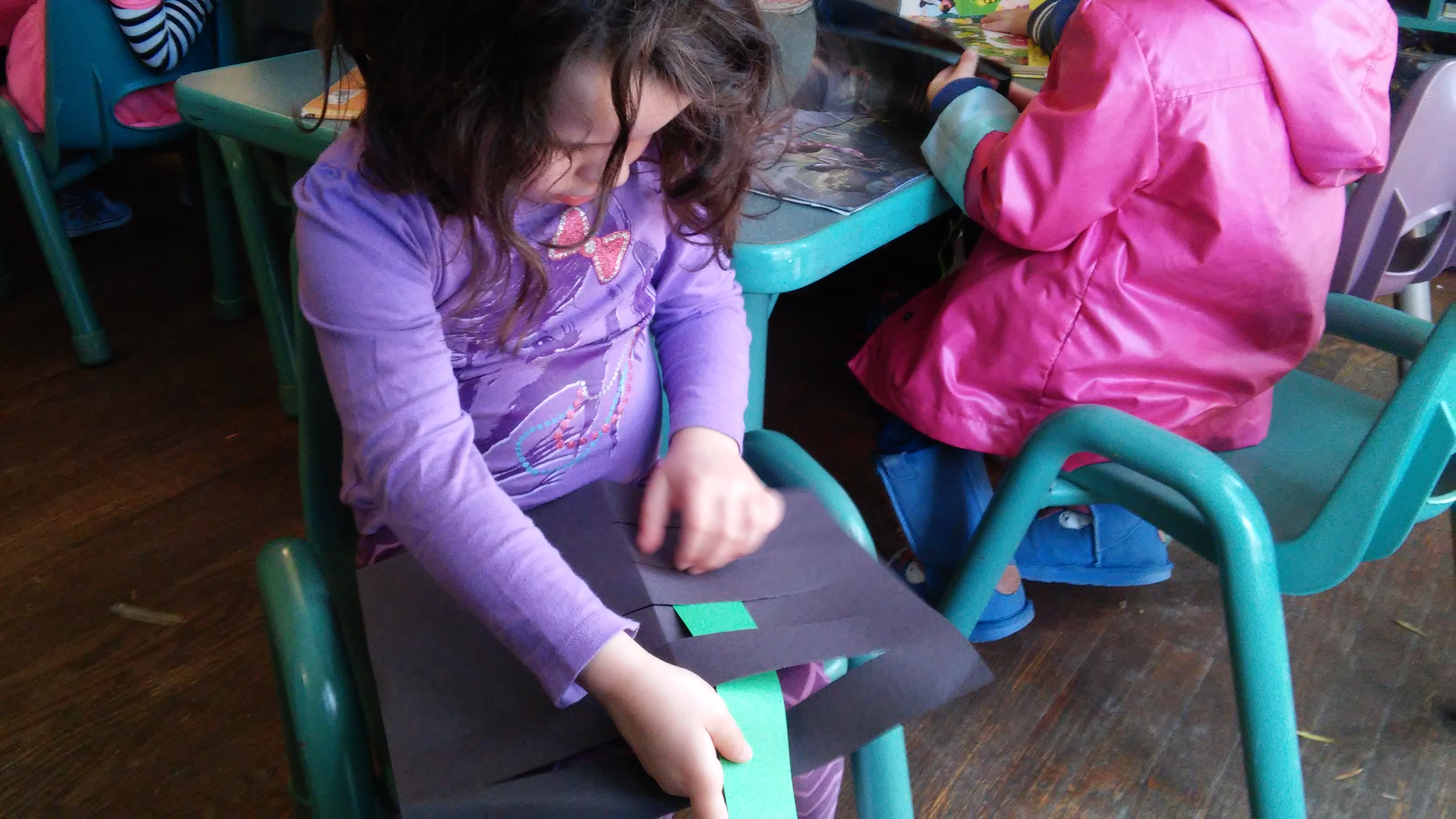
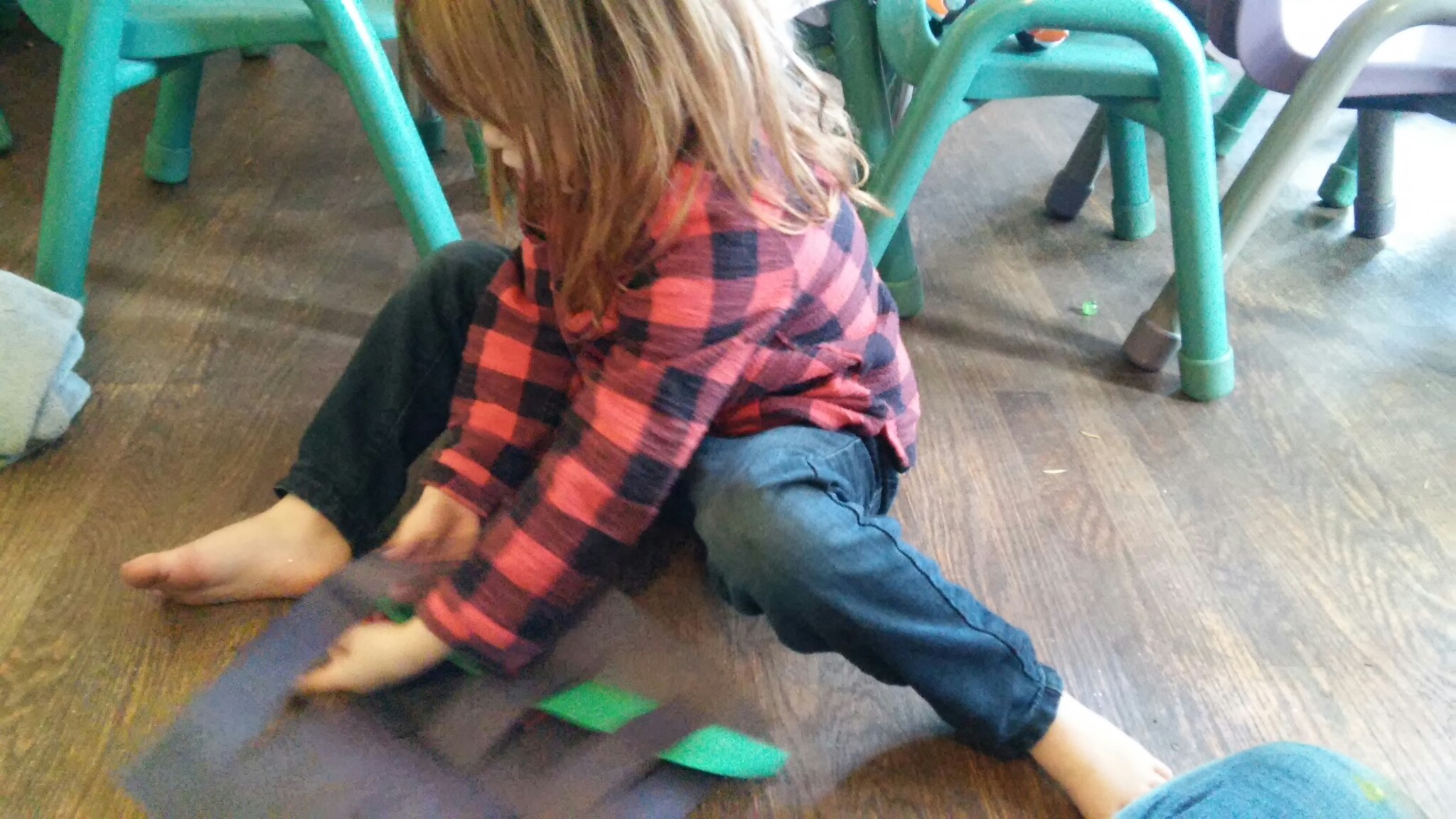
Weaving is such an excellent activity to try with preschoolers!  Weaving not only promotes fine motor skills, but helps children learn how to create patterns and work through problems they may encounter while weaving.

20141207_233341

It can also be a beautiful way for children to express themselves artistically. For this activity, we created Kwanzaa place mats using black, red, and green pieces of paper.

20141207_231739

Your little one weaved strips of paper through their place mat, to create a beautiful piece of functional Kwanzaa art!

14 - 1

Ice Sculptures

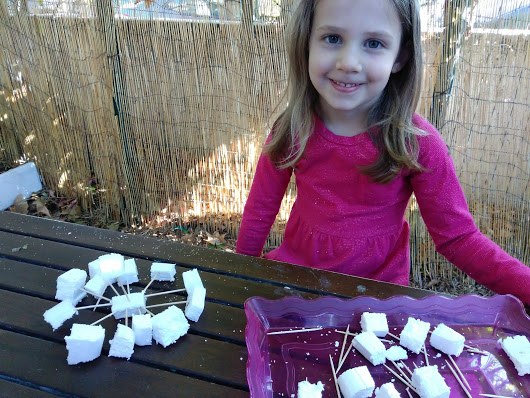
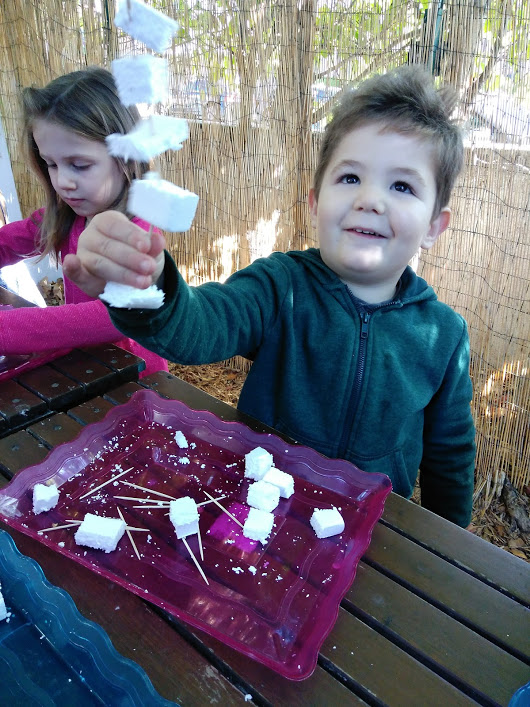
Using toothpicks, and styrofoam pieces, your little architect constructed their very own structures!
sculpture
 Playing with a variety of building materials is critical for the development of spatial thinking, or envisioning where different items go in relation to each other as they build.
sculpture4
scupt3
Deciding how to structure the pieces, connect them together, and configuring whether they are aligned or perpendicular to one another, are just the kinds of skills that support later learning in science, technology, engineering and math.
sculpture2
scupt5

Dreidel Dreidel Dreidel!

The dreidel, known in Hebrew as a sevivon, dates back to the time of the Greek-Syrian rule over the Holy Land—which set off the Maccabean revolt that culminated in the Hanukkah miracle.

20141201_100613

Learning Torah was outlawed by the enemy, a “crime” punishable by death. The Jewish children resorted to hiding in caves in order to study.

20141201_100619

If a Greek patrol would approach, the children would pull out their tops and pretend to be playing a game. By playing dreidel during Chanukah we are reminded of the courage of those brave children.

Tracing the Dreidel

The tactile experience (touching the letter with your finger) is important for building a memory trace. This enables students to acquaint the name of each letter with a visual representation for the letter sound.  For a child who is struggling with their letters, the sooner they can integrate the sound of the letter with what it looks like, the sooner their writing contains more meaning for them.

20141201_101353

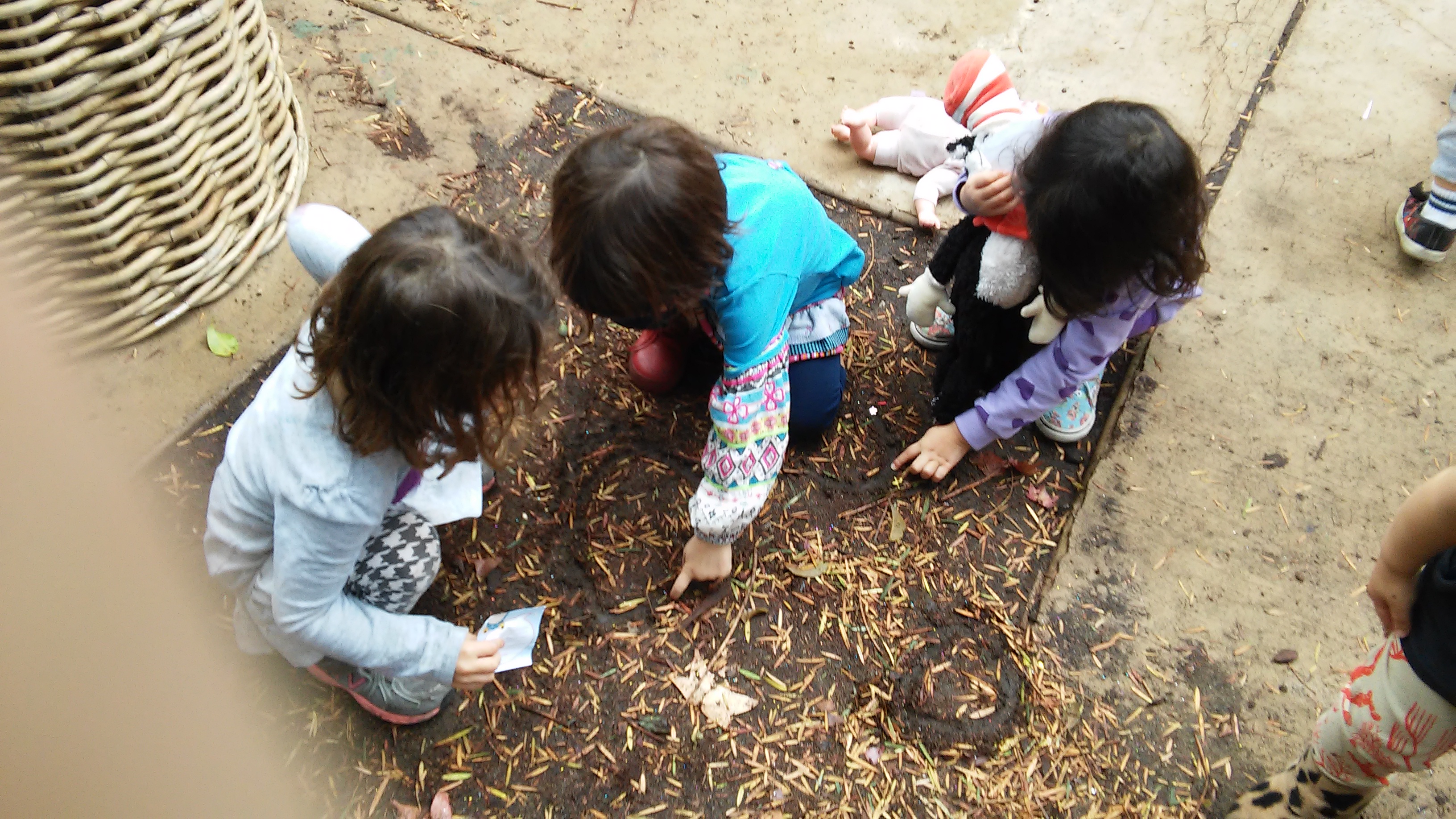
For this activity, we talked about the letter D. We discussed words that begin with this letter; words like dinosaur, dirt, dreidel, and dog that we pronounced and then broke up into their component parts. Using our fingers, we moved to the ground, where we carved (with some help from Miss Carrie) letter Ds into the dirt, and then traced them with our pointer fingers.

20141201_101350

Tactile Letter Puzzles

Tactile letter activities are an amazing way to help kids explore the alphabet. Tactile means connecting with the sense of touch, so these activities are designed for kids to explore the alphabet using their fingers. When they trace the letters, they are learning the strokes and shape of the letter to prepare them for writing in the future.

20141205_100914

For this activity, we used pieces of foam to construct the letter D. All of the alphabet letters include either straight lines, diagonal lines, and/or big and little curves and this experience helped students perceive how these components fused together to create a larger picture. Before preschoolers begin to read or spell, they must learn the letters of the alphabet and the sounds they represent. Learning to pair letters and sounds helps prepare preschool children for later reading.

20141205_101124

The Visual Perceptual Menorah

Research has shown that young children learn best through active, hands-on experiences.

menorah

In other words, children learn by doing. Play provides the foundation for academic learning.

img_20191217_102711068

To incorporate the menorah into our Hanukkah theme, we placed candles into real menorahs!

menorah2

This activity accessed several developmental areas.

img_20191217_102245060

Each candle was color-coded to match a corresponding cavity on the menorah.

img_20191217_103319250

By discerning between an array of different colors, students exercised their matching and visual perceptual skills.

img_20191217_100432745


This experience also encouraged your little ones to investigate, discover, and learn new ideas related to a culture different from their own.

img_20191217_100115268

By collaborating with their classmates, they also fostered their decision-making skills, supporting their emerging social-emotional development, as they best problem-solved how to share supplies to meet a common goal.