W is for Winter

Although the formal study of reading and writing does not occur until kindergarten, young children are capable of recognizing letters and their functions.

trace

Providing regular opportunities to practice pre-reading skills, is essential in gaining knowledge of the alphabet and its association to how words work.

trace1

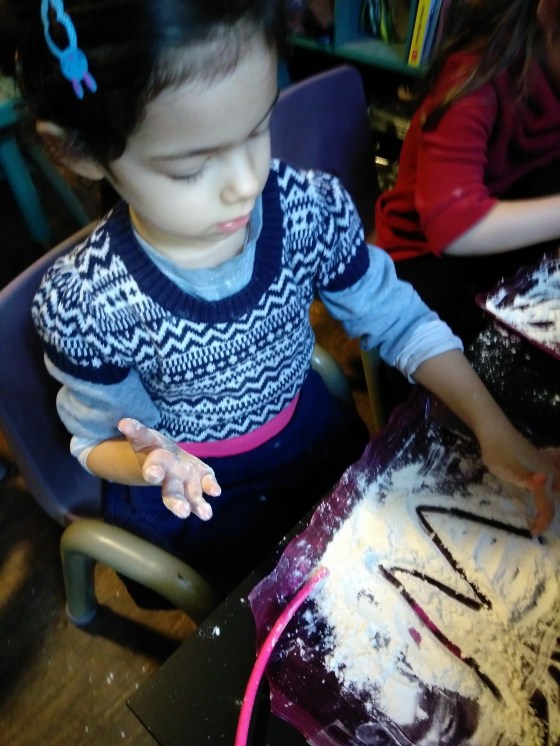
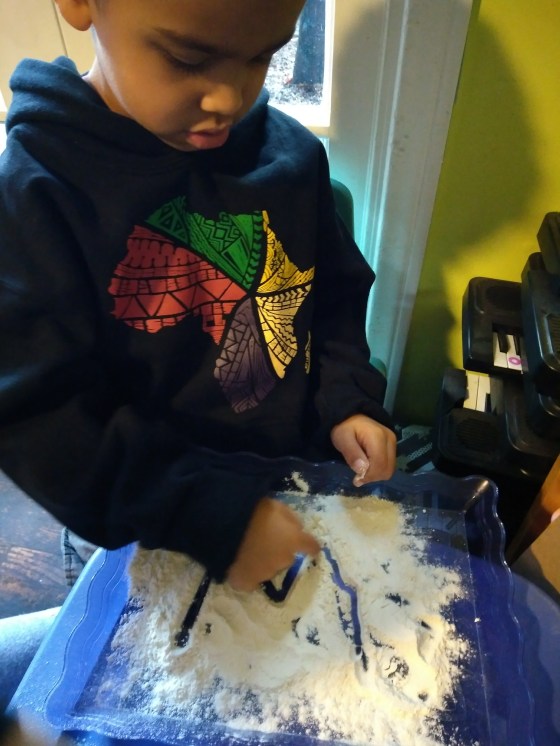
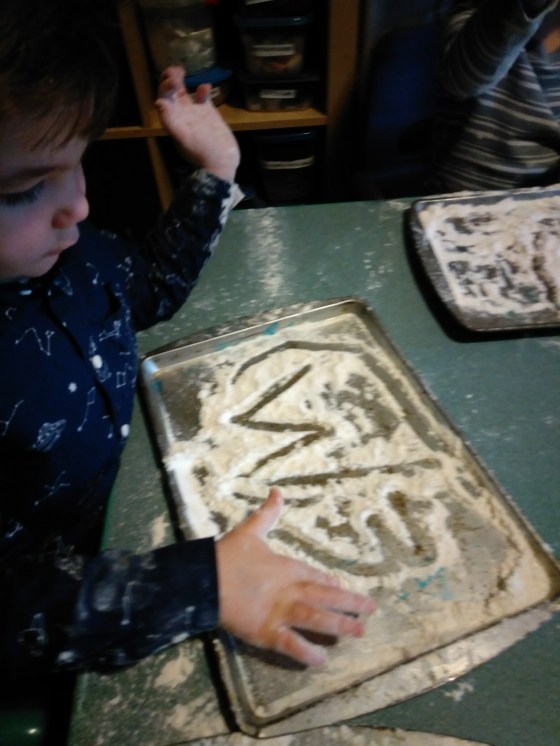
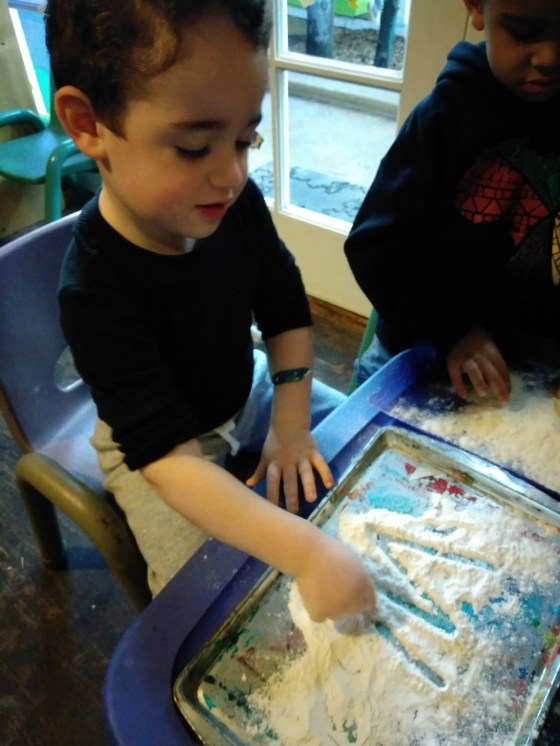
Using flour and our fingers, we practiced tracing the letter W.

trace2

Throughout the week, we have been talking about different words that start with the letter W.

trace3

We have additionally been singing songs that reinforce the different sounds that W makes.

trace4

Painting with Flippers

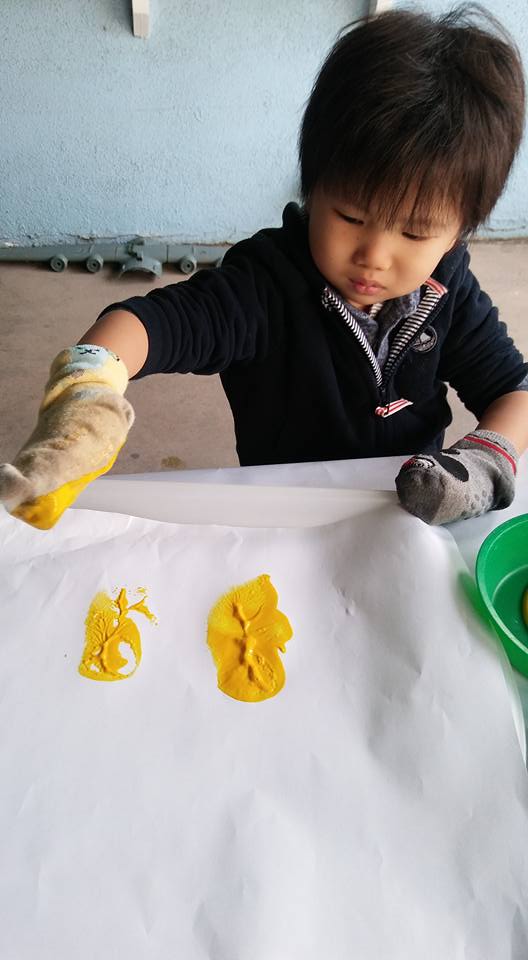
Using socks as flippers and white paint, we created our very own walruses! We began the project with a discussion about what walruses, where they live, what they eat, and what flippers are!

flipper6

We then dove into the paint, and created a messy, but fun masterpiece! This sensory activity was one of the favorites for the week!

flipper4

Sensory play is important because it gives children the change to play with different types of textures, which helps them to build new ways of talking about the world.

flippers

Sensory play is also calming for young children. It helps regulate their internal discomfort by soothing their senses and providing a creative outlet for their emotions.

flipper3

Play Dough Owls

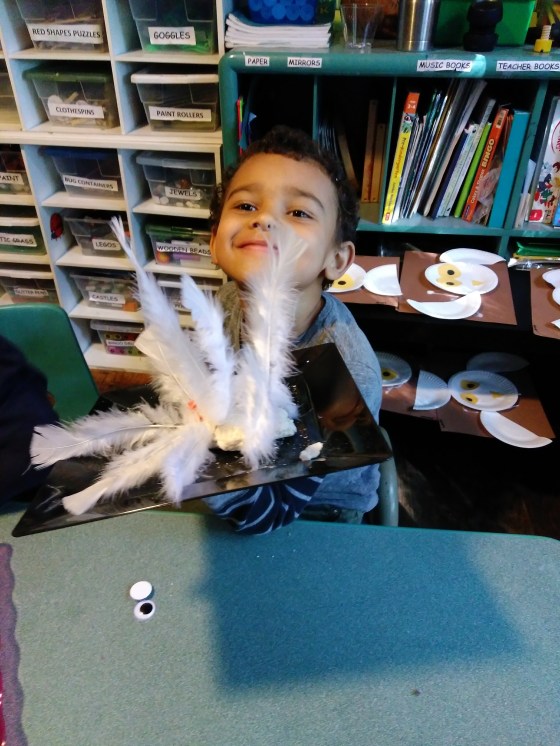
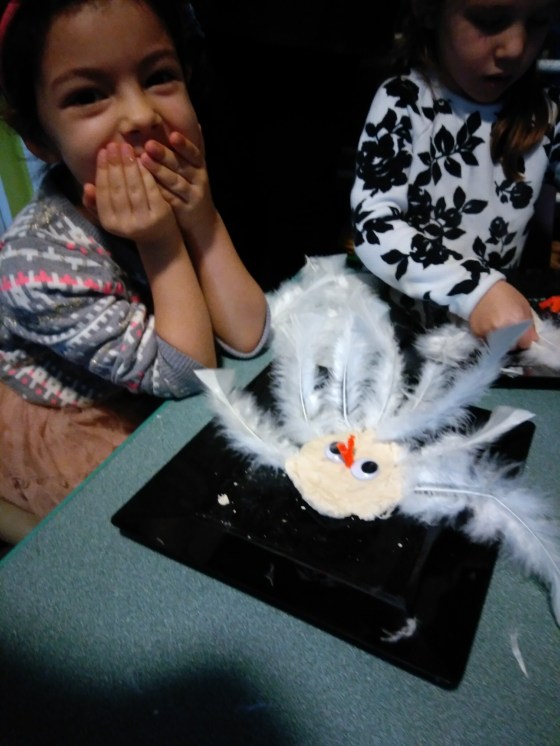
Since we are learning about snow owls this week, we used to play dough to create our own!

feather

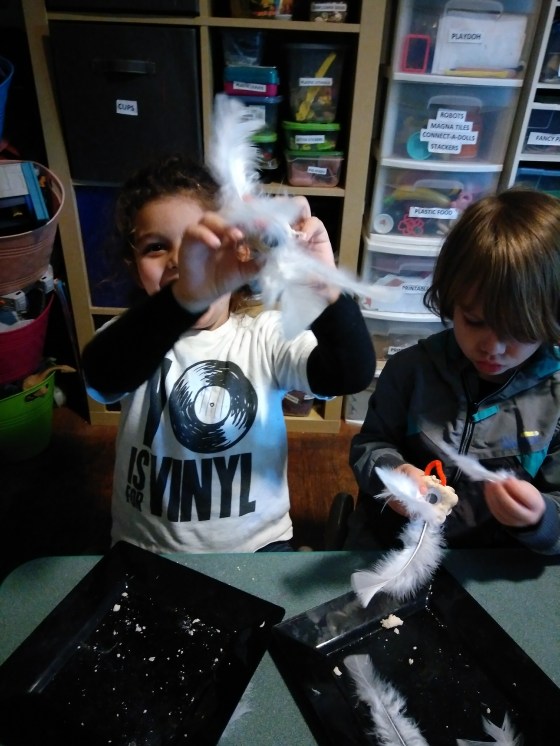
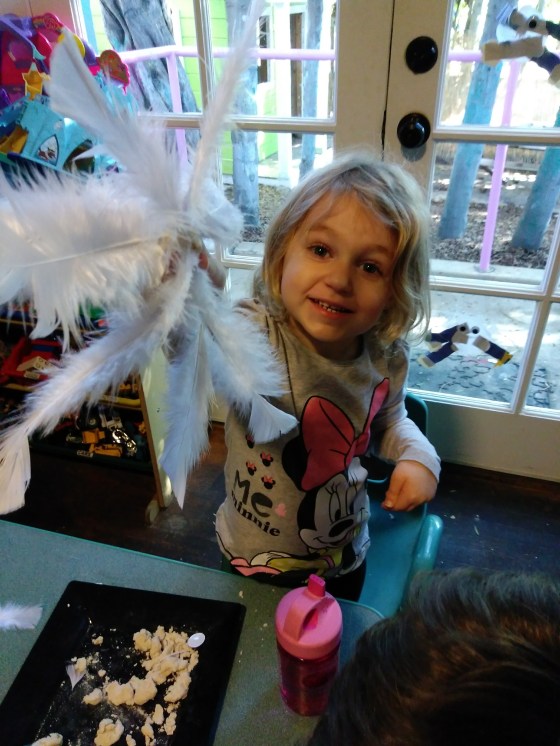
Using play dough as a medium, feathers, and plastic eyes, we created our own version of our favorite snow owls!

feather1

Using play dough helps a child practice using certain physical skills with the hands when they manipulate the dough with their fingers.

feather2

Children can practice skills such as pinching, squeezing or poking while they play with the dough.

feather3

Lastly, using play dough helps a child practice using imagination and other cognitive abilities such imitation, symbolism and problem solving.

feather4

This helps your little ones learn more about their environment as they make and mimic everyday objects with the play dough.

feather5

Snow Owl Puzzles

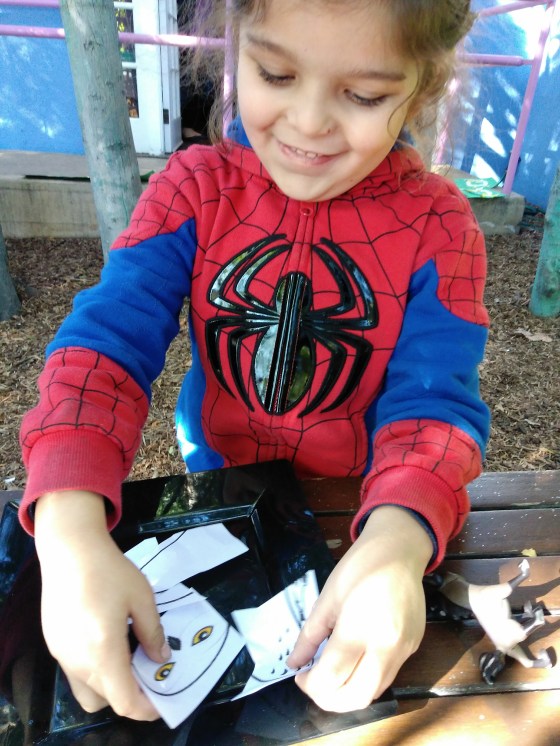
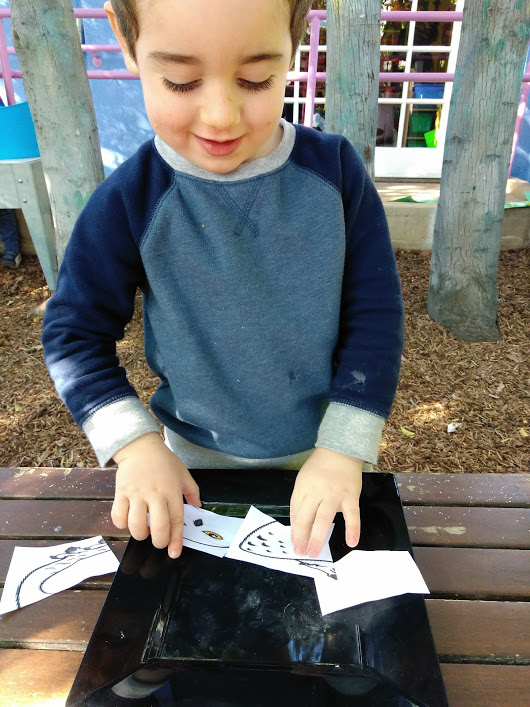
Using pre-cut pictures, we practiced putting snow owls together!

snowowl

Puzzles help young children build the skills they need to read, write, solve problems, and coordinate their thoughts and actions – all of which they will use in school and beyond.

snowowl1

They also help them begin to recognize colors and shapes, and come to realize that the sum of parts make up a whole – a concept that will help them with math later on.

snowowl2

By arranging pieces into the puzzle, your little one also develops the muscle group used for writing, or the “pincer” grasp.

snowowl3

Penguin Counting

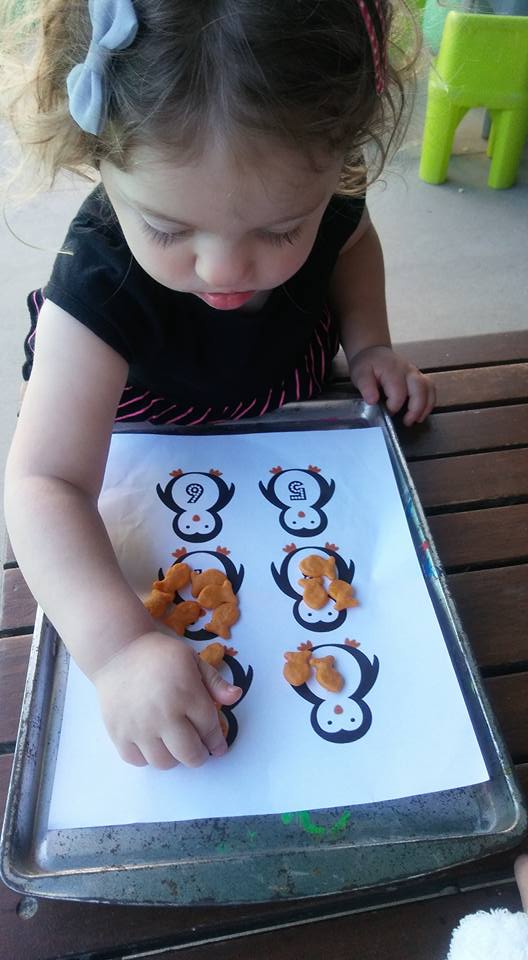
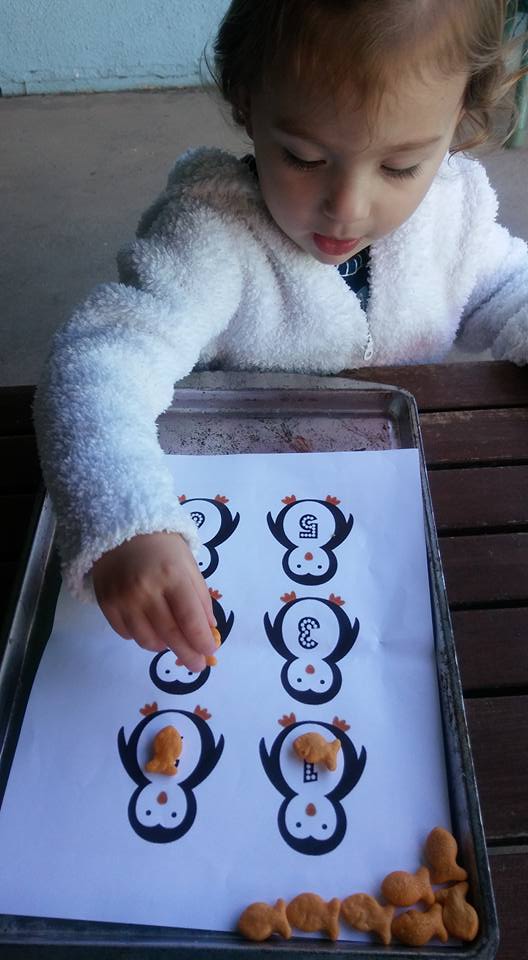
Using crackers and penguin diagrams of varying numbers and amounts, we learned and revisited counting and Arabic numerals!

penguin3

Each child was given a group of goldfish crackers, and a picture of penguins with numbers inside them.

penguin

Once again, we are using things that our little ones are naturally interested in to teach about counting, numeral recognition, and patterns!

penguin4

Not limited to just numbers, preschool math incorporates a broad range of skill sets and knowledge including sorting, colors and recognizing groups and patterns.

penguin6

These activities teach our little ones about problem solving and using logic. This activity also involved fine motor skills, as they manipulated Their fish and attached them to their rows.

penguin5

Play Dough Penguins

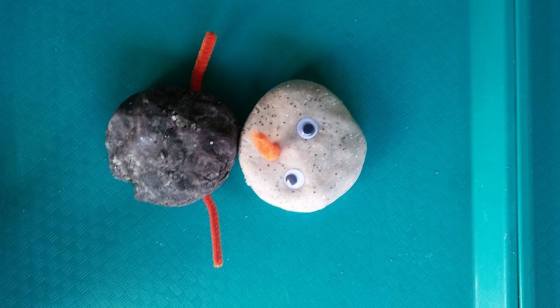
Since we are learning about penguins this week, we used to play dough to create our own version of them!

pengdo6

Using play dough as a medium, pipe cleaners, and plastic eyes, we created these magnificent creatures!

pengdo

Using play dough helps a child practice using certain physical skills with the hands when they manipulate the dough with their fingers.

pengdo1

Lastly, using play dough helps a child practice using imagination and other cognitive abilities such imitation, symbolism and problem solving.

pengdo3

This helps your little ones learn more about their environment as they make and mimic everyday objects with the play dough.

pengdo2

pengdo7

Moose Color Sorting

Sorting is a beginning math skill. It may seem that a big chunk early math is about learning numbers and quantity, but there’s much more to it. By sorting, children understand that things are alike and different as well as that they can belong and be organized into certain groups. Getting practice with sorting at an early age is important for numerical concepts and grouping numbers and sets when they’re older.

moosehead

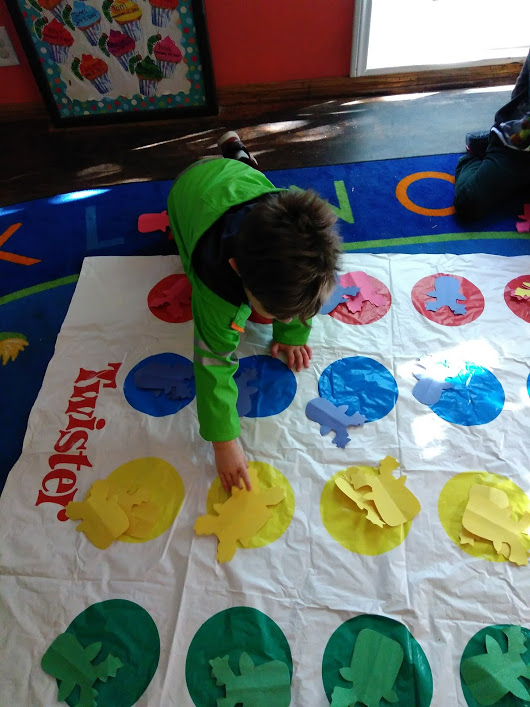
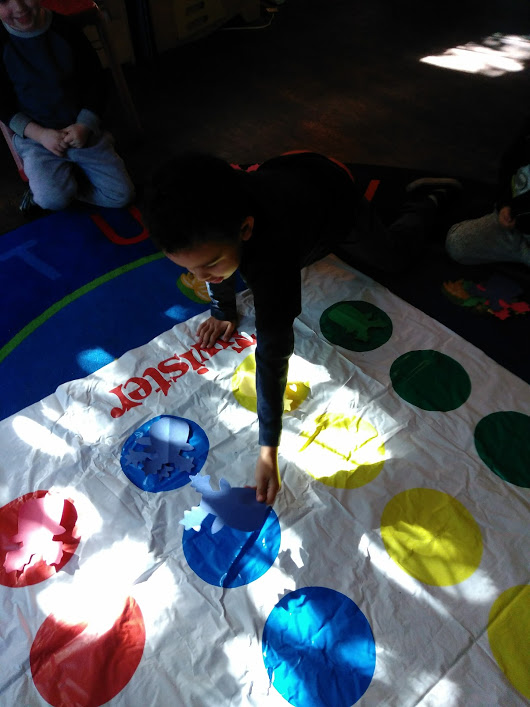
This type of thinking starts them on the path of applying logical thinking to objects, mathematical concepts and every day life in general. Studies have even been shown that kids who are used to comparing and contrasting do better in mathematics later on. For this activity, we practiced sorting different colored moose. Using our thinking minds, we placed different colored moose onto the different colored circles of a Twister board! Since we are learning about moose, this was a perfect complement to our curriculum!

moosehead2

Graham Cracker Moose

Food preparation is not only a fun, engaging activity for children,  but one that can be used for years as an important teaching and development tool for all ages. For one thing, hands-on cooking activities encourage a sense of pride and confidence. The act of following a recipe can encourage self-direction and independence, while also teaching children to follow directions and use thinking skills to problem solve.
moosesnack2

Working with food also inspires children’s curiosity, thinking, and problem solving, offering new opportunities to make predictions and observations.

moosesnack3

Additionally, creating snacks offers authentic opportunities for students to understand and apply their knowledge of measuring, one-to-one correspondence, numbers, and counting. As they follow a recipe, children organize ingredients, follow a sequence, and carry out multiple directions.
moosesnack

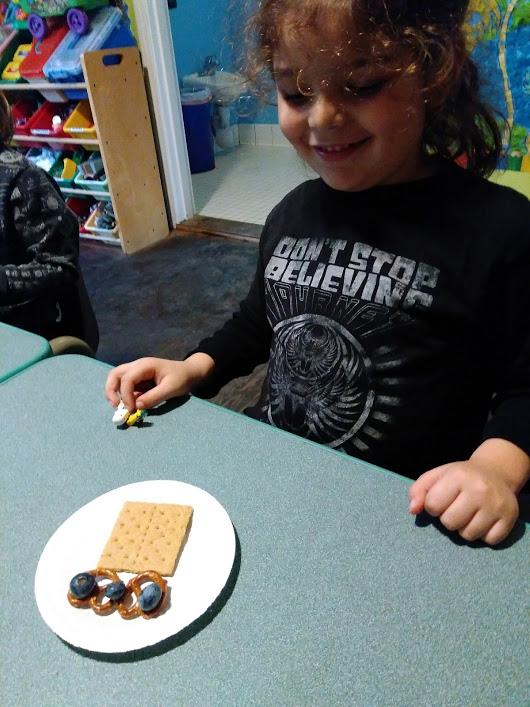
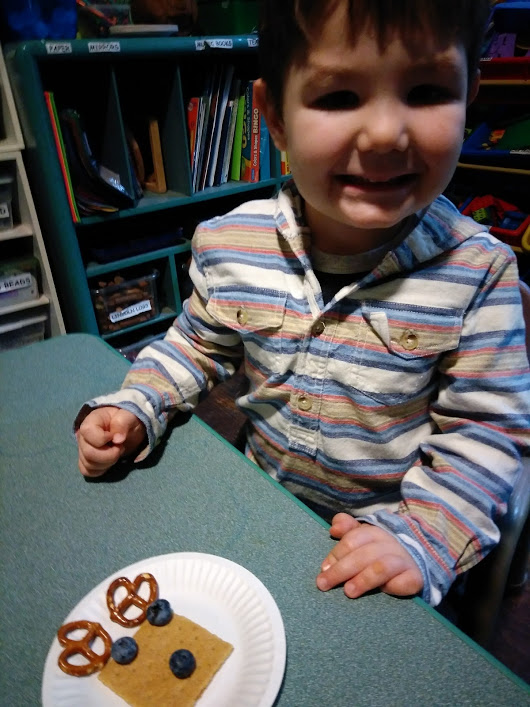
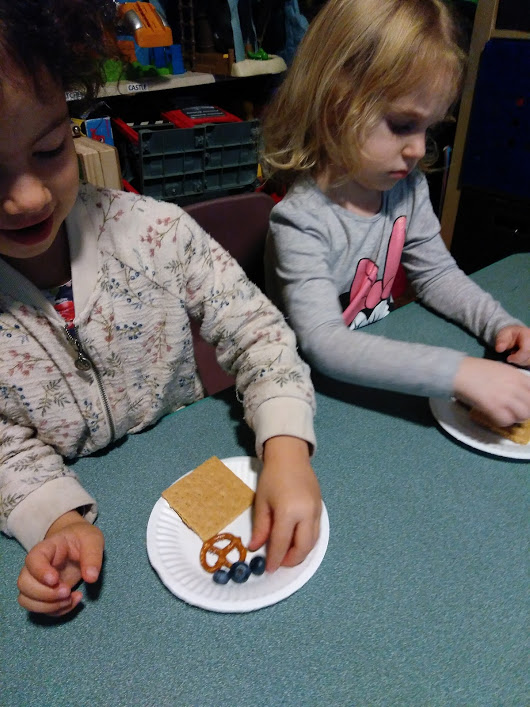
Lastly, chopping, squeezing, mixing, and spreading materials help develop a child’s small muscle control and hand-eye coordination. For this activity, we used a few ingredients to crease Moose Snacks. We used graham crackers as the head, pretzels as the antlers, and blueberries as the eyes. Once we were finished, we ate up our yummy creations!
moosesnack1

Moose Habitats

We began our Arctic Animal month with a lesson about all things related to the moose!!

moose

Although native to Europe and Asia, moose are found throughout Northern hemisphere in Northern Canada and other colder climates.

moose1

Moose are also called “elk” and are members of the deer family.

moose2

These large mammals are solitary and do not form herds. Although generally slow-moving and sedentary, moose can become aggressive and move quickly if angered or startled.

moose3

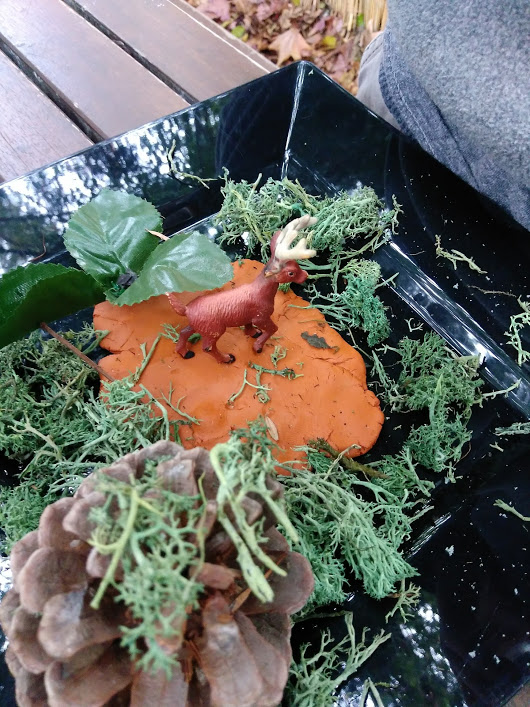
Using small toy moose, pine cones, artificial grass, rocks, and clay, we created our very own moose habitats!
Ursus Maritimus

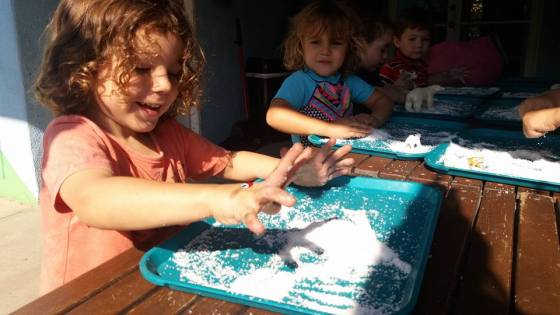
Your little one participated in yet another fun sensory activity!

14068315_1286230801410752_8401587915833770388_n

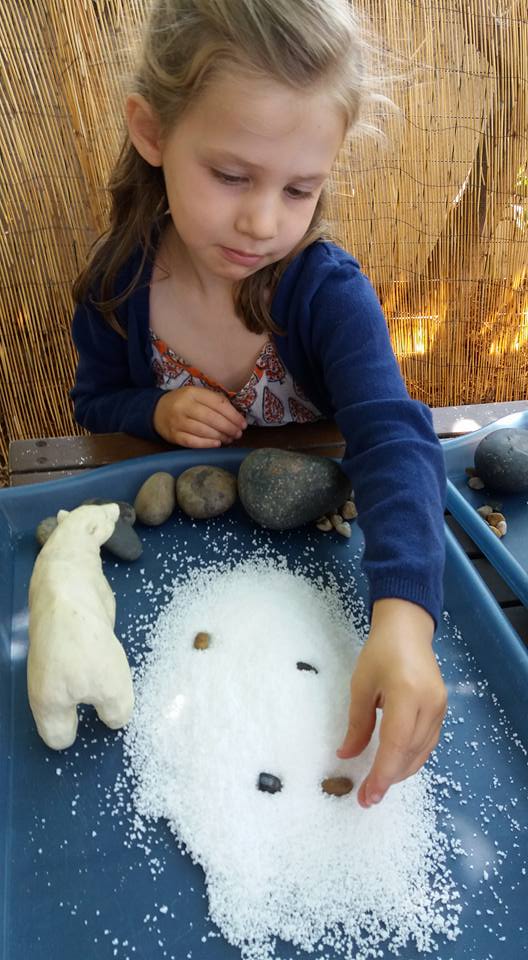
Using insta-snow,  rocks, and  toy polar bears, your little one created their very own winter wonderland!

14068319_1286231001410732_8619250389290906189_n

We began this activity with a discussion and review of the various bears that we have been learning about this week.

14102549_1286230858077413_6173104217366294487_n

We then talked about the polar bear and the kind of environments that the polar bear prefers.

14183724_1286230838077415_4989407327656595339_n

Our discussion concluded with a review of the new vocabulary that we have been learning, such as glacier, blubber, the Arctic Circle, and carnivore.

14183827_1286231028077396_3702017276364823366_n

Your little explorer then happily constructed the perfect living space for their arctic creature.

14191900_1286230881410744_576631998871423813_n

This was the definite favorite for the week, as your little one applied their understanding of various vocabulary and scientific concepts.

14184536_1286231114744054_8203583640166001139_n