Build a Burrow

The materials we choose to bring into our classroom reveal the choices we have made about knowledge and what we think is important to know.

How children are invited to use the materials indicates the role they shall have in their learning.

Materials are the text of early childhood classrooms.
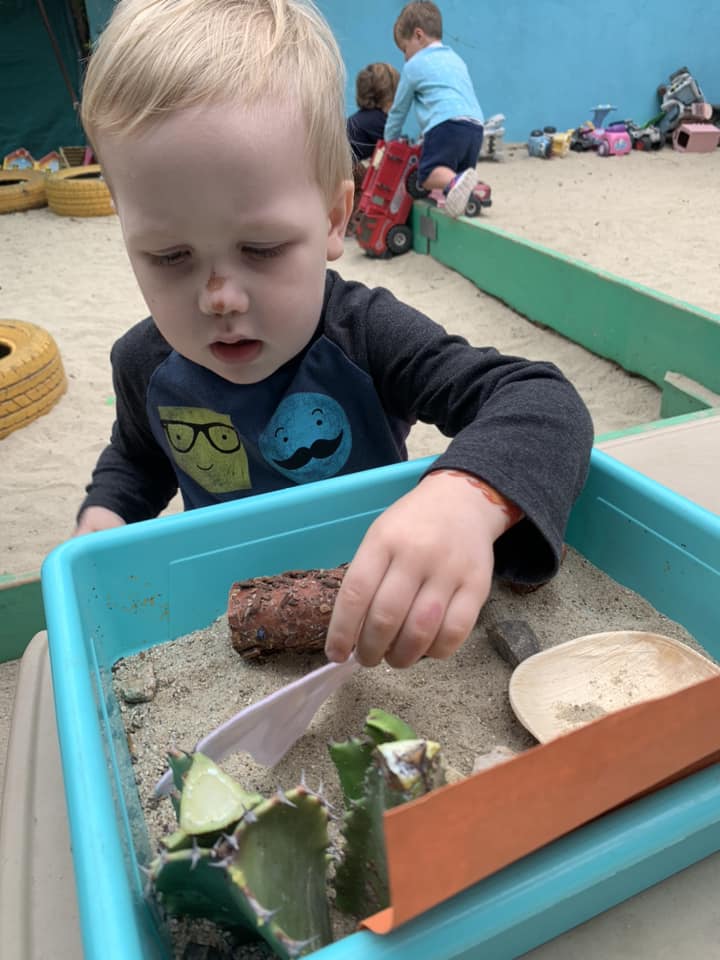
Unlike books filled with facts and printed with words, materials are more like outlines.

They offer openings and pathways by and through which children may enter the world of knowledge.

Materials become the tools with which children give form to and express their understanding of the world and the meanings they have constructed. It is for this reason that we are constantly interacting with several different substances, all of which serve a learning purpose!
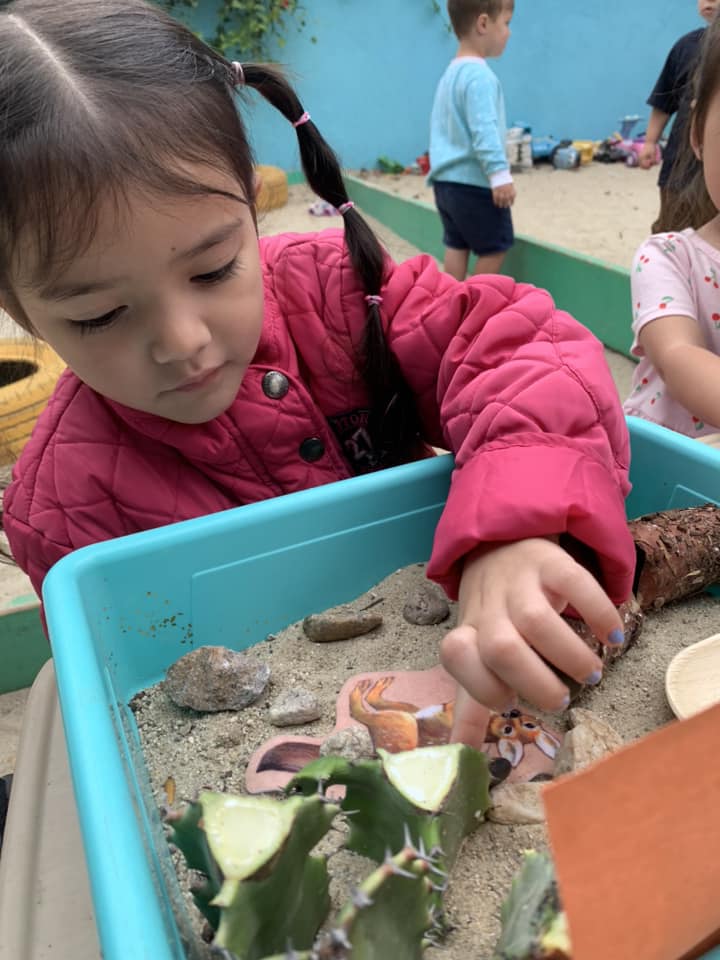
During the month of June, we learned all about the desert. During our fourth week of instruction, we talked all about the fennec fox! Three primary activities dominated our week. For these three activities, we utilized a variety of materials to construct fennec fox habitats.

gplus1470023330

Before we began, we read a story called Fenny the Fox, by Hans Baumann. From this book, we learned that fennec foxes live in burrows.

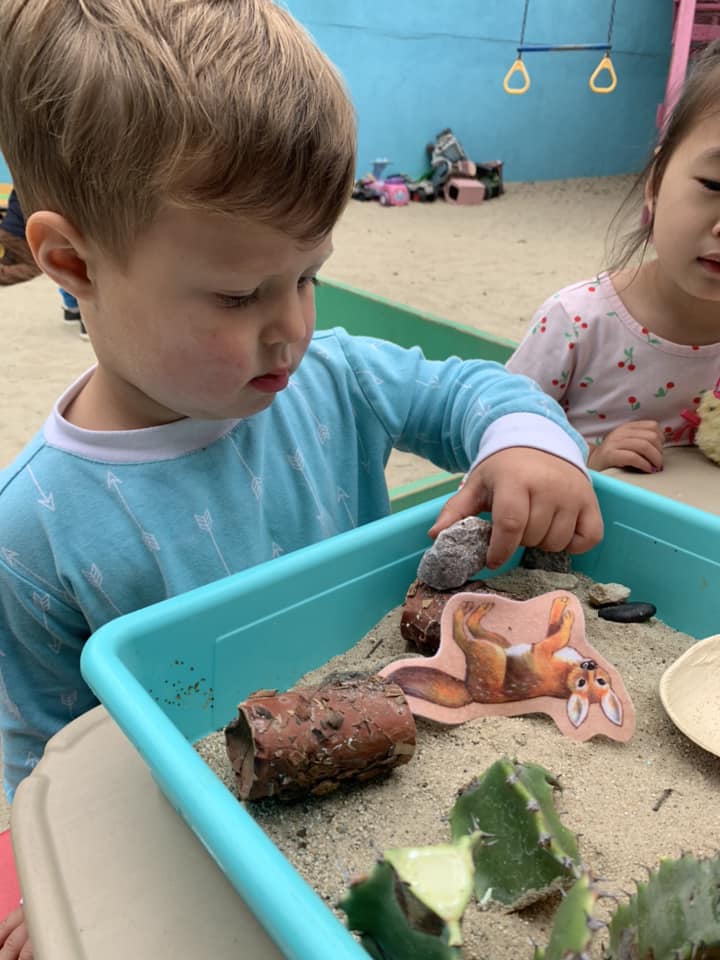
At the start of the week, we created these burrows by painting cardboard tubes. We then added wood chips and sand to them, and later placed them into our sensory tables. Students were invited to play and explore the different materials used. During the middle of the week, we constructed burrows out of bamboo flower pots.
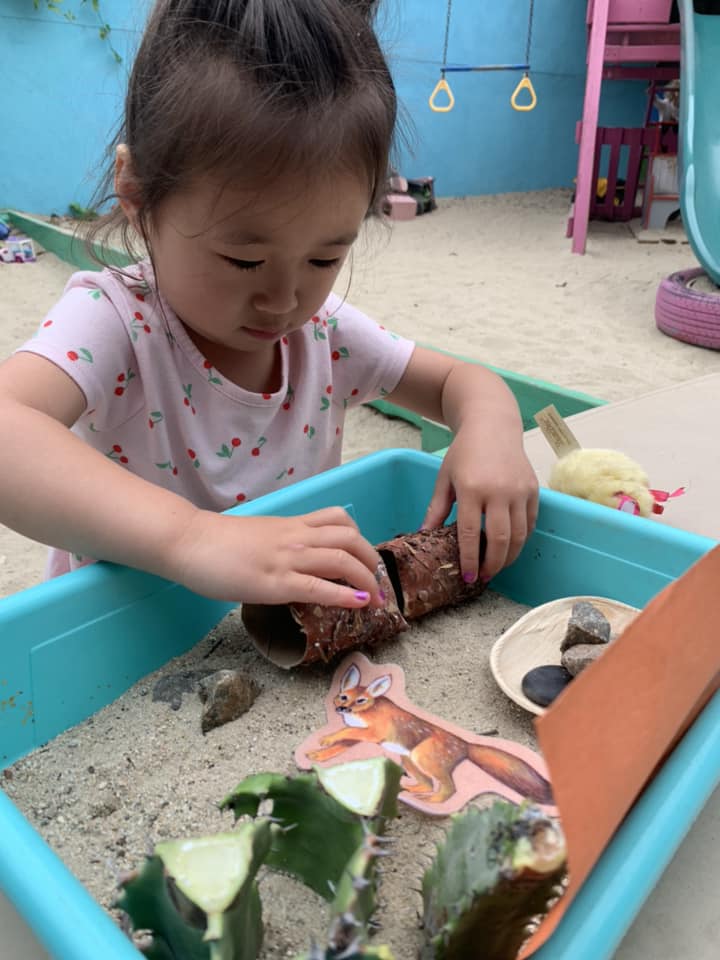
Students enjoyed creating scenarios with their friends as they interacted with desert vegetation, rocks, and sand. Lastly, we constructed burrows out of sand blocks. Using their thinking minds, students created burrows using sand blocks and a few other materials. It was exciting to see the combinations of materials they came up with, as many tried to build the biggest burrows they could!
Scorpion Search and Sort

Scorpions have been found in many fossil records, including coal deposits from the Carboniferous Period and in marine Silurian deposits. They are thought to have existed in some form since about 425-450 million years ago.

gplus1113543428

They are believed to have an oceanic origin, with gills and a claw like appendage that enabled them to hold onto rocky shores or seaweed. As part of our desert theme, we spent two days on the scorpion. Although there are many different species, our favorite was the Arizona Bark Scorpion.

gplus1579676219

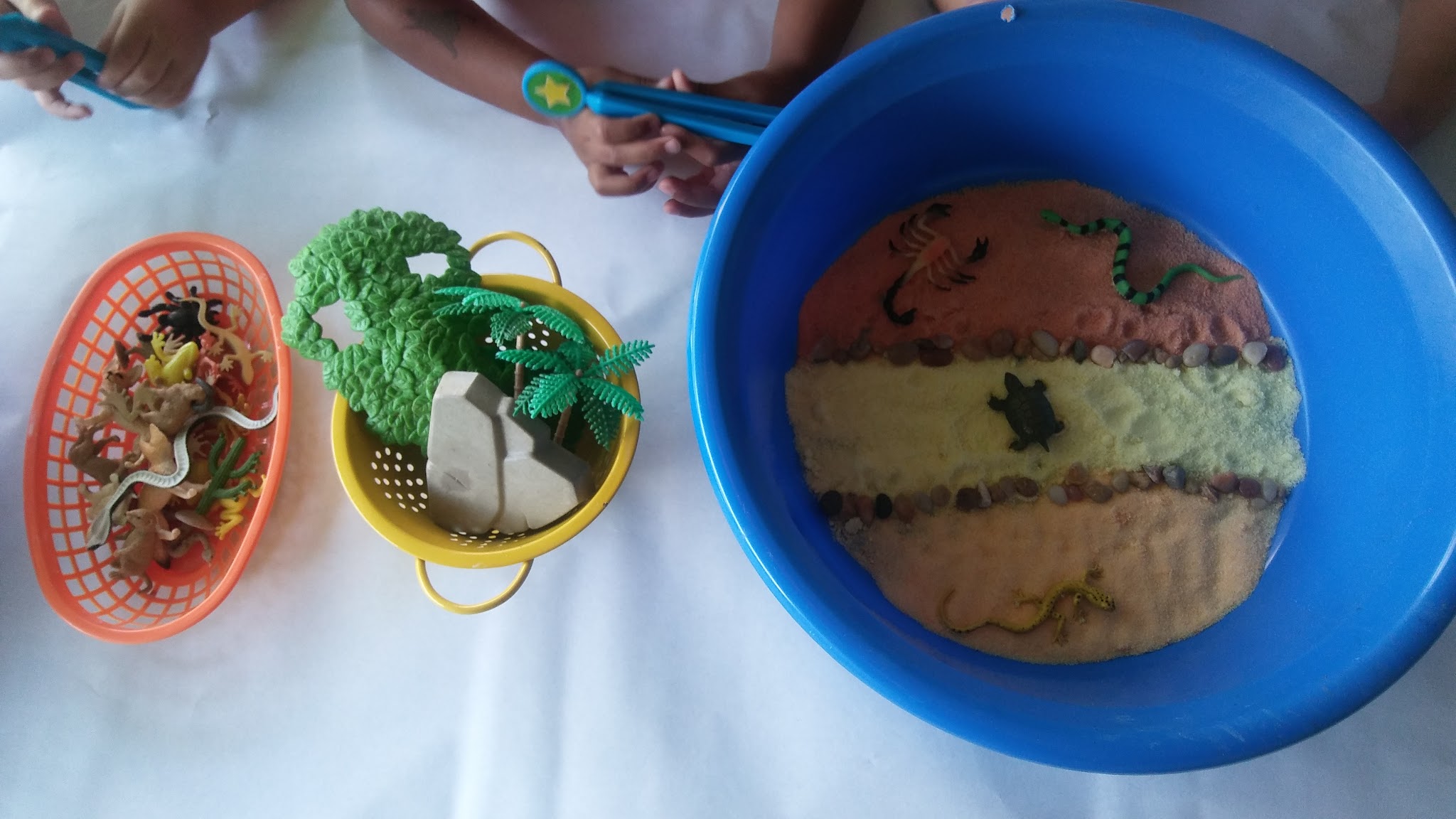
To further our understanding of this creature, we went on a “dive” for them in our desert sensory bins. Students, once again, used large tweezers to retrieve these from the sand. To instill an academic component into this activity, our older students sorted their scorpions from largest to smallest.

gplus-1389074477

Gelatin Safari

For this activity, we talked all about snakes, lizards, and the tarantulas.

gplus217794490

In particular, we looked at pictures of the California King Snake, the Sonoran Collared Lizard, and the Desert Tarantula.

gplus-872373765

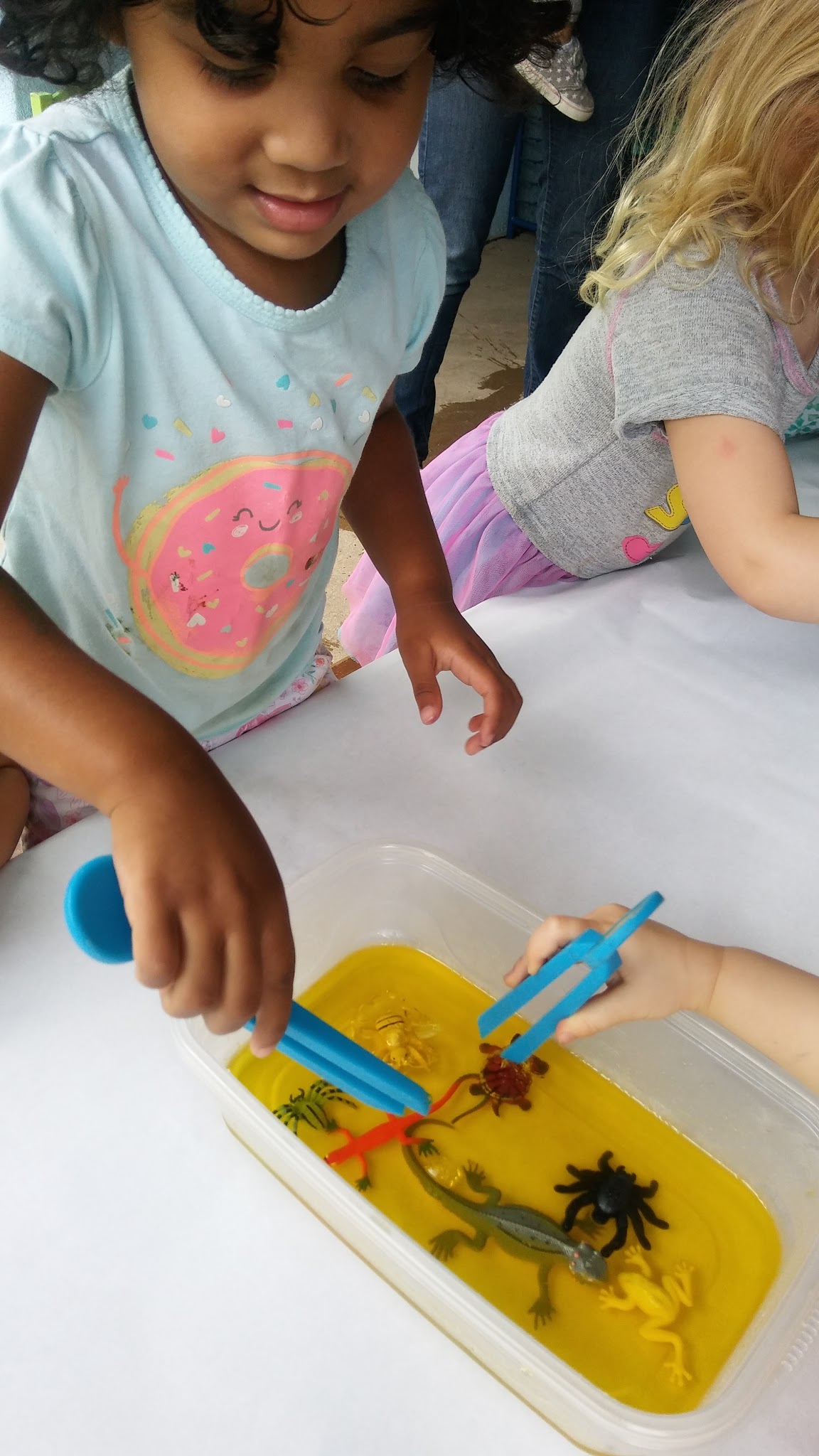
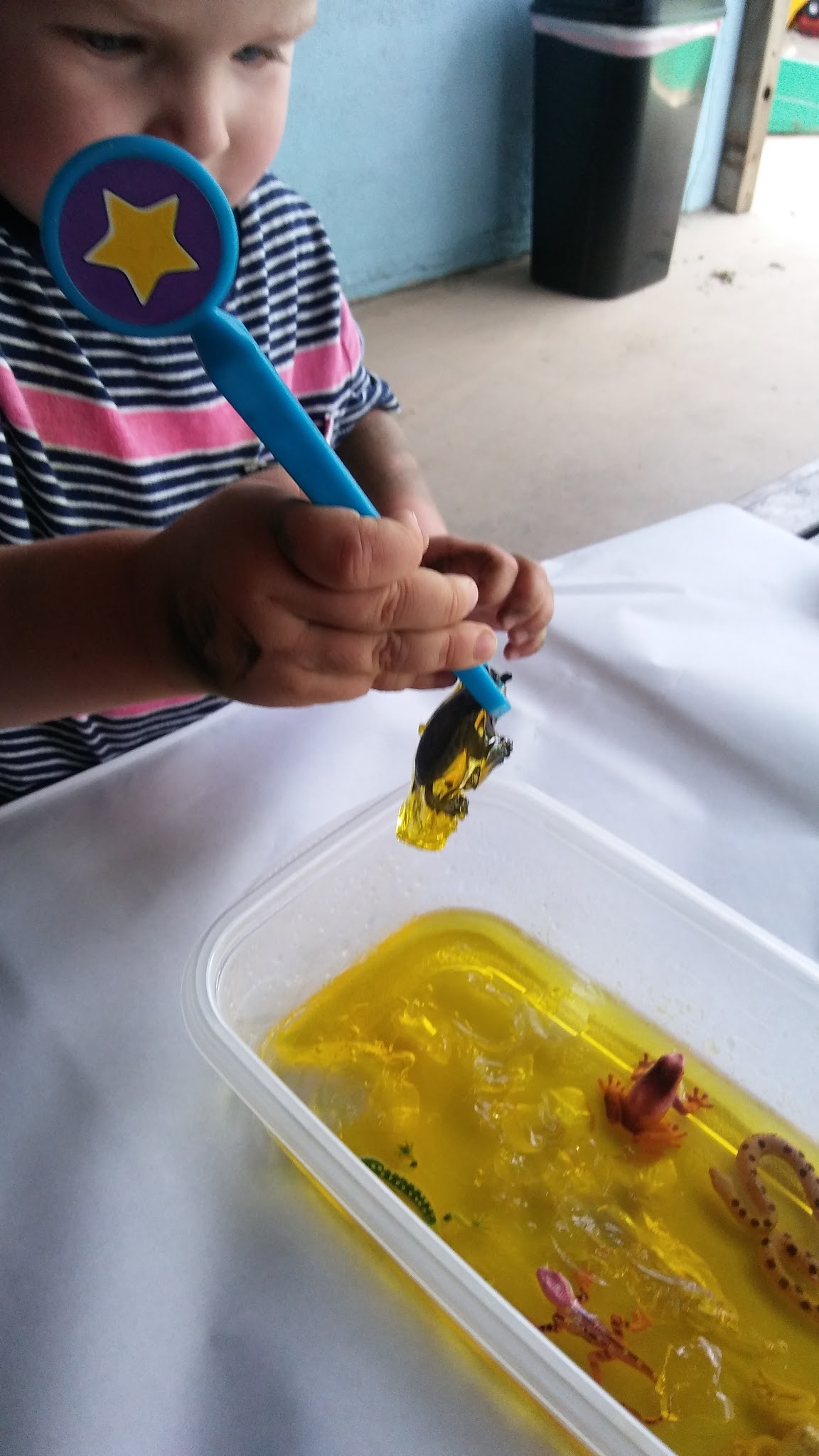
We then practiced removing replicas of these creatures from vats of jello.

gplus-1014952671

Using tweezers and their thinking minds, students grasped their creatures, counting how many they could capture!

gplus-2128232864

Vinegar Snake Eggs

Young children are biologically prepared to learn about the world around them, just as they are biologically prepared to learn to walk and talk and interact with other people. Because they are ready to learn about the everyday world, young children are highly engaged when they have the opportunity to explore.

gplus915912240

They create strong and enduring mental representations of what they have experienced in investigating the everyday world. They readily acquire vocabulary to describe and share these mental representations and the concepts that evolve from them. Children then rely on the mental representations as the basis for further learning and for higher order intellectual skills such as problem solving, hypothesis testing, and generalizing across situations.

gplus-1491539346

While a child’s focus is on finding out how things in her environment work, her family and teachers may have a somewhat different goal. Research journals, education magazines, and the popular press are filled with reports about the importance of young children’s development of language and literacy skills. Children’s natural interests in science can be the foundation for developing these skills.

gplus2069324233

Whereas many adults think of science as a discrete body of knowledge, for young children science is finding out about the everyday world that surrounds them. Our third week of desert activities revolved all around desert animals. The first three days involved talking about the rattlesnake! Using a variety of materials, we created our own version of a rattlesnake egg. To begin with, we talked about the characteristics of reptiles. One of these characteristics relates to egg-laying. Using chicken eggs, we discovered what happens to them when placed in different materials.

17 - 1 (2)

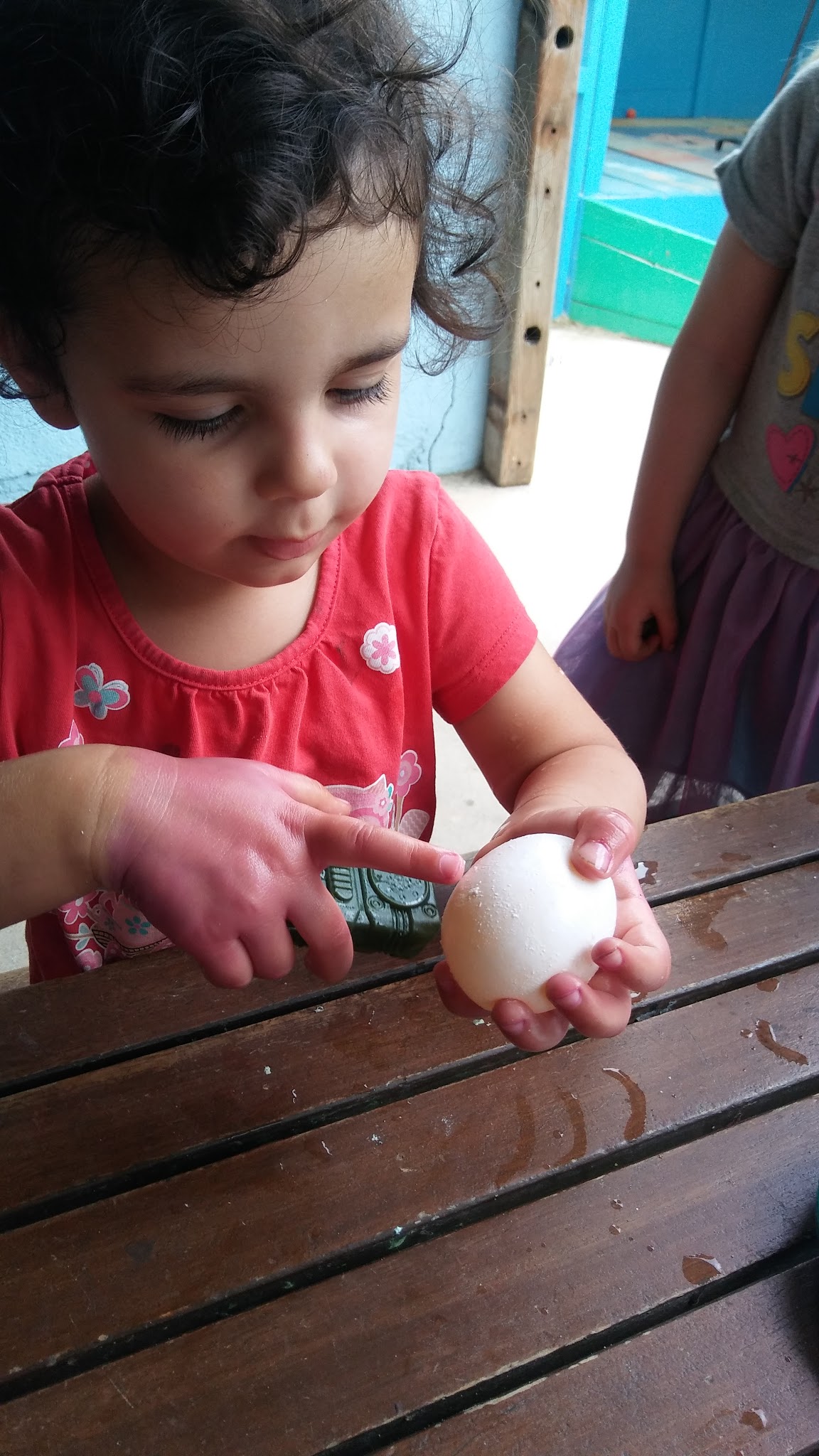
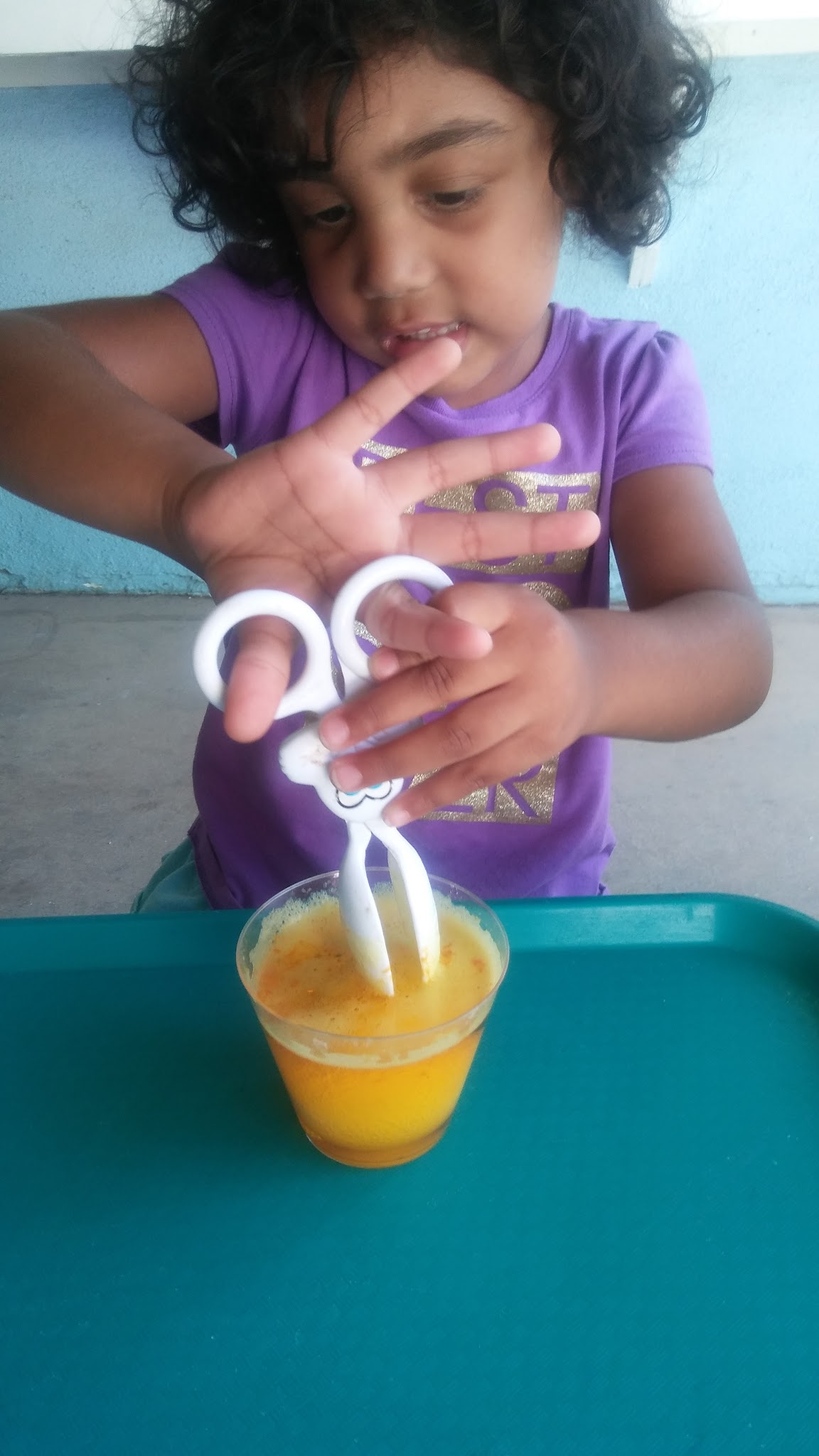
Using vinegar, we soaked eggs over night. We did the same with water. Following this, we noticed that the vinegar-soaked eggs lost their skin. To investigate, we used preschool-sized words to talk about the feeling, smell, and sight of the different eggs. We discussed opposite words such as soft and hard, cold and warm, smooth and coarse. We then drew pictures of what we saw. Finally, we held the eggs in our hands, using our vocabulary to discuss them. Lastly, we soaked the eggs in colored water that we attempted to pick up with tweezers. Students were then able to take their science experiments home!

gplus464648167

Thirsty Cactus

The desert is a hostile setting for plants. Arid conditions trigger an array of adaptations, such as the extensive root systems of cacti, which maximize the ability of desert plants to suck up and retain precious groundwater.

gplus1463699724 (1)

To demonstrate this quality to our young saguaro specialists, we talked about the root systems of cacti. We talked about how they are like straws that suck water up out of the sand.

gplus-1899147261

Using cactus shaped sponge, we practiced soaking water up out of ramekins. Students love the cause and effect of the water absorbing and then releasing from the sponges.

17 - 1 (1)


Zucchini Cactus

For many of our play dough activities, your little one is engaging in the important skill of bilateral coordination.

gplus-1011628030

This refers to coordinating the left and right sides of the body in a purposeful way.

gplus-107539476

When students use two hands to manipulate dough (as they did in this project), they are learning how to attune the fine motor movement associated with the left side of the brain to the right. Play dough is one of our favorite ways to learn, because it is so easy and so fun!

gplus387023099

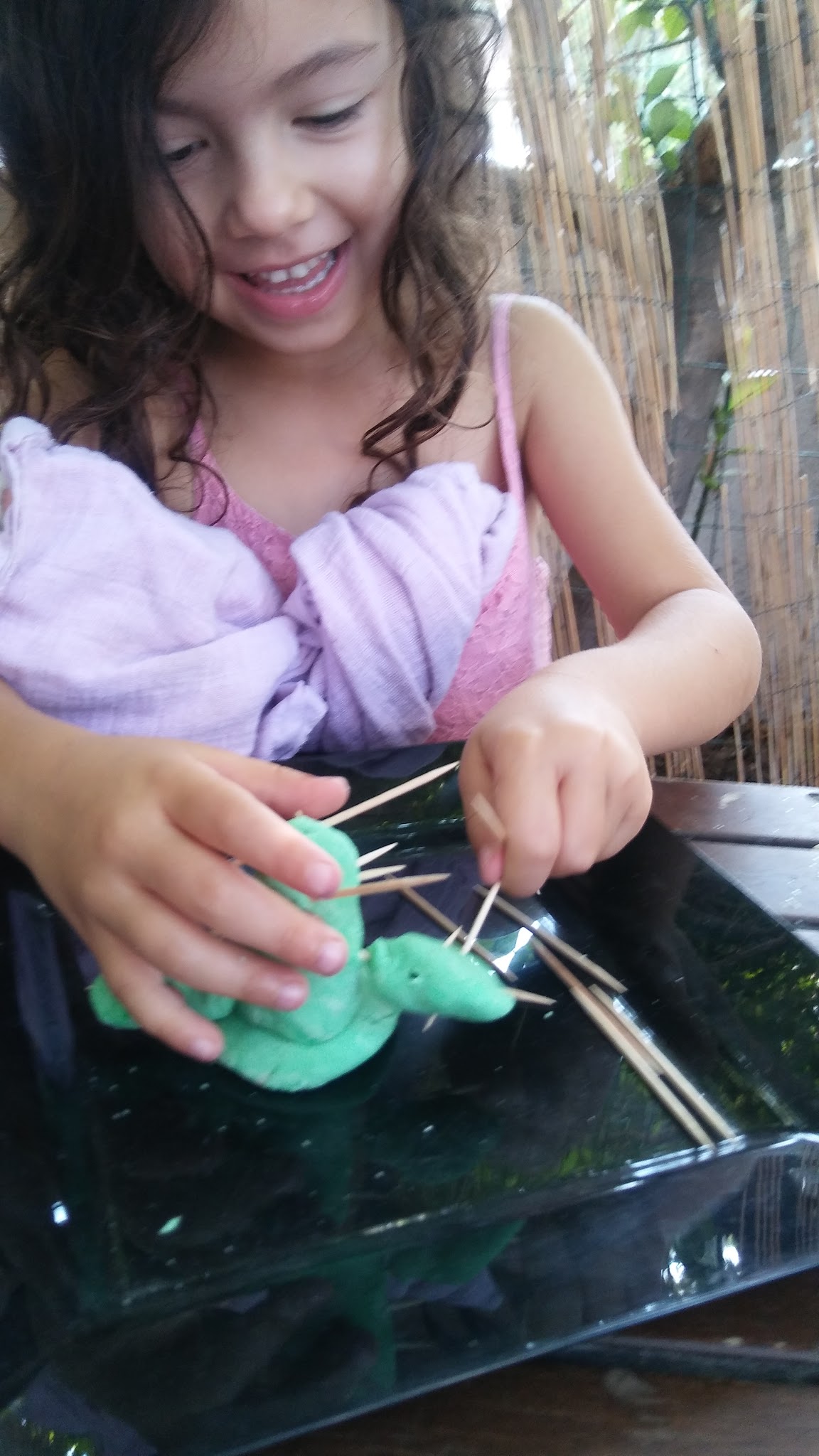
Because our second week of desert activities revolved around vegetation, your little one participated in creating several cacti and succulents out of a variety of materials. For this activity specifically, students were encouraged to place toothpicks into play dough. Once situated, they were then directed to slide pink beads onto the toothpicks.

gplus739065211 (1)

This entire week involved reading a book about the Sonoran Desert, so we enjoyed talking about the great saguaro. We started the week with creating cacti out of play dough, and then moved onto zucchini (using most of the same materials)! Students loved creating their plants out of food for Tuesday’s project. When finished, we displayed our creations, while using the extra pieces as a yummy snack!


D-E-S-E-R-T Tracing

Activities that develop a child’s control of the small muscles of the hands (fine motor skills) allow children to make the precise movements necessary for forming letters and improve hand/eye coordination.

gplus-548683014

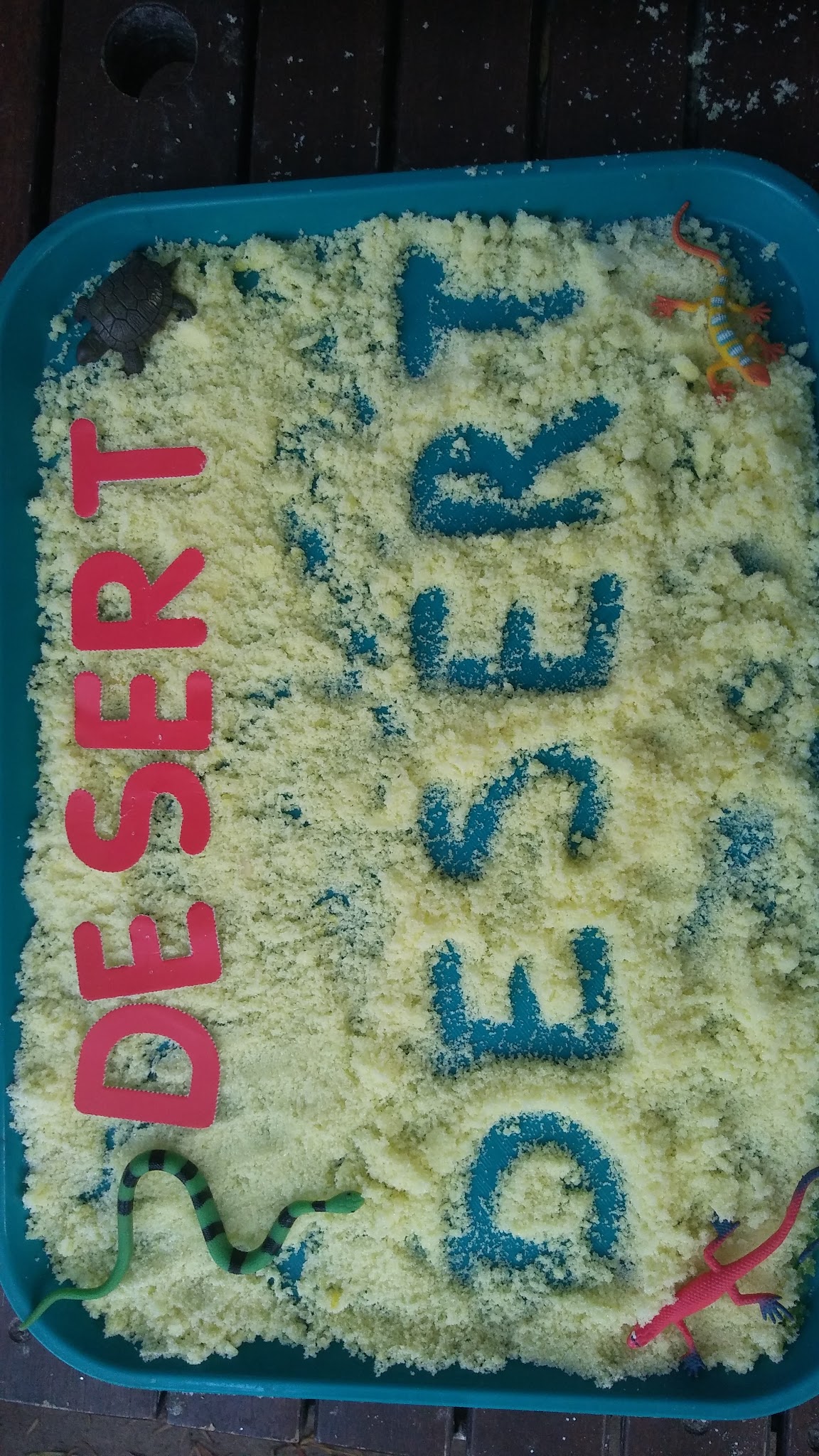
For this activity, we talked about the letters in the word DESERT. We then talked about which sounds each letter makes.

gplus724210062

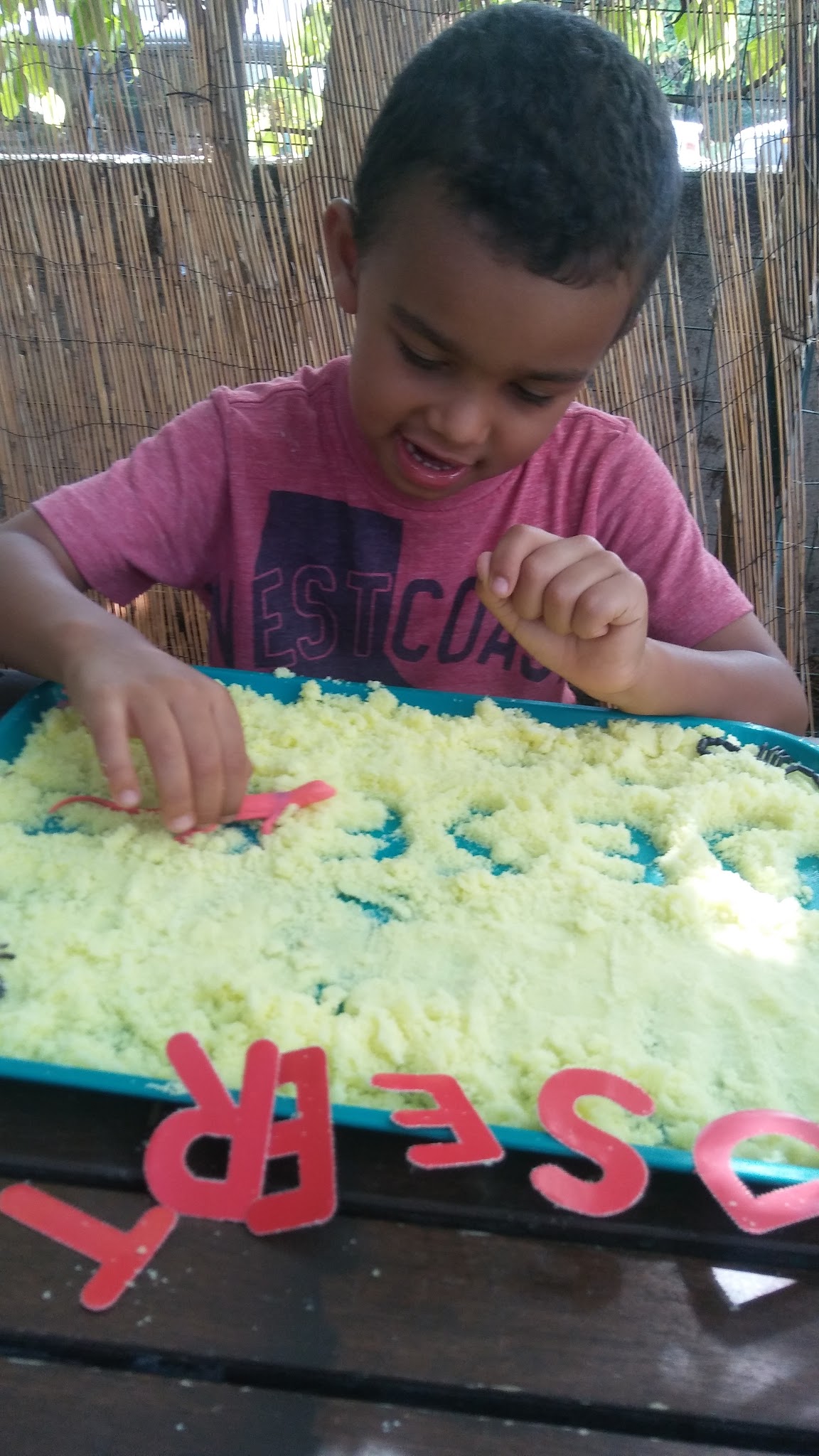
Lastly, we traced the letters D-E-S-E-R-T into yellow sand. Through each week of our desert theme, we picked a different word to study.

gplus1630747816 (1)

During circle (and project) time, we created these words in a variety of ways. Doing so allows your little one to use their different senses to practice their pre-writing and pre-reading skills.

Death Valley Dunes

Many first time visitors to Death Valley are surprised it is not covered with a sea of sand. Less than one percent of the desert is covered with dunes, yet the shadowed ripples and stark, graceful curves define “desert” in our imaginations.

For dunes to exist there must be a source of sand, prevailing winds to move the sand, and a place for the sand to collect.

The eroded canyons and washes provide plenty of sand, the wind seems to always blow (especially in the springtime), but there are only a few areas in the park where the sand is “trapped” by geographic features such as mountains.

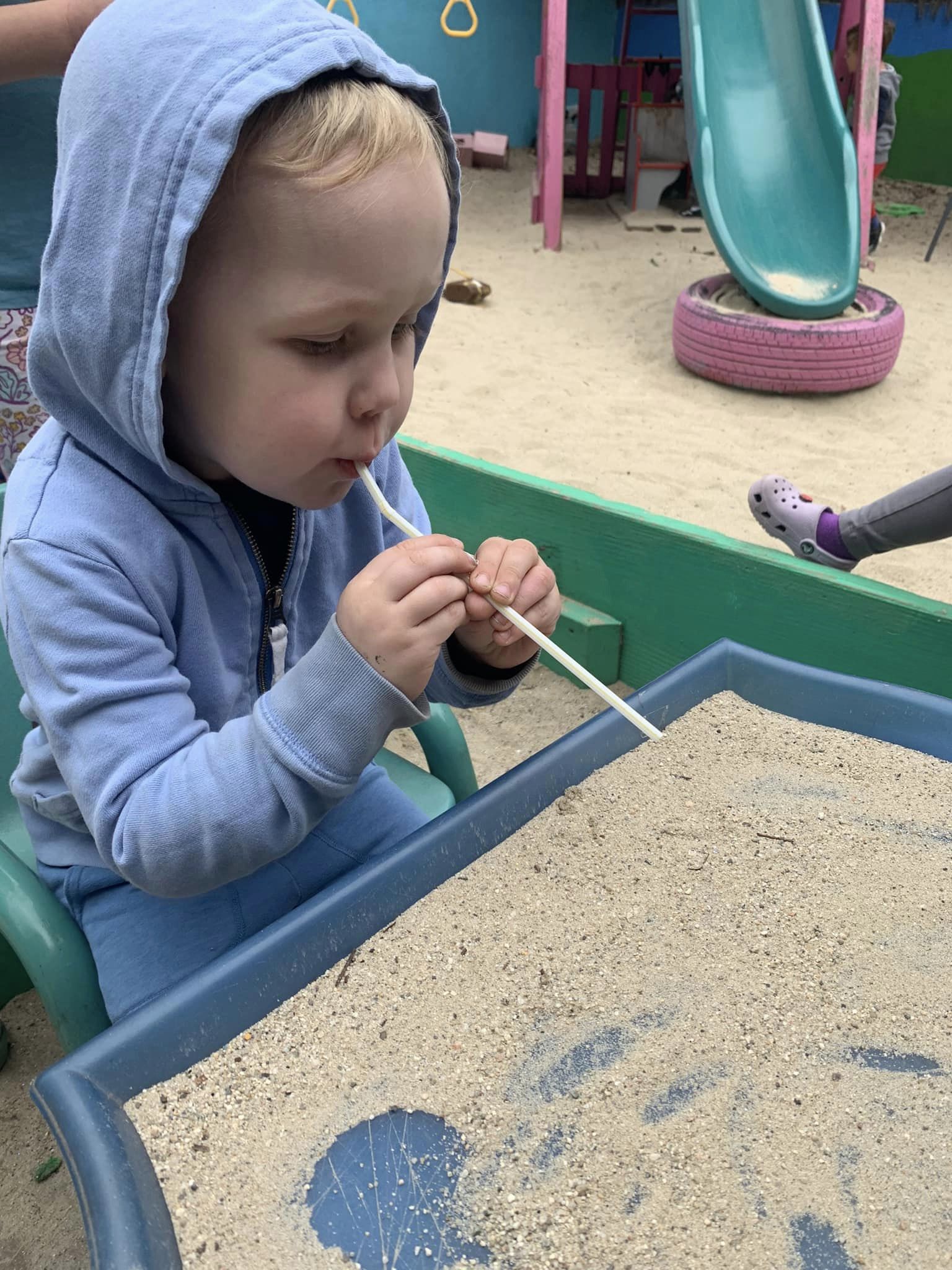
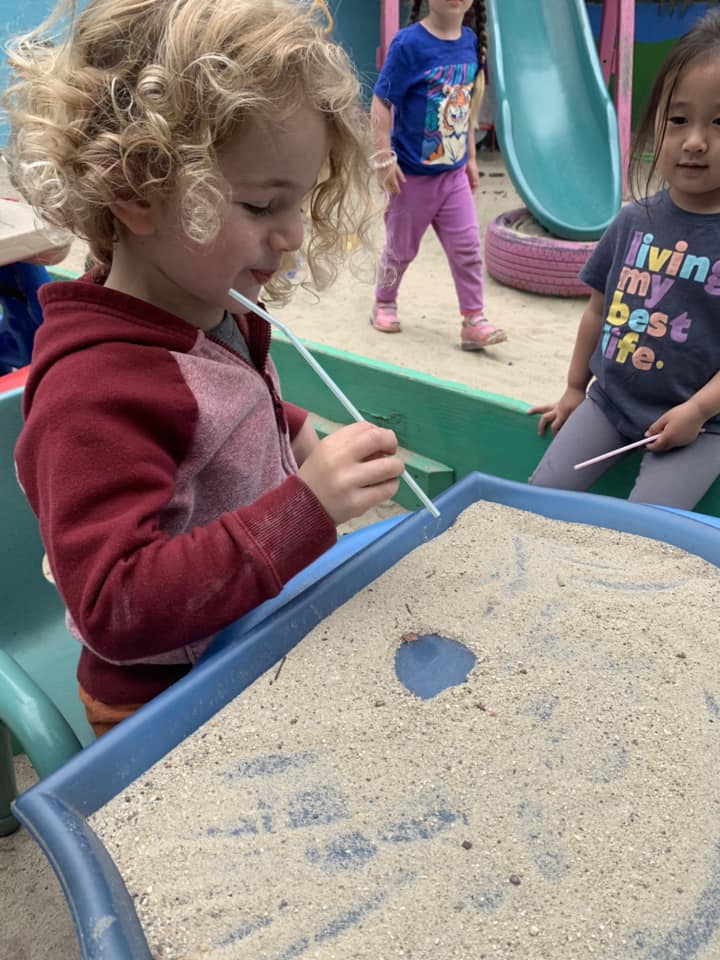
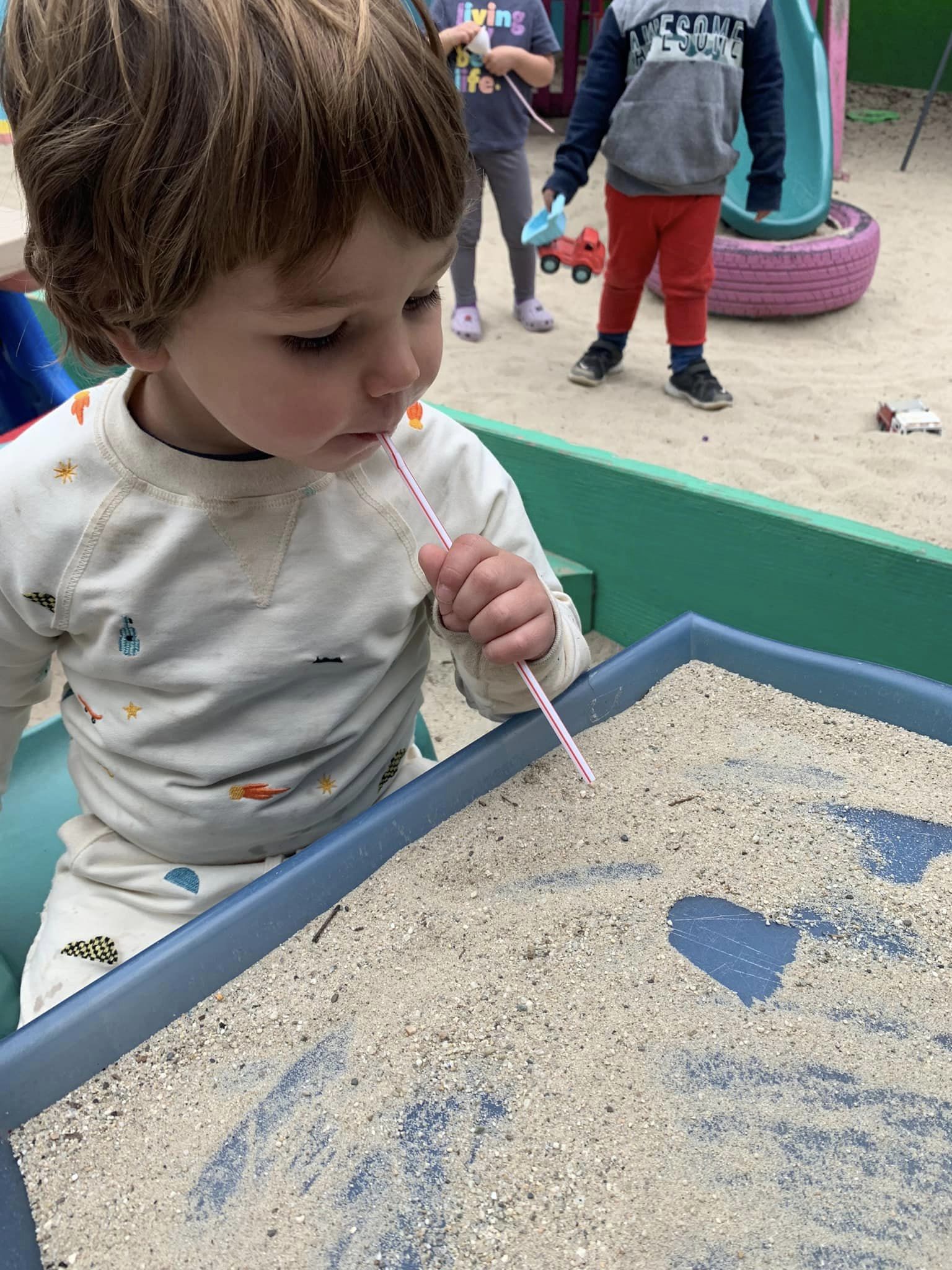
To recreate the famous Mesquite Flat Dunes of Death Valley, we used straws and sand to create ripples in small trays.

We noticed how the shape of the sand changed when we blew into the straws. Students enjoyed adding new words to the changes they saw, and giggled as they cleared their trays of sand!

Desert Landscapes

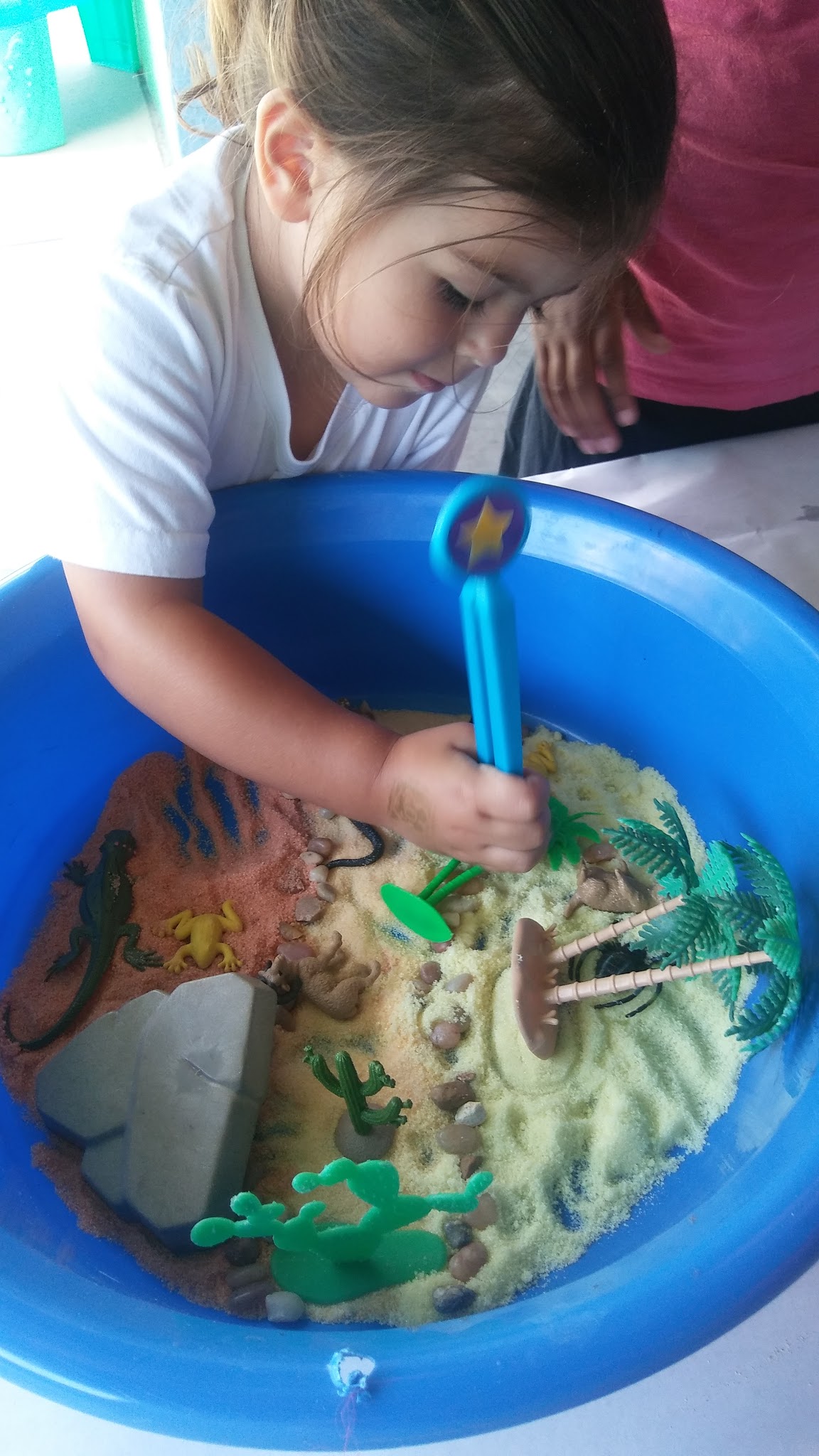
Small world [lay enables young learners to recreate some of the environments that they have been learning about in class.

gplus1257911512

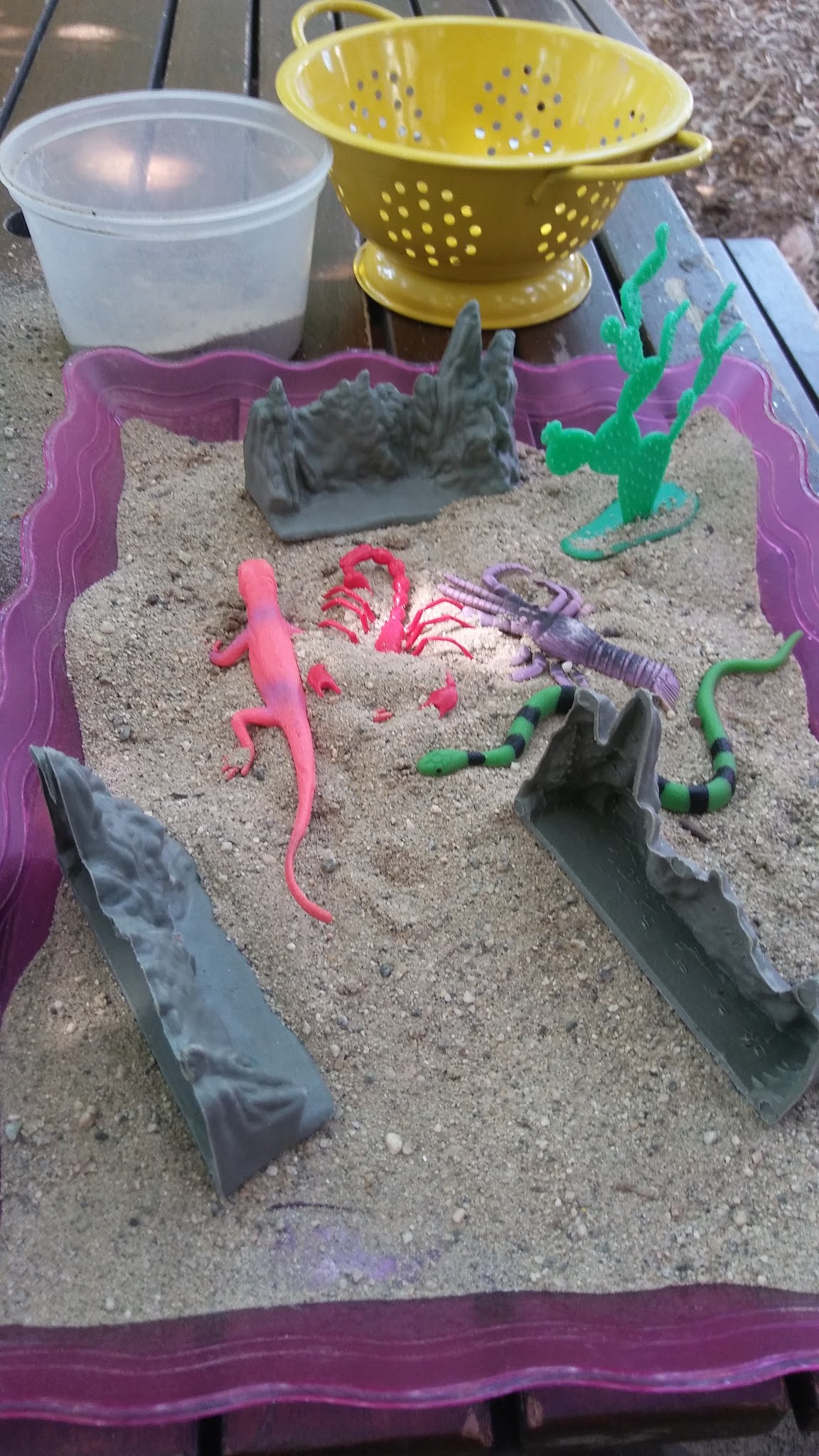
Since the first week of our desert theme involved the physical geography of the desert, we used a variety of materials to create this.

gplus-778690411

Using sand, toy cacti, toy creatures, and rocks, we designed and later interacted with our very own desert landscapes!

gplus1075252358