Little Red Hen Dramatic Play – Baking Bread

Dramatic play is important for young children.

bread10

bread11

It gives them the opportunity to apply their understanding of concepts and vocabulary they have been introduced to throughout the week.

bread1

bread2

bread3

The world of the Little Red Hen has provided endless opportunities for acquiring language, categorizing and classifying information, comparing and contrasting, and engaging their senses.

bread5

bread4

Your little one has not only been learning about the story of the Little Red Hen, but, how bread is made, and why bread and grains are imperative for our energy levels.

bread19

bread17

bread12

bread6

The social benefits they reap from these interactions continue to play a necessary role in their development, and most importantly, make everyone feel good.

bread22

bread7

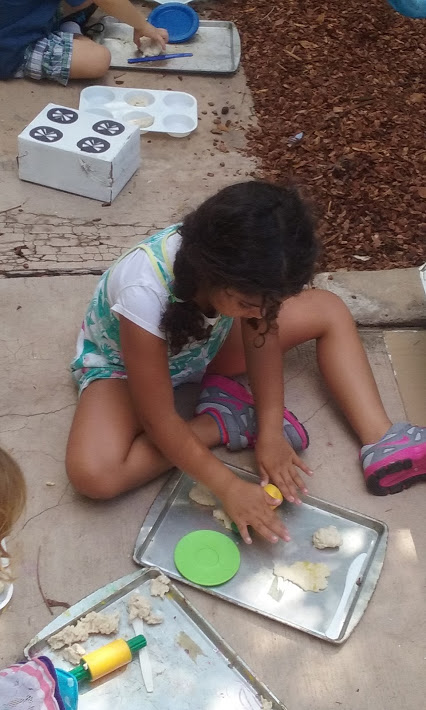
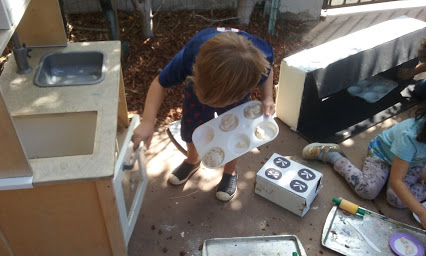
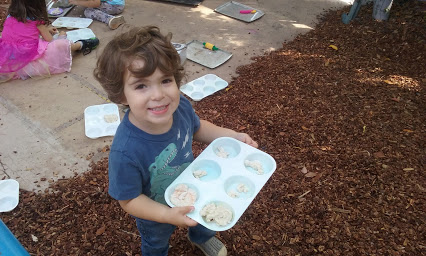
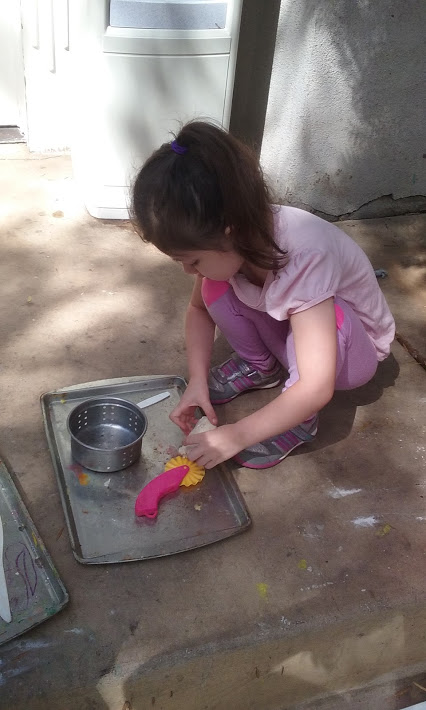
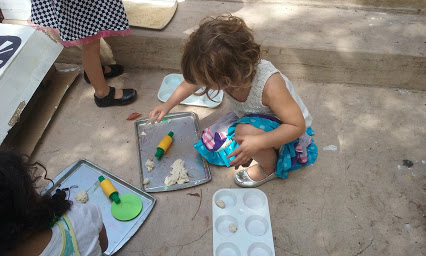
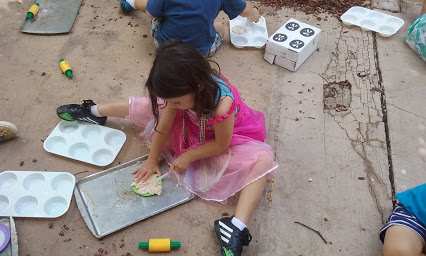
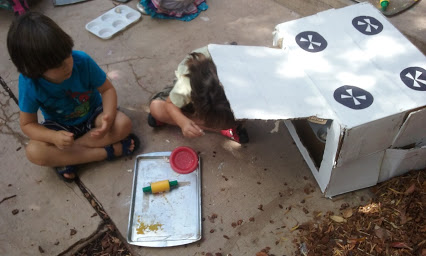
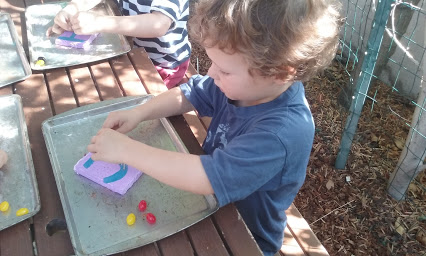
For this activity we made bread with play dough, and used boxes to represent ovens.

bread15

bread13

bread8

We pretended to bake and later eat our bread with our friends!

bread16

bread16

bread9

Jellybeans and the Letter J

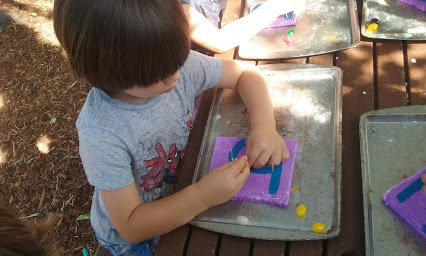
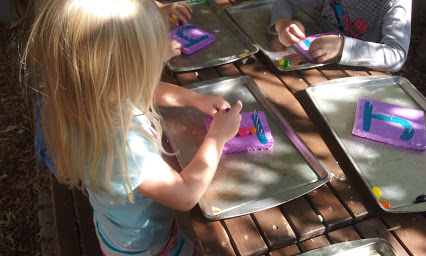
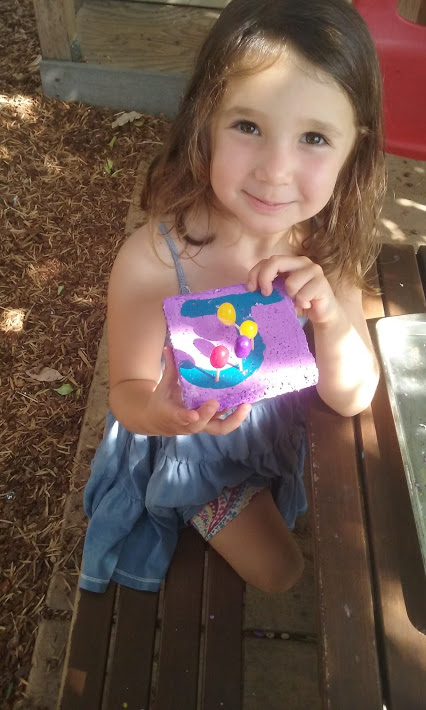
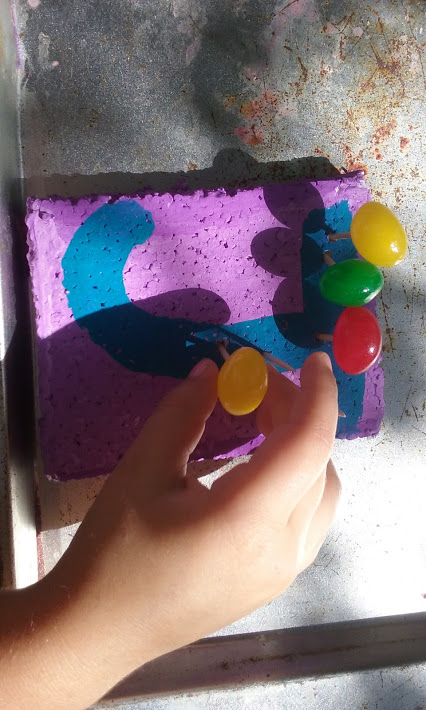
Using jelly beans, and pieces of Styrofoam (onto which a letter J was painted), we created our very own Js!

jelly1

jelly2

Pre-writing and alternative writing activities teach young children to think critically, tap into their creativity, and work independently.

jelly3

jelly6

Activities like these are important, because they are fun and engaging while reinforcing the skills necessary for your little ones to become proficient writers.

jelly5

Jack’s Jewels

In the story of Jack and the Beanstalk, Jack races up a beanstalk to find some treasure that belongs to an enormous giant. Jack then seizes the treasure and races down the stalk to bring it to his mother. To incorporate this part of the plot to our pre-writing curriculum, we did a very special project called Jack’s Jewels. This helped us learn more about the letter J.

jewel1

Young children need a variety of ways to learn about letters. Between the ages of two and four, your little one is just learning how to distinguish letters from shapes, identify the sounds they make, and are working on strengthening  the tiny muscles in their hands. Though we do worksheets at our school, these pre-writing activities are more engaging, and their content is more likely to be retained by your little one.

jewel3

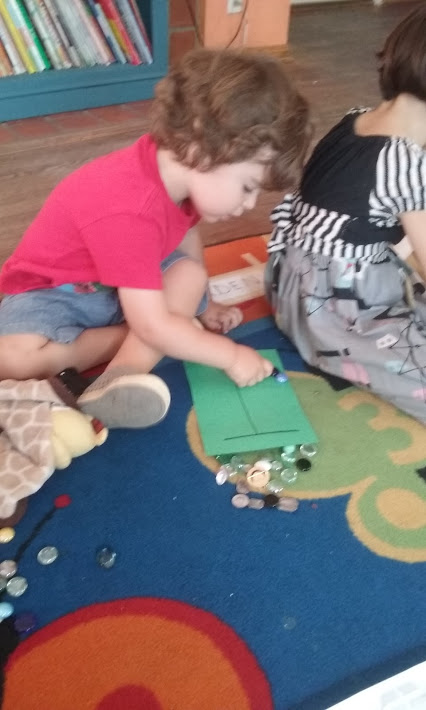
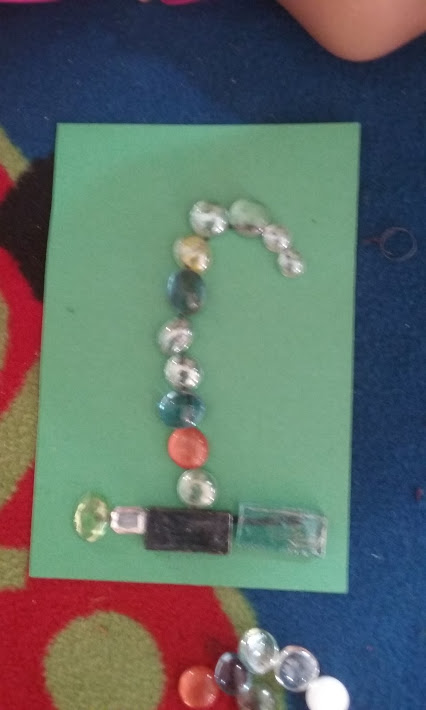
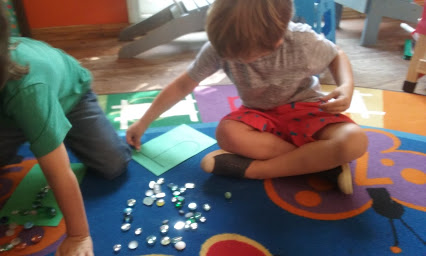
Using jewels, and mats marked with the letter J, we made the letter J for Jack! 

jewel2

Each child did this by placing their jewels (a word starting with the letter J) on their Js. This activity improved your little ones’ fine motor skills, encouraged hand-eye coordination, and provided another opportunity to practice their pre-writing skills!

Little Red Hen Story Board

Circle time is an important daily activity in the preschool classroom. There are so many things that happen during circle time. Children listen to a story, learn who is present and absent, discuss the daily schedule, talk about special happenings in their lives, find out about new materials in the classroom, and perhaps, sing a song or do a movement activity. In our daily circle times, we are constantly learning together!

story

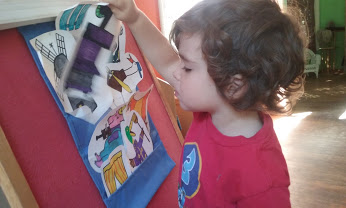
This special time helps establish a sense of community among members of our class, and enables us to officially start the day! For this activity, we used a story board to tell the story of the Little Red Hen. Before we started, each child was given a picture taken from the book. As the story was read, students would bring their pictures up to the board. This enabled each child to identify different characters, relate to plot details, and become a part of the story!

story2

Gingerbread and Pom Poms

In the story of Hansel and Gretel, the main characters become lost in a forest and stumble upon a house made of gingerbread and candy. Hungry and tired, the children engorged themselves with the delectable treats.
pom3

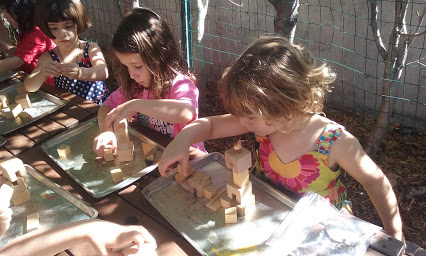
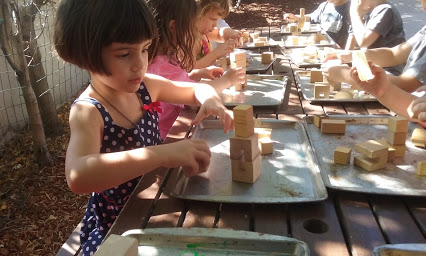
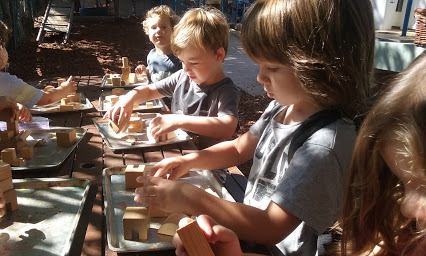
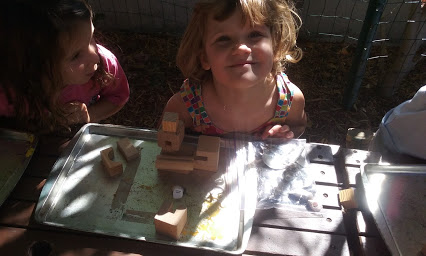
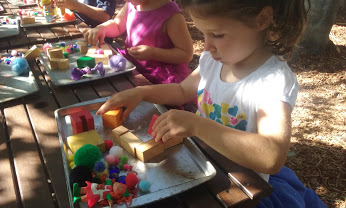
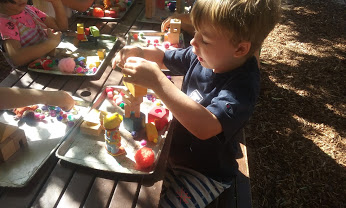
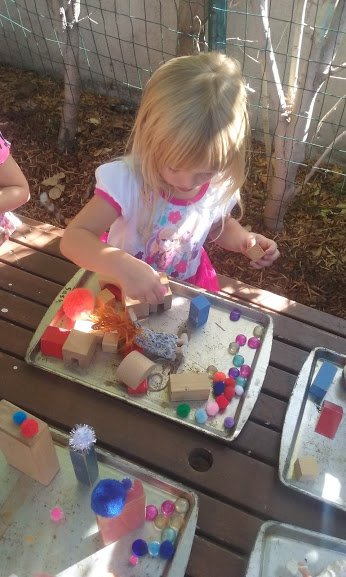
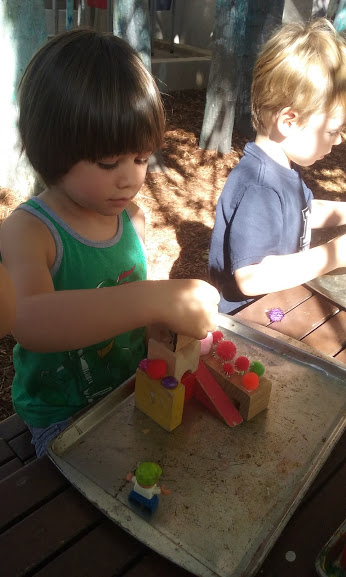
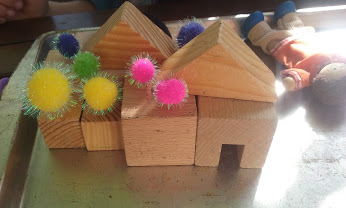
The inhabitant of the house, an old woman, invited them in and prepared a feast for them. The woman, however, was a witch who built the house to entice children to her. For this activity, we used blocks to construct gingerbread houses, along with pom poms and plastic jewels to represent candy.
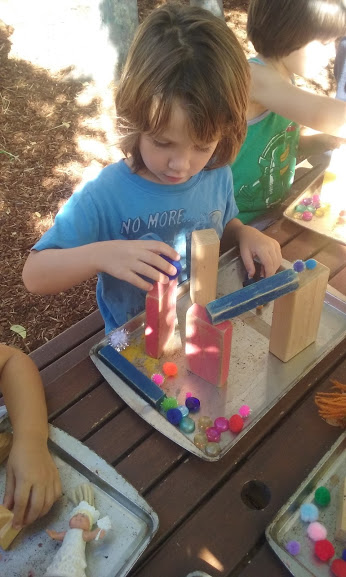
pom1

Block play has long been a favorite learning center in preschool classrooms and child care centers, but it can also be used to promote STEM.
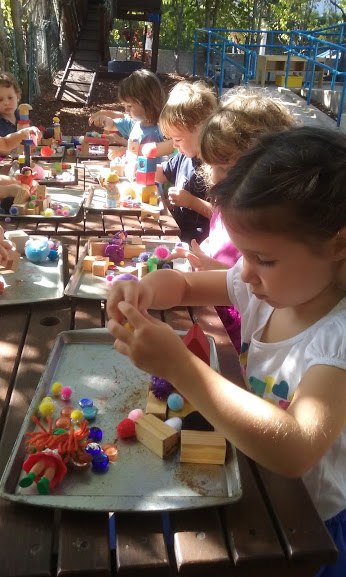
pom9

What is STEM? It stands for Science, Technology, Engineering, and Mathematics. And Miss Carrie LOVES science and engineering. A major benefit of this is the plethora of building materials that your little one gets to use in creative ways. When using block play to promote science, technology, engineering, and mathematics children participate in versatile learning opportunities that block play presents. Children can learn a variety of skills and gain a more comprehensive understanding of the concepts they are learning in class by playing with blocks.
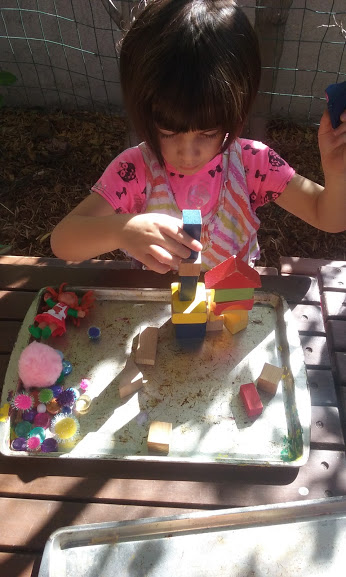
pom5

In regards to STEM, block play helps children nurture and develop skills in each discipline. For the science component, children can explore cause and effect and learn about gravity, stability, weight, and balance as they play with blocks in the classroom.
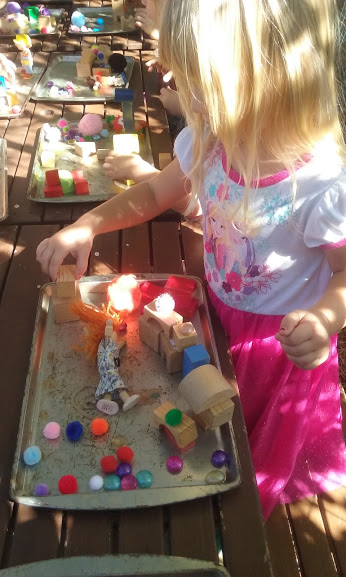
pom7

Inductive thinking, experimentation, properties of matter, and inclined planes can be incorporated into block play in preschool as well. Block play can also help children develop the fine and gross motor skills they need to use technological devices.
pom2

Having a classroom camera that children can use to take pictures of their designs and structures can also help children learn technology skills.

For those interested, Miss Carrie will give them the opportunity to take a picture of their own construction. That is why you often see pictures of what they make!

Moreover, you can use blocks or other building items (we used pom poms and jewels) to help children learn about engineering concepts and develop problem-solving skills. Children can also learn about architecture and the names and functions of different buildings and bridges as they build their own unique structures.
pom4

They can also experiment with different designs and learn why some designs work and others fall down. It may not look like it, but the very act of adding jewels to their gingerbread houses helps your children learn to express quantities and measurements, sort and match objects based on similarities and differences, and understand basic math concepts (numbers, shapes, counting, addition, subtraction, etc.).
pom8

Lastly, you can use block play to help older children learn about fractions, symmetry, graphing, classification, and other mathematical concepts!
pom6

Pool Noodle Beanstalks

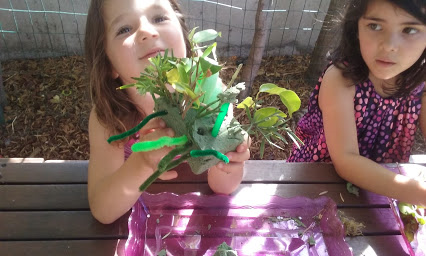
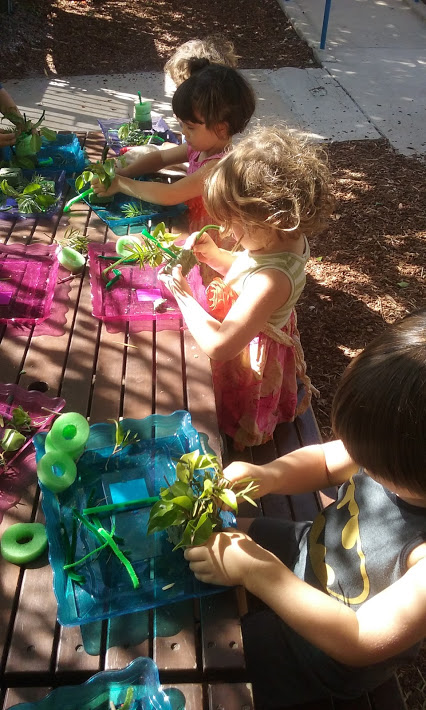
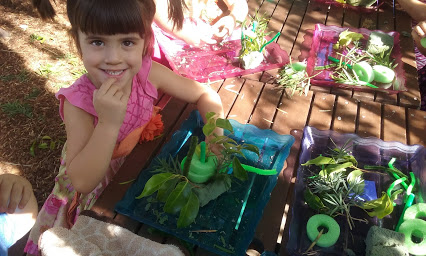
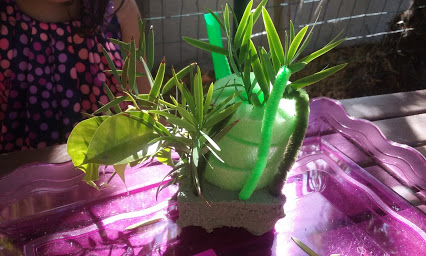
This stringing activity involved stringing cut-up portions of a pool noodle onto a pipe cleaner that, when strung together, resembled Jack’s beanstalk.

stalkie1

The pipe cleaner was stuck in flower foam, and students also included small branches and straws to complement the proportions within the pool noodle structure.

stalkie9

Stringing (or beading) activities provide a host of developmental benefits for the preschool learner. The first of these includes grasping.

stalkie5

Various sizes of items promote different grasps. Larger items often promote the “3-jaw chuck” grasp, similar to holding a large pencil or marker. This activity encouraged the use of this grasp.

stalkie2

If you see here, Lucie is using this grasp to place her straw into the foam. She will then slide a pool noodle onto this implement to finish the beanstalk.

stalkie8

Stringing activities also strengthen in-hand manipulation skills. Also, many components of making a beaded craft increase strength and coordination in the small hand and finger muscles.

stalkie6

For example, picking a small item up, and then manipulating it in one’s hand until it is pinched between your thumb and finger, involves translation, shift and rotation movements of the small item within the hand.

stalkie7

stalkie3

Lastly, this activity involved accessing your little one’s cognitive skills by asking a series of important questions, such as: What kind of stalk do I want to make? What pattern should I make? Where are all the materials needed to complete this beanstalk? By answering these questions, the child develops his/her planning and problem-solving skills.
stalkie4

Flour Sensory Play

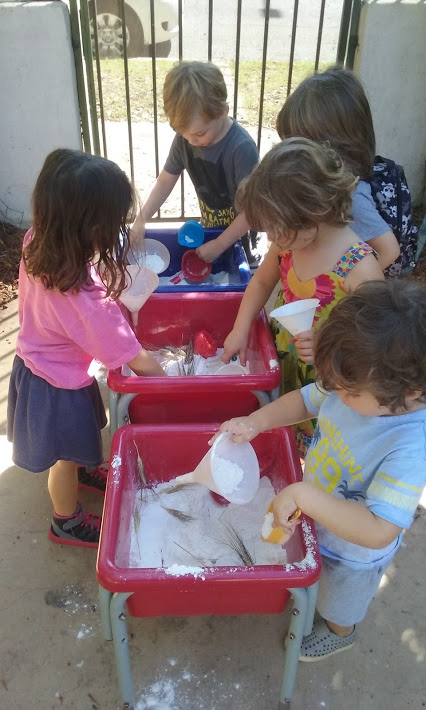
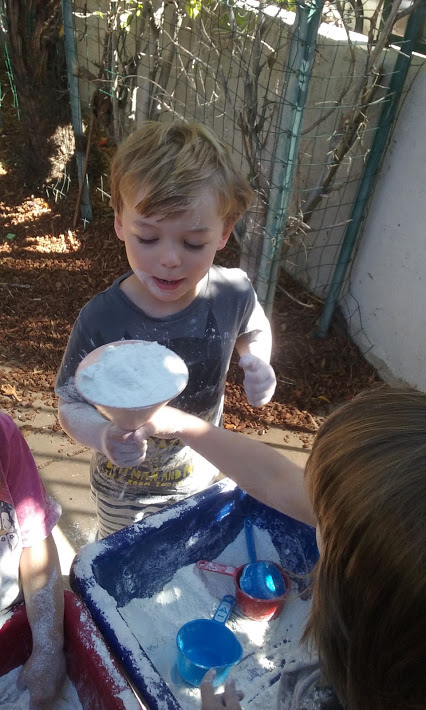
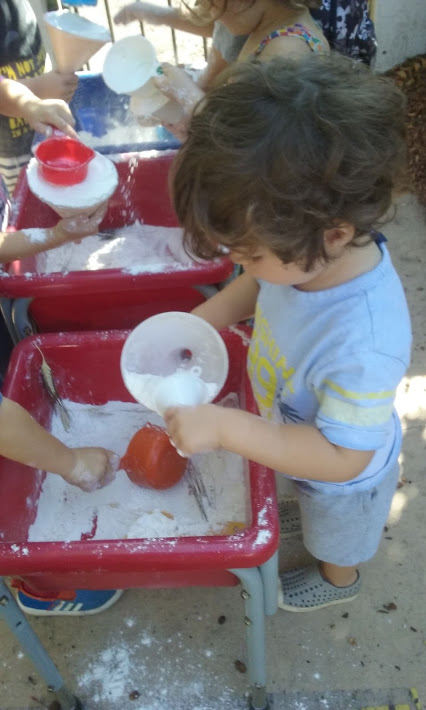
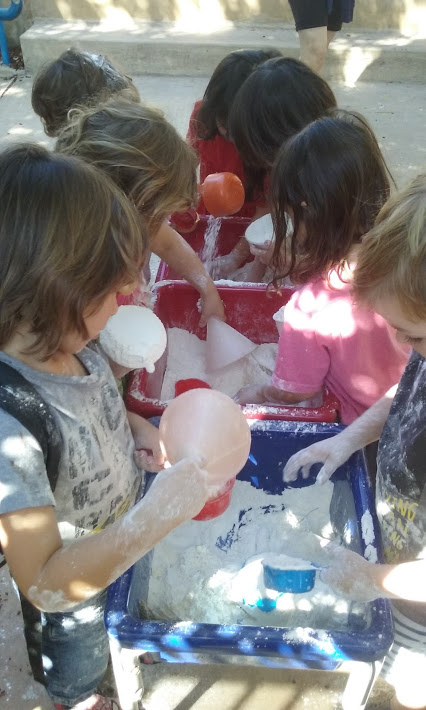
This activity enabled us to talk about what bread is made of, and the kitchen utensils we use to create it!

flour1

Following a few minutes discussing the different ingredients required to make bread, we used funnels, measuring cups, and flour to create a variety of yummy dishes!
flour7

flour2

The children enjoyed this activity, and it encouraged cooperative play, shared dialogue, fine motor coordination, and gross motor coordination.

flour5

flour3

The use of the funnels also introduced the children to the physical properties of flour and measurement: a most scientific endeavor!
flour6

flour4

Hansel’s Pebble Path

Given a creative teaching approach and suitable supplemental activities, children’s literature can be used successfully as a content base for the preschool classroom.

pebble1

Appropriate selections give students exposure to new, illustrated vocabulary in context, provide repetition of key words and phrases that students can master and learn to manipulate, and provide a sense of accomplishment at the completion of study that finishing a worksheet cannot provide.

pebble2

Recreating parts of a well-read book is a pleasure, and students feel a sense of accomplishment when they have mastered a piece of literature, regardless of whether it is The Cat in the Hat or Ulysses.

pebble7

pebble3

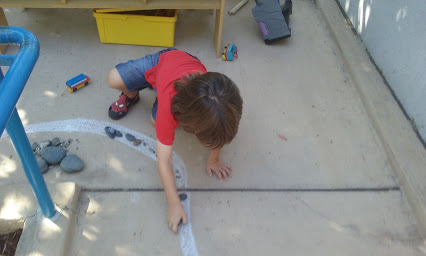
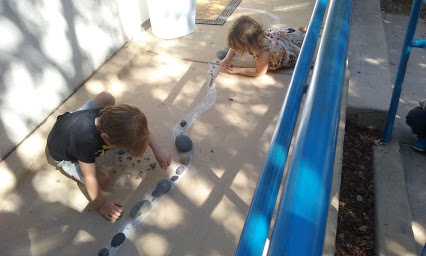
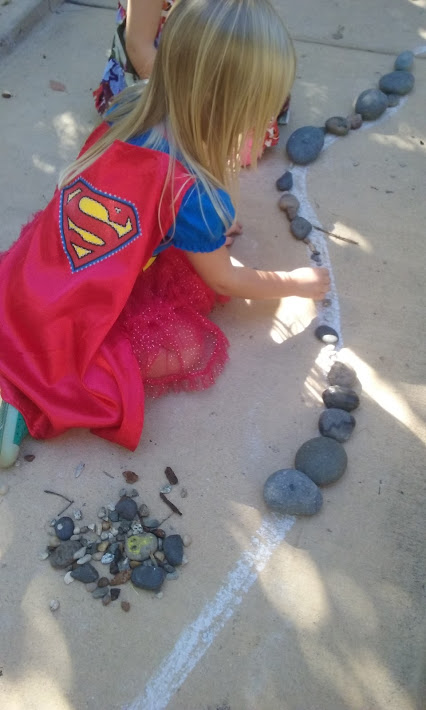
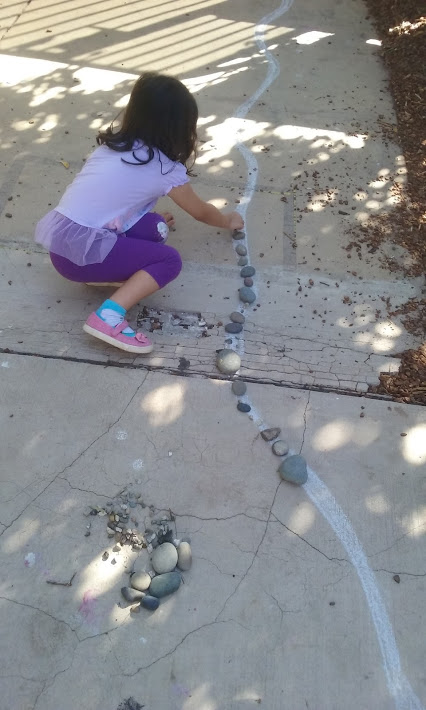
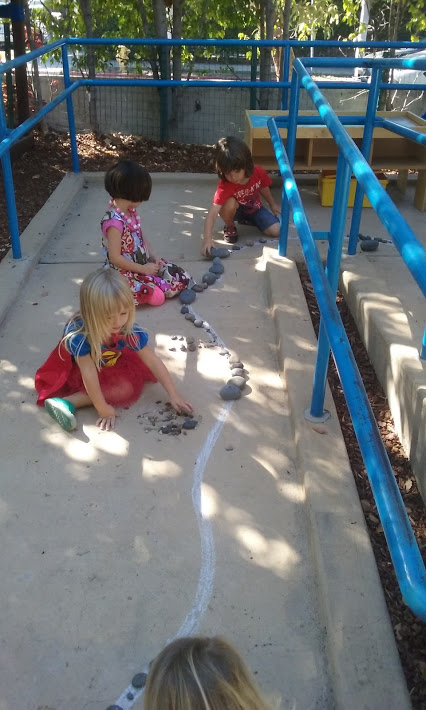
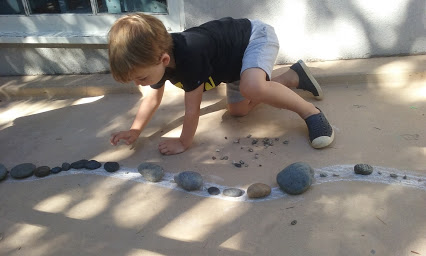
For this activity, we recreated part of the story of Hansel and Gretel. In the story, the siblings are led into the middle of a forest, and Hansel uses pebbles to find his way back home.

pebble8

pebble4

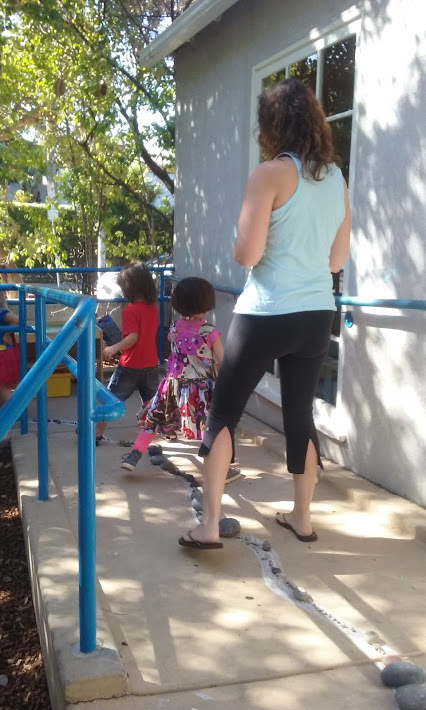
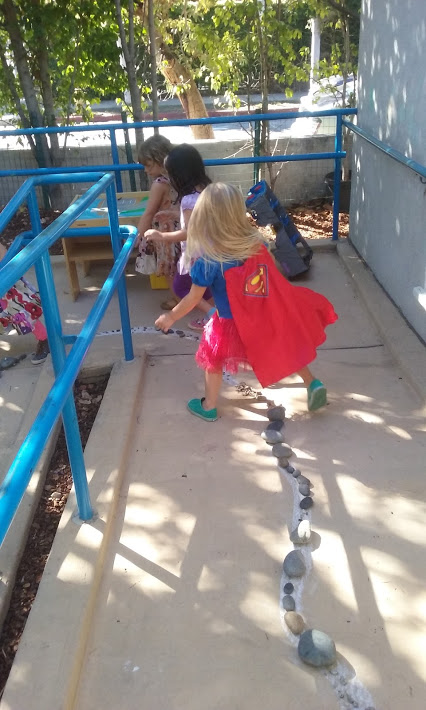
To demonstrate their understanding of this section of the story, we created our own path of pebbles.

pebble9

We then practiced acting out this part of the story with our friends!

pebble5

pebble10

pebble11

pebble12

pebble13

pebble14

Chicken Coop Block Play – Little Red Hen

In our class, we provide environments that encourage and enhance problem solving.

coop1

It is for this reason that we often incorporate block play into our curriculum.

coop2

Block play encourages a child to test spatial relationships and mentally rotate objects in the mind’s eye.

coop3

Such practice might lead kids to develop superior spatial abilities.

coop4

Within the story of the Little Red Hen, we are introduced to a mother hen and her chicks.

coop5

We spent much of this week discussing chickens and how they are raised.

coop9

coop7

This activity involved creating a chicken coop for our little red hen and her chicks!

coop8

Hansel and Gretel – Gingerbread House

In the story of Hansel and Gretel, there is a gingerbread house in the middle of the forest that is inhabited by an evil witch.
ginger 1
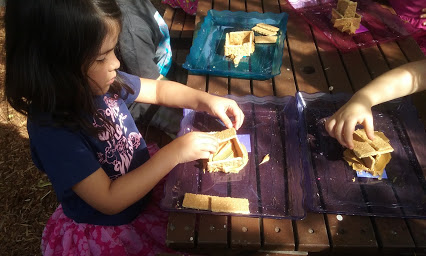
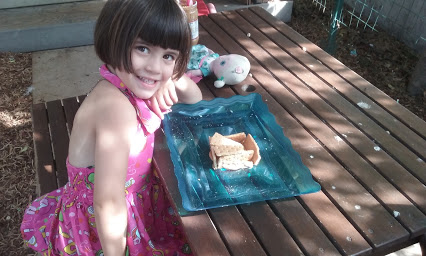
To help your little ones make a connection to this dwelling, we created our very own!
ginger 2
There are few things that are more engaging to young children than playing with food, especially when they are playing with a purpose!
ginger 3
Young children are budding scientists, constantly learning about and seeking charge of their worlds.
ginger 4
As they manipulate different materials, they are forming mental representations of how different materials interact, and then work to plan changes to them.
ginger 5
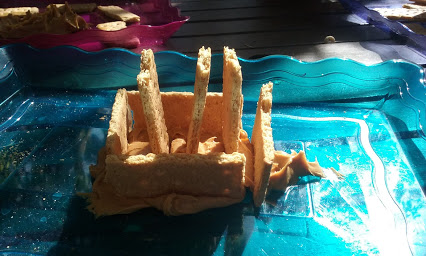
Using graham crackers as the walls, and peanut butter as the mortar, your little ones constructed their very own gingerbread houses! This was the definite winner of the week!
ginger 6