Sink or Swim Experiment

There are times in science where changing one variable can be the difference between fire and smoke, conducting and insulating, and in this case, sinking and swimming.

leaf

In the sink or swim experiment, your little one learned how adding one variable to water will change the amount of surface tension the water has.

sink2

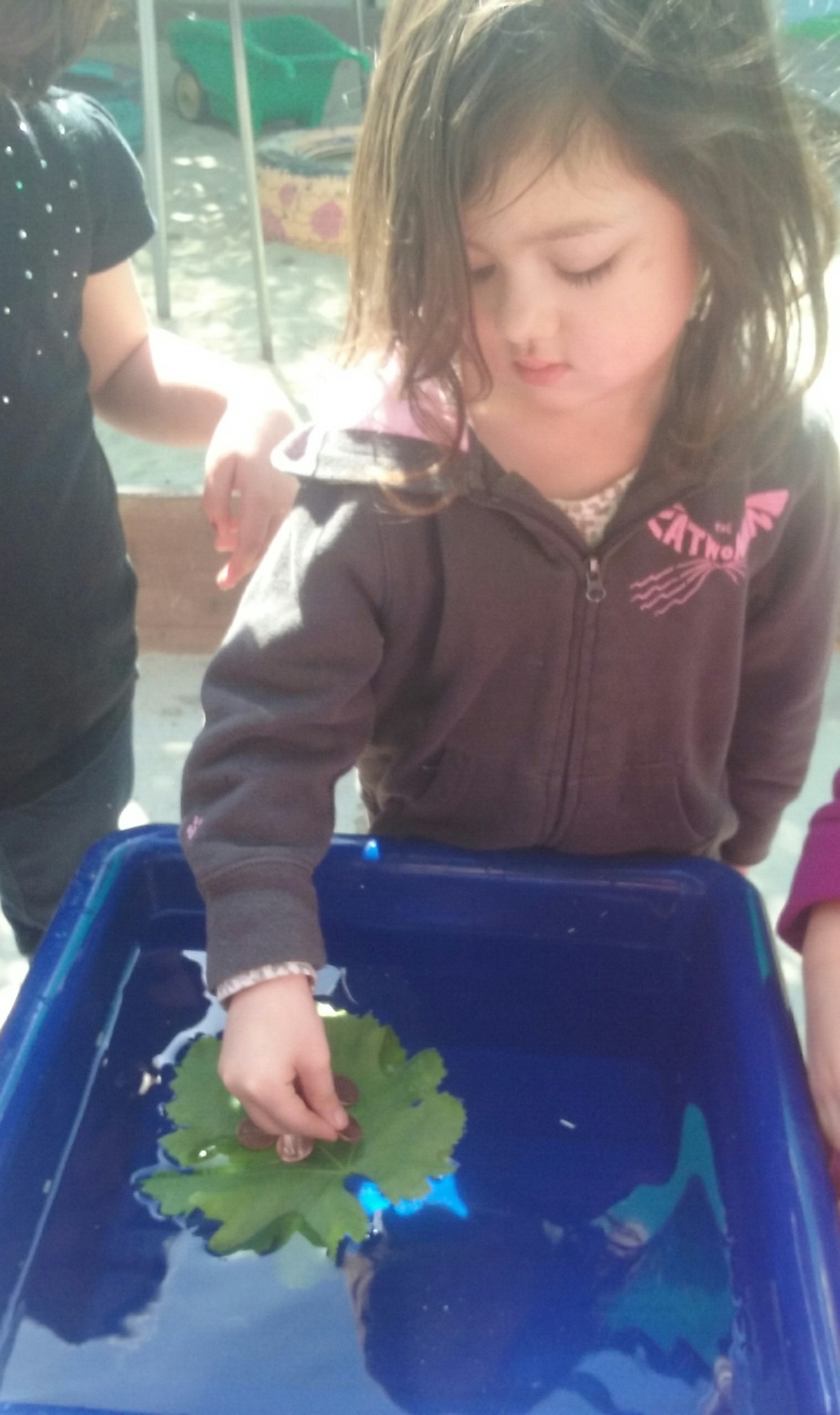
They saw that anything they added to water can quickly affect whether something (in this case, a leaf) sits on water or not. They then added pennies, one at a time, to see how many it would take to sink their leaf!

 leaf1

Parts of a Flower

Teaching preschoolers about the three main parts of a flower — the roots, stem and flower petals — is best accomplished through simple language. This activity required several steps.

petal1

Your little ones were initially introduced to the roots of a flower by learning that the roots are what hold the flower in the ground. This information was followed up by us pulling a flower out of the ground.

petal7

Your budding florists were able to see the roots come up out of the ground. Students were then encouraged to touch the roots.

petal5

As they examined the roots, they were told that the flower’s roots are like their mouths: the roots are how the flowers get food from the soil.

petal2

We then replanted the flower being used in the demonstration. As we finished patting supportive soil around the stem, your preschooler’s attention was directed to the stem.

petal6

You child was then informed that the stem is what holds the flower up. It was compared to their legs which support their bodies. They were told that the stem brings the food from the roots to the rest of the flower.

petal3

Lastly, we learned that the flower at the top of the stem is called the petals. Your little one was told that this is the part of the plant that makes more flowers.

petal4

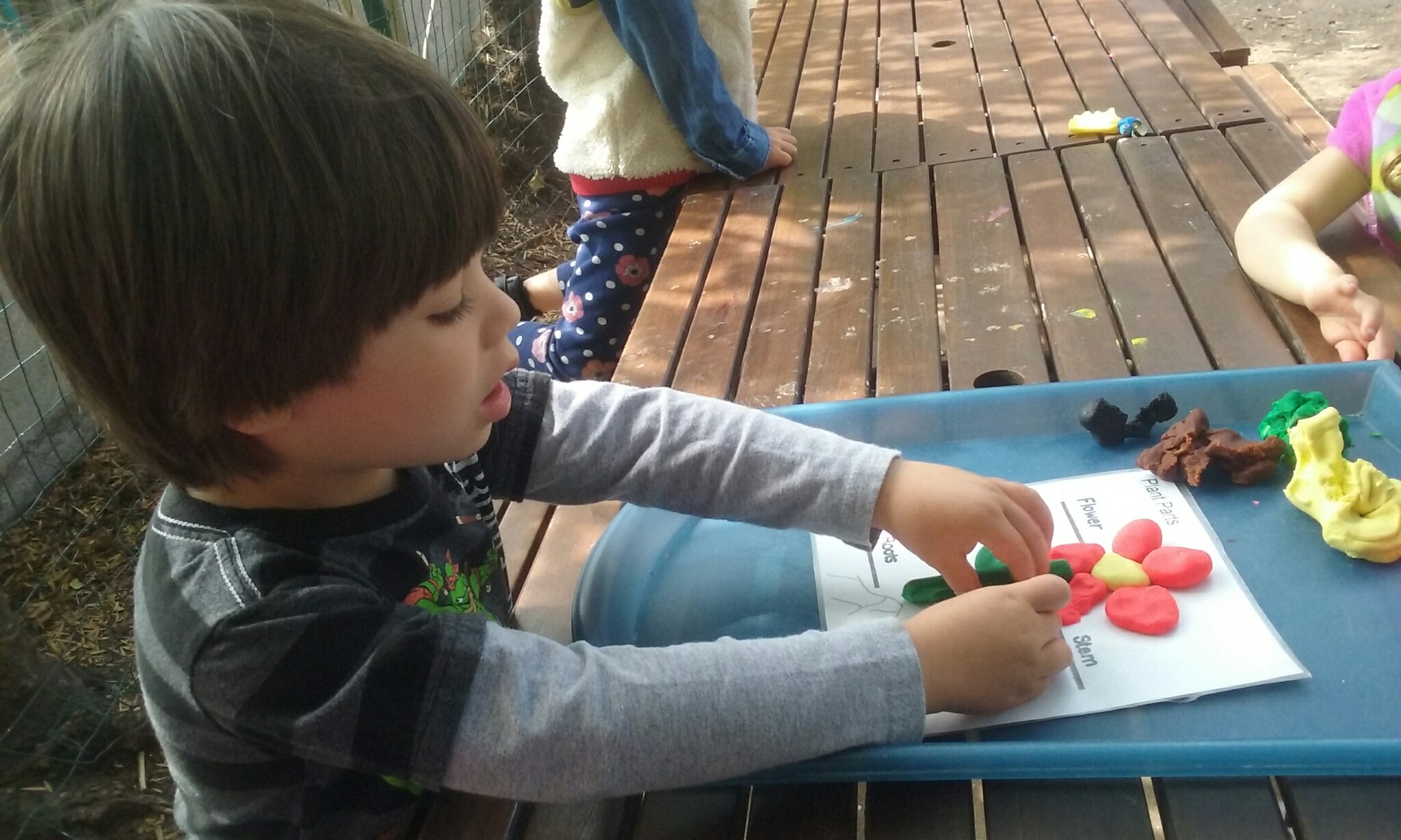
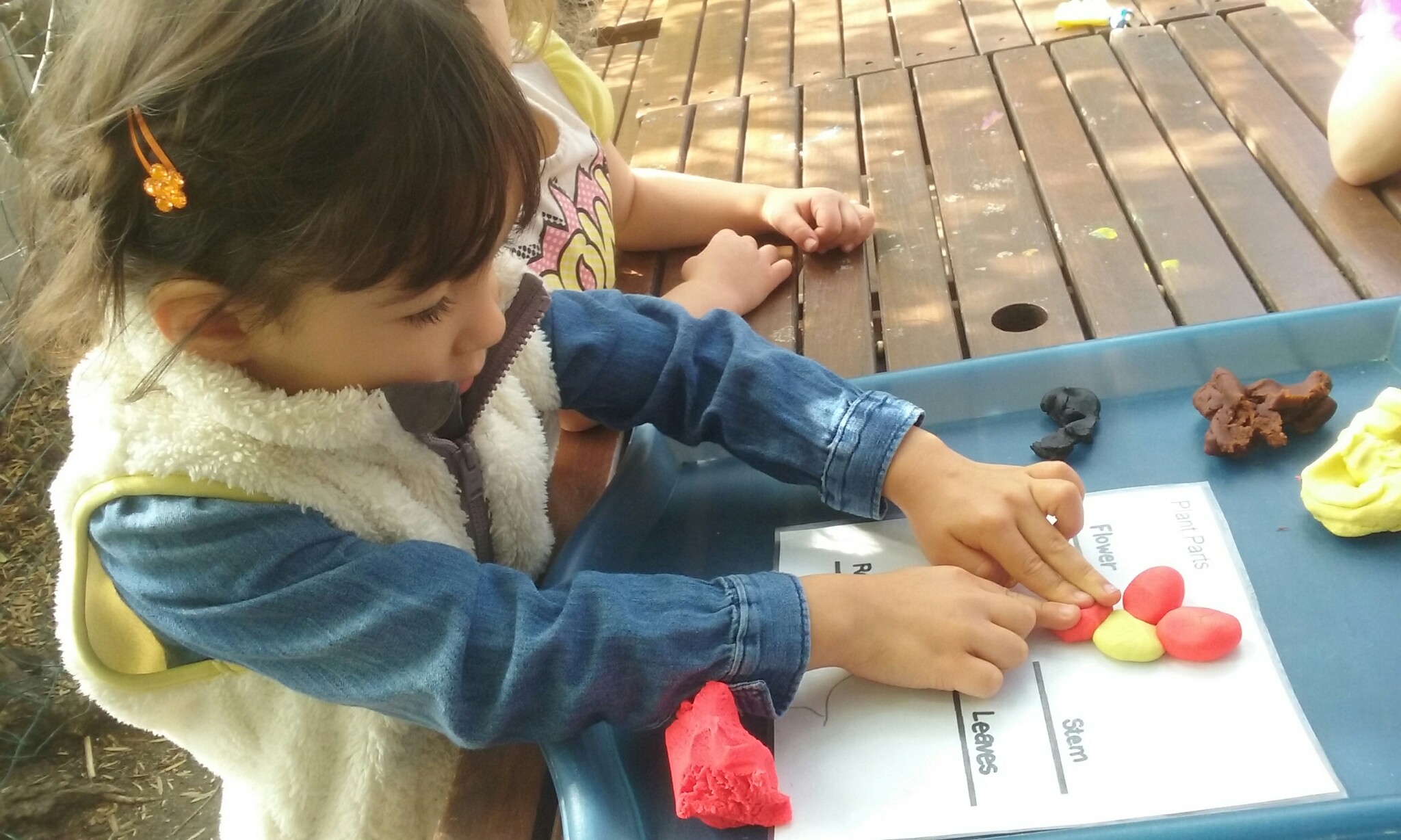
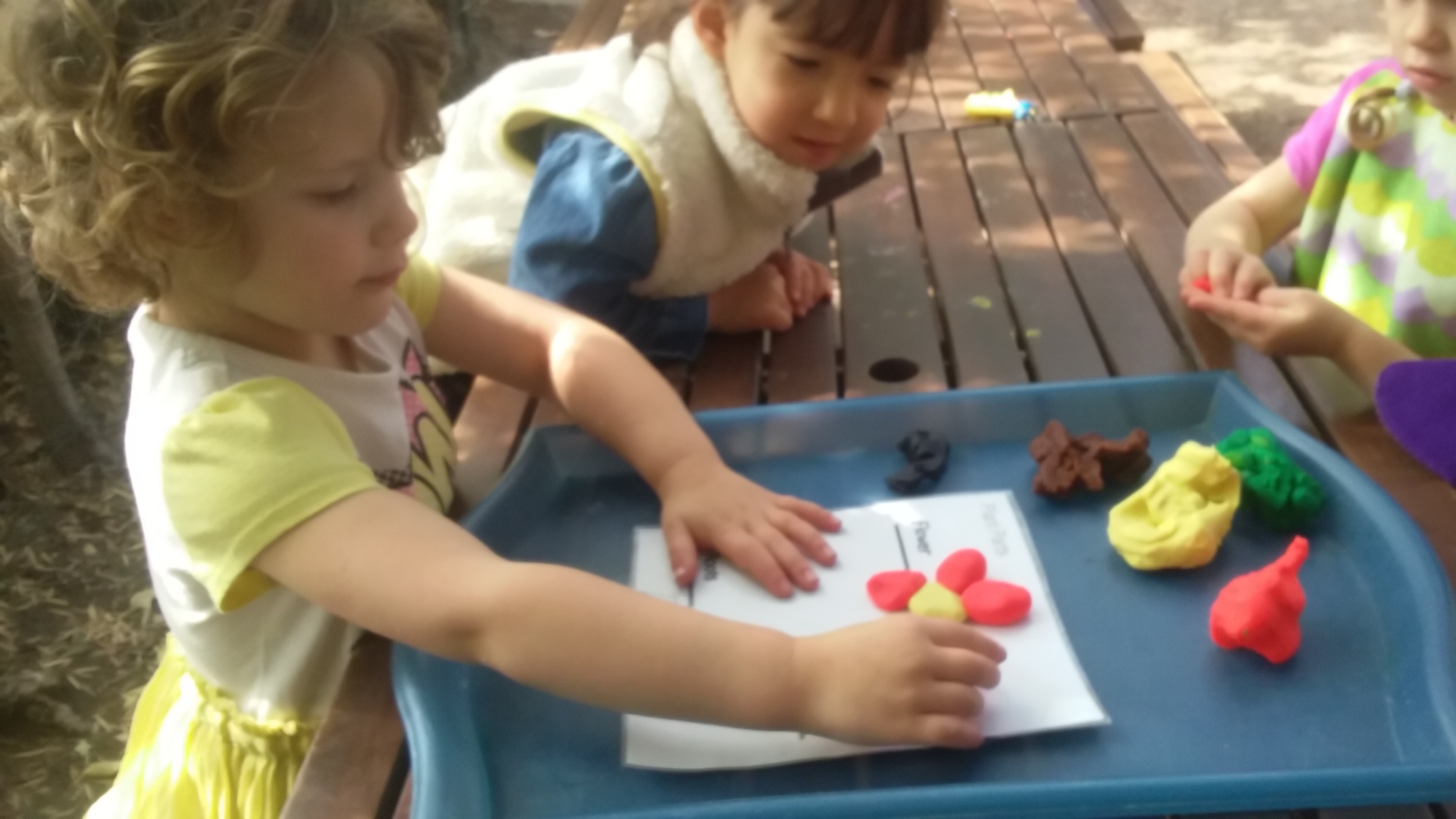
To help apply their understanding of this new vocabulary, we created our own flowers out of playdoh! Using a diagram, your little one created roots, a stem, the flower petals, and seeds!

petal8

Color Changing Carnations

Young children are biologically prepared to learn about the world around them, just as they are biologically prepared to learn to walk and talk and interact with other people.

dye7Because they are ready to learn about the everyday world, young children are highly engaged when they have the opportunity to explore.

carnationThey create strong and enduring mental representations of what they have experienced in investigating the everyday world.

carnation1They readily acquire vocabulary to describe and share these mental representations and the concepts that evolve from them.
carnation2

Children then rely on the mental representations as the basis for further learning and for higher order intellectual skills such as problem solving, hypothesis testing, and generalizing across situations.

carnation3

While a child’s focus is on finding out how things in her environment work, her family and teachers may have a somewhat different goal. Research journals, education magazines, and the popular press are filled with reports about the importance of young children’s development of language and literacy skills. Children’s natural interests in science can be the foundation for developing these skills.
dye12

Whereas many adults think of science as a discrete body of knowledge, for young children science is finding out about the everyday world that surrounds them.
dye3

This is exactly what they are interested in doing, all day, every day. In the preschool classroom or in the university research laboratory, science is an active and open-ended search for new knowledge.
dye14

It involves people working together in building theories, testing those theories, and then evaluating what worked, what didn’t, and why.
dye15

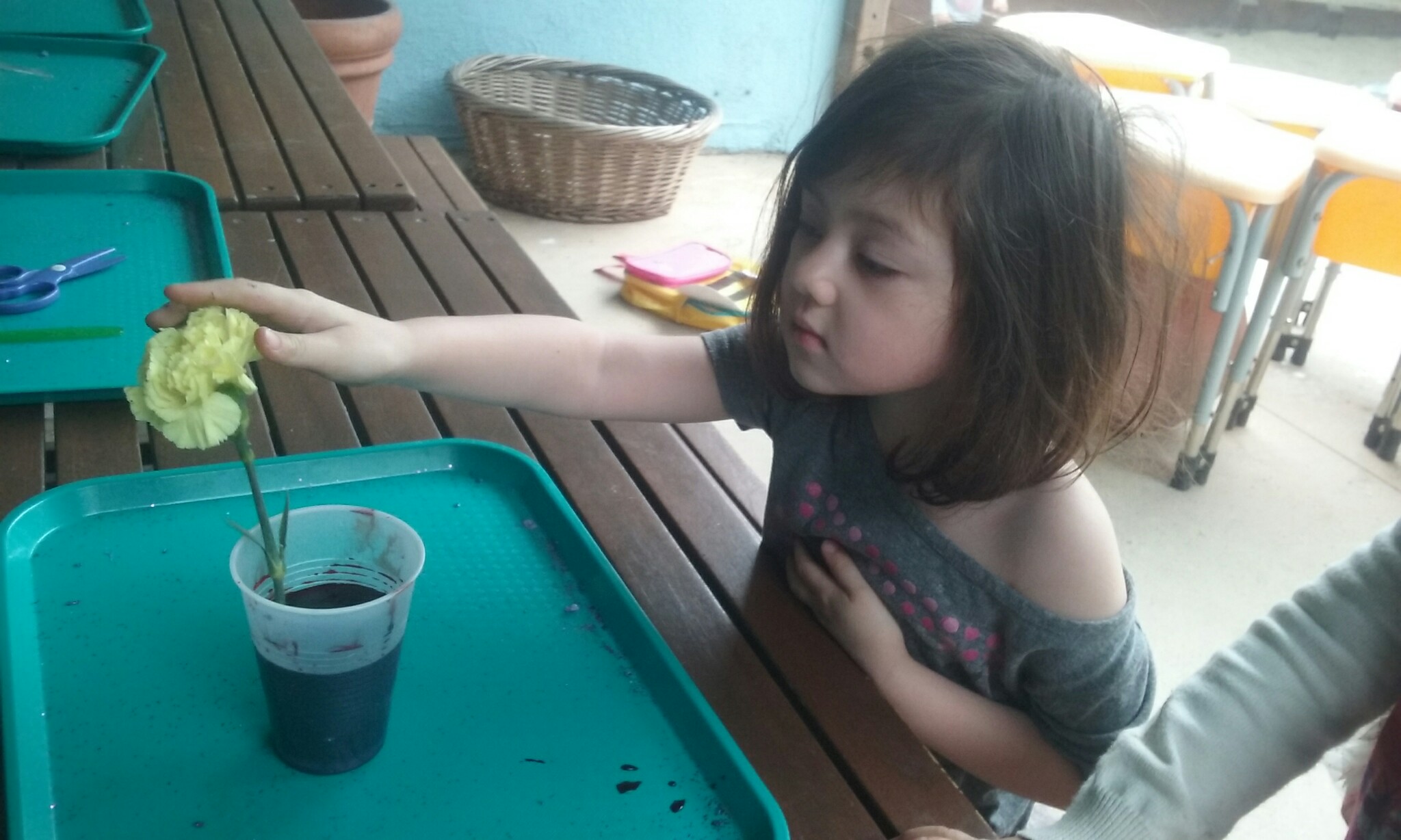
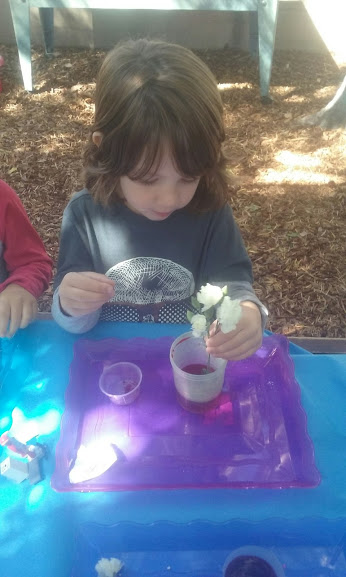
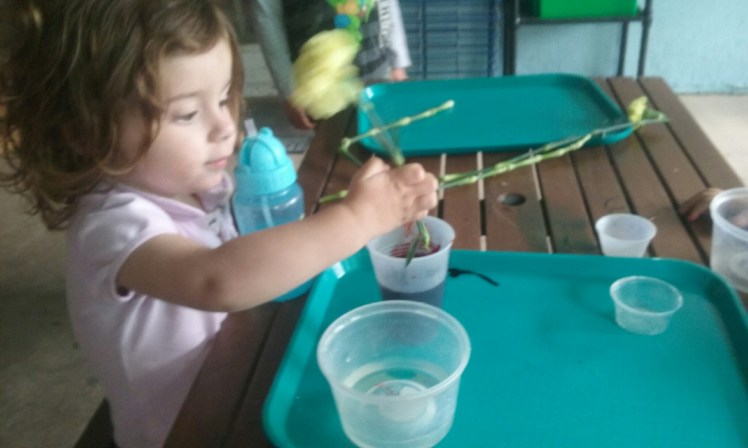
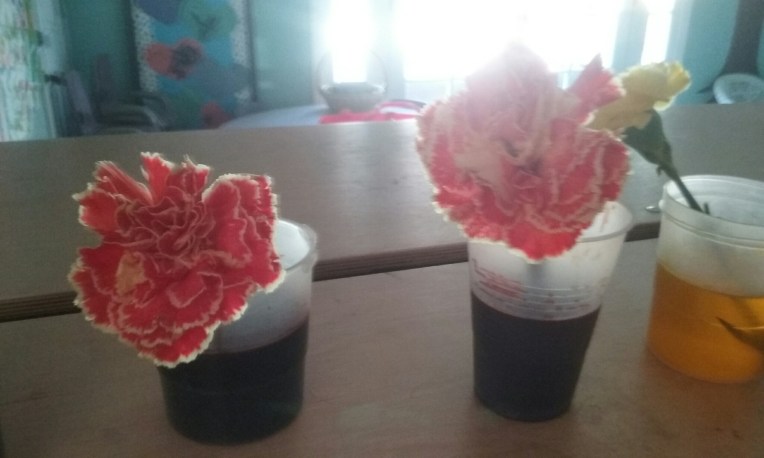
It is for this reason that your little one participated in an experiment with flowers, food coloring, and their thinking minds. Your little ones initially learned about what a stem is, and how it carries water up from the ground to the flower petals so that they flower can “drink” when it is thirsty.
dye16

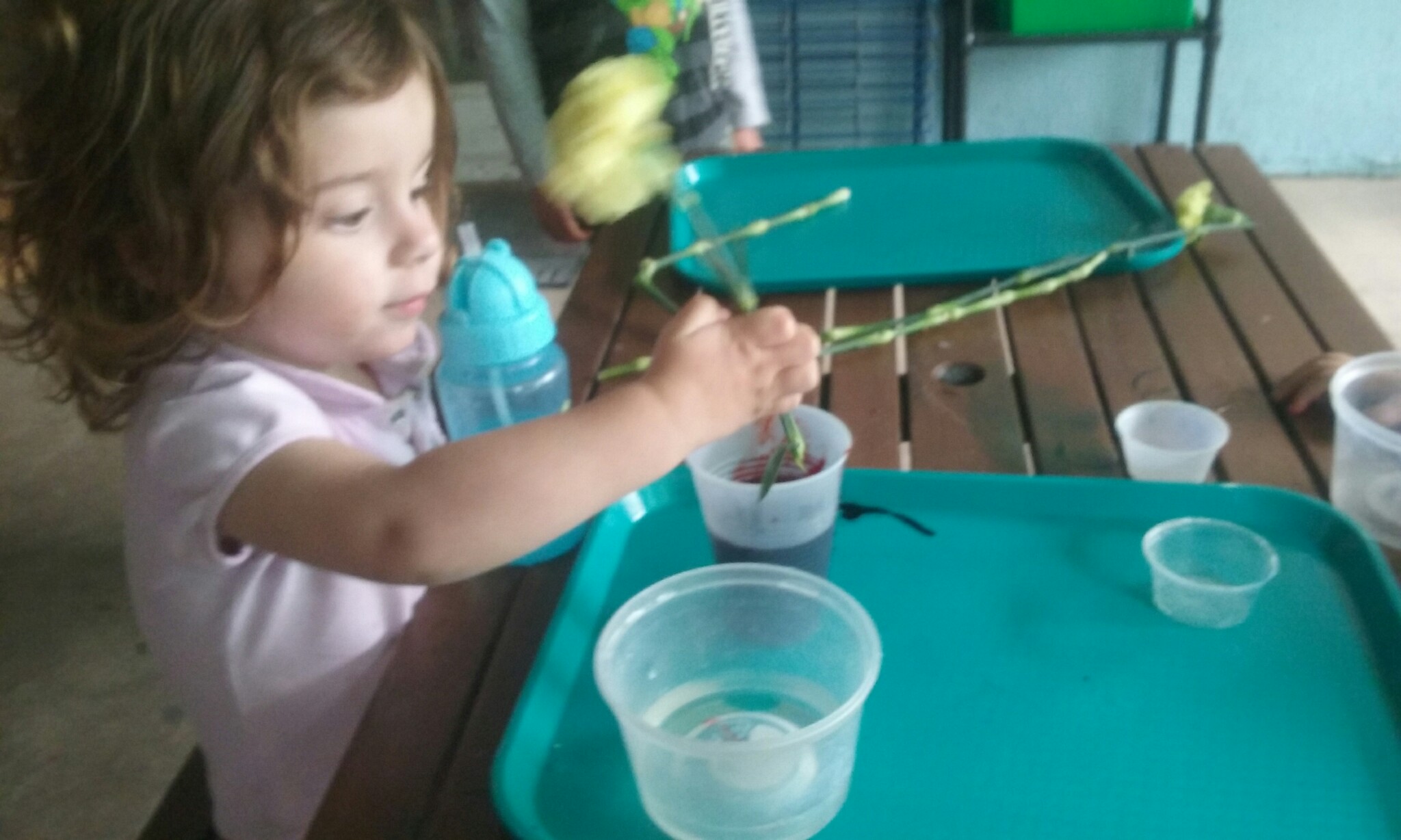
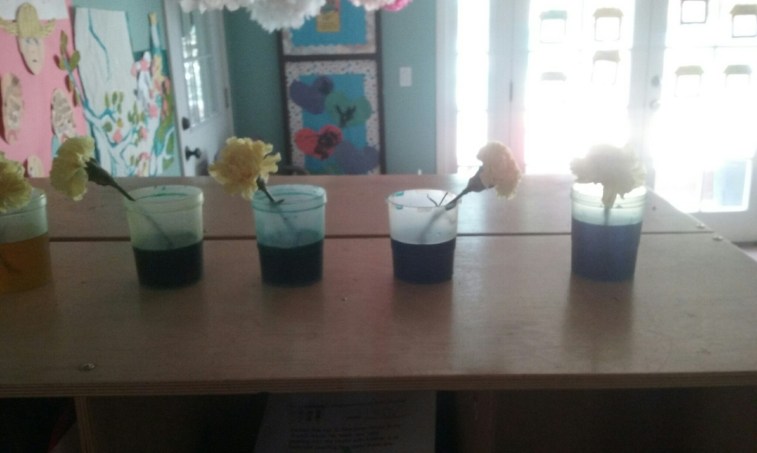
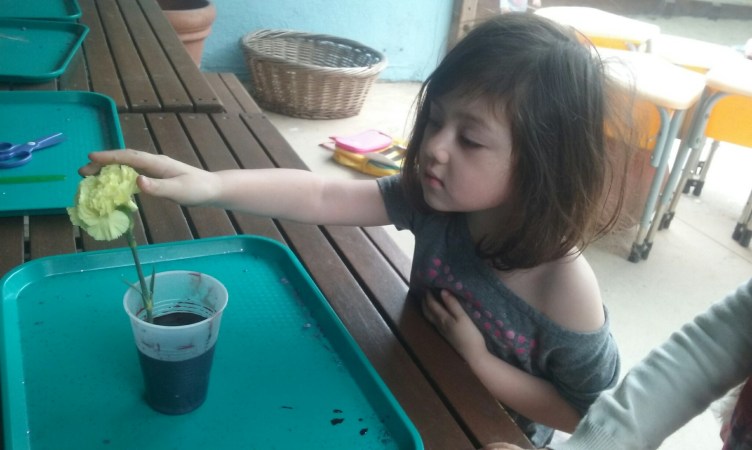
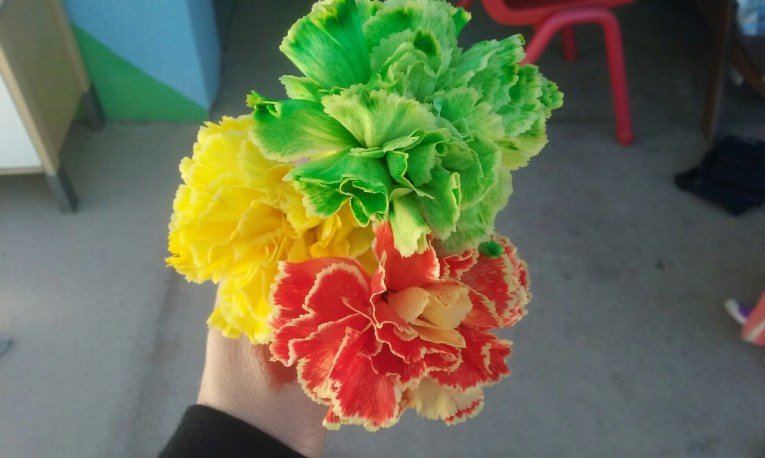
They were then asked to pour colored water into several bowls and place white carnations inside.

dye17

Following this, they were asked to predict what color they thought the carnations would turn. Lastly, they waited to see the end result!

 

Plant Handbooks

This week, we focused on the fascinating world of plants. Through books and other print materials (and exploration of actual plants) your little ones identified plants as living things, examined the parts of plants, experimented with what plants need to live and grow, and appreciated the importance of plants to people and other living things.

plantnote

For this activity your students created notebooks to help them grow their green thumbs. Students initially learned that plants have three main parts—roots, stems, and leaves.

planetnote2

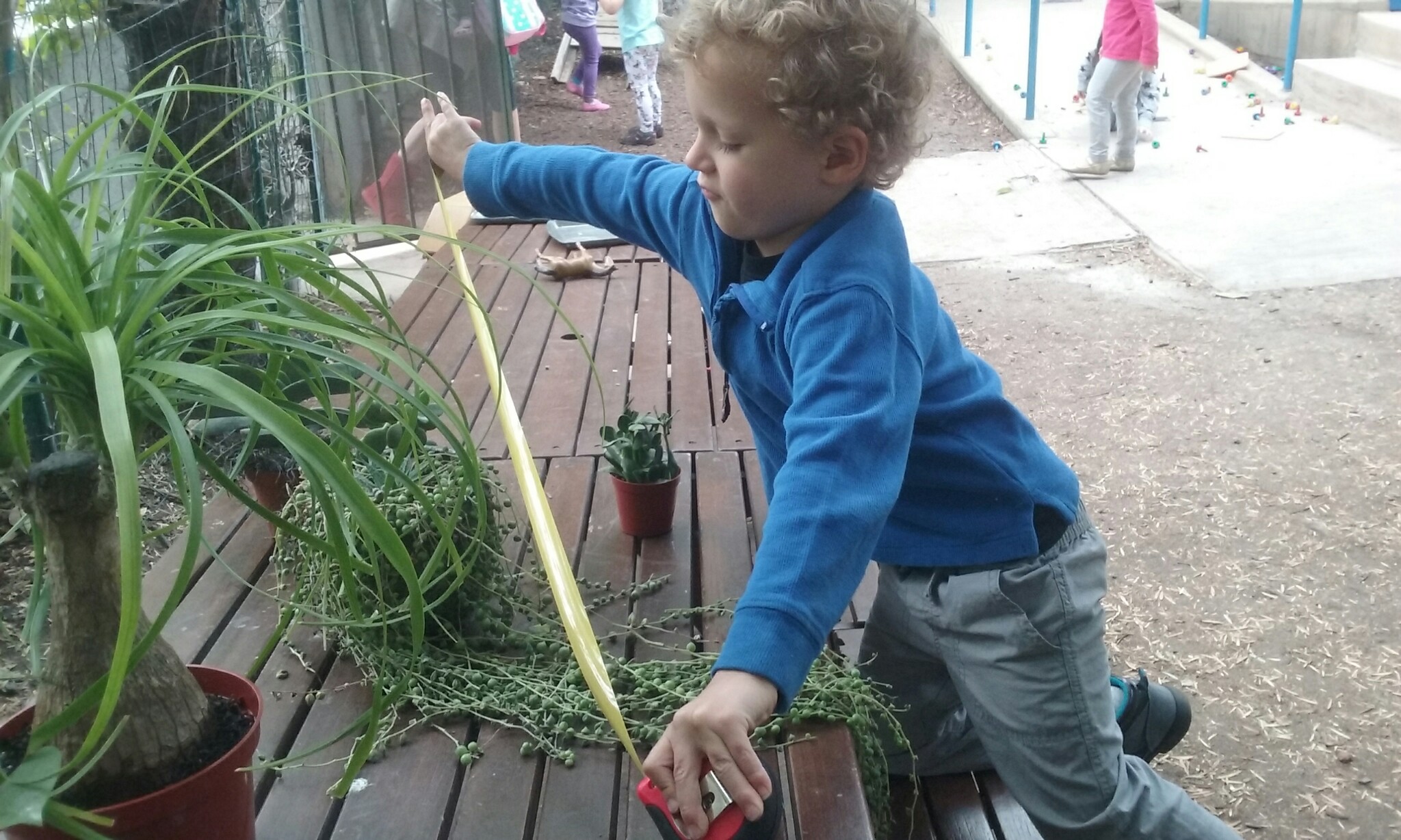
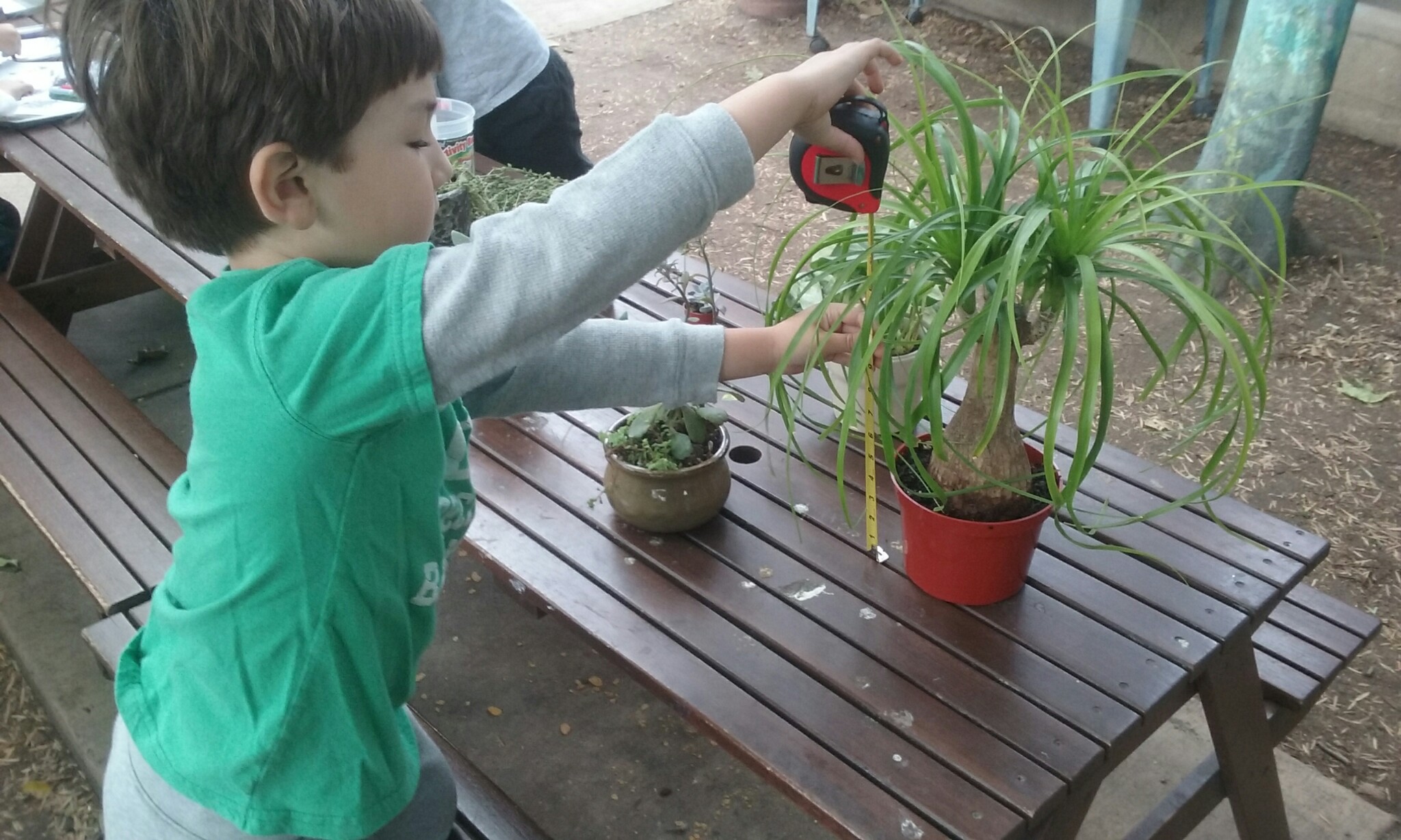
They learned that roots usually grow underground and absorb minerals and water from the soil. They were also told that the stem supports the plant and transports water and nutrients from the roots. Leaves contain chlorophyll, a light-absorbing green pigment used in photosynthesis. After this, they used a tape measure to measure each plant, comparing the “bigger” plants with the smaller ones.

plantnote3

plantnote4

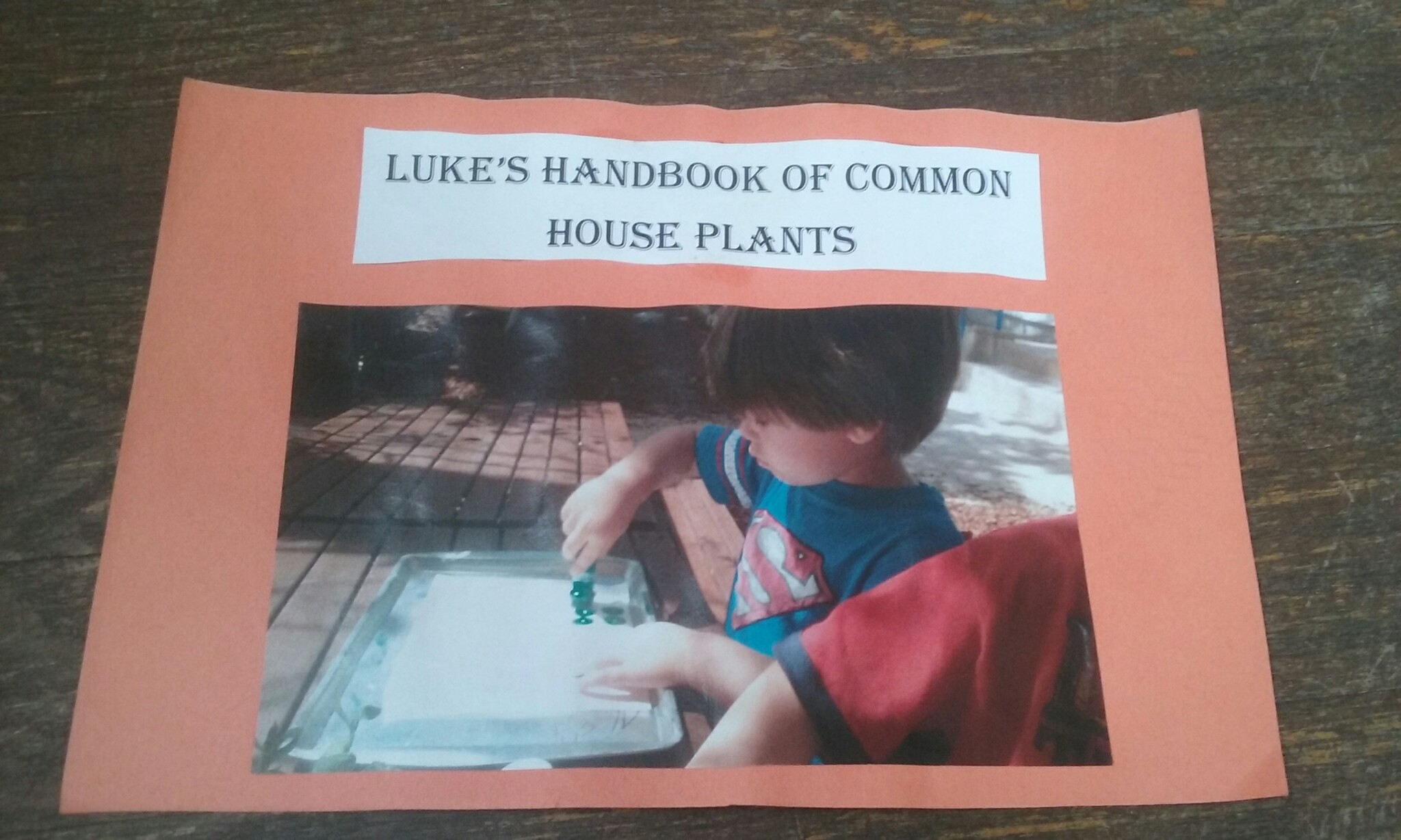
Gardening gives children a chance to learn an important life skill, one that is overlooked in standard school curriculums. Gardening is also a great way to teach environmental awareness by exploring the workings of nature. It is this reason that we not only observed a measured a variety of common house plants, we documented all of the wonderful things we learned by recording our experiences in plant books! Please enjoy one of our handbooks below!

handbook1

handbook2

handbook3

handbook4