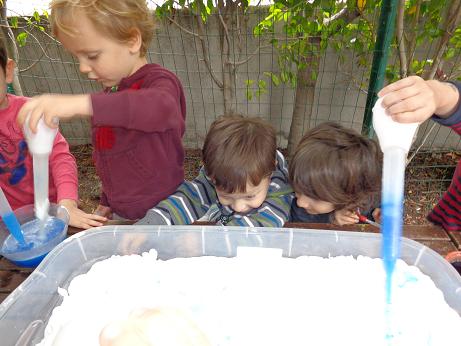
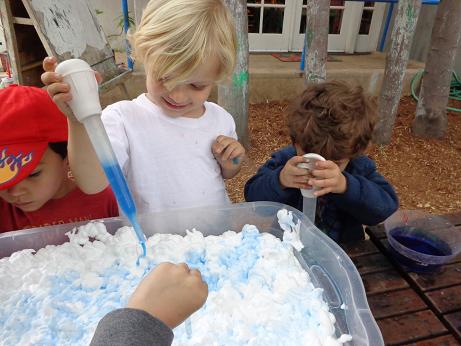
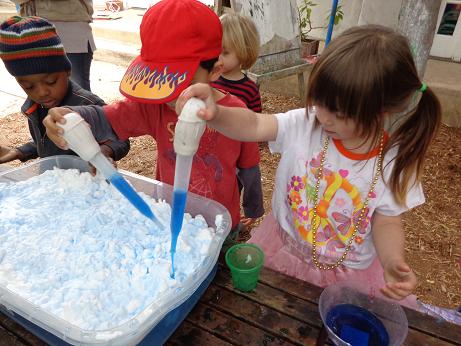
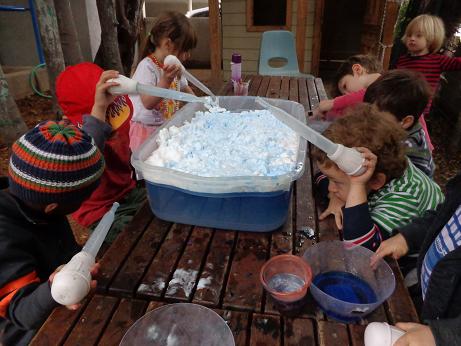
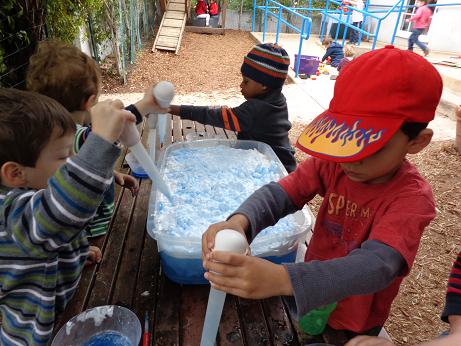
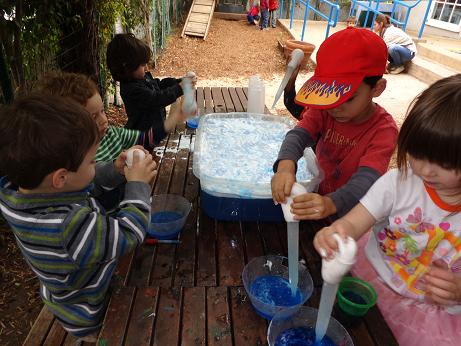
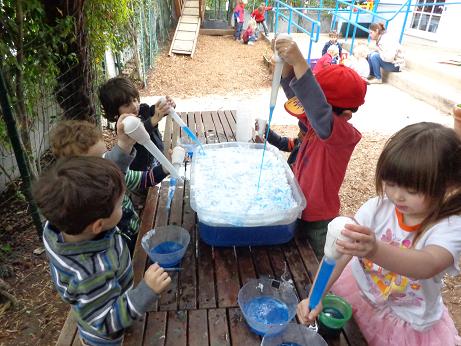
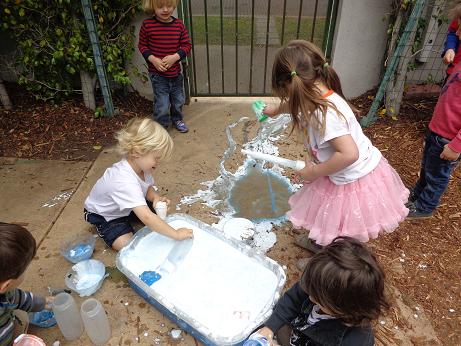
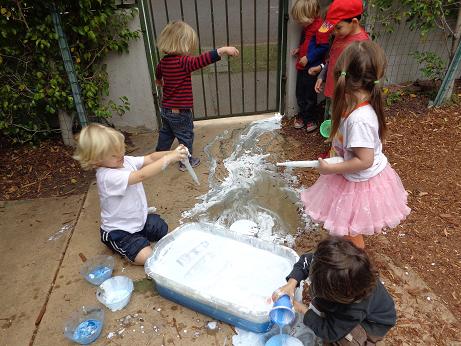
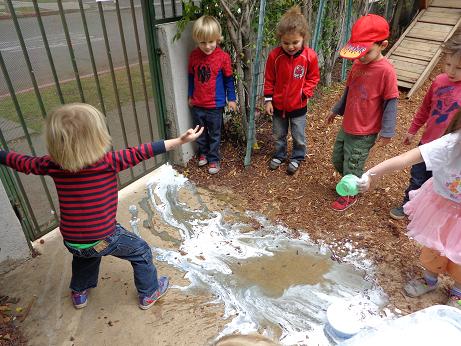
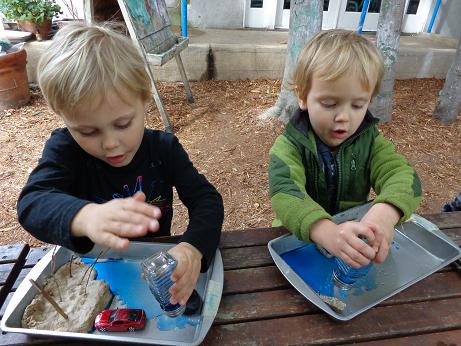
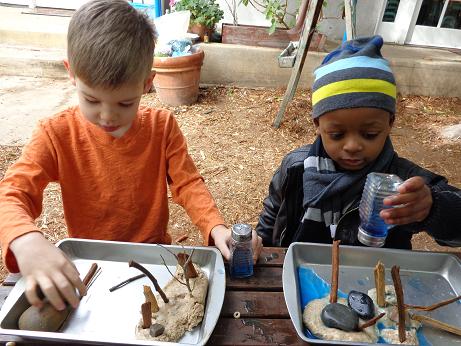
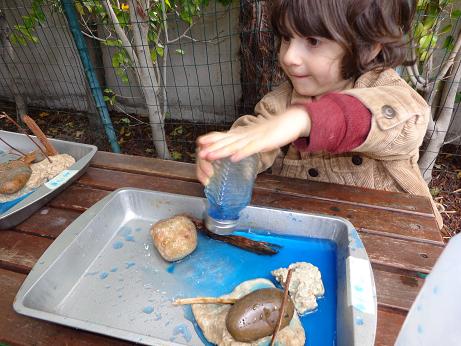
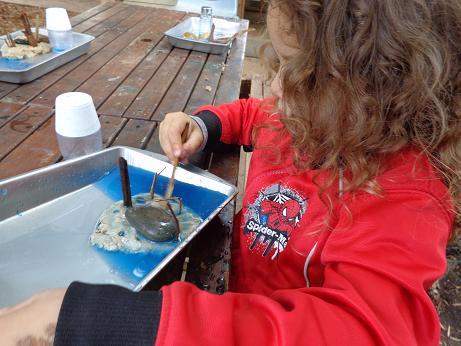
On Tuesday, we read about cumulus clouds during circle time. Our discussion involved defining and identifying cumulus clouds, and discovering their formation! Using preschool-friendly terms, we learned that clouds are created by moisture, sunlight, water, and ice! We also explored words associated with rain, and revisited our lesson on rain formation. Our shaving cream clouds were a natural extension of our lesson! Using turkey basters, your budding scientists dropped blue water into the shaving cream. They were transfixed as the color seeped through the “clouds” into the water. Your little meteorologist was then given ample opportunity to explore the “process” on their own. They were very intrigued, and decided, once they had used all of their water, that it would be more fun to move the clouds to the ground. Everyone delighted in pouring the “clouds” onto the ground and dancing in the remains. Activities that provide open ended learning foster a lifelong love of science and discovery. Young children are naturally curious, and need little motivation to promote their wonder and fascination of the world. Our messy cumulus clouds project provided the opportunity to fulfill some of that wonder.
Category Archives: Seasons
What Happens to Rain?
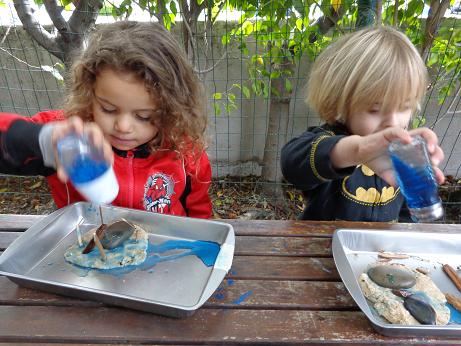
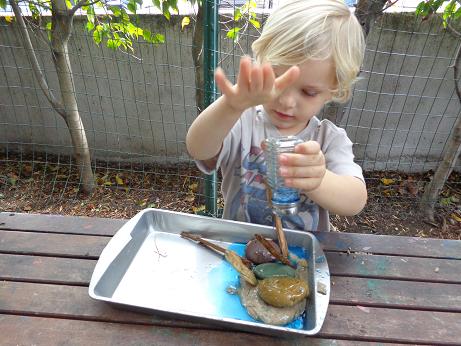
Teaching scientific concepts to young children poses unique challenges, so in our classroom, we use simple vocabulary and fun projects to keep them captivated! Water rotation is an ideal introduction to rain formation, so we talked about where rain comes from and where it goes! With Playdoh, sticks, salt shakers, and blue water, we practiced making it rain on our “land” and then watched as it returned to the “ocean”. Hands-on activities such as these reinforce complicated concepts and allow your preschoolers to grasp how rain works!
Seasons Trees
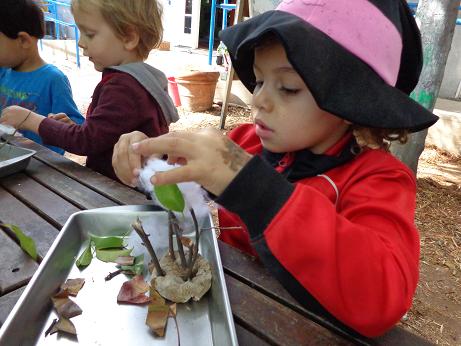
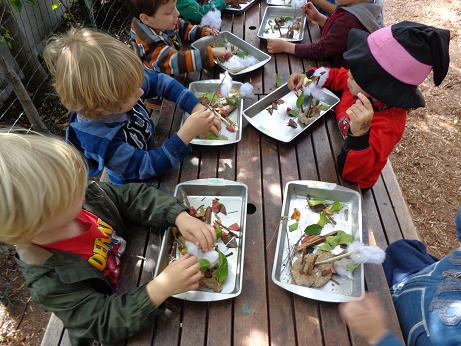
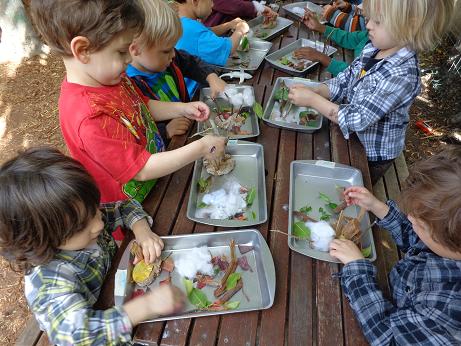
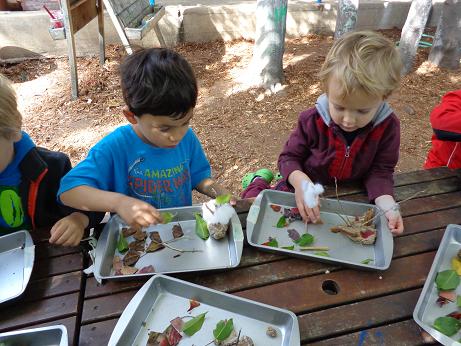
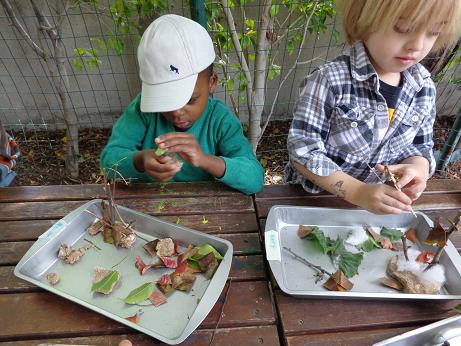
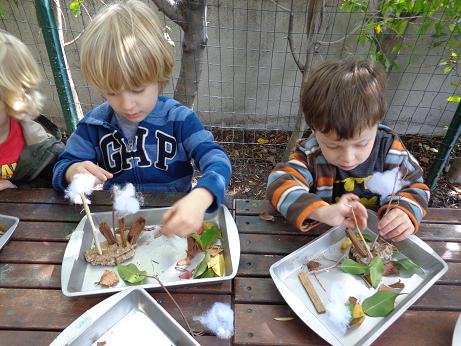
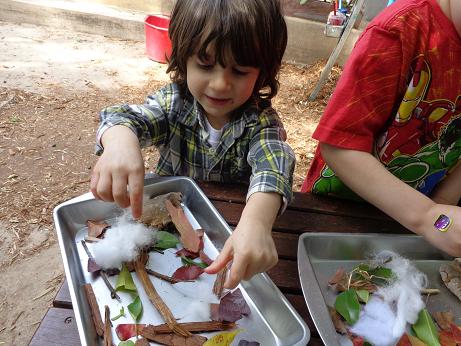
Young children are aware of the seasons, and can recognize the changes they perceive throughout the year. Because they are naturally curious, they question the differences that distinguish one season from the other. This activity served to do just that! Using sticks, different colored leaves, cotton, and Playdoh, we created our very own trees! These trees were special because they transformed throughout the changing seasons. We began with spring, discussed its characteristics, and constructed our trees to resemble the abundance and newness of life. As we continued through the seasons, our trees changed. Leaves changed color, fell, and were eventually covered by snow. As your little one moved from season to season, they were given vocabulary to describe the changes they were experiencing. By building and rebuilding their trees, your little one was able to practice and apply their understanding of new concepts, and had fun while doing it!
Cloud Jars
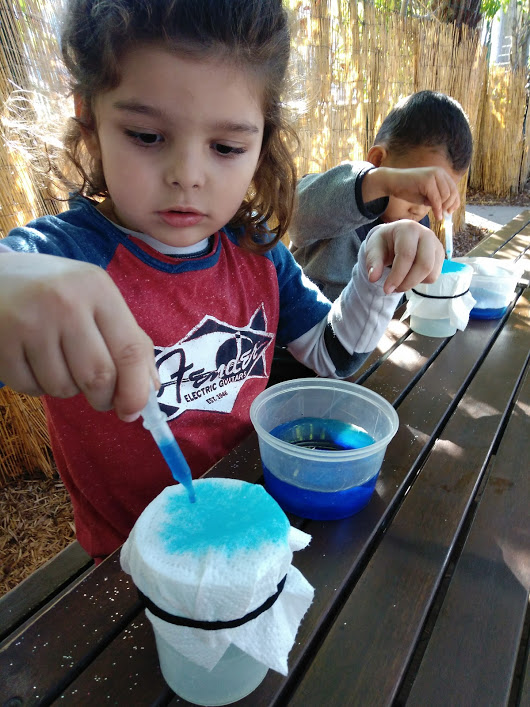
Using paper towels, eye droppers, and blue water, we explored the exciting science behind cloud and rain formation! Using the eye droppers, we dropped blue water onto the paper towels. As the towel became saturated, the “rain” began to pour inside the jar! Sensory and discovery activities offer a means to introduce scientific concepts to young children.

As they engage in the activity, they are practicing what they are learning. The actions they take part in allow them to experience a concept. As we were doing this activity, your little one was encouraged to talk about what they saw and what they were doing.

Doing this enables their understanding of the physical and mental processes they are experiencing and provides them with the vocabulary to describe it.