As part of simple, tactile play – play dough can be squashed, squeezed, rolled, flattened, chopped, cut, scored, raked, punctured, poked and shredded!
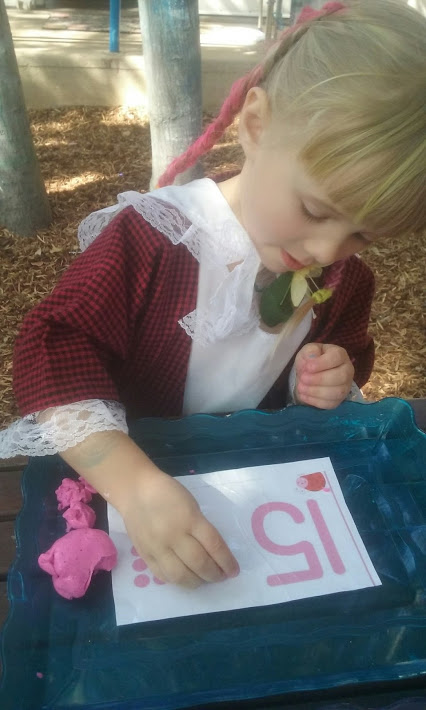
Each one of these different actions aids fine motor development in a different way, not to mention hand-eye coordination and general concentration. It is for these reasons that I use play dough so often, and for some many different learning experiences. Many young children are tactile learners and require the sense of touch to interact with the world around them.
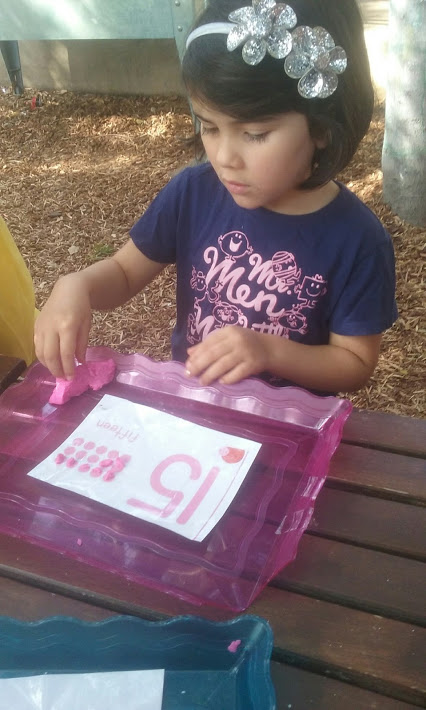
Because we are learning about all things related to numbers, I combined play dough, a number mat, and our thinking minds to learn more about counting! There were two components of this activity. Students first traced the number fifteen (on the number mat) with their fingers. They then clapped and chanted the number.
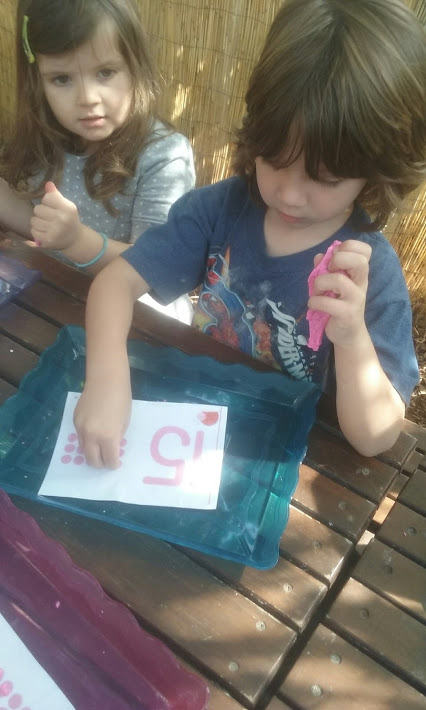
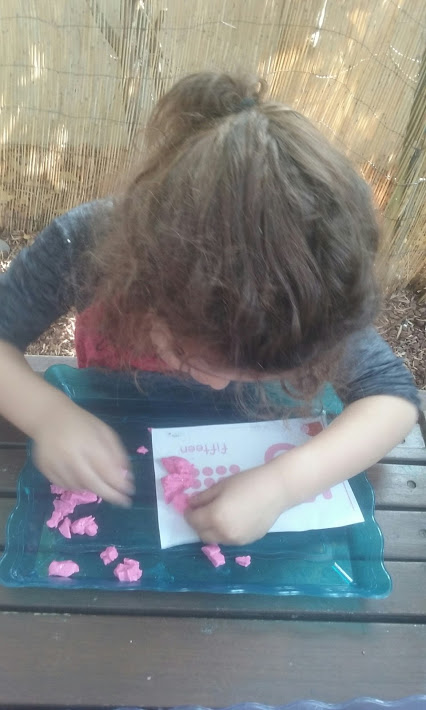
Lastly, they pinched off fifteen small pieces of play dough and placed them on fifteen spots. Allowing so many opportunities for learning (clapping, chanting, listening, and speaking) enables all learners to connect with the material, and ensures their success. When children feel successful, they are more motivated to learn.






















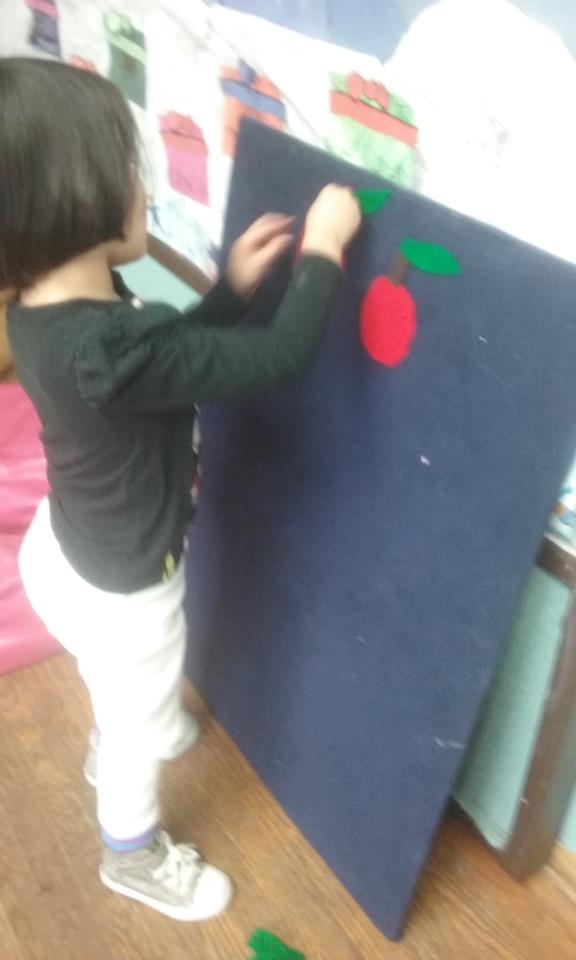
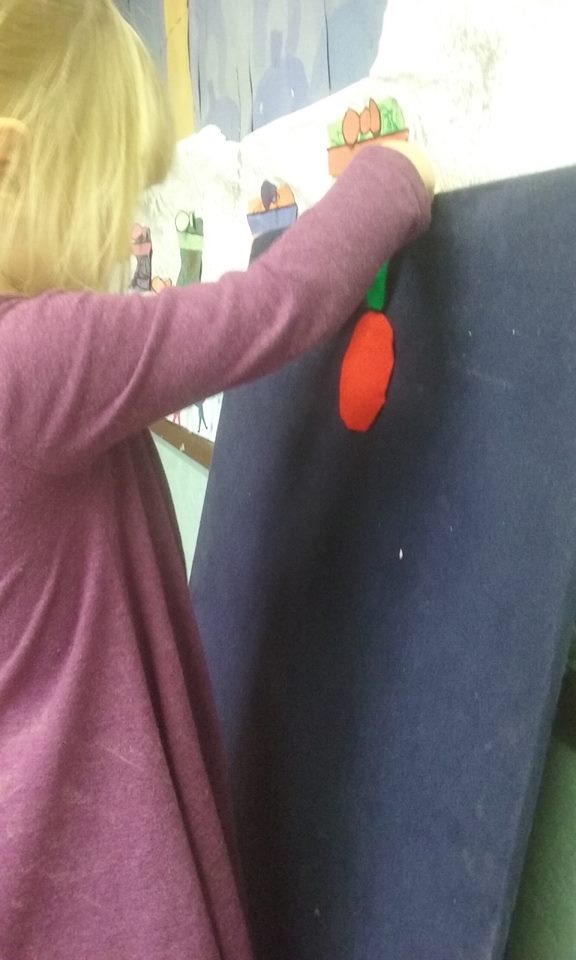 Before we started, each child was given an apple made of felt. As the story was read, students would bring their apples up to the board. This enabled each child to identify different sections, relate to plot details, and become a part of the story!
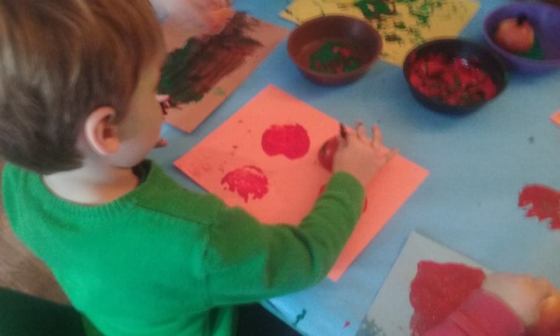 Children form many connections and ideas of how the painting process works for them, as well as what they enjoy about it. Watch a child painting and you will see a fully engaged child. We can almost see children’s thoughts, such as, “When I push my brush flat, my line gets bigger”, or “I like stirring this, but I don’t want to put it on paper or touch it”, or “I mixed red with more red and orange, and got fire color red!” To continue with our Ten Apples Up On Top theme, we painted with apples! Using corn skewers, apples, and paper, we practiced dipping our apples into paint and creating our very own apple prints!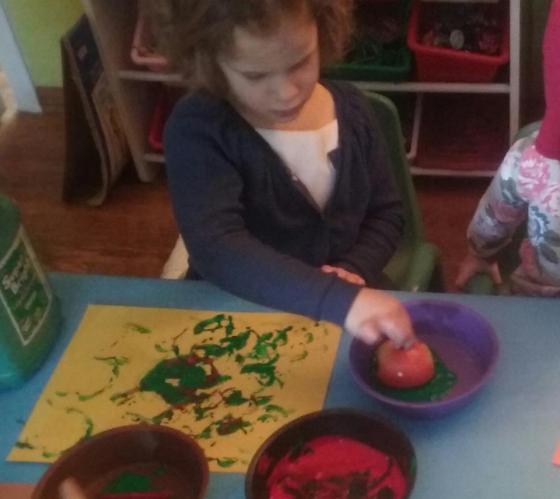


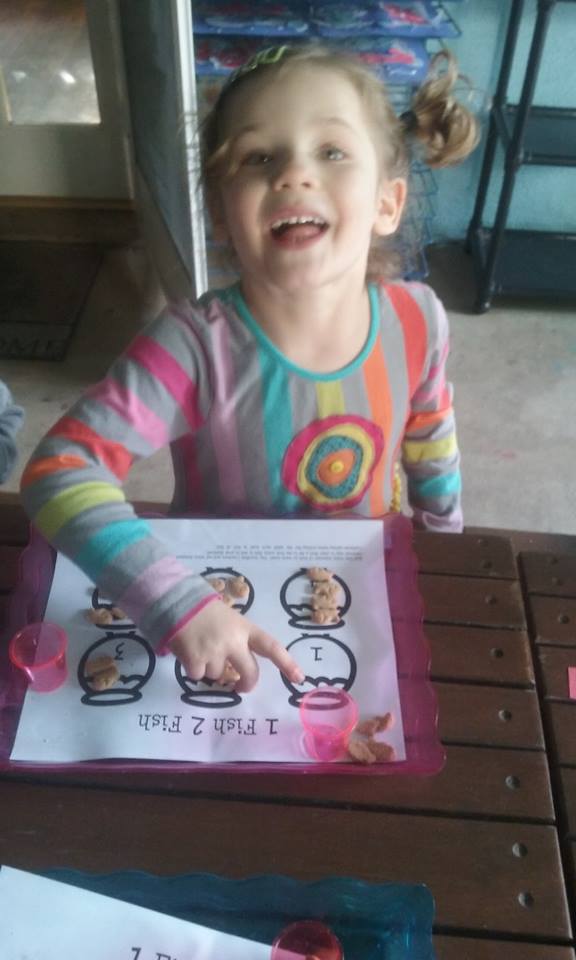


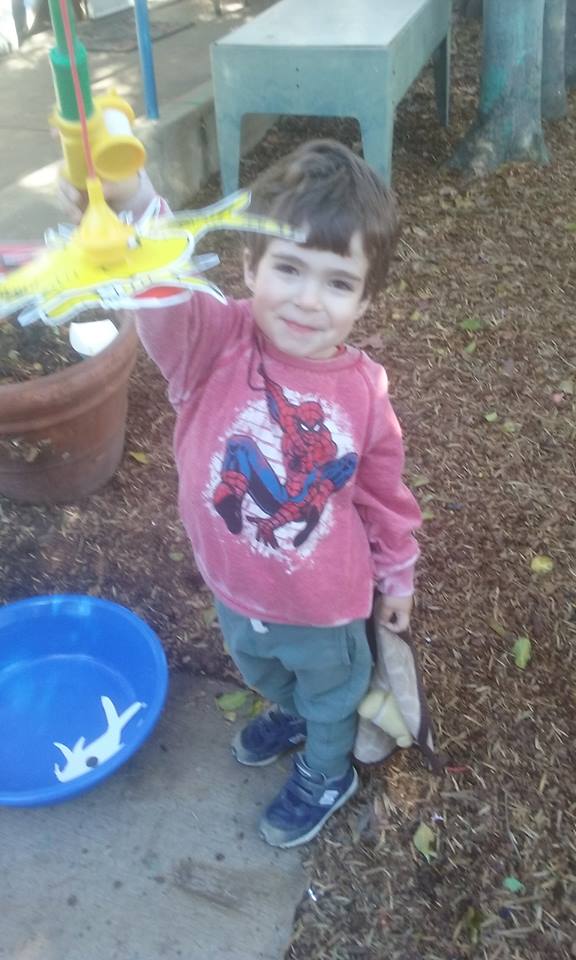

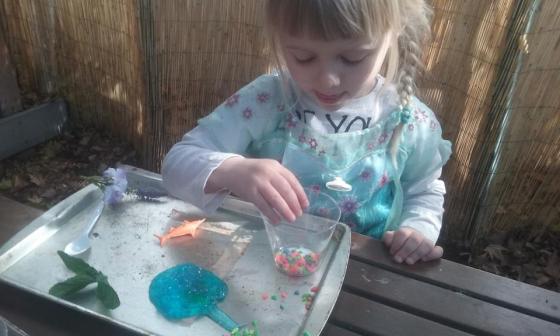

 Because we are always talking about our colors, we practiced sorting fish according to their color. Using cardboard cut-outs of fish and a Twister board, we placed fish onto their matching color.

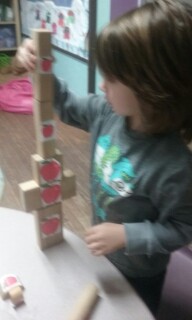 This book presented a host of opportunities for us to practice our counting skills! For this activity, we used blocks (of which apple stickers were attached), to practice our counting!
 Using our hands and our thinking minds, we stacked our blocks until we reached ten! Creating a foundation for complex mathematical thinking is initiated in early childhood.
 Stacking objects helps your preschooler begin to acknowledge quantities, cause and effect, and measurement. This awareness lays the framework for more complicated concepts later on.
 misscarriescorner