You may think that preschoolers are too young to learn about environmental conservation and sustainability. But it’s actually the perfect age.
If you’ve ever sat and watched young children playing outside, you know how kids just seem to have an innate connection to nature. They’re fascinated by the clouds in the sky, the dandelions in a field, the bugs crawling in the dirt.
Environmental education for kids builds on their natural interest, encouraging their curiosity and helping them grow into adults who consider the environmental in everything they do. For this activity, we talked about pollution and how it affects ocean life.
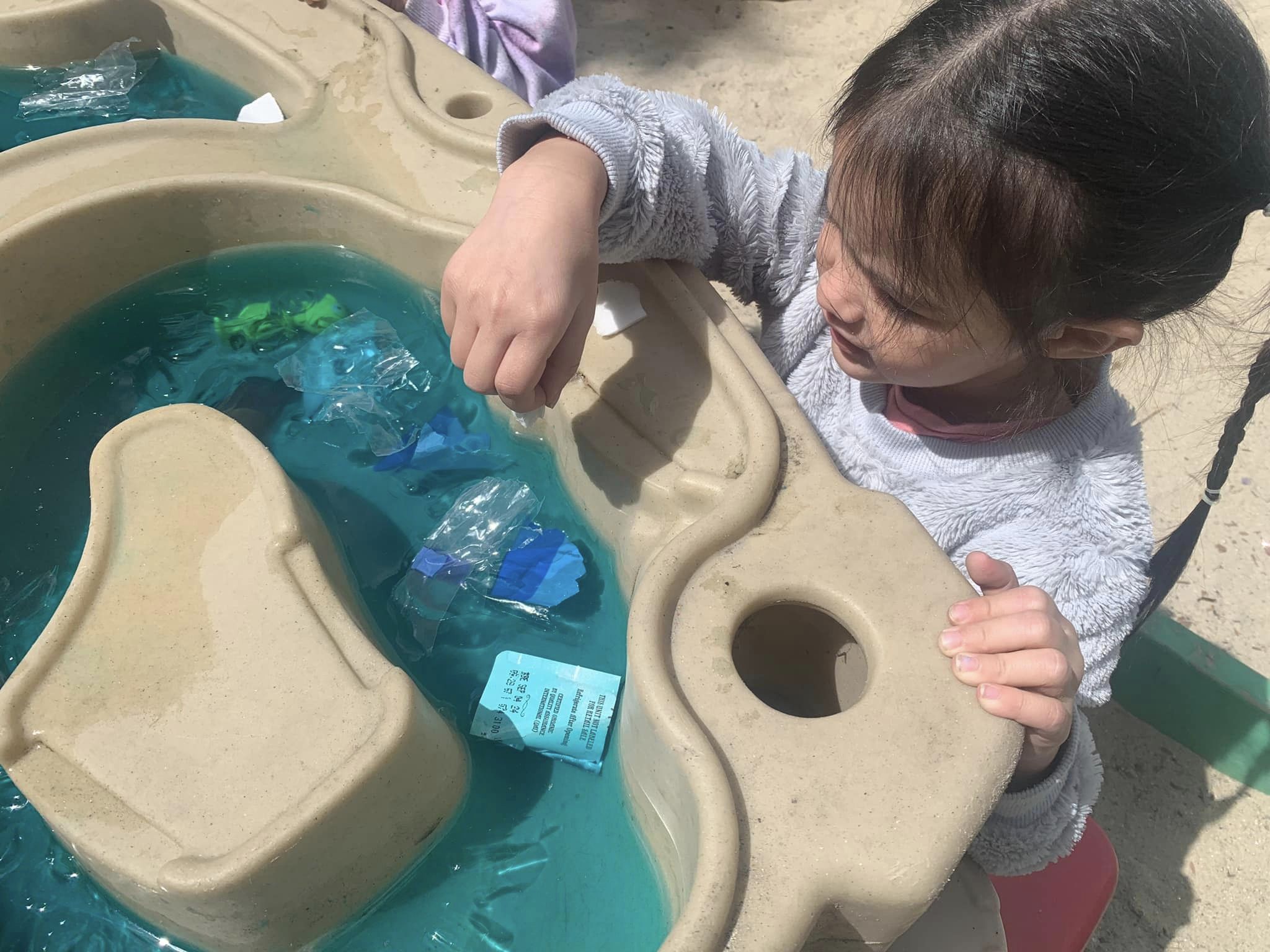
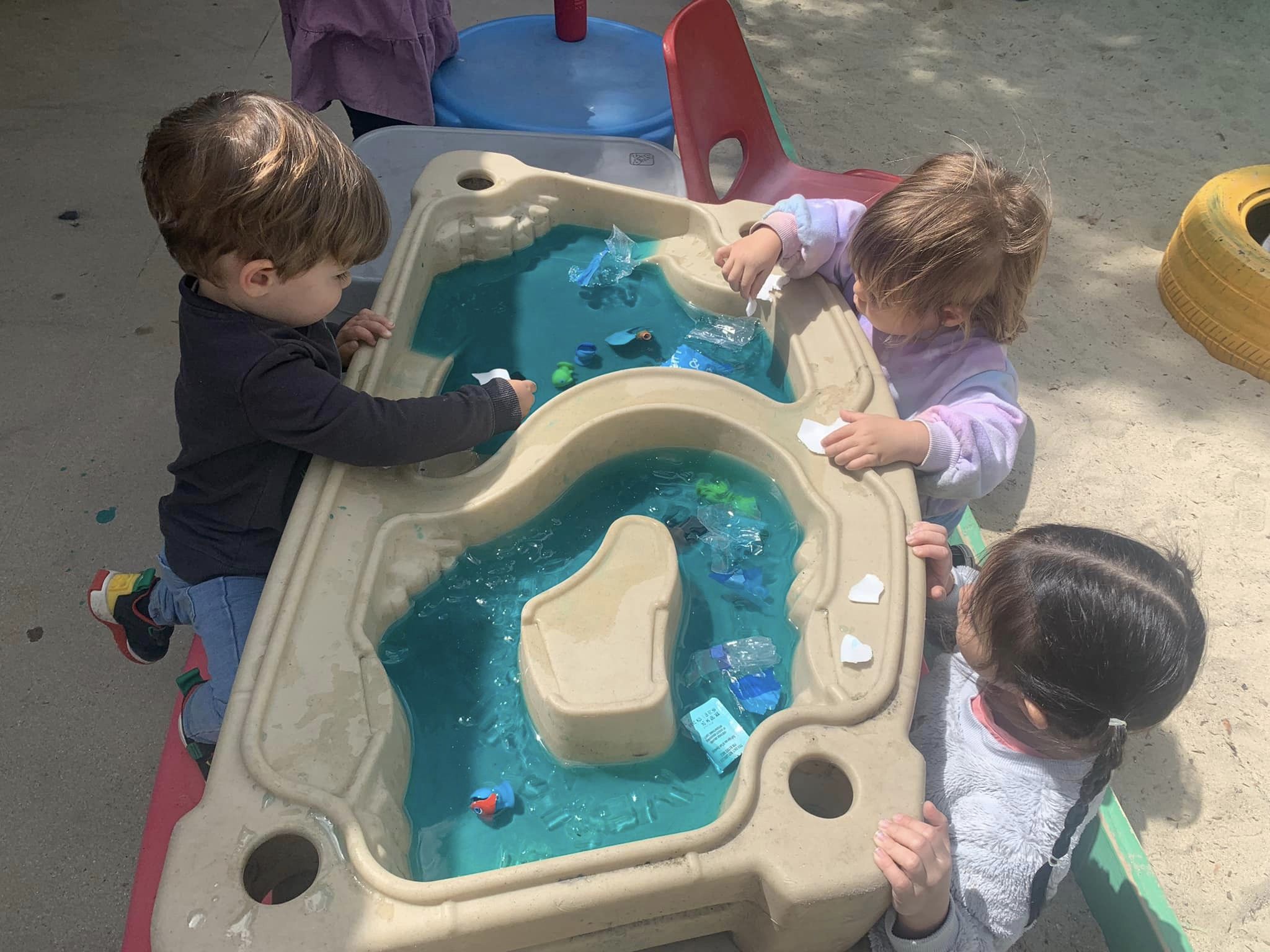
To tie this in with our fish theme, we decided to both create and then “clean up” a bay. Students were first presented with a sensory table full of “dirty” water and “trash”.
They were given nets, recycling bin, and a trash bin to remove the trash.
Following this, students were presented with a sensory table full of clean water, abundant with sea life. Lastly, we had a discussion about why it is so important to throw our trash away in trash cans.
Measurement concepts are often a part of children’s interactions. “My dad is bigger,” “I can jump higher,” and “I have more play dough than you!” are common comparisons that children make.
From the child’s perspective, these statements compare quantity; however, they also provide a nice introduction to measurement. Unfortunately, it is an often neglected content standard in early childhood classrooms.
Throughout the many projects we do throughout the week, we are constantly measuring, comparing, and contrasting items related to the theme. For this activity, your little one was presented with a problem.
They were each given seven pictures of fish that were of varying length. They were then asked to sort them by size. The target words for this activity were long, longer, and longest.
Sorting activities often appeal to children and many will naturally sort according to qualities and characteristics they visually notice without every being taught.
This fundamental pre-requisite to further mathematical understanding can often be disregarded or ignored as a purely play-based activity that children instinctively engage with.
However, it is important and essential part of beginning mathematical skills and an important part of every child’s developmental journey.
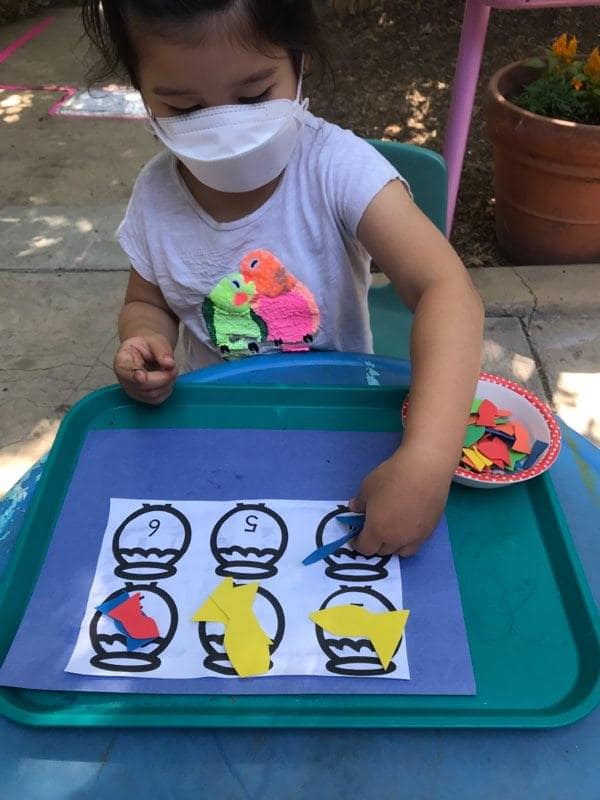
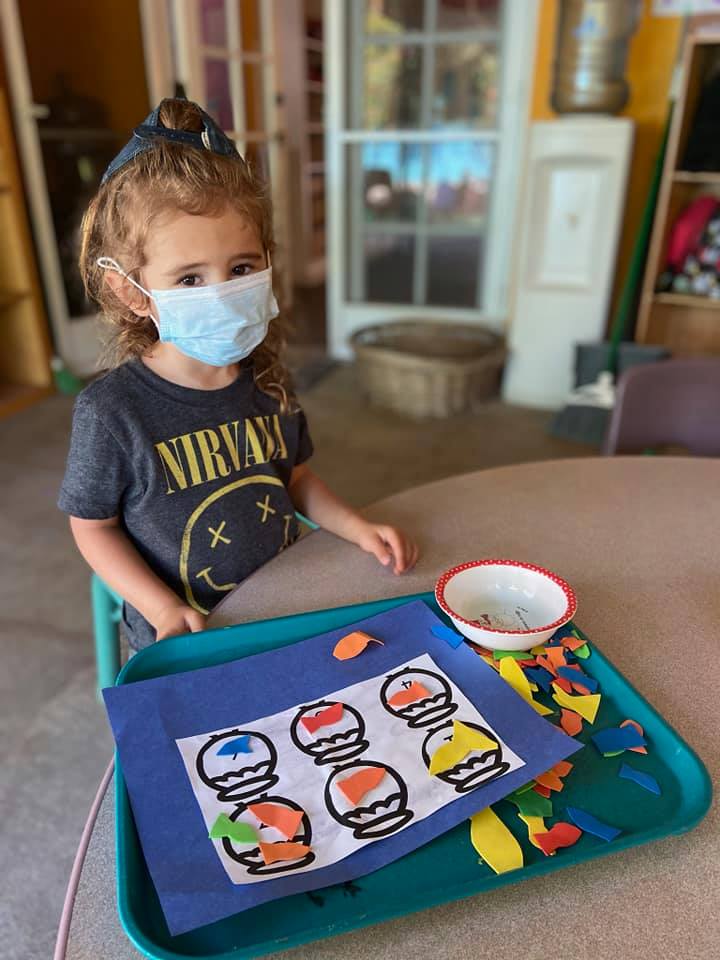
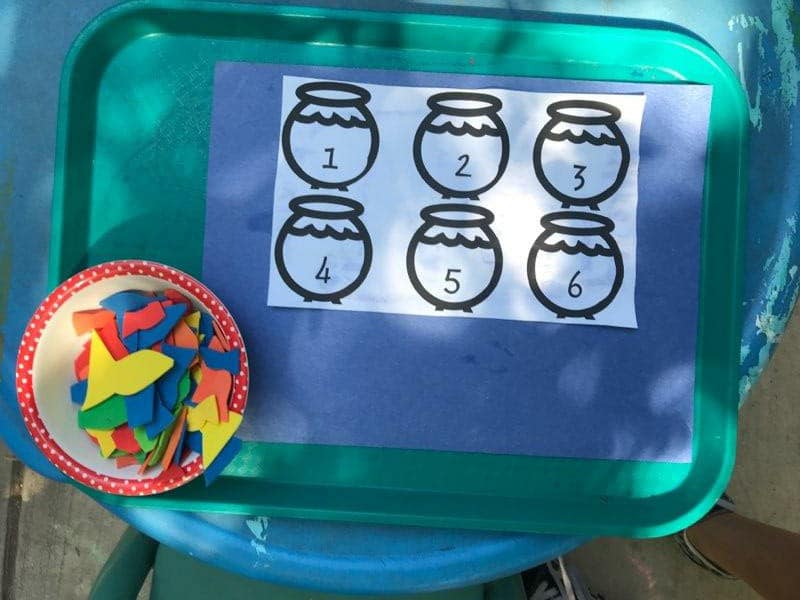
For this activity, we sorted fish according to number.
Students were given six different paper bowls in order to accomplish this.
They were then directed to count different quantities of fish and place them into the match fish bowl.
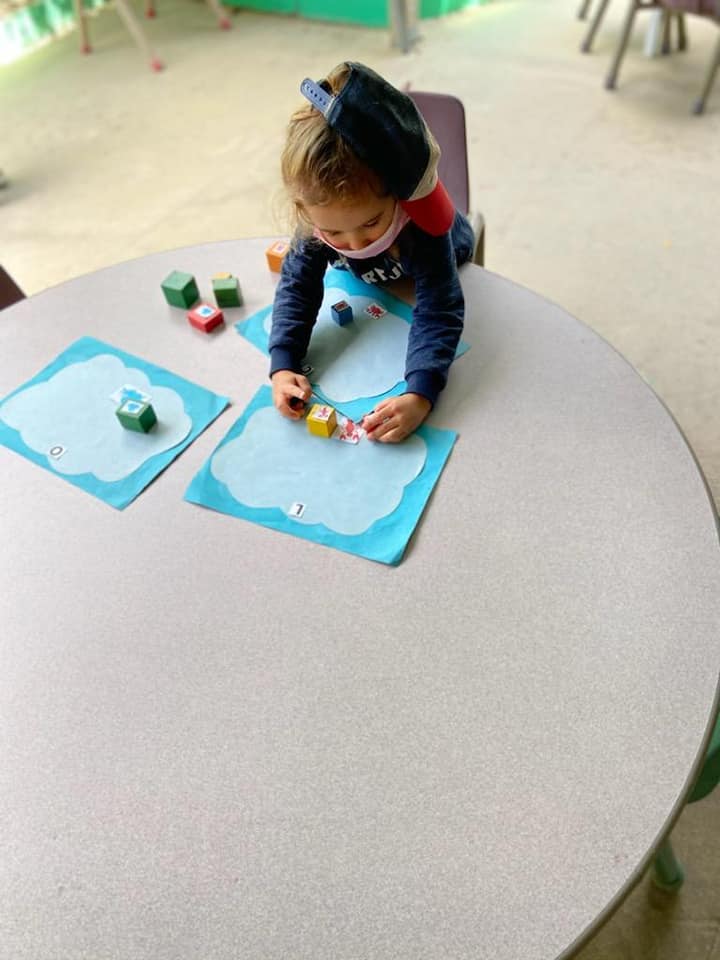
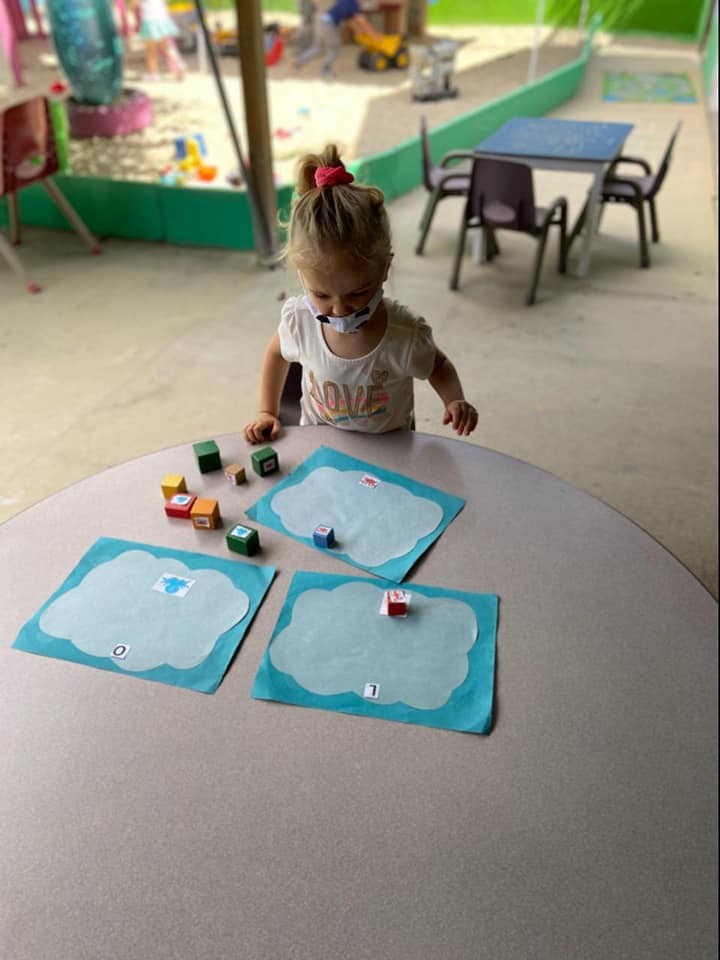
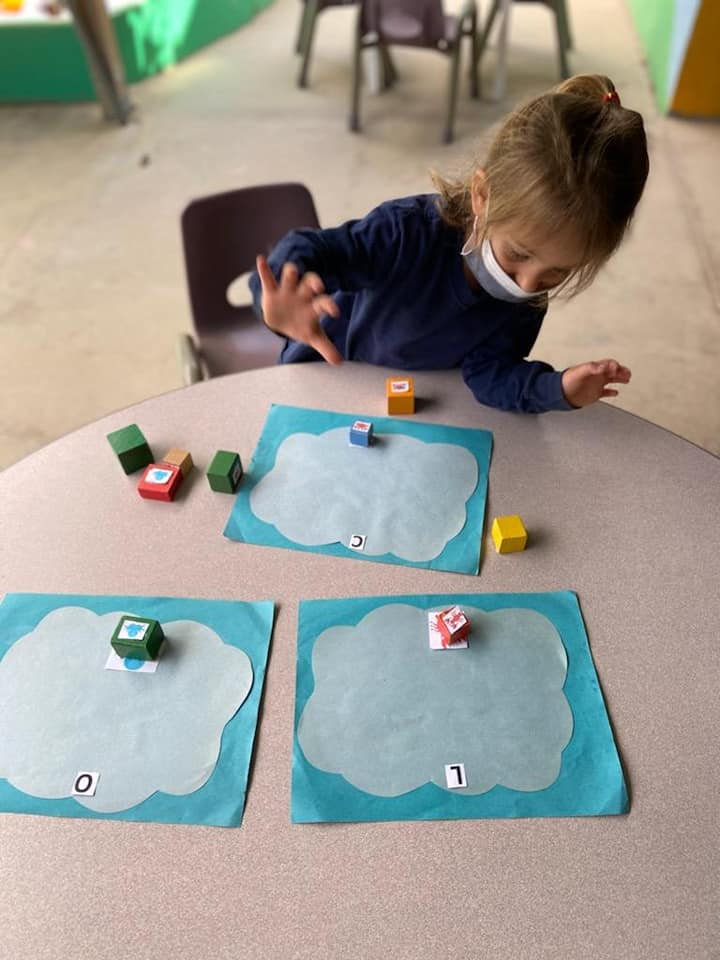
For this activity, students matched three different sea creatures by the first letter in the word.
Using blocks as manipulatives, students were introduced to three different ocean mats.
Each had a different letter written on it.
There was O for Octopus, F for Fish, and C for Crab.
Each block was affixed with a picture of the creature on it. Students enjoyed the colorful illustrations, and successfully matched each creature with its letter!
Toddlers love to scribble as they explore their creativity and put their ideas on paper.
It is also considered “pre-writing” – a task that gets them one step closer to writing letters and words.
When you add tracing to your little one’s drawing time, it helps refine those pre-writing skills, laying a strong foundation for drawing and emerging writing.
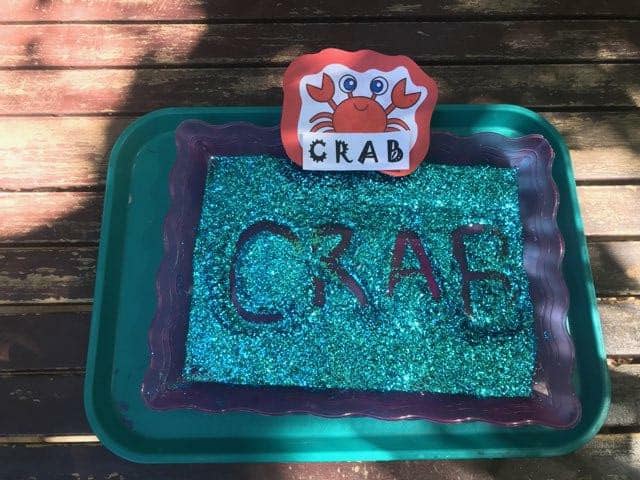
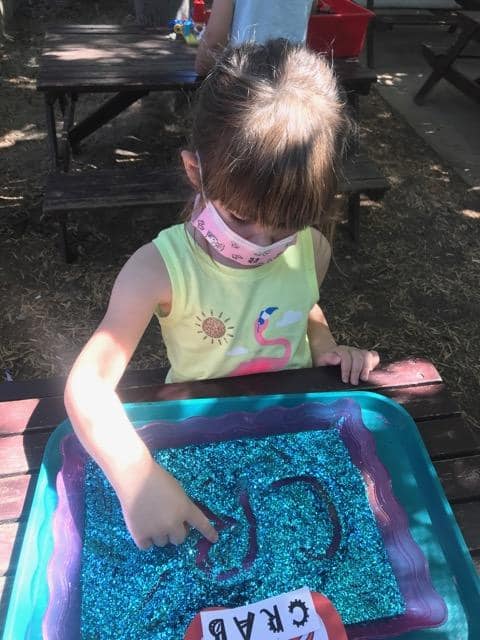
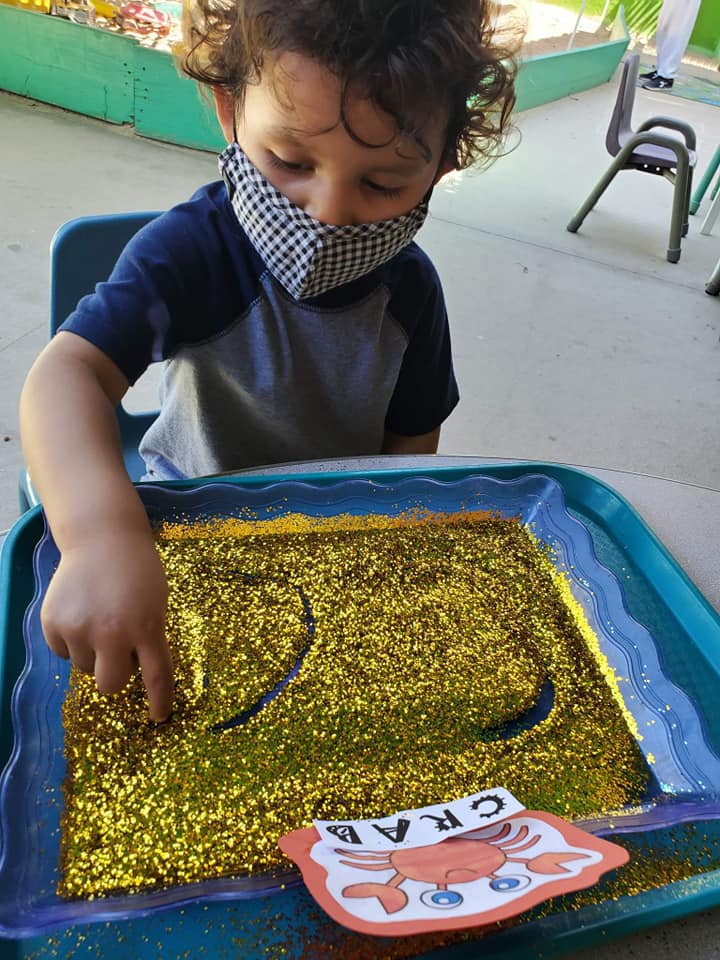
For this activity, we used glitter to trace the word CRAB. Using their fingers, students traced each letter, one at a time. While doing so, the learned about the sound that each letter makes. Finally, they enjoyed the feeling of glitter on their fingers and especially washing it off!


















 misscarriescorner