Hurricane Dramatic Play

Dramatic play is a wonderful way for young children to act out roles and express themselves. Providing dress up costumes and pretend real life items encourages them to get into character, express their feelings, and gain mastery over new concepts.  20140827_111123

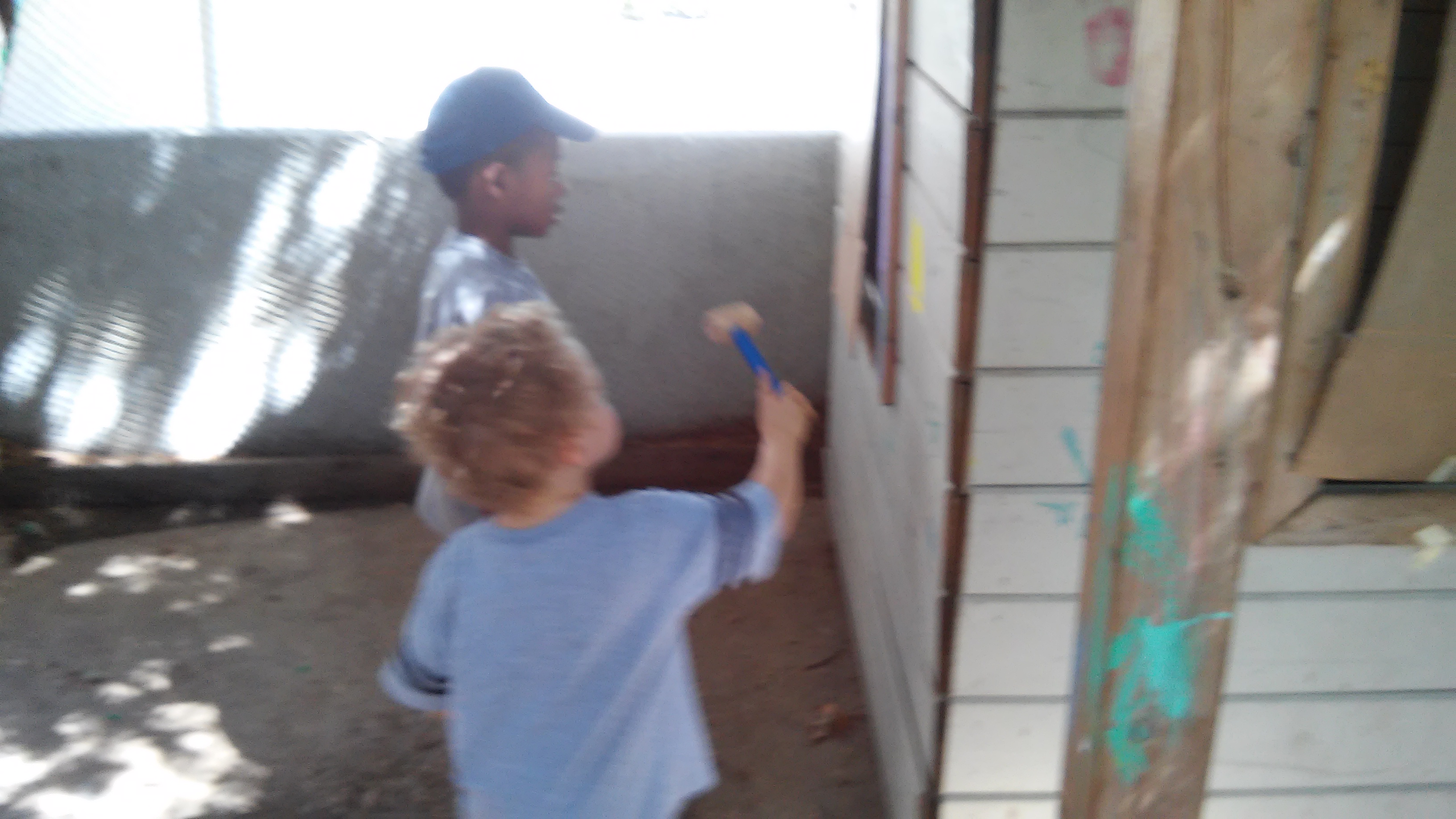
When your child continues to play a new role and theme over and over again, it is a sign that they are applying and processing the concepts that may be too complicated for them to integrate from a book. In this activity, we prepared our “house” for an upcoming hurricane.

20140828_114538

We packed emergency kits, boarded up our windows, and crouched as Miss Carrie used instruments to recreate the sounds of a hurricane outside.

20140827_110955

Cyclone in a Bottle

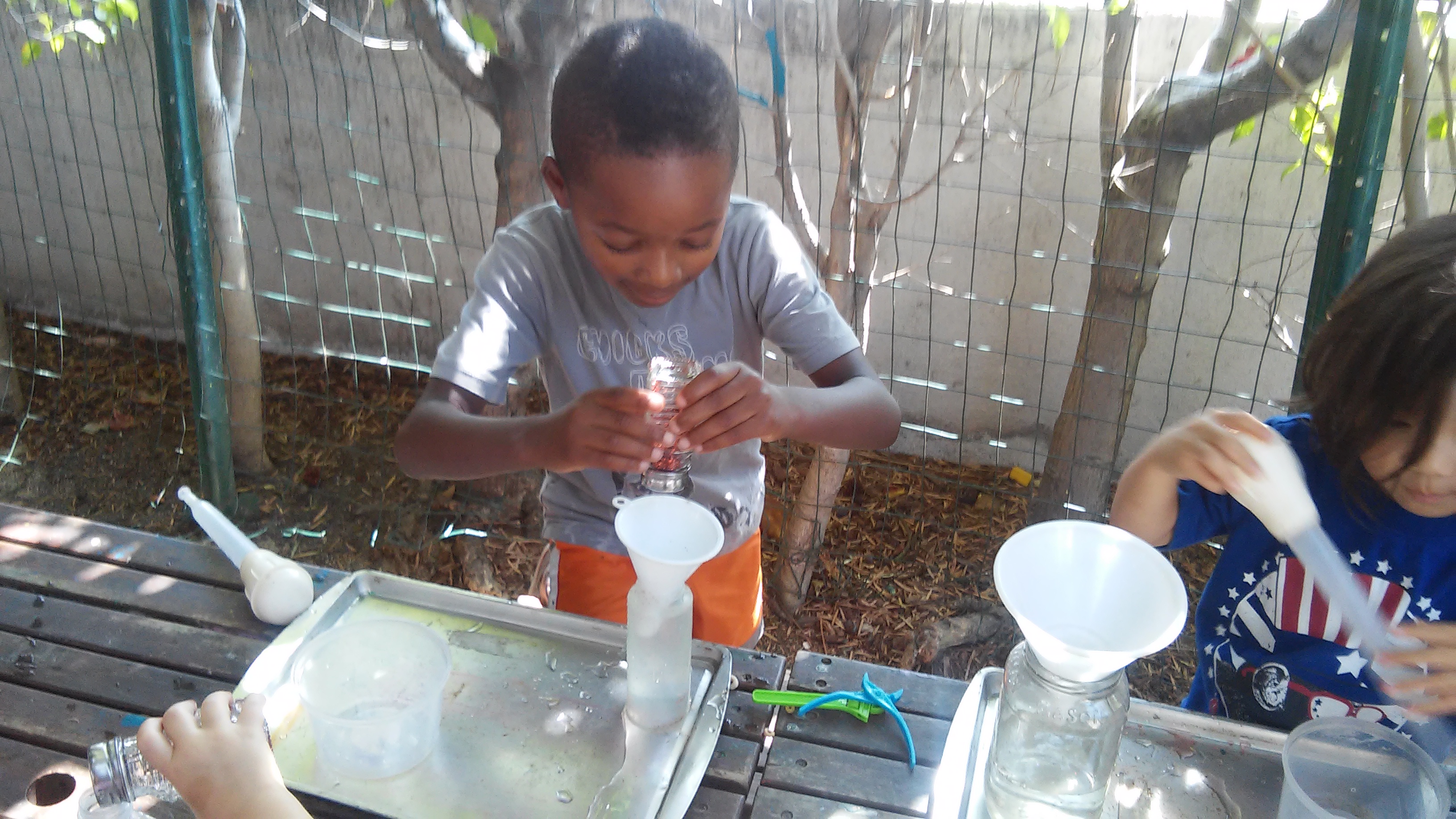
Your little scientists had a blast with this hands-on experiment. They used jars, bottles, water, a funnel, and dish soap to create a cyclone in a jar! To initiate this activity, your little one learned that tornadoes form when cold and hot air combine and spin very quickly.

cyclone4

They also learned that the swirling winds of a tornado are called a vortex. Following this brief introduction, they poured water into containers until they were about ¾ full.

cyclone

This component of the activity required teamwork. One of the students would hold the bottle, while the other one poured the liquid in. Then we added a few squirts of dish soap.

cyclone1

It really did not take much and we took the funnel off for this part so we would not have to wait for it to drip through the funnel. Then we added two drops of food coloring.

cyclone6

Next, we put the funnel back on to add in some glitter. This made the tornado easier to see. We talked about debris and how tornadoes have high winds that can break things and carry debris to other places.
cyclone2

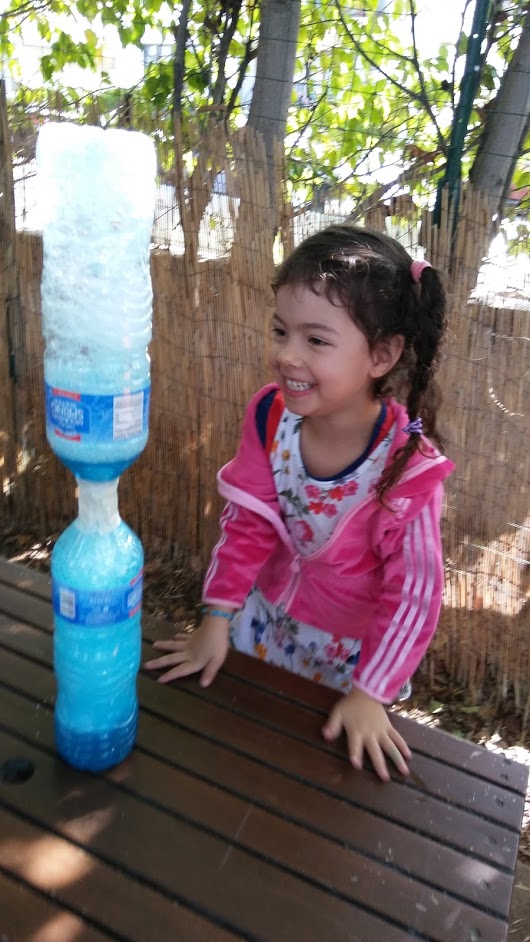
To view our tornadoes, the kids turned their bottles upside down and held them by the neck. Then they quickly spun the bottle in circular motion for a few seconds.

cyclone5

When they stopped, they were able to see a mini tornado forming in the water!As a result of this activity, your budding meteorologist experimented with the physical properties of water: density, volume, polarity, and cause and effect.

cyclone3

Students also participated in inquiry-based science, which enabled them to formulate explanations based on evidence, and then connect those explanations to the topic at hand.


Clouds and a Cotton Ball

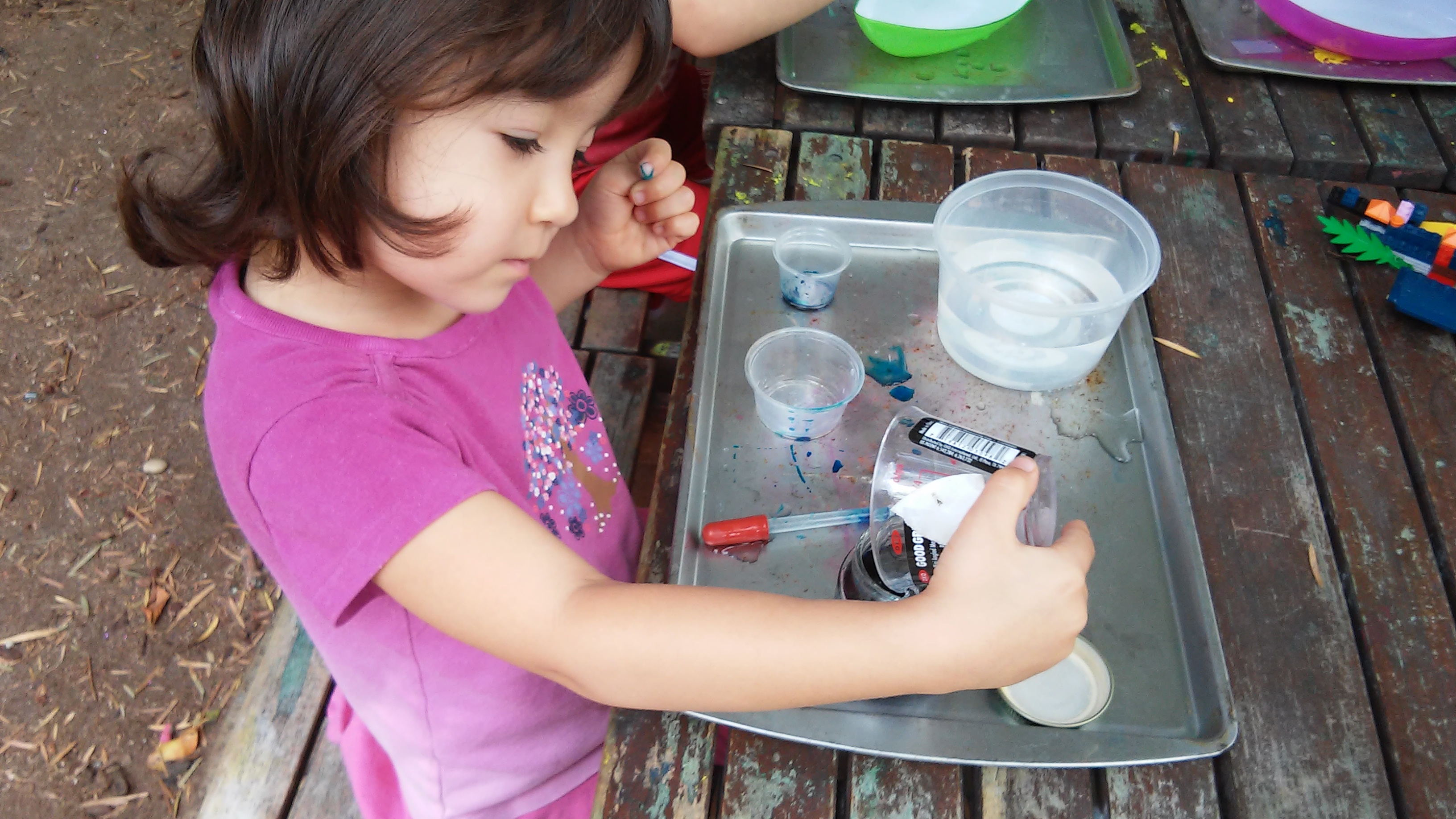
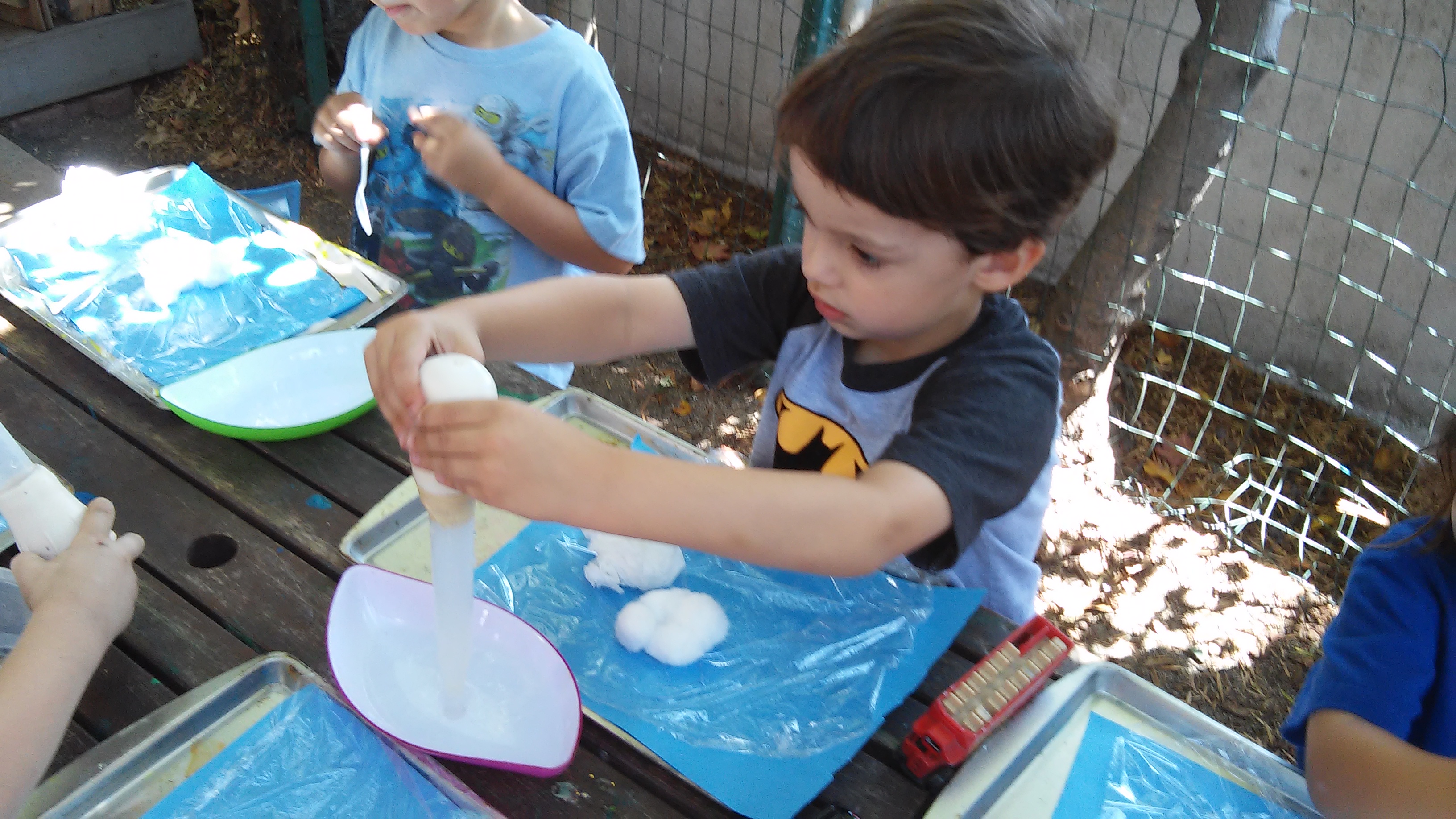
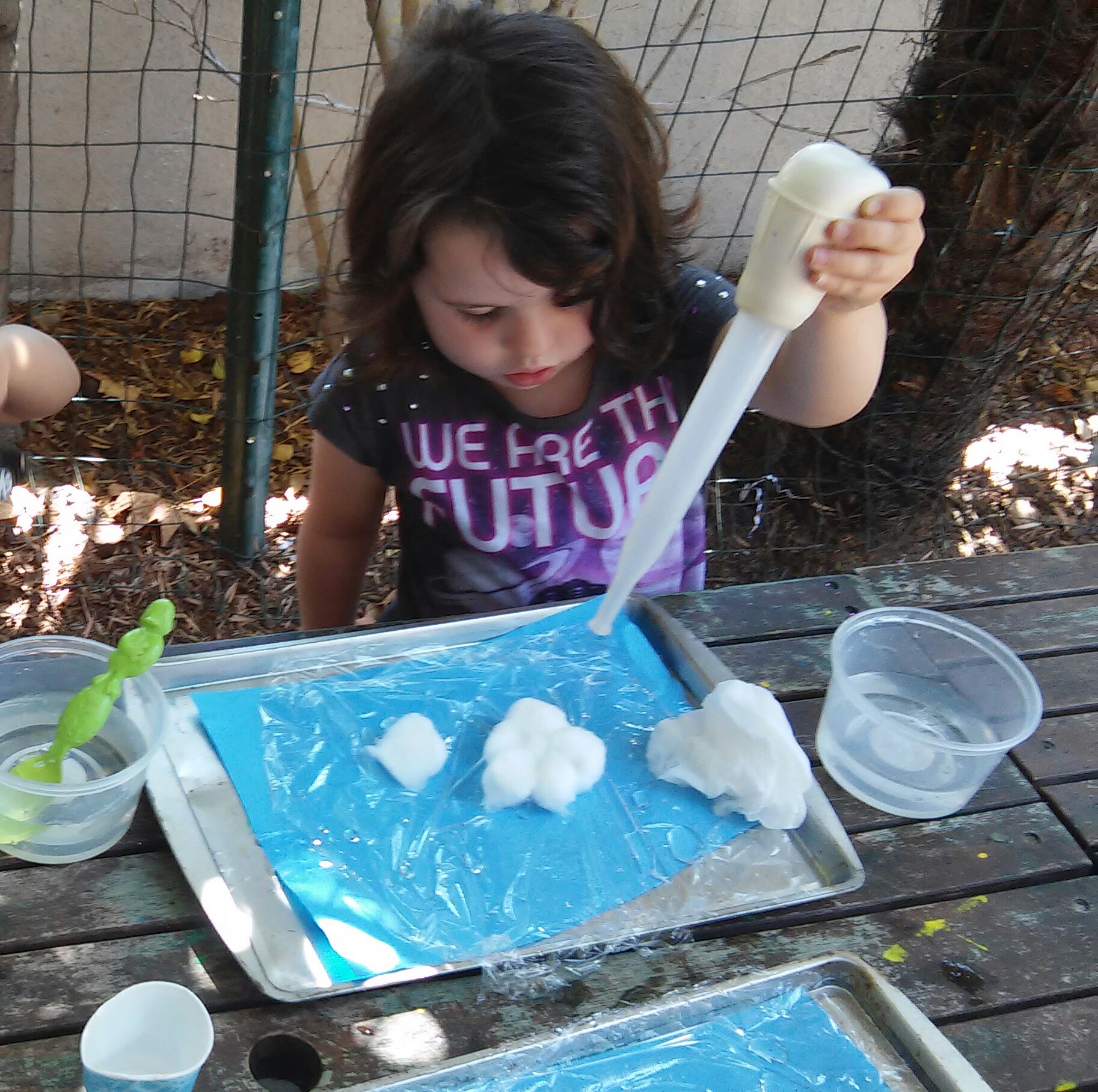
For this activity, your little one demonstrated how rain falls from clouds with the help of cotton balls, turkey basters, and water. To initiate this activity, your budding meteorologist learned about the physical properties of clouds, how they are created, hold water, and eventually form hurricanes. This activity accessed several areas of development.

cloud1

By adding water to the cotton balls, each student experimented with a variety of measurement concepts such as volume, density, and weight. As they regarded the varying amount of water seeping from their “clouds”, they experienced the physical components of cause and effect. Lastly, they acquired new language, as they discussed how their clouds changed shape with the added water.

cloud


Cloud Jars

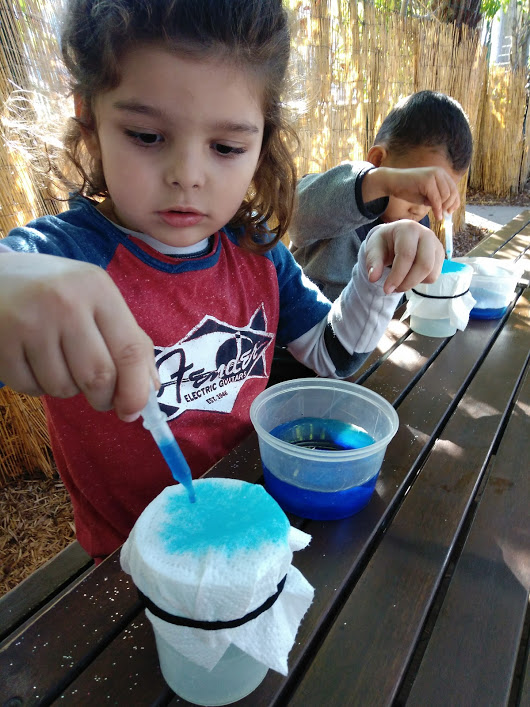
Using paper towels, eye droppers, and blue water, we explored the exciting science behind cloud and rain formation! Using the eye droppers, we dropped blue water onto the paper towels. As the towel became saturated, the “rain” began to pour inside the jar! Sensory and discovery activities offer a means to introduce scientific concepts to young children.

cloudjar

As they engage in the activity, they are practicing what they are learning. The actions they take part in allow them to experience a concept. As we were doing this activity, your little one was encouraged to talk about what they saw and what they were doing.

cloudjar2

Doing this enables their understanding of the physical and mental processes they are experiencing and provides them with the vocabulary to describe it.

cloudjar1