Letter S Snow Tracing

Although the formal study of reading and writing does not occur until kindergarten, young children are capable of recognizing letters and their functions.

Snowtrace

Providing regular opportunities to practice pre-reading skills, is essential in gaining knowledge of the alphabet and its association to how words work.
Snowtrace1

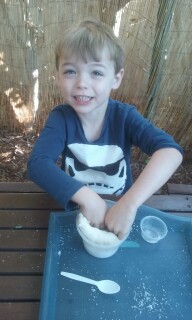
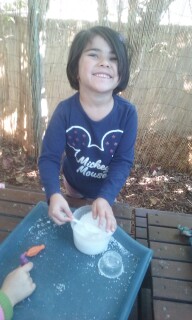
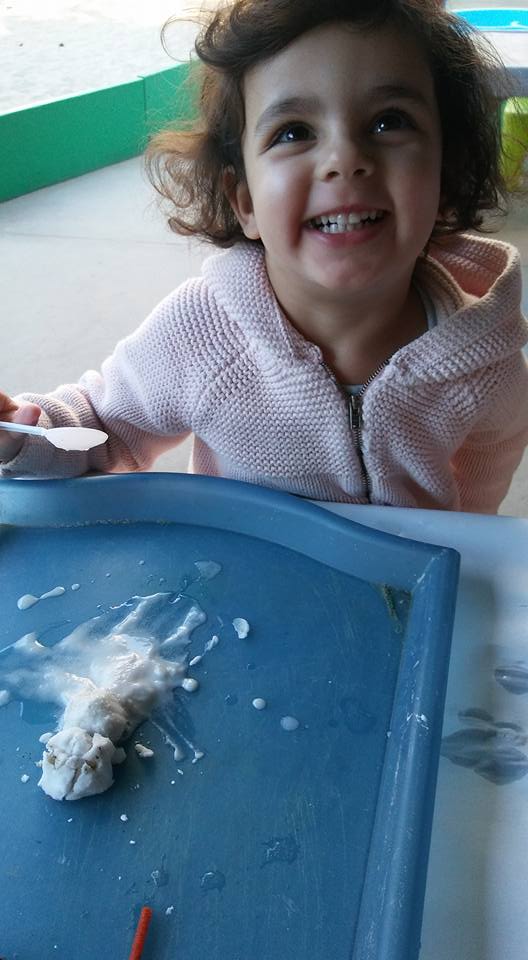
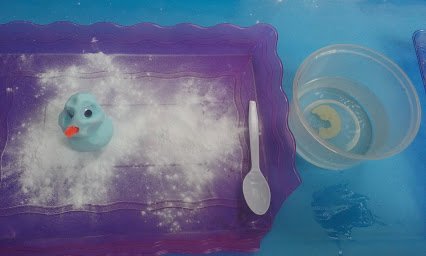
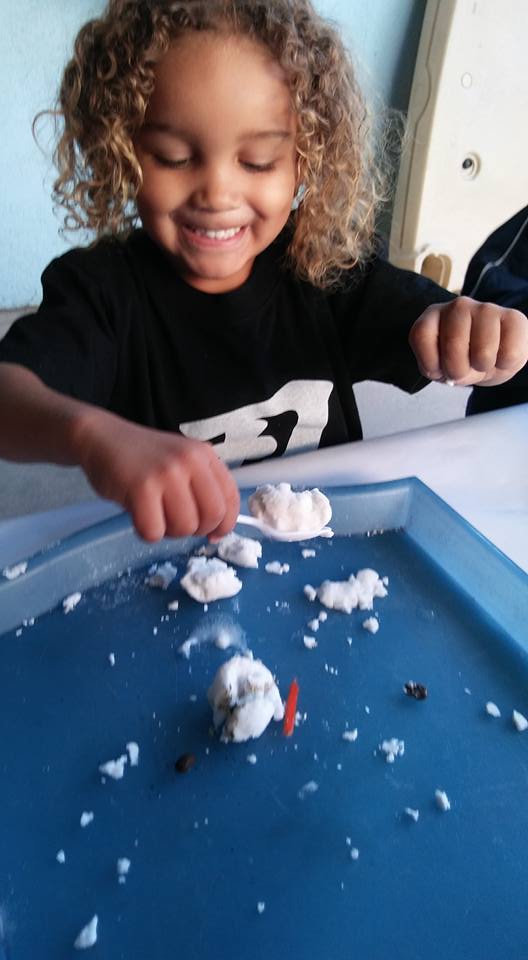
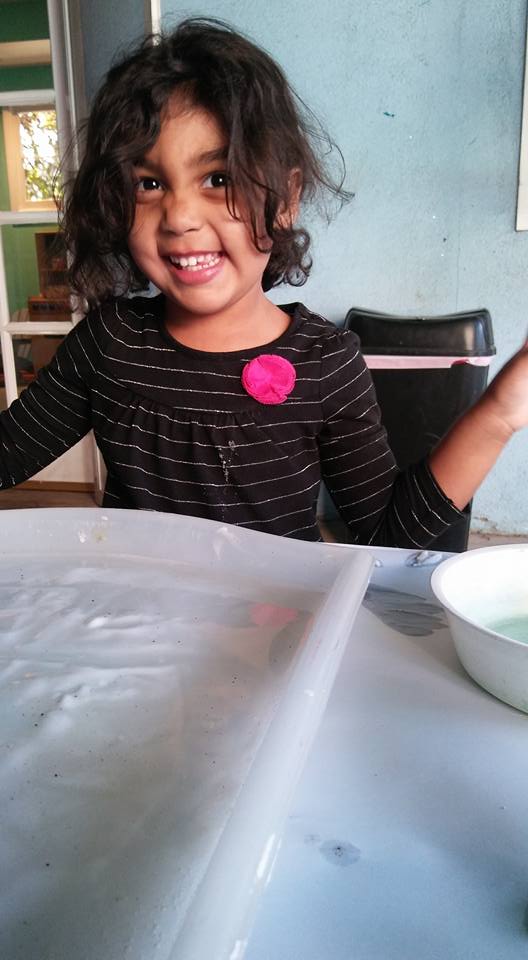
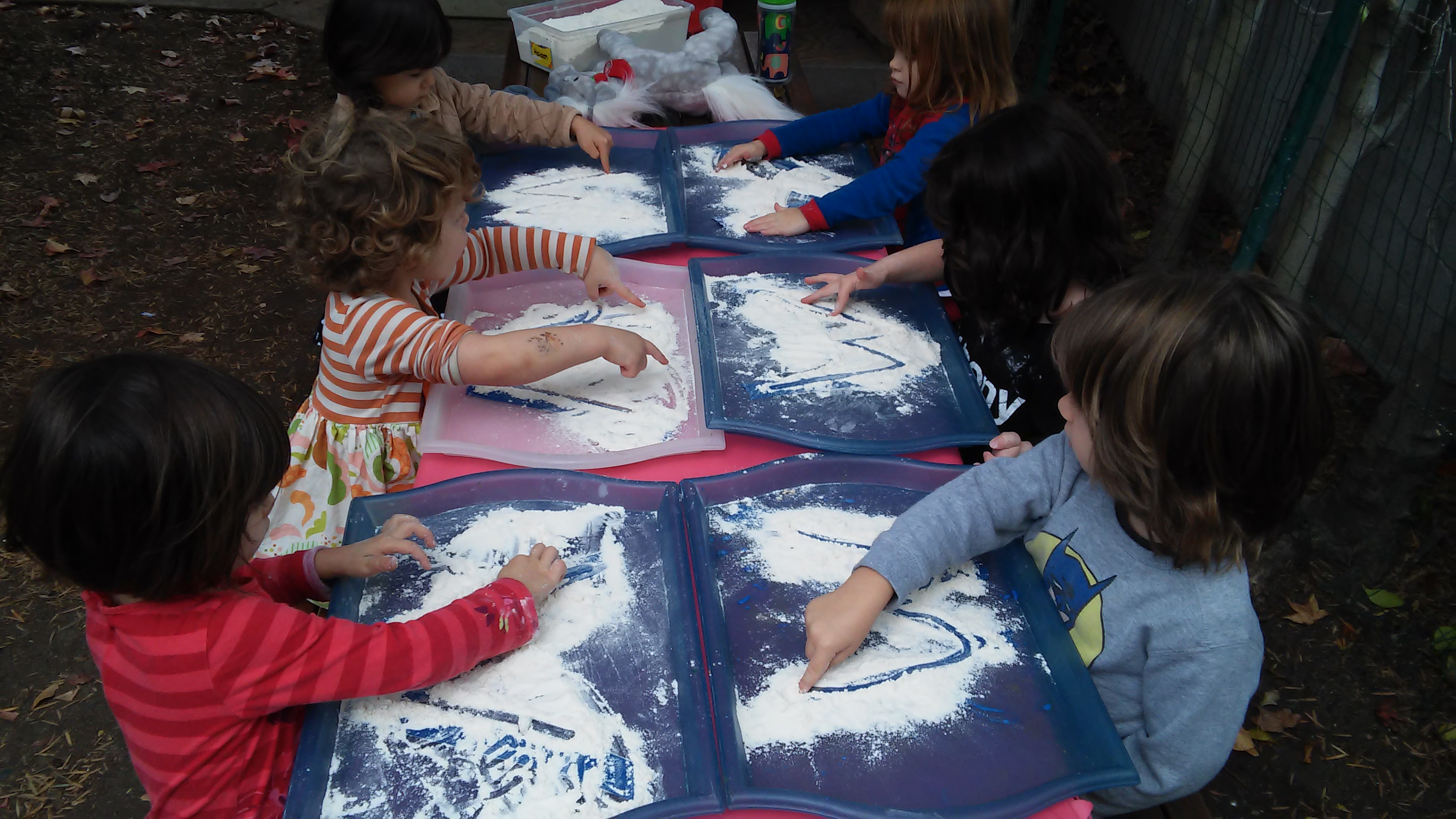
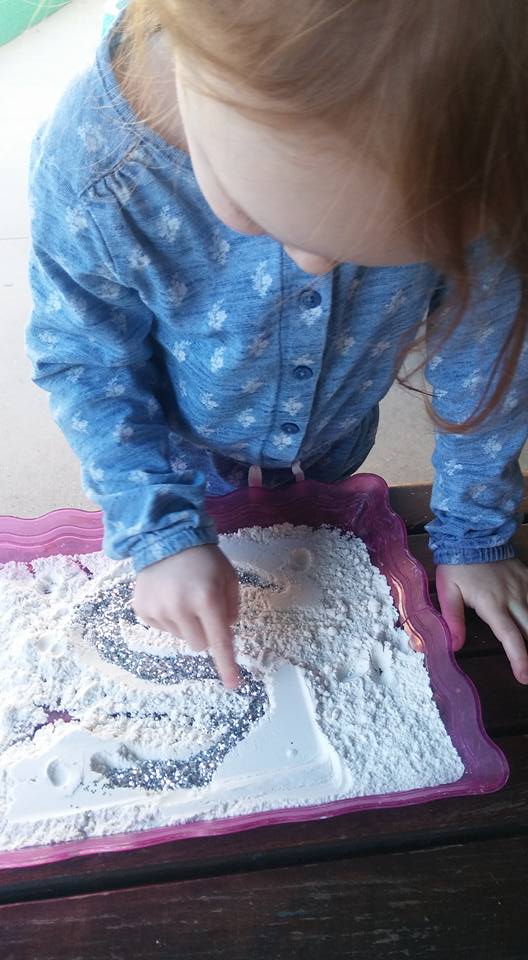
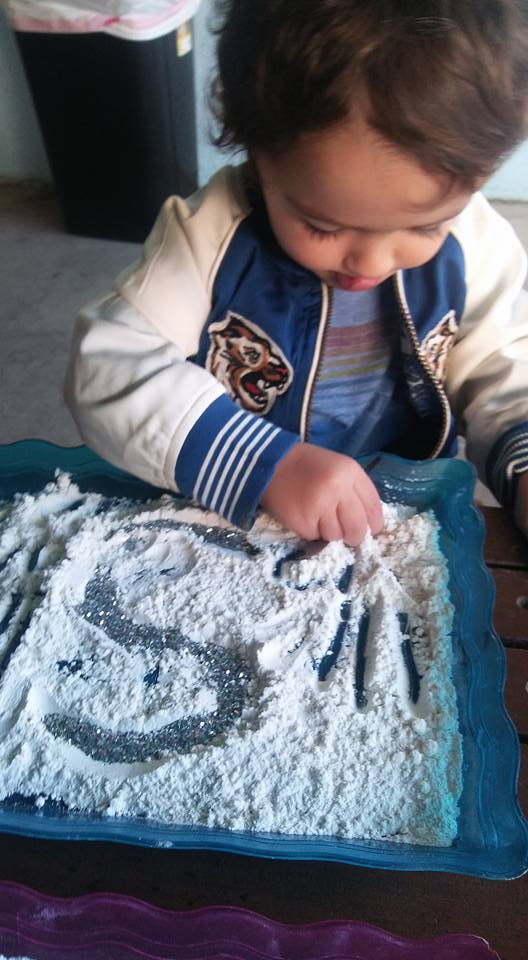
Using insta-snow and our fingers, we practiced tracing the letter S.
Snowtrace2

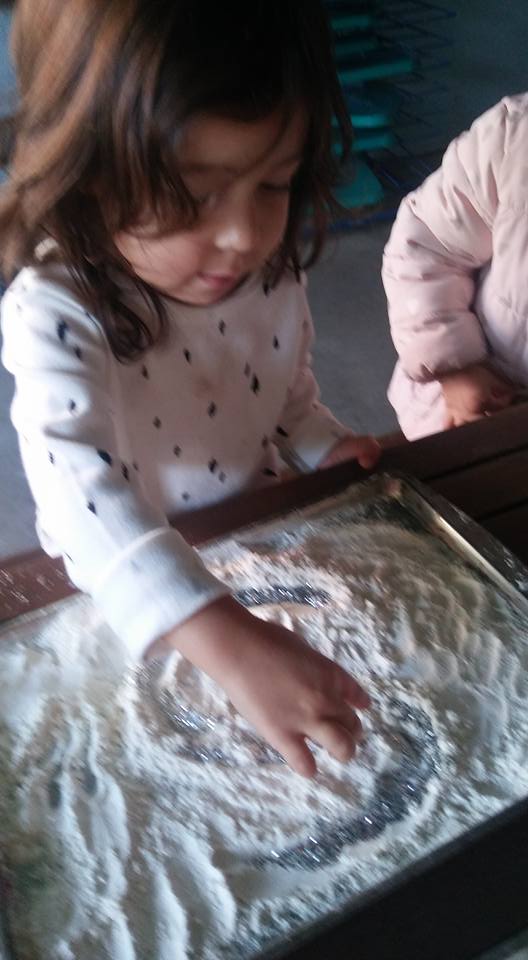
Throughout the week, we have been talking about different words that start with the letter S.
Snowtrace3

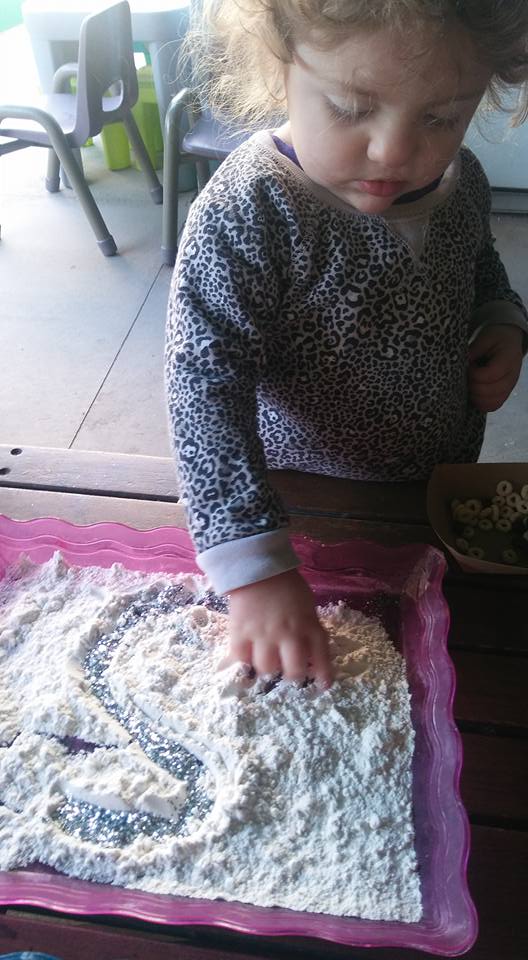
We have additionally been singing songs that reinforce the different sounds that S makes. Lastly, we traced these Ss, then constructed snowballs out of our insta-snow!
Snowtrace5

Sensory Play with Insta-Snow

Children (and adults) learn best and retain the most information when they engage their senses.

insta

By giving children the opportunity to investigate materials with no preconceived knowledge, you’re helping them develop and refine their cognitive, social and emotional, physical, creative and linguistic skillsets.

insta1

These sensory experiences provide open-ended opportunities where the process is more important than the product; how children use materials is much more important than what they make with them.

insta4

For this activity, we explored the physical properties of insta-snow. As your little ones manipulated the snow with their hands, they used many different words to describe its texture and temperature, giggling with their friends as they did so!

insta3

Dissolving Snowman

A primary vehicle to scientific instruction is that of example.

Dissolve1

mansnow

Because the study of scientific concepts incorporate both observation and experimentation, our classroom activities strive to both display and apply this type of instruction.

Dissolve

Dissolve2

This activity involved the science of how things dissolve.

Dissolve3

Your budding chemist first learned that all things are made up of molecules.

Dissolve4

mansnow3

We talked about how when some molecules interact, exciting things happen, and the word that describes this (in our experiment) phenomena is dissolution.

Dissolve11

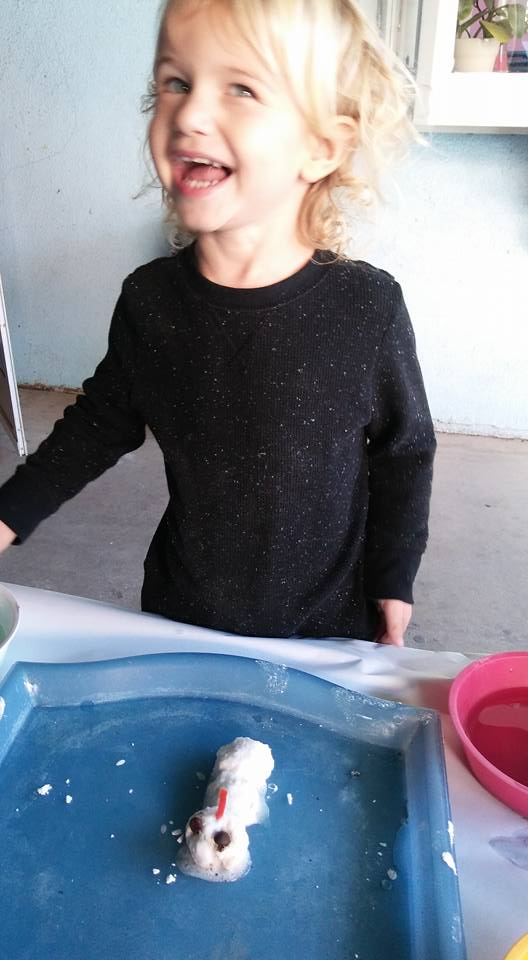
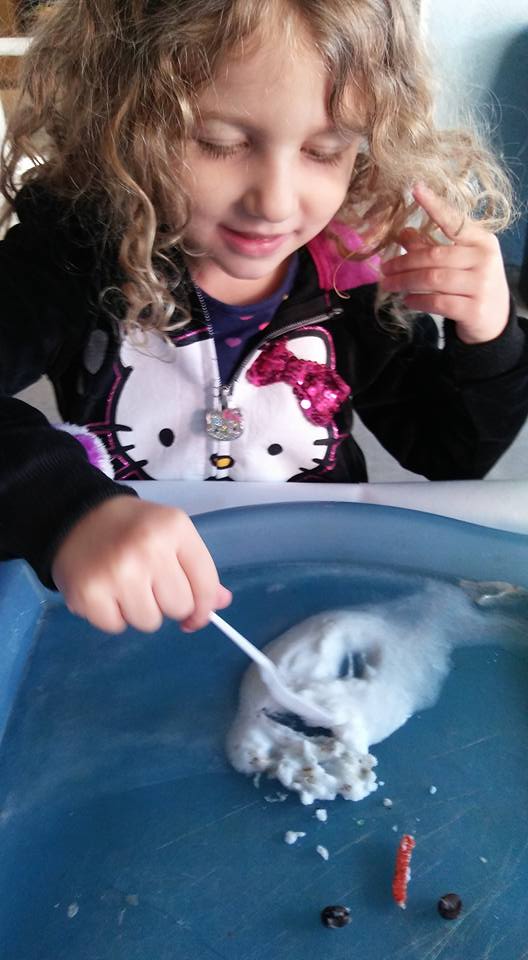
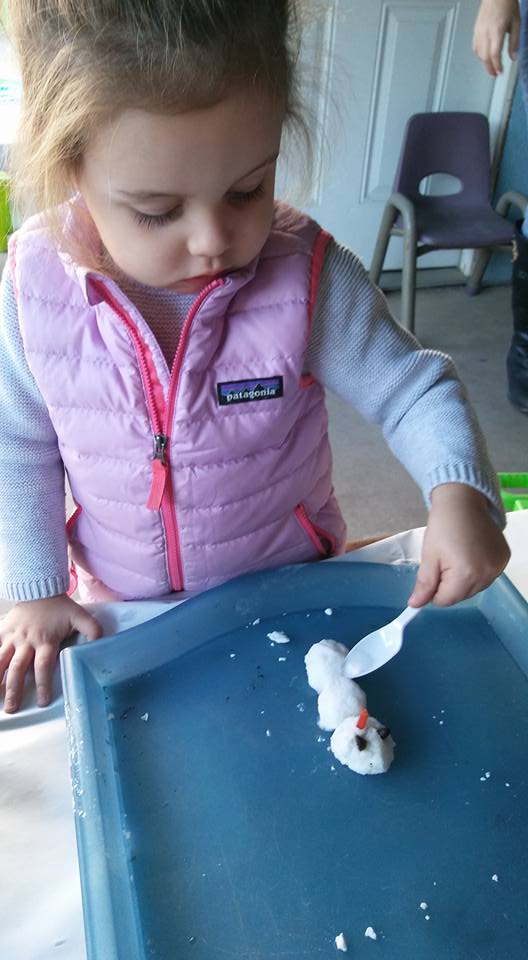
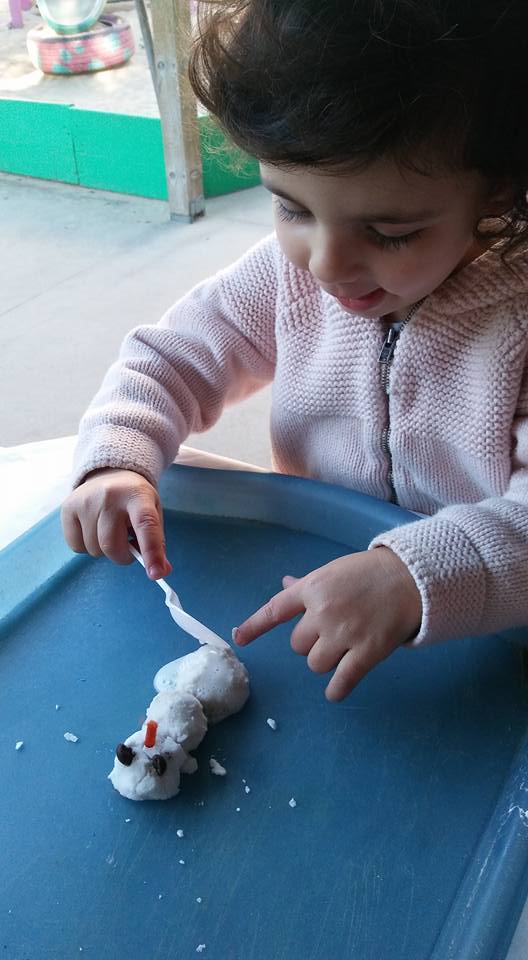
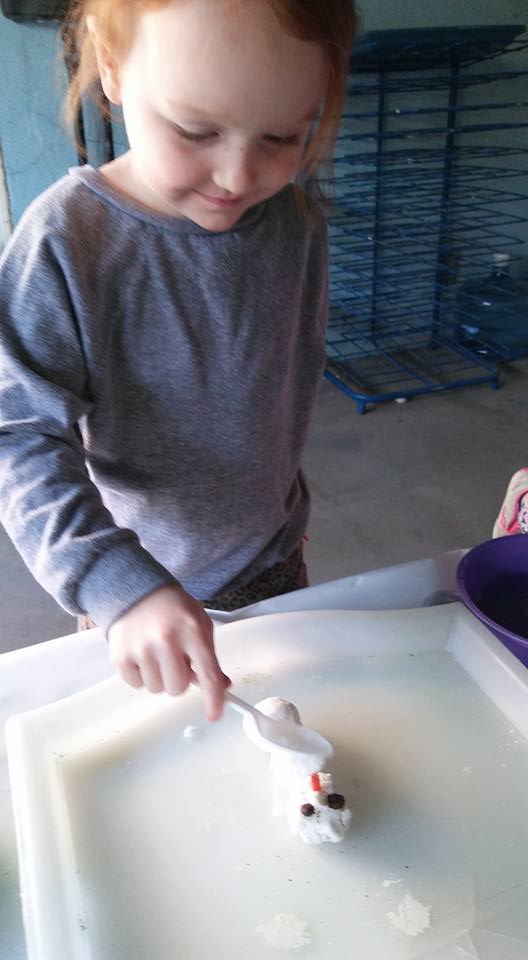
Using two different materials (baking soda and soap), we constructed snowmen and observed how our creations dissolved once we added vinegar to them.

Dissolve10

We then discussed why we thought some snowmen “disappeared” faster than others.

Dissolve6

Everyone enjoyed constructing and then watching as their creations disappeared!

Dissolve12

Walrus Habitats

Your little one participated in yet another fun sensory activity!

20141128_104437

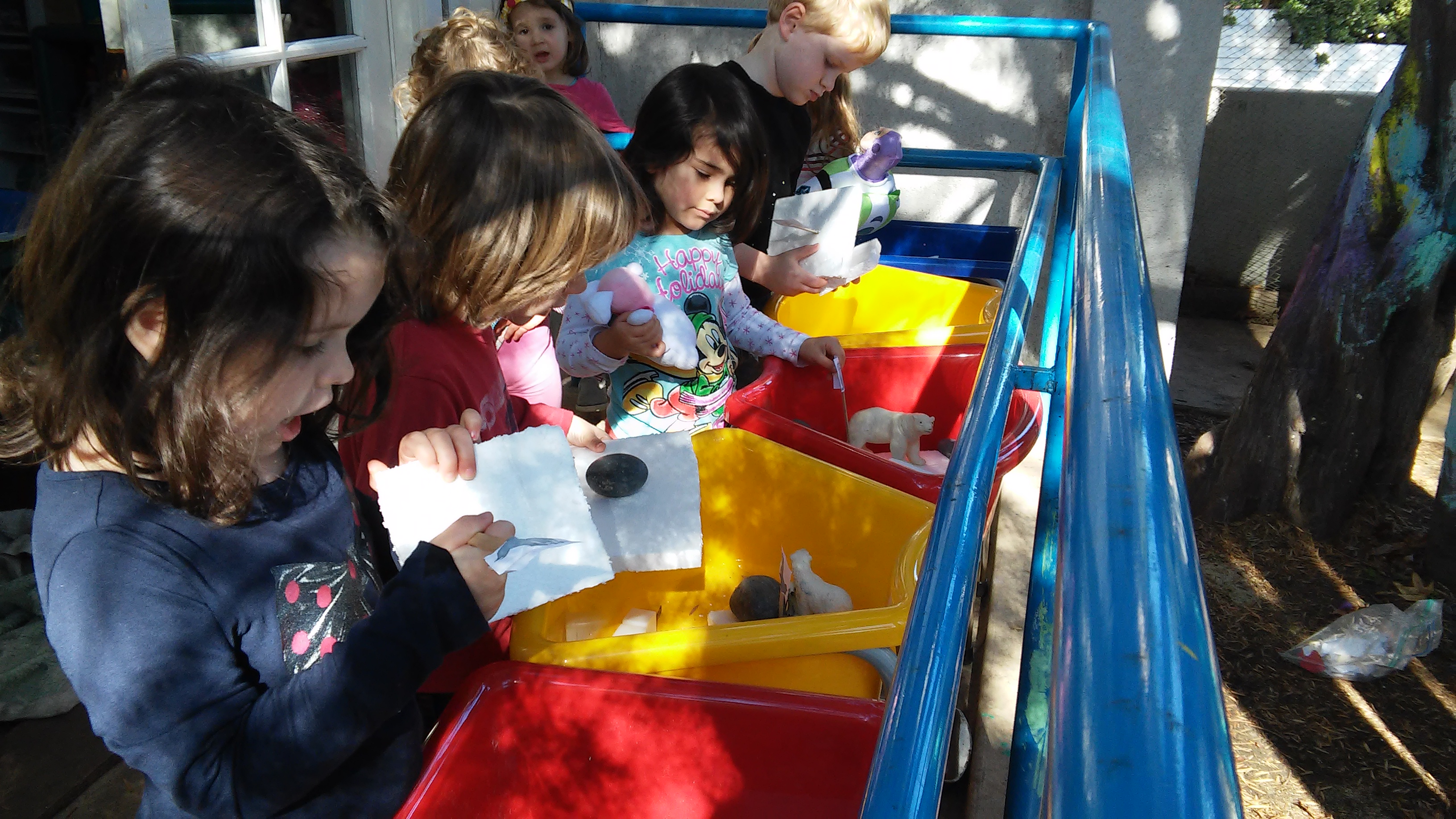
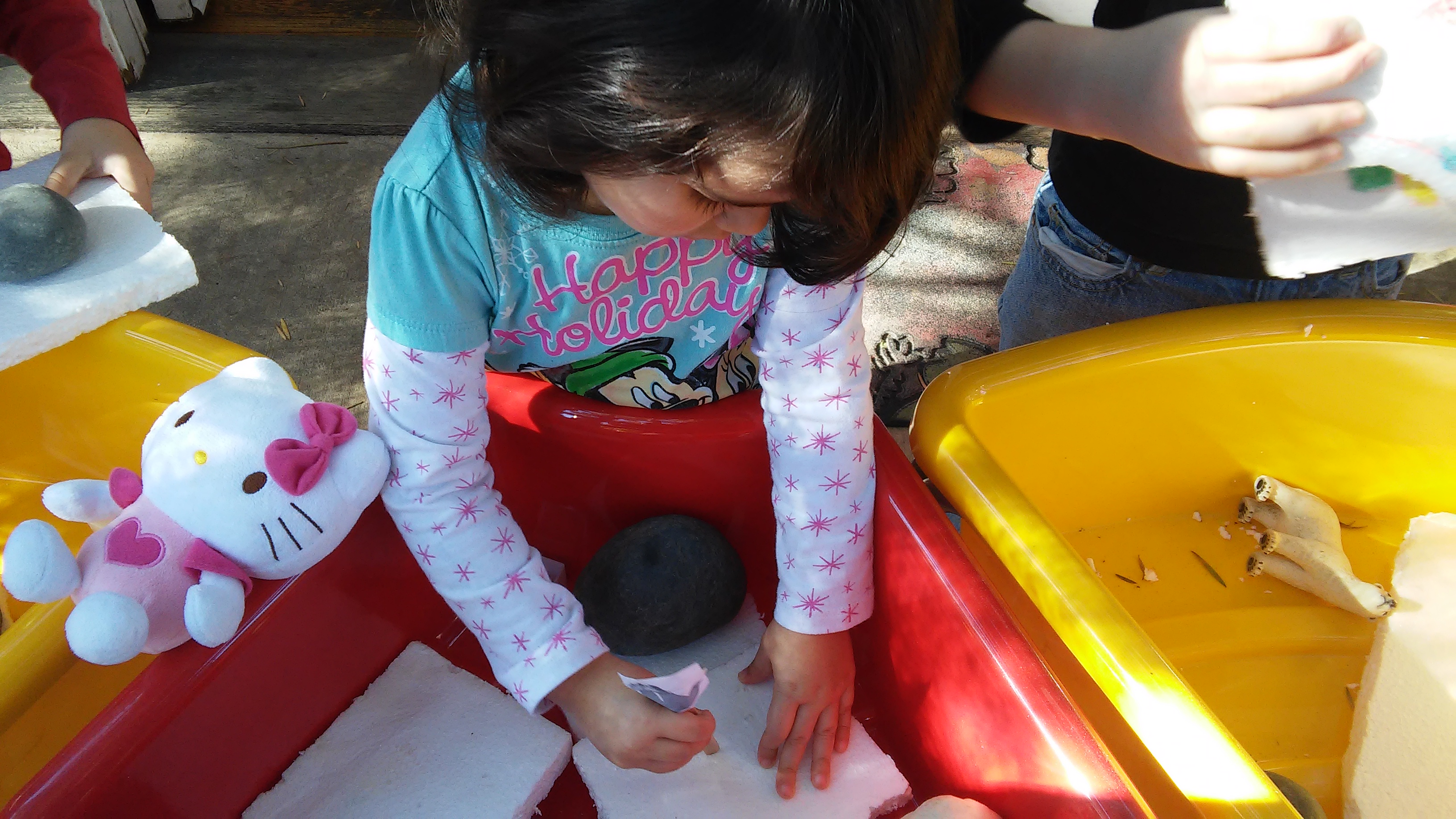
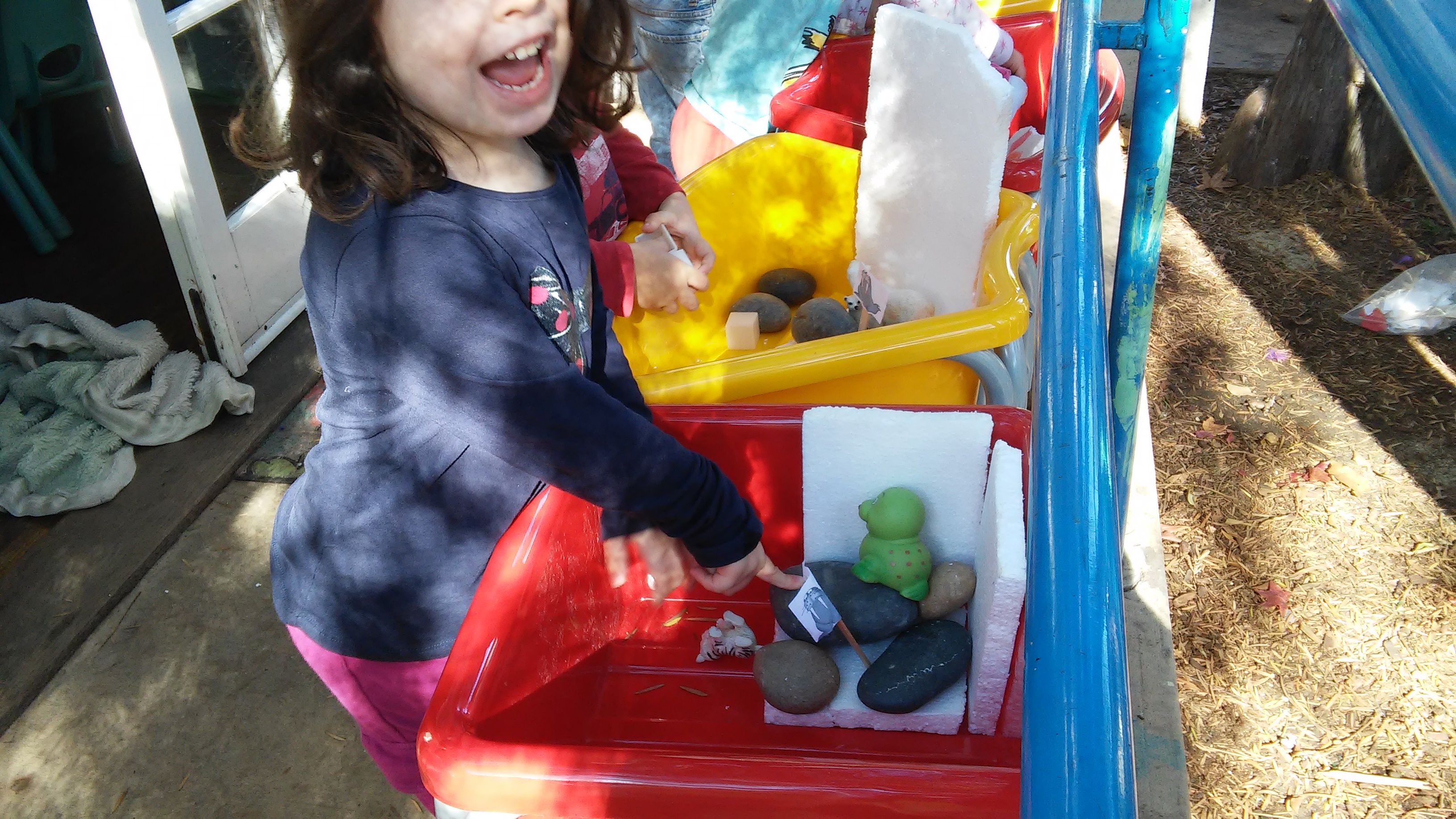
Using large styrofoam as ice, rocks, and walruses, your little one created their very own winter wonderland!

20141128_104552

We began this activity with a discussion and review of the various arctic animals that we have been learning about.

20141128_104603

We then talked about where these creatures lived.

20141128_104718

Our discussion concluded with a review of the new vocabulary that we have been learning, such as glacier, albatross, walrus, Antarctica, and leopard seal.

20141128_104609

Your little explorer then happily constructed the perfect living space for his walrus. This was the definite favorite for the week, as your little one applied their understanding of various vocabulary and scientific concepts.

20141128_104422

Fine Motor Snowman

Fine motor activities are the most difficult for young children to practice on a consistent basis.

20141129_122812

Because they are mobile and constantly on the move, they tend to prefer gross motor activities such as jumping, running, pulling, and pushing.

20141129_123010

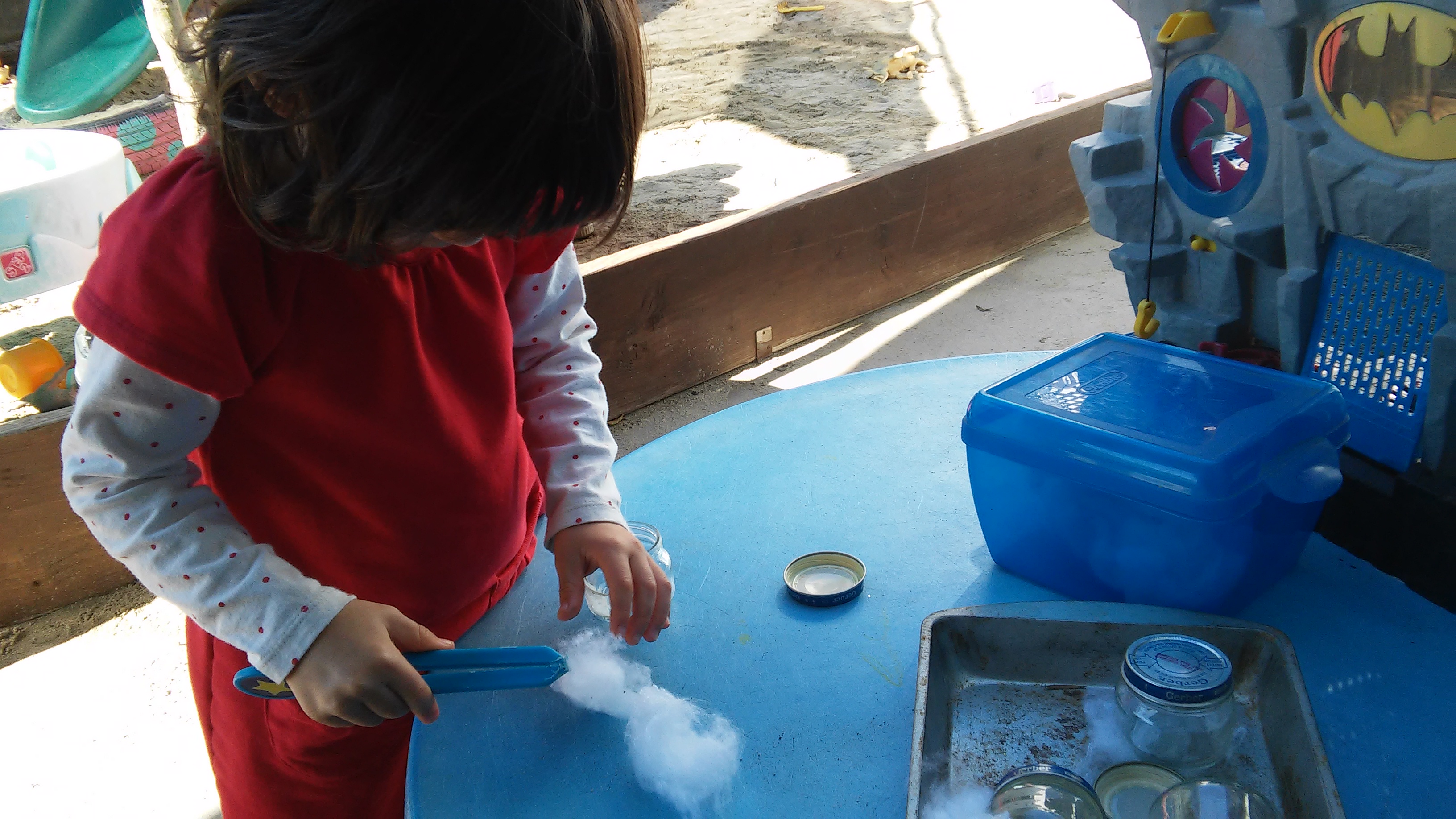
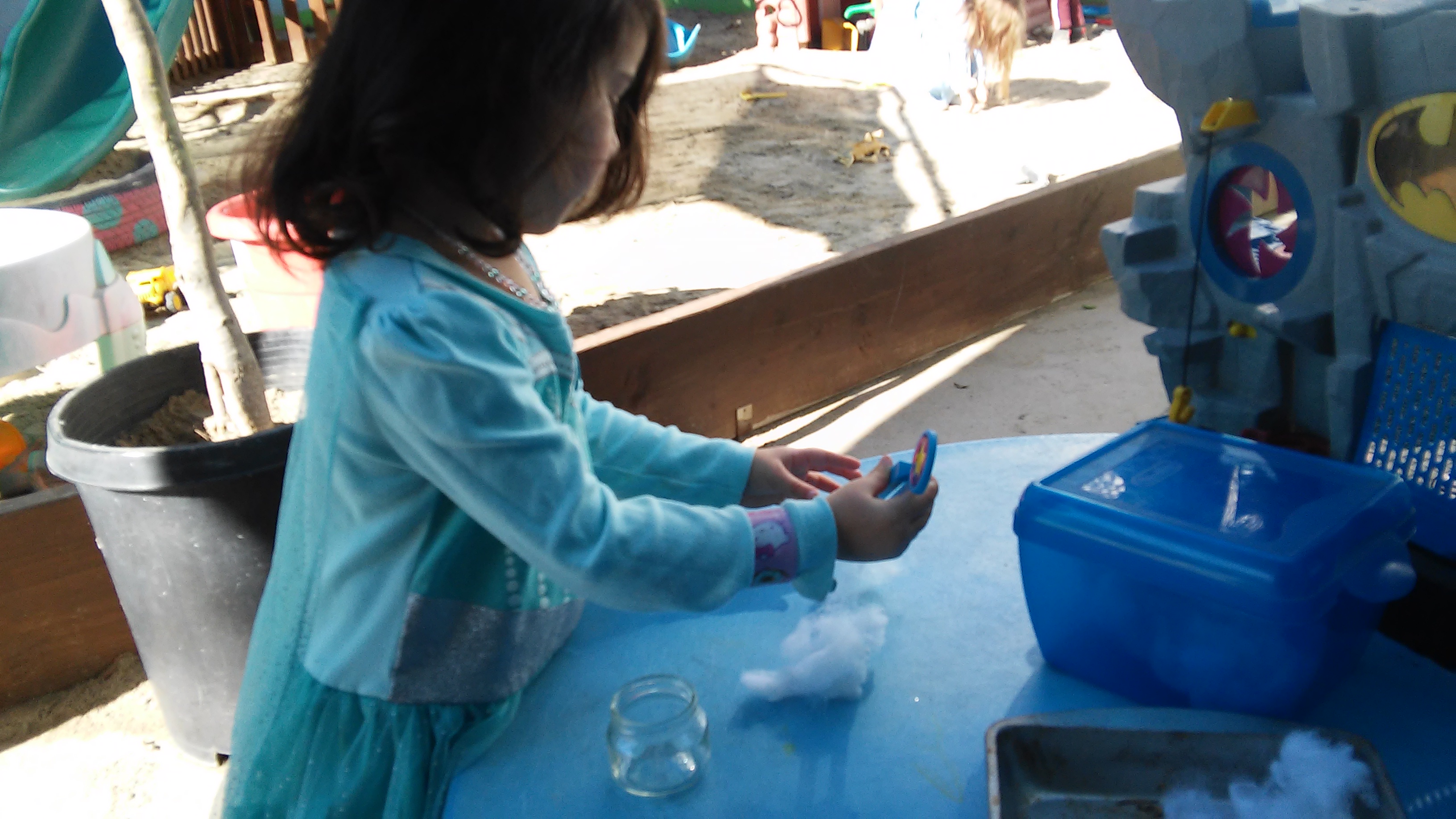
To continue to hone these necessary skills, your little one participated in a special activity designed to build and refine the small muscles in their hands.

20141129_122331

Experiences such as these aid your little one’s ability to grasp a writing instrument, manipulate tiny objects, and handle scissors. For this activity, your little one was directed to grab cotton with a large pair of tweezers. Their task was to maintain a firm grip on the cotton as they placed it into the jar.

20141129_122411

20141211_161756

Ice Fishing

Animals use a number of tactics during the winter months to survive.

icefish

Polar bears will hibernate, while certain types of birds migrate to warmer climates. Fish remain in rivers and lakes during winter, making ice fishing a popular activity for people living in colder climates.

icefish1

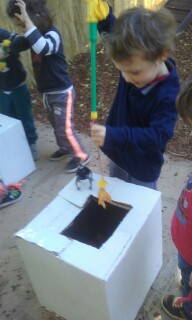
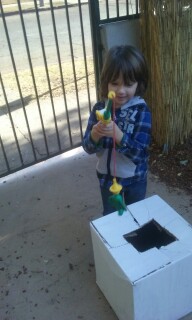
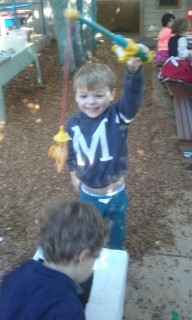
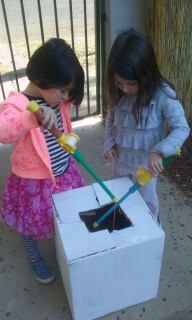
Using a box covered with white paper to resemble ice, fishing poles, and magnetic fish, we went ice fishing!

icefish4

To truly understand the definition of a concept of a word, young children must act physically on a concept in which the word is used.

icefish5

When children have tested a concept by exploration and manipulation, then it has meaning.

icefish2

Ice fishing provided the avenue to explore new vocabulary, which included the words fishing pole, casting, and reeling.

icefish3

Walrus Puzzle

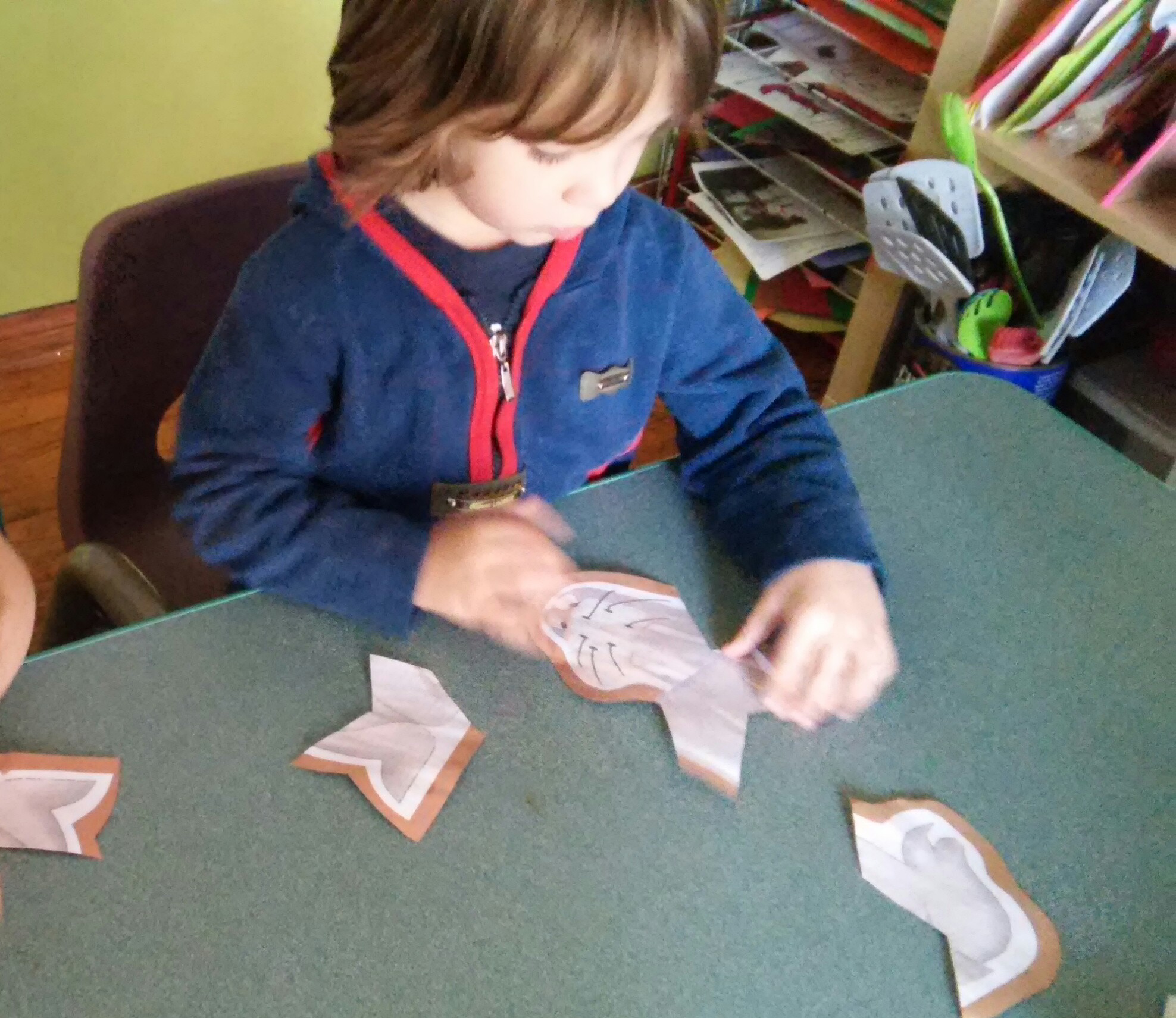
Using pre-cut pictures, we practiced putting walruses together! Puzzles help young children build the skills they need to read, write, solve problems, and coordinate their thoughts and actions – all of which they will use in school and beyond. They also help them begin to recognize colors and shapes, and come to realize that the sum of parts make up a whole – a concept that will help them with math later on. By arranging pieces into the puzzle, your little one also develops the muscle group used for writing, or the “pincer” grasp.

20141208_144905-1

Letter W Flour Tracing

Writing is a skill that most people use every single day, whether it be writing a note to a friend or writing a check to a utility company. Even in the age of technology, the written word is still everywhere. But how do you teach a young child the proper way to write? The first step is simple… pre-writing. Pre-writing is learning the skills necessary to begin writing. Pre-writing is an important step because it teaches children the correct way to hold a pencil, how to use a good, firm grip, and emphasizes the use of fine motor skills. Pre-writing also helps children with the development of hand/eye coordination, learn that words go left to right, and that lines of writing go top to bottom on a page.

20141211_104403

Ideally, the first materials used are not markers and pencils but materials that allow children to strengthen the muscles in their hands needed to properly hold writing implements. We add a tactile (kinesthetic) component when we practice shaping the letters with different materials. Shaping letters with dough, tracing them on textured paper cutouts, and writing in the sand or salt trays all help children internalize the shape of the letter, while developing their fine motor skills.

20141211_104412

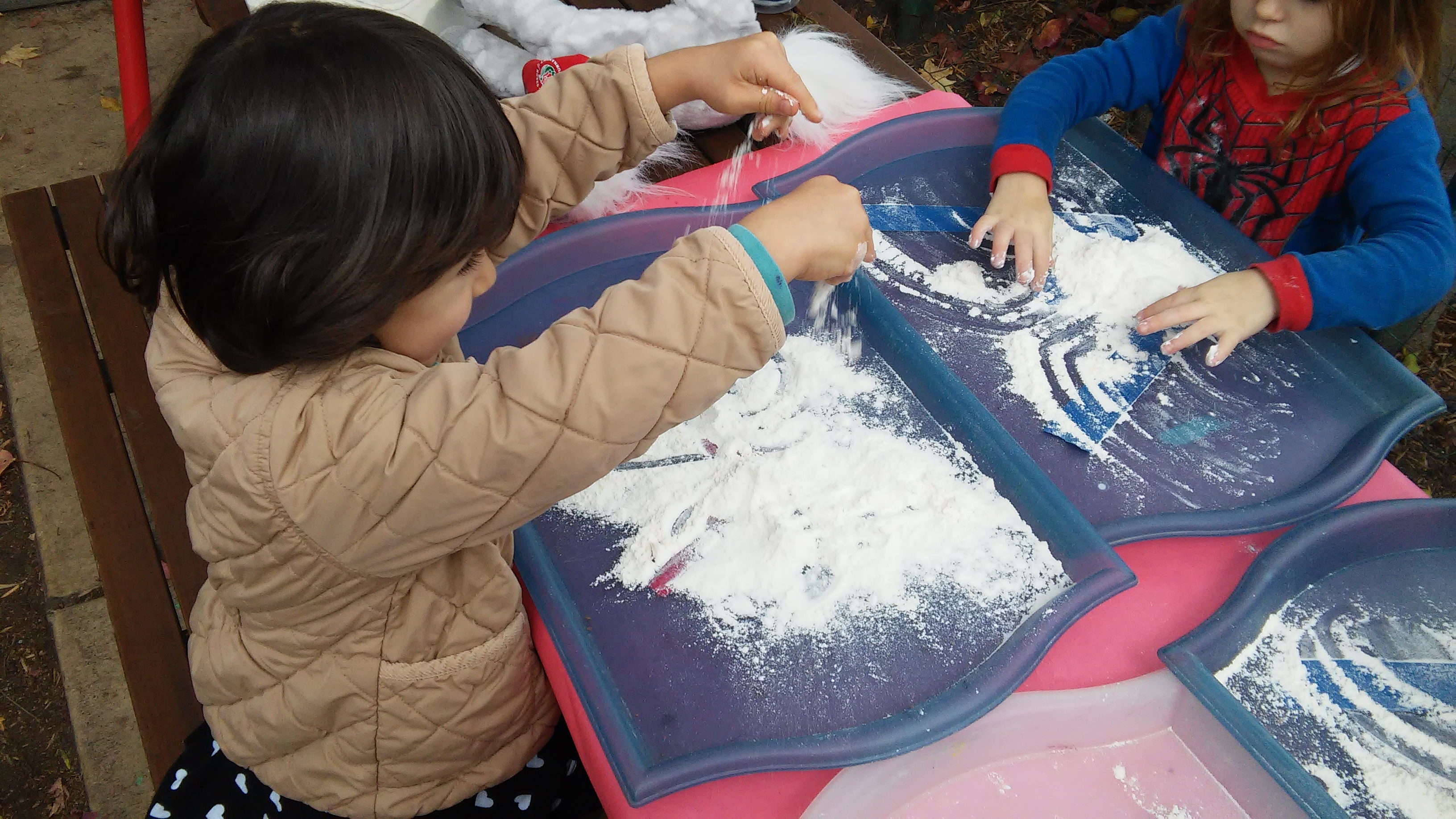
For this activity, we practiced tracing the letter W with flour! Your child was directed to trace the letter W into the flour. Doing so helped your child develop stronger familiarity with the structure of W, integrating the sense of touch to create a visual representation of the letter.

Ice Skating

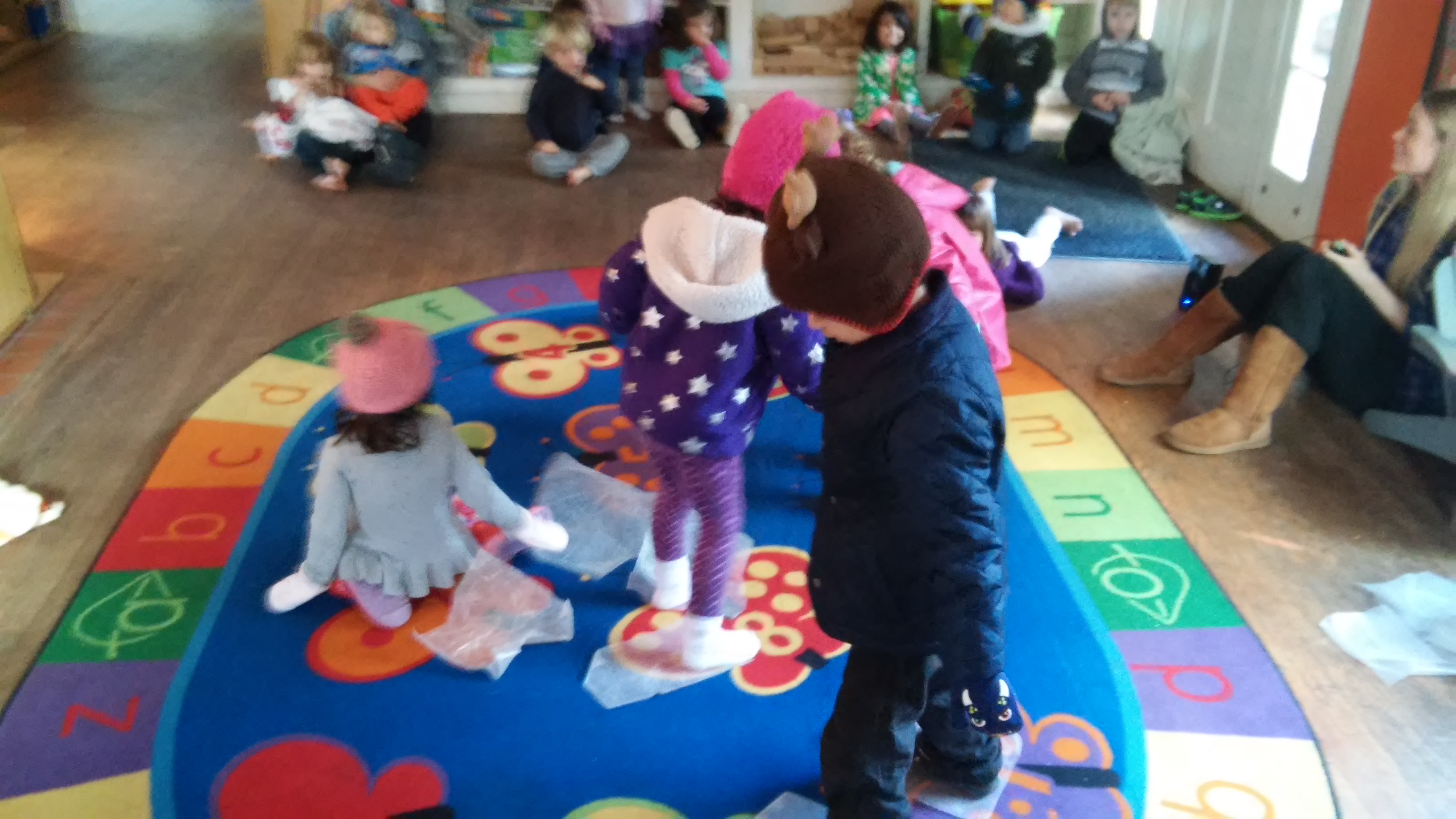
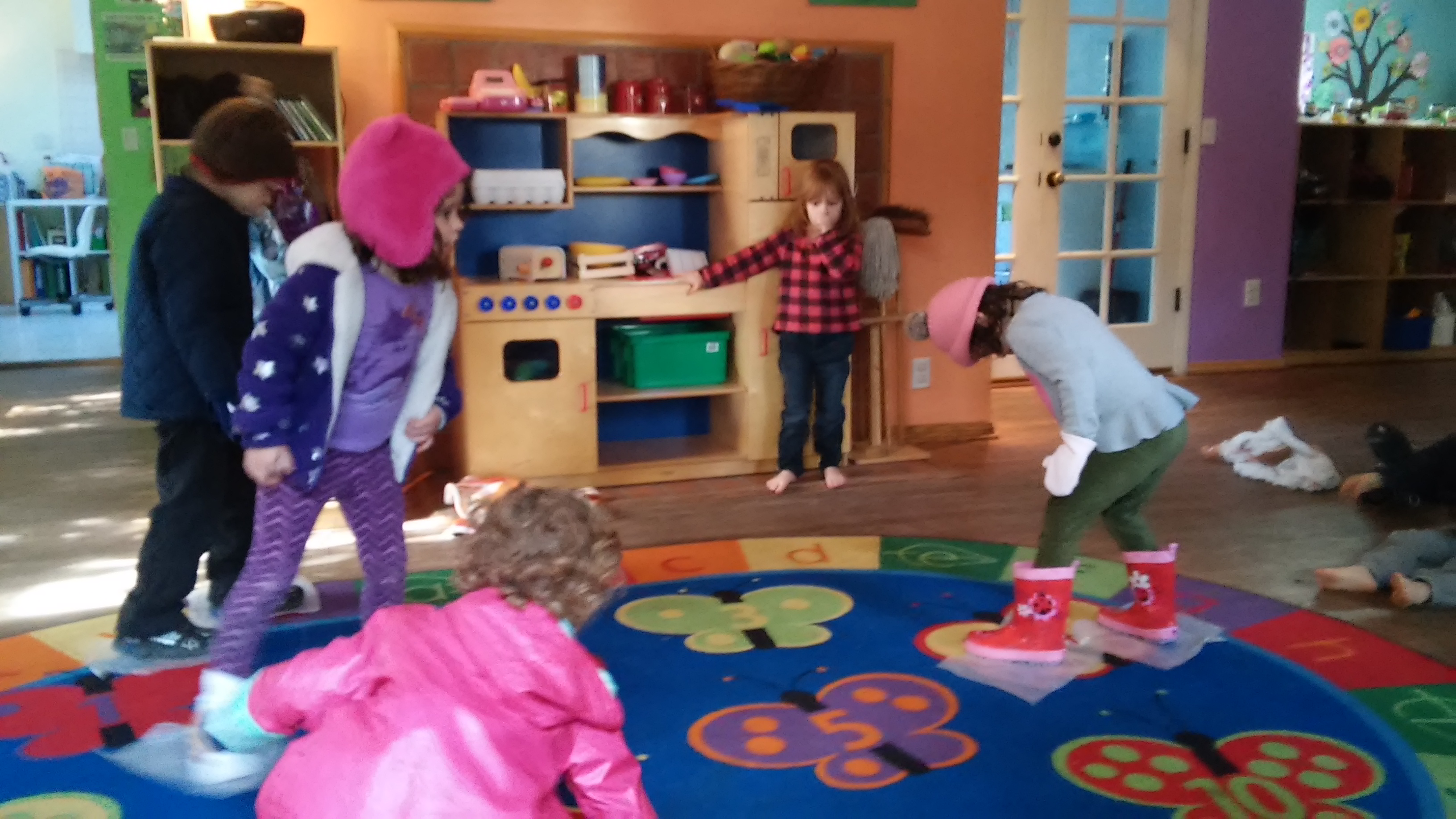
Using wax paper, we ice skated at school!
20141207_222853
We began the activity with a discussion of the weather, the different kinds of weather we see throughout the year, and the different kinds of things we wear for cold weather.
20141207_222847
We then put on our hats, scarves, and mittens, and skated around the room to waltz music!
20141207_222229
Weather activities teach young children about the exciting world that they live in.
20141207_223013
Talking about how weather changes helps your little one to make associations to how the world around them affects their daily lives.
20141207_223531 - Edited

Ice Sculptures

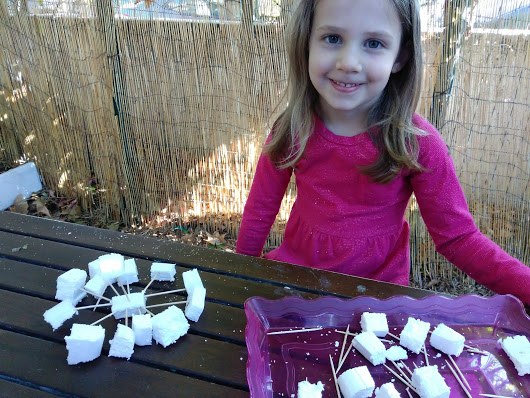
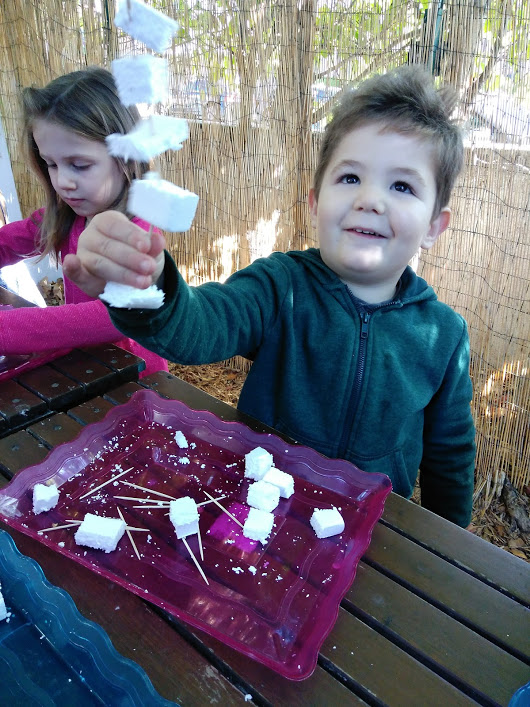
Using toothpicks, and styrofoam pieces, your little architect constructed their very own structures!
sculpture
 Playing with a variety of building materials is critical for the development of spatial thinking, or envisioning where different items go in relation to each other as they build.
sculpture4
scupt3
Deciding how to structure the pieces, connect them together, and configuring whether they are aligned or perpendicular to one another, are just the kinds of skills that support later learning in science, technology, engineering and math.
sculpture2
scupt5