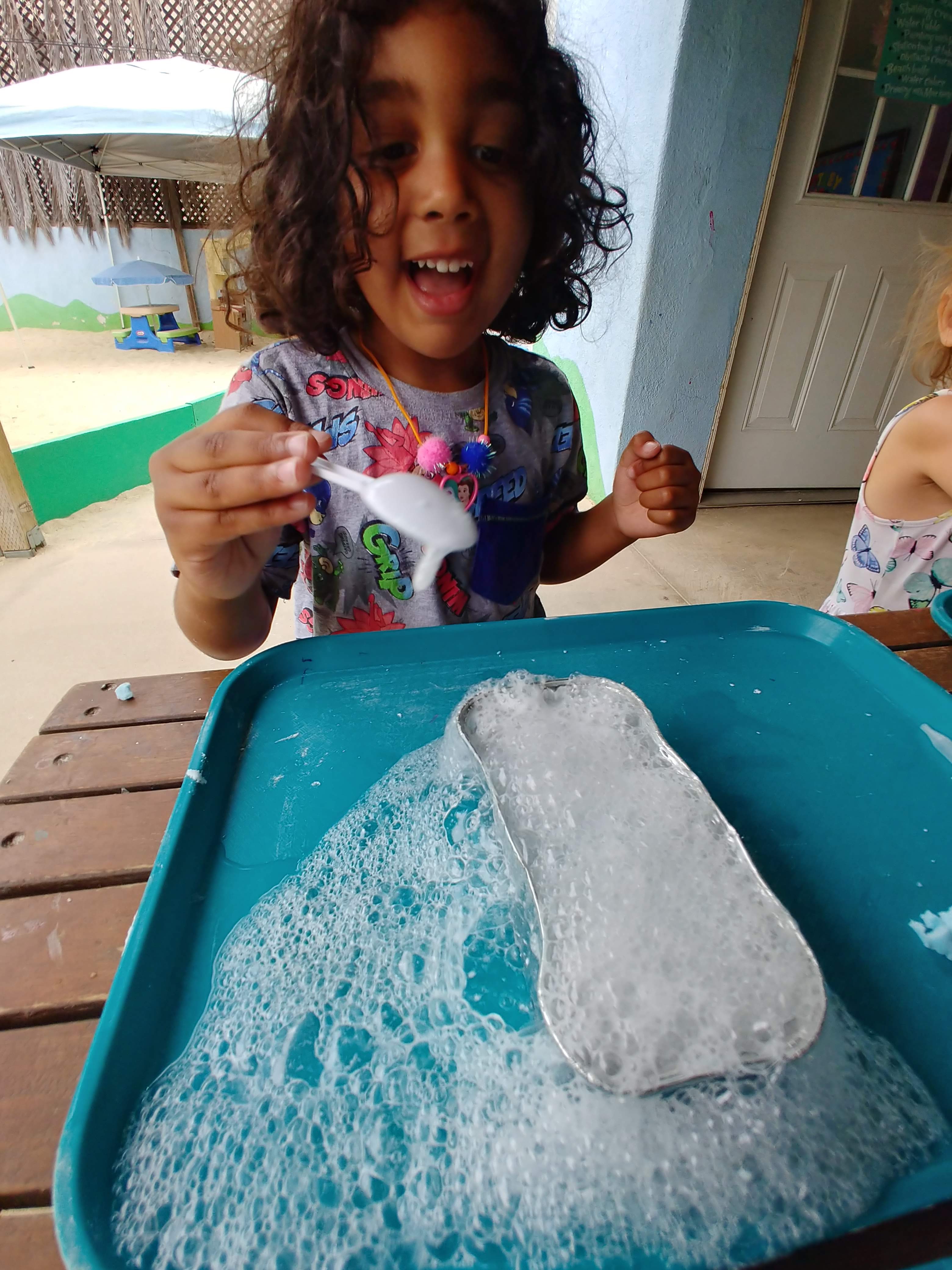
Play Dough Savannahs

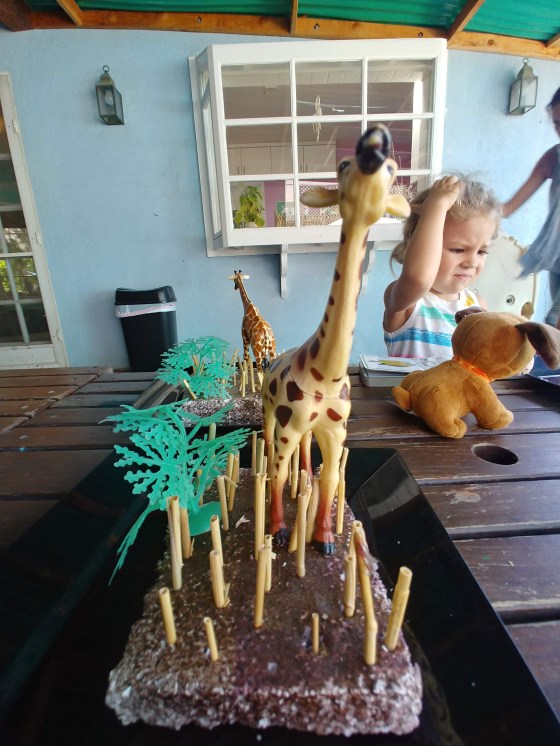
One thing we like to do in Miss Carrie’s class is create environments.

20180810_102410_hdr

We do this with a variety of materials to make these activities fun and stimulating.

20180810_102226_hdr

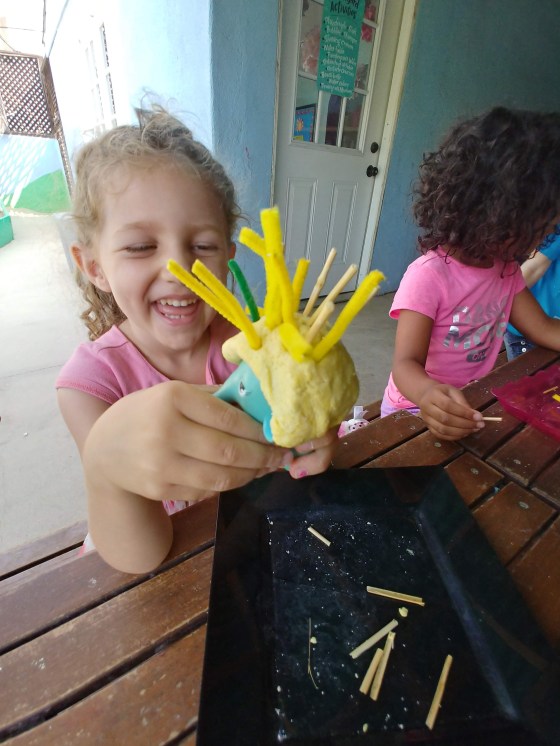
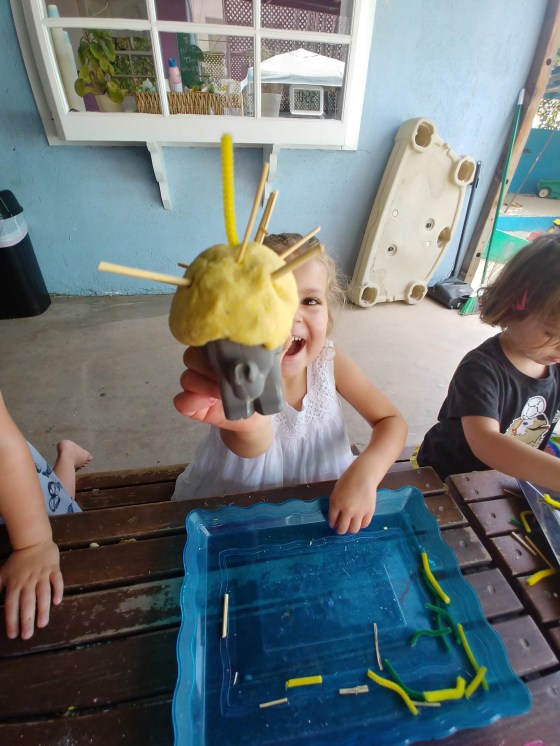
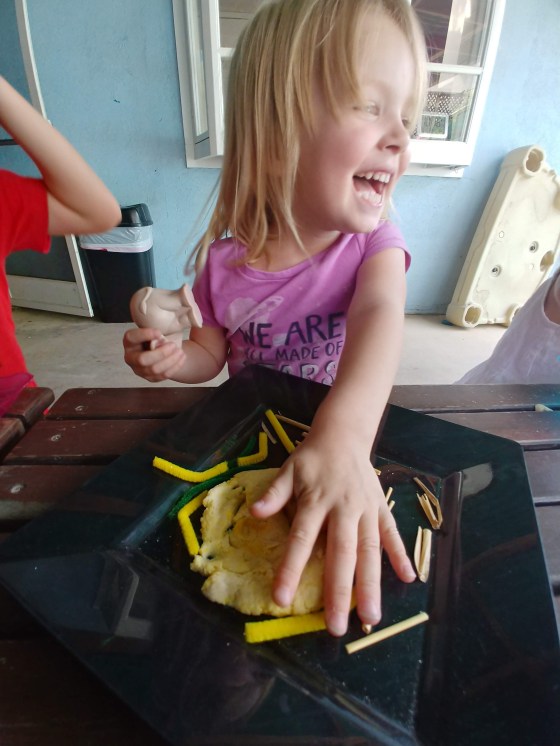
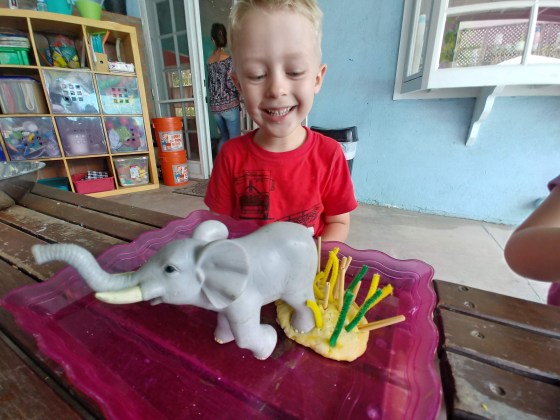
For this activity, we created savannahs out of play dough and yellow pipe cleaners.

20180810_101605_hdr

Students then added an animal to their savannahs and created different scenarios with their friends!

20180810_101704_hdr

Sorting Elephants

Sorting and classifying are basic skills taught to children as part of preschool and kindergarten math programs. These activities require children to organize items into groups based on a common characteristic such as size, color, shape, texture, or flavor and also explain why they grouped the items as they did.

20180809_101750_hdr

Sorting and classifying are skills that a child will use in all areas of his life at home and in school as he puts away toys, organizes clothes, arranges a locker or empties the dishwasher, for example. Children first learn how to sort items.

20180809_101324_hdr

For example, a young child can likely separate a group of plastic figurines into two groups (vehicles and animals, perhaps) before he is able to state the distinction that cars have wheels and animals are living things. As children gain comfort sorting, they are encouraged to explain their thought process in sorting by identifying and naming the characteristic that determines the groups.

20180809_101116_hdr

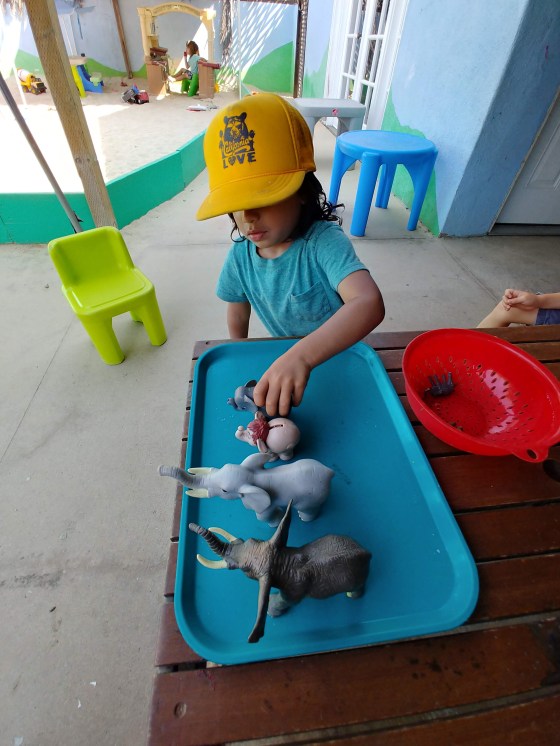
Recognizing groups of objects requires logical thinking, an ability that will be important as your child makes other decisions. Also, understanding the relationship between the different groups and being able to discuss that relationship hones analytical skills. For this activity, we practiced sorting elephants by size. We placed large elephants at the top of the tray and decreased in size as we went down.

Feeding the Elephants

Under natural conditions, elephants eat mostly grass, tree leaves, flowers, wild fruits, twigs, shrubs, bamboo, and bananas.

20180808_103144_hdr

Their main food is grass when it’s available, along with some leaves. But if the weather turns dry and grass dies back, they will eat almost any kind of vegetation they can find.
20180808_102714

They will knock down trees to eat their foliage. They will even turn to bark and the woody parts of plants. Also elephants use their tusks to dig for roots.

20180808_102628_hdr

Much of this coarse food passes through their system without being thoroughly digested. They also use their tusks to dig for water, making it available not only to themselves, but also to other types of animals.

20180808_102422_hdr

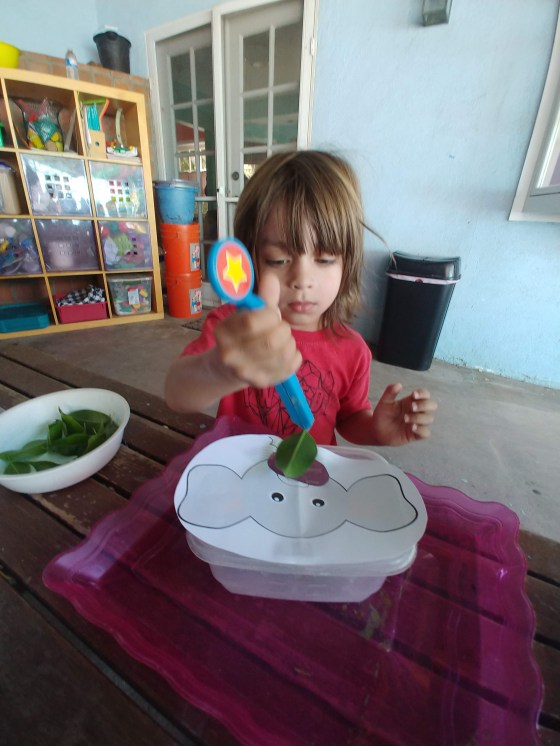
To demonstrate this phenomena, we fed our very own elephants! Using tweezers, students placed leaves into the mouths of their elephants. This accessed both fine motor skills and hand-eye coordination!


Elephant Sensory Play

From birth through to early childhood, children use their senses to explore and try to make sense of the world around them.

20180807_100442

They do this by touching, tasting, smelling, seeing, moving and hearing.

20180807_100657_hdr

Sensory activities also play a key role in the maturation process of young children.

20180807_100554

Activities that require manipulation and touch enable children to heighten the adaptive response tthey playedhrough their senses. They are an integral component in early childhood education.

20180807_100647

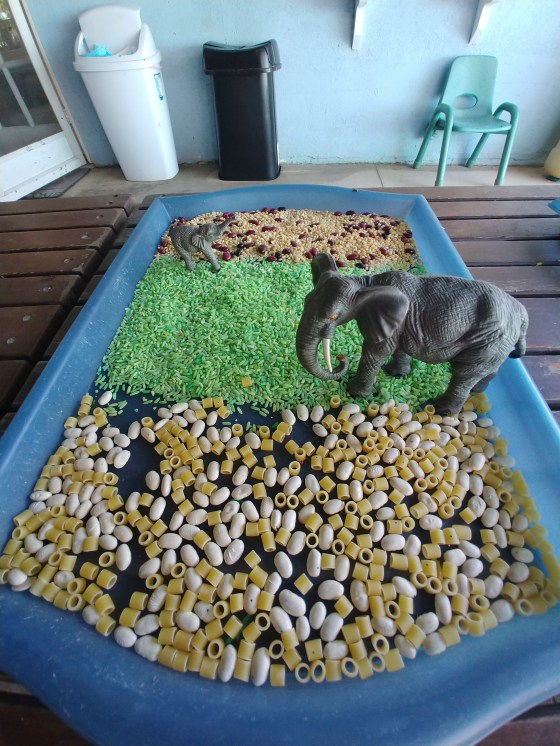
They not only engage the child, but stimulate cognitive development.  To access this, your young one participated in an activity where they played with you elephants on “savannahs” made out of pasta, rice, and beans. Students enjoyed creating stories with their friends, engaging with their senses while doing so!

Lion Pom Poms

Very early writing is indicative of unconscious, or implicit knowledge of writing conventions.

20180821_103147_hdr

As children’s knowledge of writing develops, their implicit knowledge gradually becomes more explicit knowledge that they learn to use to communicate meaning.

20180821_102727_hdr

The more children interact with print in various forms, the more likely they will develop explicit knowledge and awareness of writing conventions. It is for this reason that we are always using creative ways to practice our writing. From tracing letters in sand, to writing them in pencil, we enjoy literacy!

20180821_102712_hdr

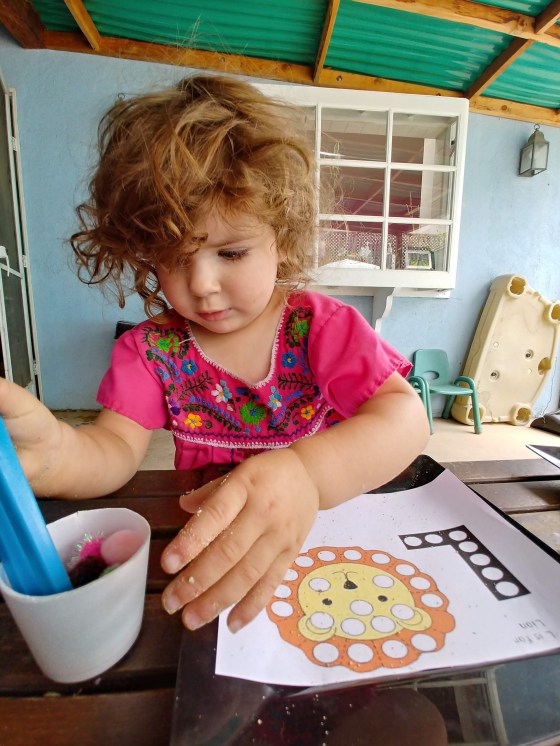
For this activity, we discussed the different shapes that form letters. We learned that some of these shapes are round, some are pointy and some are jagged. Using tweezers and pom poms, we created a letter L. They then traced Ls in sand. Lastly, we learned how to write an L with large pencils!

Alla Seltzer Rockets

Your little ones love to explore with the many science activities that we do throughout the week.

These activities not only engage your child, but explain the physical properties of objects, teach cause and effect, and provide the necessary hands-on experience most conducive to learnng.

For this activity, w used alka seltzer tablets and film canisters to make rockets.

To do this, we mixed the ingredients, and poured them into film canisters.

These film canisters were decorated like rockets.

Upon mixing the ingredients, we squealed as we watched our rockets soar to the sky!

Sensory Play on Mars

Sensory Play includes any activity that stimulates your young child’s senses: touch, smell, taste, movement, balance, sight and hearing.

Sensory activities facilitate exploration and naturally encourage children to use scientific processes while they play, create, investigate and explore.

The sensory activities allow children to refine their thresholds for different sensory information helping their brain to create stronger connections to process and respond to sensory information.

20180719_101722

As part of our Planet’s week, we decided to create the surface of Mars.

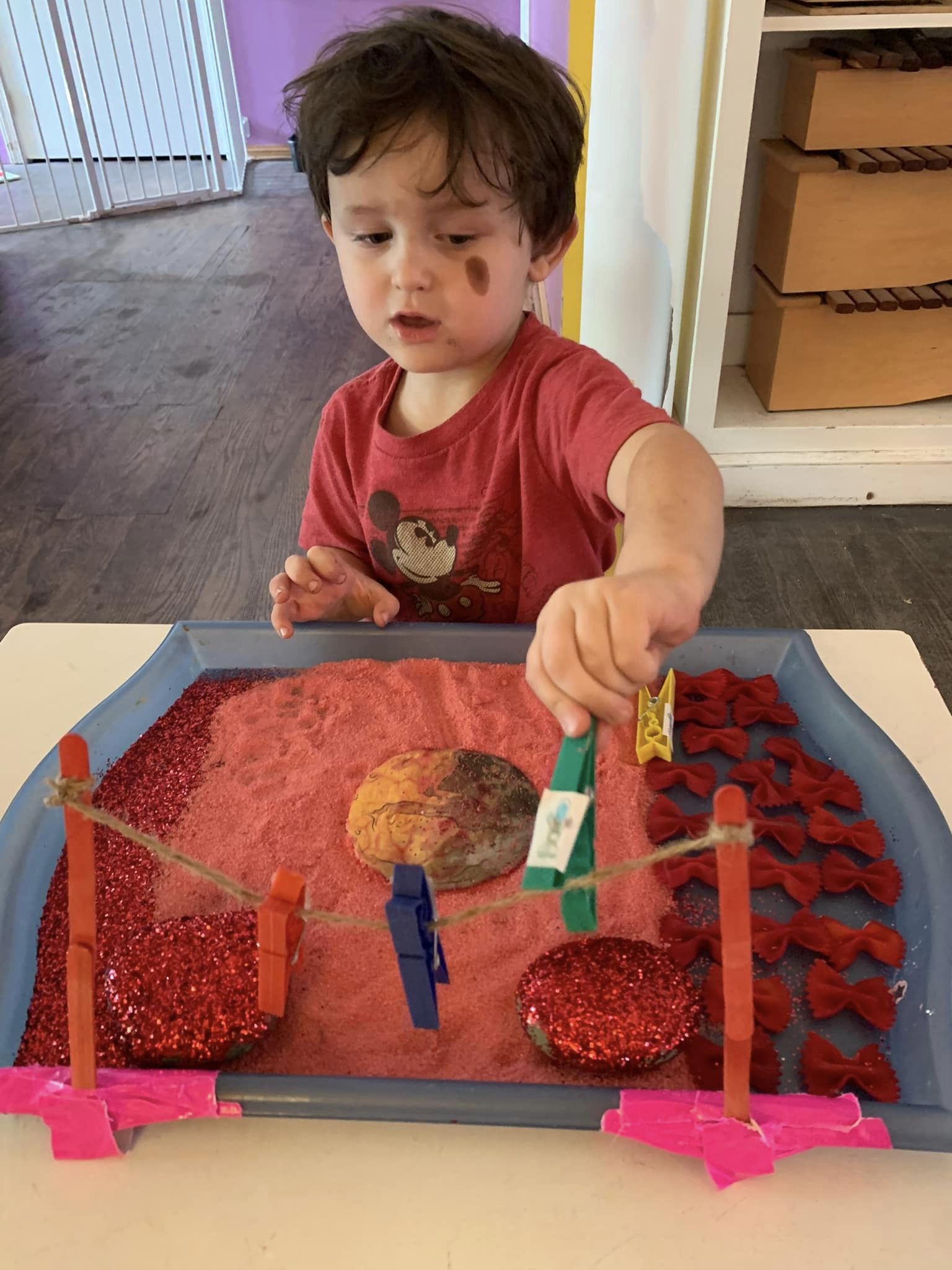
With some pasta, red sand, and kidney beans, we learned about the composition of the soil on Mars, and then we made it!

Neptune: Planet of Diamonds

Scientists have long thought that massive planets like Neptune and Uranus which contain relatively tiny rocky cores covered with a mantle of slurried water, ammonia, and methane ices and surrounded by a thick atmosphere—are subject to rain made with literal diamonds.

20180718_154435_hdr

Now researchers have synthesized the process in a lab, showing how such conditions might occur. Their results support this idea.

20180718_154041_hdr

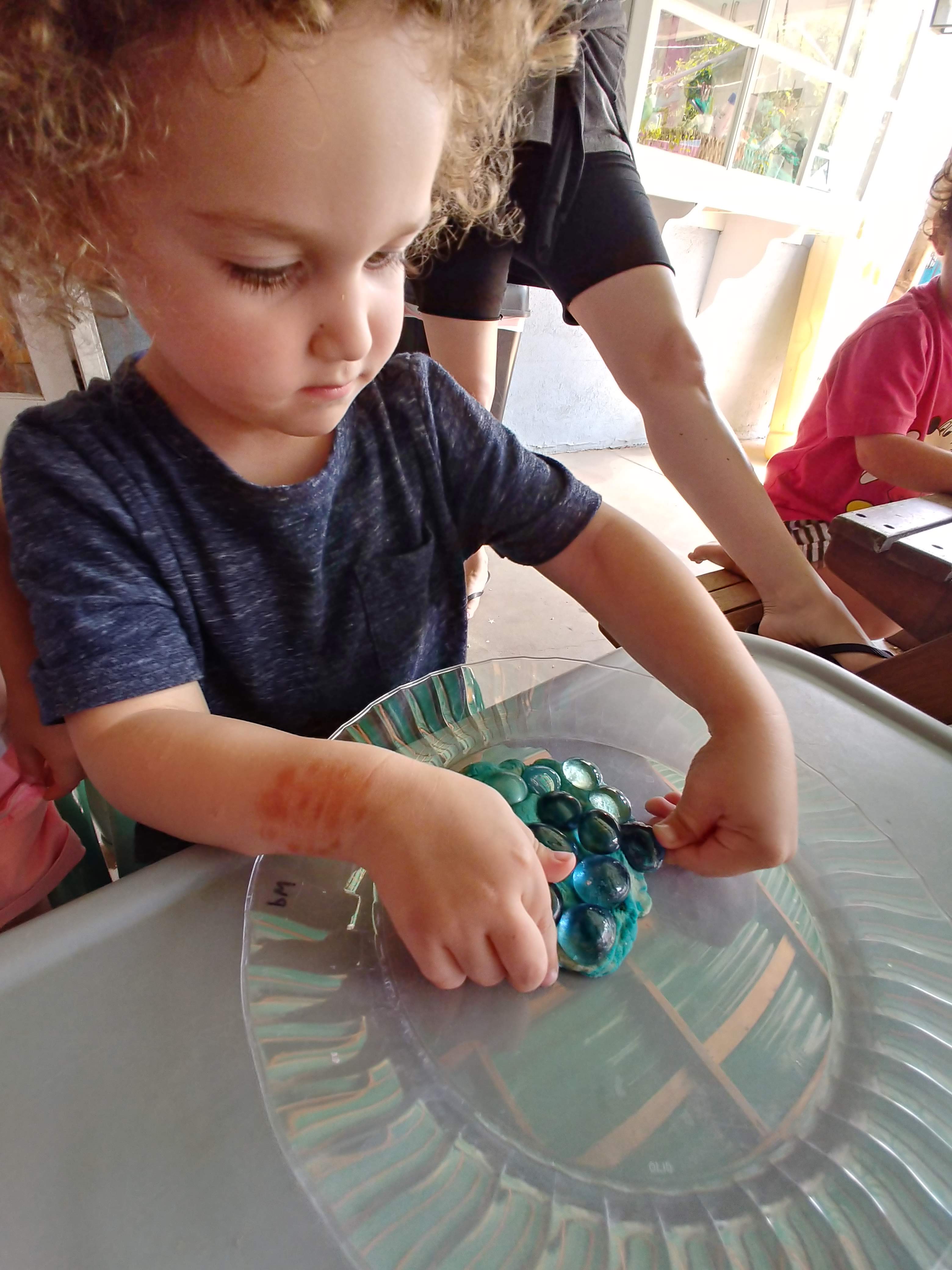
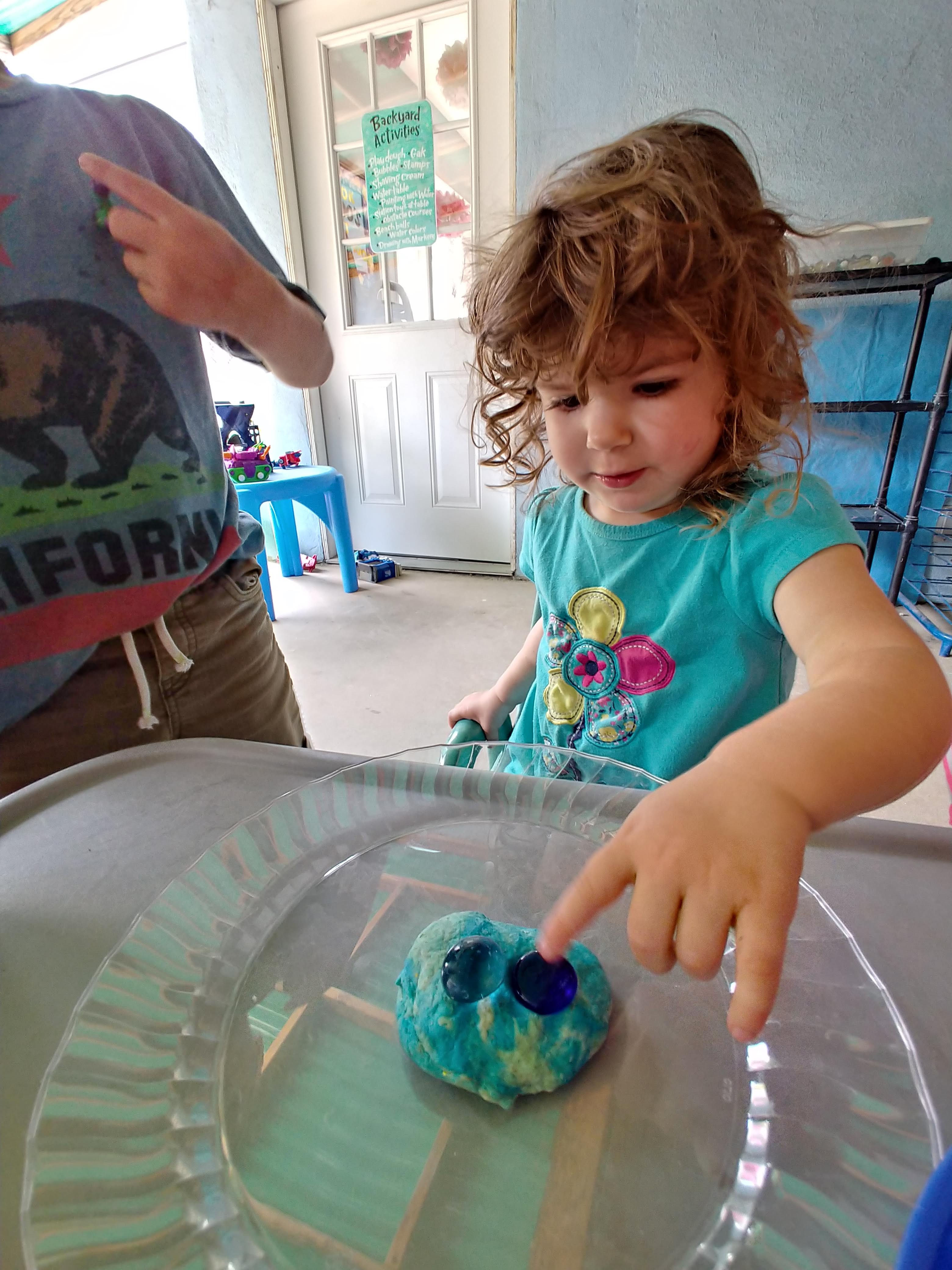
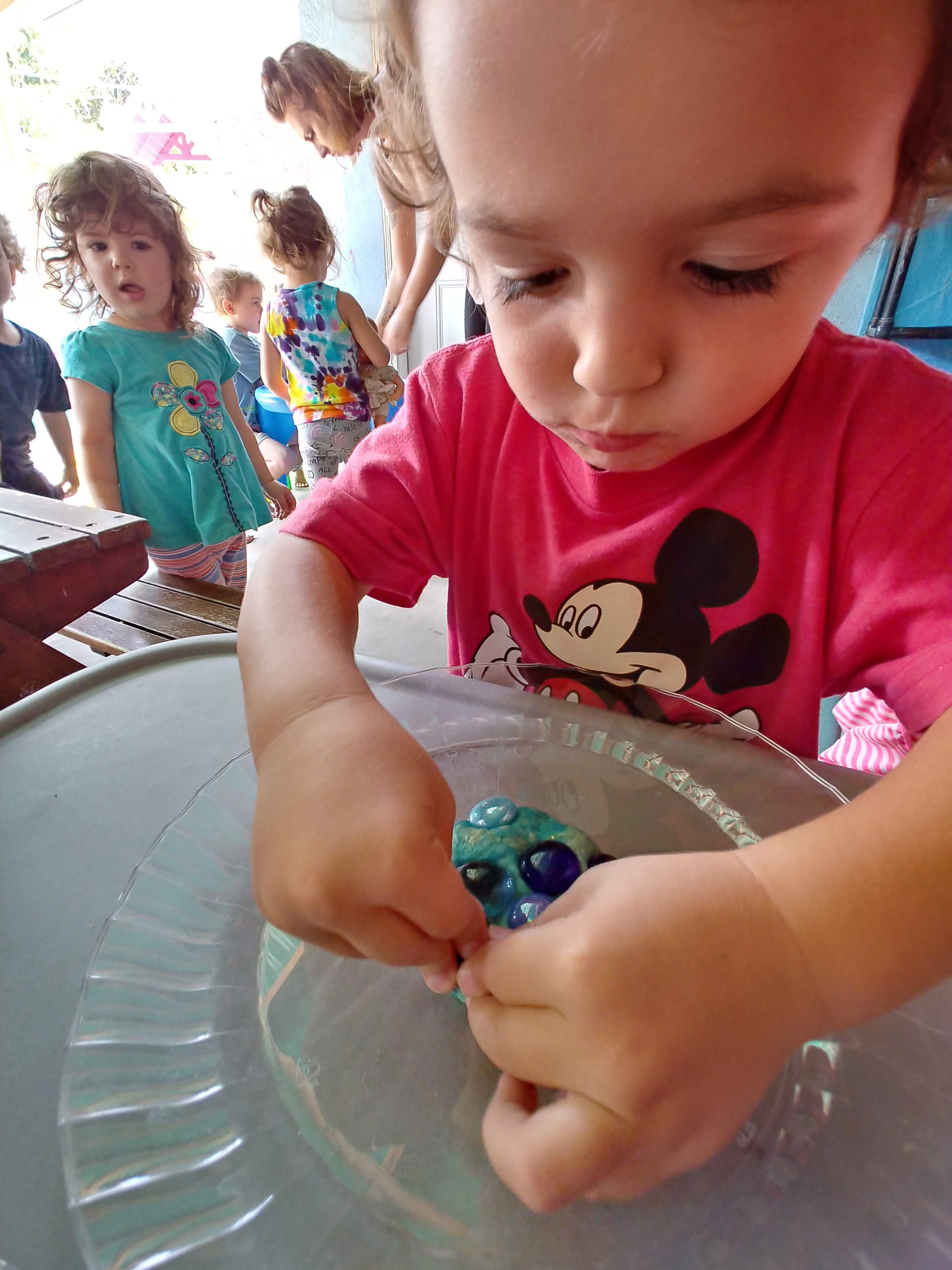
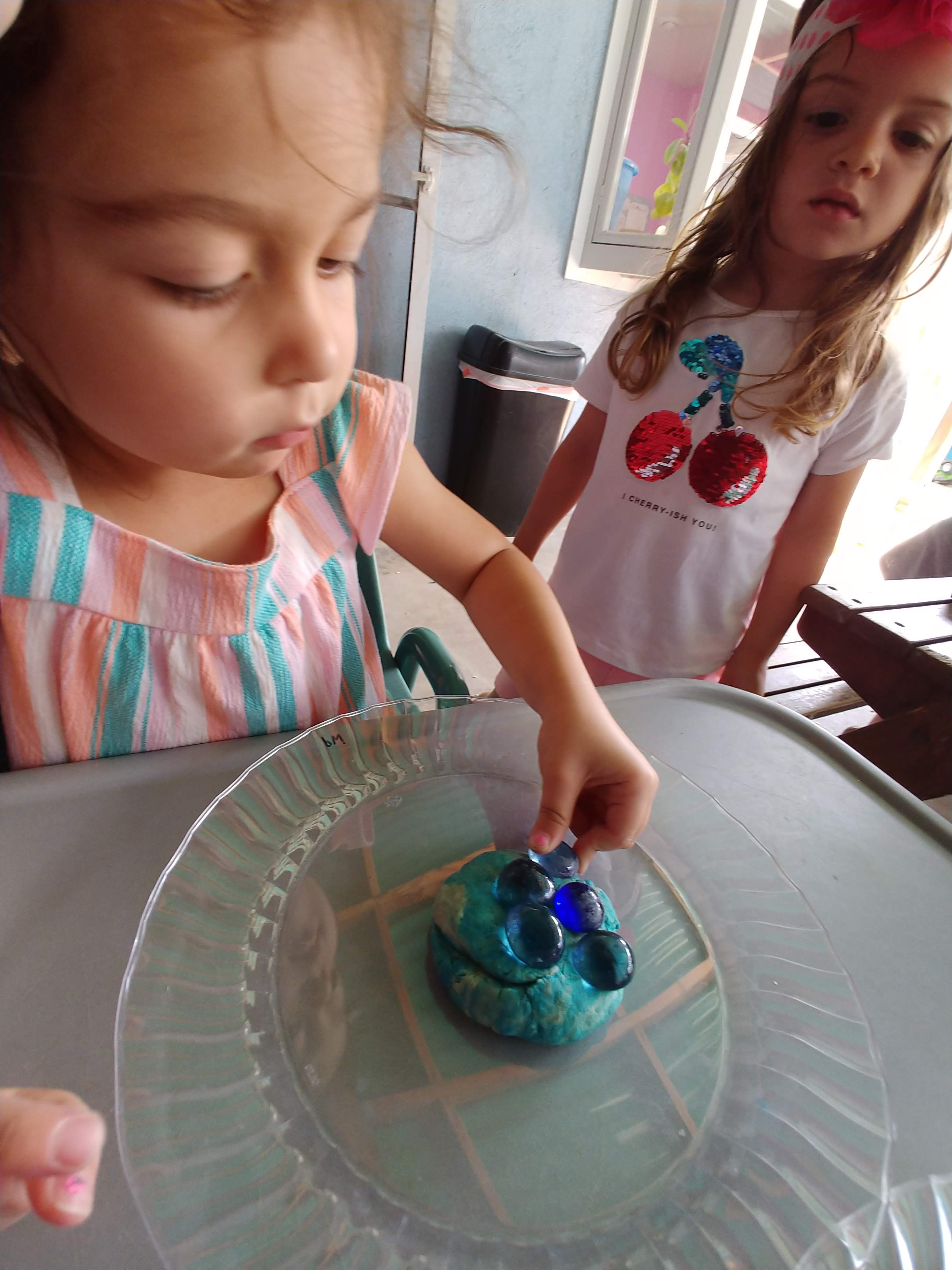
To recreate this process in our class, we created our very own Neptune s with glass beads and play dough. In our classroom, we love to play with play dough because it has so many developmental benefits!

20180718_153853_hdr

For one, improves fine motor skills as students manipulate the dough. Secondly, it encourages divergent thinking as students build their own creations. Lastly, it builds creativity, as students use their imaginations!

20180718_153802

Dissolving Neptune

Dark, cold and whipped by supersonic winds, ice giant Neptune is the eighth and most distant planet in our solar system.

20180718_102713

More than 30 times as far from the Sun as Earth, Neptune is the only planet in our solar system not visible to the naked eye. Neptune’s atmosphere is made from about 80 percent hydrogen and 19 percent helium.

20180718_102812_hdr

It also contains a small amount water and methane, which give rise to the green-bluish color. The dark blue and bright white features of the atmosphere help distinguish Neptune from Uranus.

20180718_102625_hdr

The thin cirrus-like white clouds contain methane ice. When hydrocarbon snowflakes form in Neptune’s atmosphere they melt before reaching the surface because of the high pressure. The fastest winds in the Solar System blow on Neptune.

20180718_102057

With speeds of about 1,240 mph, they are five times faster than the strongest winds on Earth! To help your little ones understand the vast gases of Neptune, we created our very own!

20180718_102659

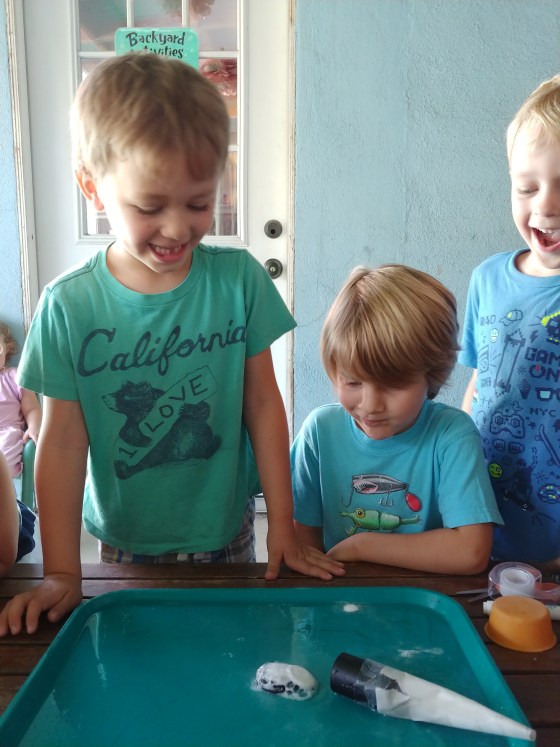
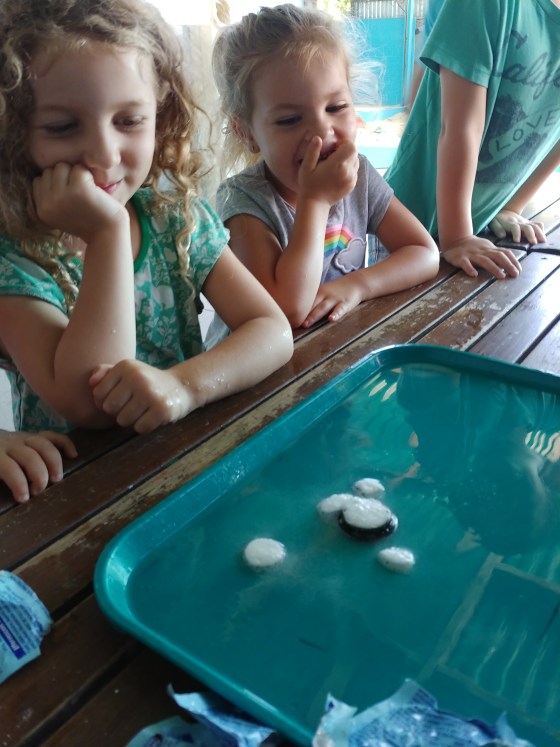
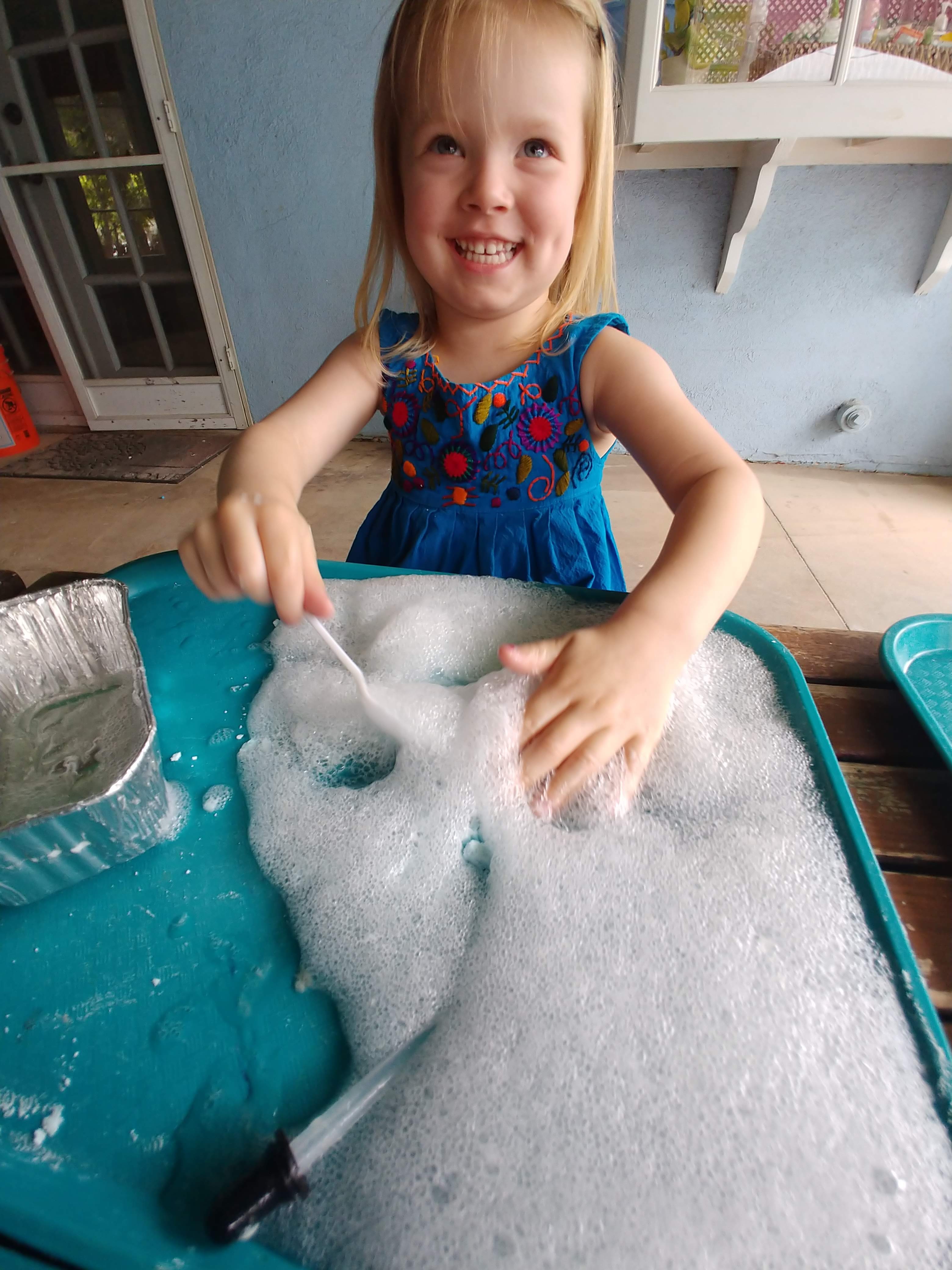
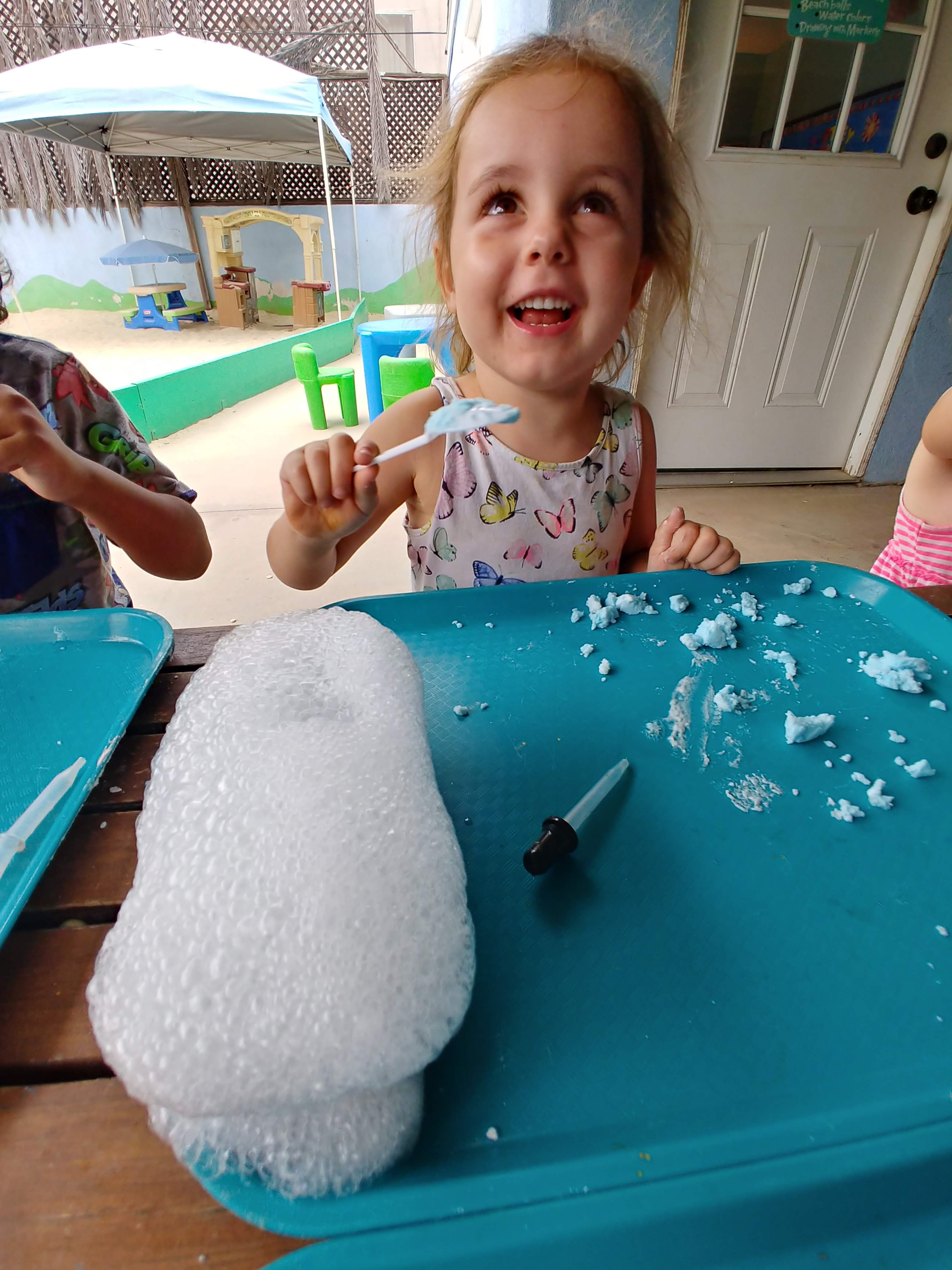
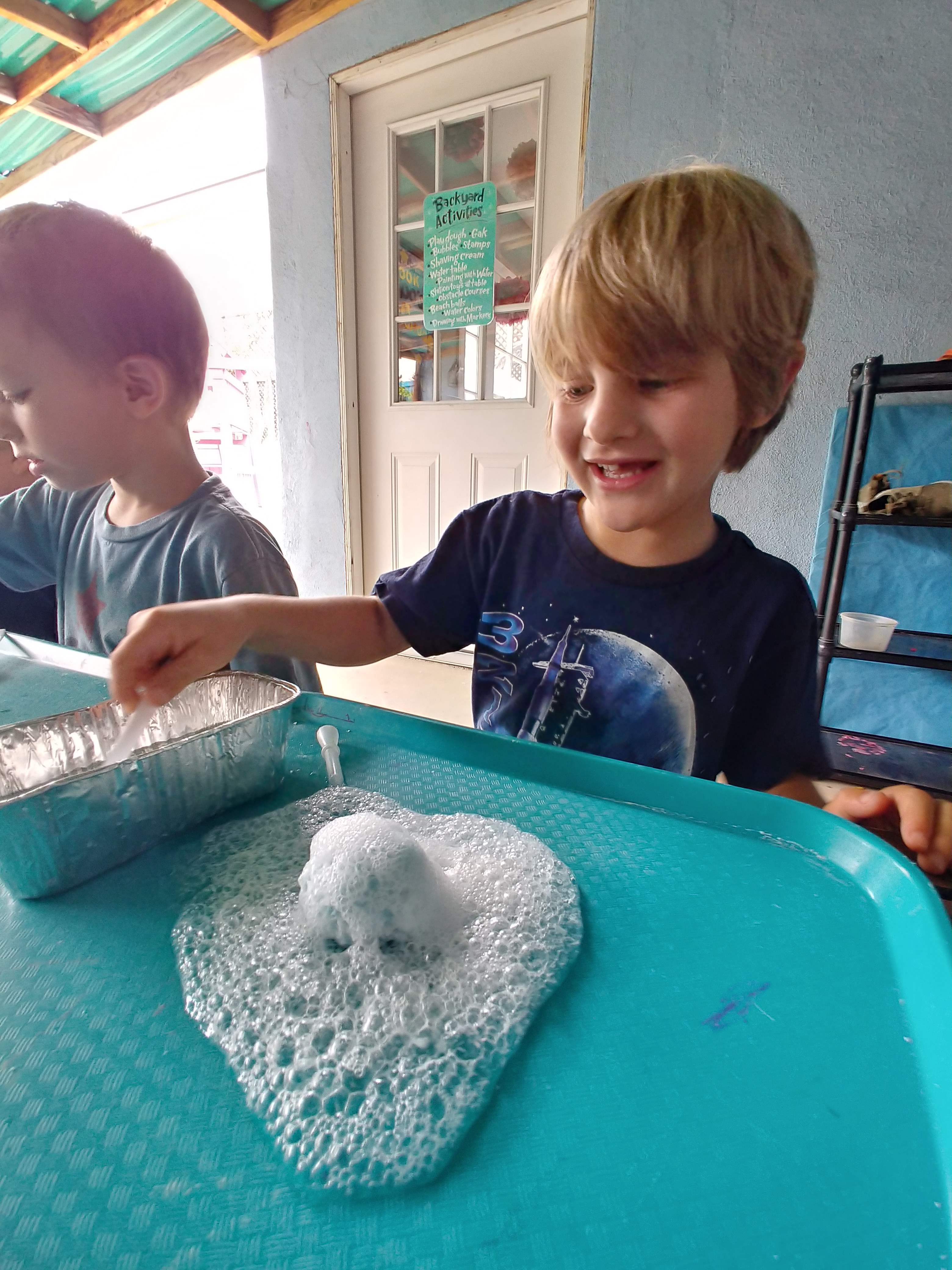
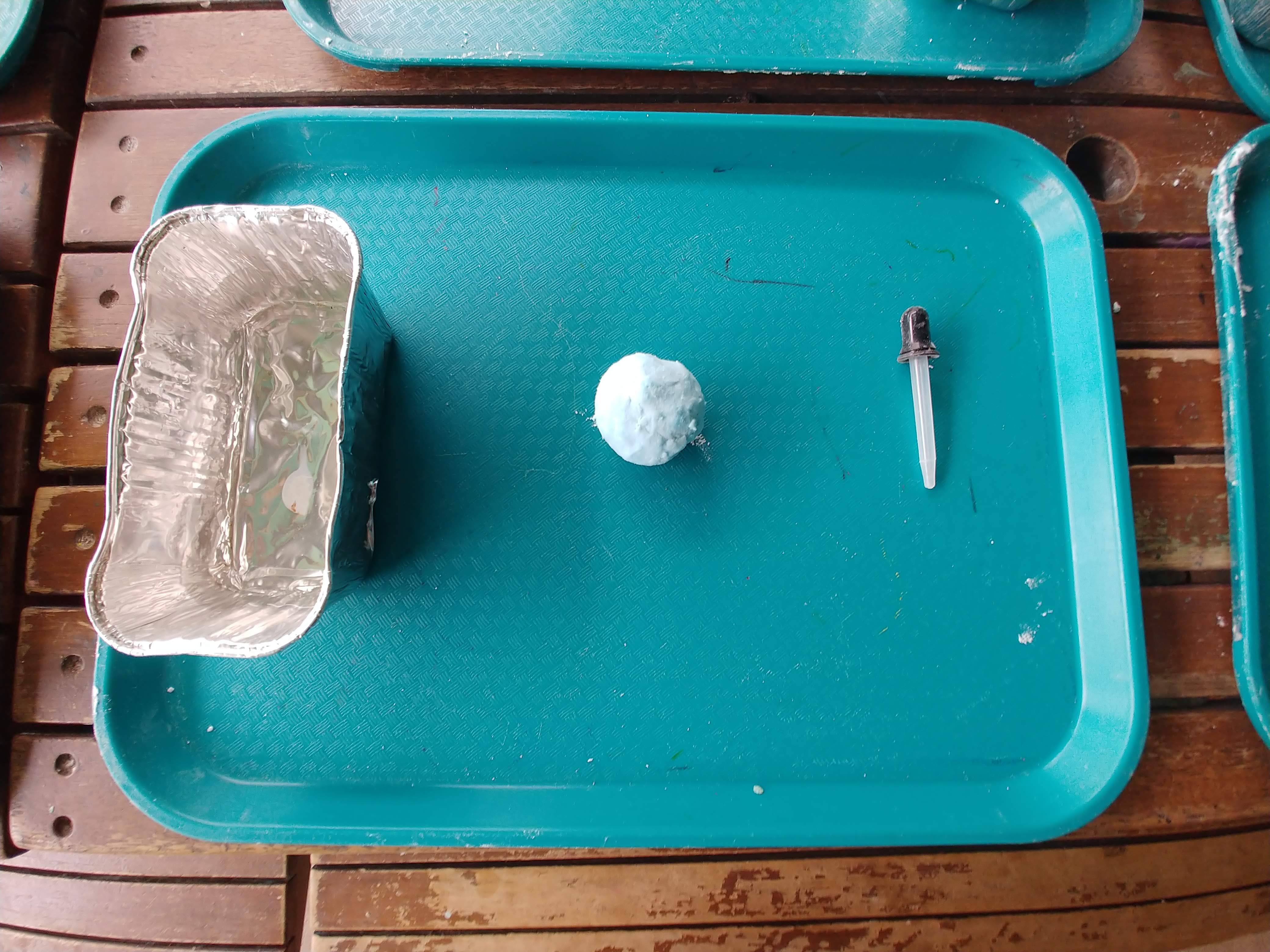
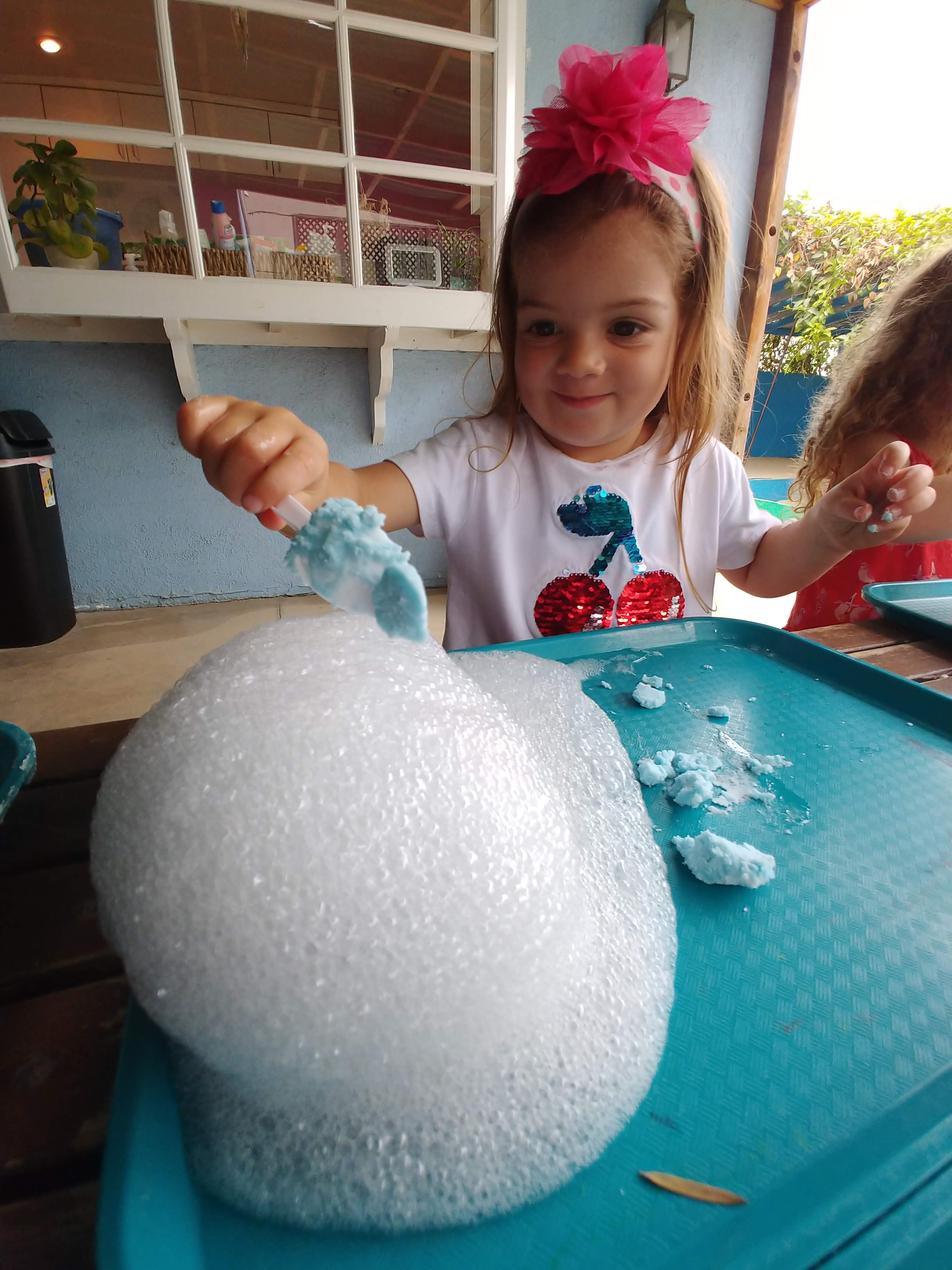
Using baking soda and lotion as our play dough, we constructed spheres that resembled the planet. We then used eye droppers to add vinegar to the dough, laughing as we watched.

20180718_102820_hdr


Rocket Blocks

Hands-on learning is an integral component in early childhood education.
The manipulation and experimenting of materials provide a reference of learned concepts, and enables young children to construct meaningful experiences that aid their ability to commit new information to memory.
For this activity, your little one learned about how rockets are built.
To help them connect with this idea, they created rockets out of blocks covered in aluminum foil.  rocketblock1