Moose Color Sorting

Sorting is a beginning math skill. It may seem that a big chunk early math is about learning numbers and quantity, but there’s much more to it. By sorting, children understand that things are alike and different as well as that they can belong and be organized into certain groups. Getting practice with sorting at an early age is important for numerical concepts and grouping numbers and sets when they’re older.

moosehead

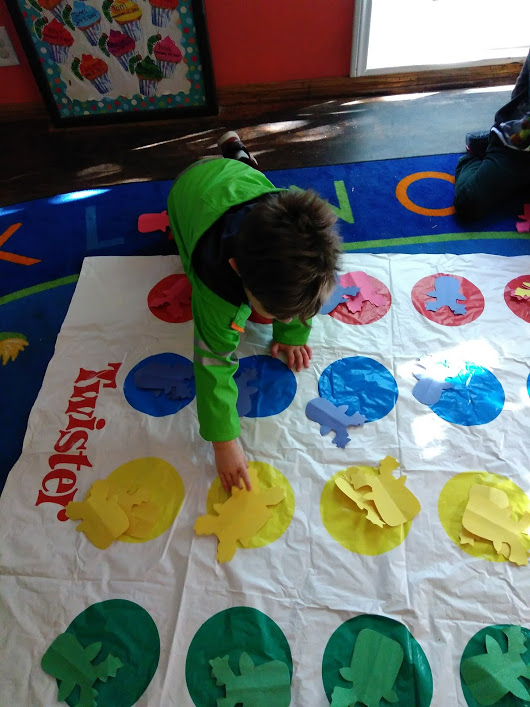
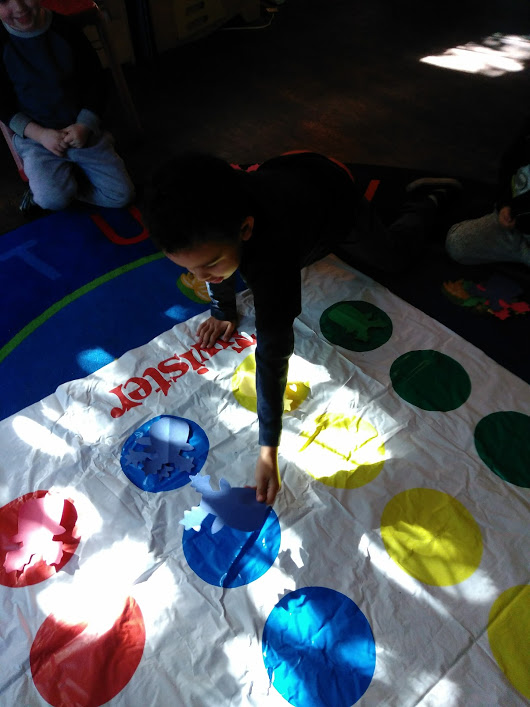
This type of thinking starts them on the path of applying logical thinking to objects, mathematical concepts and every day life in general. Studies have even been shown that kids who are used to comparing and contrasting do better in mathematics later on. For this activity, we practiced sorting different colored moose. Using our thinking minds, we placed different colored moose onto the different colored circles of a Twister board! Since we are learning about moose, this was a perfect complement to our curriculum!

moosehead2

Graham Cracker Moose

Food preparation is not only a fun, engaging activity for children,  but one that can be used for years as an important teaching and development tool for all ages. For one thing, hands-on cooking activities encourage a sense of pride and confidence. The act of following a recipe can encourage self-direction and independence, while also teaching children to follow directions and use thinking skills to problem solve.

moosesnack2

Working with food also inspires children’s curiosity, thinking, and problem solving, offering new opportunities to make predictions and observations.

moosesnack3

Additionally, creating snacks offers authentic opportunities for students to understand and apply their knowledge of measuring, one-to-one correspondence, numbers, and counting. As they follow a recipe, children organize ingredients, follow a sequence, and carry out multiple directions.

moosesnack

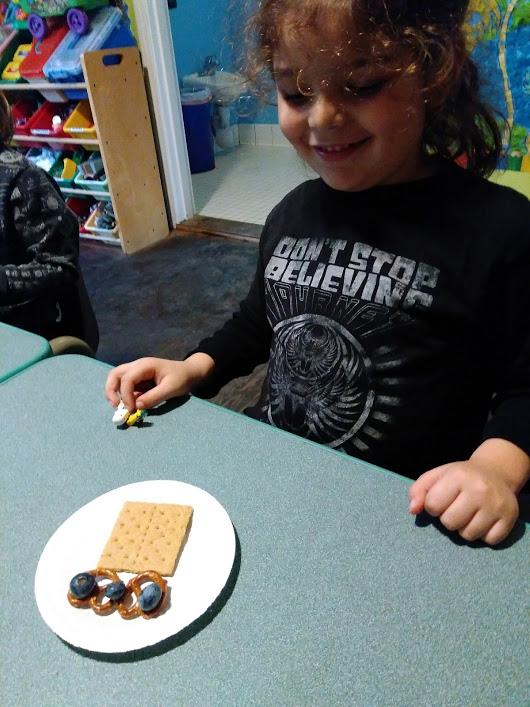
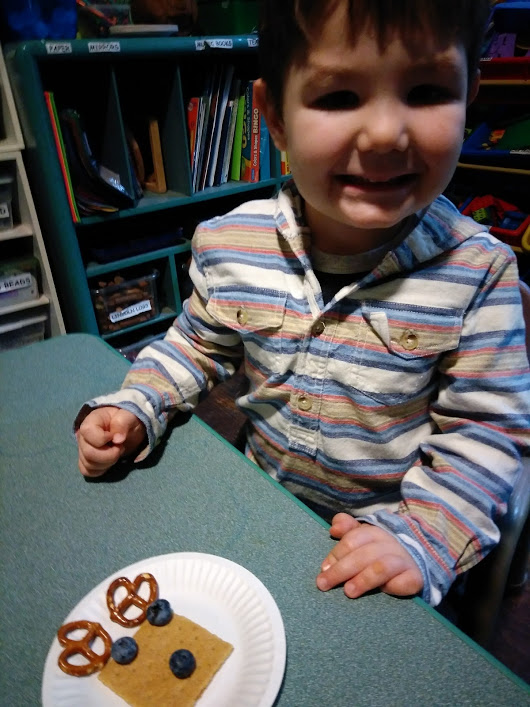
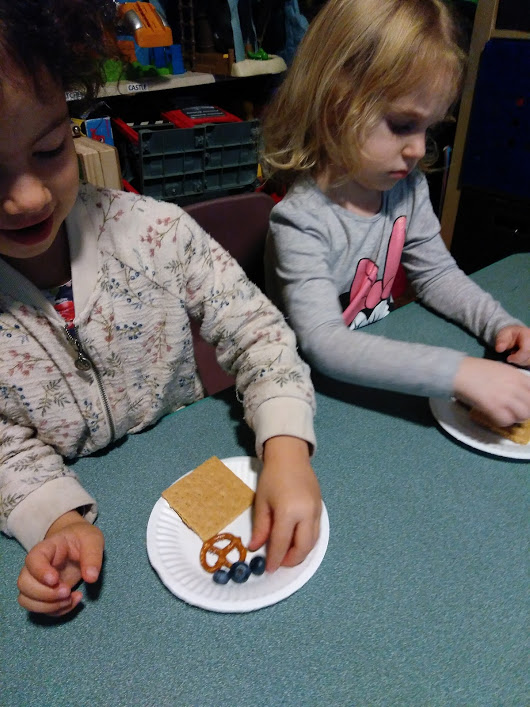
Lastly, chopping, squeezing, mixing, and spreading materials help develop a child’s small muscle control and hand-eye coordination. For this activity, we used a few ingredients to crease Moose Snacks. We used graham crackers as the head, pretzels as the antlers, and blueberries as the eyes. Once we were finished, we ate up our yummy creations!

moosesnack1

Moose Habitats

We began our Arctic Animal month with a lesson about all things related to the moose!!

moose

Although native to Europe and Asia, moose are found throughout Northern hemisphere in Northern Canada and other colder climates.

moose1

Moose are also called “elk” and are members of the deer family.

moose2

These large mammals are solitary and do not form herds. Although generally slow-moving and sedentary, moose can become aggressive and move quickly if angered or startled.

moose3

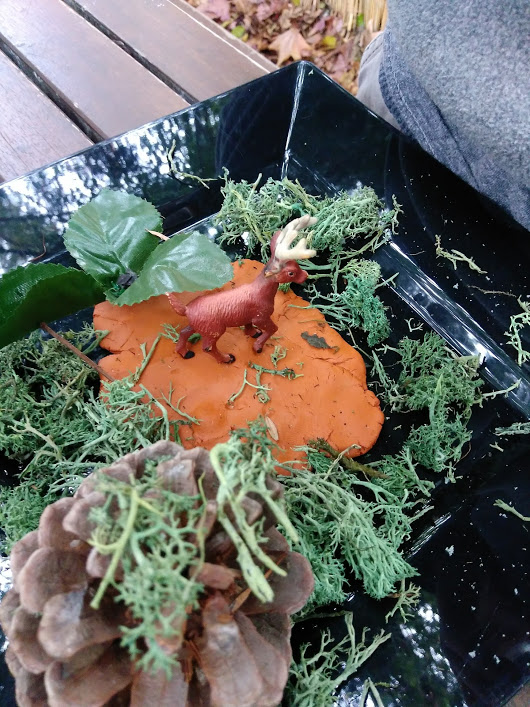
Using small toy moose, pine cones, artificial grass, rocks, and clay, we created our very own moose habitats!

Counting Clouds

Early math is not about the rote learning of discrete facts like how much 5 + 7 equals. Rather, it’s about children actively making sense of the world around them. Unlike drills or worksheets with one correct answer, open-ended, playful exploration encourages children to solve problems in real situations.

clouds3

Because the situations are meaningful, children can gain a deeper understanding of number, quantity, size, patterning, and data management.

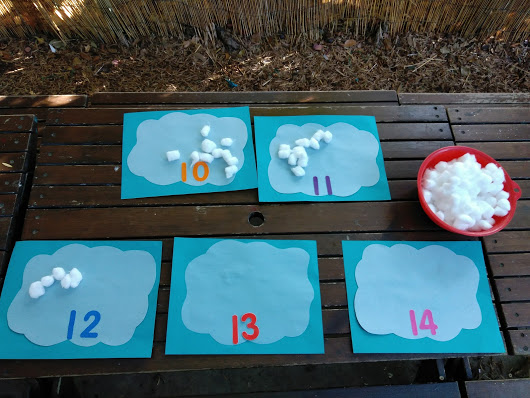
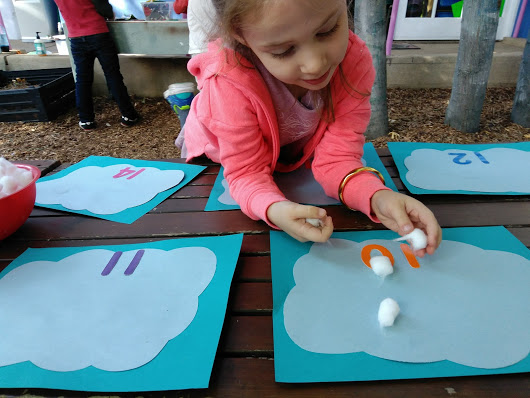
cloudsFor example, it is easier to understand what six means when applied to a real-life task such as finding six beads to string on a necklace or placing one cracker on each of six plates. It is for this reason that we cotton balls, colorful paper, and numbers to practice our counting. To fit this into our winter theme, we used colorful illustrations numbered 10-14.
clouds1

These symbolized clouds that your little ones made by sorting them by number. They started by placing them onto the clouds in no particular order. Once they mastered this task, they added them (while counting out loud) with the number ten on the top and the number fourteen on the bottom.  Next, they practiced adding and subtracting different cotton balls and counting them.

clouds2


Flower Foam Wreaths

Lateralization activities provide a great educational and developmental experience for preschoolers. As children grasp whatever implement they are working with, they are building their pincer grip which is crucial for writing skills.

wreath

The more they do this, the more they learn about which hand is more comfortable for them.

wreath3

Lateralization activities are also a lesson in patience as students ever so slowly work their way through a project  with their chosen implement.

wreath1

This activity involved a creative way to practice our lateralization skills. Using pine boughs and floral foam, your little ones wove their very own wreaths!

wreath2

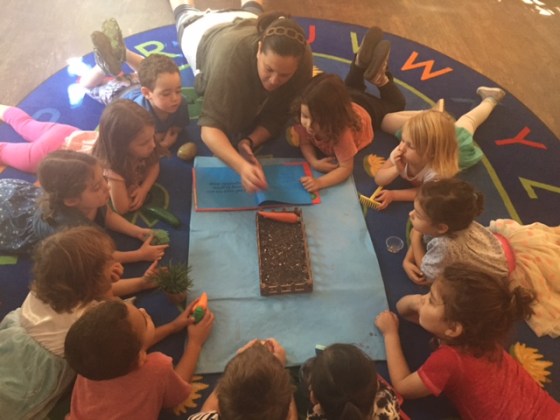
Vegetable Soup Story Tray

Children can find it very difficult to re-tell stories and even harder to make them up. This is particularly so if they have not had much experience with stories and story telling in the preschool setting.

img_4163

There are a variety of ways to involve children with texts, and the use of ‘story trays’ is one that does not only spark an interest in reading but also involves much talk and discussion, which is why we include them in our curriculum!

img_4166

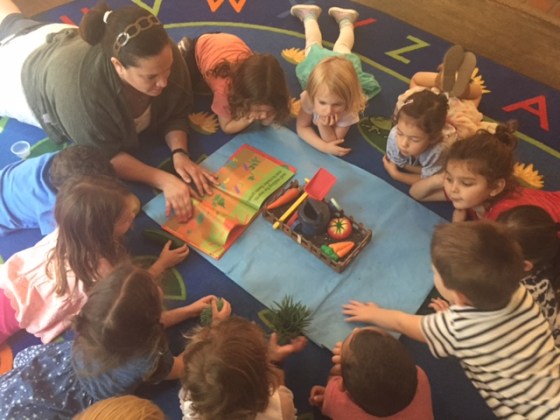
A story tray is a tray containing a book, plus items associated with the story, which might include characters in the form of soft toys or puppets. There might also be a non-fiction book on a similar theme, which allows children to experience different types of text.

img_4169

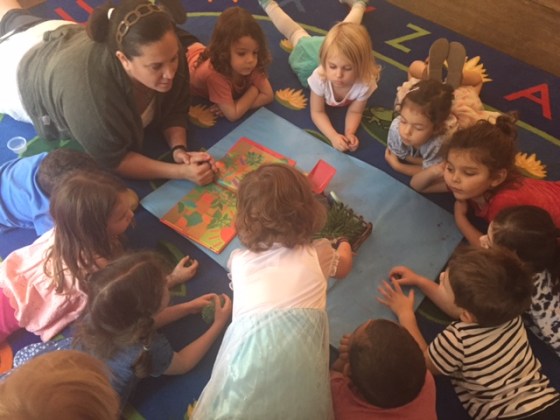
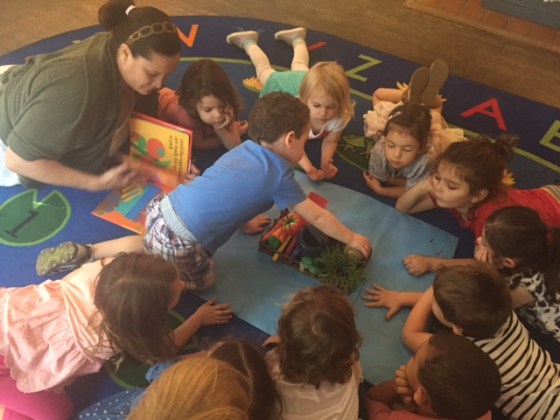
These items are used to help bring the story to life. They provide a visual and tactile stimulus that the children can use to take part in the telling or re-telling of the story. Children of all abilities enjoy using them but they can be particularly useful in helping children who are not interested in reading, for whatever reasons, to enjoy books. For this activity, we used a variety of items to re-tell the story of a book called Vegetable Soup. Each child was given one of the items in the story, and as the story was read, they would add their item to the tray. Some of these items included toy vegetables, a water can, soil, toy shovels, and seeds!

img_4172

Fall Leaf Sorting

Many preschoolers are able to use numbers arbitrarily; pretending to count, or mixing up numbers and letters. From about the age of four, preschoolers will begin to show one to one correspondence, or the ability to count objects correctly, as well as recognize most numbers 0-9 and sometimes recreate numerals when given an example.

leaves

As with many preschool skills, it is important for young students to be given many different opportunities for to see, touch and use numbers throughout the day. Including numbers in thematic play is one way that they can begin to recognize numbers.

leaves1

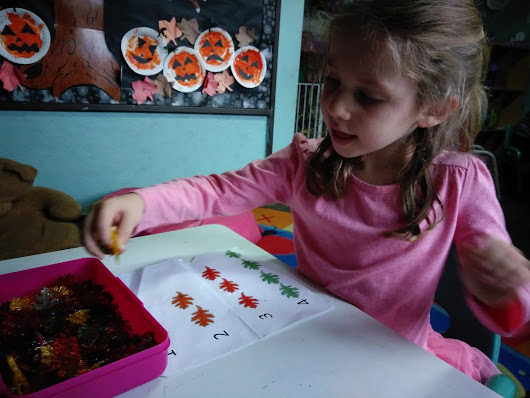
For this activity, your little one participated in a sorting/numeral recognition activity that tied in with our fall weather theme. Using manipulatives and pictures of leaves (with numbers printed on them), your little one practiced sorting and matching groups of leaves with their corresponding numeral.

leaves2

Q-Tip Corn

Children who are encouraged to write with a variety of utensils at an early age will later learn to execute their fine motor skills more easily, more effectively, and with greater confidence than children who do not have this encouragement. Though the mastery of one’s fine motor skills take time, they can be practiced and developed throughout the course of one’s preschool experience.

qtipcorn

Occupational therapists agree that the tripod grasp is the preferred mode of writing in the latent preschool years and into middle childhood. This grasp provides the most control of a pencil. To refine the muscles required for this grasp, we practiced dabbing spots onto construction paper that resembled corn.

qtipcorn1


Lego Letters

Using Legos, the letters F-A-L-L, and our learning minds, we created the word “FALL”! In young children, gross motor skills are the first to develop, therefore creating a need to continually introduce your budding writer to an array of fine motor activities. These activities build a foundation for the later manipulating of various writing utensils.

legoletter

Playing with Lego building blocks, cutting paper with scissors, and putting puzzles together all serve a developmental purpose. They not only promote coordination, but improve dexterity and hand control.

legoletter1

And not only that, when your children are moving, they are learning! In our classroom, we use games and other materials to relay prekindergarten concepts. These materials almost always consist of things that they are naturally interested in, so they do not realize they are learning!

legoletter2

Since our class is going through a Lego craze right now, we love to incorporate them into our developmental domains. By creating letters out of Legos, they are experiencing a range of important skills.

legoletter3