Number Match

Counting in its various forms is an integral component in your child’s daily life.

countMost educators agree that counting is the single most effective element in your little one’s emerging mathematical development.

count2Not only is counting essential in everyday routines, but a significant factor in the development of number and arithmetic concepts and skills.

count3

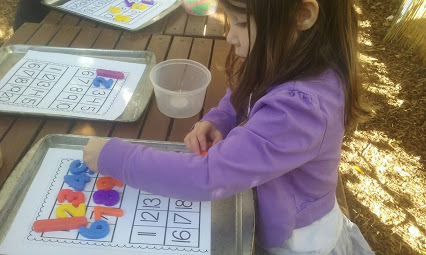
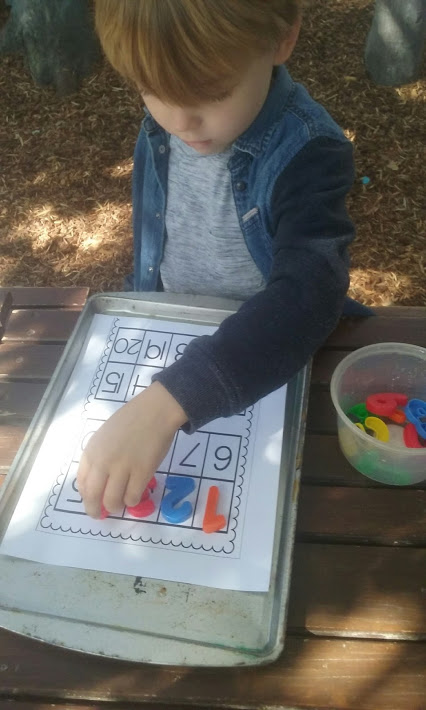
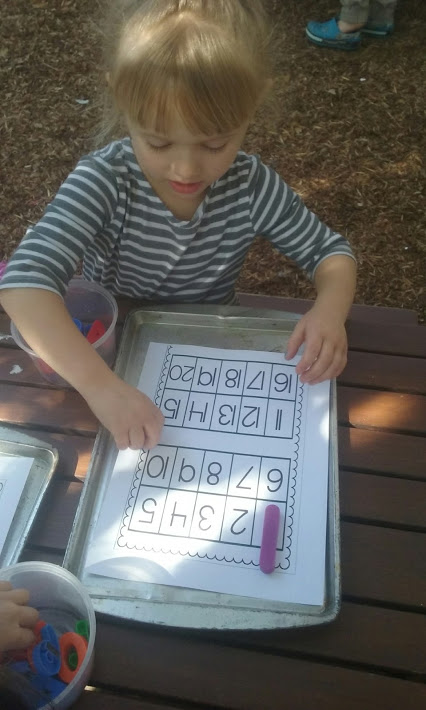
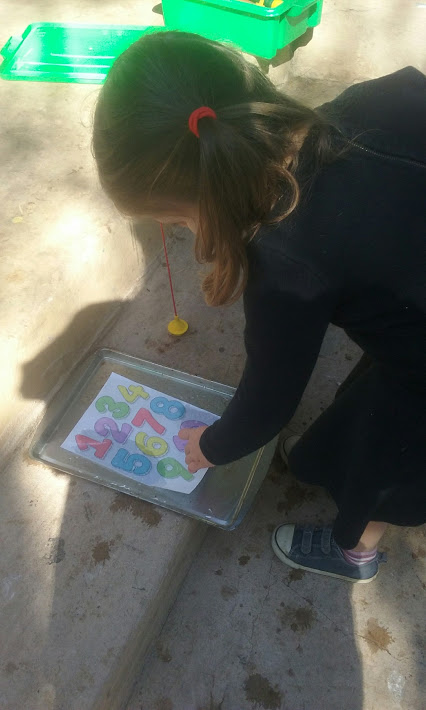
For this particular activity, your budding mathematician was instructed to place plastic numbers onto a number board, counting as they did so from one to twenty.

count4

Carrot Top Math

Understanding the one-to-one correspondence of object to object is necessary before young children can carry out meaningful counting and higher calculations. Children can find many opportunities in their daily life to experience one-to-one correspondence.
carrot
They can place one sock inside one shoe or one shoe on one foot; they can get one napkin or snack for each member of the family or class; they can place one lid on each of several containers; they can place pieces in one-piece puzzles. Once children understand these relationships, they can link one number with one object and then count with understanding.
carrot1
When students are ready to develop the skill of counting, they can benefit from learning several counting strategies to increase their accuracy and efficiency. Students sometimes develop one or more such strategies on their own, but it is to their benefit to provide training in this area.
carrot3
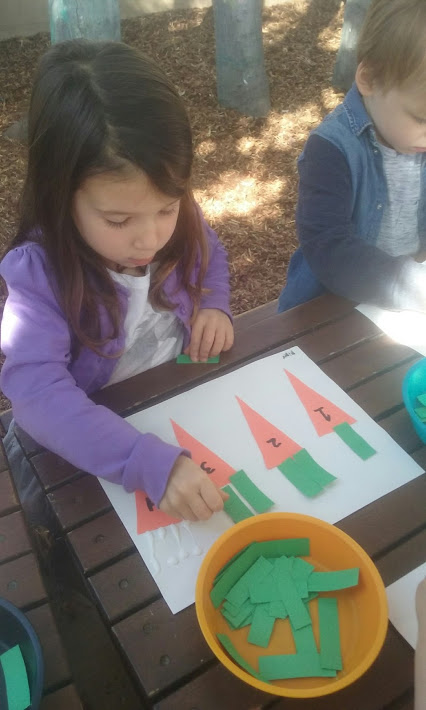
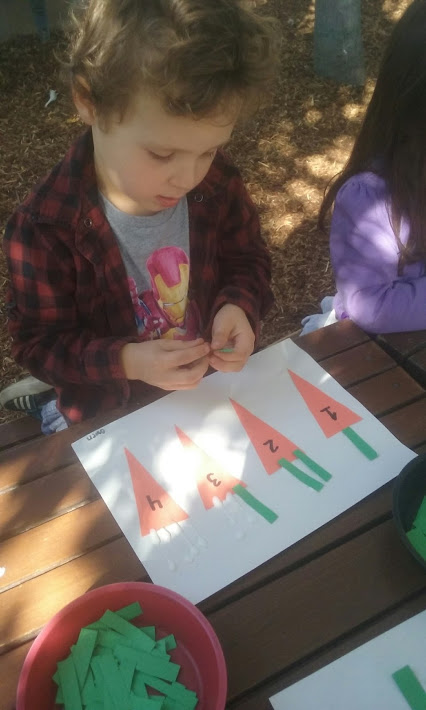
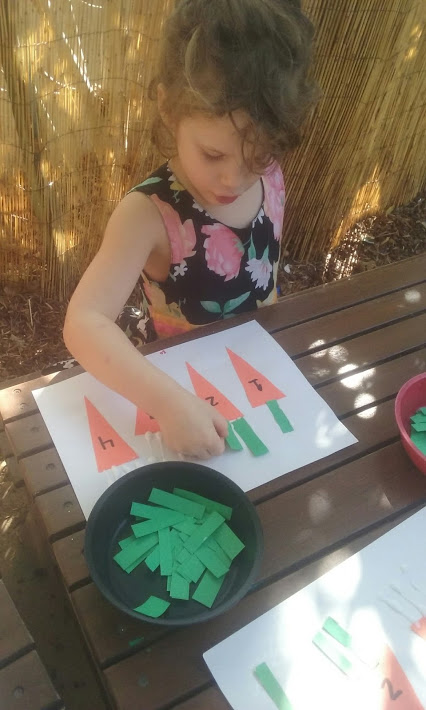
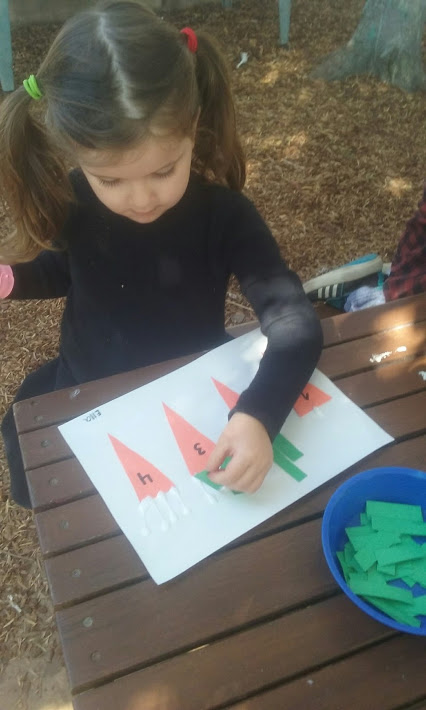
As with any concepts or skills, it is important to start working with real objects and manipulatives and to continue providing these as learning aids. For this particular activity, we placed a predetermined number of leaves on four different carrots. We practiced adding and subtracting the various leaves, noticing the changes in quantity.
carrot2

Play Dough Math

As part of simple, tactile play – play dough can be squashed, squeezed, rolled, flattened, chopped, cut, scored, raked, punctured, poked and shredded!
tactile

Each one of these different actions aids fine motor development in a different way, not to mention hand-eye coordination and general concentration. It is for these reasons that I use play dough so often, and for some many different learning experiences. Many young children are tactile learners and require the sense of touch to interact with the world around them.
tactile1

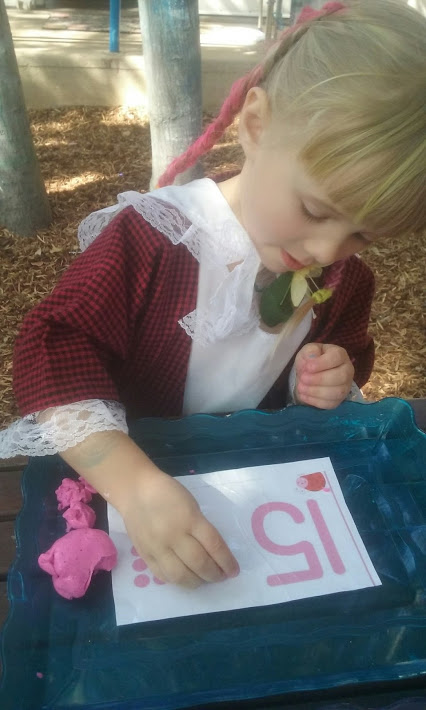
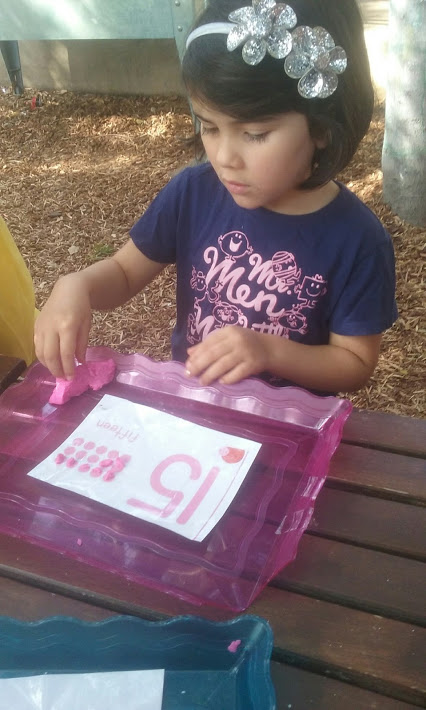
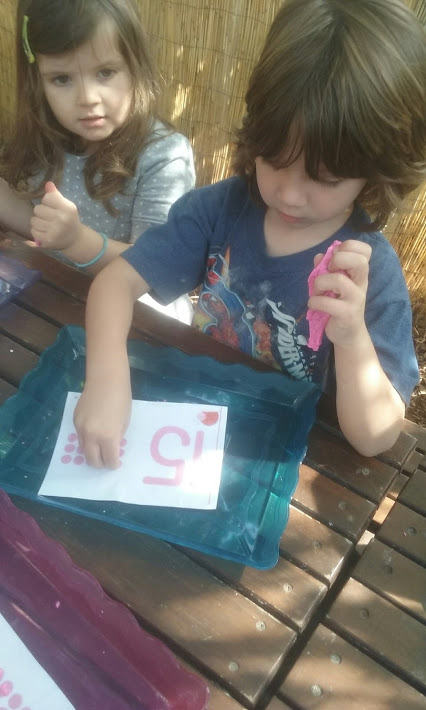
Because we are learning about all things related to numbers, I combined play dough, a number mat, and our thinking minds to learn more about counting! There were two components of this activity. Students first traced the number fifteen (on the number mat) with their fingers. They then clapped and chanted the number.
tactile2

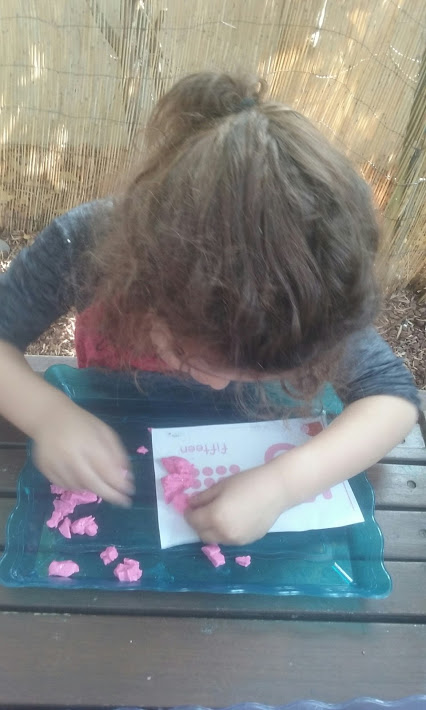
Lastly, they pinched off fifteen small pieces of play dough and placed them on fifteen spots. Allowing so many opportunities for learning (clapping, chanting, listening, and speaking) enables all learners to connect with the material, and ensures their success. When children feel successful, they are more motivated to learn.
tactile3

Ten Apples Story Board

Circle time is an important daily activity in the preschool classroom. There are so many things that happen during circle time. Children listen to a story, learn who is present and absent, discuss the daily schedule, talk about special happenings in their lives, find out about new materials in the classroom, and perhaps, sing a song or do a movement activity.

storyboard

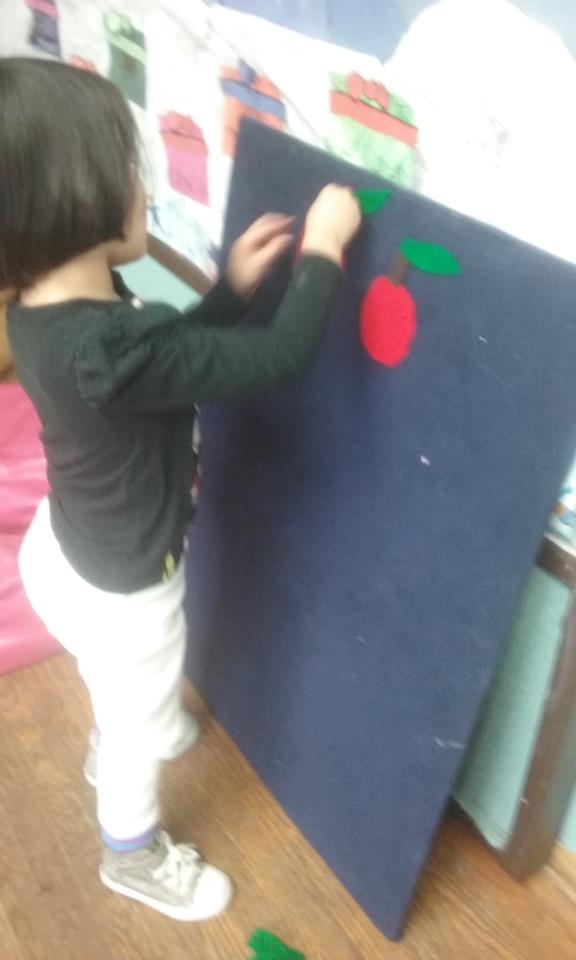
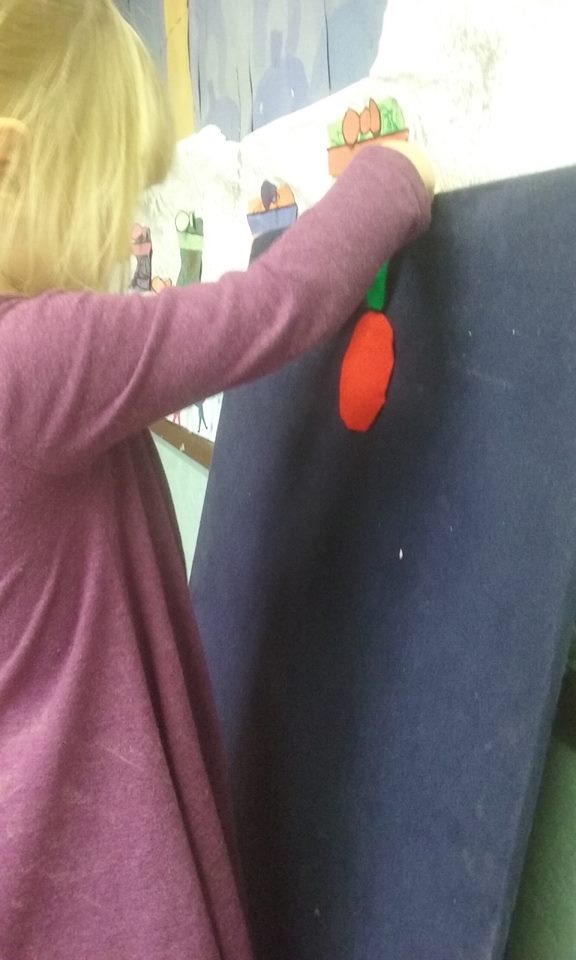
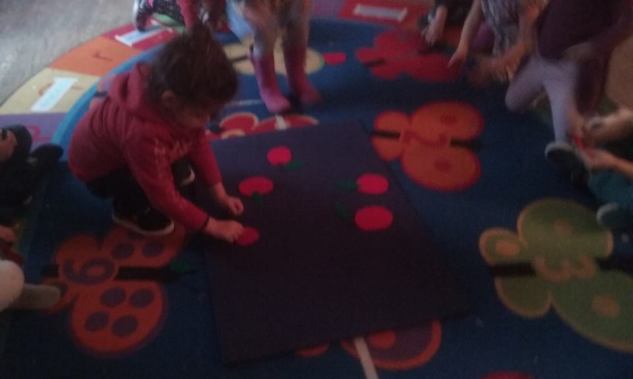
In our daily circle times, we are constantly learning together! This special time helps establish a sense of community among members of our class, and enables us to officially start the day! For this activity, we used a story board to tell the story of Ten Apples Up On Top.

storyboard1Before we started, each child was given an apple made of felt. As the story was read, students would bring their apples up to the board. This enabled each child to identify different sections, relate to plot details, and become a part of the story!
storyboard2

Apple Printing

Painting is much more than just a simple activity. Painting is a way for children to do many important things: convey ideas, express emotion, use their senses, explore color, explore process and outcomes, and create aesthetically pleasing works and experiences.

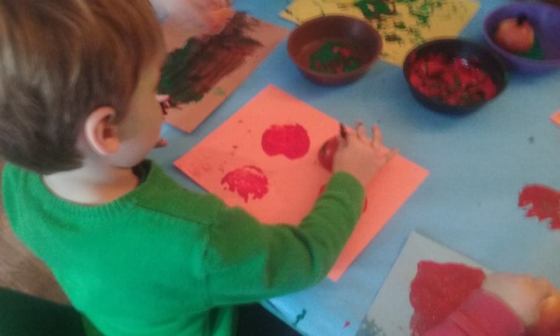
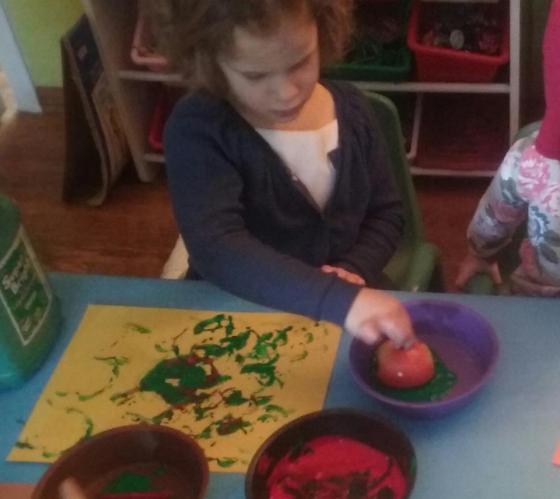
appleprintChildren form many connections and ideas of how the painting process works for them, as well as what they enjoy about it. Watch a child painting and you will see a fully engaged child. We can almost see children’s thoughts, such as, “When I push my brush flat, my line gets bigger”, or “I like stirring this, but I don’t want to put it on paper or touch it”, or “I mixed red with more red and orange, and got fire color red!” To continue with our Ten Apples Up On Top theme, we painted with apples! Using corn skewers, apples, and paper, we practiced dipping our apples into paint and creating our very own apple prints!
appleprint1

Bobbing for Apples

Young children enjoy learning about how things work.

bob

By participating in a vast array of science activities, they are learning important critical thinking and observation skills. These activities also promote their inherent sense of curiosity about the world.

bob1

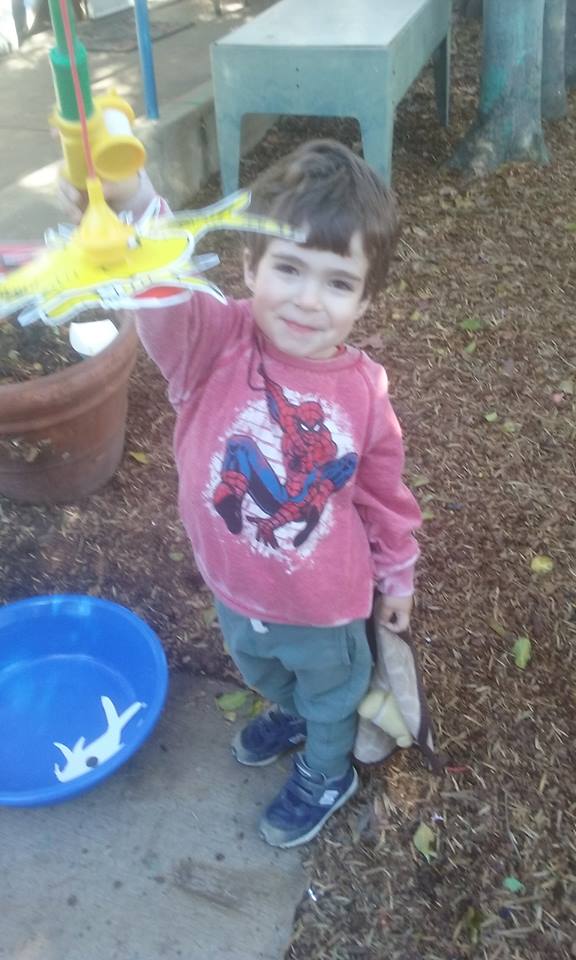
For this activity we experimented with sinking and floating. Using real apples, we placed them in water to observe whether they would sink or float. Then, we used tongs to grasp them. We were “bobbing” for apples!

bob2

One Fish Two Fish Number Sort

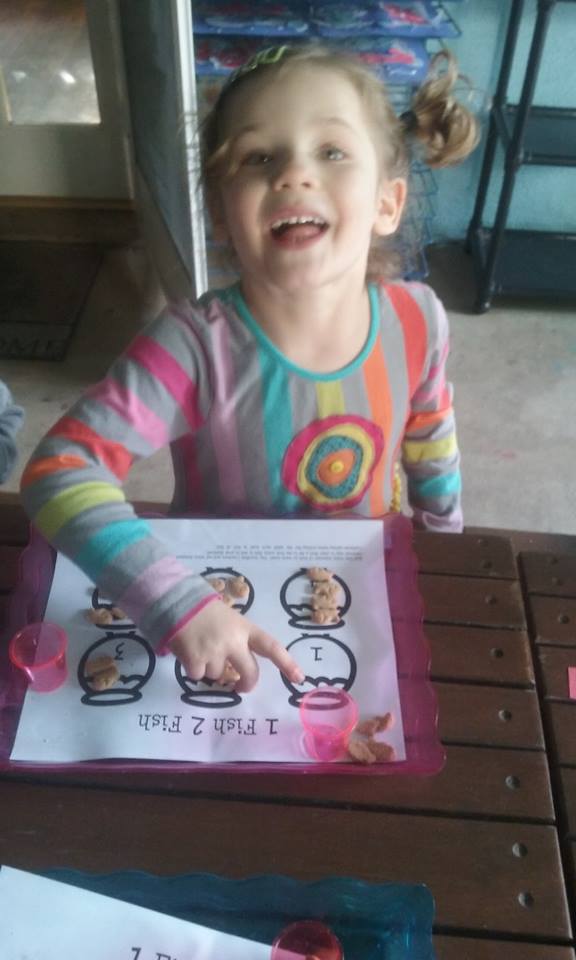
Using goldfish crackers and pictures of fish bowls, our number sorting project was a popular event this morning! The activity was introduced by talking about different numbers. Quantitative concepts were discussed; including, by not limited to: the difference between large and small, identification and classification of various fish, sizes, and counting.
goldfish
Our students eagerly collected their goldfish, sorted them according to number and counted them! The more our young ones are exposed to different opportunities for counting, the more eager they are to continue to count! By using a variety of objects, we reinforce number recognition and the understanding of quantity. Children are able to understand math through early play. When they sort objects according to different criteria, they are given the opportunity to apply mathematical concepts to their everyday play and experiences.
goldfish1