Thanksgiving Dinner Dramatic Play

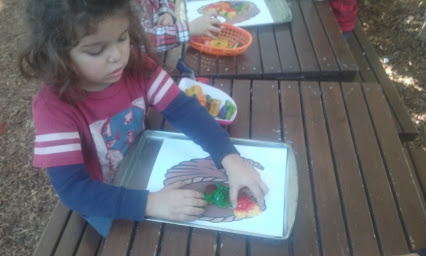
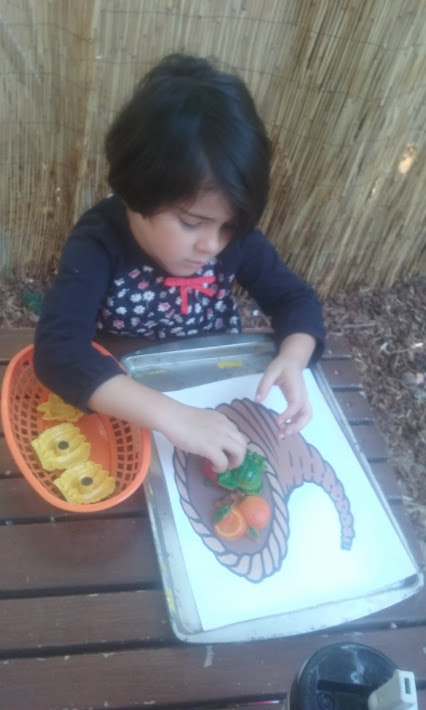
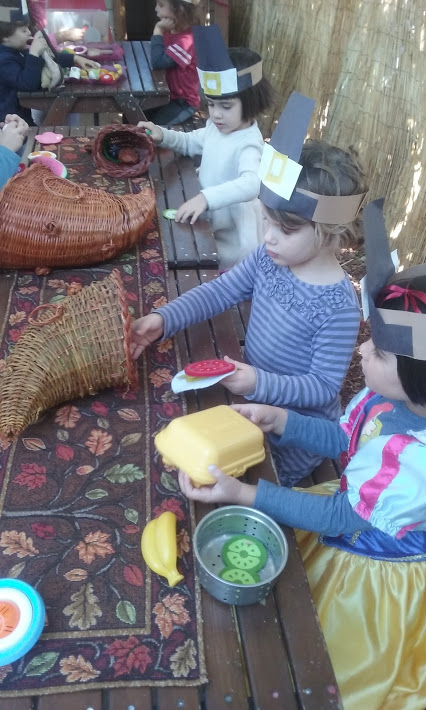
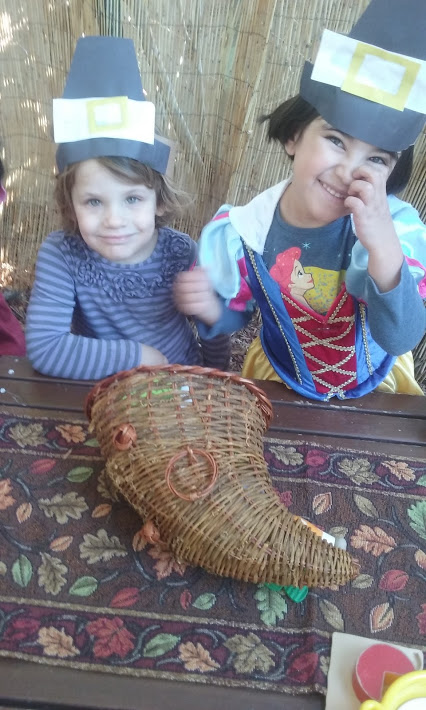
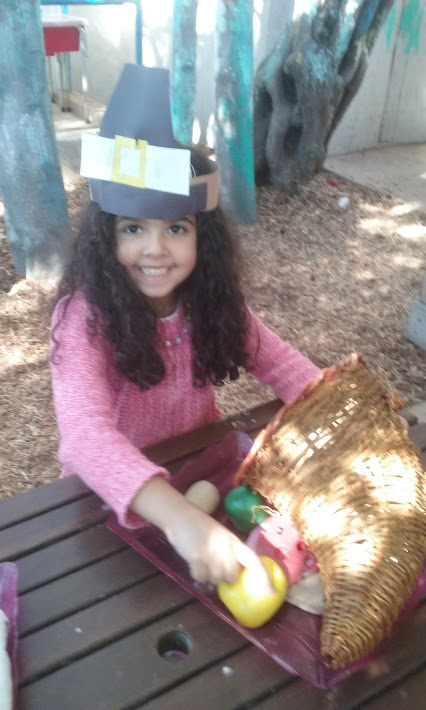
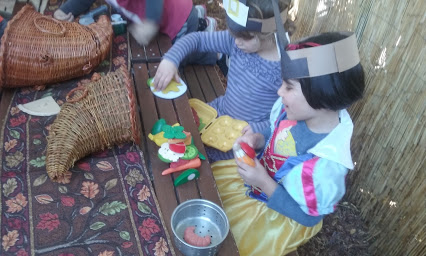
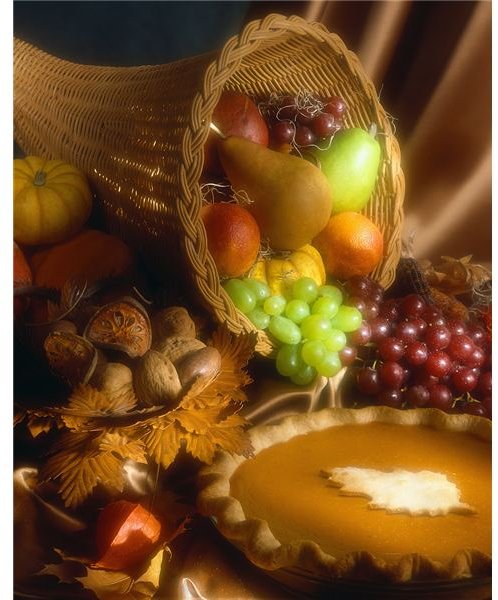
Using play food, REAL cornucopias, plates, and utensils, we made our very own Thanksgiving Feast!
copia6
copia
We wore Pilgrim hats, and used our words to talk about all things Thanksgiving!
copia7
copia1
This gave your little ones one a chance to act out and mimic the things we have been reading about all week!
copia5
copia2
Our dramatic play also encouraged cooperation with each other, perception of meaning, and increased language skills.
copia4
copia3

Fruit Turkeys

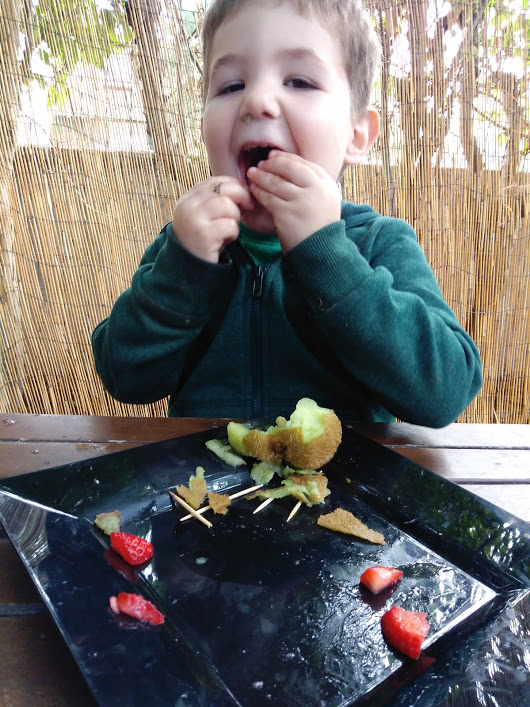
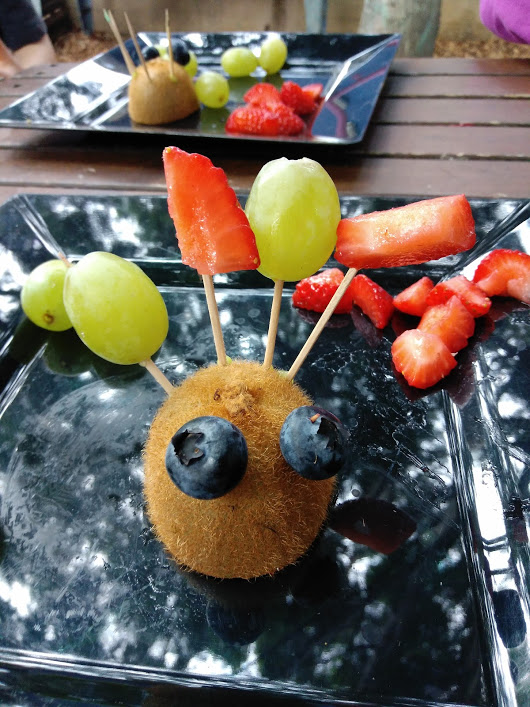
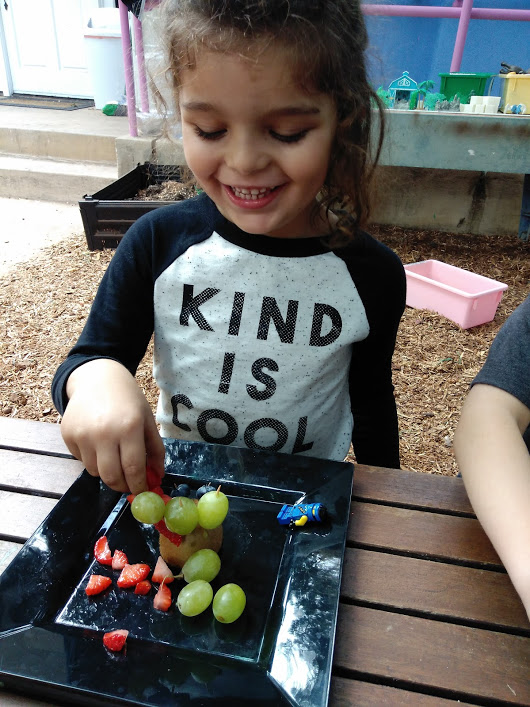
Using fruit, toothpicks, and their tummies, your little ones made a colorful array of turkeys!

fruitturk

fruitturk2

Young children enjoy manipulating real-life materials in their learning environments, and found much satisfaction in creating turkeys out of kiwi, strawberries, pineapple and blueberries.

fruitturk1

Children at this age learn more from three-dimensional items, objects they can see and understand firsthand, rather than simply drawing concepts on a piece of paper.

fruitturk3

fruitturk4


Drum Circle

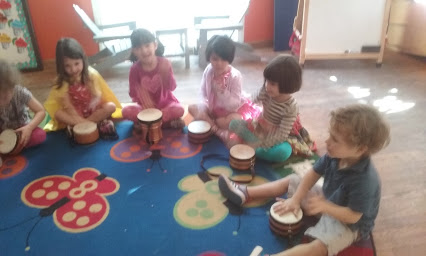
Indians used music as a means to celebrate, mourn, and communicate. Young children love to play music, and even more so, together!
drum
Using drums, our hands, and our creativity, we performed a variety of rhythms, using a popular call and response game. Performing as a group fosters a child’s sense of community, increases self-esteem, and encourages listening skills.
 drum1

Static Electricity Bats

Static electricity is the result of an imbalance between negative and positive charges in an object.

static

These charges can build up on the surface of an object until they find a way to be released or discharged.

static1

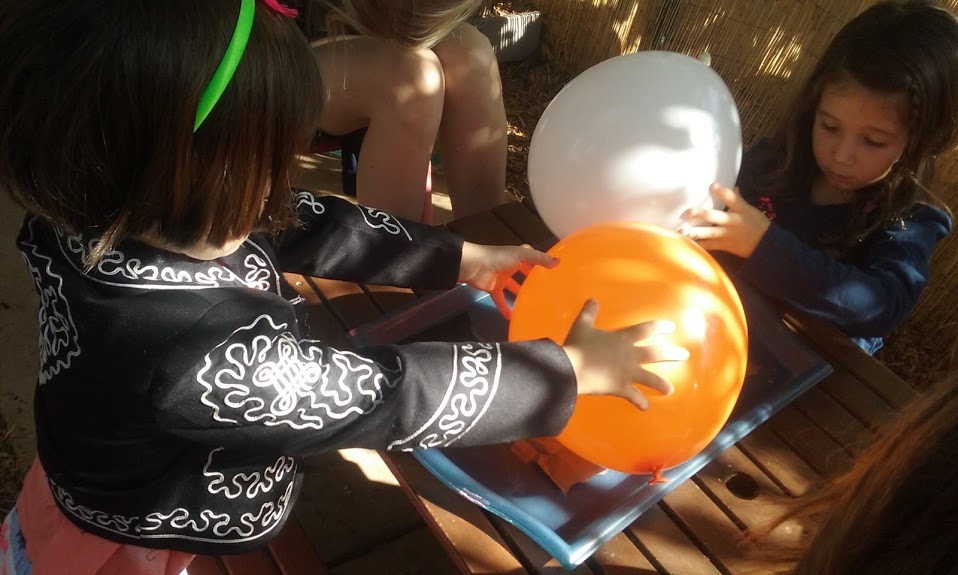
For this activity, we experimented with static electricity to create moving bats!

static2

We first rubbed the balloon on a piece of felt to create an electric charge.

static3

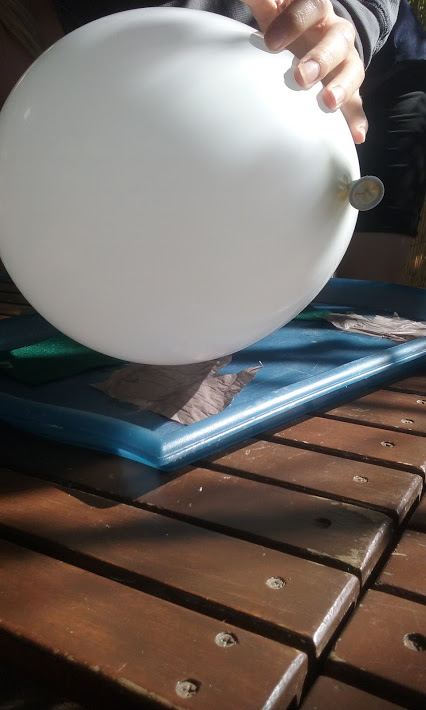
We then moved the balloon over our bats, which were made out of tissue paper.

static4

The static electricity enabled the bats to fly!

static6

Pumpkin Play Dough

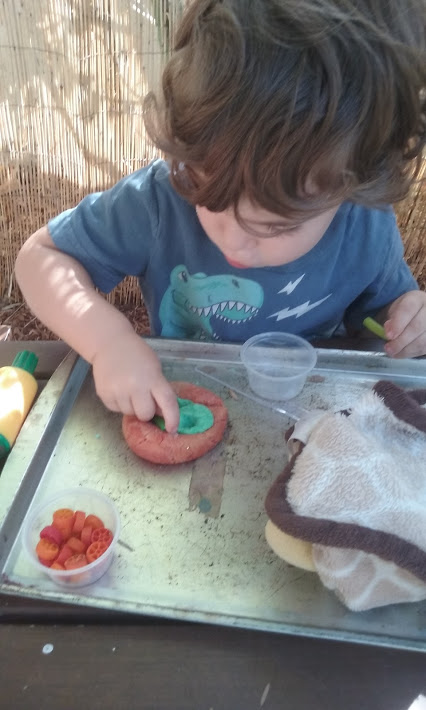
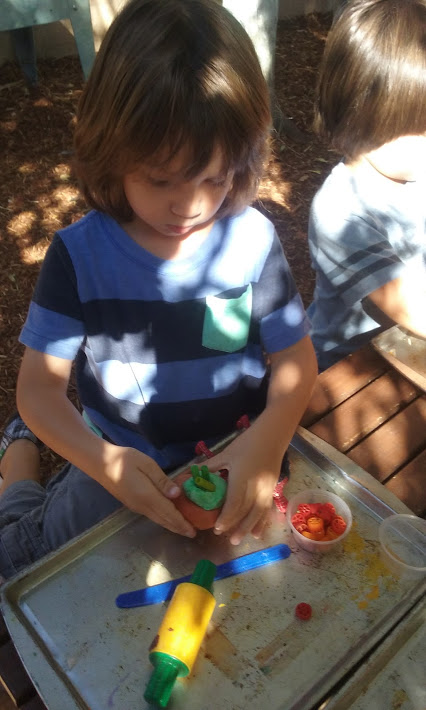
We have been learning all about pumpkins, so we made our very own!

pump1

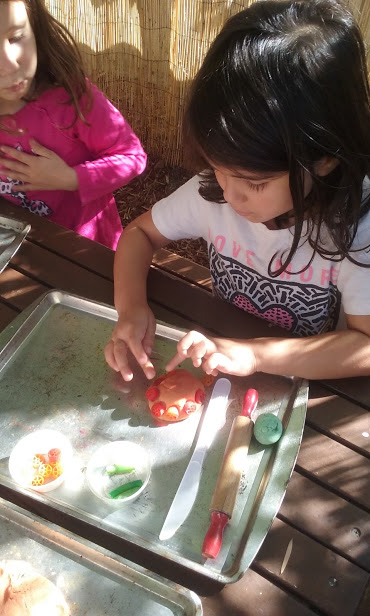
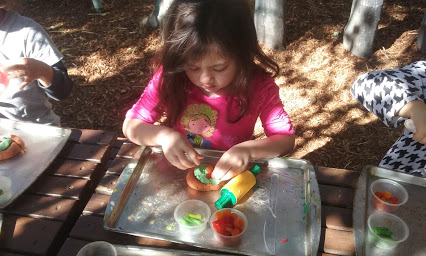
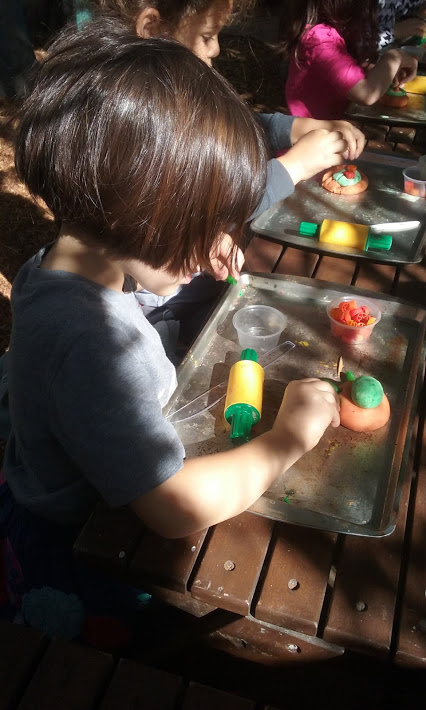
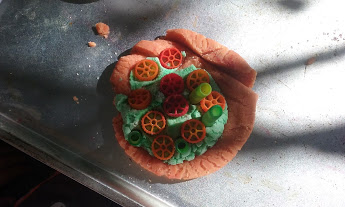
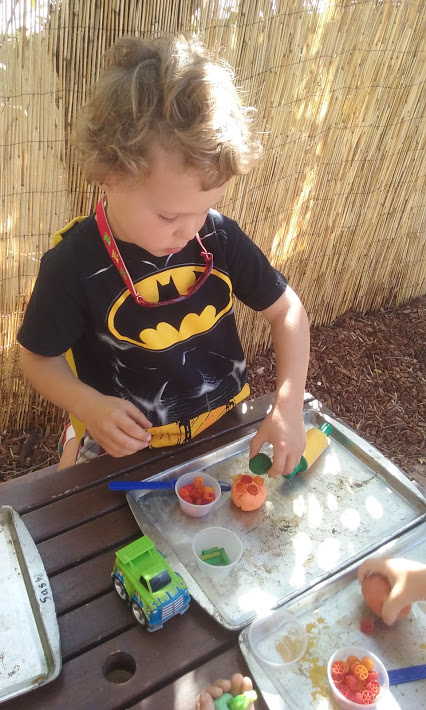
Using play dough as a medium and colored pasta, we created our favorite Halloween plant!

pump2

This activity also revisited and reinforced such vocabulary as “stem”, “pumpkin patch”, “top” and, and “bottom”.

pump3

Using play dough helps a child practice using certain physical skills with the hands when they manipulate the dough with their fingers.

pump5

Children can practice skills such as pinching, squeezing or poking while they play with the dough.

pump6

Lastly, using play dough helps a child practice using imagination and other cognitive abilities such imitation, symbolism and problem solving.

pump7

This helps our little ones learn more about their environment as they make and mimics everyday objects with the play dough.

pump

pump8

Pumpkin Pounding

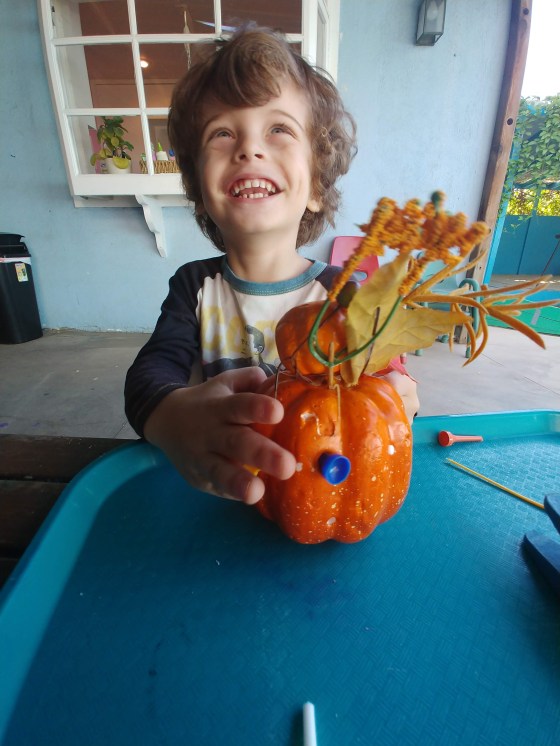
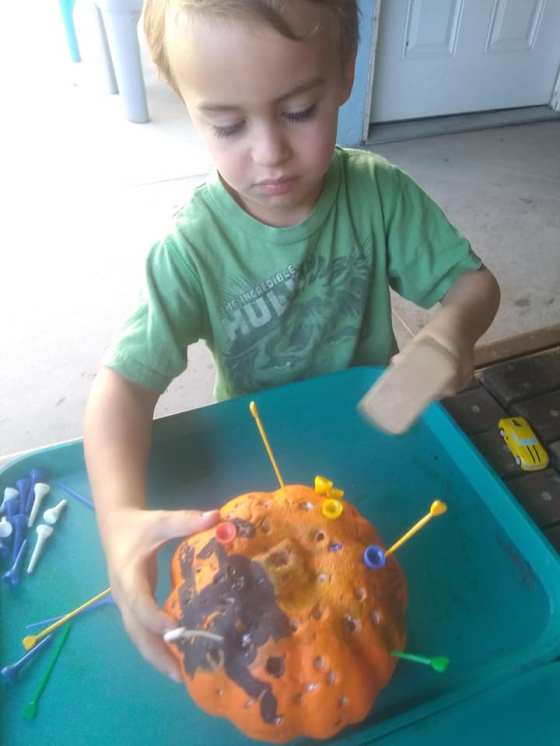
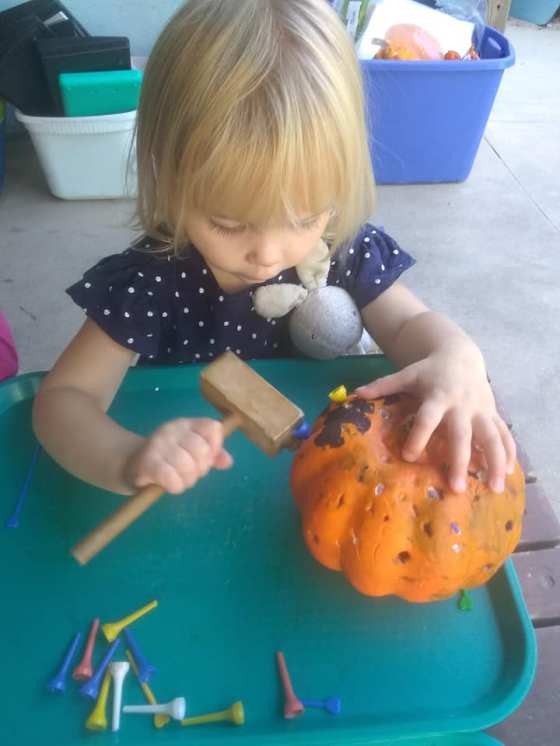
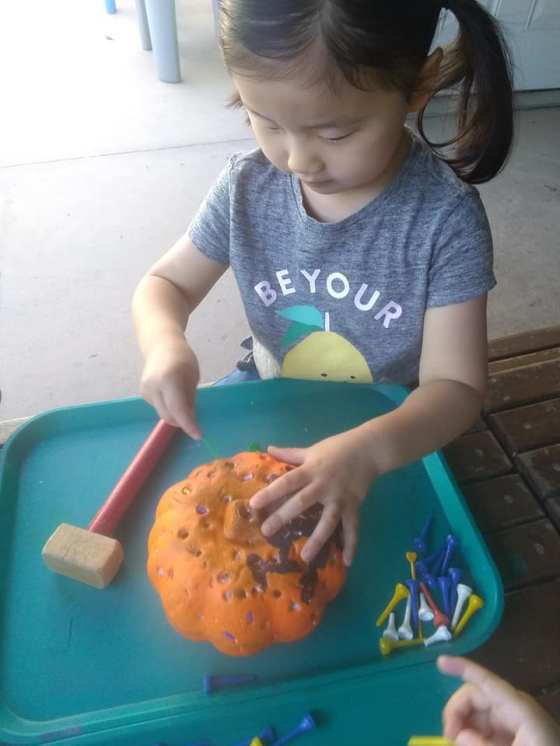
Using golf tees and wooden hammers, we practiced hammering golf tees into styrofoam pumpkins.
20181005_101628
This encouraged motor development, hand-eye coordination, creativity, and math and science skills!
71274845_2750600934973724_8012235798193635328_n
As young children explore with age-appropriate tools, they use small and large muscles.
71642255_2750600124973805_7321711838473748480_n
As they make decisions about the orientation of the golf tees, they participate in problem solving skills.
72669500_2750599924973825_920114528904019968_n
Lastly, as they complete their project, they experience a feeling of accomplishment.
71804726_2750599744973843_8018412742849331200_n
Most importantly, they had fun while doing it!

Bat Caves

Most bats are nocturnal. They fly and forage for their food (bugs) at night.

This means that they need safe places to sleep during the day.
22688906_1727347950632366_7900297536231021380_n
Caves provide the kind of protected shelter in which bats can thrive.

Hanging from the ceiling of a cave, bats are out of reach of most of their enemies.
cave8
Some of the most successful species of bats live in large cave colonies. Some of these colonies have millions of members, even up to 20 million!

Using dirt, rocks, toy bats, and our imaginations, we created our own caves!

Sensory play is an integral part of how your child examines, discovers, categorizes, and makes sense of their world.

As they create their caves, they are taking in new information through their senses, acquiring language skills, and collaborating with their peers.

Spider Web Habitats

Your little one participated in yet another fun sensory activity!

spider4

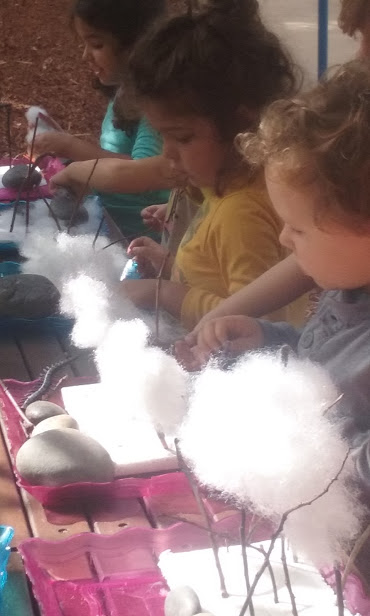
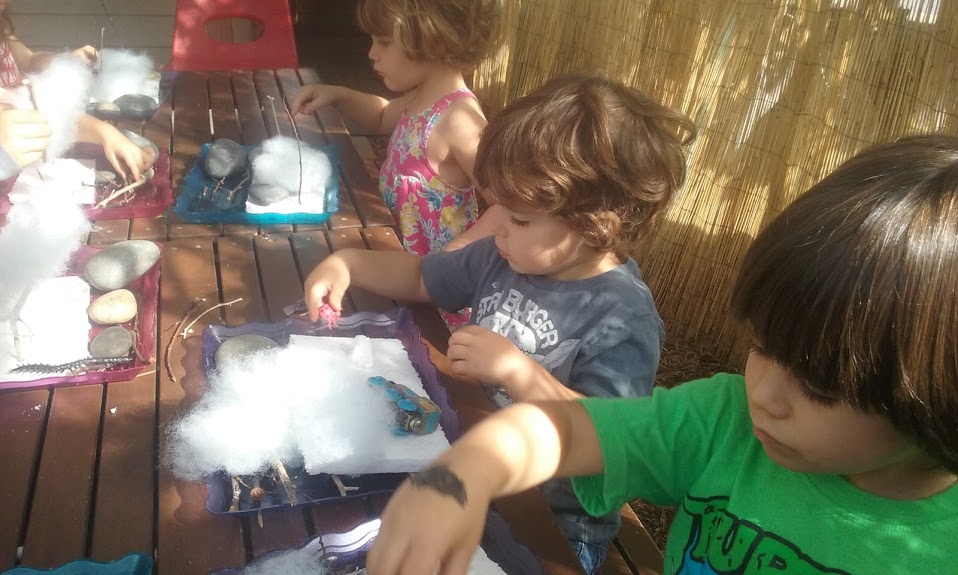
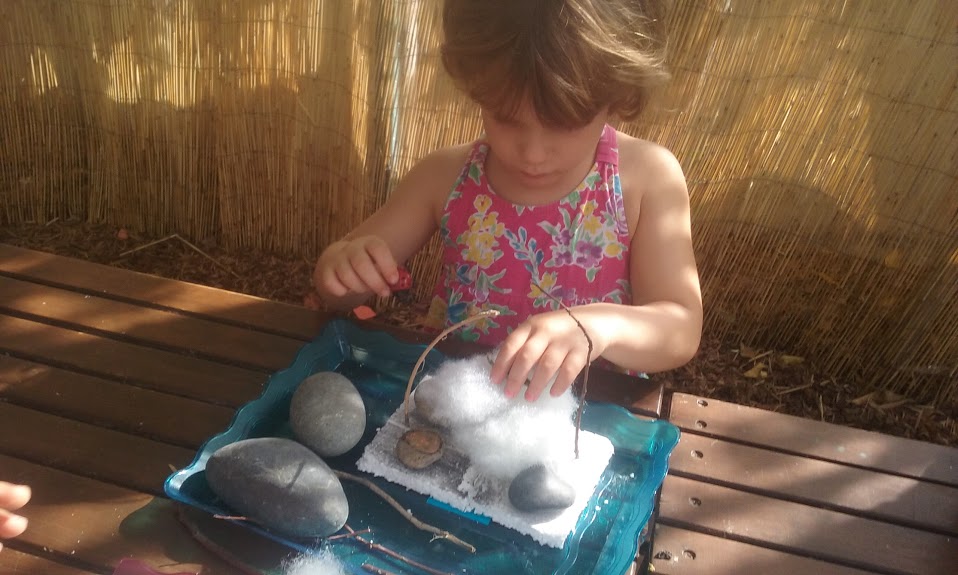
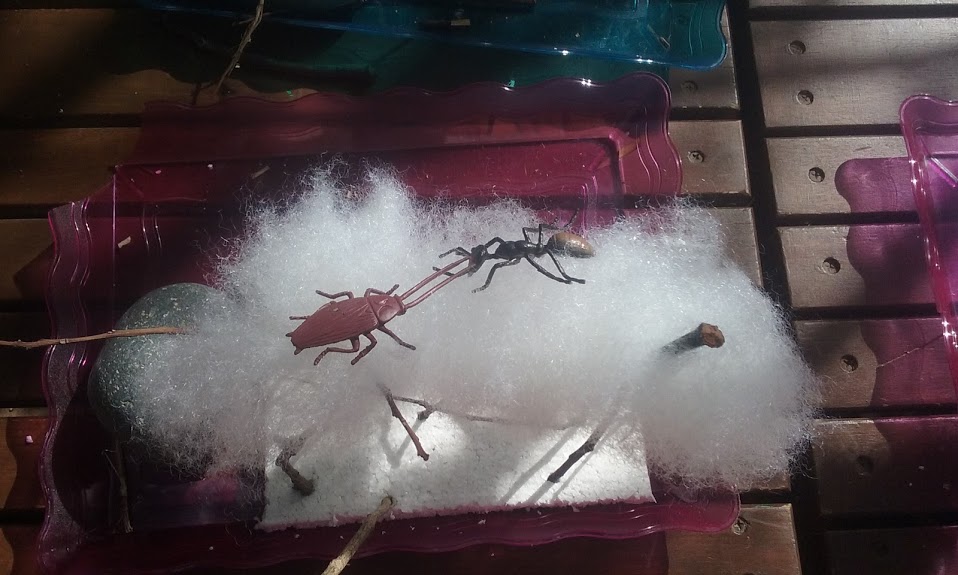
Using styrofoam as our base, white web material, sticks, and plastic bugs, your little one created their very own spider habitat!

spider5

spider

We began this activity with a discussion and review of the spiders and other bugs that we have been learning about. We then talked about where these creatures lived.

spider1

Our discussion concluded with a review of the new vocabulary that we have been learning, such as insect, web, arachnid, antenna, web, and silk.  

spider2

Your little arachnid enthusiast then happily constructed the perfect living space for his spider friends.

spider10

spider3

Witch Potions

Young children love to pour and dump, and derive much joy from engaging their senses to investigate their surroundings.

witch7

witch

As they manipulate various substances, they are observing the physical properties of the world around them.

witch6

witch1

By transferring materials and exploring how they interact, they are learning about density, weight, and volume, which form the foundation for critical thought.

witch2

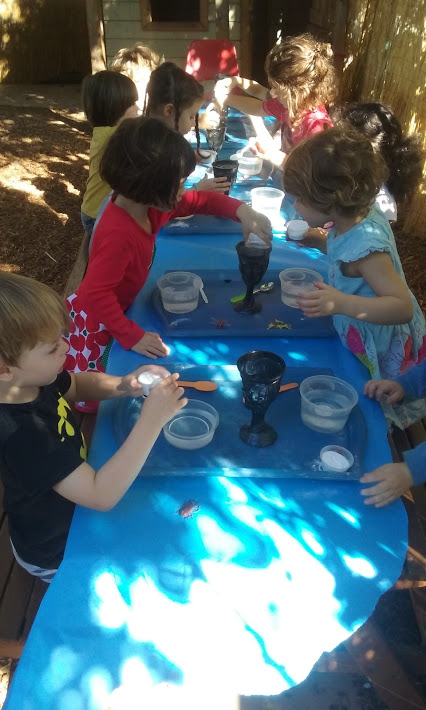
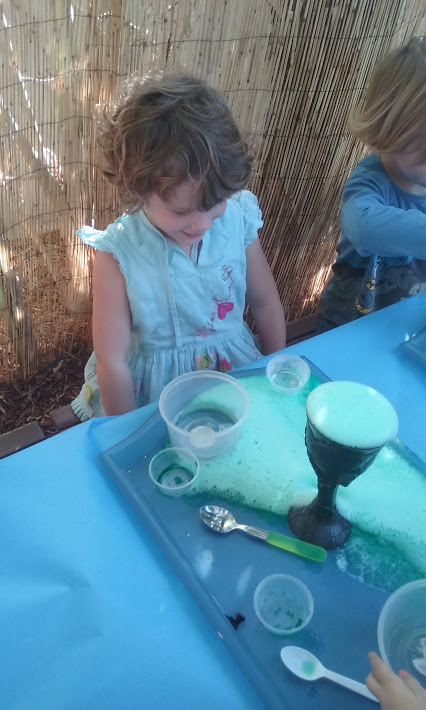
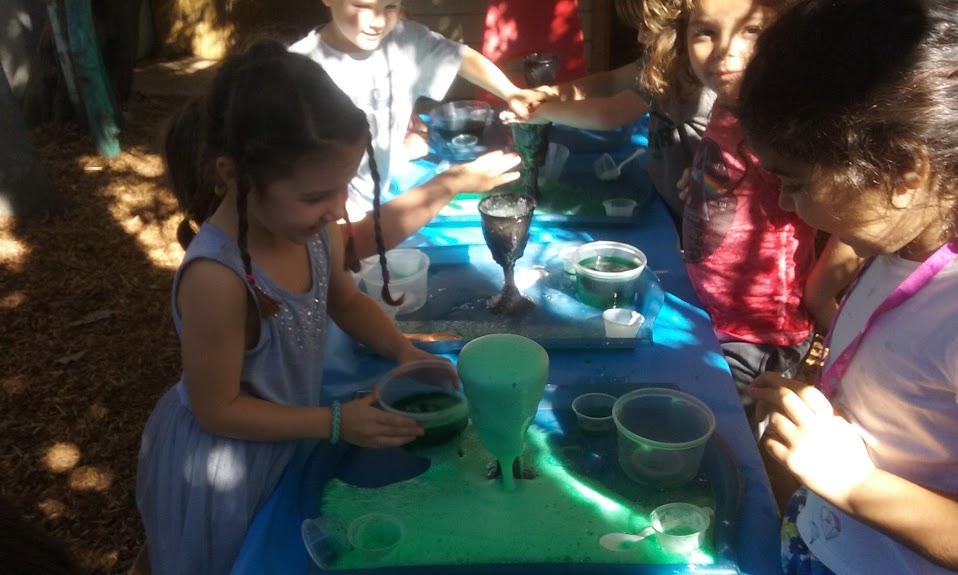
For this particular activity, we combined baking soda and vinegar to create witch’s potions.

witch4

Each child enjoyed watching their potions foam and come to life!

witch5

Frankenstein Foam

Preschoolers are constantly doing math, even when they are not aware of it. It enables them to problem solve, and make sense of the world around them. Because young children learn best by doing, opportunities that enable them to participate at a hands-on level yield the most promising results.

22519617_1722437244456770_7192865600472654468_n

When they participate in their own learning experiences, they construct meaning as they communicate and represent their understanding of complicated concepts. To help improve our counting skills, we created “Frankensteins” out of flower foam.

22528318_1722437271123434_815844566030999701_n

Using golf tees as the mouth, nose, and eyes, we counted how many golf tees were needed to construct the “faces”, and then recorded our results.

22539991_1722437314456763_6048528550726714340_n

As they assembled their creations, they were encouraged, not only to count, but to write down what they were counting. This enabled them to observe the relationship between the object in their hands and the symbol that represented what they were seeing.

22549560_1722441064456388_8184991402533794250_n