Your preschooler consistently expresses her preference for tactile play.
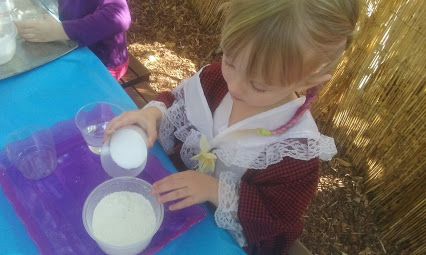 As young children seek to grasp new information, this form of play provides the perfect forum to apply newly acquired concepts.

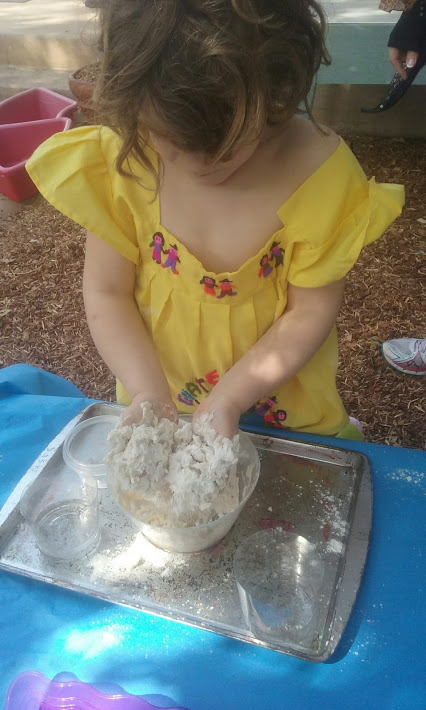 As they interact with peers, their teacher, and provided materials, your budding ornithologist forms relationships to learned notions that enable them to make sense of their world.
 For this particular activity, we learned about how baby birds are born. Because they are reptiles, most birds lay eggs. Using play dough, tiny birds, sticks, and rocks, we created our very own bird nests!
 We first made the play dough (using salt, flour and water), and then created our nests!
 Your little scientist enjoyed spinning elaborate tales of baby birds cavorting through the “forest” as they followed their “parents”.
 Their conversations allowed for the processing of new vocabulary and the enjoyment of working together toward an idealized goal.

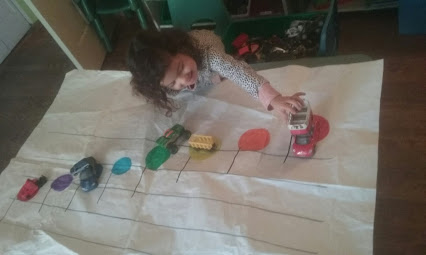 For this activity, I used cars to reinforce the concept of the Solfege scale. Students were given cars of a variety of colors. They were then told to play the different cars onto the notes with the same color, singing as they did so. Following this, they were told to “drive their cars” on the staff at various tempos.
 For this activity, we drove Adagio (slow), Moderato (medium speed), and Allegro (fast). After this, they were told to drive their cars at different speeds to different notes. For example, they would drive the yellow car “slowly” (Adagio) to Mi (the yellow note). They would also drive the light blue car rapidly (Allegro) to So (the light blue note). Doing activities like this enables children to play as they learn!
 Following this, they were given a variety of blocks to first create one eighth note, and then two together.
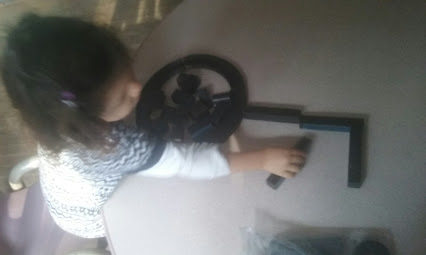 They were then given play dough and were instructed to create two eighth notes.
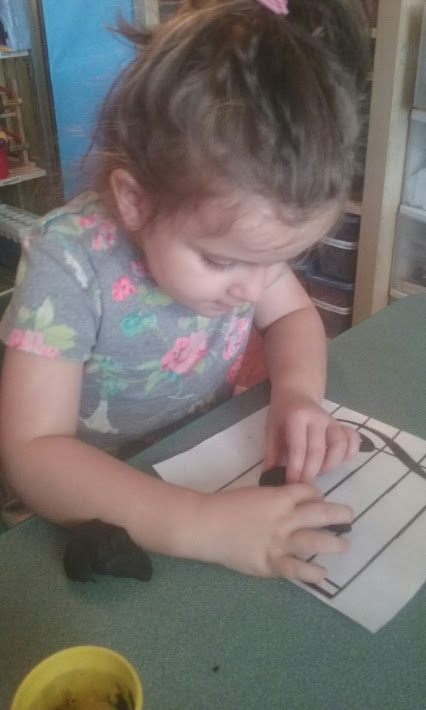 Next, they were given a white board and were told to draw an eighth note.
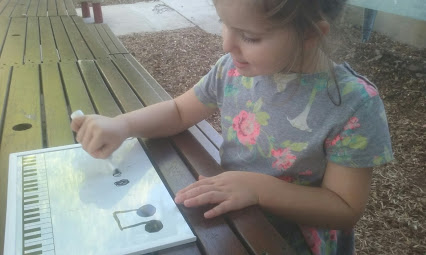 Lastly, they played several exercises on the keyboard, aimed at helping them feel the rhythm of Titi in their fingers. They would initiate the exercise with the red note (or Do), chanting Titi as they did so, progressing up the solfege scale (playing Titi on each note), and then returning back. Providing several learning activities enables different learners (whether visual, auditory, or tactile) to grasp material more effectively.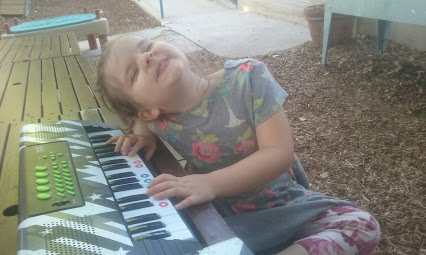
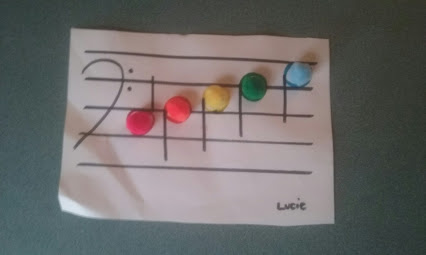 In this game, students used pom poms and tweezers to add “notes” to the Solfege scale. As they added the pom poms to the staff, they sung the pitch.
 To encourage musicianship, students sung and placed pom poms on a variety of musical intervals, such as Do-Mi-So and Re-Fa.
 This enabled them to both recognize and apply their understand of common musical intervals.
 We did this, first with the treble clef, and then with the bass clef.
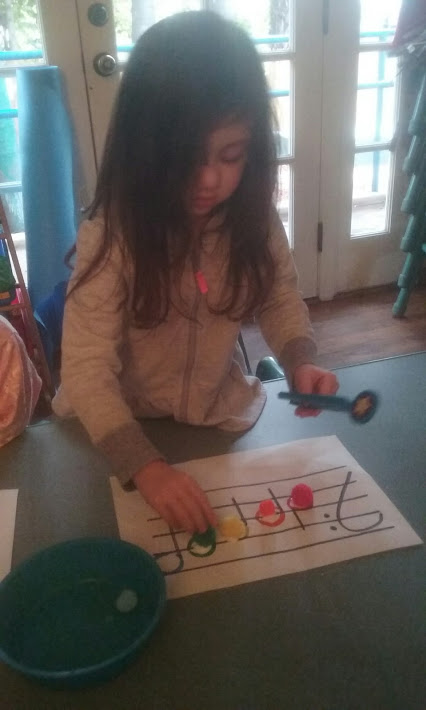 Following this, they played these intervals on their keyboards.



 misscarriescorner