Hansel and Gretel – Gingerbread House

In the story of Hansel and Gretel, there is a gingerbread house in the middle of the forest that is inhabited by an evil witch.
ginger 1
To help your little ones make a connection to this dwelling, we created our very own!
ginger 2
There are few things that are more engaging to young children than playing with food, especially when they are playing with a purpose!
ginger 3
Young children are budding scientists, constantly learning about and seeking charge of their worlds.
ginger 4
As they manipulate different materials, they are forming mental representations of how different materials interact, and then work to plan changes to them.
ginger 5
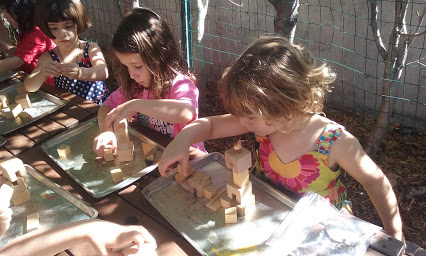
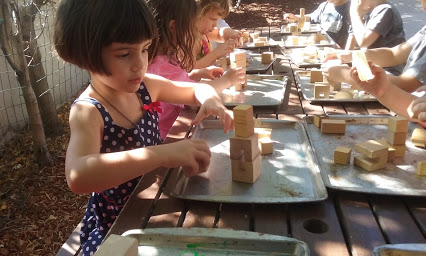
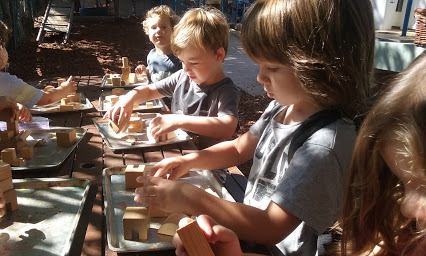
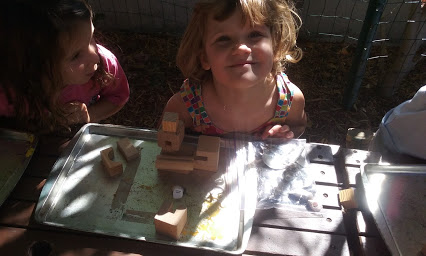
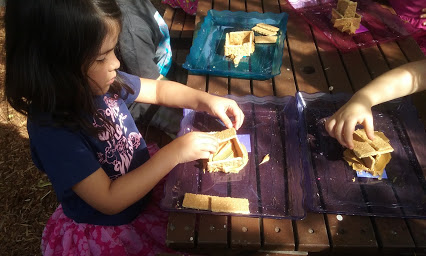
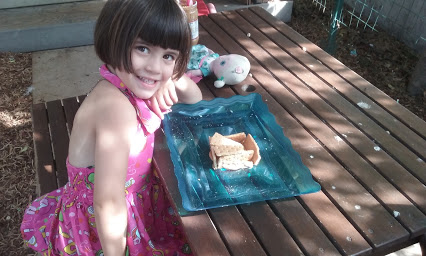
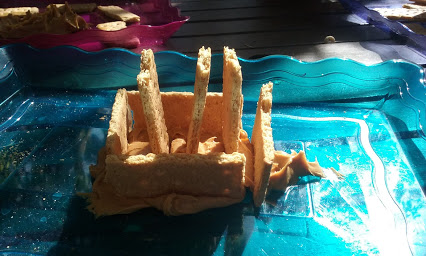
Using graham crackers as the walls, and peanut butter as the mortar, your little ones constructed their very own gingerbread houses! This was the definite winner of the week!
ginger 6

Counting Seeds

Of all the math skills that children will acquire, counting is one that most children will already be doing before they reach school-age.

seed count 4

seed count

Rote counting (or saying numbers in a sequence from memory) is what most children will be able to do, but this does not mean that they can actually determine the amount in a collection.

seed count 2

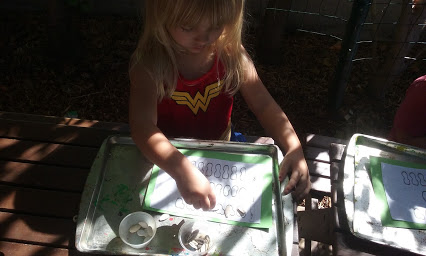
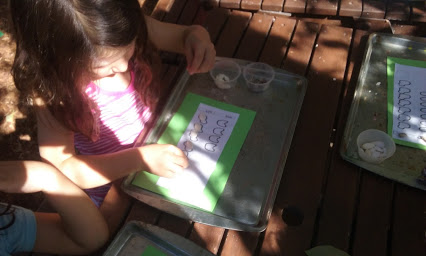
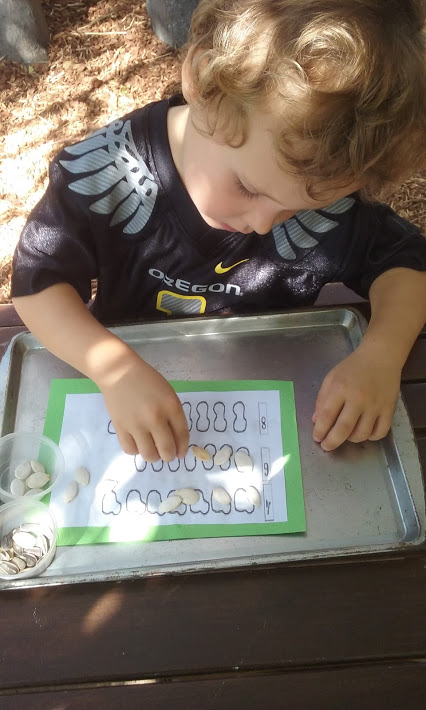
In order to help our students develop an actual understanding of numbers and how counting relates to real life, we did a hands-on activity with seeds aimed at developing their one-to-one correspondence.

seed count 3

By placing a certain amount of seeds on a diagram (counting as they did so), participants were able to make a connection between the spoken numeral and a concrete amount.

seed count 5

seed count 7

Beanstalk Weaving

Lacing and weaving activities provide a great educational and developmental experience for preschoolers.

stalk 1

As children grasp the tip of the item that they are lacing with, they are building their pincer grip which is crucial for writing skills.

stalk 2

They also learn patterns and develop hand-eye coordination through the very act of lacing or weaving.

stalk 3

Finally, it is also a lesson in patience as they ever so slowly work their way across the lacing base with their implement.

stalk 4

This activity involved a creative way to practice our lacing skills.

stalk 5

Using branches and toilet paper tubes, we created our own version of Jack’s beanstalk. We weaved the branches into the tubes, and saw our beanstalks come alive!

stalk 6

Jack and the Beanstalk Small World Play

Small world play occurs when children use miniature items such as toys, found objects, or replicas to act out scenes or ideas from real life, stories, or books.

jack 2

jack 1

Small worlds often include sensory elements which add even more depth to the experience and create more opportunities for language stimulation.

jack 3

jack 4

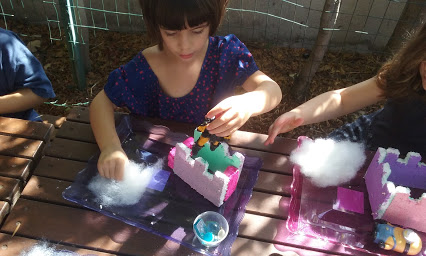
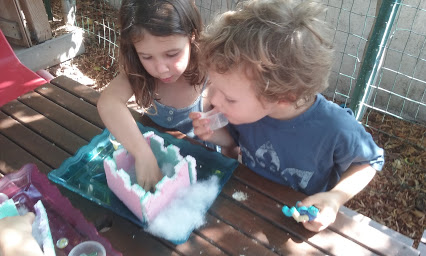
For this activity, we created castles out of styrofoam, and then used these castles to act out scenes from Jack and the Beanstalk.

jack 9

jack 5

Each castle came with jewels (to symbolize treasure), a plastic toy giant, a plastic toy Jack, and cotton to represent clouds. This activity was open-ended, which means that your little ones were given the freedom to explore and add their own twist to the plot of the story!

jack 7

jack 6

Play Dough Chicken Coops

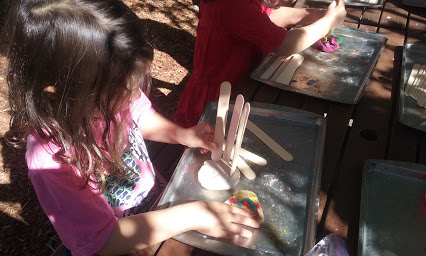
With play dough, young children express their ideas through art and make-believe play.

chicken coop 7

chicken coop 6

At the same time, they learn symbolic thinking by pretending that the play dough is something else (“That thing with the antlers is a moose”).

chicken coop 5

chicken coop 4

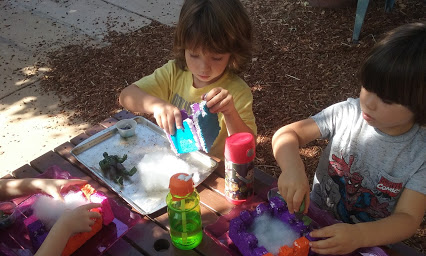
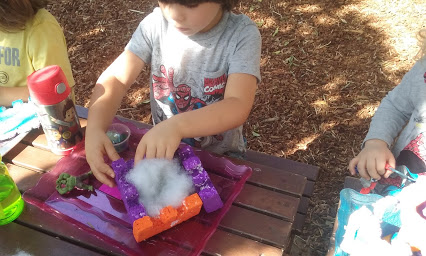
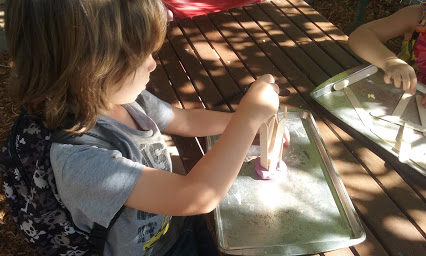
For this activity, we created chicken coops, using craft sticks and play dough.

chicken coop 3

chicken coop 2

This enabled your little one to connect with the main character of the Little Red Hen!

chicken coop

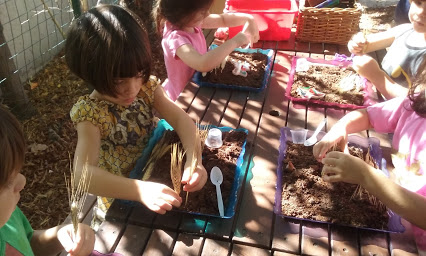
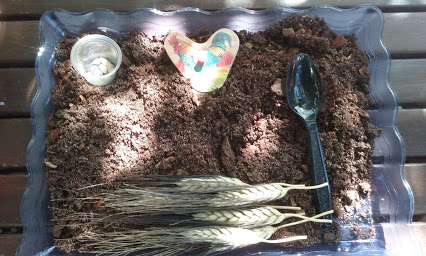
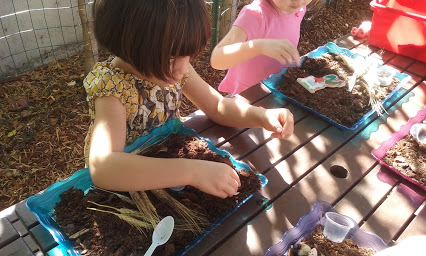
Planting and Harvesting Wheat – Small World Play

No Little Red Hen unit would be complete without a section on wheat! In the story, the red hen not only plants wheat, but harvests it and later turns it into bread!
red hen 1
red hen 2
This project involved your little one learning that wheat grows globally in bountiful supply.
red hen 3
They learned that because it can be harvested in winter and spring, it is utilized abundantly.
red hen 6
Using hens, stalks of wheat, seeds, and shovels, your little farmer harvested their own wheat…just like the little red hen!
red hen 7
They learned that these crops require constant care and upkeep.
red hen 8
Producing wheat is an intensive process, and your little one learned about the many technological advances that allow all of us to enjoy our bread, cereal, and pasta!
red hen 9
They were introduced to the words “swather” (to cut and bind wheat) and “combine” (a process in which trucks cut and loosen wheat from its stem).
red hen 10
By harvesting their own crops, your little one was able to apply their understanding of new vocabulary related to the Little Red Hen!
red hen 11

B is for Bus

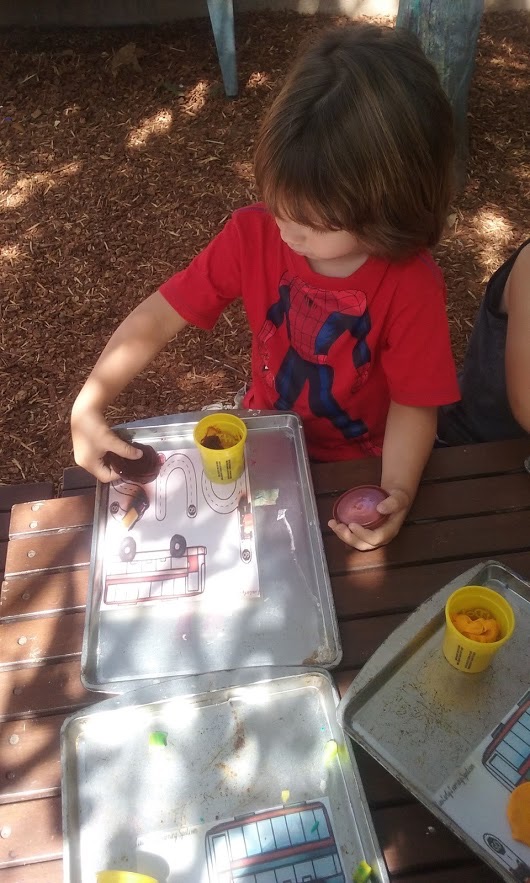
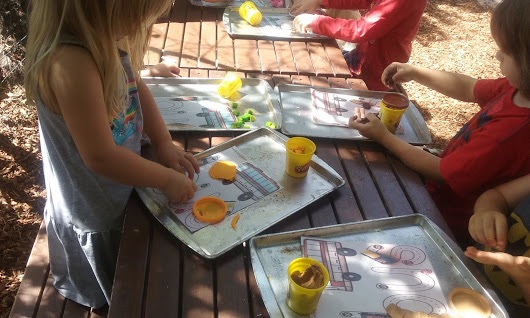
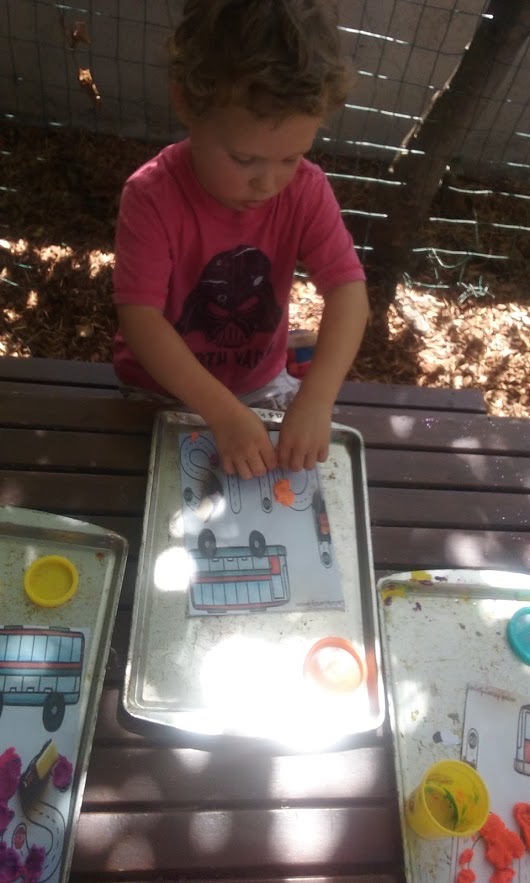
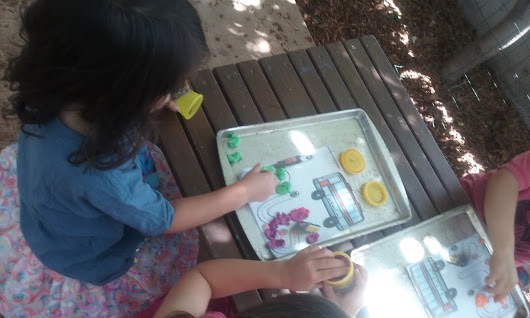
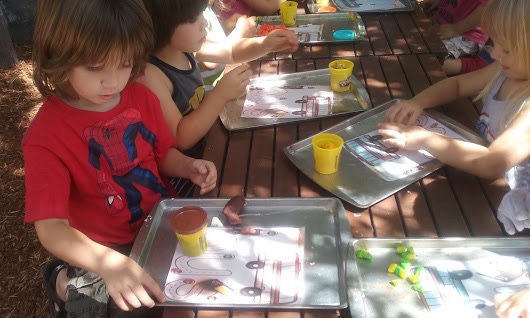
Squishing, rolling, sculpting, molding . . . young children love to play with playdough.

image

This firm and soft substance holds many benefits for the preschool child.

image

Through it, our students practiced their fine motor and pre-reading skills as they pinched and rolled the dough.

image

These actions strengthened the small muscles in their hands and helped with letter recognition.

image

For this activity, we used playdough to spell the word bus.

image

One of our letters for the week was B, so we first talked about the sound B made, and then put ourselves to work to create a B, a U, and an S!

image

image

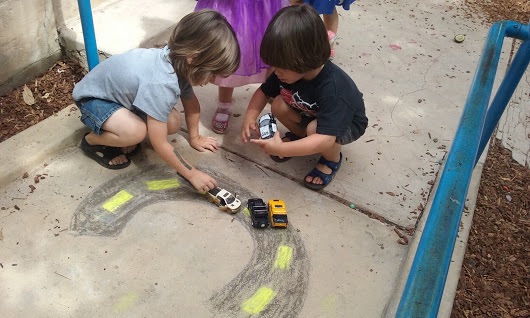
Chalky Roads

Research has shown us that there are six early literacy skills that are essential for young children to become familiar with in order to be successful readers.

image

These skills include vocabulary, print motivation, print awareness, letter knowledge, narrative skills, and phonological awareness. This activity targeted two of these concepts.

image

The first, is that of letter knowledge. Letter knowledge reflects an awareness that letters are different from each other.

image

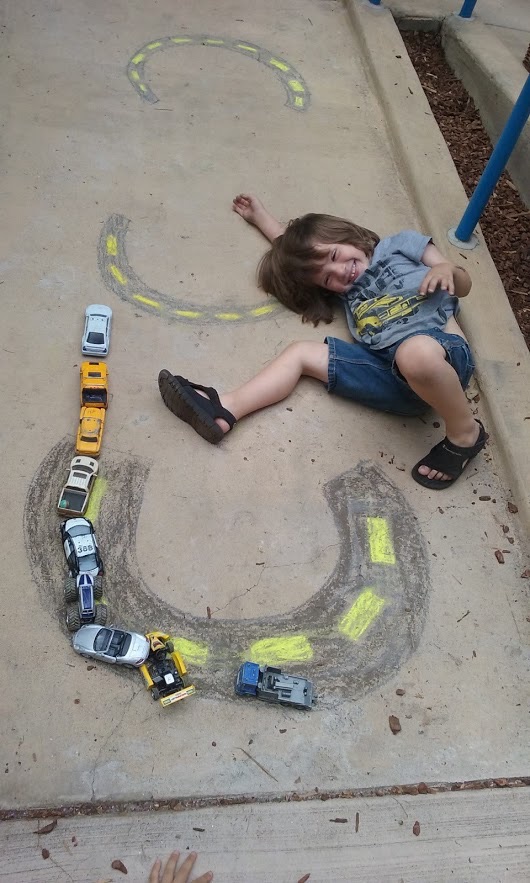
The second, is that of phonological awareness. Phonological awareness means that your little one understands that letters make sounds. For this activity, we created roads out of yellow and black chalk.

image

Using cars and a little imagination, we placed our cars onto our chalky roads! These roads were shaped like the letter C. As they placed their cars onto their letter roads, they were encouraged to say, “C is for car!”

image

Dock Builders

A dock is a structure built along, or at an angle from, a navigable waterway so that vessels may lie alongside to receive or discharge cargo.

image

image

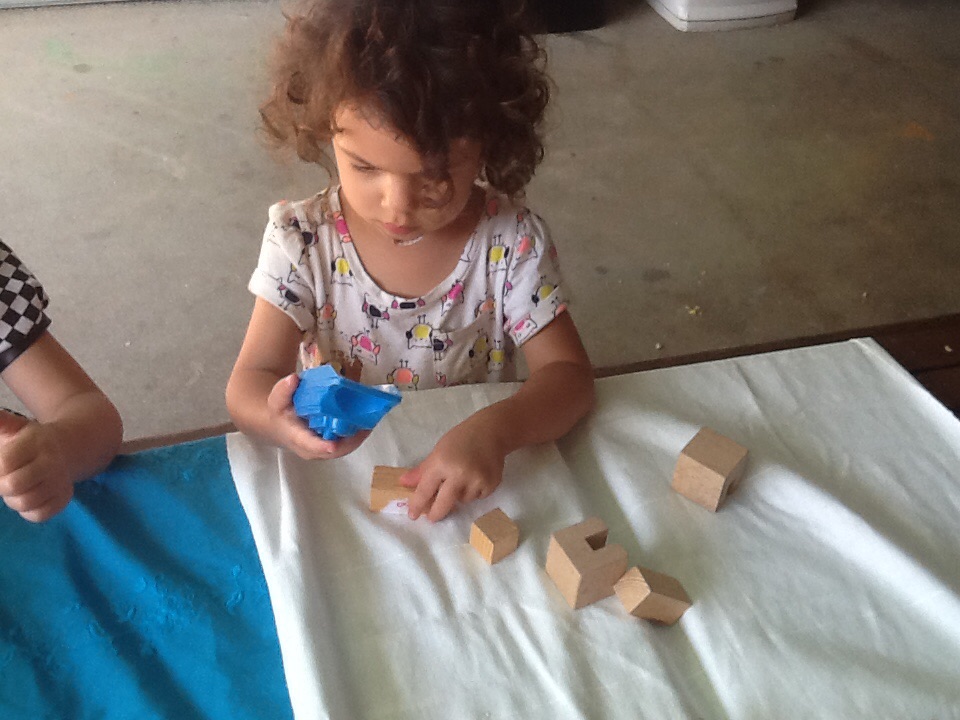
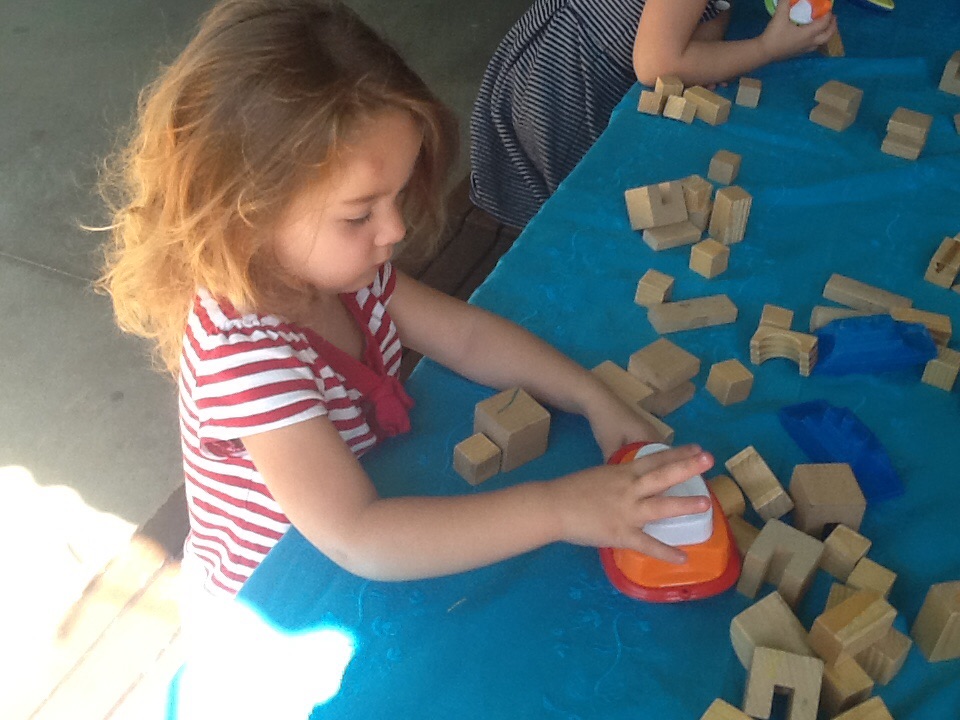
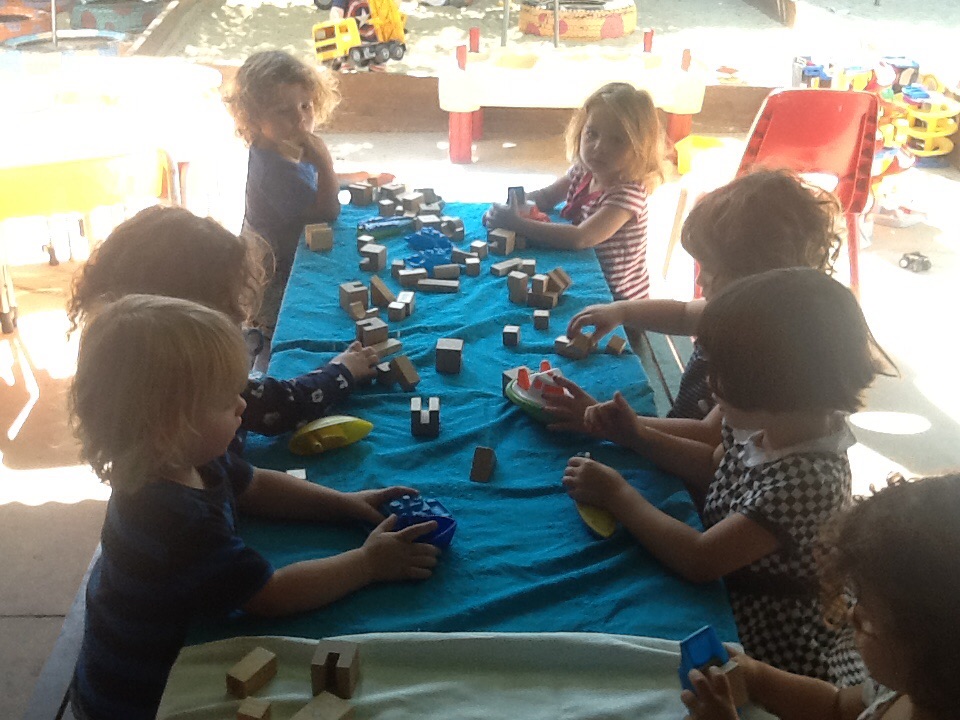
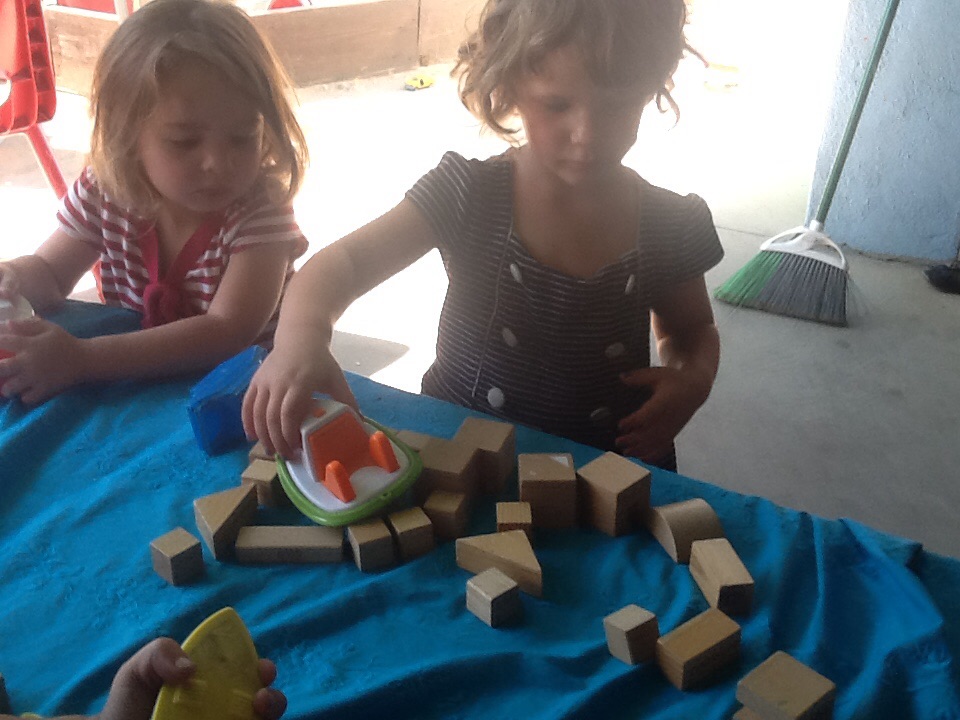
Because we are learning about all things transportation, we built our own docks using blocks as our docks, plastic boats, and blue fabric as our “water”.

image

Children learn many concepts through block play.

image

Play with blocks provides an excellent opportunity for relaying concepts that are best understood by “doing”.

image

It also plays host to a variety of cognitive skills, such as symbolization and representation, directionality, divergent thinking, and logical reasoning.

image

Continue reading

Fishing for Letters

We are having so much fun playing and learning with letters!

image

image

Today we fished for magnetic letters in our water table!

image

image

Each child used a fishing pole to catch a letter and transfer it to its matching mat.

image

image

As they caught each letter, they were encouraged to say the name of the letter and/or the letter sound.

image

image

They then placed it on a mat, and continued to catch letters until all of them were gone!

image

image

This fun challenge enabled your little one to practice their letter recognition and pre-reading skills!

image

Continue reading