I Like Me Story Board

Circle time is an important daily activity in the preschool classroom. There are so many things that happen during circle time. Children listen to a story, learn who is present and absent, discuss the daily schedule, talk about special happenings in their lives, find out about new materials in the classroom, and perhaps, sing a song or do a movement activity.

ilikeme

In our daily circle times, we are constantly learning together! This special time helps establish a sense of community among members of our class, and enables us to officially start the day!

ilikeme1

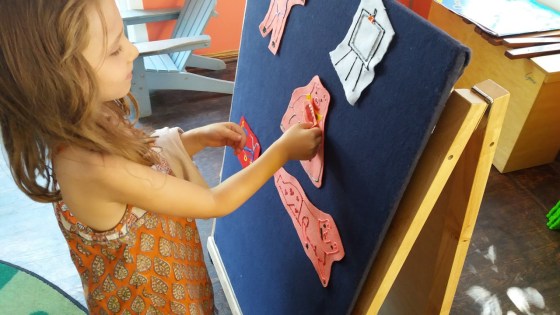
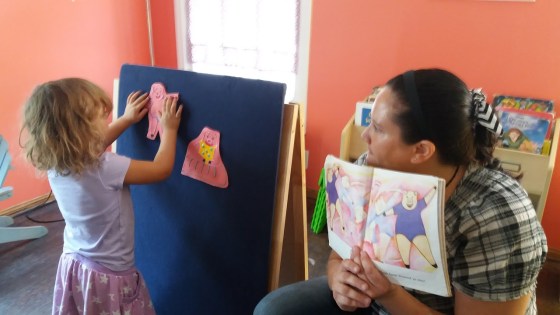
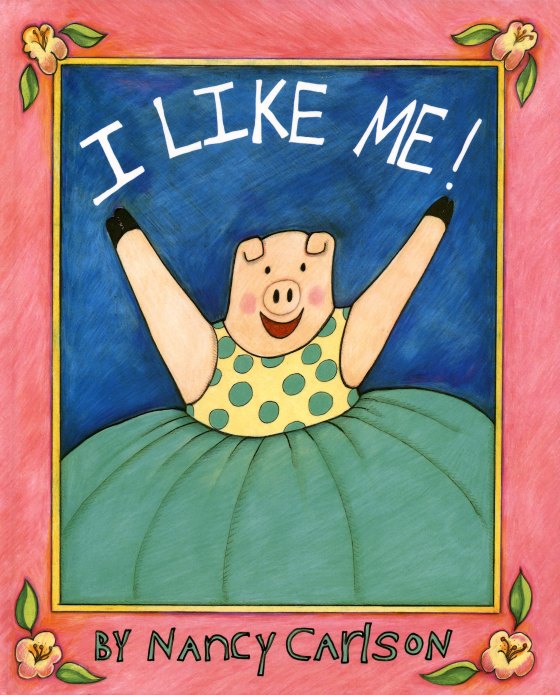
For this activity, we used a story board to tell the story of I Like Me. Before we started, each child was given a piece of the story made of felt.

ilikeme2

As the story was read, students would bring their part of the story up to the board. This enabled each child to identify different sections, relate to plot details, and become a part of the story!

ilikeme3


School Bus Names

One of the first things children learn to write is their name.

bus

It’s the easiest for them to learn and you’ll find they want to learn because it’s the one word they hear most often.

bus3

It is a word all their own because it represents their identity. During the course of our Name Week, we wrote our name in several different ways.

bus1

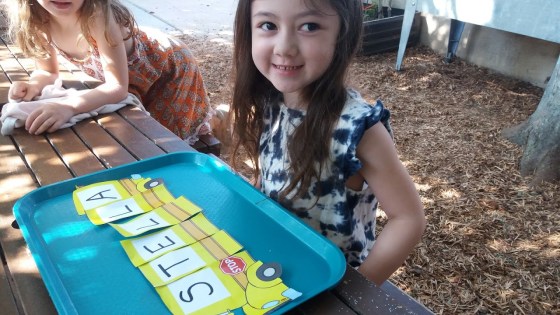
For this activity, we wrote our names using school buses! Using pre-cut puzzle pieces, students placed name letters in order, spelling their names in the process!

bus2

Name Books

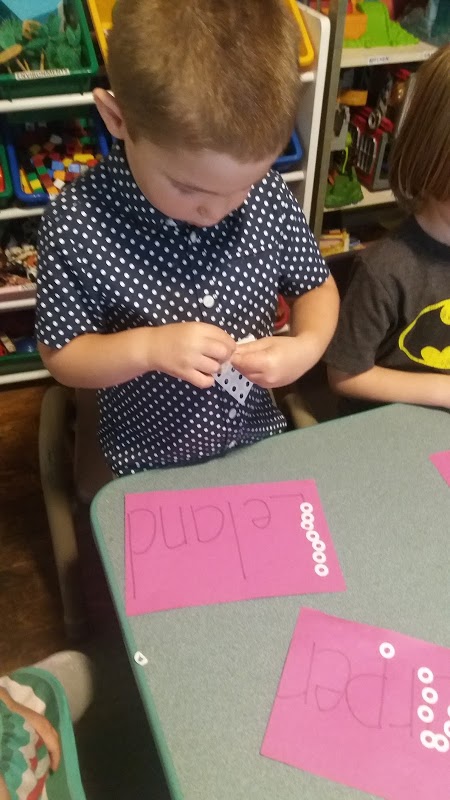
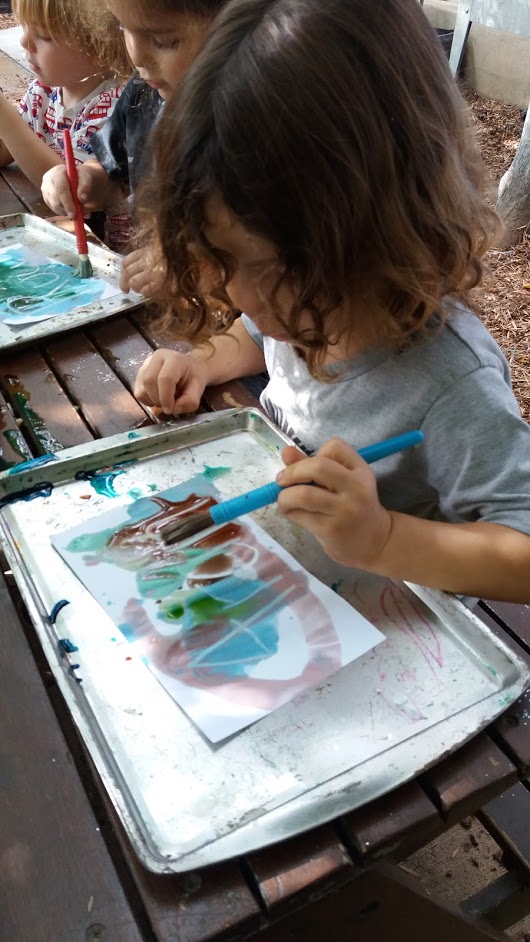
This week, we focused on the many ways we write our name! Using paint brushes, markers, and other writing implements, your little ones identified the correct way to spell their name! All of their work was compiled into name books.

namebook

In our classroom, we are constantly documenting things: what we do, how we learn, and the processes that define our week. Documentation does just that, and is important for several reasons. For one, an effective piece of documentation tells the story and the purpose of an event, experience or development.

namebook1

It is a product that draws others into the experience – evidence or artifacts that describe a situation, tell a story, and help the viewer to understand the purpose of the action. Secondly, documentation displays a child’s progress throughout the course of their academic careers. Lastly, documentation extends the learning process beyond the classroom to the home.

namebook2

When a child brings their work home, they are able to discuss it with parents and siblings. When two or more people discuss an event, each brings a new perspective and level of depth. This is so important for the preschool experience!

namebook4

Sound and Water

Sound in water and sound in air are both waves that move similarly and can be characterized the same way. Sound waves can travel through any substance, including gases (such as air), liquids (such as water), and solids (such as the seafloor).

pots

Did you know that sound cannot exist if it doesn’t have something to travel through? For example, sound cannot travel through outer space because it is a vacuum that contains nothing to carry sound.

sound1

Even though sound waves in water and sound waves in air are basically similar, the way the sound levels in water and sound levels in air are reported is very different, and comparing sound levels in water and air must be done carefully.

pots1

When we describe a sound as loud or soft, scientists say that the sound has a high or low amplitude or intensity. Amplitude refers to the change in pressure as the sound wave passes by.
pots4

If you increase the amplitude of a sound, you are making it louder, just as you do when you turn up the volume on your radio. If you decrease the amplitude, you are making the sound softer, just as when you turn down the volume.
pots5

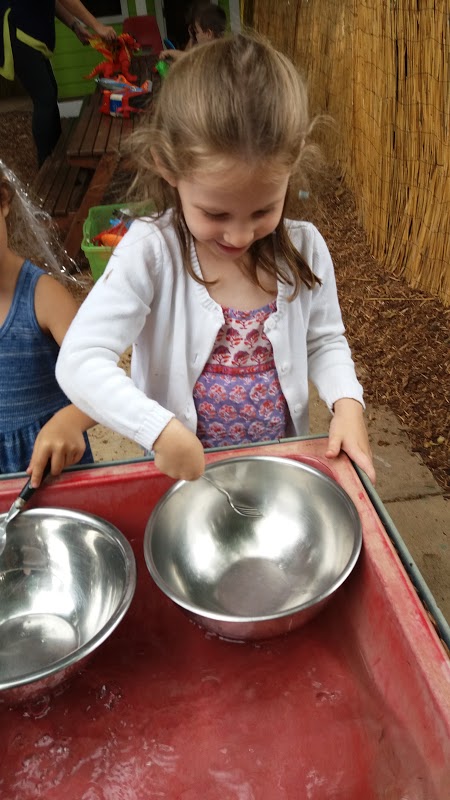
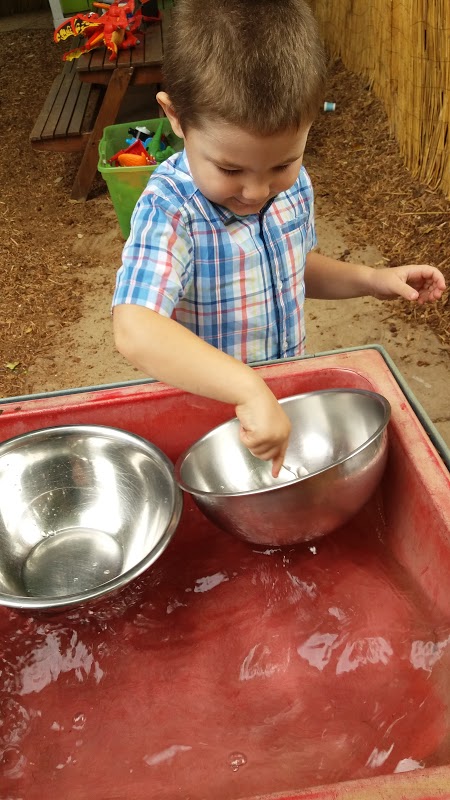
We wanted to see how this happens in the real world, so we did a music experiment with water, drum sticks, and metal bowls! First, we placed some metal bowls into the water table. Using drum sticks, we tapped the bowls, and talked about some of the sounds we heard.

pots7

We used words such as ping, loud, soft, echo. metallic, and thunder. Next, we added water to the water table, and placed the bowls inside. We again tapped the bowls, and talked about any differences we observed. Some students found that they sounded softer in the water, while others thought they sounded louder. For this half of the activity, we used words such as amplitude, sound waves, liquid, and air to describe what we were hearing.

pots8


Feeling Faces

The use of group projects in a curriculum can be very useful, especially in bringing difficult concepts to the preschool level. To bring these concepts to fruition, all participants must, in a sense, become learners along with the children.

feelingmagnet

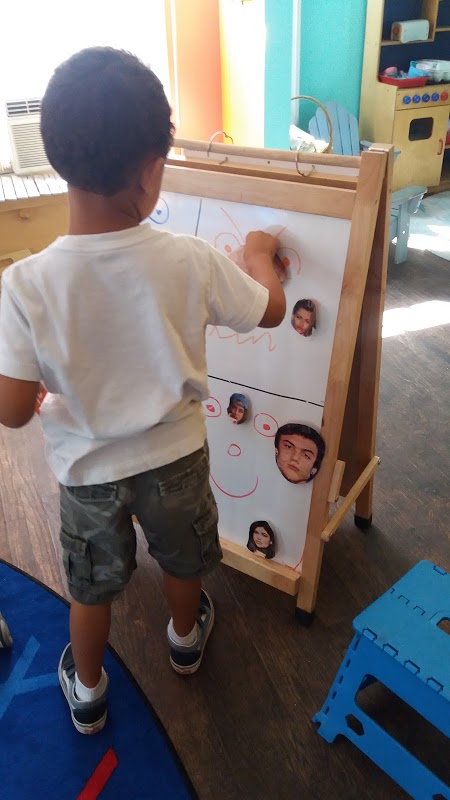
The teacher has to be careful to not act as a mentor but as a guide; that is, the teacher cannot think solely in terms of a prearranged destination to activity but must focus on offering a sense of discipline to the activity. Feelings and emotions consist of many complex components, and because of this, we must be creative in teaching our little ones about them! For this activity, we separated a variety of magazine clippings into four categories: happy, sad, angry, and surprised. Your little ones worked together to best determine whether the expression on the clipping was one of these emotions.

feelingmagnet2

Playdoh Expressions

Brain research indicates that emotion and cognition are profoundly interrelated processes. Specifically, recent cognitive neuroscience findings suggest that the neural mechanisms underlying emotion regulation may be the same as those underlying cognitive processes.

dough

Emotion and cognition work together, jointly informing the child’s impressions of situations and influencing behavior. Most learning in the early years occurs in the context of emotional supports.

dough2

Together, emotion and cognition contribute to attentional processes, decision making, and learning. Emotions and social behaviors affect the young child’s ability to persist in goal-oriented activity, to seek help when it is needed, and to participate in and benefit from relationships.

dough3

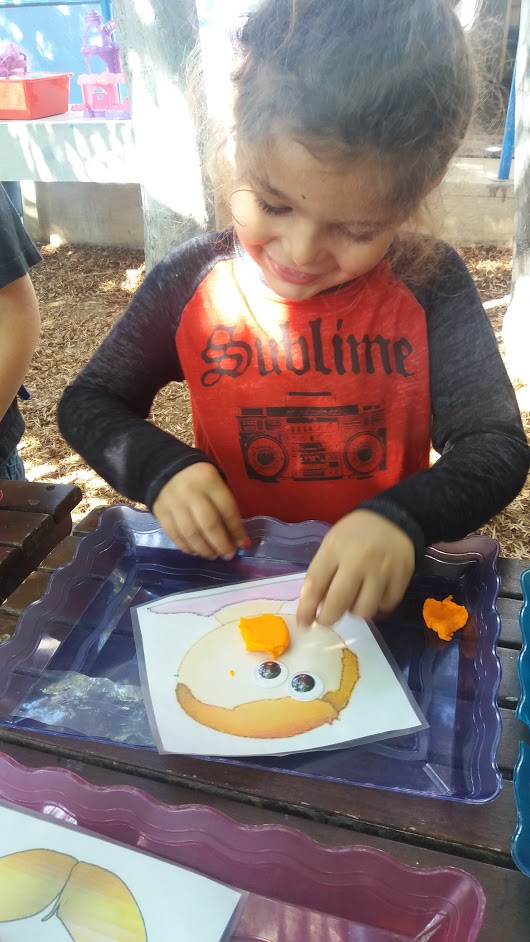
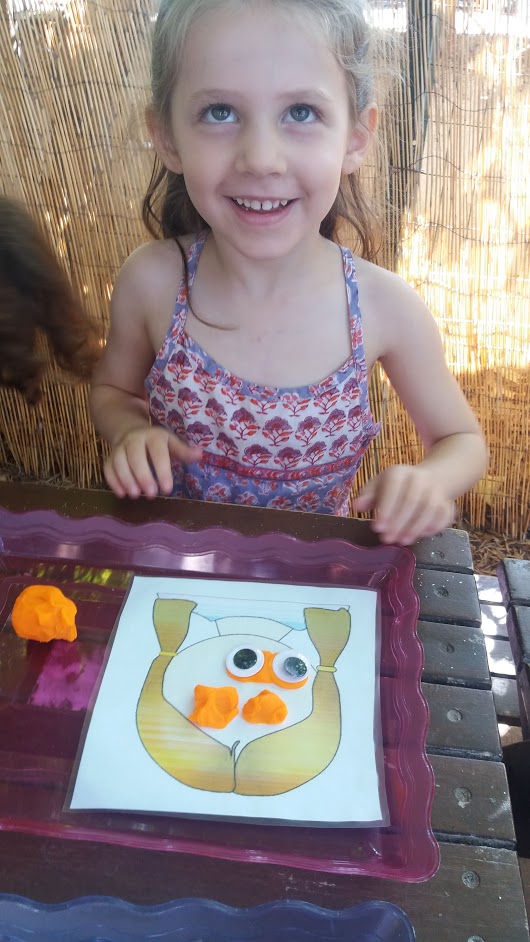
To help your little one gain an understanding of the various facial expressions that we may all, at one time, exhibit, we created a variety of different ones with play dough. Using a blank face as their template, your little one constructed different emotional states with their friends!

dough1

Fishing for Feelings

How do children start to understand who they are, what they are feeling, what they expect to receive from others?

feeling

These concepts are at the heart of their social-emotional wellness.

feeling1

They contribute to a child’s self-confidence and empathy, her ability to develop meaningful and lasting friendships and partnerships, and her sense of importance and value to those around her.

feeling2

Children’s social-emotional development influences all other areas of development: Cognitive, motor, and language development are all greatly affected by how a child feels about herself and how she is able to express ideas and emotions.

feeling3

One component of this concept lies in the ability to detect emotions in others.

15 - 1 (65)

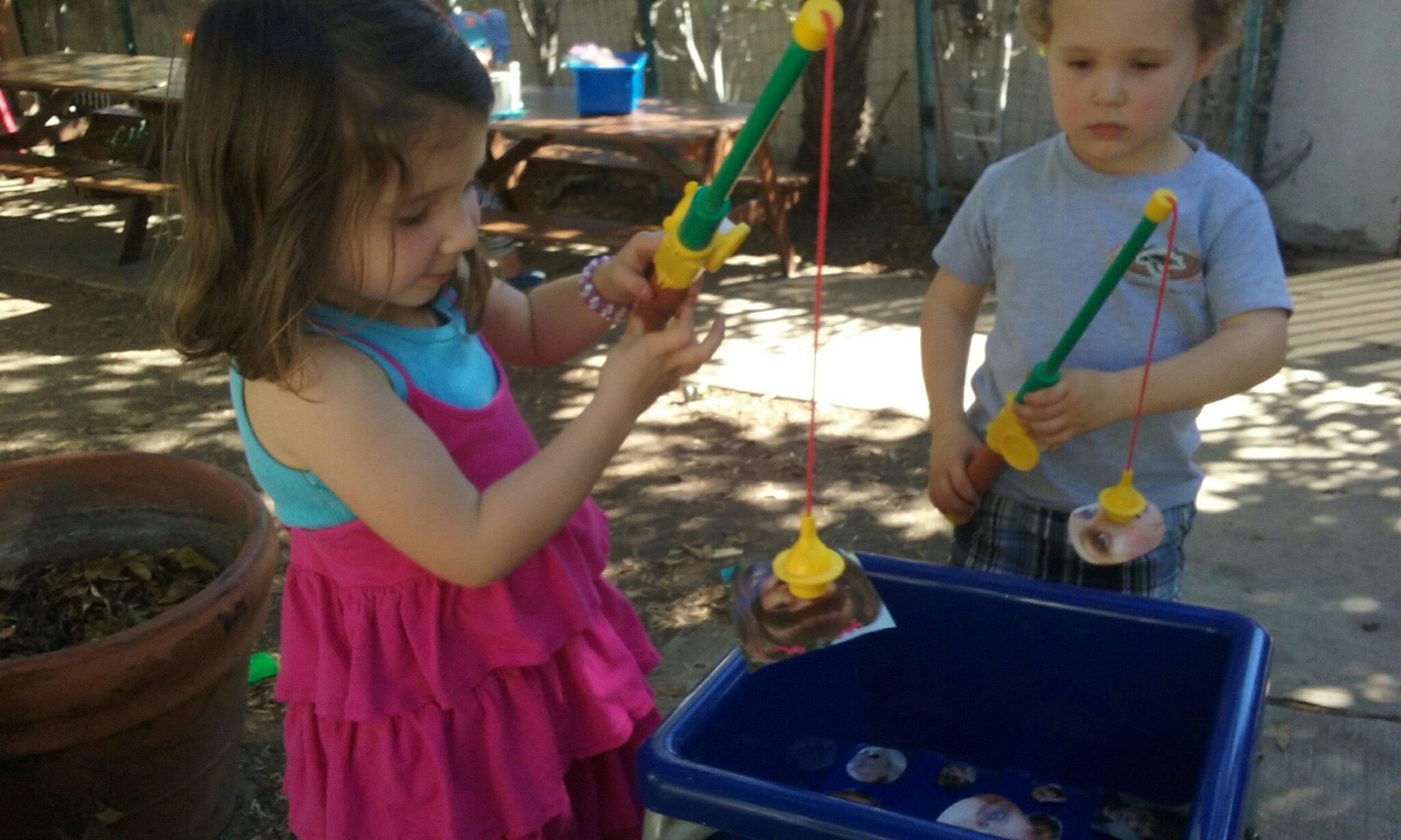
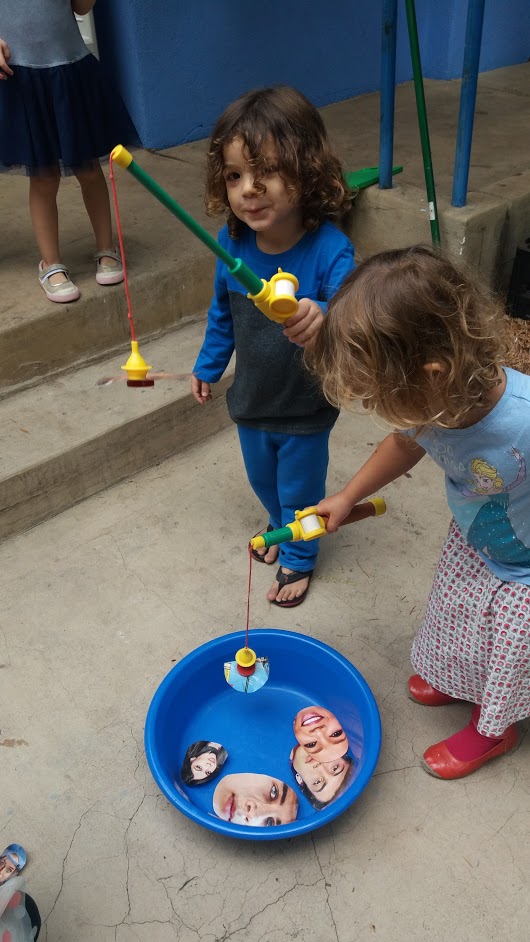
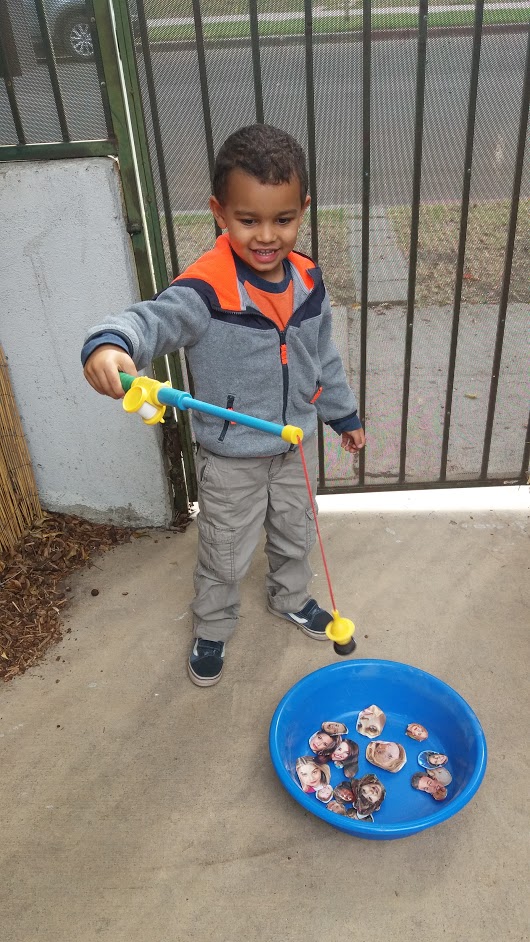
To do this, we went fishing for our feelings!

feeling4

Each student was encouraged to select a picture of a person with a particular expression, imitate it, and then name something that made them feel similar.

feeling5

Rock Faces

The California Department of Education (CDE), Early Education and Support Division (EESD), provides a guiding framework for early childhood care and education through the development and dissemination of resources and development activities.

rock

The preschool learning foundations describe research-based competencies, or knowledge and skills, that can be expected for most children to exhibit at around 48 and 60 months of age when participating in a quality preschool program.

rock4

The foundations apply to all preschool children, including children whose home language is not English and children with disabilities. One of these competencies includes the Social-Emotional Developmental Domain.

rock3

Social-emotional development includes the child’s experience, expression, and management of emotions and the ability to establish positive and rewarding relationships with others. It encompasses both intra- and interpersonal processes.

15 - 1 (57)

The core features of emotional development include the ability to identify and understand one’s own feelings, to accurately read and comprehend emotional states in others, to manage strong emotions and their expression in a constructive manner, to regulate one’s own behavior, to develop empathy for others, and to establish and maintain relationships.

rock2

To foster these skills in your little ones, we participated in a host of different activities during our week of feelings and literature. For this particular project, we used painted rocks to create a variety of different facial expressions.

rock1