Play Dough Ants

What is soft and colorful and can squish through your fingers? The answer is play dough. The invention of play dough dates back to the 1930s. Originally it was invented to be wallpaper cleaner.

IMG_2690

However, after a classroom of children began using it as a modeling compound, it was reformulated and introduced to the Cincinnati schools in the mid-1950s as play dough. Today play dough can be found in almost every preschool and kindergarten classroom. Bringing play dough into a learning center offers a variety of educational opportunities.
IMG_2678

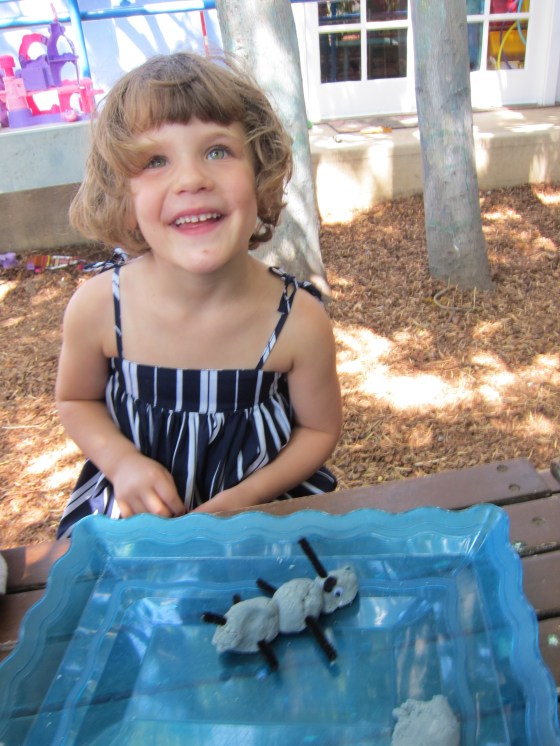
It is a great, inexpensive educational tool that can be used to foster creativity, literacy, and math skills. And most importantly of all, kids love play dough. There is something magical about rolling, patting, and squishing the brightly colored dough with your fingers. For this activity, we used play dough to create our very own ants!
IMG_2677

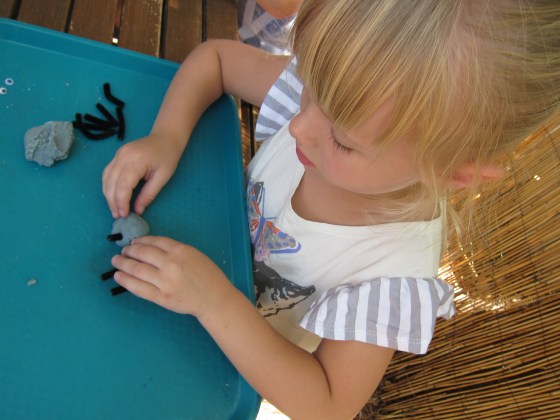
To begin with, we talked about what an insect is. Students learned that one thing that makes insects different from other bugs, is the number of legs they have. They were told that ants, like other insects, have six legs. Your little one also learned about what an antenna is. Within the ant colony, these antenna are used to communicate. Following a brief discussion, students created their own ants with play dough, black pipe cleaners, and googly eyes!

IMG_2691

Ant Hill Sensory Play

Ants create nests in many places, but in North America their nests are mostly constructed underground or in fallen logs.

IMG_2624

Ants are constantly excavating their underground homes and carrying the soil up to the surface.

IMG_2628

They can create large mounds of soil and sand outside their nest entrances.

IMG_2633

Some ants build up their mounds with sticks and pine needles and bits of grass.

IMG_2658

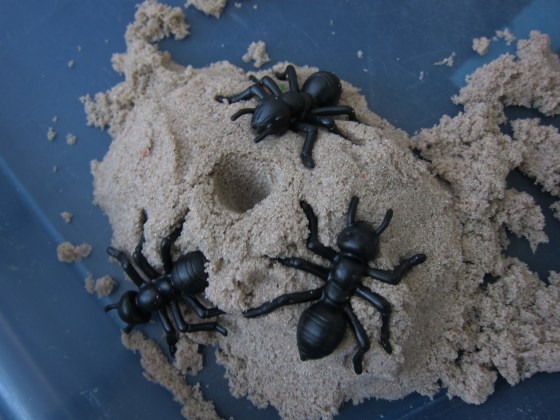
This visible part is called an “ant hill” or an “ant mound.” Often a single nest will have more than one opening. For this activity, we created our own ant hills out of kinetic sand!

IMG_2667

Ant Number Sorting

Many preschoolers are able to use numbers arbitrarily; pretending to count, or mixing up numbers and letters.

IMG_2607

From about the age of four, preschoolers will begin to show one to one correspondence, or the ability to count objects correctly, as well as recognize most numbers 0-9 and sometimes recreate numerals when given an example.

As with many preschool skills, it is important for young students to be given many different opportunities for to see, touch and use numbers throughout the day.

Including numbers in thematic play is one way that they can begin to recognize numbers.

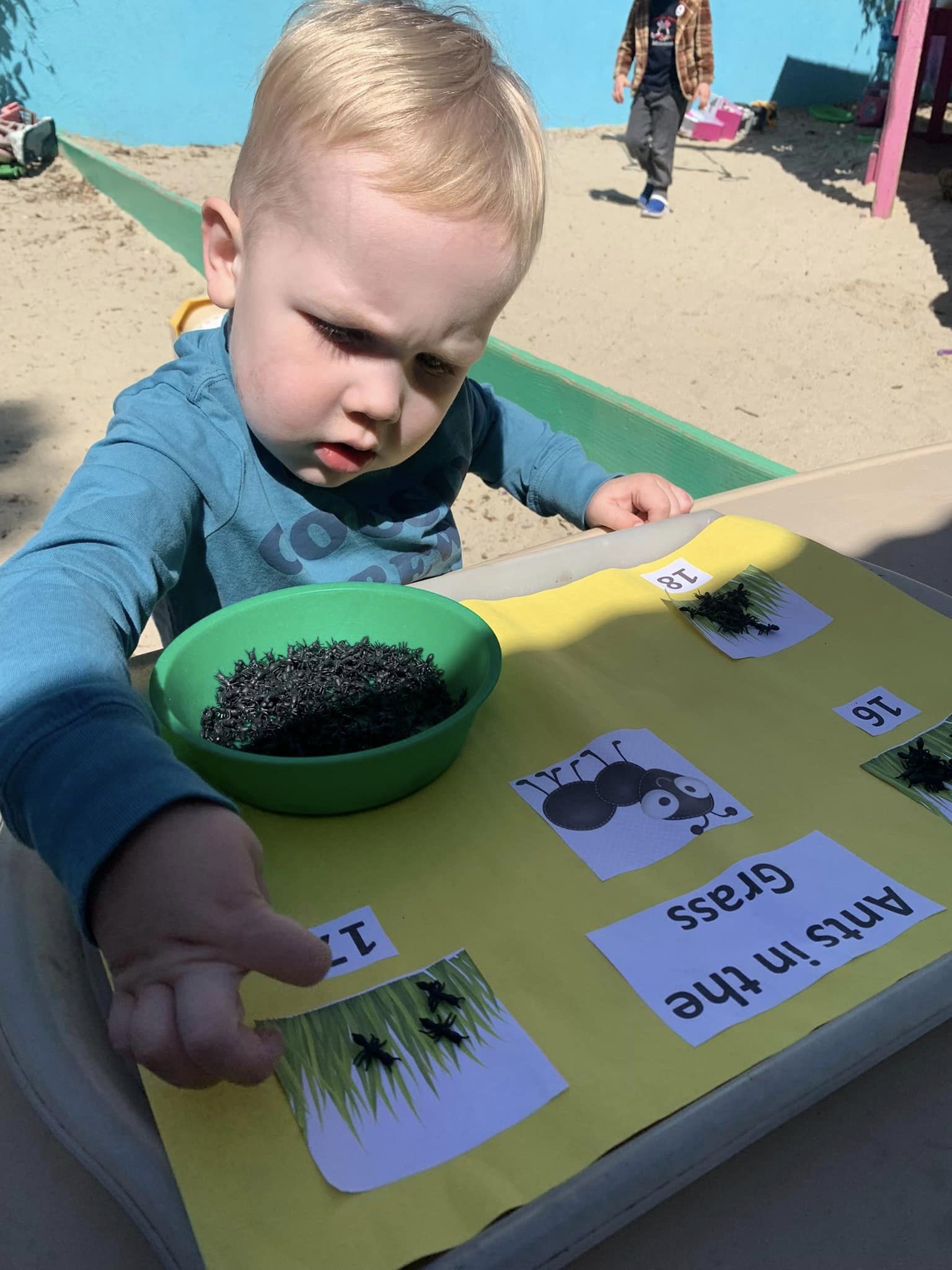
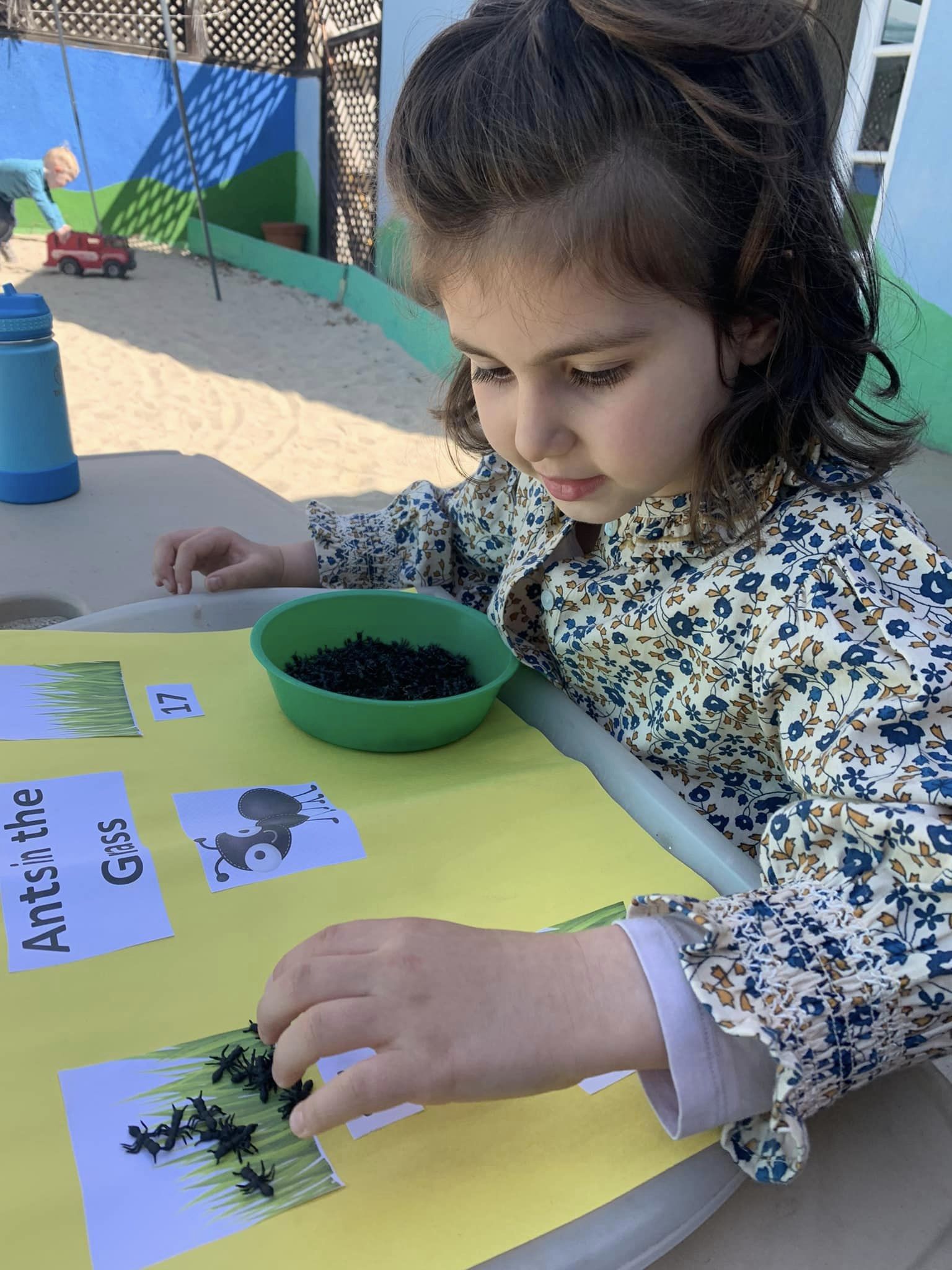
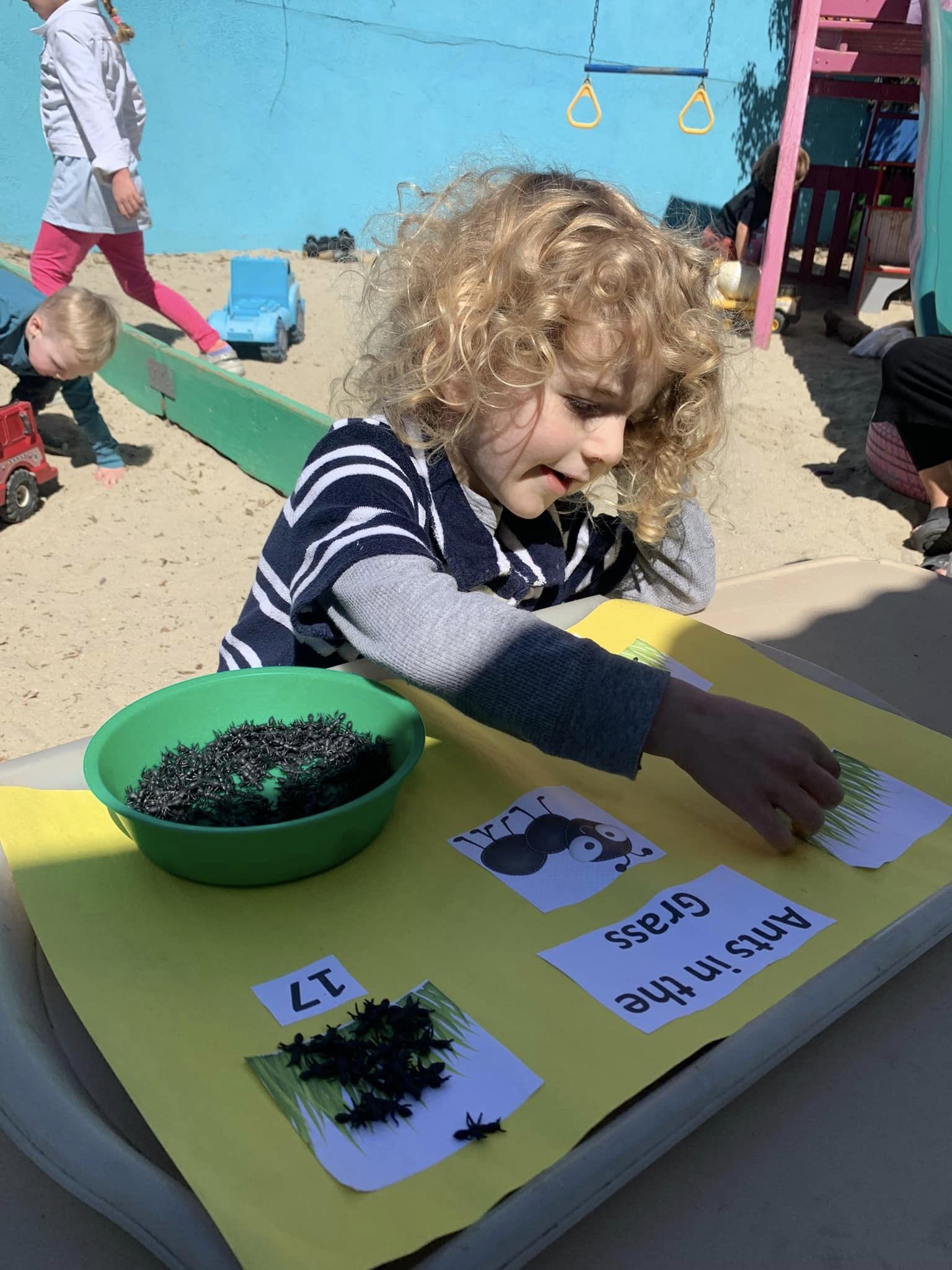
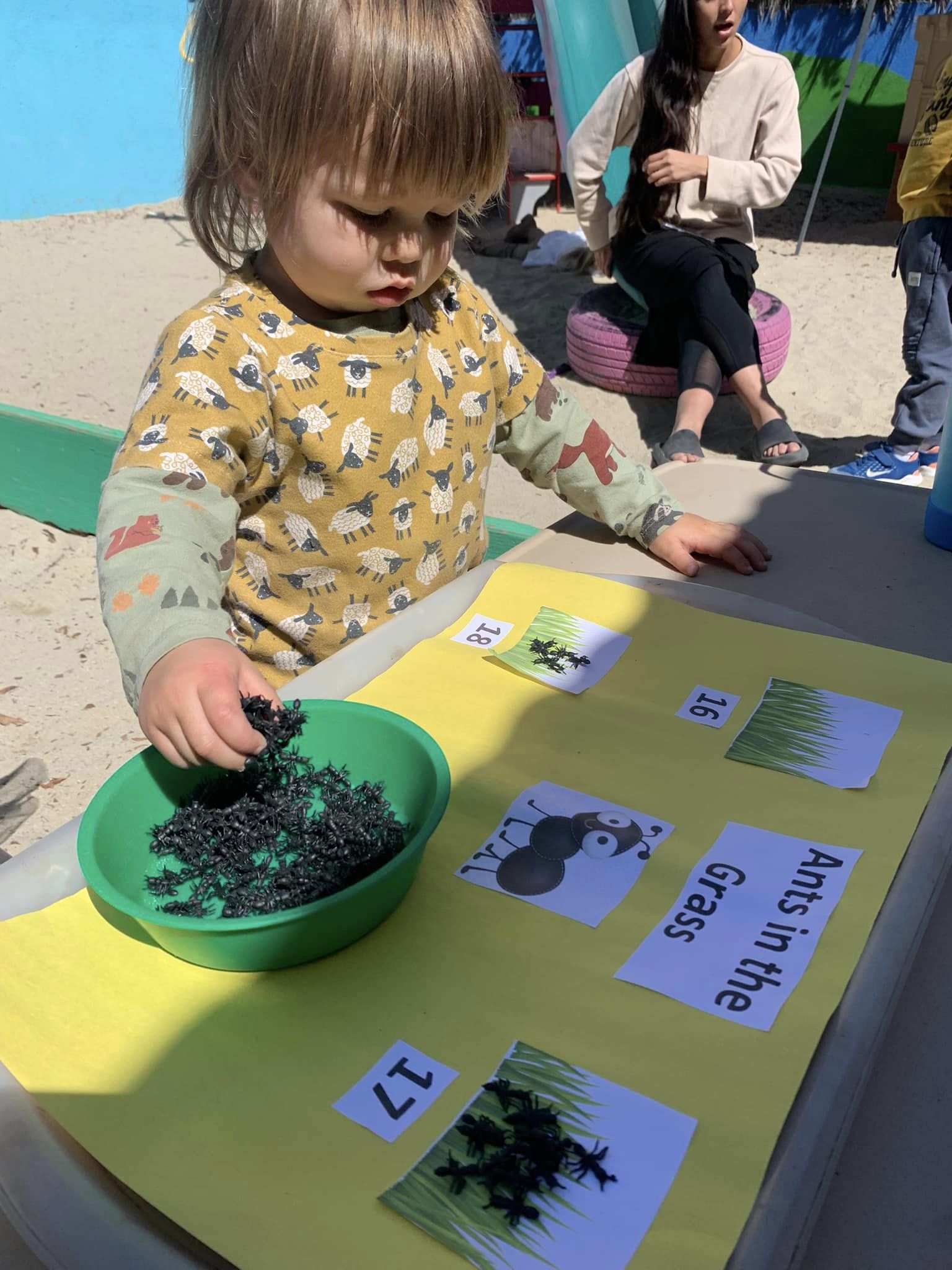
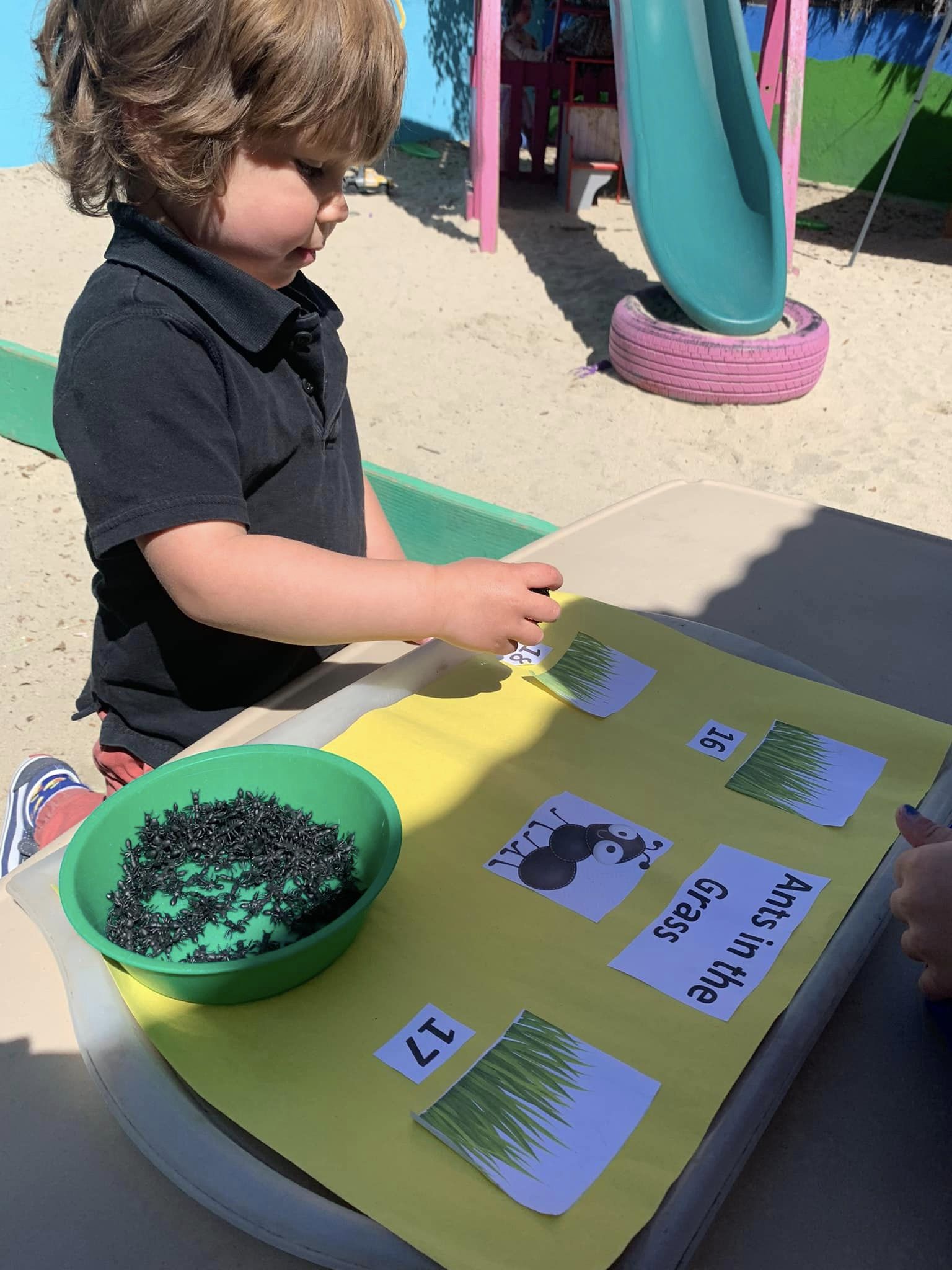
For this activity, your little one participated in a sorting/numeral recognition activity that tied in with our ant theme.

Using manipulatives and pictures of grass (with numbers printed on them), your little one practiced sorting and matching groups of ants with their corresponding numeral.

Since we were working on numbers 10-20 this week, we used these numbers in this activity.

Ant Farm

Most of our students are delighted by all the little creepy crawlies they observe as they are playing outdoors, and ants are no exception.

IMG_2771

After all, they work together as a team in every task to build their community and can lift several times their own weight – pretty cool!

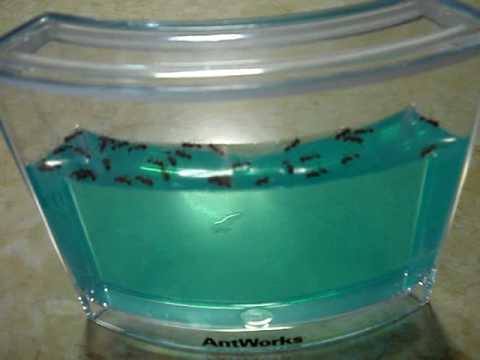
hqdefault

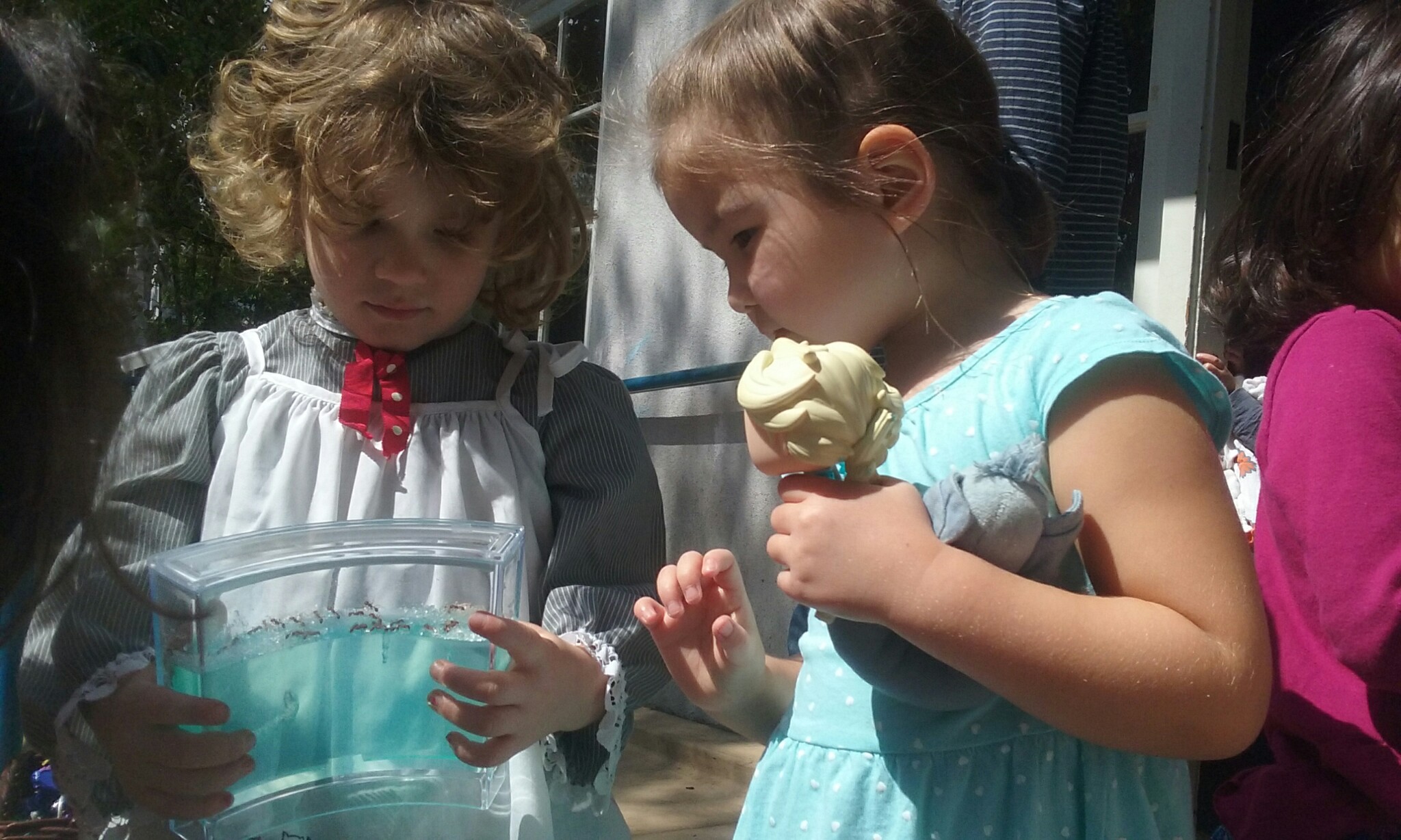
This was a fun and easy way for your little ones to experience a real ant farm! After waiting a couple of days for the ants to complete their tunnels, your little ones spent days observing these amazing insects.

IMG_2774

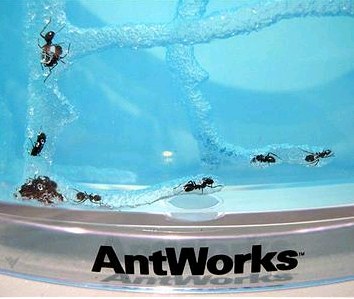
This gel-based ant farm was based on the 2003 NASA Space Shuttle experiment designed to determine whether ants would tunnel in zero gravity, and was marketed to be sold to the public.

ant_works

The result is a bluish gel that provides all nutrition to a variety of ant types, and a beautiful network of canals available to your little one.

IMG_2781