A lacework of bees hanging together, leg-to-leg, between the frames of comb is called a “festoon” and the behavior is called “festooning.” The bees hang in sheets within the hive. A festoon is often only one layer thick, and the design is open and airy. Beekeepers have lots of explanations for this behavior. Some say the structure acts like a scaffolding from which the bees build comb, and some say bees can only produce wax from the festooning position. Scientists, however, are much less confident about the function of festooning. Most agree that there is no known function. To help you little ones learn about this concept, we created our own wall of bees!
Category Archives: Bugs
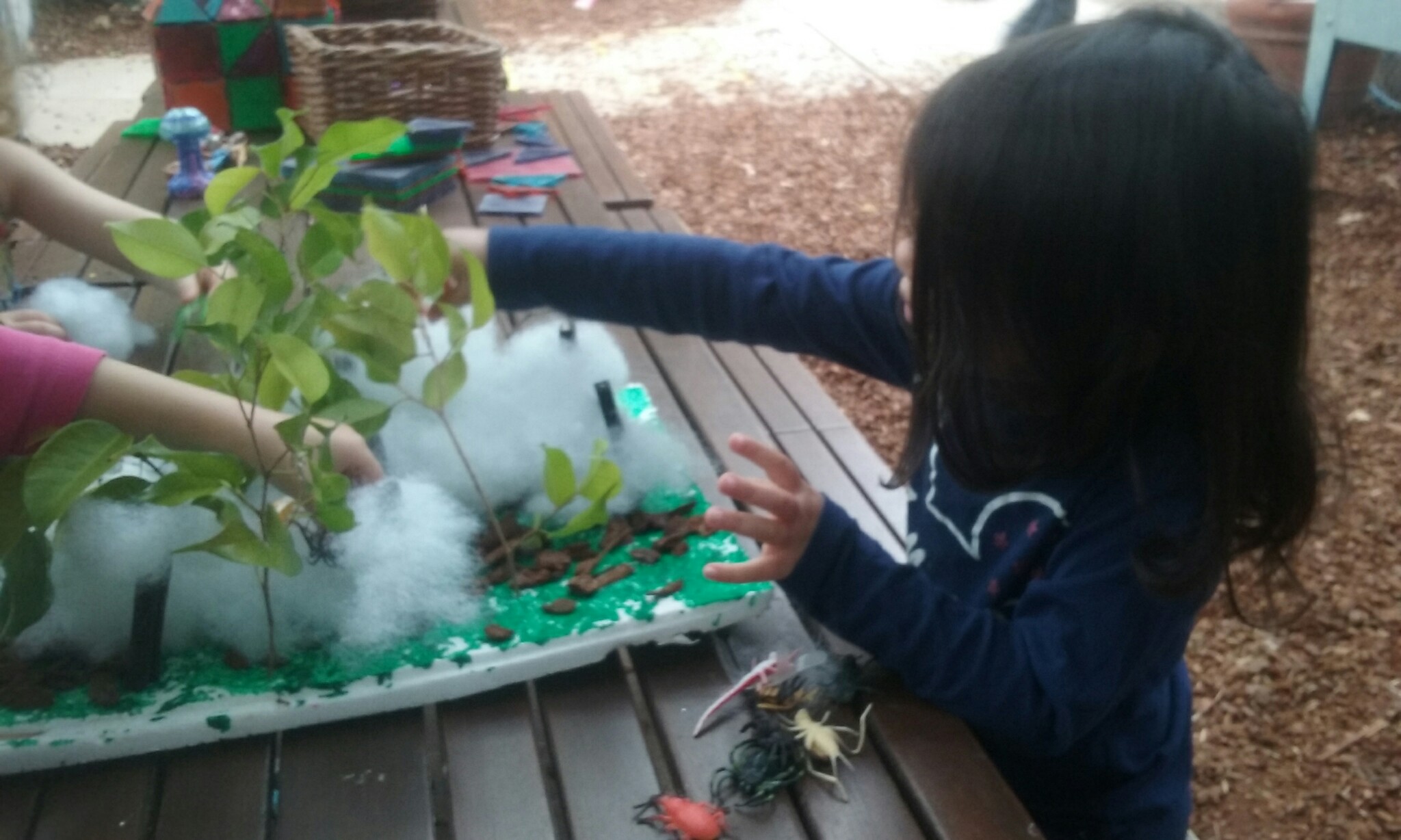
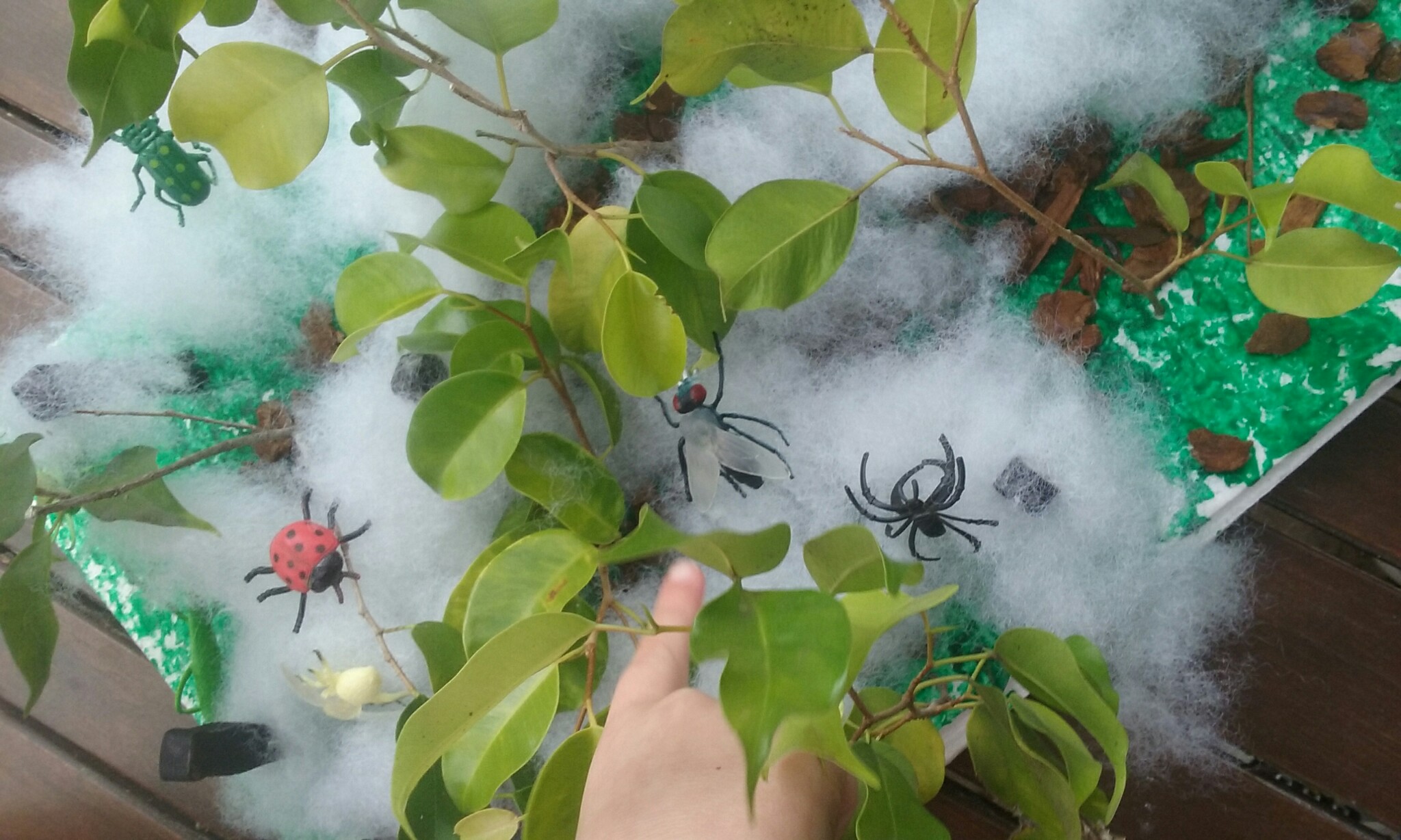
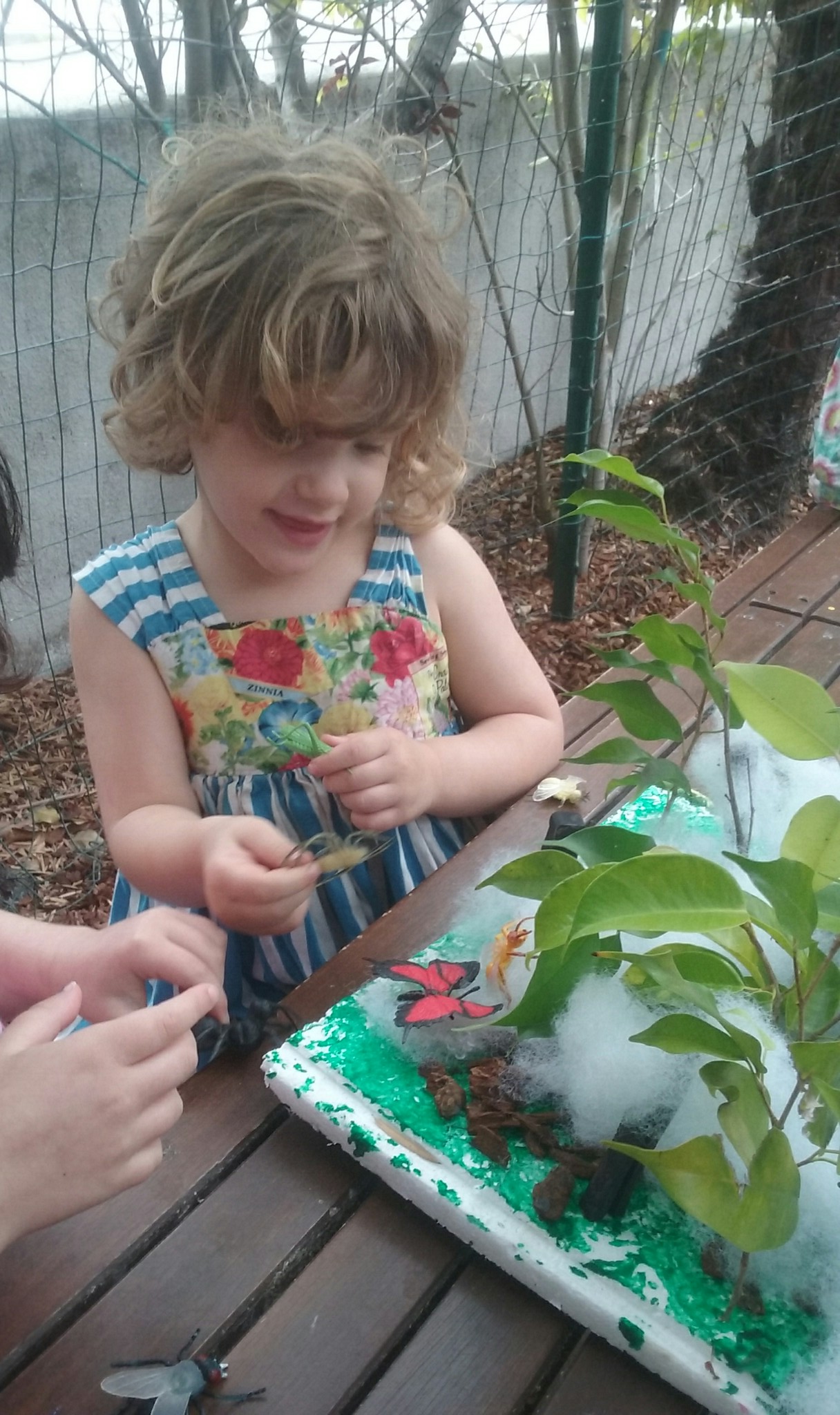
Spider Web Habitats
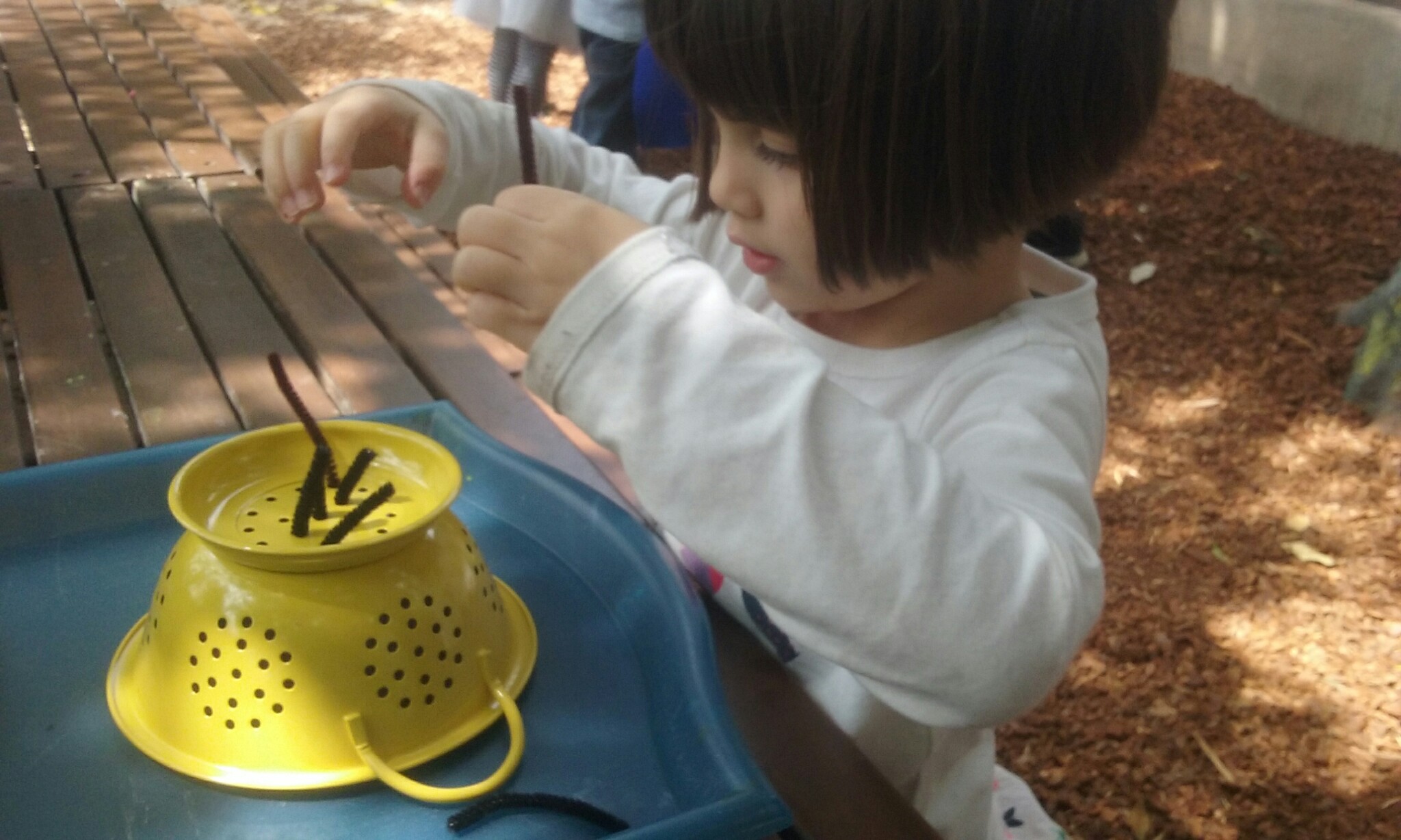
Colander Counting
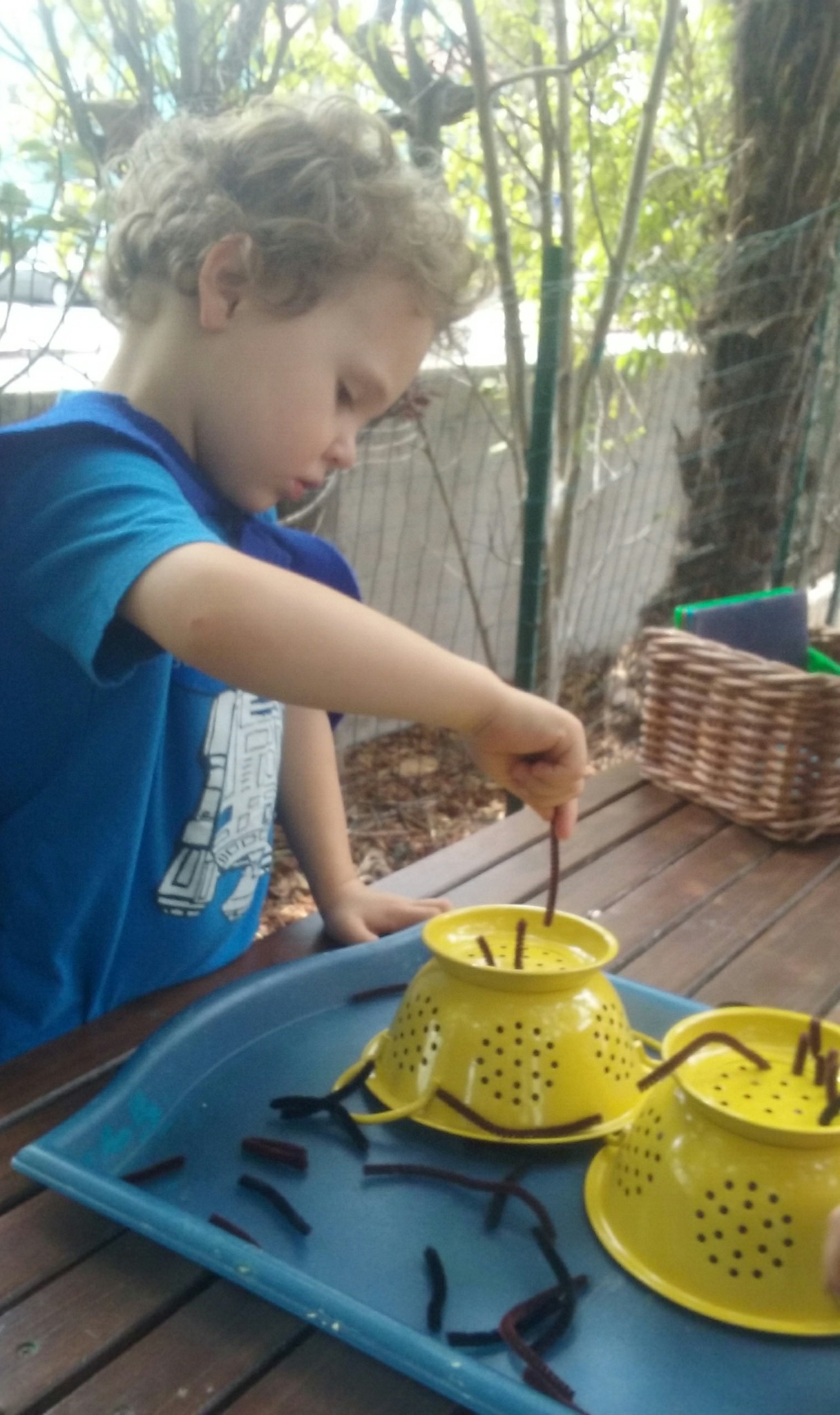
Using a colander and black pipe cleaners, we made our very own bees. With their fingers, each child laced the pipe cleaners through the colander’s holes.
This activity developed your little one’s fine motor skills, improved hand eye coordination and concentration, and most importantly, kept your little one happily amused! They were also directed to place a predetermined amount of pipe cleaners through each hole.
The number we have been focusing on this week is eight, and so each child practiced counting from one to eight and from eight back down to one, placing one pipe cleaner in the colander at a time, and counting aloud as they did so.
Pollen Water Transfer
When honey bees seek out nectar and pollen to make honey with, they visit many different types of flowers, including clover, dandelions, goldenrod, fruit trees, and milkweed. Once at the flower, the worker bee drinks as much nectar as she can hold. When she gets back to the hive, she passes the nectar on to another worker. This worker holds the nectar on her tongue until the water evaporates (leaves the nectar to go back into the air).
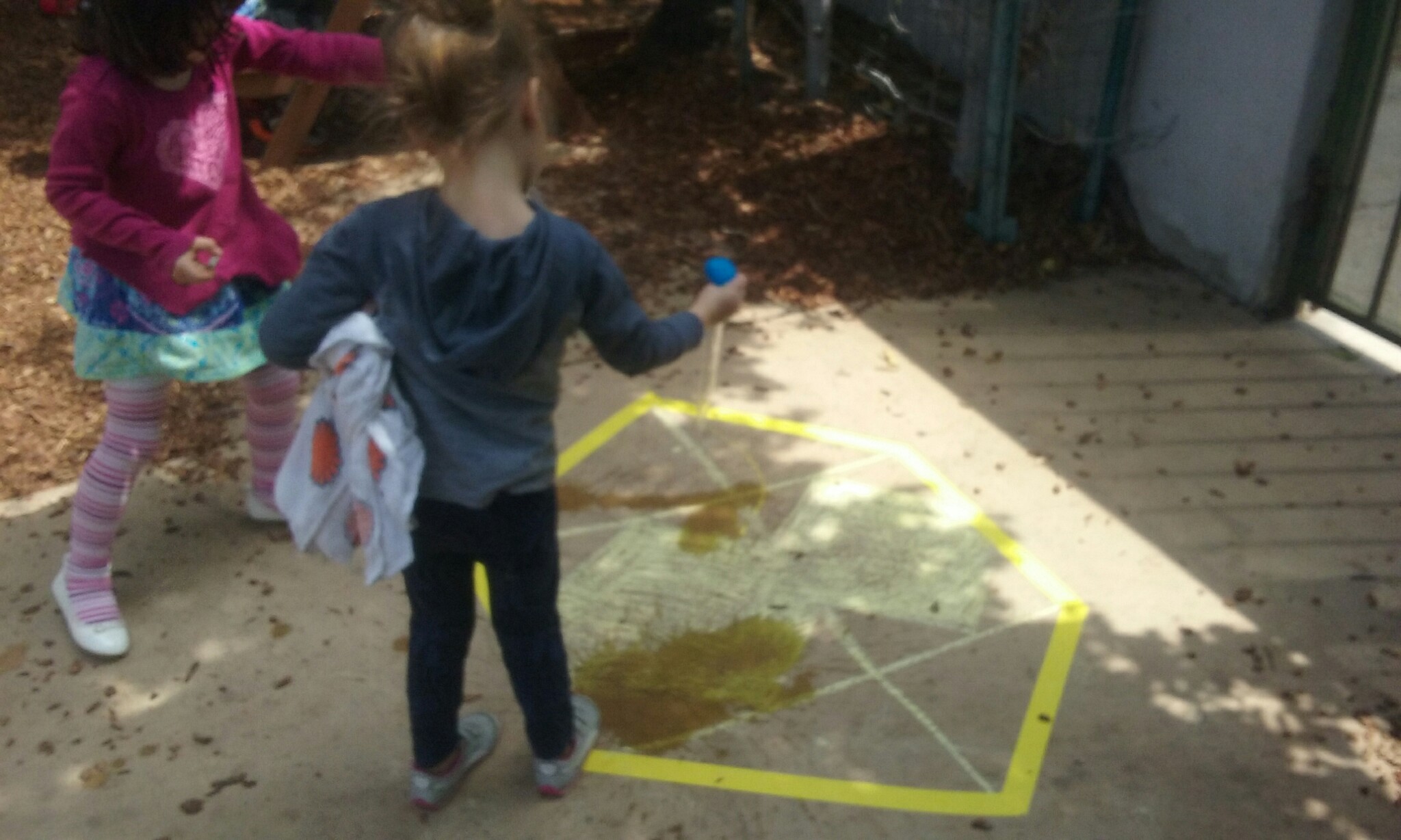
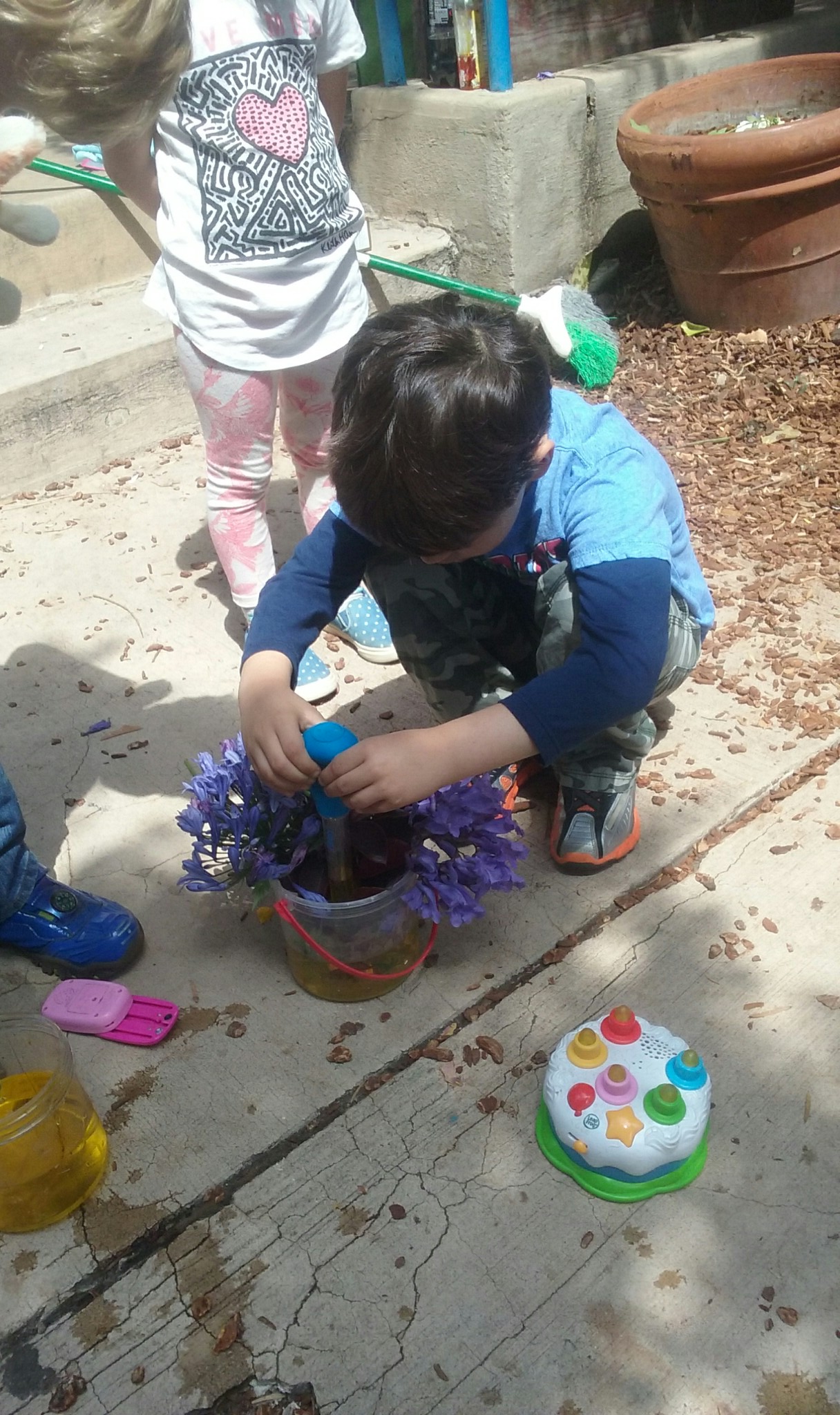
She is left with honey on her tongue, which is stored in the hive. To help your little ones understand how this works, we used turkey basters, real flowers, and yellow water to move “nectar” from our “flowers” to a beehive created out of chalk and yellow tape. The purpose of this activity was to suck up the yellow water from the flowers, and use it to make the chalk disappear!
This activity incorporated several developmental tasks. It enabled your little one to formulate ideas based on quantity and space. It also helped your little ones understand how bees obtain pollen from flowers that they take back to their hives. Lastly, by transferring the liquid among the different compartments, your little was given the opportunity to estimate how much should be poured onto our chalk beehive to make the hexagons disappear.
Counting Jars
Early math is not about the rote learning of discrete facts like how much 5 + 7 equals. Rather, it’s about children actively making sense of the world around them. Unlike drills or worksheets with one correct answer, open-ended, playful exploration encourages children to solve problems in real situations. Because the situations are meaningful, children can gain a deeper understanding of number, quantity, size, patterning, and data management.
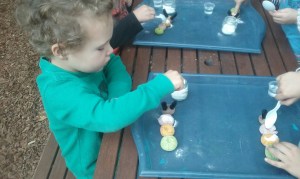
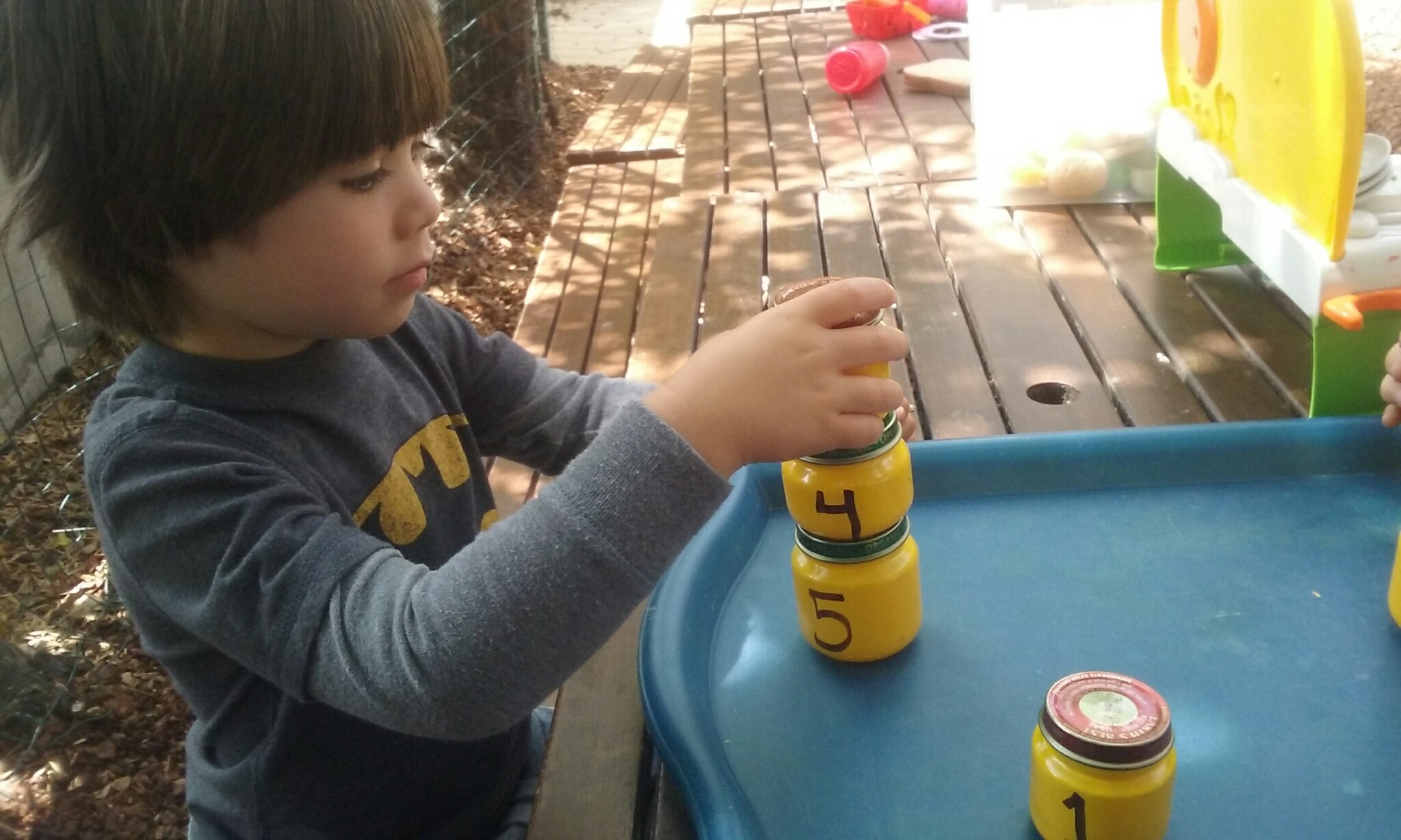
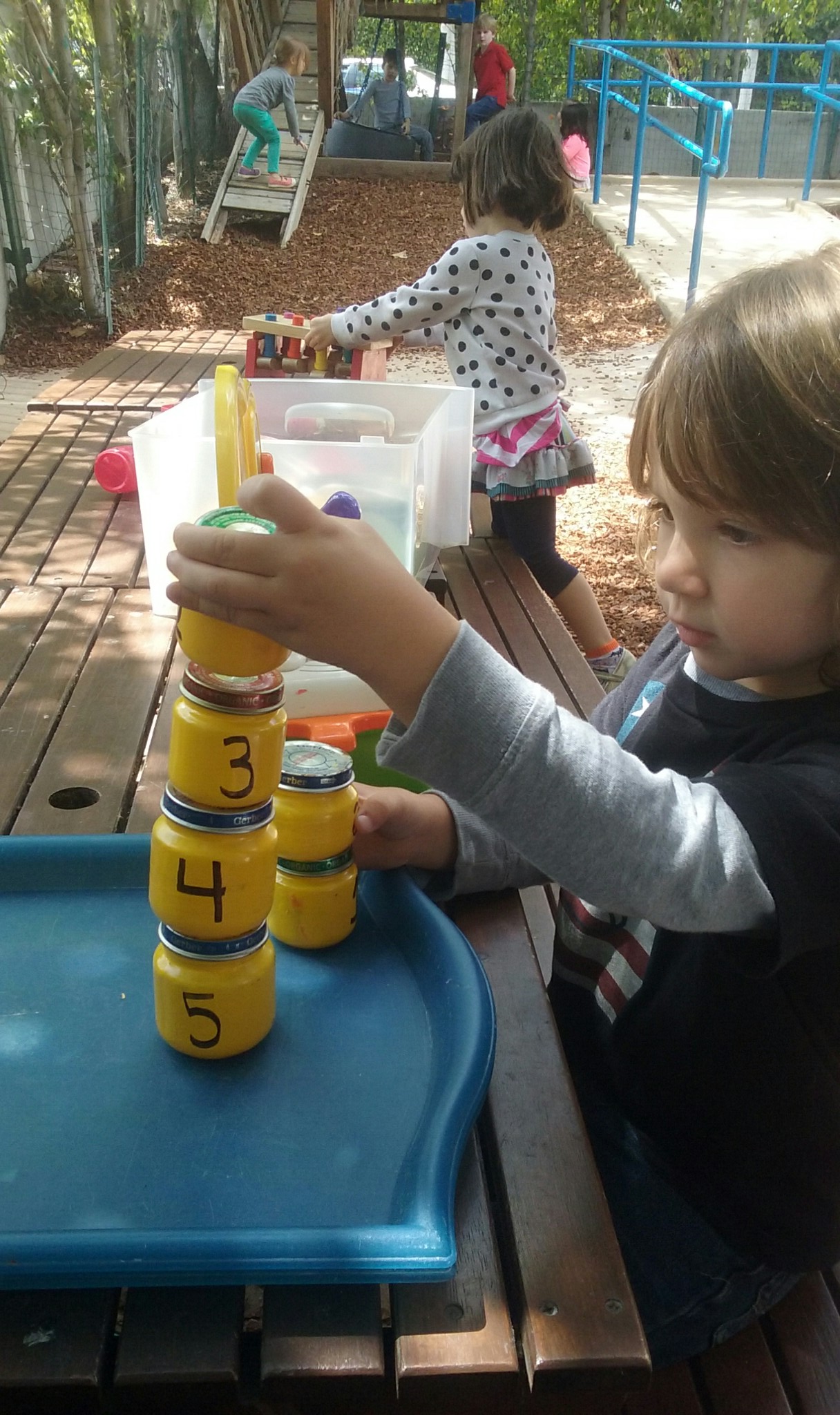
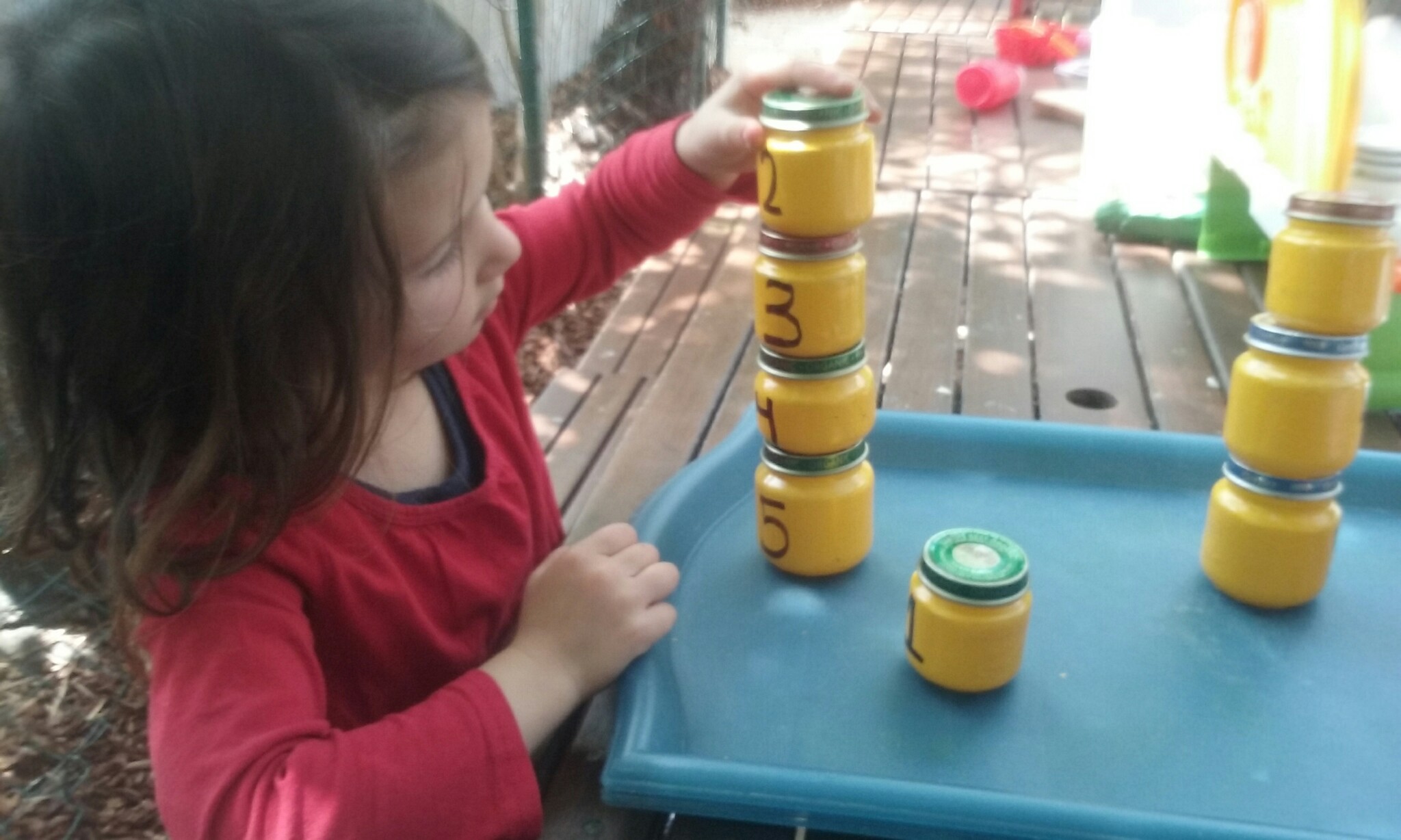
For example, it is easier to understand what six means when applied to a real-life task such as finding six beads to string on a necklace or placing one cracker on each of six plates. It is for this reason that we used baby jars, the color yellow, and numbers to practice our counting, adding, and subtracting. To fit this into our bug theme, we used baby jars painted yellow, and numbered 1-5.
These symbolized a beehive that your little ones made by stacking them on top of each other. They started by stacking the jars in no particular order. Once they mastered this task, they stacked them (while counting out loud) with the number one on the bottom and the number five on the top. Then they stacked them with the number five on the bottom and the number five on the top. Next, they practiced adding and subtracting different jars and counting them.
Hexagon Hives
Beehives are made of walls, each of the same size, enclosing small hexagonal cells where honey and pollen is stored and bees are raised.
To help your little ones understand the hexagon shape, we created a variety of “hexagon” structures and “hexagon” art.
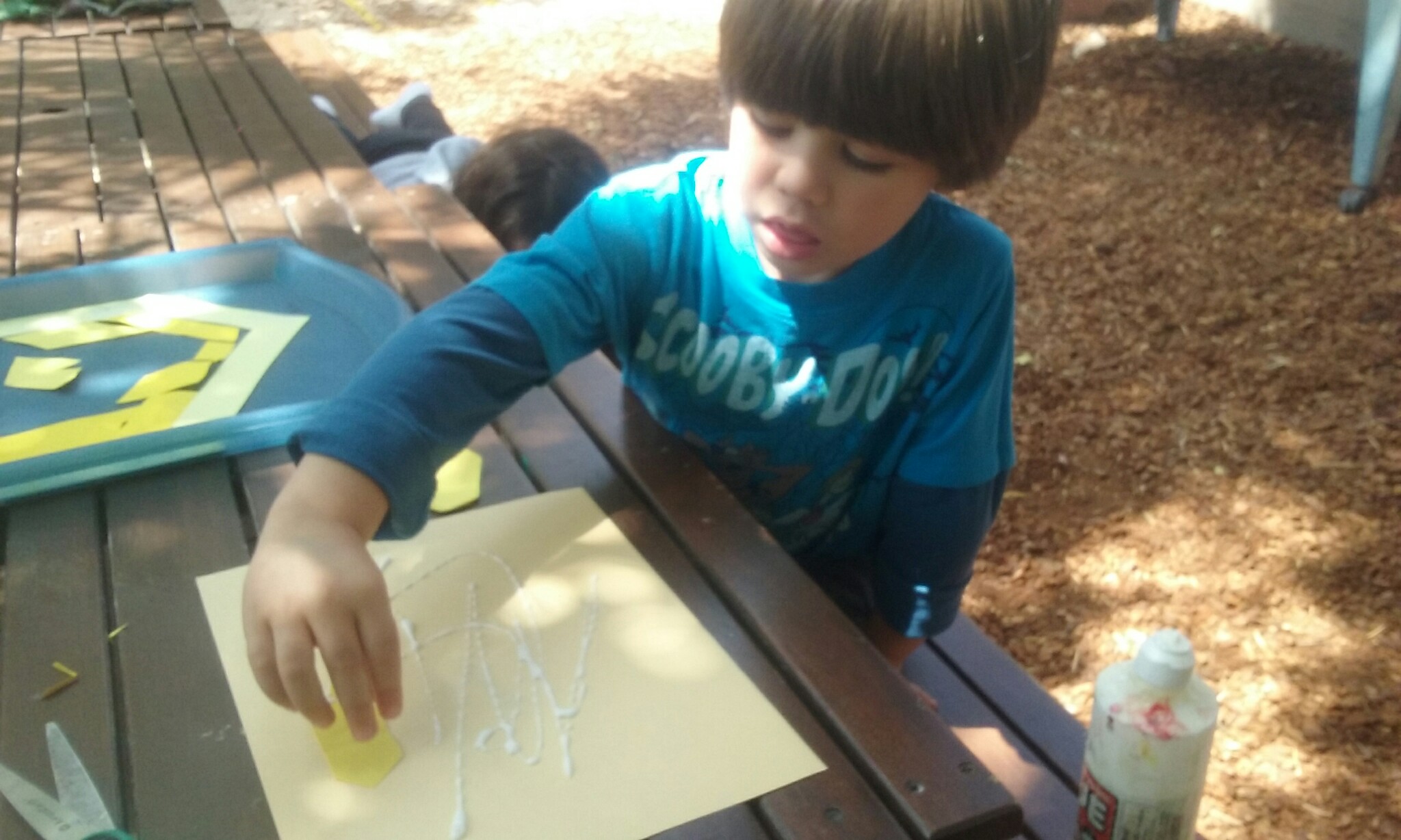
We first used yellow tape that we filled in with hexagons, triangles and squares.
We then used paper hexagons to create our own beehives. An awareness of shapes and spatial sense will help your child get ready to learn about geometry.
Counting Bees
In the spring, when the flowers start blooming and the bees start buzzing, it’s a great time to learn about counting!

This was a super fun beehive fine motor and counting activity for your little ones to practice their fine motor and early math skills!

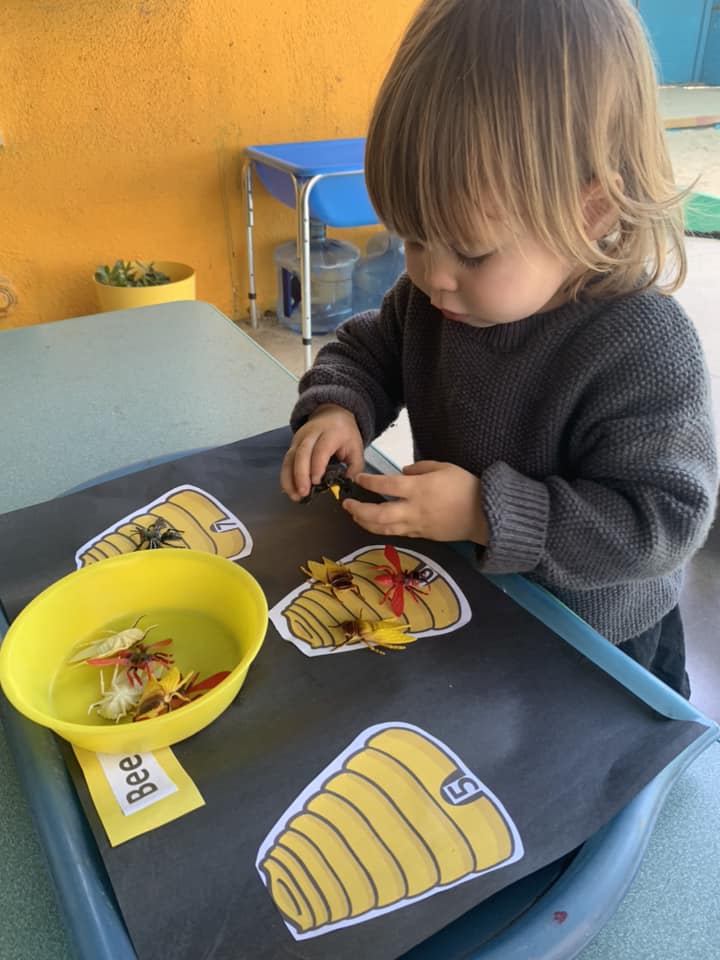
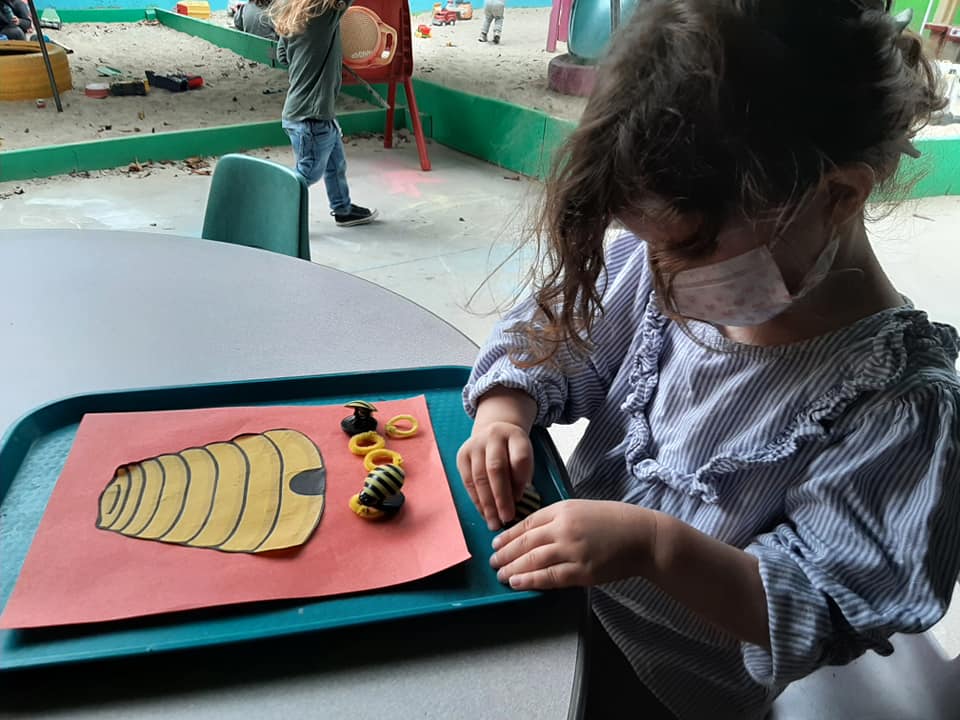
While enjoying this activity, students placed toy figure bees onto three beehives with varying quantities. This was a fun way for your children to work on their fine motor skills.

Activities using the hands and fingers to grab, pick, and pinch will develop fine motor strength and skills. Using a variety of fine motor tools with any activity, such as tweezers and grabbers, helps children move their small hand muscles in different ways to strengthen them and to practice coordination.

These skills will be essential for preschoolers when they begin to use pencils to draw and write later.

This activity was also a fun early math activity.

By selecting a pre-determined number (in this case, 6), your mathematicians practiced counting and one-to-one correspondence while placing the bumblebees in their ice cube trays.

Playdough, Peppers, and a Beehive
Children love to build.
It’s something to do with the challenge, the skill and probably the knocking down, that makes it such an appealing activity for kids.
When your child plays with constructive materials, building replicas of the world around her, she is like a little scientist, experimenting with balance, structure, space, and even gravity!
Have you ever watched your child attempt to build a simple tower, only to have it fall down at a particular height?
Perhaps you have noticed that she tried different ways of placing the blocks until finally she created a tower that stayed up!
Amazingly, what she is doing is using the scientific method of experimentation, observation, and cause-and-effect to solve the problem of the tumbling tower.
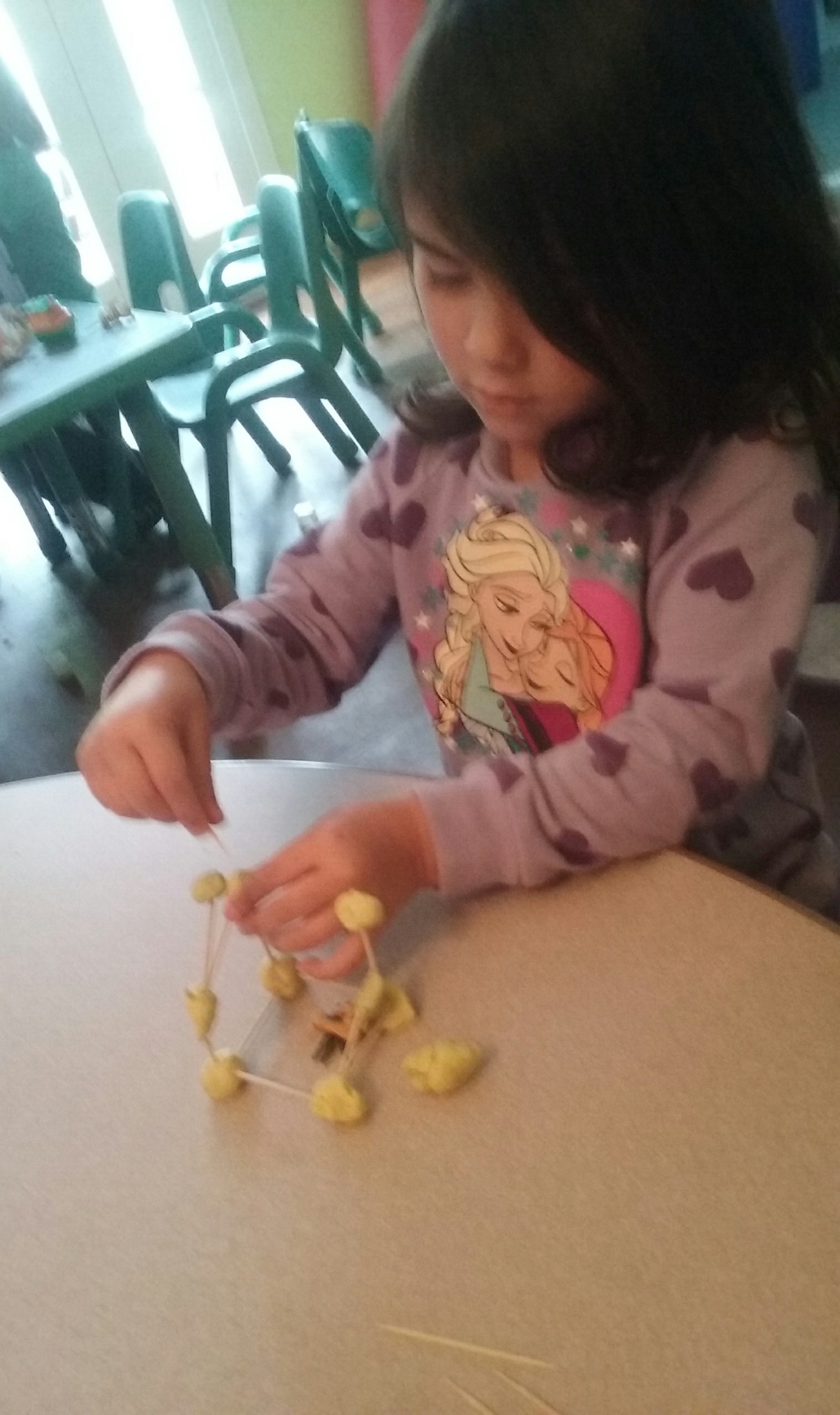
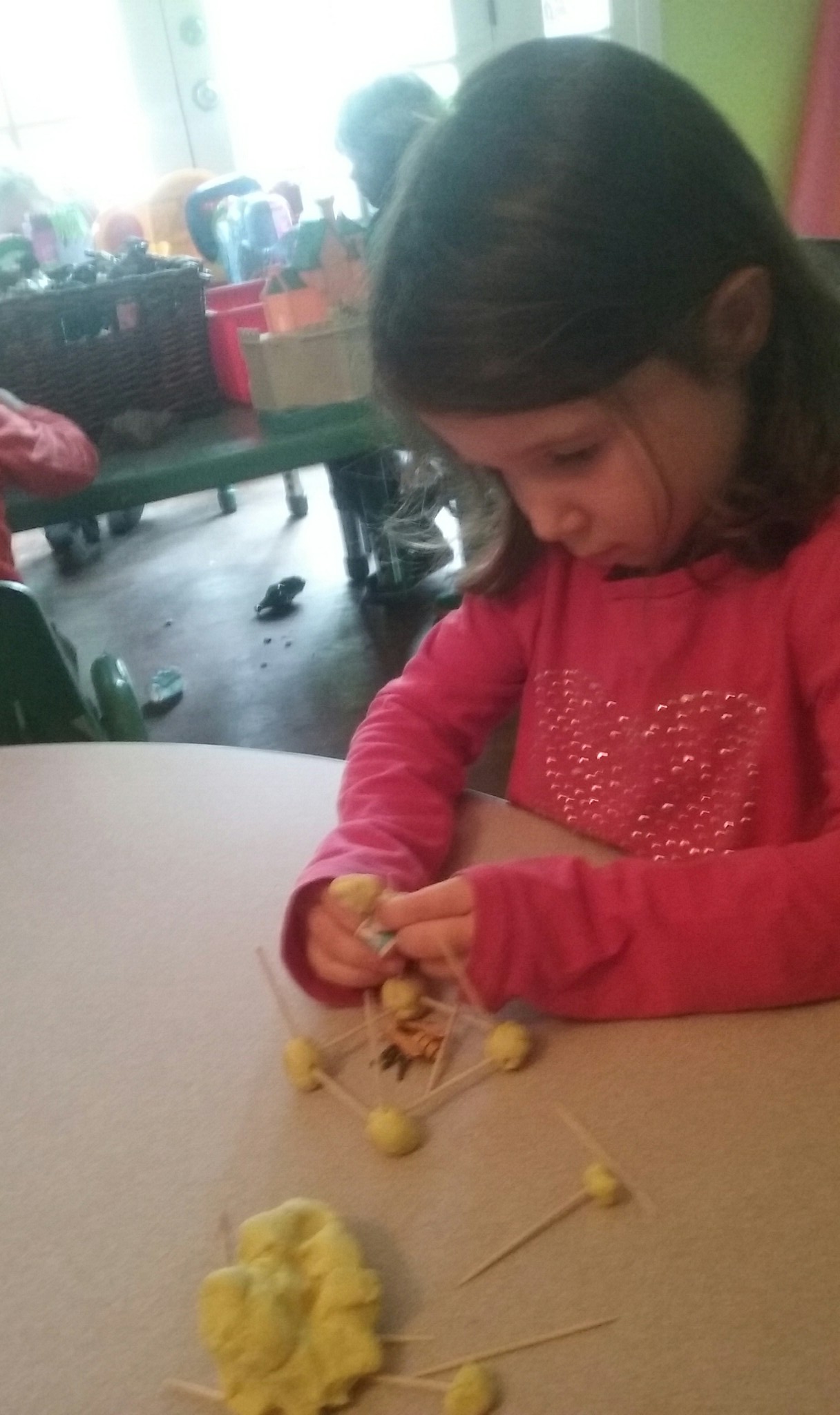
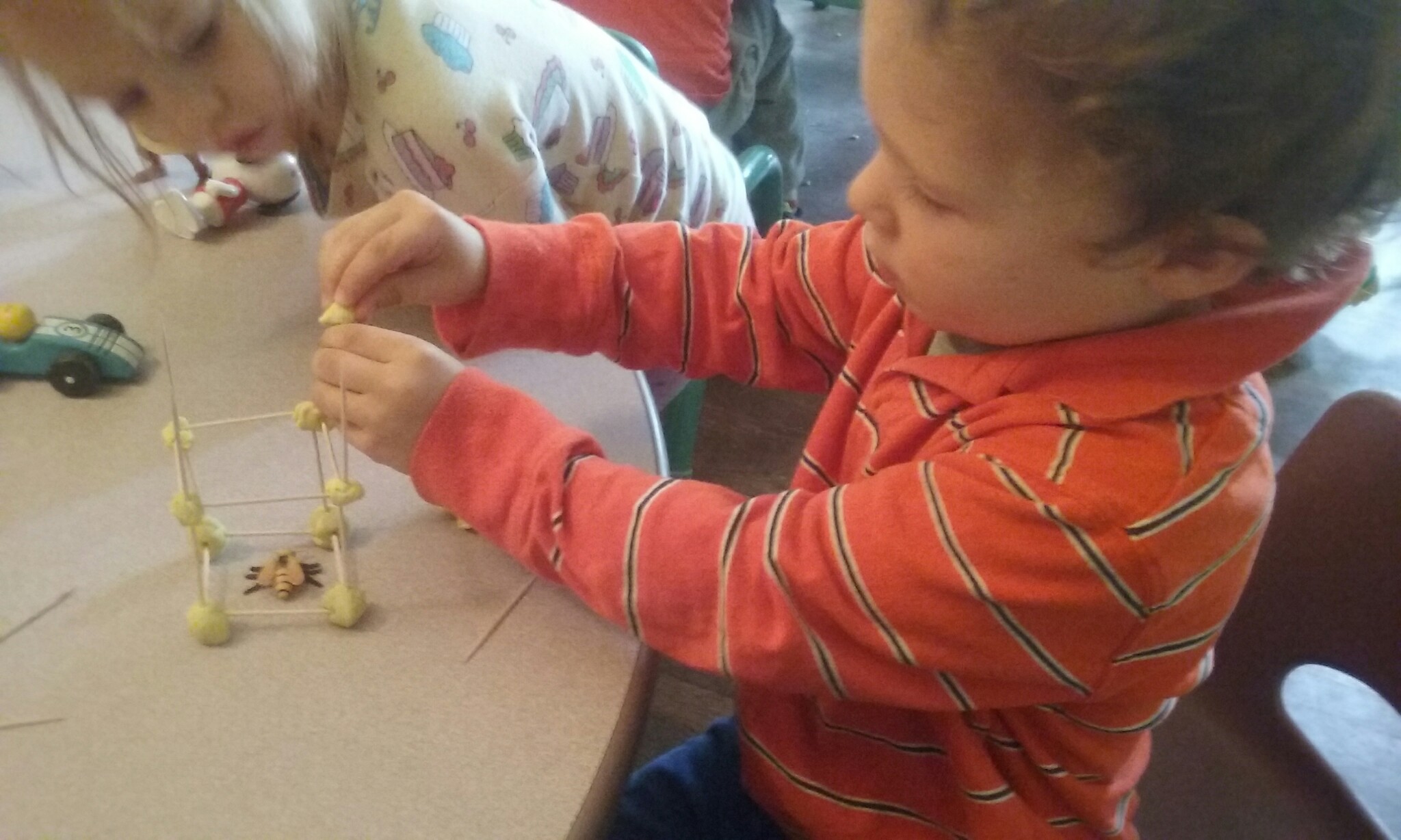
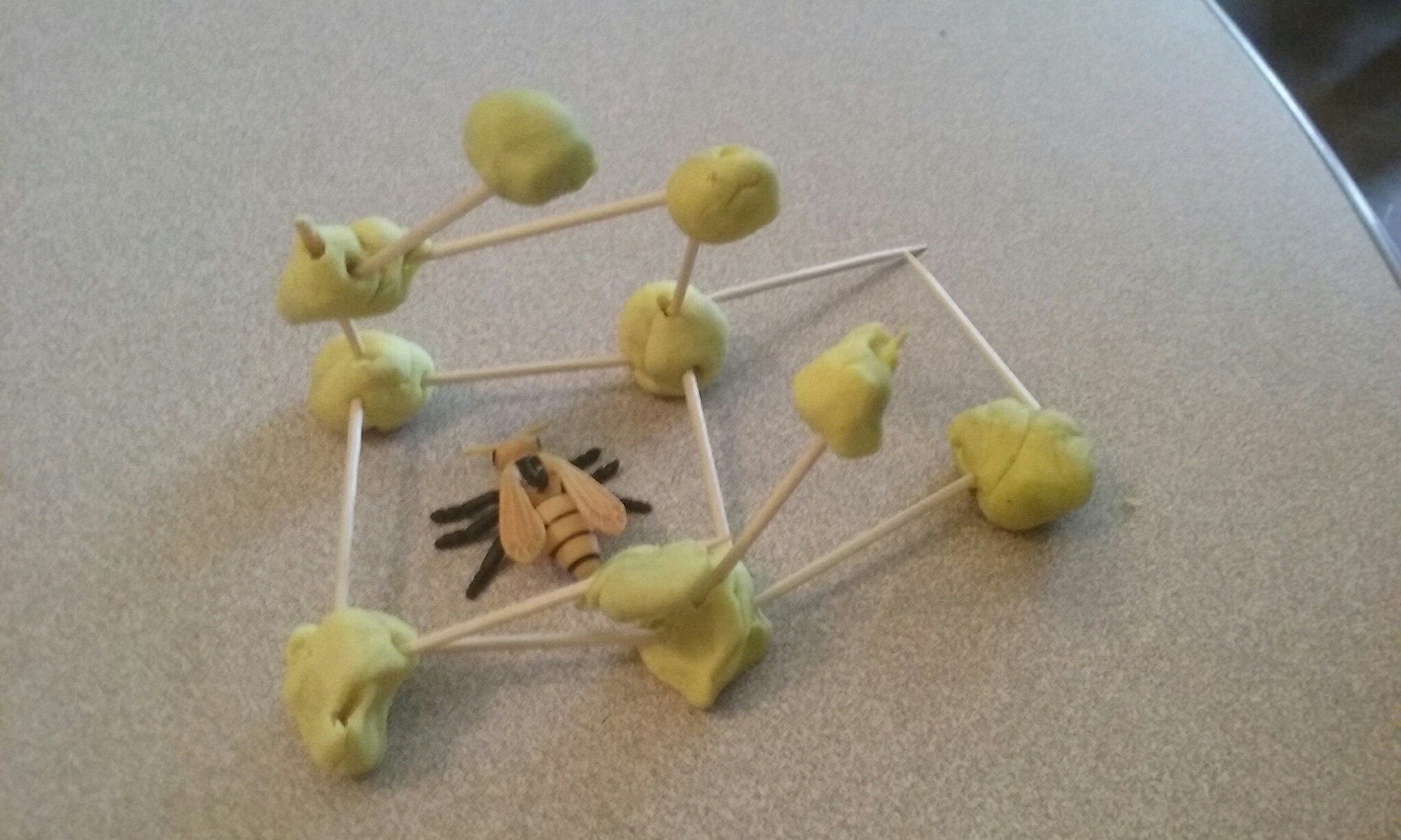
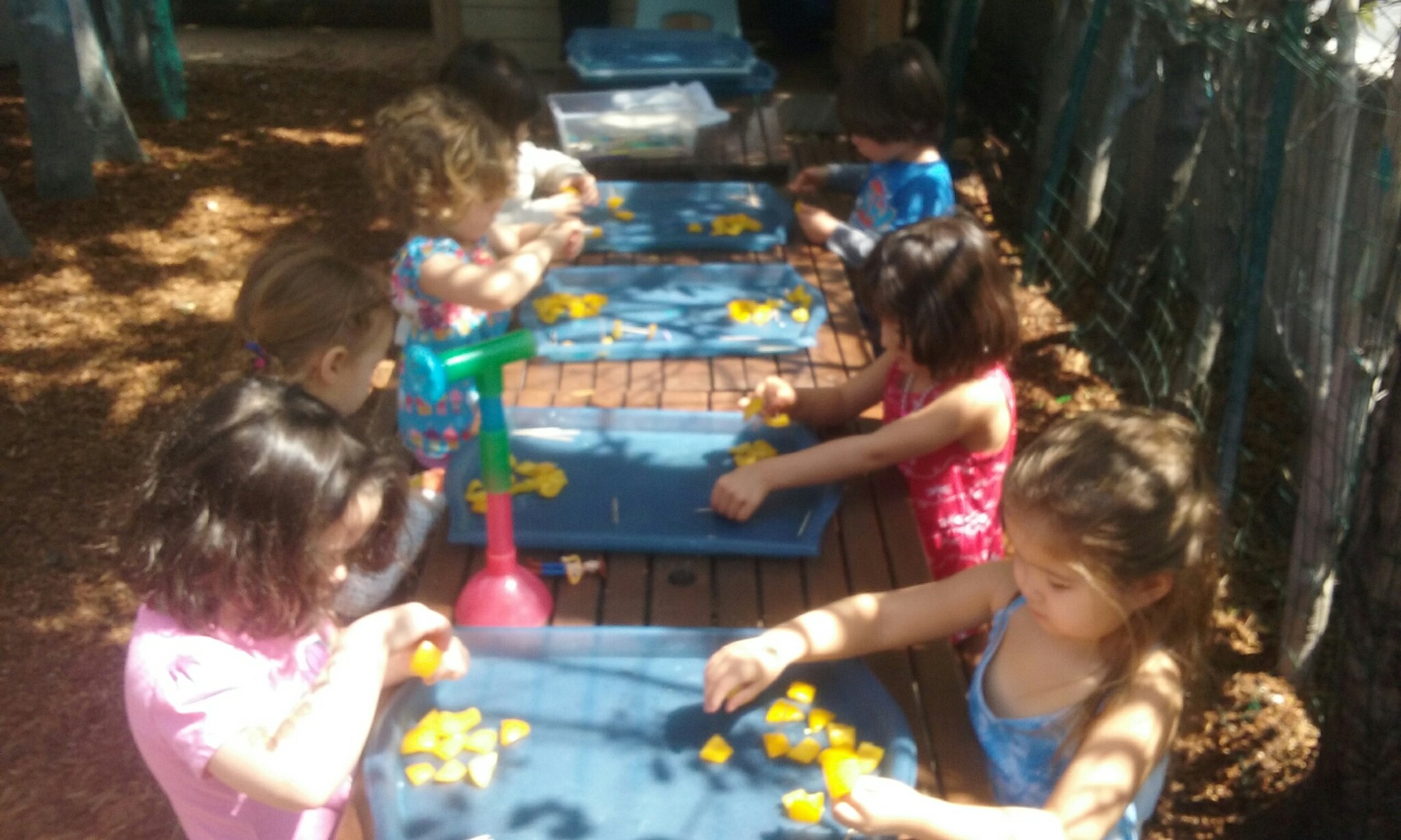
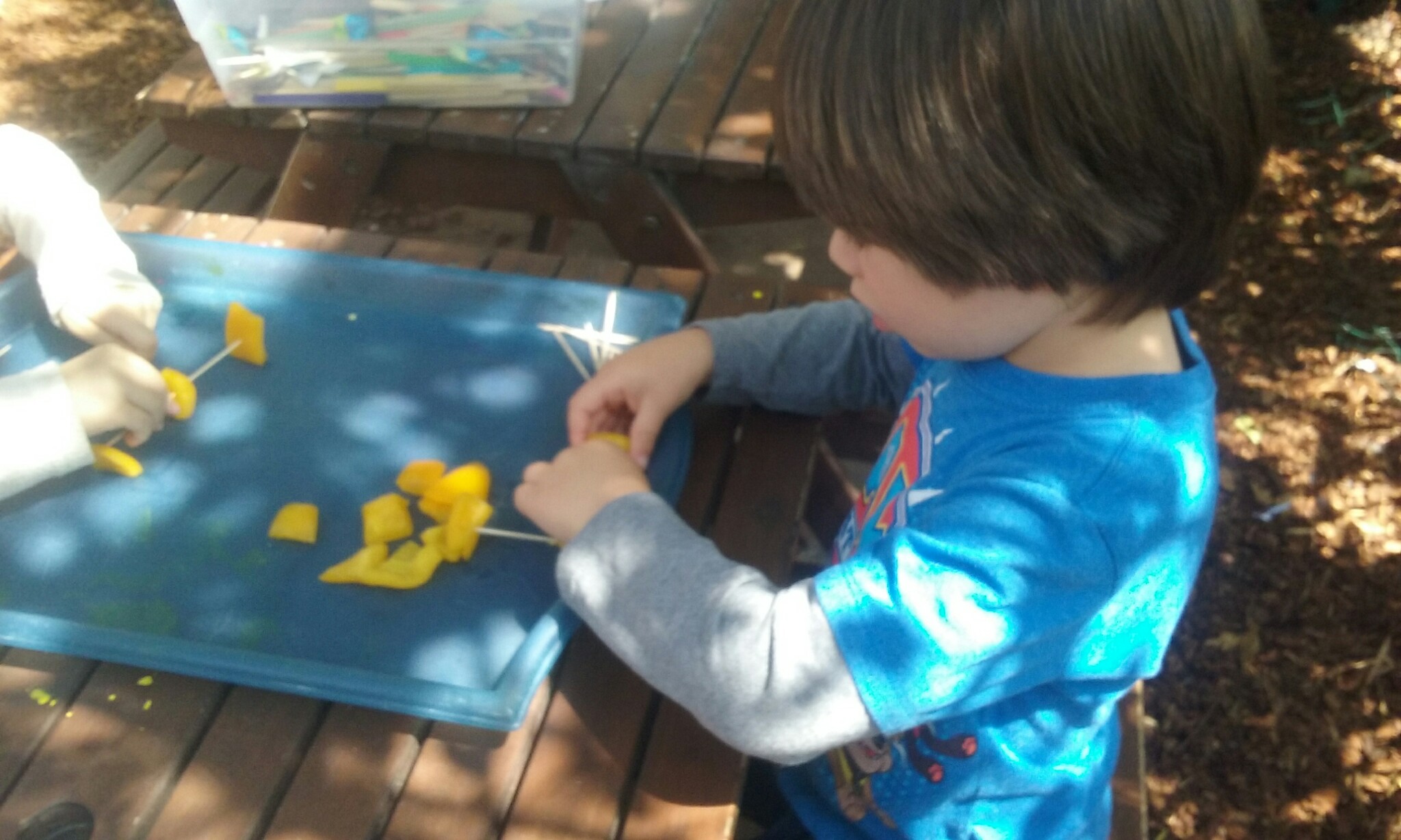
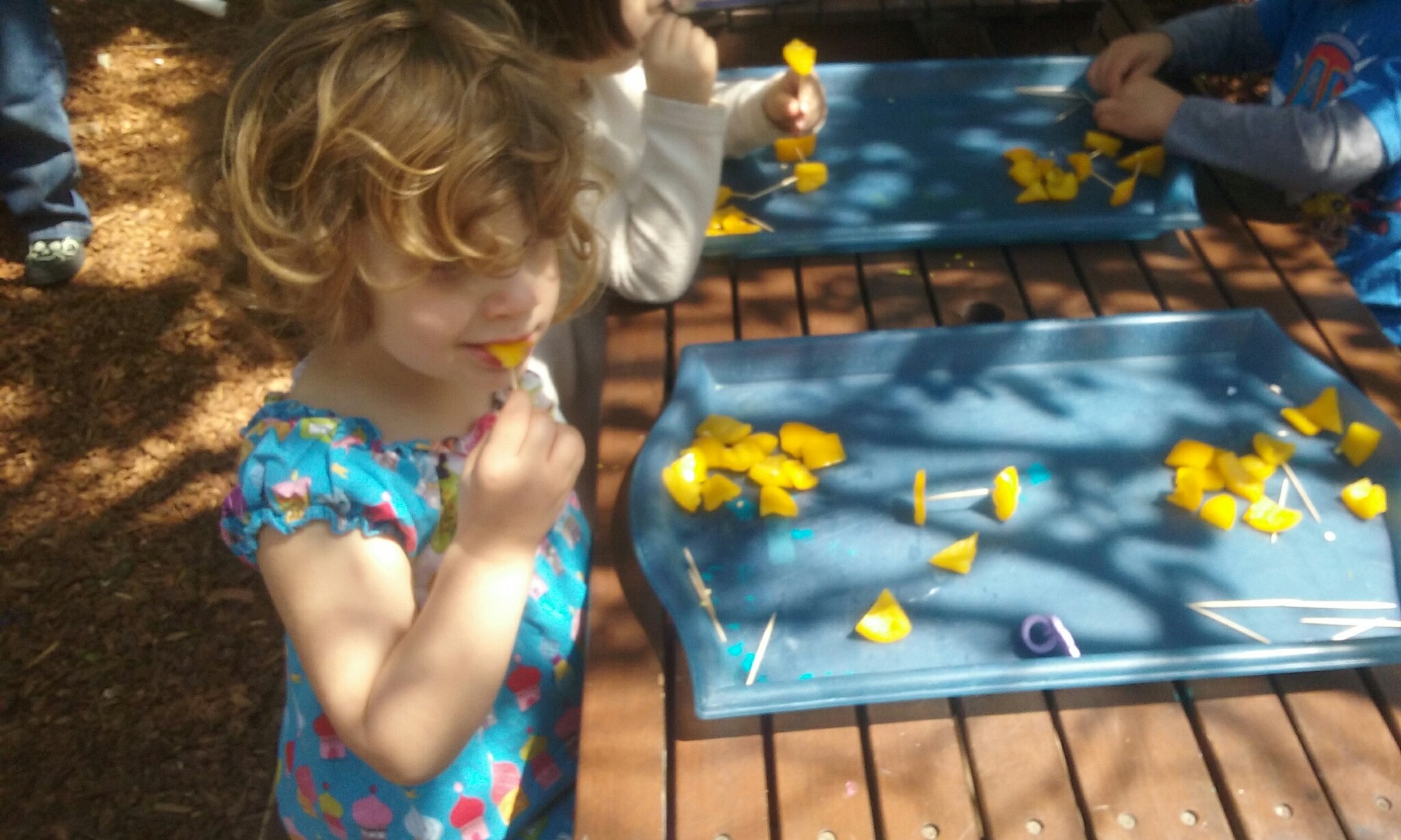
For our week of bee activities, we applied these skills to the construction of the beehive.
Using a variety of different materials, we created several beehives.
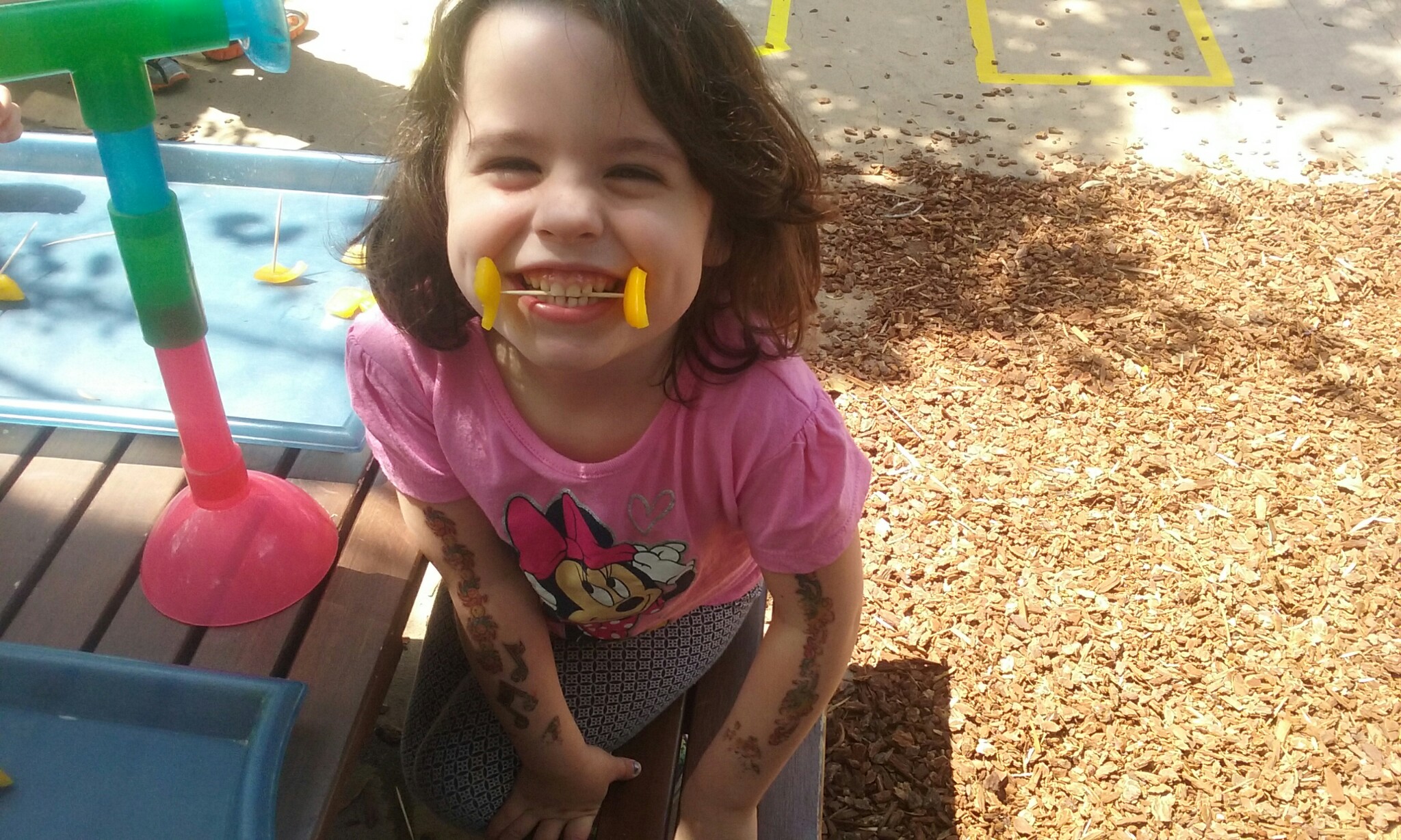
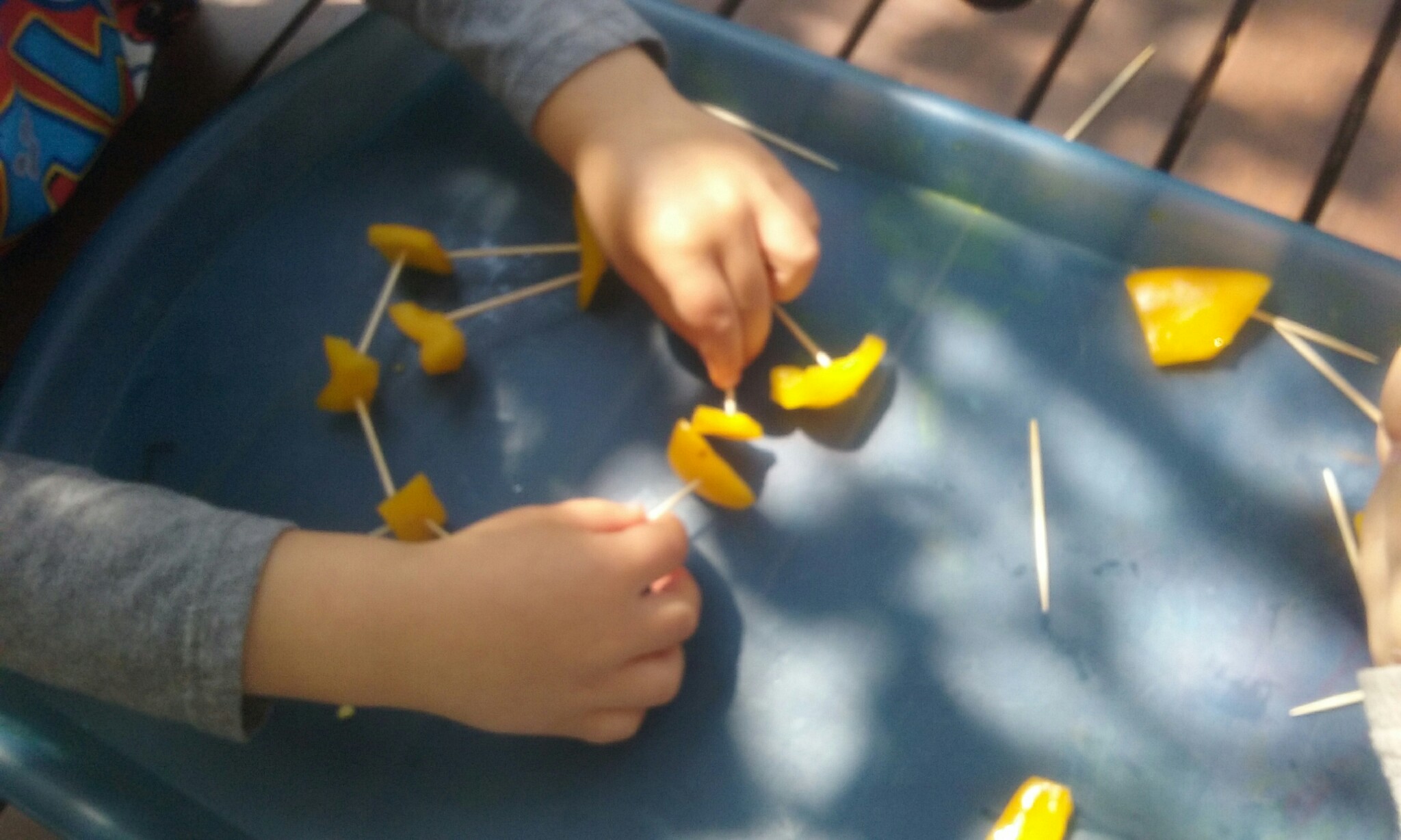
We first started with playdough and toothpicks, and finished with bell peppers and toothpicks.
Bee Observation Table
Insects are an integral part of our everyday world, having existed for over 300 million years; they are the most common animal on our planet, and there are more types of them than every other animal combined. Insects and other critters are crucial to plant life—aerating the soil, depositing nutrients, eating other animals that harm plants— but because of their often creepy reputation, they tend to be overlooked in the classroom.
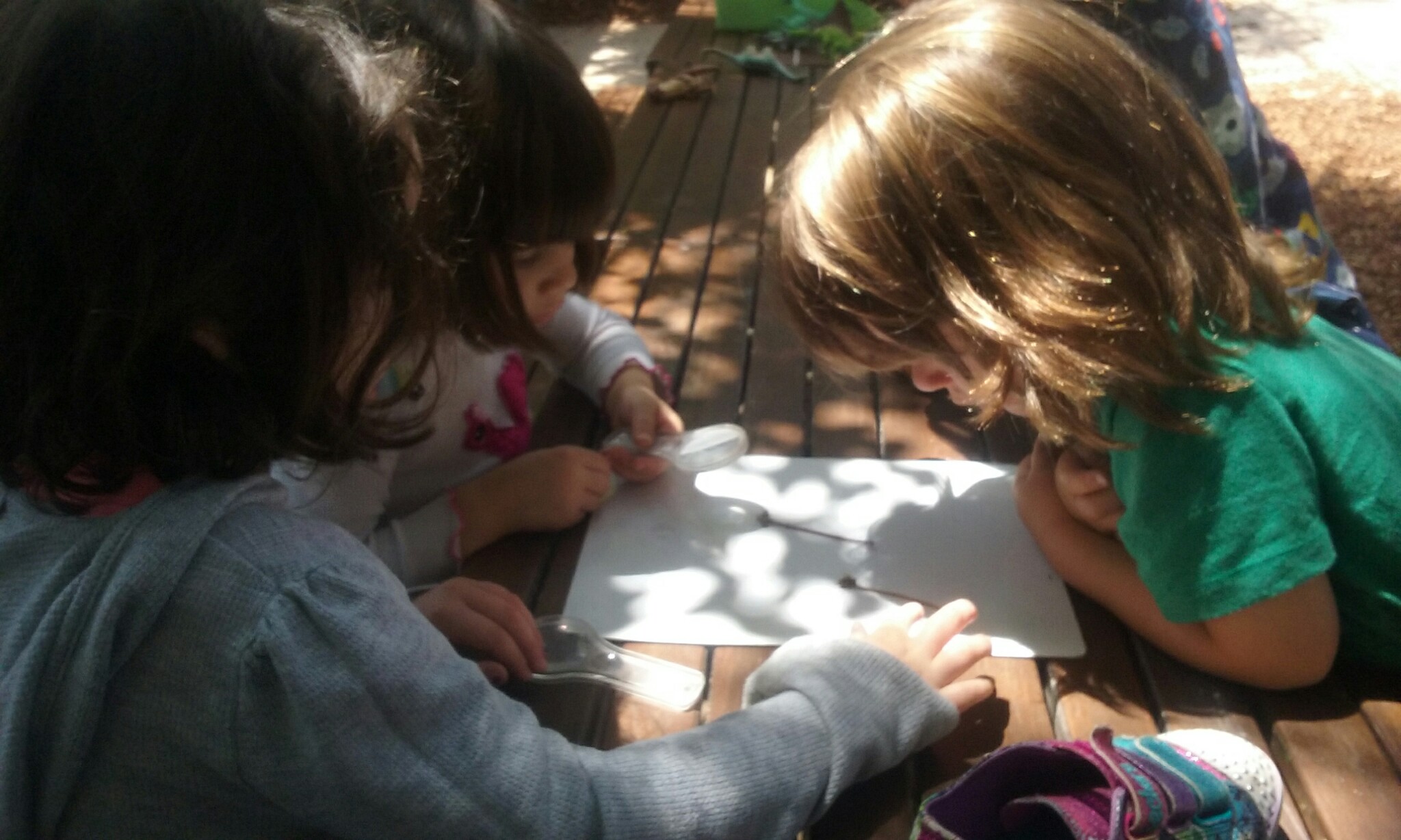
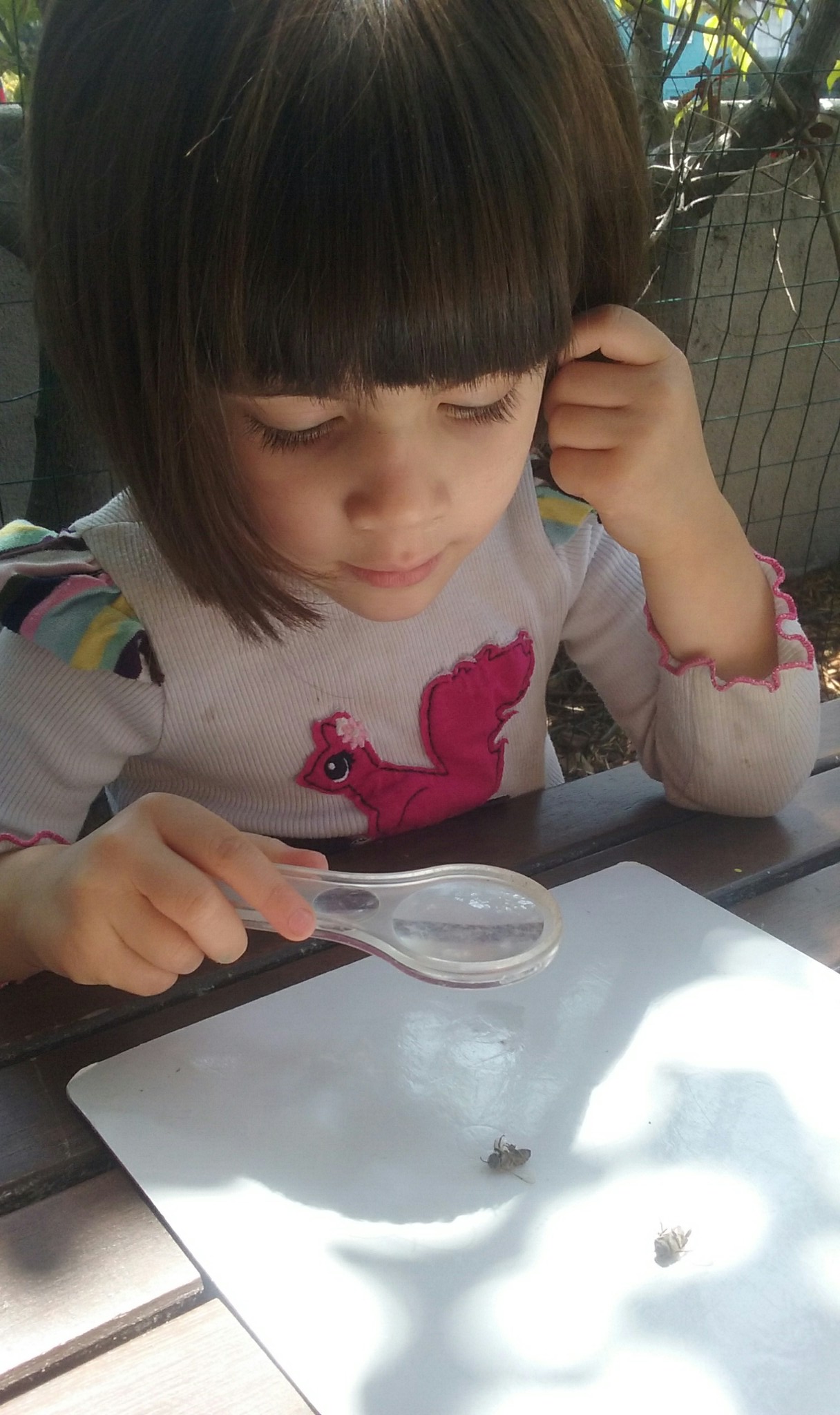
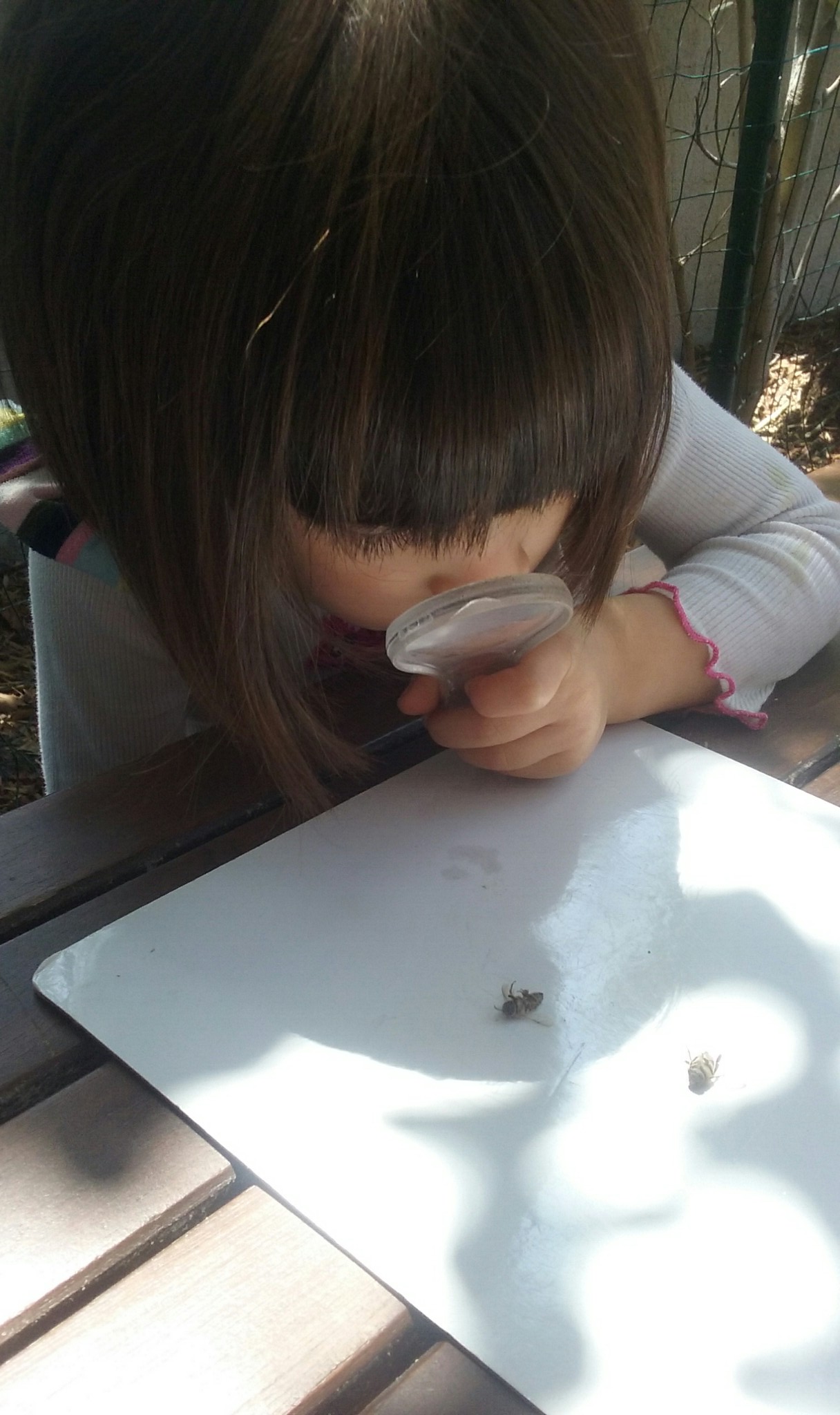
Bees, specifically, are much more important than many people realize. They not only create delicious honey, but are responsible for the pollination of new plants. Without them, Earth with be a barren place. To help stimulate curiosity in our future bee enthusiasts, your little ones observed real deceased bees with a magnifying glass. Doing so educated your budding entomologists about the importance of honey bees in our lives and the need to understand and embrace them through their continued sustainability.
Exposure to insects and small garden animals promotes focused observation and data collection. In addition, children can practice using the tools needed to gather and convey new discoveries. They can use the language of measurement; compare, contrast, and classify; and engage in the charting and graphing of eating and growth patterns as they interact with and care for their critters.
Exploring insects and small garden creatures in the classroom addresses National Science Education Standards by allowing children to develop a concrete understanding of the characteristics of common organisms, gain knowledge about life cycles, and acquire insight into how animals and the environment work as a system.
Fizzy Caterpillars
For our featured activity of our week of caterpillars, your little one participated in a simple science activity that combined five our our favorite items….baking soda, vinegar, playdough, food coloring, and googly eyes! Before we got started with our science activity, we read The Very Hungry Caterpillar by Eric Carle.
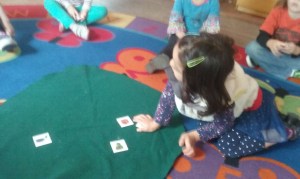
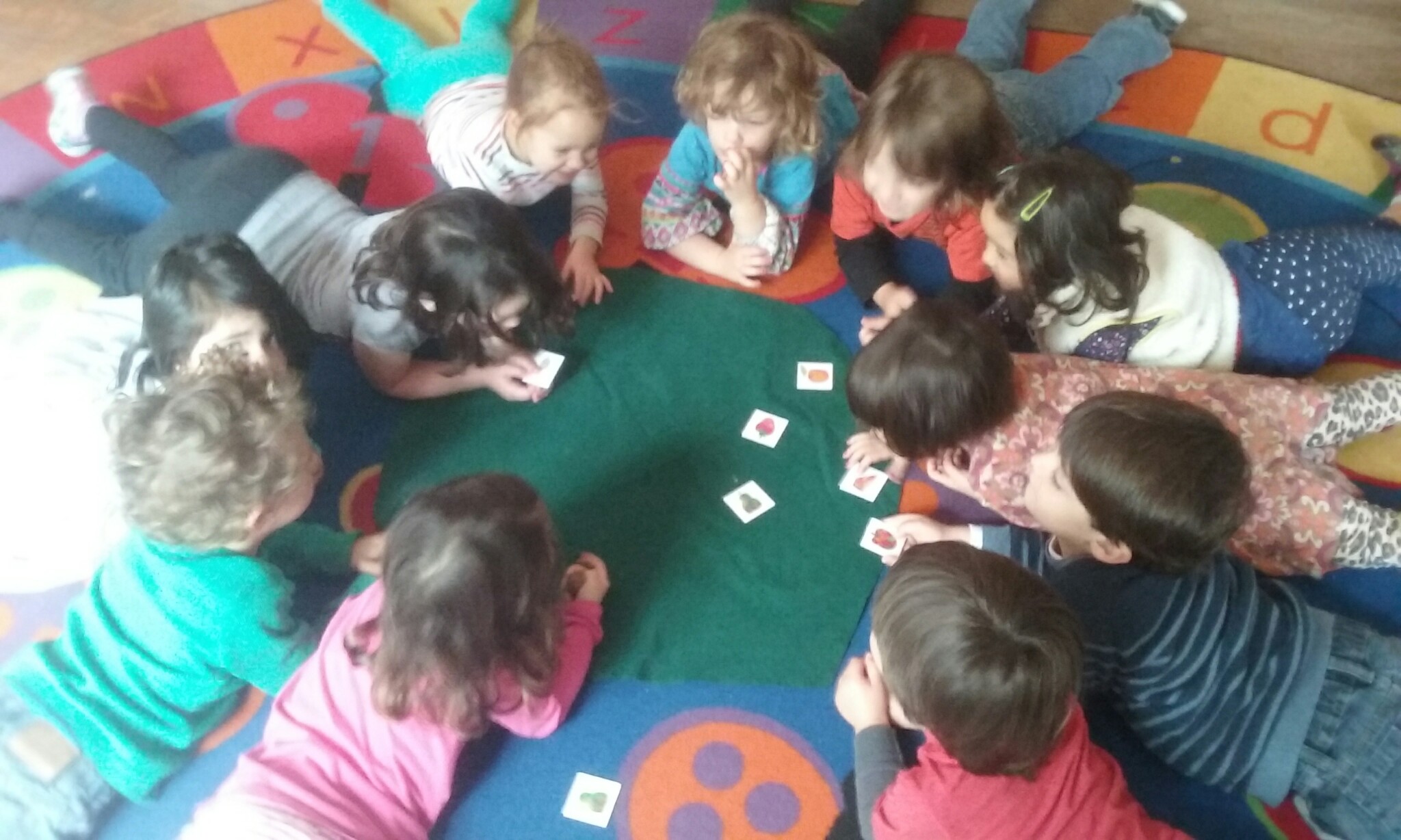
Each student was given a card that had a picture of an item from the story. During the reading of the story, each child was selected to place their “card” onto a large leaf made of felt. Once we read the book, we talked about what caterpillars looked like and made our own using some playdough.
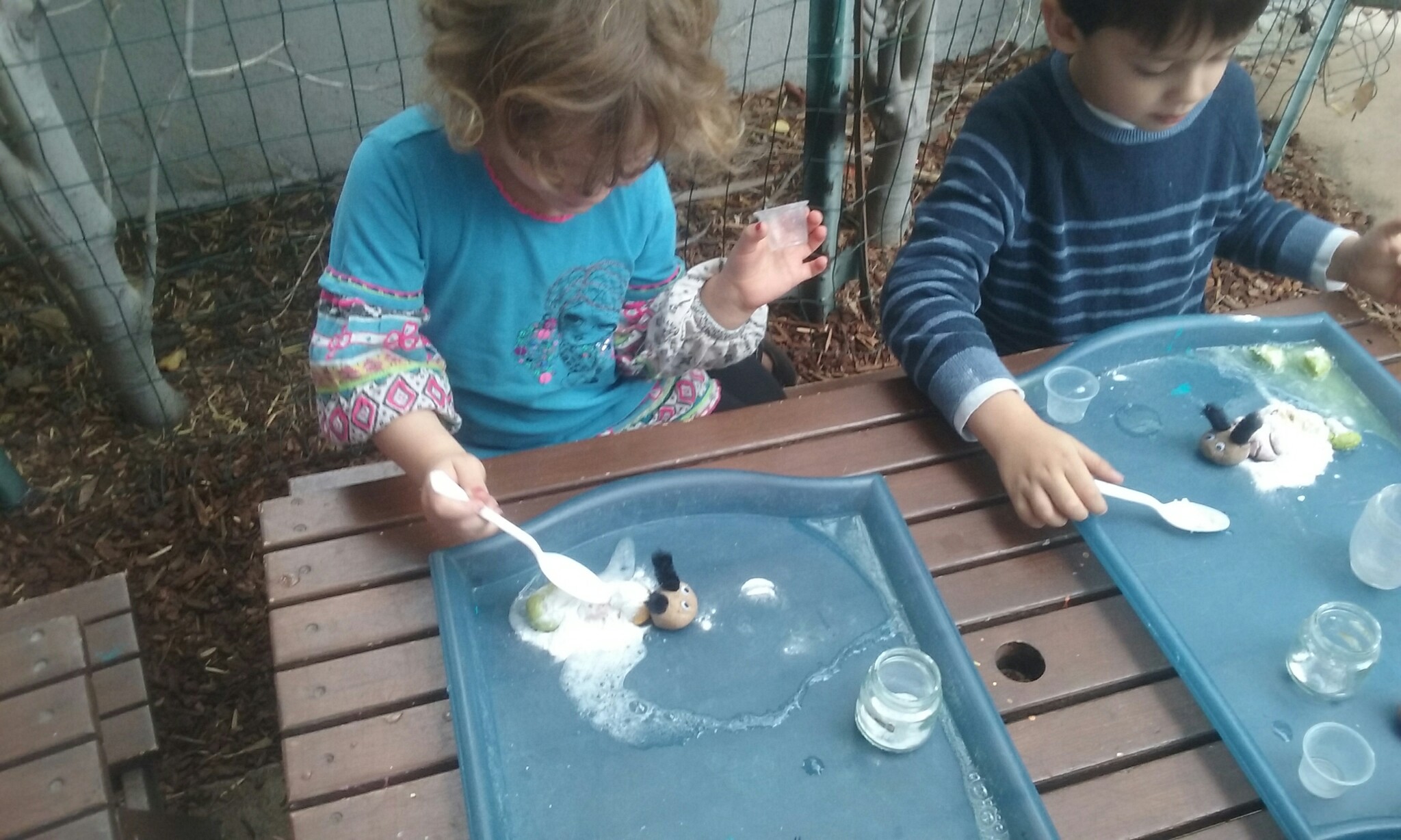
We love finding ways to connect books we read with simple science activities, so we decided to make our playdough caterpillars fizz! We used a lot of different materials, including a large plastic tray, playdough, vinegar, baking soda, food coloring, an eye dropper, googly eyes, and scissors.
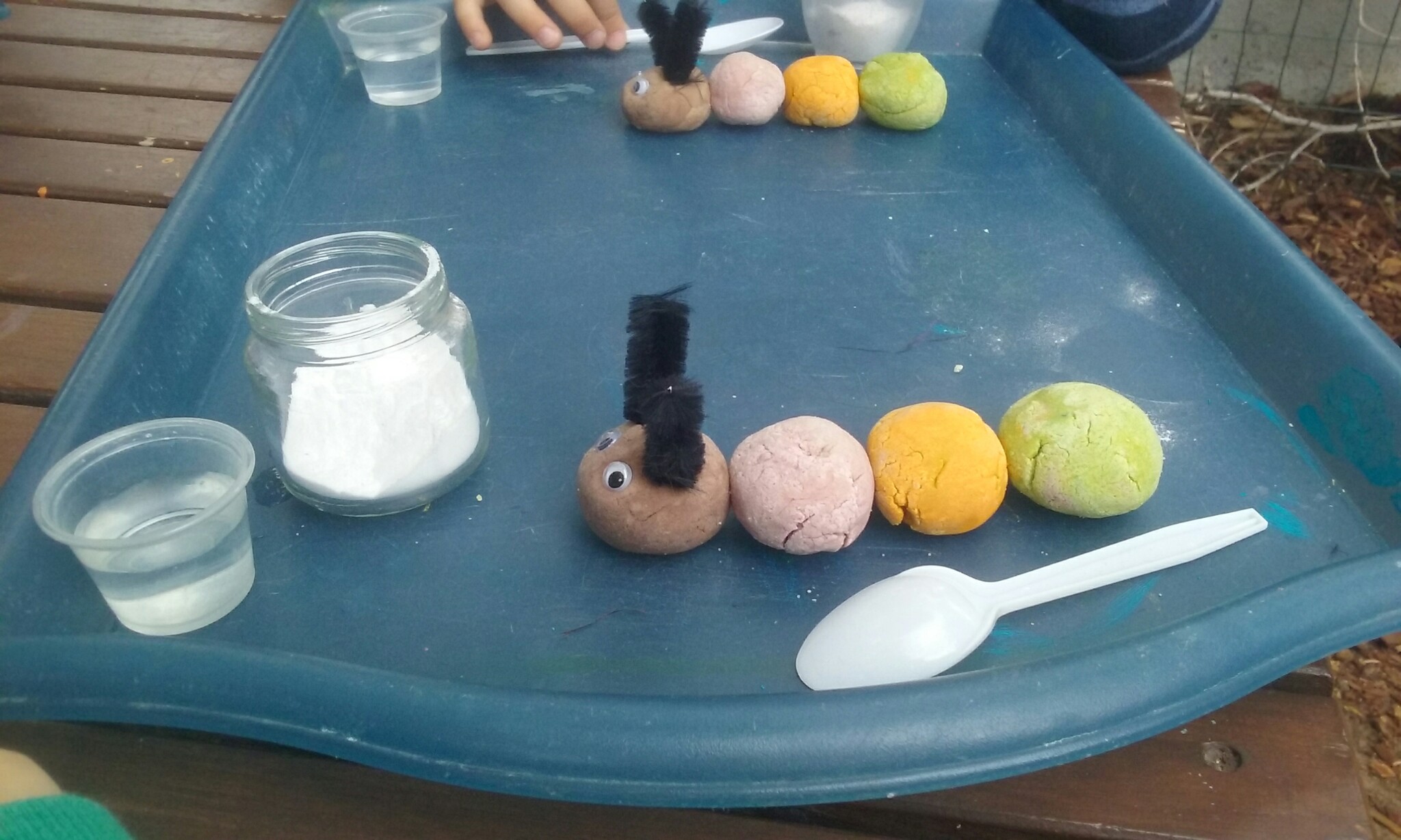
First we made caterpillars with playdough and added pipe cleaner antennae and googly eyes. While we made our caterpillar we counted each ball and talked about the simple color patterns we were creating with them. Next, your budding entomologist made a good sized thumbprint in each caterpillar segment. While we made our thumbprints we counted our playdough balls again. Then, we filled the thumbprint sized hole with baking soda and added one drop of food coloring to each hole. Then, the students were asked about what was going to happen.
Each child vocalized some predictions. Some predicted which side of the playdough balls the liquid was going to run off of as it exploded. They also predicted which colors they thought they would see as the eruptions happened.
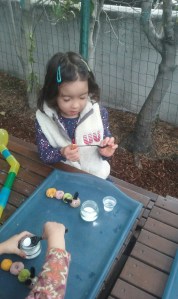
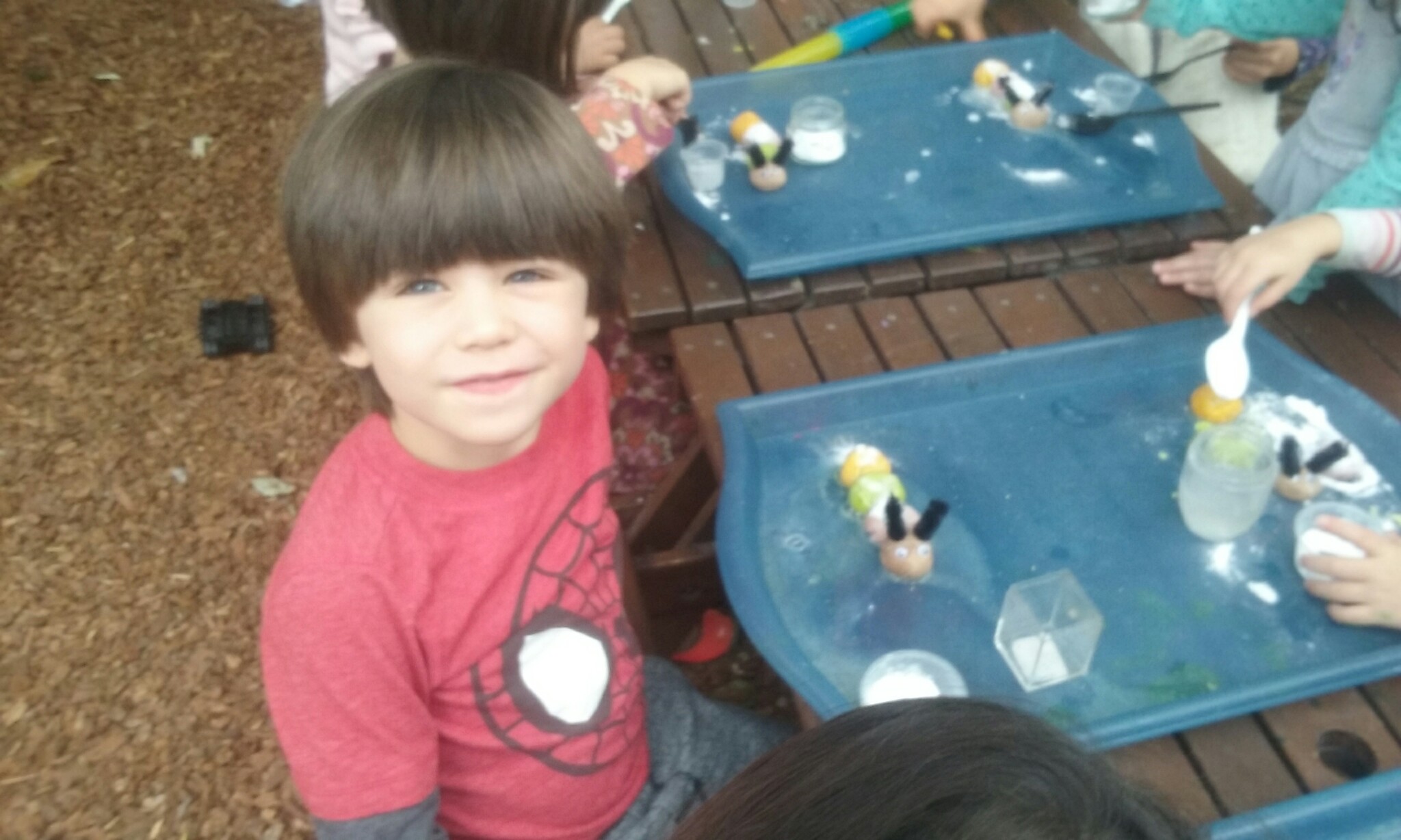
Once they made their predictions, each child filled up an eye dropper and dropped some vinegar on top of each caterpillar segment.
The colored fizzing explosions were a hit with your little ones. They were content to do this activity again and again and again.