Tactile Letter Puzzles

Tactile letter activities are an amazing way to help kids explore the alphabet. Tactile means connecting with the sense of touch, so these activities are designed for kids to explore the alphabet using their fingers. When they trace the letters, they are learning the strokes and shape of the letter to prepare them for writing in the future.
20141205_100914

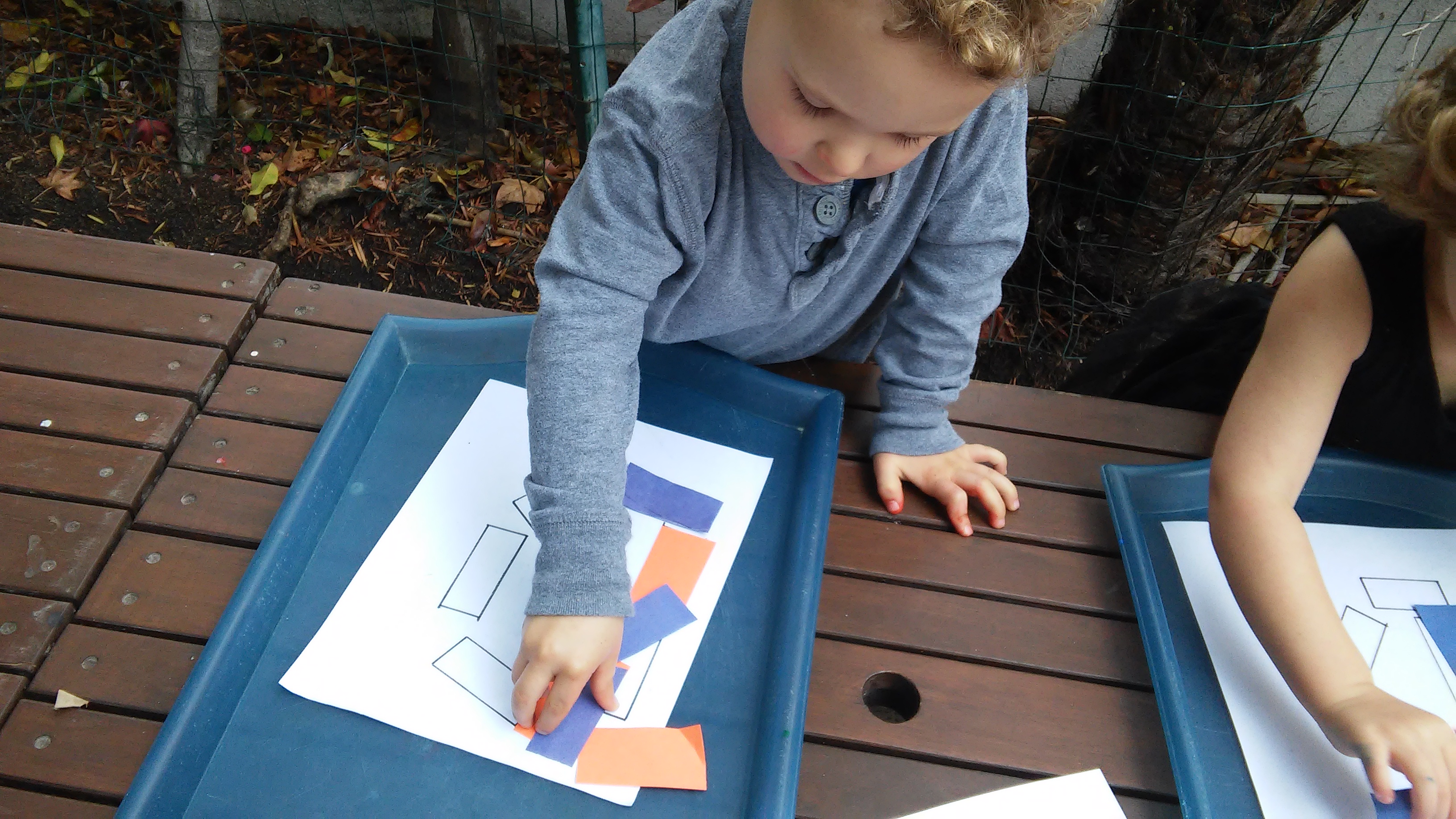
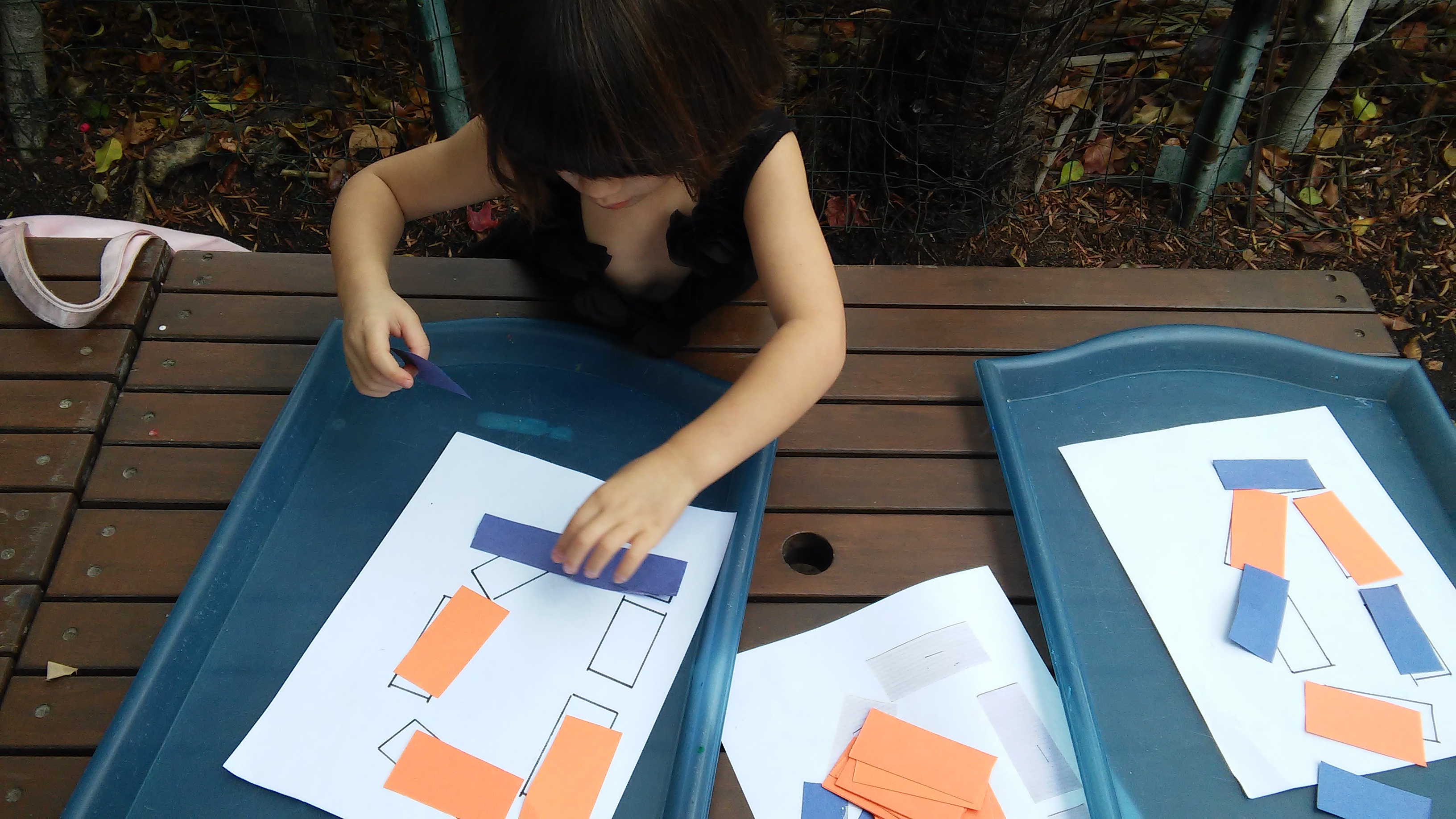
For this activity, we used pieces of foam to construct the letter D. All of the alphabet letters include either straight lines, diagonal lines, and/or big and little curves and this experience helped students perceive how these components fused together to create a larger picture. Before preschoolers begin to read or spell, they must learn the letters of the alphabet and the sounds they represent. Learning to pair letters and sounds helps prepare preschool children for later reading.
20141205_101124

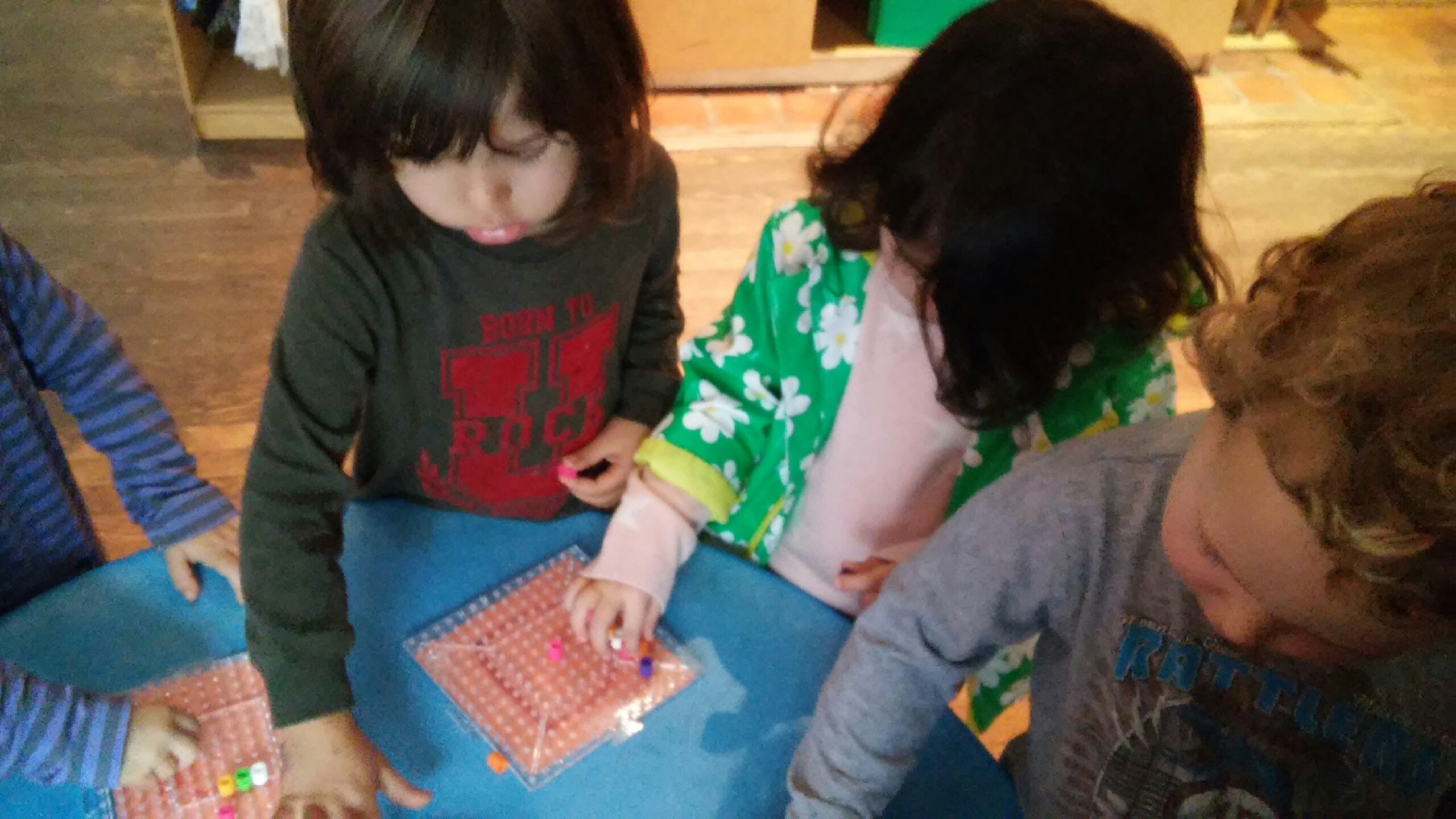
Letter D Beading

Manipulatives increase strength and coordination in the small hand and finger muscles. For this activity, we added beads to a peg board to create the letter D for dreidel.

20141203_100107 (1)

Picking up the bead and manipulating it in your child’s hand until it was pinched between their thumb and forefinger, involved translation, shift and rotation movements of the bead within the hand. This promoted the tripod grasp.

20141203_1001521

Maneuvering the beads into the shape of a D fostered visual discrimation as your budding writer selected the pattern that fit their mental image of the desired letter. Lastly, this activity was self-correcting, which encouraged creative thinking, problem solving skills, and spatial reasoning.

Shapes and Emergent Writing

Early writing encompasses the manual act of producing physical marks, the meanings children attribute to these markings, and understandings about how written language works. Early writing is one of the best predictors of children’s later reading success. Specifically, early writing is part of a set of important foundational literacy skills that serve as necessary precursors to conventional reading, including developing understandings of both print and sound (i.e., phonological awareness). Print knowledge includes general understandings of how print works and the names and sounds of the alphabet. Knowledge about sound, or phonological awareness, includes the ability to attend to and manipulate sound structure of language.

20141105_100842

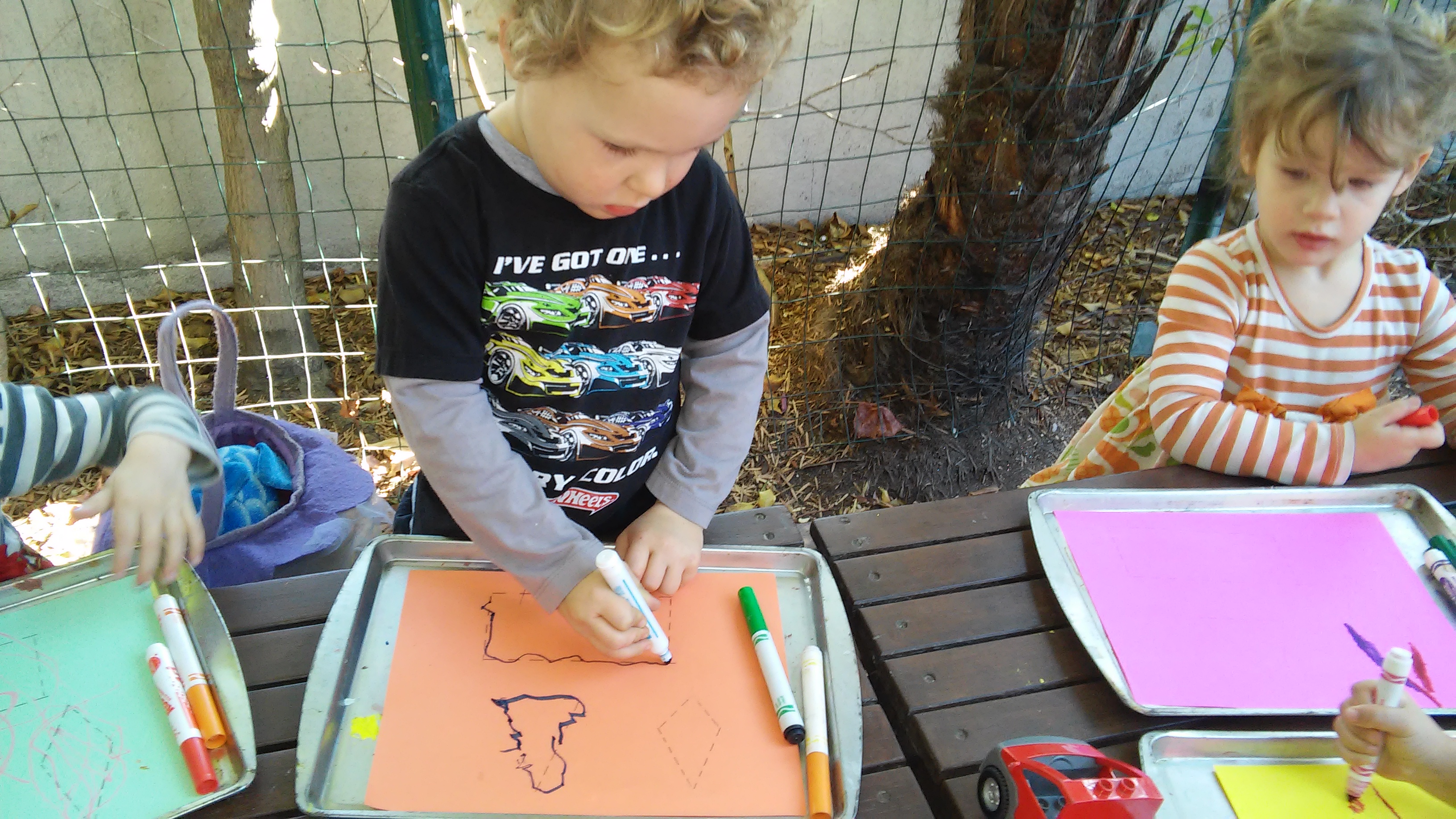
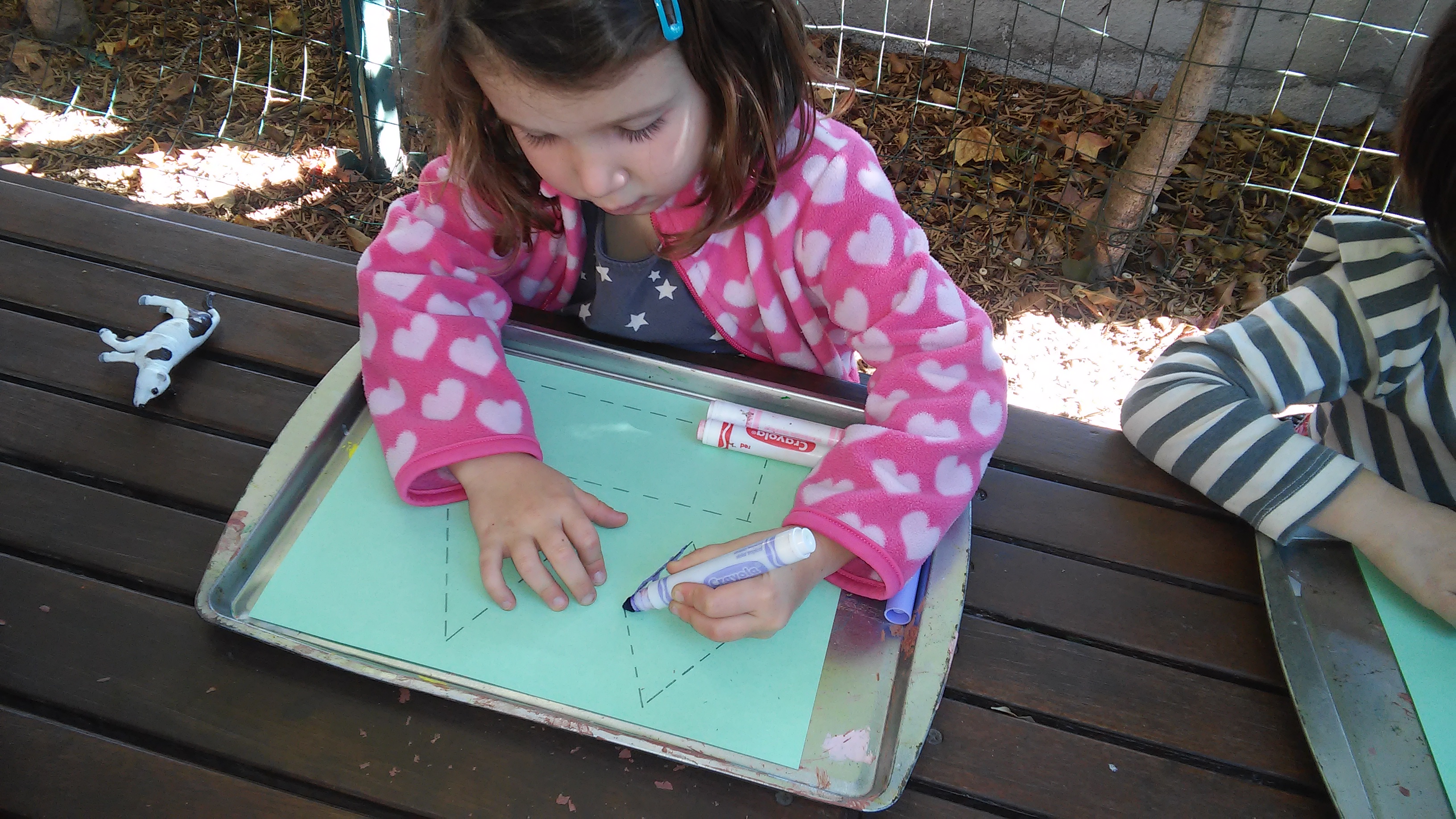
These early skills work together to lay a foundation for later reading success. As children integrate their knowledge of print and sound, they begin to grasp the alphabetic principle, a critical achievement in early literacy. The alphabetic principle is the understanding that oral language is made up of smaller sounds and that letters represent those sounds in a systematic way. Children can grow in their understanding of how print and sound work together through experimenting with writing. Writing serves as a type of laboratory, in which even very young children are actively creating and testing hypotheses about how writing works. The key to carry out these hypotheses is to present a variety of scenarios that enrich the writing experience. For this activity, we used markers (an easy utensil for small fingers to grasp) to create shapes. We focused on proper grasp, control, and left to write sequencing.

20141105_100801

Circle Color Matching

A lot of activities help in the development of fine motor and writing skills, including weight bearing on the hands, postural control and shoulder stability, and muscle development. There are also many components of fine motor skills, some of which are, development of the arches of the hands, the thumb and its webspace, separation of the two sides of the hand, which helps with in-hand manipulation, bilateral integration, and the development of hand and finger strength.

20141030_101203

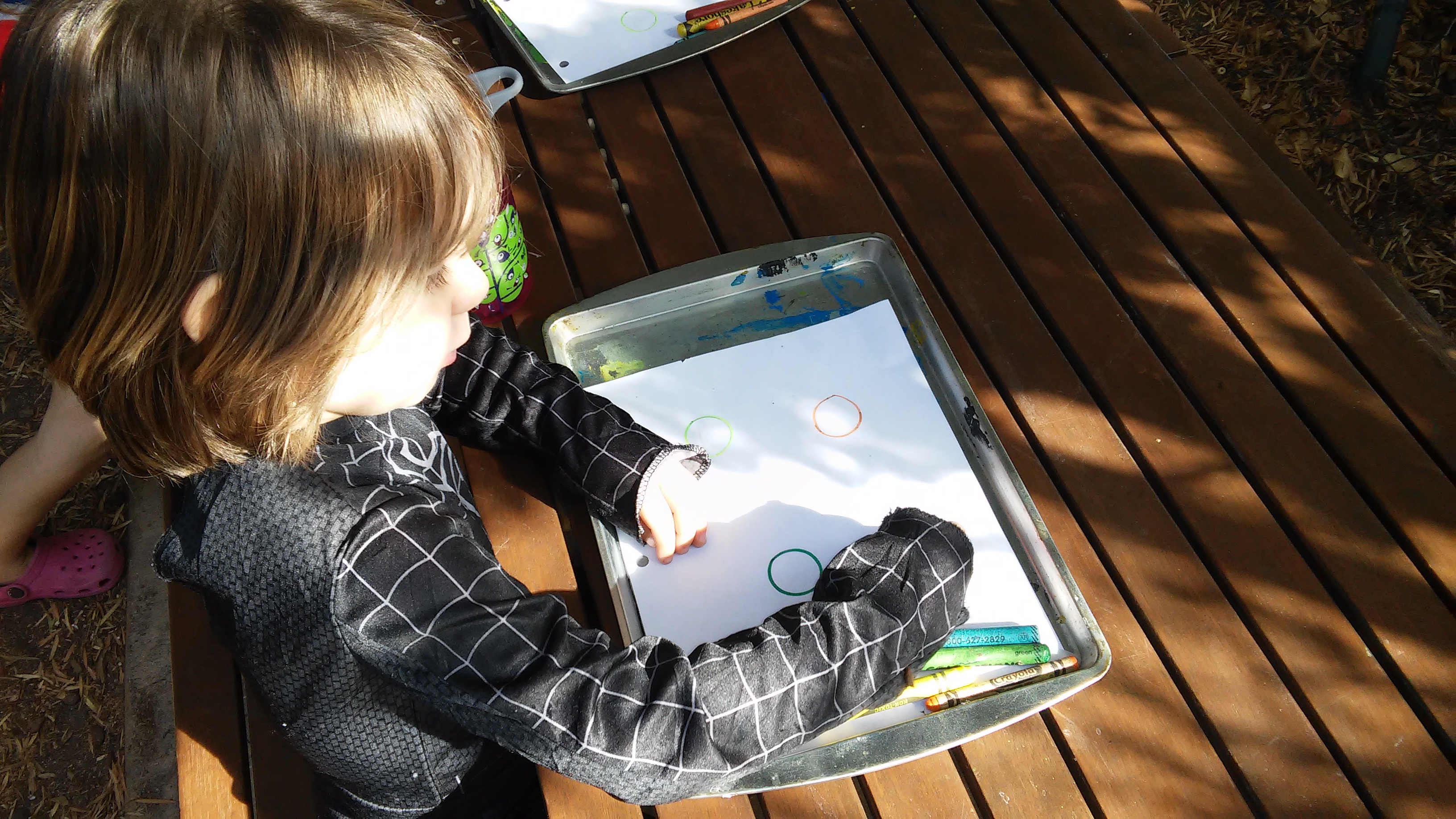
This activity required your budding writers to fill in different colored circles with a crayon. Holding a crayon is self-corrective, which means that there is only one way to grasp it properly, Because we are continuing to promote the tripod grasp, we are constantly doing activities to develop this.

20141030_101358

Your little ones were also directed to form concentric circles, which aided the progression of hand strength and finger grip. Lastly, they were given five different crayons to match the five different circles on their papers, which involved significant pre-math skills, such as recognizing visual patterns, sorting objects, and one-to-one correspondence.

20141030_101151

Playdough Learning: Straws and the Letter L

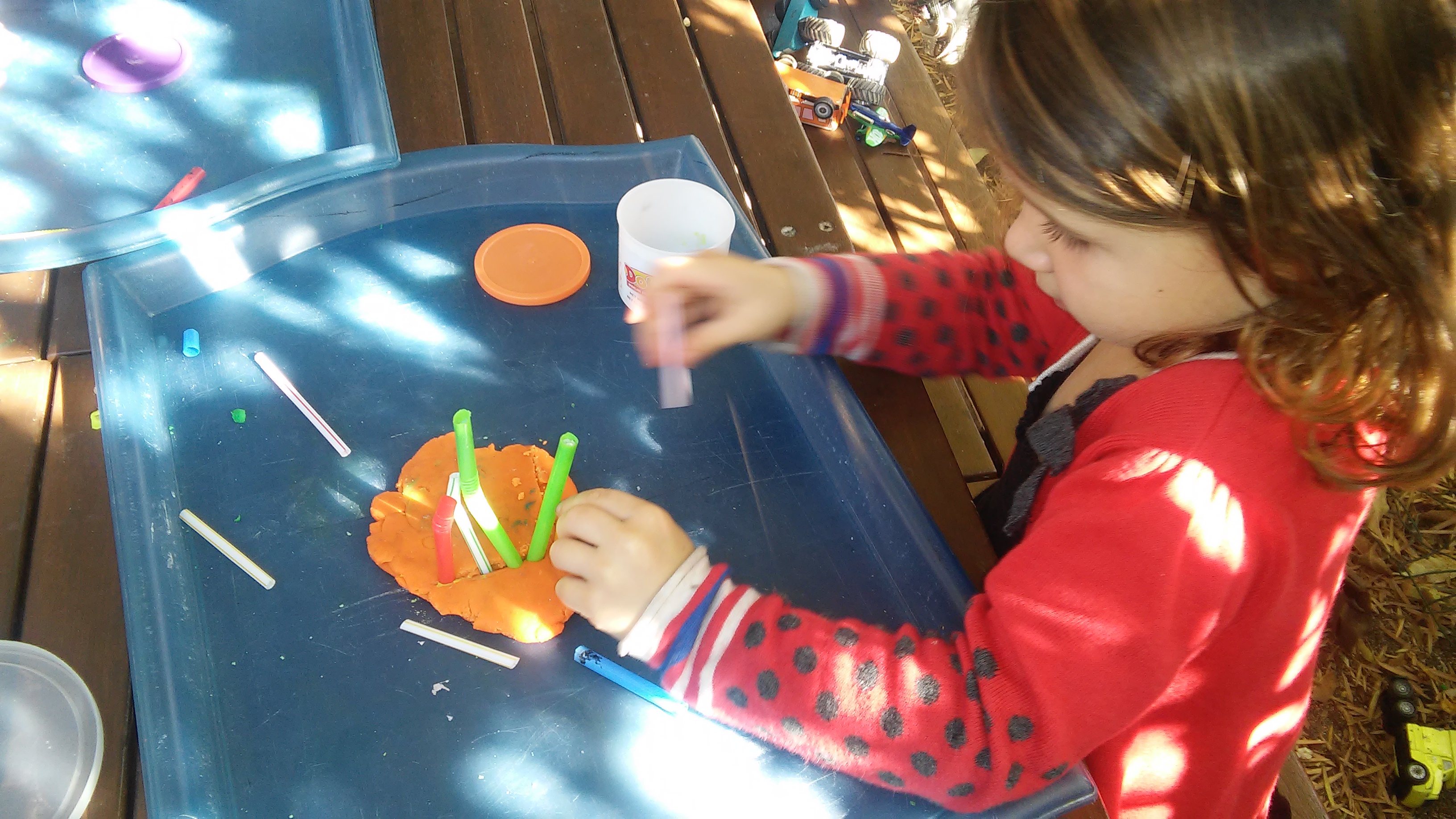
Many children feel that practicing handwriting is a chore, an unwanted burden and something they dislike spending time on. With all the technology and electronic devices we have today, it almost seems like handwriting is becoming irrelevant. In our class, it isn’t. There are several ways to form letters, and in our class, we learn to construct them properly without even using a pencil! As your children are introduced to letter formation, they benefit most from a hands-on approach using manipulatives. Even before children can properly grasp a pencil they can practice this way and get a feel for the way a letter should be formed. Miss Carrie models the correct formation with the children and then lets them explore and in essence “create” letters. For this particular activity, we practiced creating letter Ls with Playdoh and straws. Each child poked straws into the Playdoh to create the letter L.
20141029_100539

Practicing writing doesn’t mean you have to sit at a table. Many younger children are resistant to sitting and practicing. Those same children may delight in writing in dirt with a stick while playing outside. You’d be surprised at how much more fun writing is when you simply do it at a different time or place than expected. Try it!

20141029_100546

Leaves of Grass (and Playdough!)

In order to be ready to write, children need to have developed hand skills. This means they need to have the strength and dexterity to handle, and control, small objects with their hands. But, they will also need to develop the muscles in their forearm and upper body to provide the strength and stability that will allow them to use their hands to manipulate and control writing instruments.

20141028_101635

Eye-hand coordination is another pre-writing skill, as is the ability to process sensory information. The brain coordinates tactile and movement sensations as a child is writing, which allows him to make changes as needed to maintain muscle control. One of the best ways to prepare your child for the exciting world of writing is to provide lots of opportunity to work with Play-Doh and clay which helps develop finger and hand strength and control.

20141028_101536

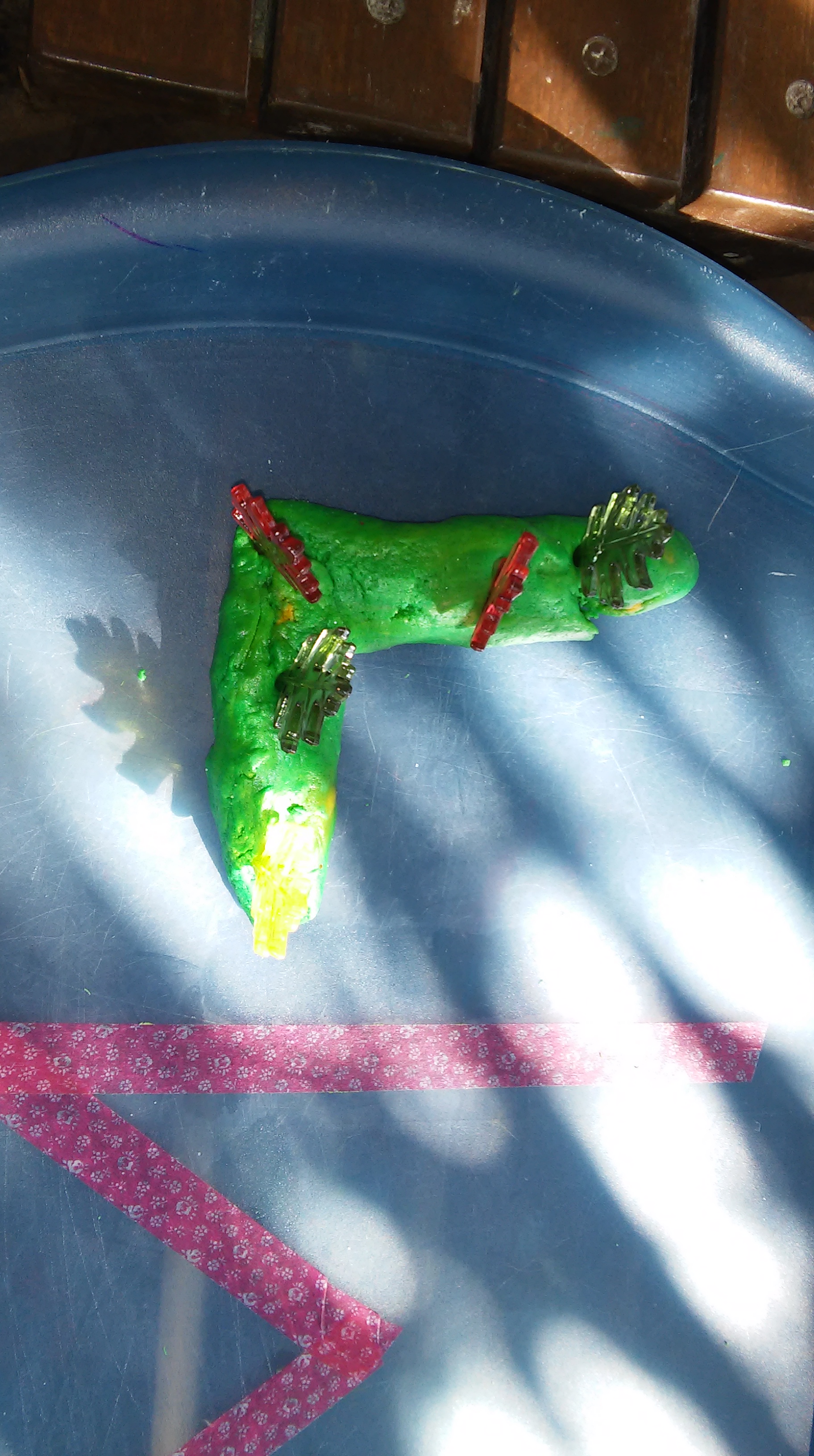
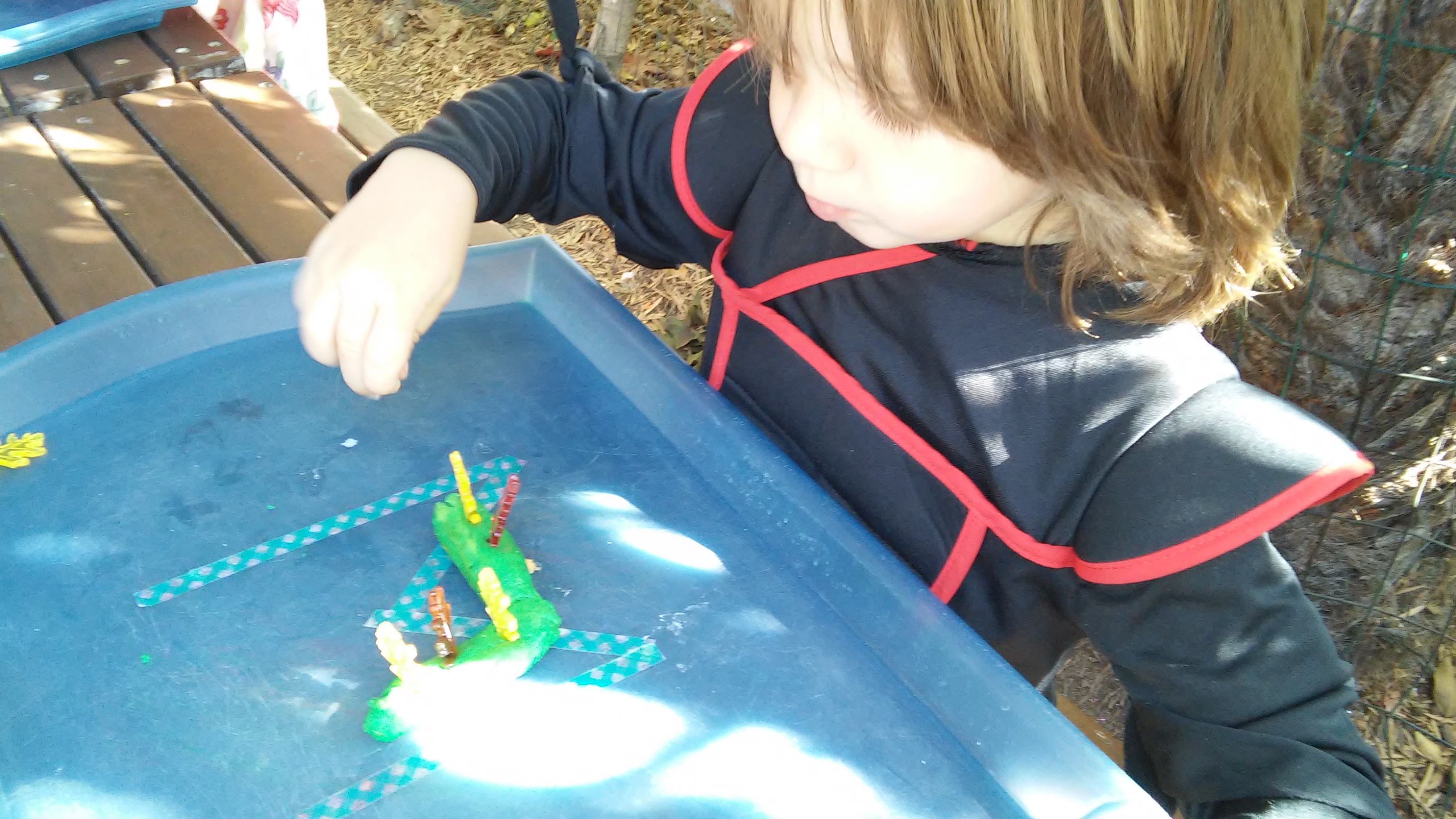
When they are playing with these materials, children are squeezing and kneading, poking and pinching, rolling and pressing – all excellent strength building movements. For this activity, we talked about the letter L. We initially learned a song about this letter, which included silly words that reinforced the sound that L makes. We then discussed a variety of words that began with this letter. Lastly, we stuck plastic “leaves” into green Playdoh. As they shaped their Playdoh into the letter O, they were strengthening the small muscles required for writing. The muscles in the palm of our hands control the movements of the thumb and fingers. When a child has developed strong fine motor skills, he is able to control the thumb and fingers individually, rather than just grasping items with his entire fist as an infant does.

20141028_101601

Dot to Dot Letter Writing

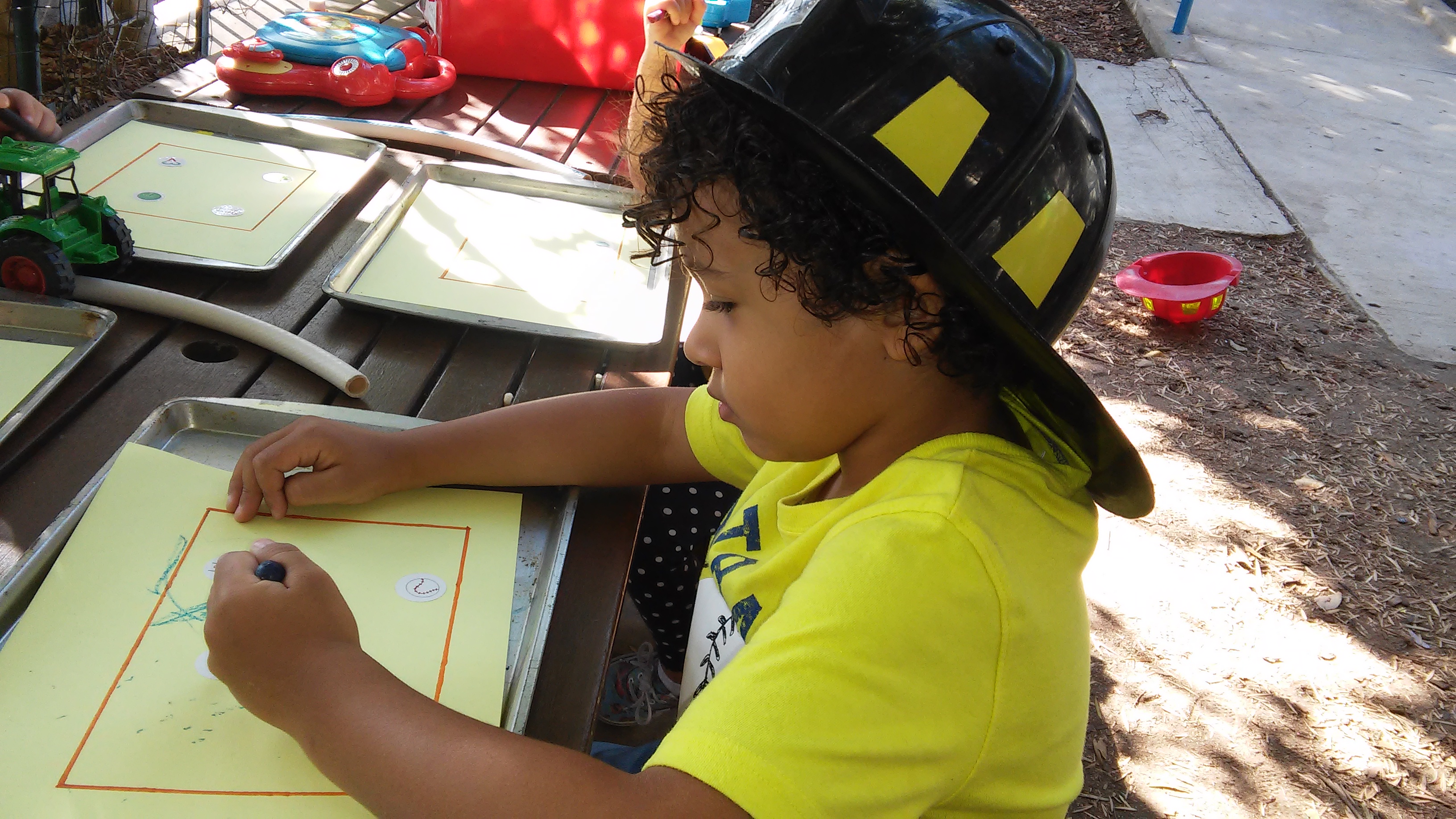
Dot-to-dots (connect the dots) are excellent vehicles to encourage pre-writing skills, number order or letter recognition and problem solving. To incorporate this into our week of learning about the letter G, we created  the letter G using stickers as our “dots” and crayons to form straight lines from one dot to another. Each point enabled your little one to create their Gs correctly (from top to bottom, and left to right). Working on dot-to-dots teaches children number order and helps with counting.

20141027_151752 (1)

Little ones may need a little help, but as they get older, completing this type of pre-writing activity all by themselves is a great confidence booster. Dot-to-dot games are also wonderful for improving hand-eye co-ordination. There’s a lot of concentration that goes into completing a dot-to-dot! Visual motor control is developed through this type of task. In addition to these benefits, doing dot-to-dot activities really helps improve handwriting skills and are a valuable pre-writing teaching tool. Children learn how to create shapes, focus their writing implement and learn how much pressure to apply to the paper.

20141021_100724 (1)

Goo Goo G

All too often, young children are given writing tools to use before they are ready for them. Young children from three to five years of age use their hands to explore and learn about the environment and themselves. By developing good hand skills and other pre-writing skills young children will be prepared for the next step, which is writing. Working on hand skills will also assist older children who are experiencing writing difficulties. This week we have been learning about the letter G, and words associated with it. We not only discussed the words, but the different sounds that G makes. In our discussions, your budding writers were also asked to use their own thinking minds to come up with words that have any G sound in it. For this activity, we discussed the “ga” sound that G makes. We then conversed about what goo is then brainstormed to make up silly words, such as “Goo Goo Grandma, Goo Ghost Gaga”. Following this, your child used the small muscles in their hands to create “goo” that they eventually scooped and pinched to place onto a taped letter G. Doing so created a visual representation that aided their understanding.

20141022_100415


M is for Moon Pre-Writing Activity

It all begins with scribbles. Aside from the decorative swirls, a few letters, and perhaps even their own names, most preschoolers start school not knowing how to write. Fortunately, this does not have to be as challenging as many parents believe.  From tracing the ABCs (culminating in higher level thinking skills like forming, organizing, and expressing complete thoughts), to using a pen and pencil on lined paper, writing is a learning adventure, similar to all of the other ones your child has experienced!

20140909_100451

The key to learning how to write is to break it into small, manageable steps. To prepare your child for this most exciting endeavor, we participate in an array  of “pre-writing” activities that make writing fun.

20140909_100433


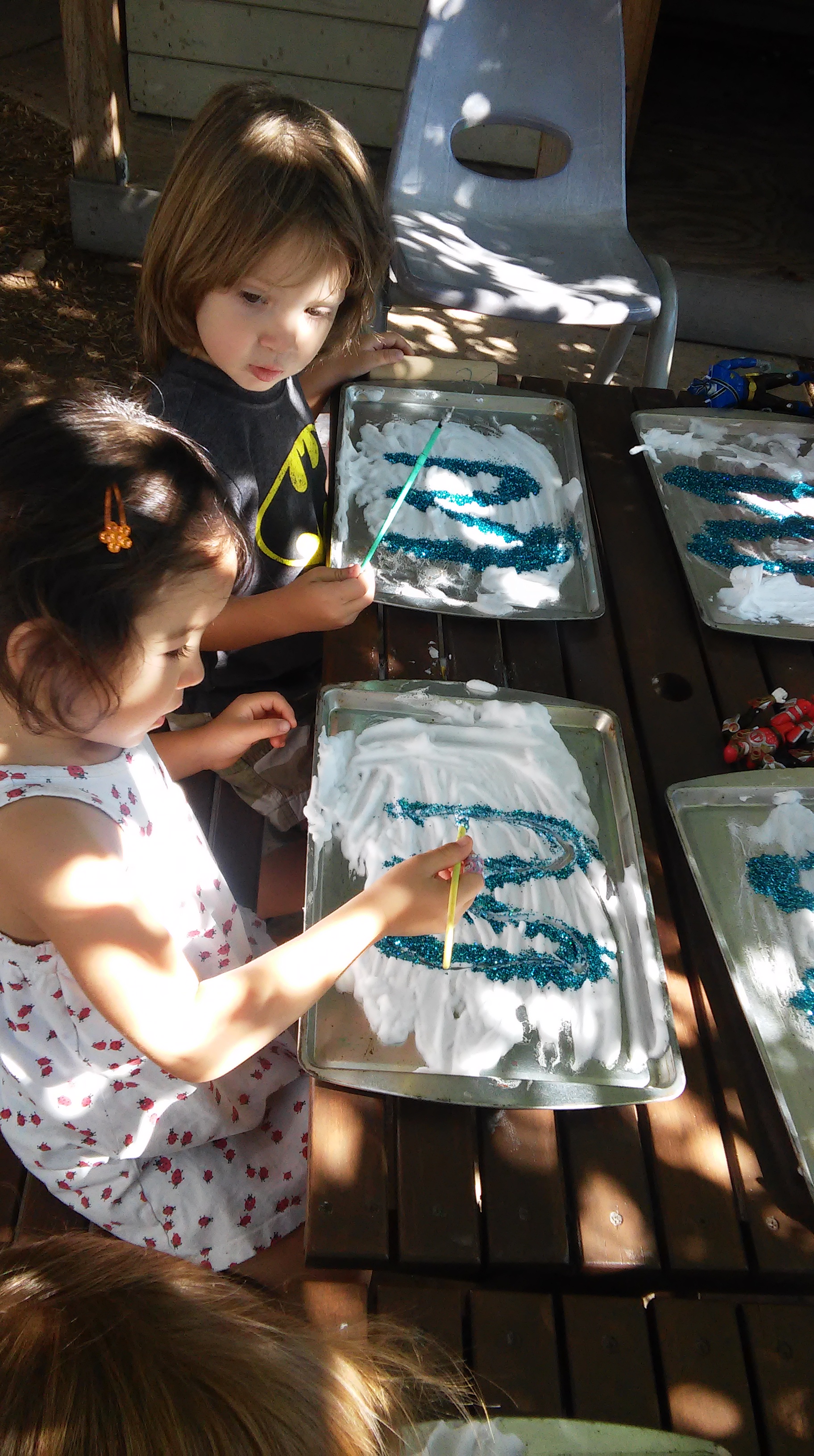
For this one in particular, we practiced writing the letter M, using shaving cream and glitter. With their paint brushes, your little one learned that all letter making starts from up to down and left to right. A paint brush is a nice introductory implement, because they are familiar, and easy to grasp. Lastly, this activity aided your budding writer in their continual mastery of the tripod grasp.

20140909_100439

20140909_100505