Pterodactyl Puppet Provocation

Using puppetry in teaching makes for one of the most enjoyable forms of learning for children of all ages.
ptero4

From simple sock puppets to the more sophisticated marionettes, puppetry as a teaching tool is important to language development and communication skills.

ptero3

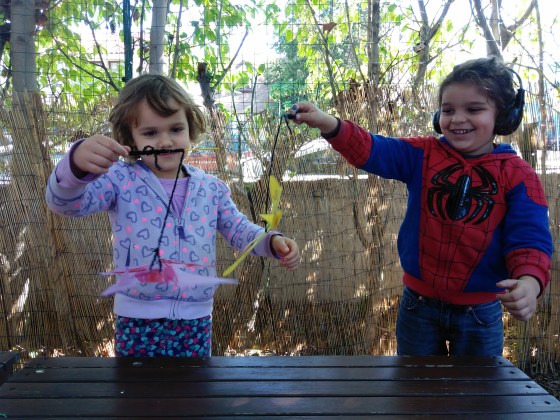
For this particular activity, we created pterodactyl puppets to learn new vocabulary. To begin with, we talked about a pterodactyl was and the food it preferred to eat.

ptero1

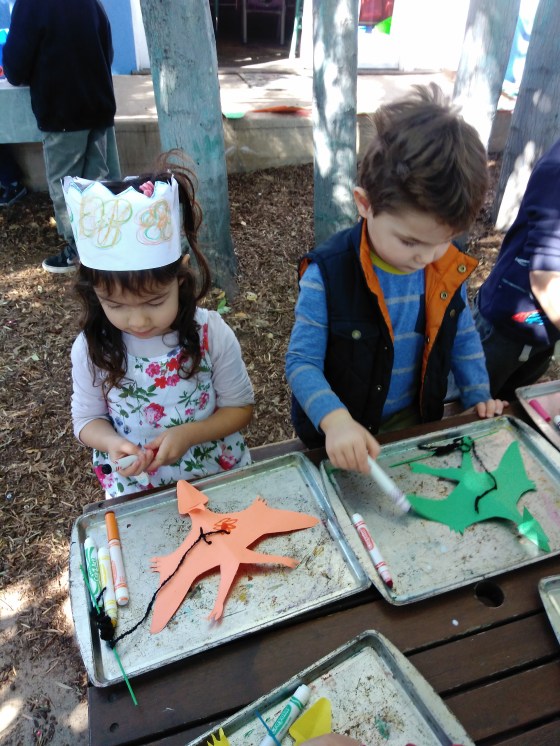
We then discussed their habitat and physical characteristics. Secondly, we used markers to decorate pre-cut outlines of pterodactyls.
ptero5

Following this, we created pterodactyl habitats. Lastly, we formed small groups to act out a few pre-written “scenes” with our puppets.

ptero

T-Rex Diet Sort

Throughout the month of our dinosaur-themed activities, we talked about what herbivores and carnivores were. We talked about what they were and the dinosaurs associated with them.

dinovore2.jpg

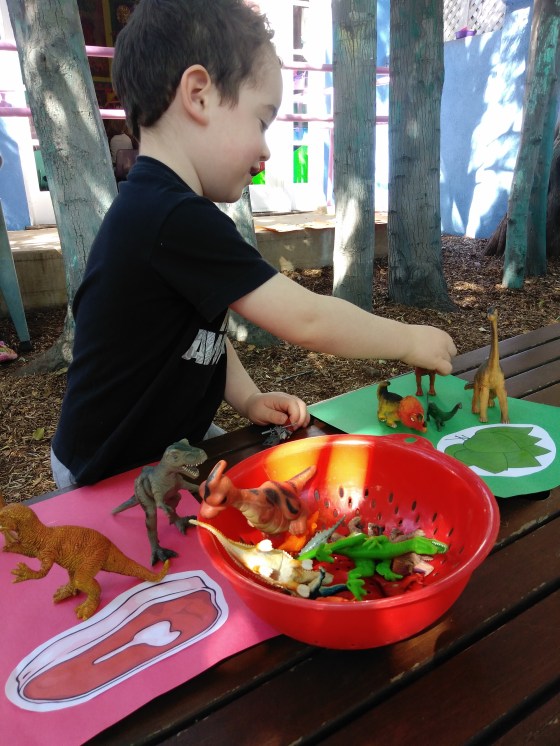
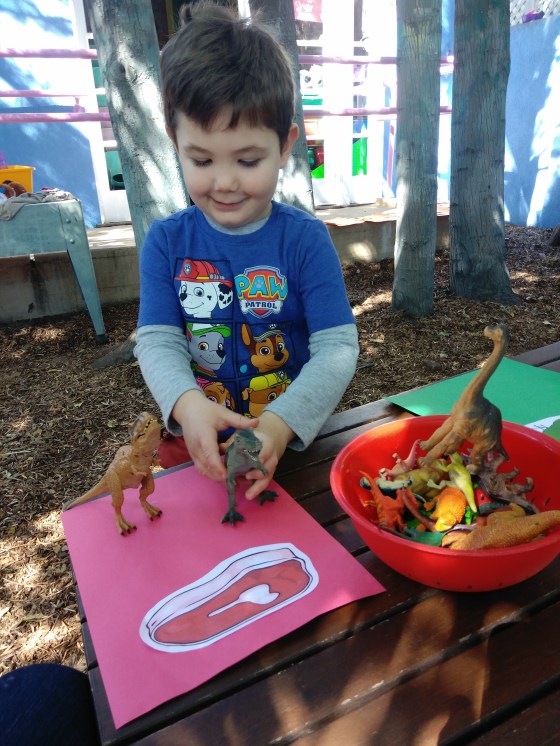
In addition to this, we talked about the different kinds of teeth and anatomy required for each particular diet and coupled that with new vocabulary (stegosaurus, brontosaurus, velicoraptor). Using dinosaurs and pictures of meat and plants, we sorted each dinosaur according to what we thought they ate, meat or plant.

dinovore1

Each student cheered on their friends, and everyone was given a chance to participate. This activity helped us integrate our discussion of the dinosaur diet, names of other carnivores and extended previously relayed information by discussing anatomy and eating characteristics.

dinovore

Dinosaur Shadow Match

Visual discrimination helps a child to see subtle differences between objects or pictures and to see if something matches up.

shadow

This visual perceptual skill can be described as “paying attention to detail”.

shadow3

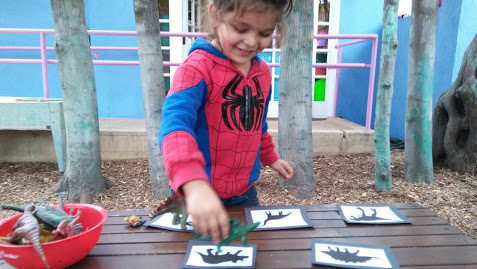
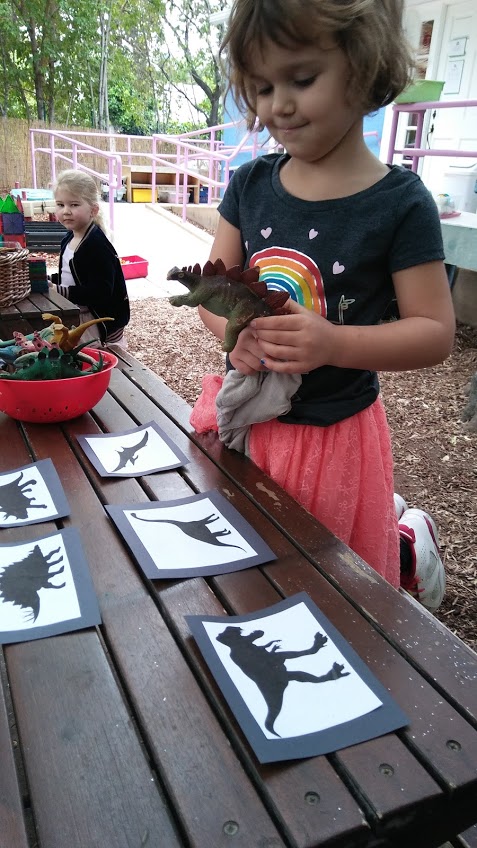
For this activity, students matched up dinosaur shadows with three-dimensional dinosaurs that had subtle differences.

shadow2

Students were asked to find these differences and match each stegosaurus with it’s “matching” shadow.

shadow1


Triceratops Case Match

Many children have problems learning the letters of the alphabet. Since letter recognition depends on understanding a sequence of features, the best way to teach children the sequence of features in recognizing a letter is by guided practice.

triceramatch

Although we do use worksheets in our classroom, our primary mode of instruction is through the manipulation of concrete materials. These can resemble anything from flashcards to sandpaper letters, shaving cream to salt trays.

triceramatch2

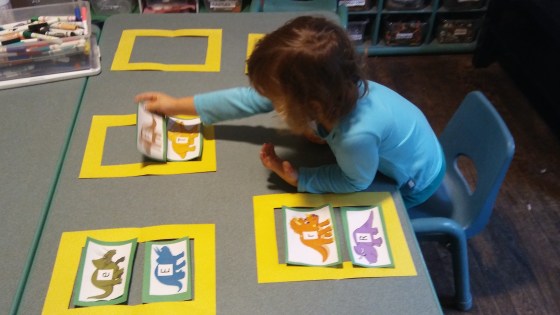
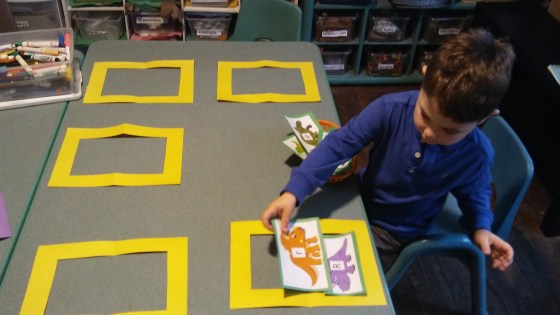
The most important thing is that there is a physical response to an abstract one. For this activity, we practiced matching upper and lower case letters. On account of this being triceratops week, we used this dinosaur manipulative to complete the activity. To do so, we placed paper squares onto a flat surface (the table). Students were then handed cards with pictures of dinosaurs on them. Each card had a capital or a lowercase letter. Following this, students matched each pair of letters. Lastly, they placed them into each square.

triceramatch1

Stegosaurus Fossils

Paleontology is the branch of biology that studies the forms of life that existed in former geologic periods, primarily by studying fossils. The only direct way we have of learning about dinosaurs is by studying fossils.

fossil4

Fossils are the remains of ancient animals and plants, the traces or impressions of living things from past geologic ages, or the traces of their activities. Fossils have been found on every continent on Earth. The word fossil comes from the Latin word fossilis, which means, “dug up”.

fossil2

Most fossils are excavated from sedimentary rock layers (Sedimentary rock is rock that has formed from sediment, like sand, mud, and small pieces of rock). Over long periods of time, these small pieces of debris are compressed (squeezed) and are buried under more and more layers of sediment that piles up on top of it. Eventually, they are compressed into sedimentary rock. The fossil of a bone doesn’t have any bone in it!  A fossilized object has the same shape as the original object, but is chemically more like a rock.

fossil1

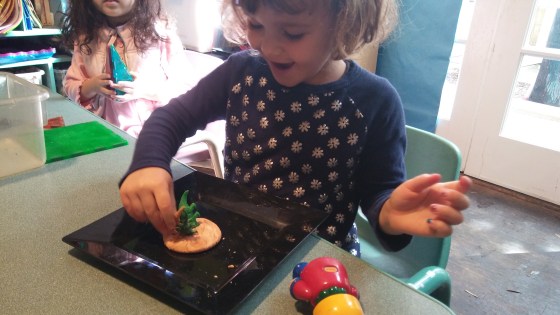
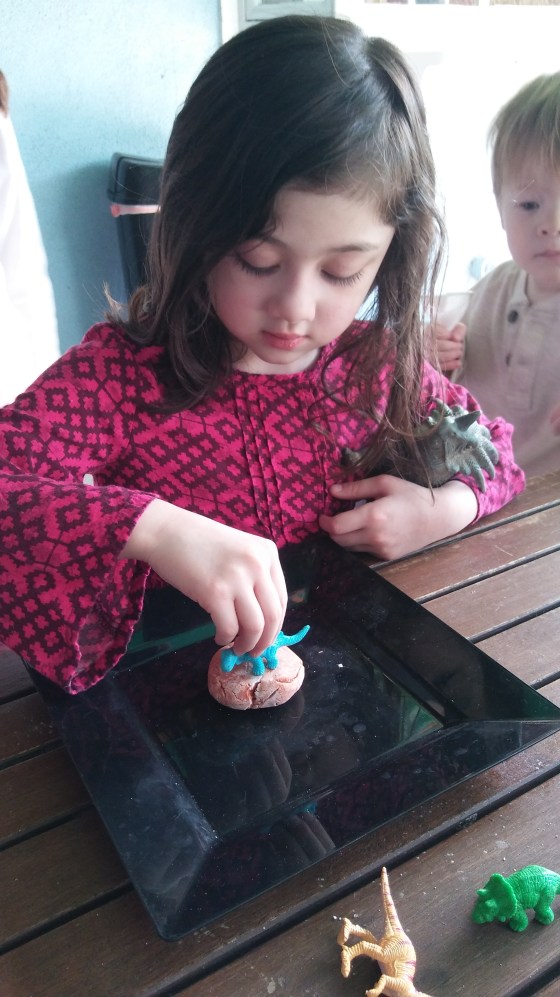
For this activity, we used salt dough to create our very own fossils. Because we discussed stegosauruses this week, our fossils consisted of this special dinosaur. A few students also selected the spinosaurus for their fossil. To prep, we talked about what a fossil is. We then practiced placing a variety of dinosaurs into the salt dough to see what kinds of indentations they would leave. Finally, we chose the one we wanted to take home, and then allowed them to harden in the toaster oven!

fossil3

K-T Extinction Event

Sixty-five million years ago, a meteor smashed into Mexico’s Yucatan Peninsula, throwing up billowing clouds of ash and smoke that quickly spread, over the next few days and weeks, across the world’s atmosphere.

ktextinct1

Blotted out, the sun could no longer nourish the earth’s teeming ferns, forests and flowers, and as these plants died, so did the animals that fed on them–first the herbivorous dinosaurs, and then the carnivorous dinosaurs whose populations these plant-eaters sustained.

ktextinct

That, in a nutshell, is the story of the K/T Extinction Event. But some experts think this story is incomplete: it has a suitably thrilling climax, to be sure, but not enough attention has been paid to the events leading up to it.

ktextinct3

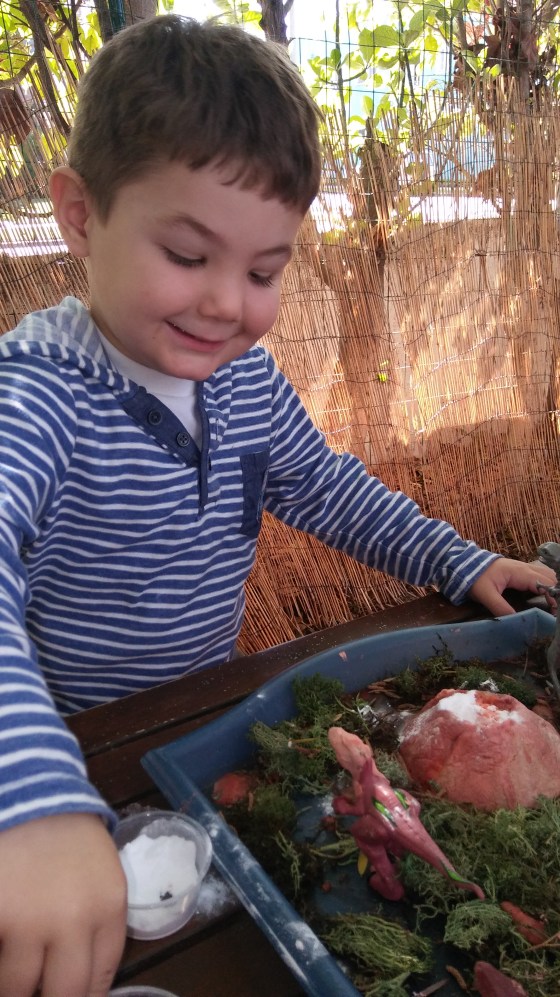
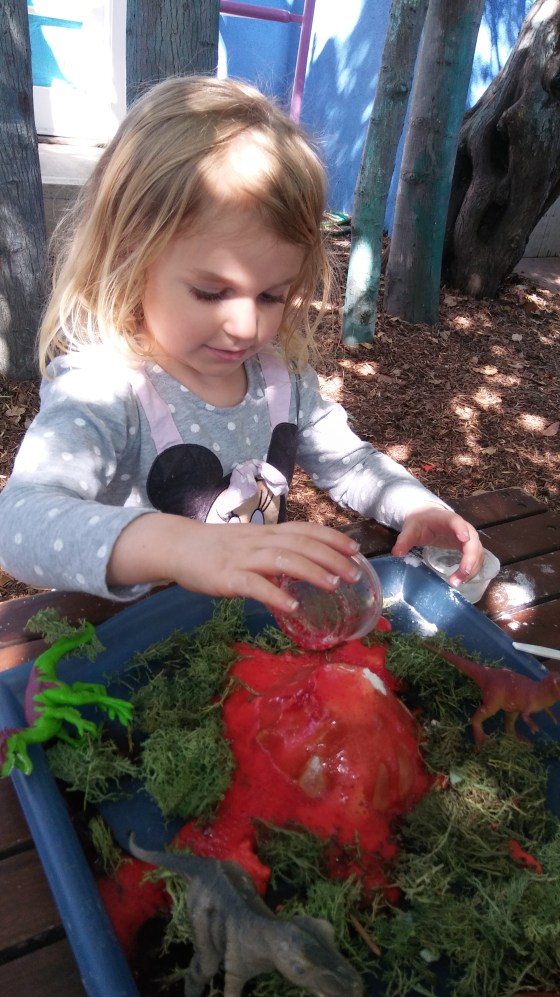
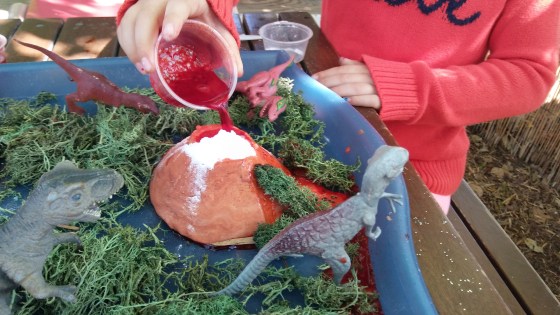
Specifically, evidence exists that the five million years leading up to the K/T Extinction witnessed a huge surge in volcanic activity–and that lung-choking, sun-blocking volcanic ash, every bit as much as meteor debris, may have weakened dinosaurs to such an extent that they were easy pickings for the Yucatan disaster. To recreate this exciting theory, we made our own volcanoes out of clay, baking soda, and vinegar. Students enjoyed manipulating their dinosaurs onto these volcanoes, watching in glee as they exploded!

ktextinct4

B is for Baker Word Match

Many children have problems learning the letters of the alphabet, especially when they are grouped together into words.

Baker1

Since letter (and word) recognition depends on understanding a sequence of features, the best way to teach children the sequence of word-making is by guided practice.

Baker2

Because of this, we partake in a variety of letter “games” that encourage your child to recognize, enunciate, and match the concept of a letter to its print form.

BakerWord

Young children learning letters need vivid, concrete language to understand the abstract component of the written word.

BakerWord1

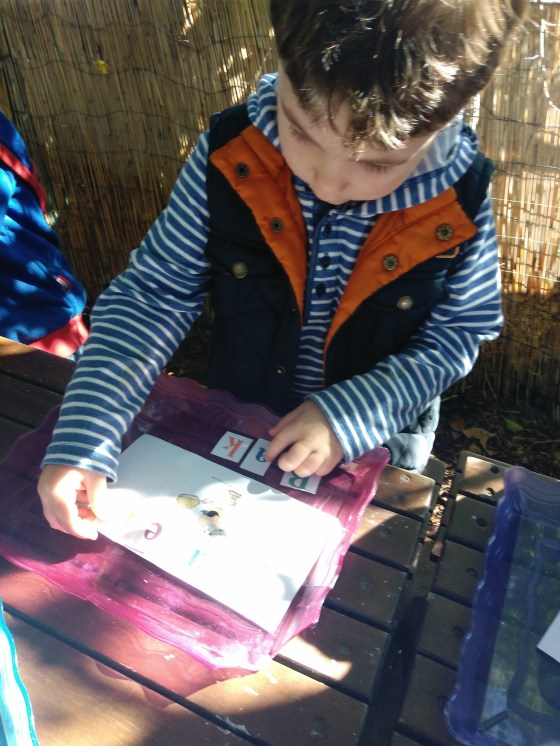
For this activity, we practiced matching cardboard cutouts of letters to the letters in the word B-A-K-E-R.

Big, Bigger, and Biggest

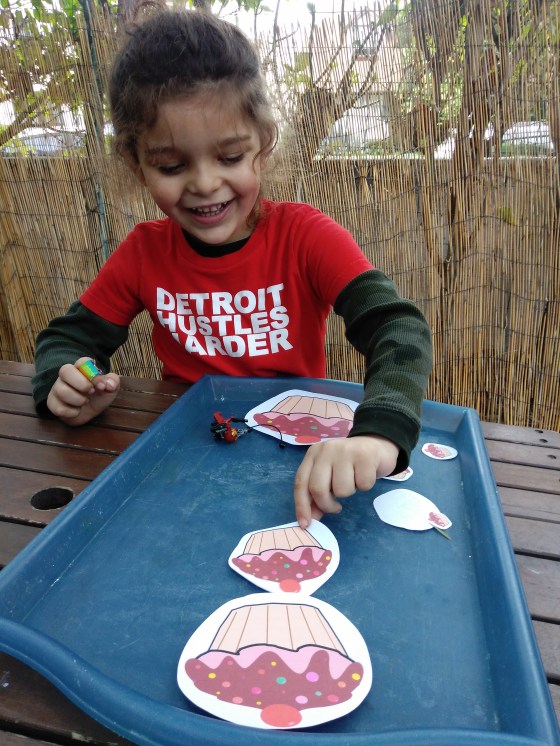
Young children learn measurement initially by sorting objects by size. For this particular activity, we practiced sorting and measuring the length of cupcake sponge blocks. Measurement can be a tricky concept for preschoolers to grasp, so experimenting with different materials assists them in the understanding of complex measurement concepts. When relaying concepts of measurement, it’s best for your budding scientist to be concrete, because that’s how preschoolers think at this stage of their development.

cupcake1

A preschooler would have a tough time learning the ropes of measuring skills using a regular ruler. They don’t have much of a handle on any abstract skills yet, and measurement falls in that abstract area. Still, the basics of measurement can be taught at the preschool level with great effectiveness by using very basic measuring methods.

cupcake2

Even though inches and centimeters are much too abstract for a preschooler’s grasp, the concept of comparing lengths of items is more concrete and can be a great way to introduce measurement. The acquisition of measurement concepts also includes new vocabulary. Throughout the activity, your little one was encouraged to use words such as longer, smaller, heavier, lighter, and variations of the terms such as large, larger, and largest.

cupcake3

Bread in a Bag

When children participate in the kitchen, they are learning important life skills. With specific direction, they can create several tasty dishes, and enjoy the sense of autonomy that is fostered as a result.

bread3

These kinds of activities provide endless opportunities for building self-esteem and increasing vocabulary!

bread2

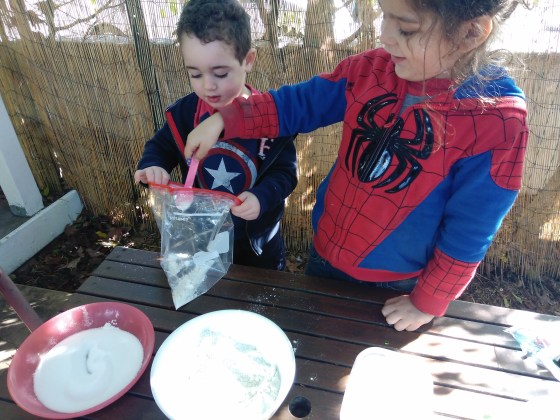
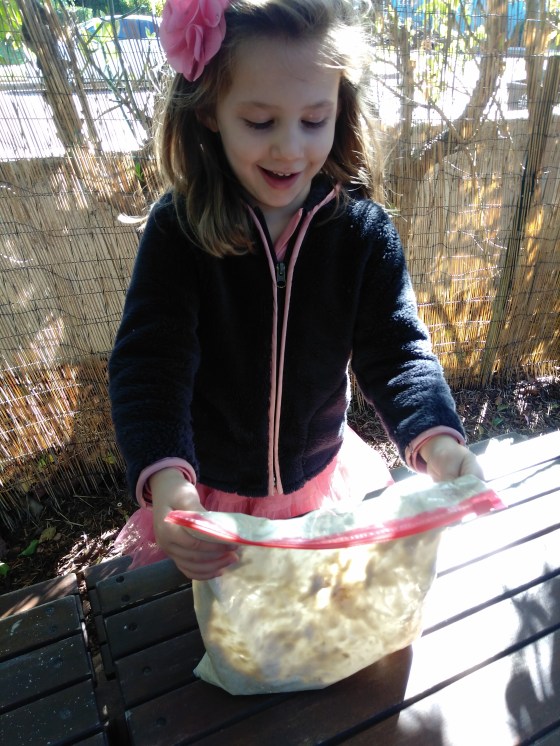
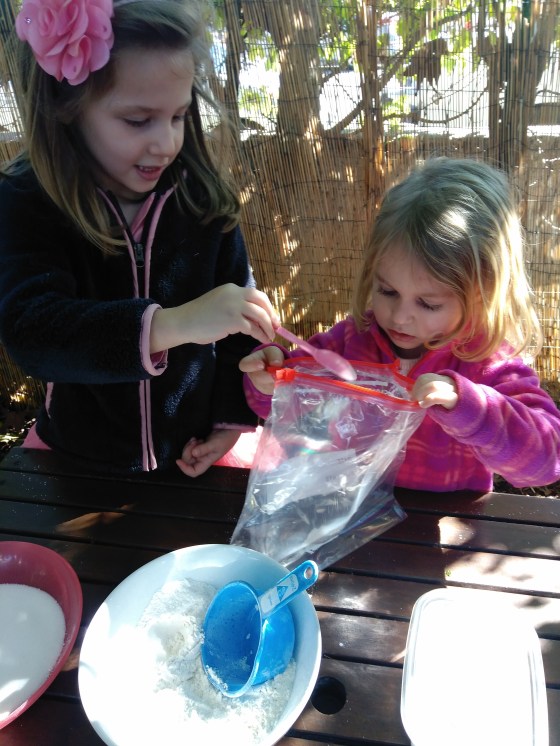
For this particular activity, we made bread with the assistance of a picture diagram as we learned about the world of baking.

breadSince we are learning about the book, In the Night Kitchen, we thought it would be fun to bake our own bread! To do this, we divided into groups of two.

bread1Each child would have a turn holding the bag that the bread would go into, while the other child added ingredients. Once finished, we put it into the toaster oven and then, into our tummies!
bread4

Nest Sorting

Many preschoolers are able to use numbers arbitrarily; pretending to count, or mixing up numbers and letters.

nest

From about the age of four, preschoolers will begin to show one to one correspondence, or the ability to count objects correctly, as well as recognize most numbers 0-9 and sometimes recreate numerals when given an example.

nest1

As with many preschool skills, it is important for young students to be given many different opportunities for to see, touch and use numbers throughout the day. Including numbers in thematic play is one way that they can begin to recognize numbers.

nest2

For this activity, your little one participated in a sorting/numeral recognition activity that tied in with our snow owl theme. Using manipulatives and pictures of owl nests(with numbers printed on them), your little one practiced sorting and matching groups of snow owls with their corresponding numeral.

nest4