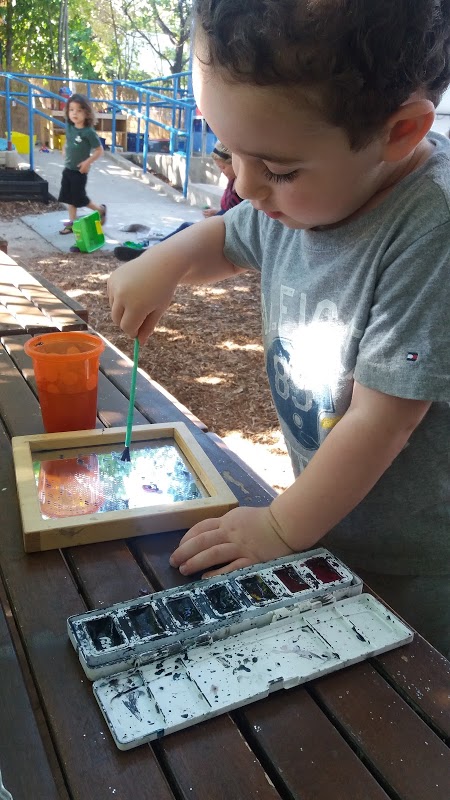
Q-Tip Skeletons

The skill of effective problem solving is a valuable and important one.

72710075_2763169607050190_2156697770189127680_n

As a child looks at various pieces and figures out where they fit or don’t fit, he or she is developing this vital skill.

20181008_101123_HDRDiagrams, puzzles, and tangrams do just that.

72556523_2763169777050173_5428631086374584320_n

Because the study of the human skeleton may seem like an abstract one for the average preschooler, we try to involve your little one in activities that appeal to their sense of play. For this activity, students used q-tips to construct a skeleton.

71890975_2763169270383557_8263949292947898368_n

With a place mat as their guide, they placed q-tips onto various bones, counting as they did so.

71817609_2763169700383514_3763797798466617344_n

Activities such as these teach children to use their own minds to figure out how to solve problems and think in a logical way.

71932565_2763169853716832_3093077829869371392_n (1)

Ghost Addition

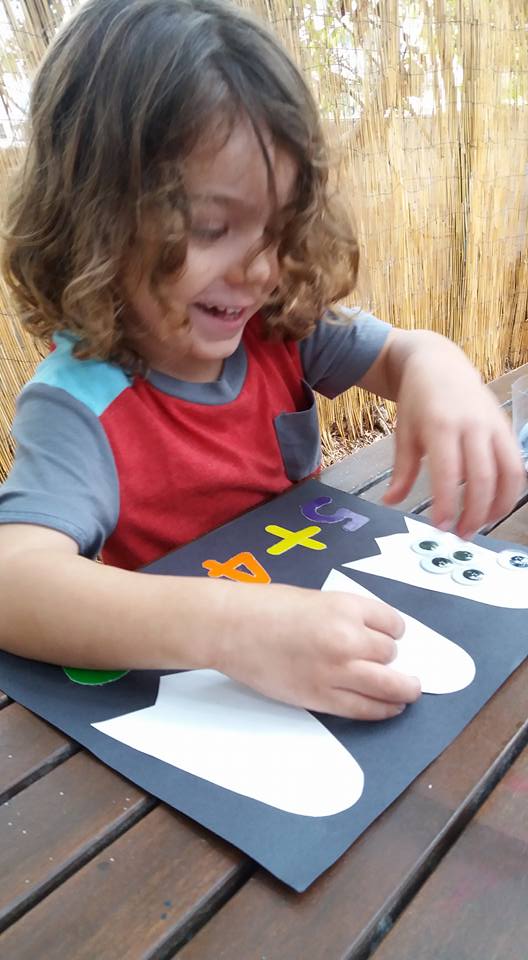
With the aid of colorful illustrations (including googly eyes) we discussed what it means to add something to an object. In this case, there were two paper ghosts.

math

Underneath each ghost was a number. Between each ghost was a “plus” sign.

math3

A class discussion was then initiated as a means to relay the meaning of this exciting symbol.

math7

We then added a counting element to this activity. Using googly eyes, we practiced adding them to our ghosts. Using real life items illustrates this complicated concept for young children, and enables them to make connections not allotted by simply using a paper and pencil.

math1

Manipulating colorful materials also provides instant feedback, which enables students to create meaningful connections between a concept and its application to real world situations.

math6

Skeleton Puzzle Match

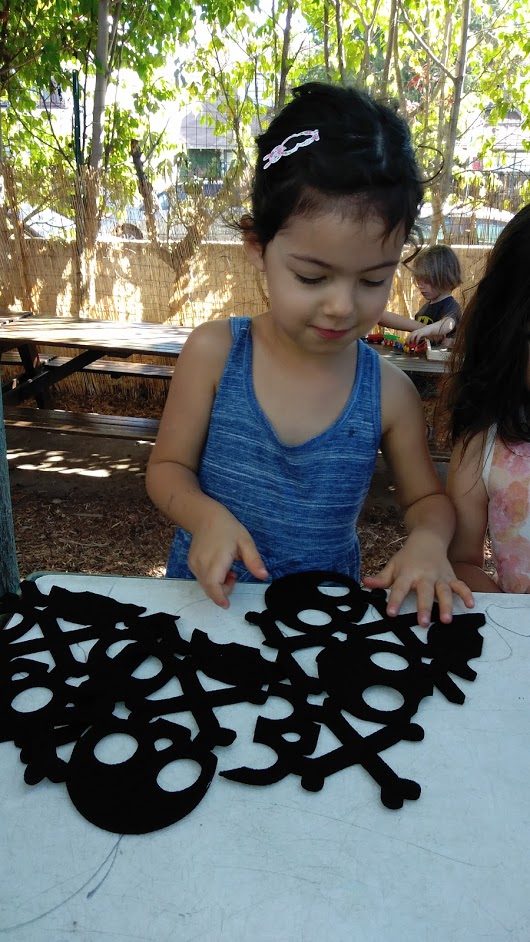
Puzzle games are an early learning favorite for educators and children alike! By matching the shapes to complete the picture, students enjoy themselves while developing important skills such as problem solving and shape, pattern and color recognition. This game was intuitive and fun, with a variety of shapes designed to help your preschooler think critically. For this activity, your little one was gently guided to match pieces of a skeleton placemat together.

puzzle1

The puzzle was made out of a foam mat, so it had the added bonus of being easy to grip. The skill of effective problem solving is a valuable and important one. As a child looks at various pieces and figures out where they fit or don’t fit, he or she is developing this vital skill. A puzzle, after all, can’t be completed by cheating! It either works and fits or it doesn’t. So puzzles teach children to use their own minds to figure out how to solve problems and think in a logical way.

puzzle


Dancing Rice

A primary vehicle to scientific instruction is that of example. Because the study of scientific concepts incorporate both observation and experimentation, our classroom activities strive to both display and apply this type of instruction.

sound

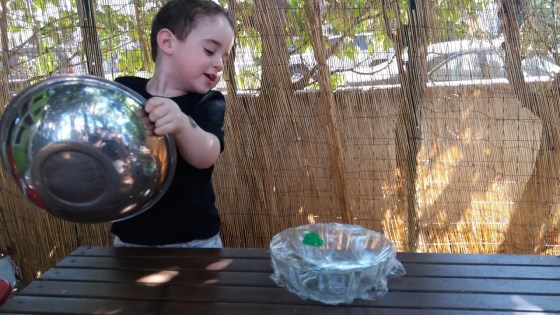
This activity involved the science of sound. Students were given a large metal bowl and a large glass bowl. The glass bowl was wrapped with saran wrap and on top of that saran wrap was rice.

sound1

Students were then encouraged to hit the metal bowl to see what would happen to the rice. They were delighted to see that the rice moved! Your budding chemist first learned that all sounds are made up of sound waves.

sound2

We talked about how when we make sound, exciting things happen that we can’t see, and that every time we make a sound we create invisible waves. In the case of the rice, these “waves” caused the rice to actually move!

sound3


Tasty Bags

The outside world shapes children’s development through experiences that they have, which include using their five senses—hearing, sight, smell, taste, and touch.  In our classroom, we draw your child’s attention to the five senses by discussing them. This increases understanding of and communication about the world around us.

taste

Throughout our week of the five senses, we learned that our senses help us decide whether to enjoy or not enjoy an experience: our eyes help us see, our ears let us hear, our hands help us feel, our noses let us smell, and our tongues help us taste things.  For this activity, we talked about our sense of taste.

taste1

Initially, your little one was told that it is our tongue that enables us to taste different flavors. Students were then divided up into small groups and were given three different bags to sample.

taste4

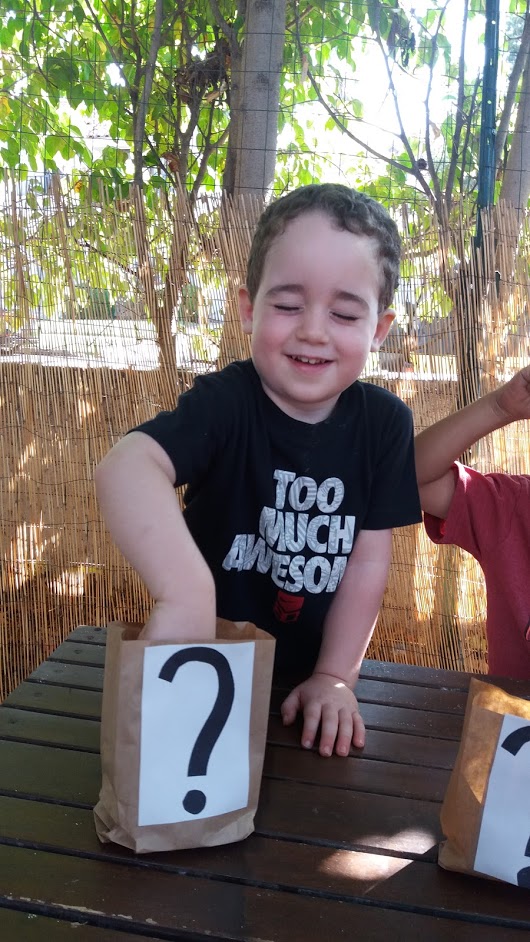
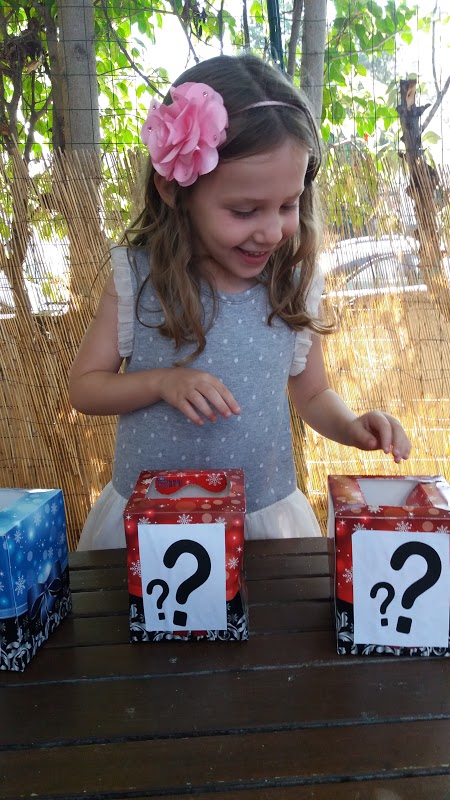
On each bag was a question mark. Your little ones were encouraged to keep their eyes closed as they reached into the bag.

taste2

They then selected a piece of food and ate it with their eyes still closed. Following this, they were asked to guess what it was they were eating. The three choices were crackers, cereal, and popcorn. Everyone loved snacking on their surprise foods with their friends! This helped isolate their sense of taste. They also had so much fun in the process!

taste3


Sniffing Jars

Our senses allow us to enjoy our food, the sound of music, the beauty of a sunny day, the softness of a child’s hair — in short, our lives! We rely on our five senses to provide information about the world around us.

sniff

Just the thought of a special holiday dinner brings to mind many observations made through the senses — the smell of dinner cooking, the sound of holiday music, the taste of freshly baked cookies, and more. Children may recognize the importance of their senses, but they don’t often focus on them individually.

sniff2

With the help of a few activities, your little one learned how to identify their senses and put them to use in the classroom. For this activity, we talked about our sense of smell with these special sniffing jars! Using only their noses, students sniffed the contents of four different jars, guessing their contents.

sniff3

In one jar was lavender oil, in another was orange extract, in another was vanilla extract, and lastly, was cacao powder. Your little ones enjoyed sniffing and then re-sniffing the different jars, guessing at what was in them, and having fun while doing so!

sniff6


Rainbow Sensory Bottles

For this activity, we celebrated our sense of sight by creating rainbow sensory bottles. What are sensory bottles?

rainbowbottle1

Sensory bottles are created by upcycling water bottles and filling them with an array of items, such as colorful beads and sequins.

rainbowbottle5

The purpose is for young children to use their senses to explore the bottles. Since we are learning all about our sense of sight, this activity help us isolate and understand this sense all the more.

rainbowbottle4

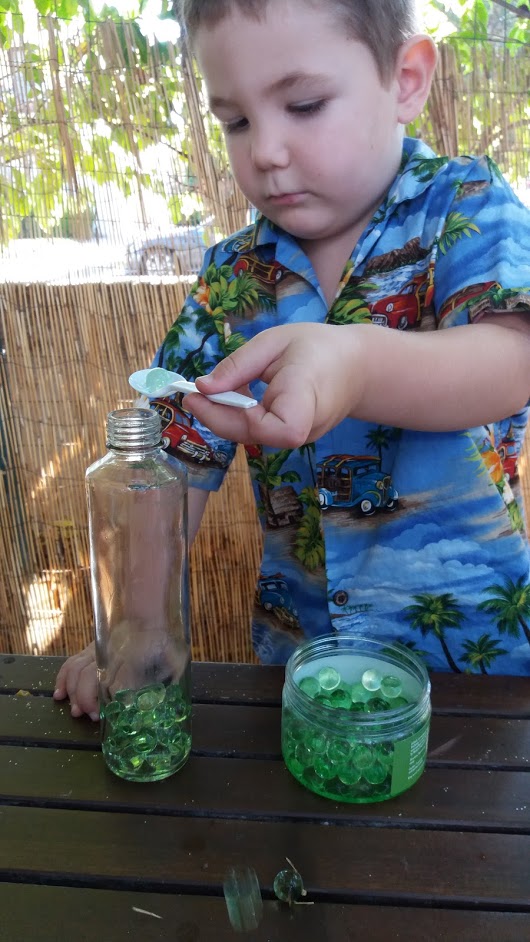
Using bath beads, spoons, and water bottles your little ones created sensory bottles for the whole class to enjoy!

rainbowbottle3

Reflective Self Portraits

A child’s self-portrait can reveal many things.

portrait

As with any drawing, it shows the development of a child’s fine motor, observation and focusing skills.

portrait1But it also can give insight into a child’s self-concept.
portrait7

portrait2

In other words, it’s the best way for a grown-up to see a child through that child’s own eyes.


portrait3

How do these little ones perceive and represent themselves?

portrait4

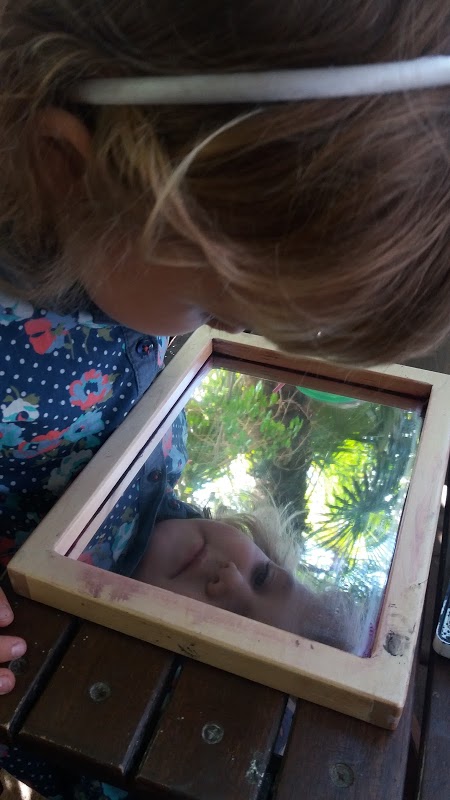
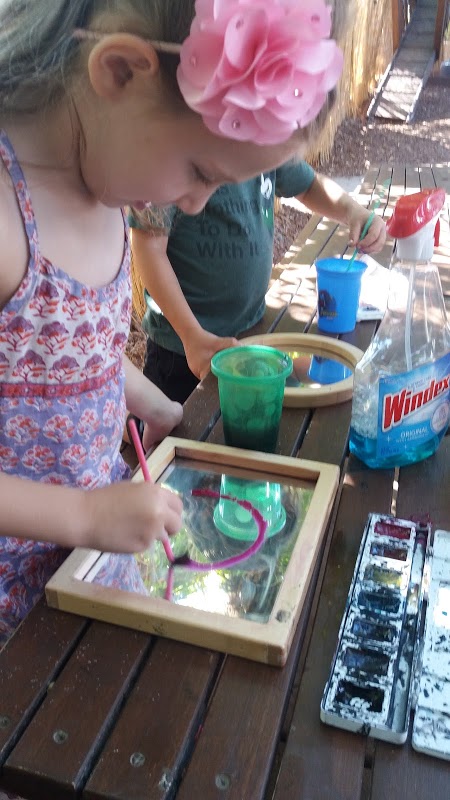
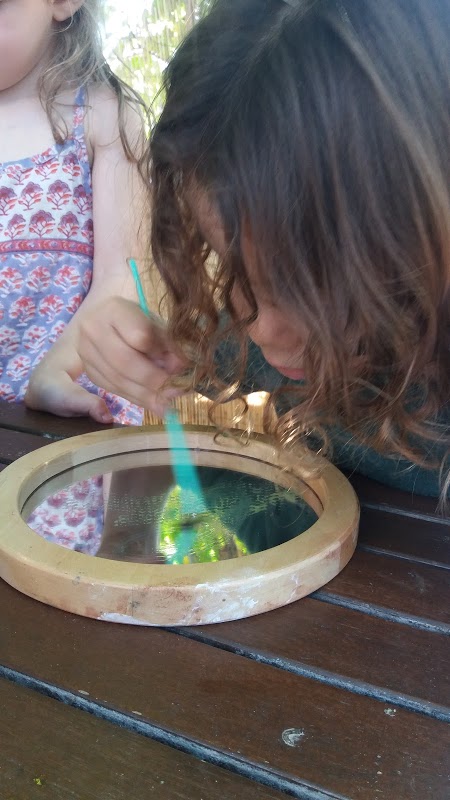
For this activity, your little one created a self-portrait using a mirror and watercolors!Using the mirror as their canvas, students looked upon their reflections and painted what they saw.

portrait6

Texture Touch Boxes

Sensory activities play a key role in the maturation process of young children.

touch

touch9

Activities that require manipulation and touch enable children to heighten the adaptive response through their senses.

touch8

touch1

They are an integral component in early childhood education. They not only engage the child, but stimulate cognitive development.

touch6

To access this, your young one participated in an activity where they had to guess what an object was, solely using their sense of touch!

touch4

Using a variety of items placed into tissue boxes, your little ones closed their eyes and reached into the boxes, guessing at what they would find, laughing as they did so!

touch5