Polar Bear Skin

A polar bear’s fur is made up of two layers – an outer layer, with long ‘guard’ hairs, and a thick undercoat, with shorter hair. The outer layer of hair is clear – and a polar bear’s skin is black.  Polar bears evolved to have black skin, as the color is the best for absorbing energy from the sun.

light

This is because objects that appear black don’t reflect any light – and as polar bears are found in countries around the Arctic Circle – Canada, Russia, Alaska in the US, Greenland and Norway – the colder conditions require as much sunlight as possible to be absorbed when it’s available.

light4

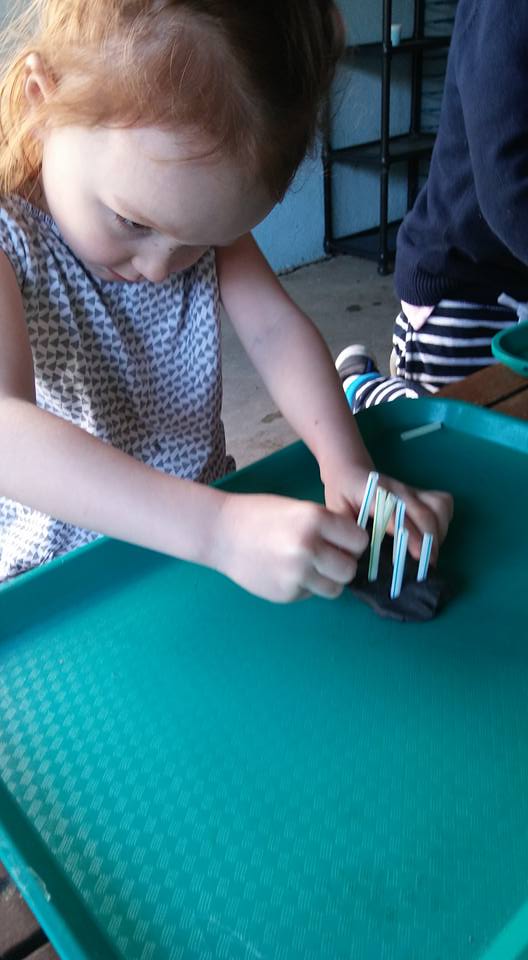
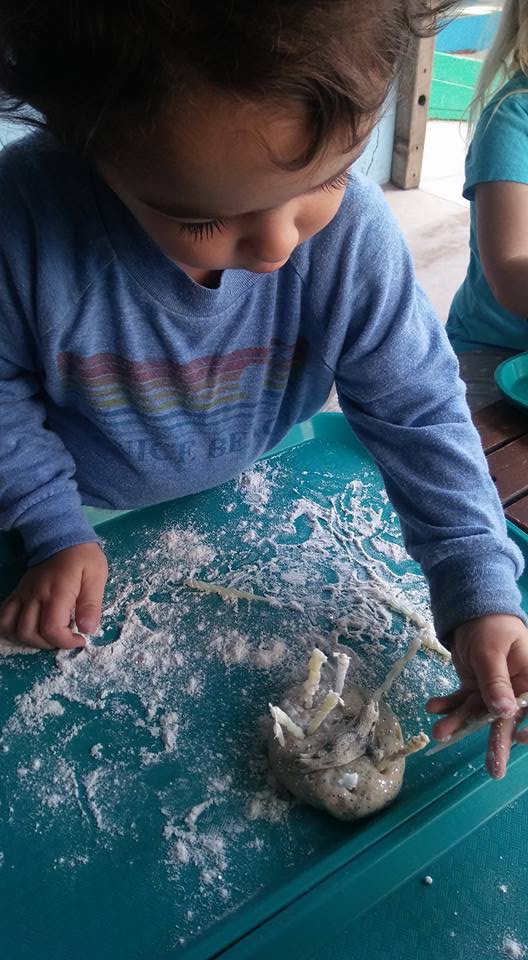
The clear fur allows this sunlight to get to the skin – but it still looks white, so that the bear can blend in with its environment of ice and snow. To learn about this phenomena, we conducted a science experiment with black play dough, straws, and flashlights. Using their fingers, students manipulated black play dough with straws. They then shined their flashlights directly onto the straws. Doing so enabled them to see that even though the play dough was black, the light against it made it look white!

light3


Walrus Whiskers

Walruses have long tusks and a prominent mustache. These large marine mammals are found near the Arctic Circle.

walrus

They are extremely social and snort and bellow loudly at their companions. Walruses also have wrinkled brown and pink skin, long, coarse whiskers, flat flippers, and lots of blubber on their bodies to keep them warm in the cold Arctic water.

walrus1

They can slow down their heartbeat to withstand the chilly water temperatures and to help them stay under water for as long as ten minutes.

walrus2

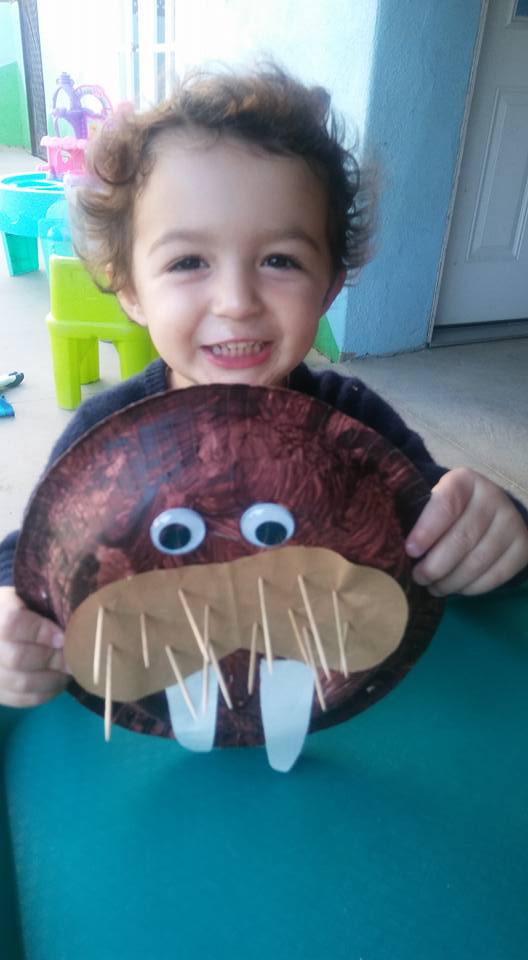
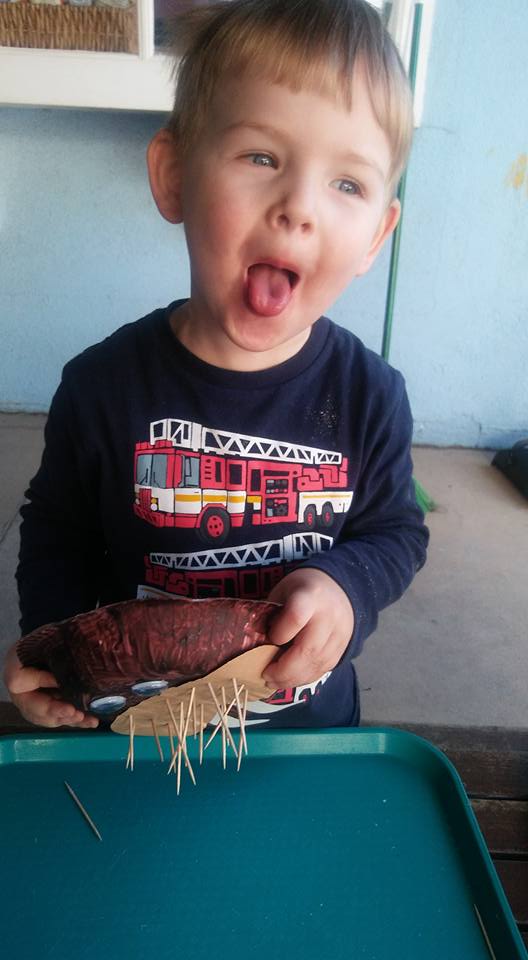
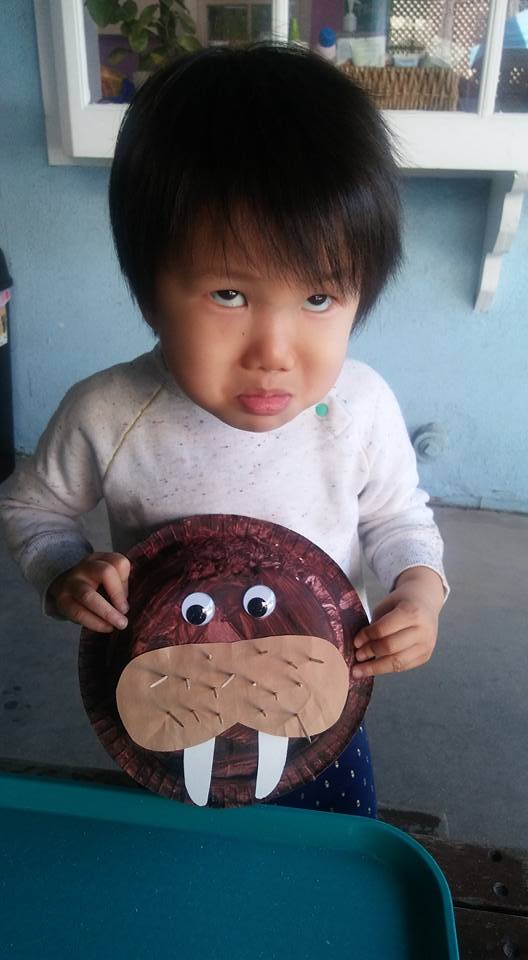
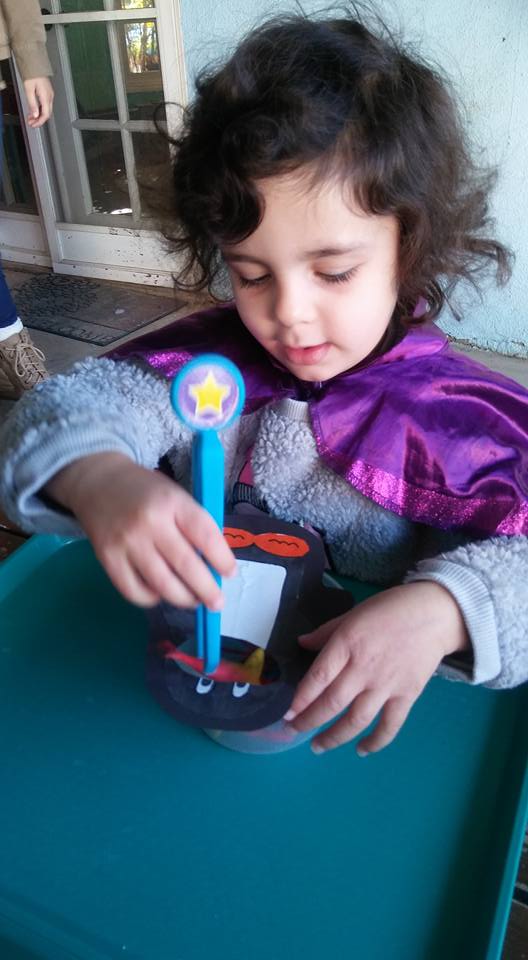
To help us learn more about their whiskers, we created our very own. With tweezers, toothpicks, and pre-cut walrus snouts, we placed our whiskers into their places, practicing our fine motor skills!

walrus3

Quickly Quigley

Storyboarding, or picture writing, is the origin of all written languages, used by ancient cultures before text evolved and as a natural bridge to text. The Chinese language was built using pictographs.

pengstory

Egyptians used storyboards, or hieroglyphics, first etched in stone and later written on papyrus, to organize a complex society and to rule the ancient world. In our classroom, we use a variation of the story board.

pengstory1

We call it the story tray! Story trays are one of several tools introduced during circle time that work for younger students for whom the visual and the concrete are helpful elements in absorbing abstract ideas.

pengstory2

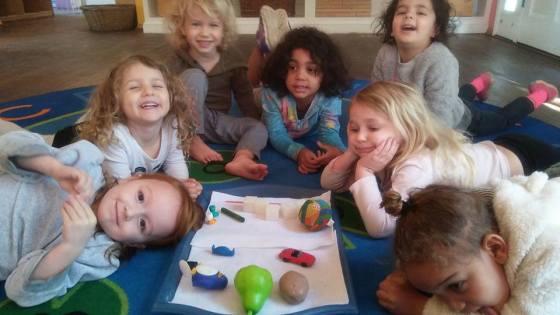
For this activity specifically, we recreated the story of Quickly Quigley, by Jeanne Gravois. This was a story about two penguins who are brothers. Throughout the story, they learn about how important it is to take their time and not rush things. This is why that, to begin with, students surrounded the story tray to reenact the story. They were then each given a part in the story. Their “part” was reflected by a three-dimensional object. As the story progressed, students placed their item onto the tray. We did this until the story was completed.

pengstory3

Swimming Penguins

Though ungainly on land, the flightless penguin has physical characteristics perfect for swimming through water – fortunate, as some species are known to be at sea for up to 75 per cent of their lives.

float

Spending so much time in the water puts penguins at risk from predators, so swimming skills are essential. While their long, streamlined bodies and short legs give them a clumsy gait when waddling on land, penguins’ wings have a unique characteristic that gives them surprising agility in water.

float1

While penguins’ wings are not suitable for aerial flight – mainly because, unlike the delicate lightweight bones of other birds, penguin bones are solid. Referred to as flippers, the penguin’s stiff wings act as the perfect natural paddle.

float2

What’s most interesting, however, is the recent discovery that as well as being able to flap their flippers up and down like wings, penguins can also twist them in a corkscrewing motion.

float3

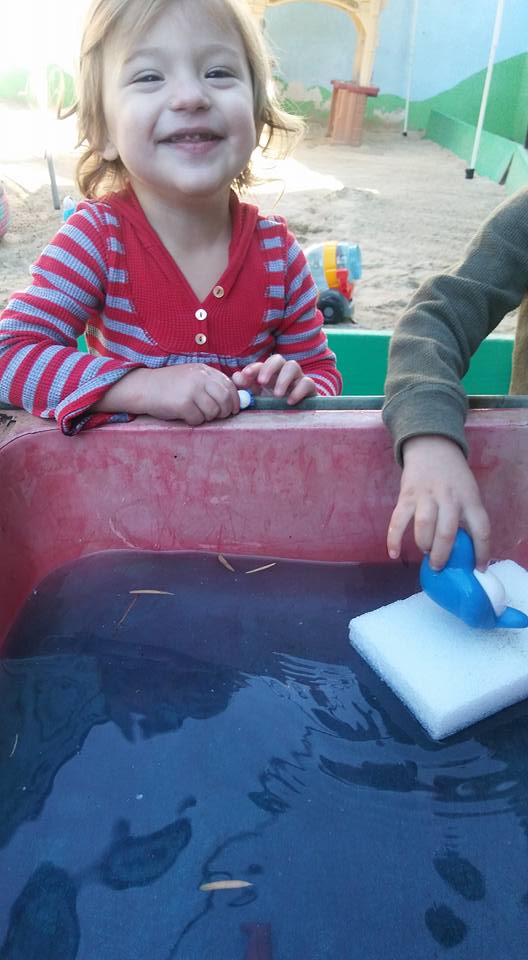
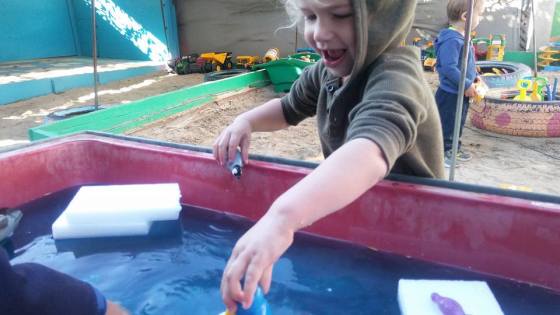
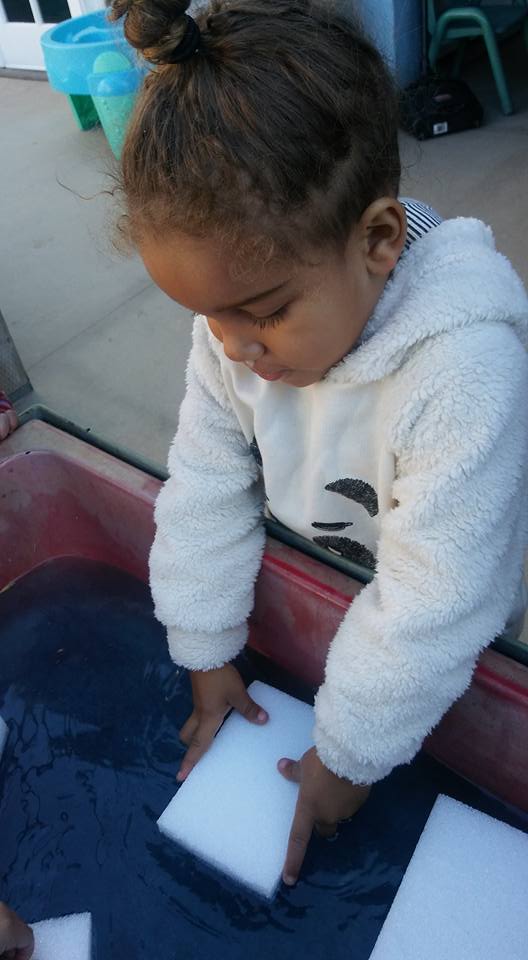
To demonstrate this phenomena, we played with toy penguins in the water table! Using styrofoam as our “ice bergs”, students practiced making their penguins “swim” though the water, only to rest on their ice bergs!

float4

Penguin Habitats

Penguins generally live on islands and remote continental regions free from land predators, where their inability to fly is not detrimental to their survival.

pengfloThese highly specialized marine birds are adapted to living at sea—some species spend months at a time at sea.

pengflo1

Penguins are usually found near nutrient-rich, cold-water currents that provide an abundant supply of food.

pengflo2

Different species thrive in varying climates, ranging from Galápagos penguins on tropical islands at the equator to emperor penguins restricted to the pack ice and waters of Antarctica.

pengflo3For this activity, we attempted to recreate some of these habitats.

pengflo4

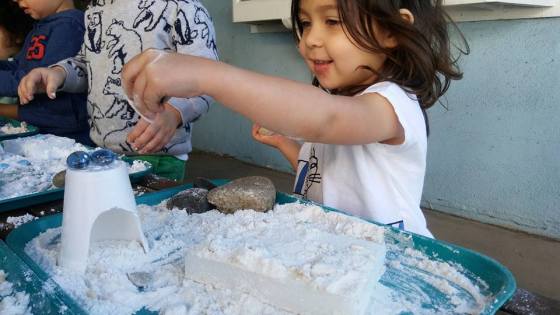
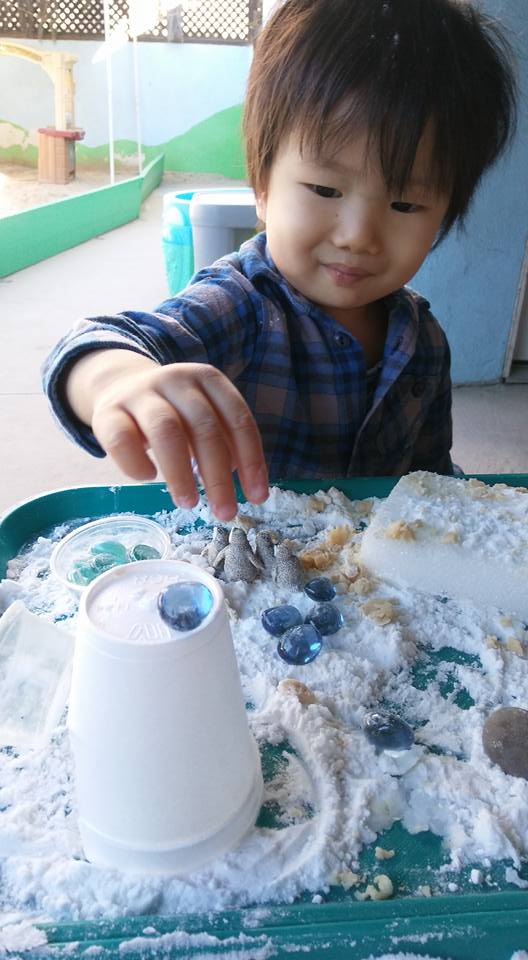
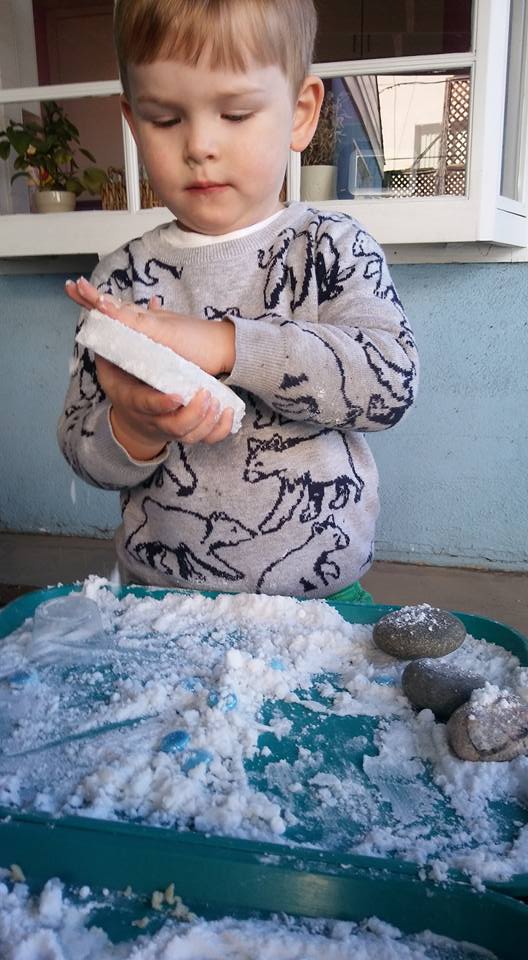
We used flour, glass jewels, white play dough, styrofoam, rocks, and toy penguins to do this.

pengflo5

Students enjoyed manipulating the flour as they created their own arctic wonderland!

pengflo6

Feeding the Penguins

Penguins eat krill (a shrimp-like crustacean in the Family Euphausiidae), squids, and fish.

peng2

peng

Various species of penguins have slightly different food preferences, which reduce competition among species.

peng8

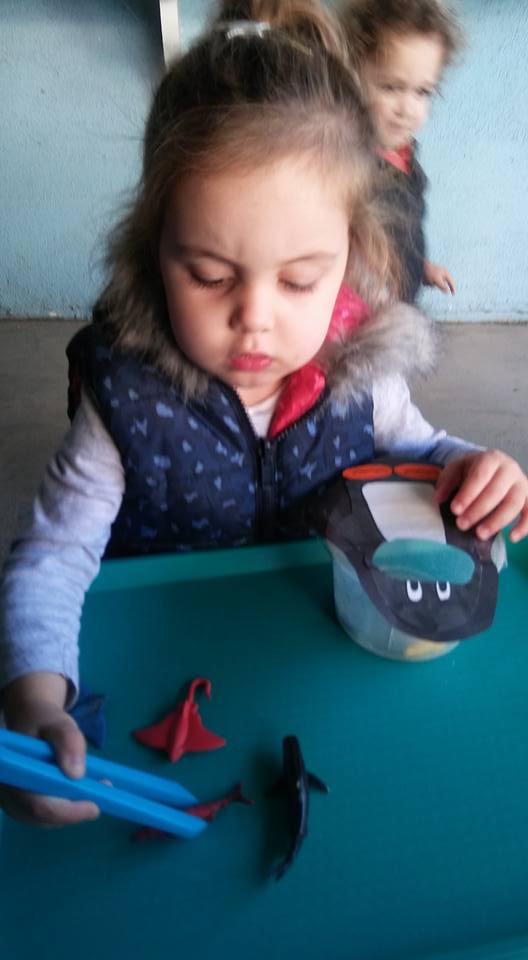
As part of our week of arctic animals, we fed penguins with our very own fish! Using tweezers, students grasped for different sea creatures and slipped them into the mouths of their penguins!

peng6

Painting on Ice

Children are naturally curious. From the minute they gain control of their limbs, they work to put themselves out into the world to see how it all works.

art

They explore, observe and imitate, trying to figure out how things operate and how to control themselves and their environments.

art11

This unrestricted exploration helps children form connections in their brain, it helps them learn—and it’s also fun.

art9

Art is a natural activity to support this free play in children.

art10

The freedom to manipulate different materials in an organic and unstructured way allows for exploration and experimentation.

art2

These artistic endeavors and self-directed explorations are not only fun, but educational as well.

art5

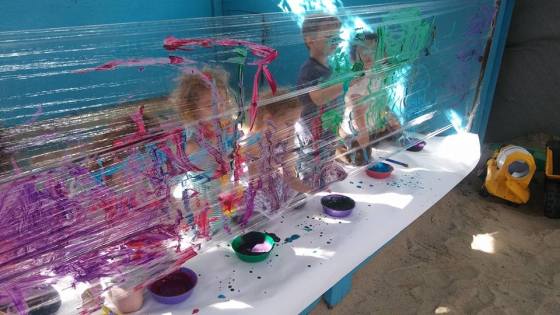
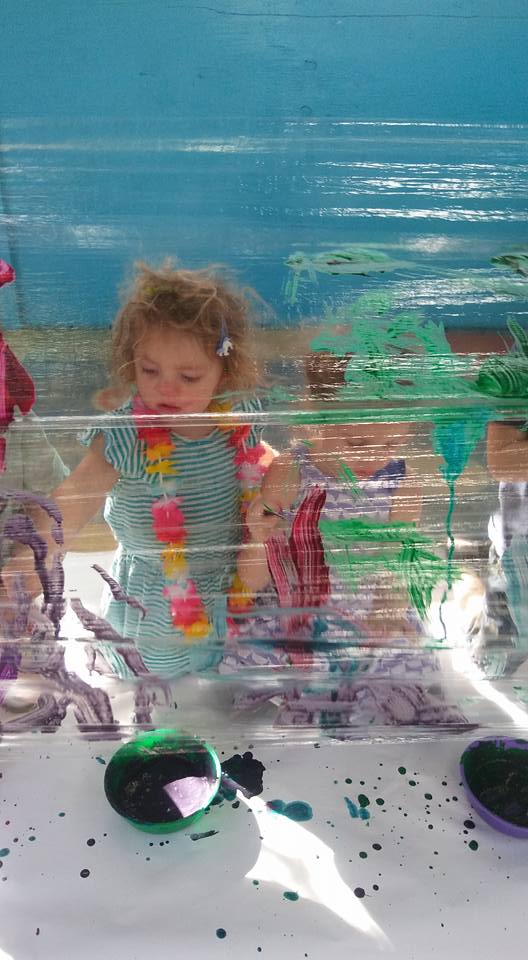
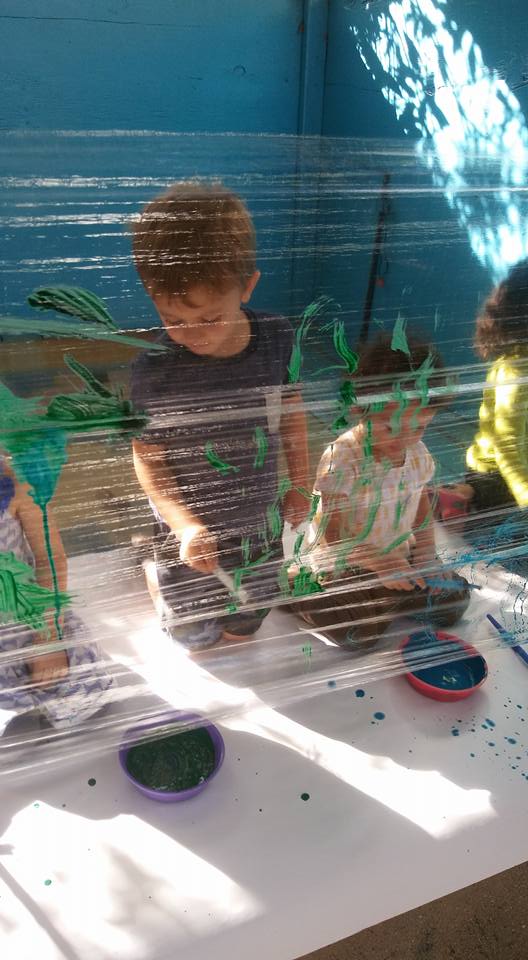
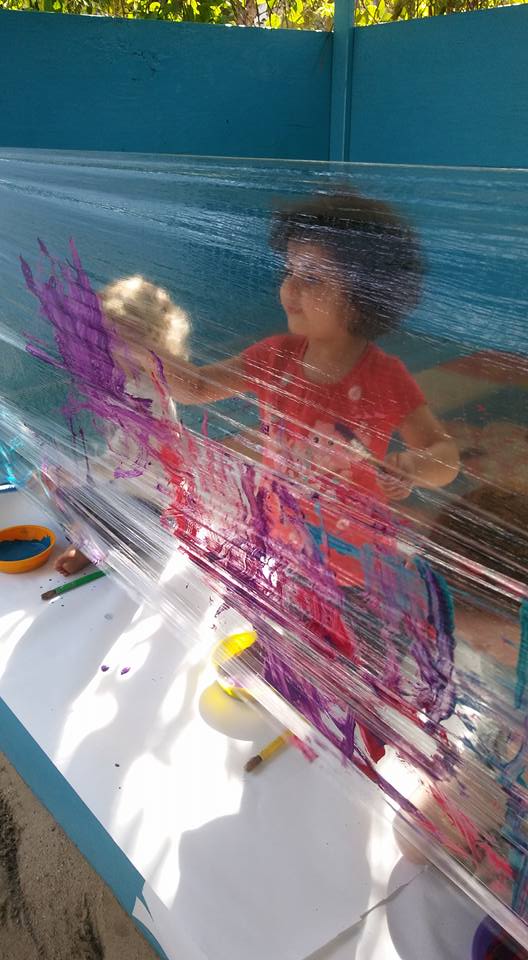
As part of our arctic theme, we painted onto “ice” with our friends. Using saran wrap as the “ice” and paint, we practiced creating designs and other pictures, having fun while doing so!

art8

Polar Bear Play Dough

During our week of polar bears, we learned all about these creatures and where they live.

polarplay

polarbear6

We made them (and their habitats) with a variety of materials, we played gross motor games aimed at teaching their behaviors, and finally, we used play dough!

polarbear7

polarbear1

For this activity, students added plastic icicles and glitter to white play dough.

polarplay2

They then used polar bears to create habitats for them.

polarplay3

Finally, students created stories about their creatures with their friends!

polarbear3

Snowman Slime

From birth through to early childhood, children use their senses to explore and try to make sense of the world around them. They do this by touching, tasting, smelling, seeing, moving and hearing.

Snowslime

Providing opportunities for children to actively use their senses as they explore their world through ‘sensory play’ is crucial to brain development – it helps to build nerve connections in the brain’s pathways.

Snowslime2

This leads to a child’s ability to complete more complex learning tasks and supports cognitive growth, language development, gross motor skills, social interaction and problem solving skills.

Snowslime1

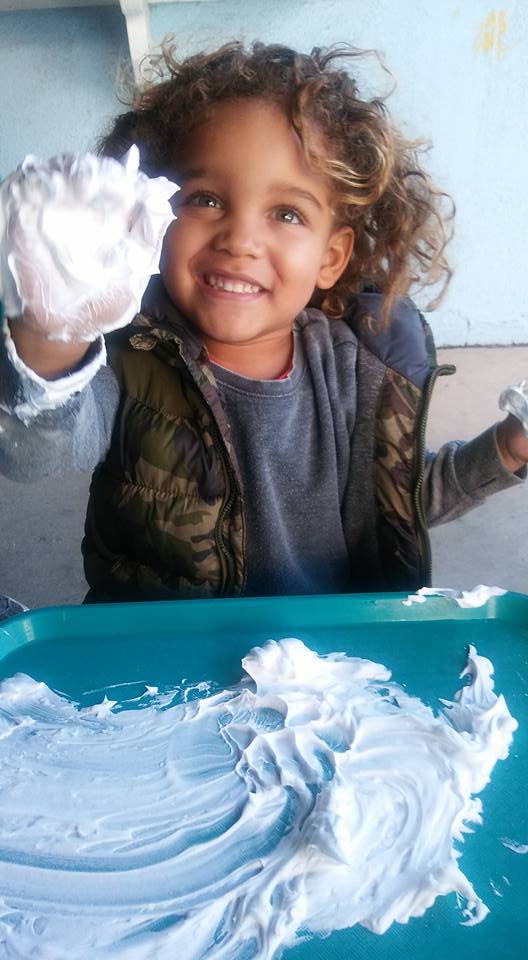
For this activity, we used a few different materials to create snowman slime. We first combined corn starch and water to create the “slime”. This is a malleable substance that appears as a solid when placed on a hard surface and liquid when it is picked up.

Snowslime3

Following this, students added black rocks, foam sheets, and black cardboard. These materials made up the eyes, nose, and hat of the snowman. Lastly, we explored the substance, watching it ooze through our hands as we played with it!

Snowslime4

Snowman Play Dough

Play dough activities are a great way to help young children develop fine motor skills as well as bilateral coordination skills!

Snowman

There are many other benefits as well. For one, play dough provides a great sensory medium, which can be used to help children who struggle with sensory processing.

Snowman3

Play dough play can also help develop coordination skills.

Snowman4

For example, young children will use hand-eye coordination to cut, poke and prod play dough and when using cookie cutters in the dough.

Snowman5

Lastly, manipulating play dough helps to strengthen hand muscles and develop control over the fingers.

Snowman6

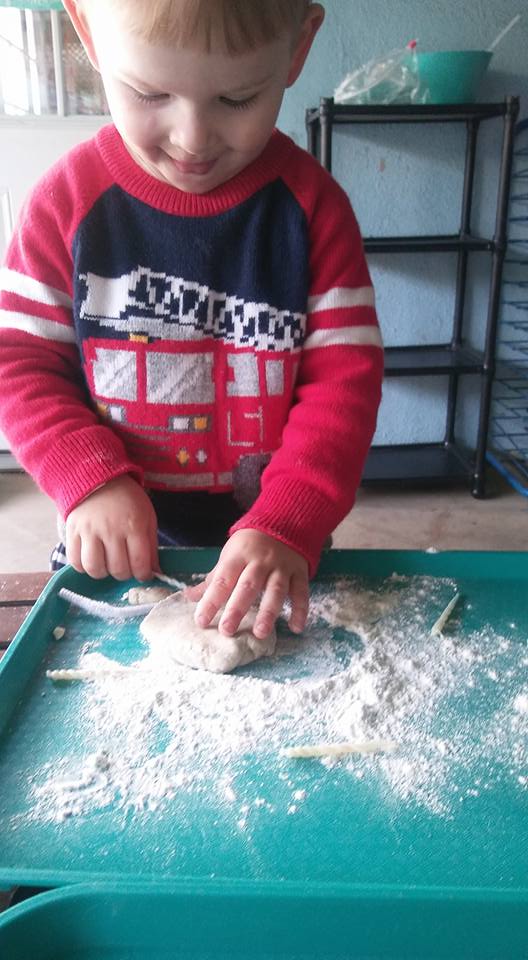
For our week of snowman-themed activities, we utilized this medium to create our very snowmen.

Snowman7

We did this by combining play dough, googly eyes, pipe cleaners and rocks. We had so much for creating and then tearing down our creations!