Nest Sorting

Many preschoolers are able to use numbers arbitrarily; pretending to count, or mixing up numbers and letters.

nest

From about the age of four, preschoolers will begin to show one to one correspondence, or the ability to count objects correctly, as well as recognize most numbers 0-9 and sometimes recreate numerals when given an example.

nest1

As with many preschool skills, it is important for young students to be given many different opportunities for to see, touch and use numbers throughout the day. Including numbers in thematic play is one way that they can begin to recognize numbers.

nest2

For this activity, your little one participated in a sorting/numeral recognition activity that tied in with our snow owl theme. Using manipulatives and pictures of owl nests(with numbers printed on them), your little one practiced sorting and matching groups of snow owls with their corresponding numeral.

nest4

Ice Creatures

This month, we are learning all about arctic animals.

pounding

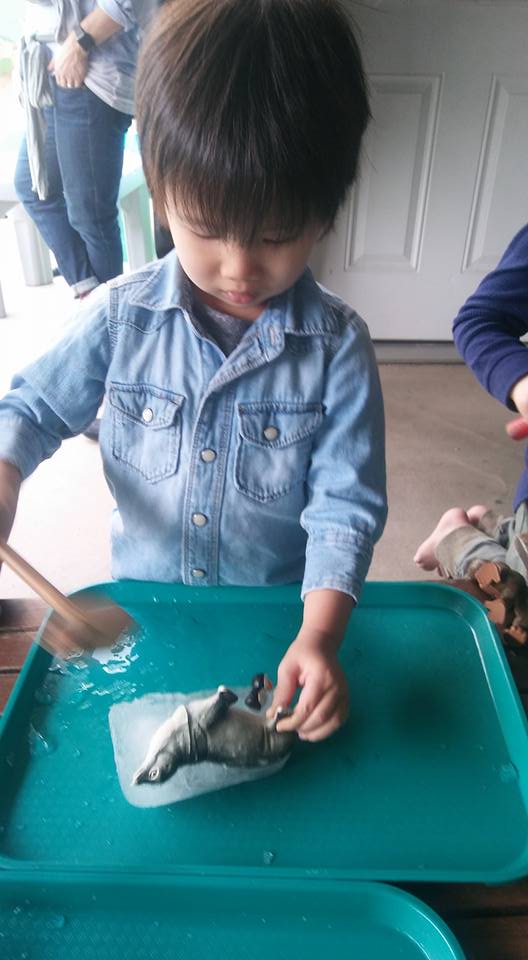
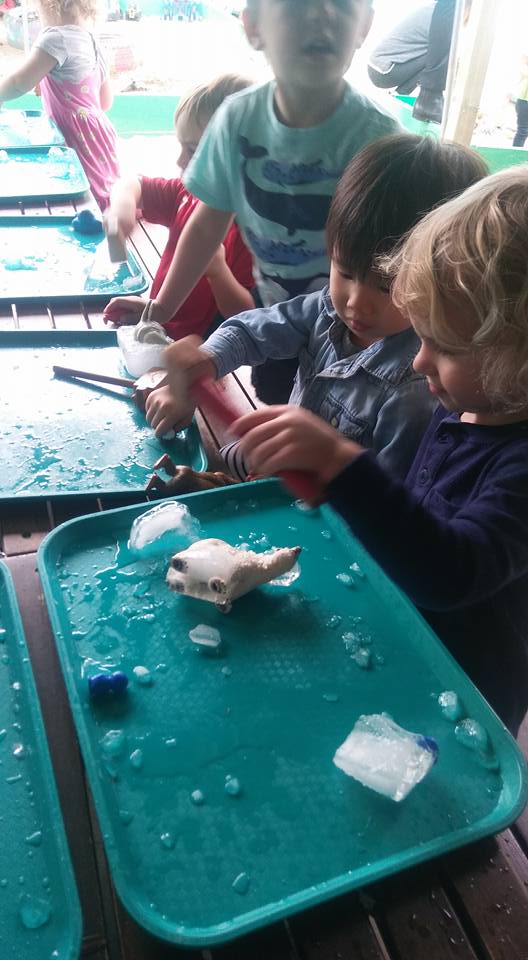
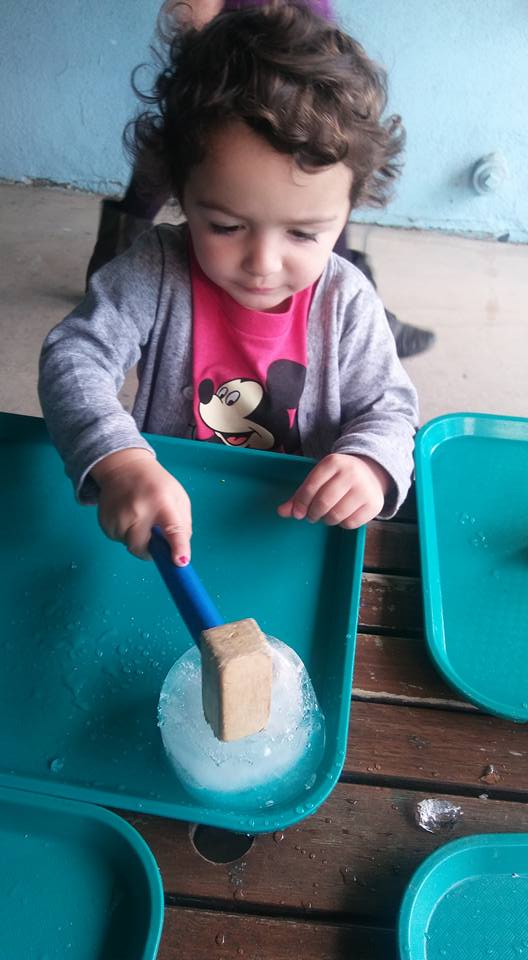
Using wooden play dough hammers, we practiced freeing our arctic friends from large chunks of ice.

pounding3

freeice6.jpg

This encouraged motor development, hand-eye coordination, creativity, and math and science skills!

pounding8

As young children explore with age-appropriate tools, they use small and large muscles.

pounding7

As they make decisions about the orientation of the hammer, they participate in problem solving skills.

pounding1

Lastly, as they complete their project, they experience a feeling of accomplishment. Most importantly, they had fun while doing it!

freeice2.jpg

Snow Owl Nests

Your preschooler consistently expresses her preference for tactile play. As young children seek to grasp new information, this form of play provides the perfect forum to apply newly acquired concepts.

owl

As they interact with peers, their teacher, and provided materials, your budding ornithologist forms relationships to learned notions that enable them to make sense of their world. For this particular activity, we learned about how snow owls are born. Because they are reptiles, most birds lay eggs.

owl1

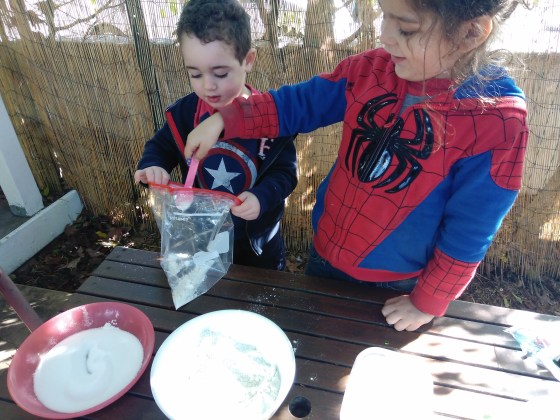
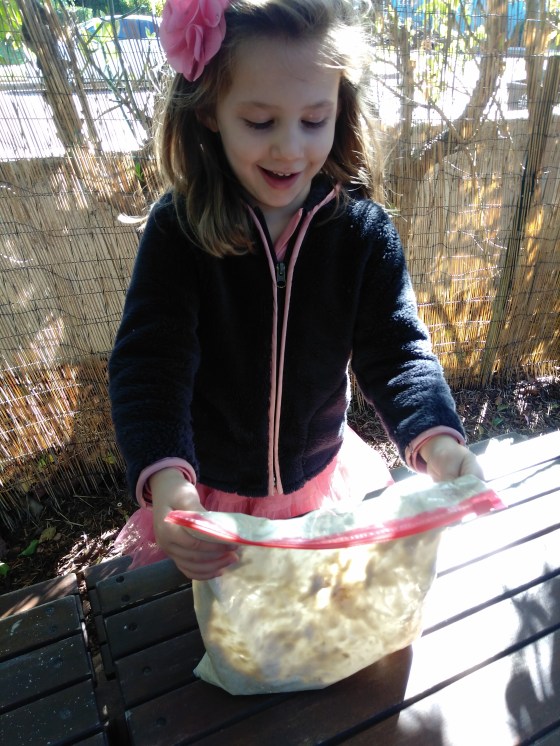
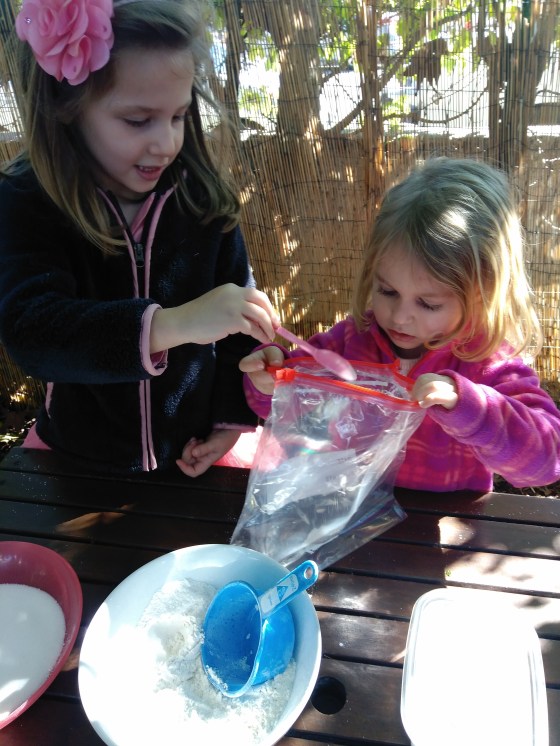
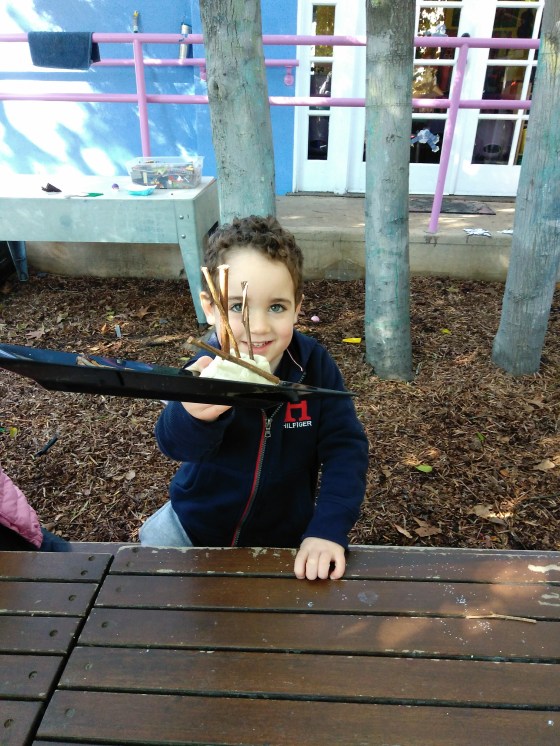
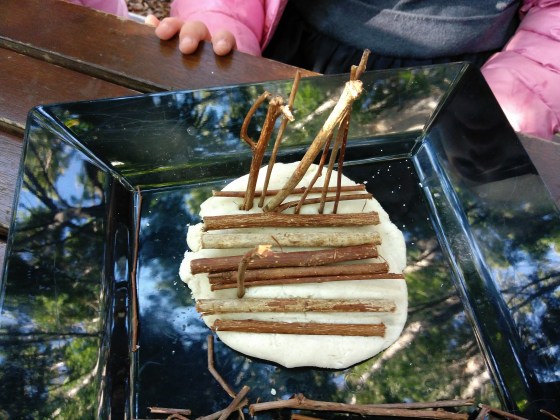
Using play dough, tiny snow owls, sticks, and rocks, we created our very own owl nests! We first made the play dough (using salt, flour and water), and then created our nests!

owl3

Your little scientist enjoyed spinning elaborate tales of baby owl cavorting through the “snow forest” as they followed their “parents”. Their conversations allowed for the processing of new vocabulary and the enjoyment of working together toward an idealized goal.

owl2


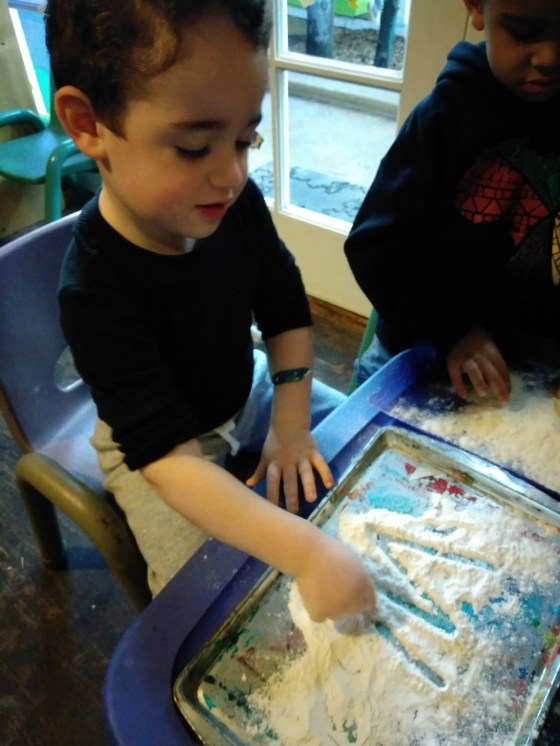
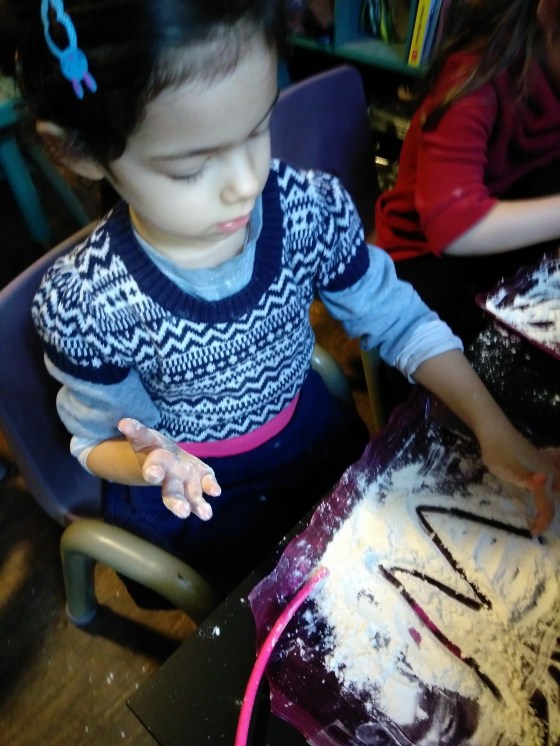
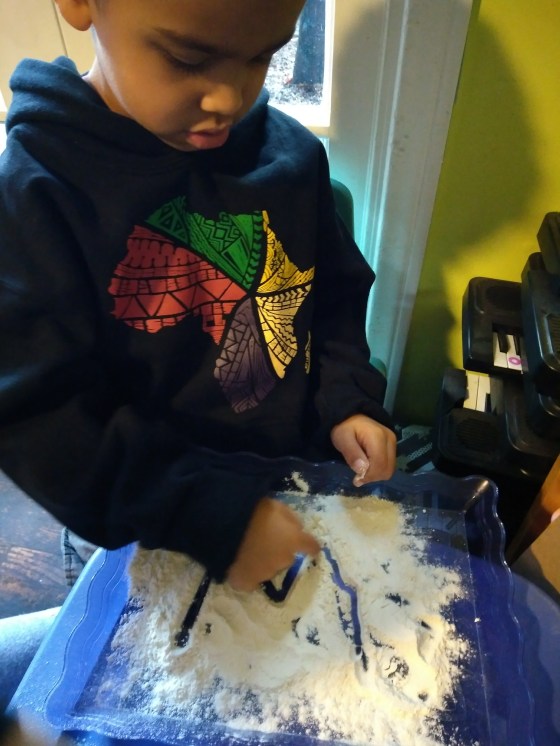
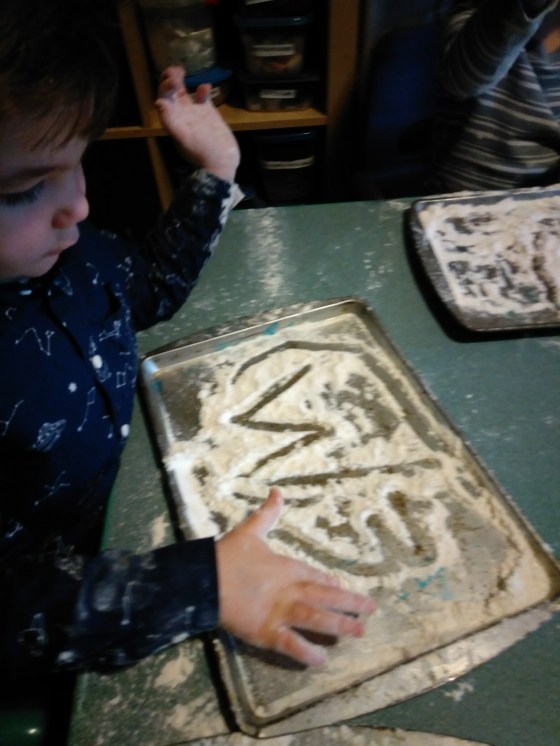
W is for Winter

Although the formal study of reading and writing does not occur until kindergarten, young children are capable of recognizing letters and their functions.

trace

Providing regular opportunities to practice pre-reading skills, is essential in gaining knowledge of the alphabet and its association to how words work.

trace1

Using flour and our fingers, we practiced tracing the letter W.

trace2

Throughout the week, we have been talking about different words that start with the letter W.

trace3

We have additionally been singing songs that reinforce the different sounds that W makes.

trace4

Painting with Flippers

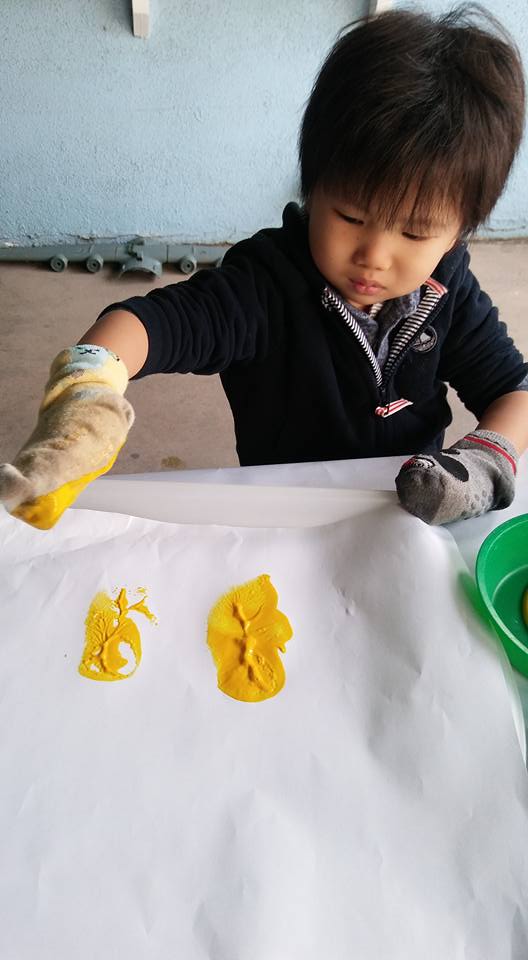
Using socks as flippers and white paint, we created our very own walruses! We began the project with a discussion about what walruses, where they live, what they eat, and what flippers are!
flipper6

We then dove into the paint, and created a messy, but fun masterpiece! This sensory activity was one of the favorites for the week!

flipper4

Sensory play is important because it gives children the change to play with different types of textures, which helps them to build new ways of talking about the world.

flippers

Sensory play is also calming for young children. It helps regulate their internal discomfort by soothing their senses and providing a creative outlet for their emotions.

flipper3

Walrus Blubber

Walruses deposit most of their body fat into a thick layer of blubber – a layer of fat reinforced by fibrous connective tissue that lies just below the skin.

ice

The blubber layer insulates the walrus and streamlines its body. It also functions as an energy reserve.

ice1

Using rubber gloves, our hands, and ice water, we learned about how our marine friends stay warm in their cold environments!

ice2

We first dipped our hands into icy water, and talked about words associated with the cold, such as ice, chilly, frozen, icy, and snow!

ice3

We then talked about what blubber was, and compared it to a thick rubber glove. After that, we put on a rubber glove and dipped our hands again into the water. Each child was then asked whether or not their hand felt warmer or colder with the glove on. Lastly, we talked about other uses for blubber and why some animals need to protect themselves from the cold.

ice4

This activity allowed your adventurer to explore the concept of animal adaptations through investigation and application.


Play Dough Owls

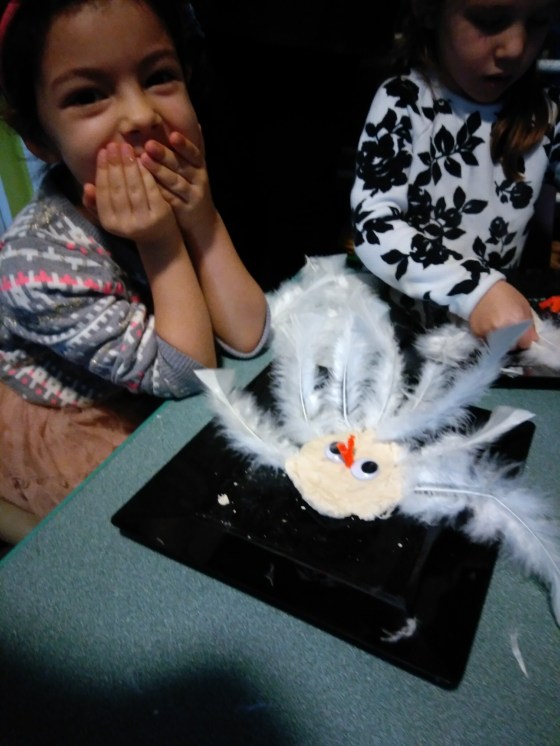
Since we are learning about snow owls this week, we used to play dough to create our own!

feather

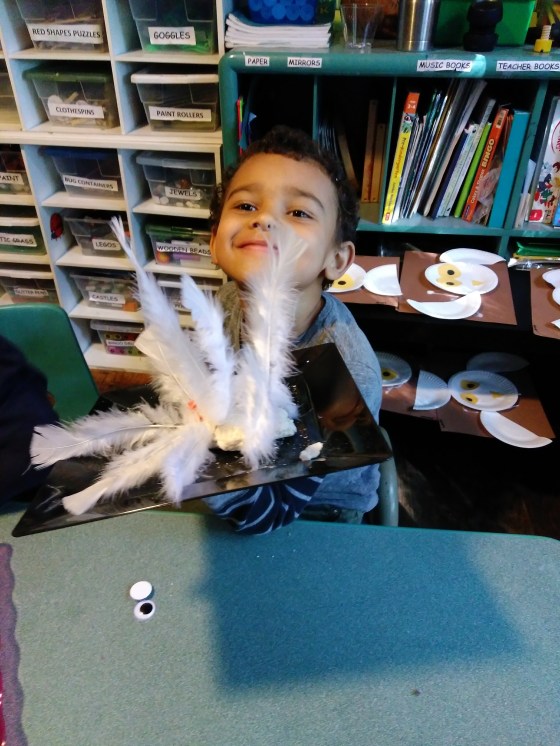
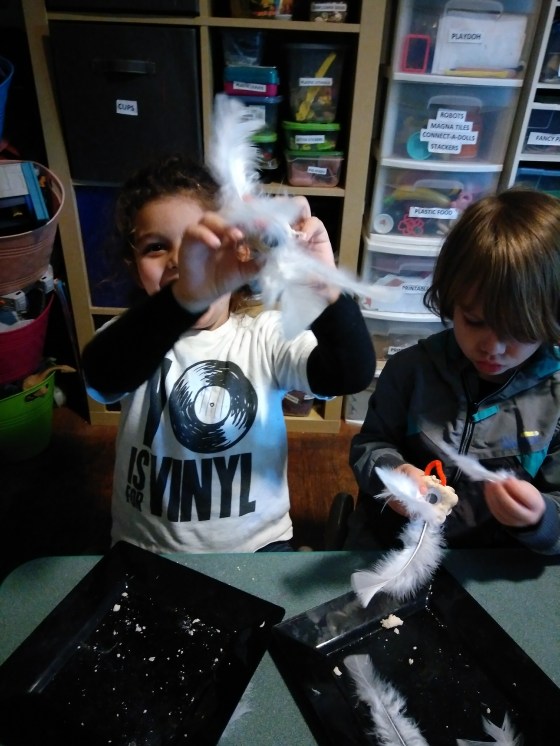
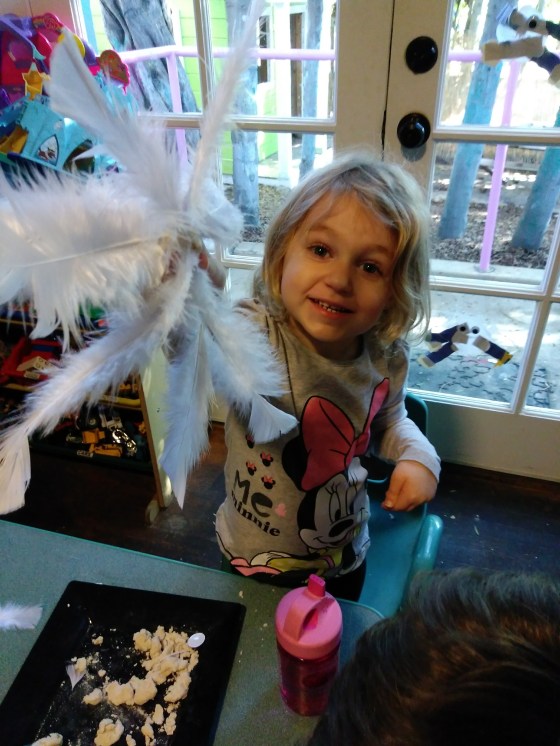
Using play dough as a medium, feathers, and plastic eyes, we created our own version of our favorite snow owls!

feather1

Using play dough helps a child practice using certain physical skills with the hands when they manipulate the dough with their fingers.

feather2

Children can practice skills such as pinching, squeezing or poking while they play with the dough.

feather3

Lastly, using play dough helps a child practice using imagination and other cognitive abilities such imitation, symbolism and problem solving.

feather4

This helps your little ones learn more about their environment as they make and mimic everyday objects with the play dough.

feather5

Snow Owl Puzzles

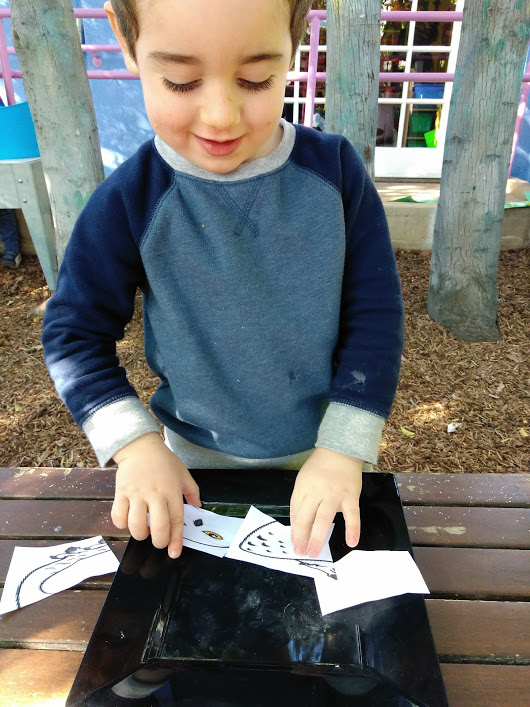
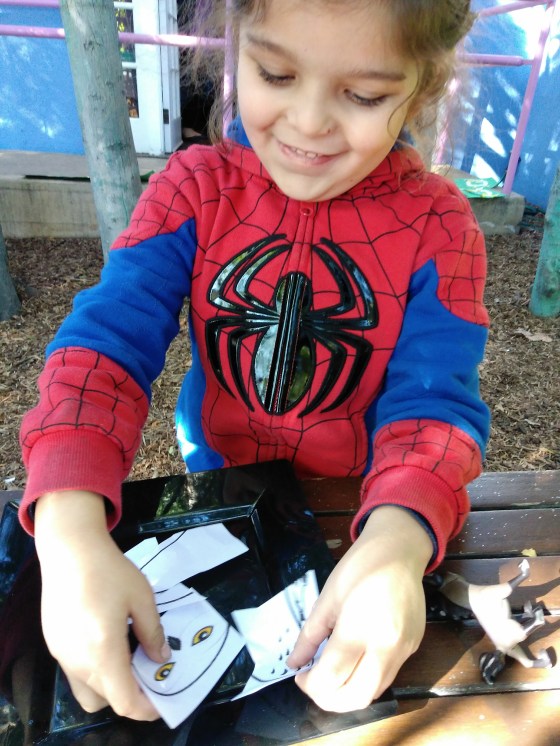
Using pre-cut pictures, we practiced putting snow owls together!

snowowl

Puzzles help young children build the skills they need to read, write, solve problems, and coordinate their thoughts and actions – all of which they will use in school and beyond.

snowowl1

They also help them begin to recognize colors and shapes, and come to realize that the sum of parts make up a whole – a concept that will help them with math later on.

snowowl2

By arranging pieces into the puzzle, your little one also develops the muscle group used for writing, or the “pincer” grasp.

snowowl3

Penguin Counting

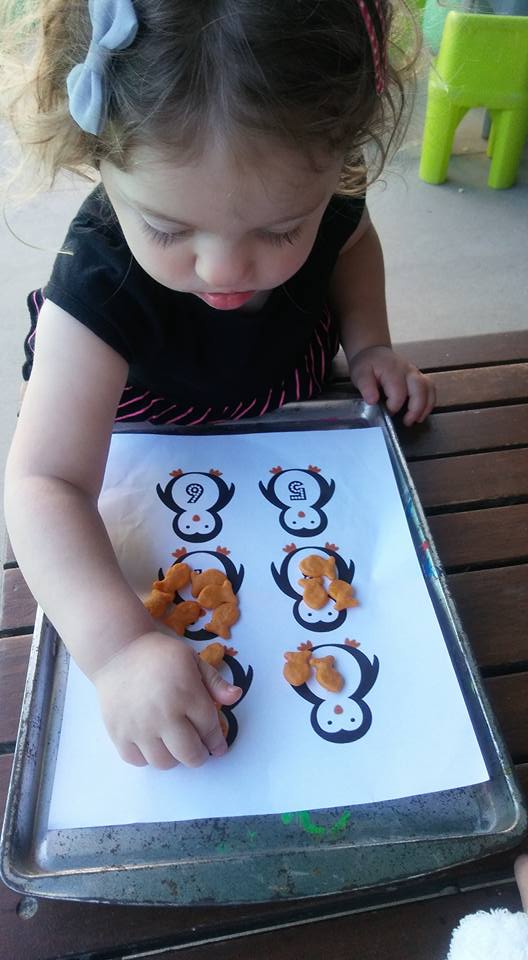
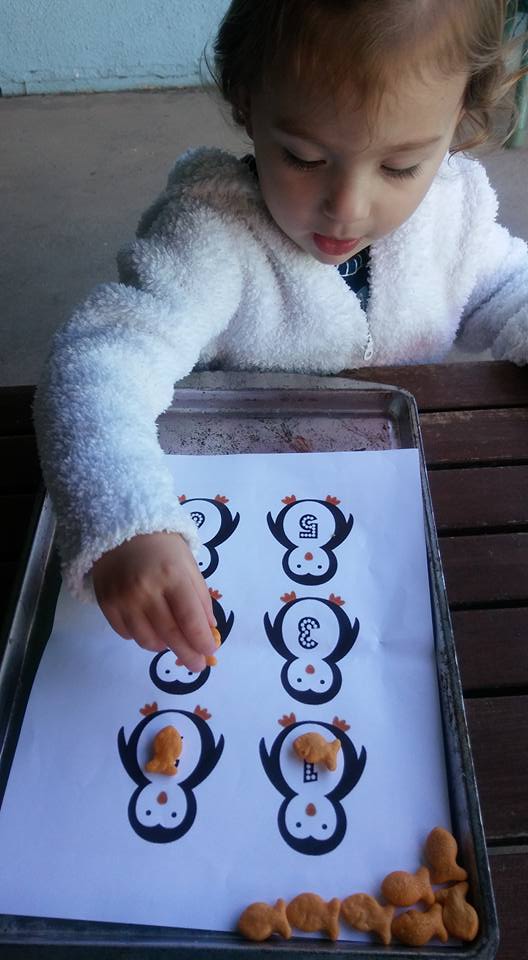
Using crackers and penguin diagrams of varying numbers and amounts, we learned and revisited counting and Arabic numerals!

penguin3

Each child was given a group of goldfish crackers, and a picture of penguins with numbers inside them.

penguin

Once again, we are using things that our little ones are naturally interested in to teach about counting, numeral recognition, and patterns!

penguin4

Not limited to just numbers, preschool math incorporates a broad range of skill sets and knowledge including sorting, colors and recognizing groups and patterns.

penguin6

These activities teach our little ones about problem solving and using logic. This activity also involved fine motor skills, as they manipulated Their fish and attached them to their rows.

penguin5

Play Dough Penguins

Since we are learning about penguins this week, we used to play dough to create our own version of them!

pengdo6

Using play dough as a medium, pipe cleaners, and plastic eyes, we created these magnificent creatures!

pengdo

Using play dough helps a child practice using certain physical skills with the hands when they manipulate the dough with their fingers.

pengdo1

Lastly, using play dough helps a child practice using imagination and other cognitive abilities such imitation, symbolism and problem solving.

pengdo3

This helps your little ones learn more about their environment as they make and mimic everyday objects with the play dough.

pengdo2

pengdo7