Throughout the early years of life, children notice and explore mathematical dimensions of their world. They compare quantities, find patterns, navigate in space, and grapple with real problems such as balancing a tall block building or sharing toys fairly with a playmate.
 Mathematics helps children make sense of their world outside of school and helps them construct a solid foundation for success in school.
 In our classroom, we use play and sensory experiences (in addition to more direct academic approaches) to relay these integral math concepts to your little ones.
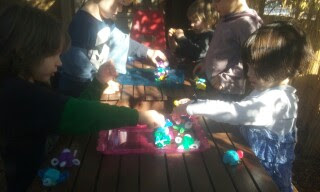
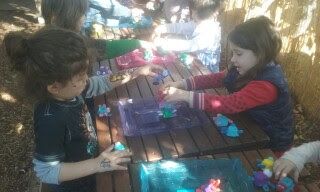
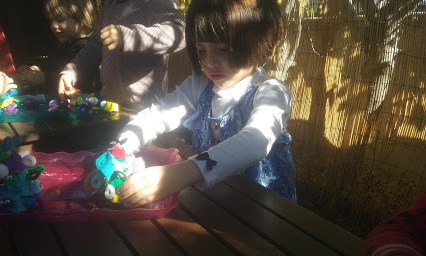
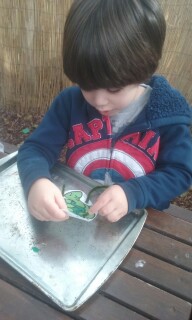
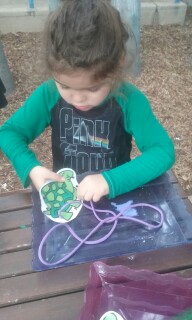
This activity involved stacking egg carton turtles onto one another in this Yertle the Tertle activity. In the story, Yertle commands the turtles of Sala-ma-Sond to pile onto each other so that Yertle could grab the moon.
 The very act of stacking presented a host of counting opportunities for our class, so we put our learning into action! Students were first directed to stack their turtles.
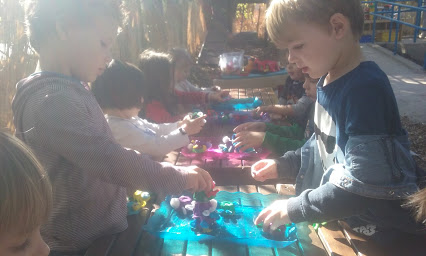 This was a bit tricky, as it required them to focus. Doing so enabled them to witness the magic of cause and effect. Once fully stacked, students were then urged to count their pile.
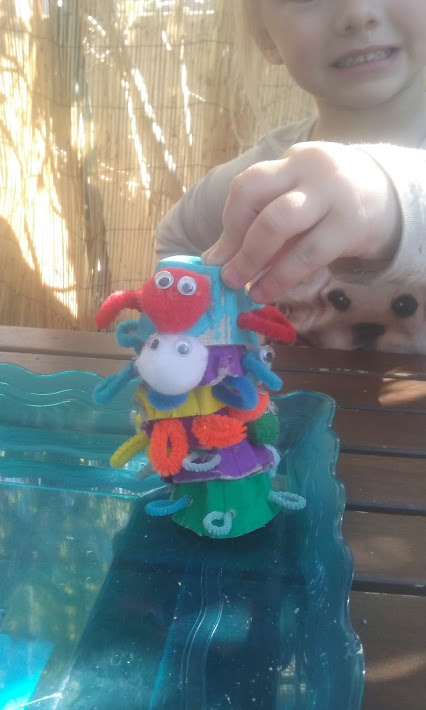 Following the mastery of this task, students broke their piles into smaller groups and counted them as well!

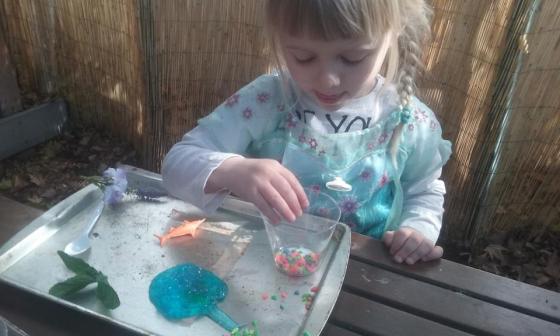

 Because we are always talking about our colors, we practiced sorting fish according to their color. Using cardboard cut-outs of fish and a Twister board, we placed fish onto their matching color.

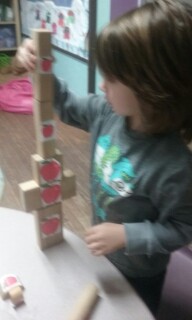 This book presented a host of opportunities for us to practice our counting skills! For this activity, we used blocks (of which apple stickers were attached), to practice our counting!
 Using our hands and our thinking minds, we stacked our blocks until we reached ten! Creating a foundation for complex mathematical thinking is initiated in early childhood.
 Stacking objects helps your preschooler begin to acknowledge quantities, cause and effect, and measurement. This awareness lays the framework for more complicated concepts later on.
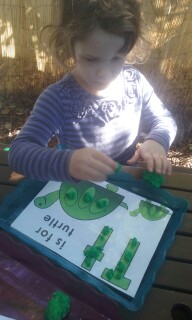
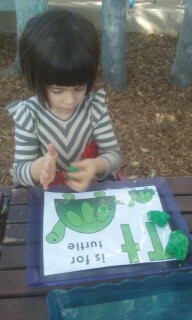
 Using play dough as a medium and small plastic people, we recreated the story! This activity also revisited and reinforced vocabulary words, such as inside, outside, under and, and over.
 Using play dough helped your little practice using certain physical skills with their hands as they manipulated the dough with their fingers. Children can practice skills such as pinching, squeezing or poking while they play with the dough.
 Lastly, using play dough helps a child practice using imagination and other cognitive abilities such imitation, symbolism and problem solving. This helps our little ones learn more about their environment as they make and mimics everyday objects with the play dough.
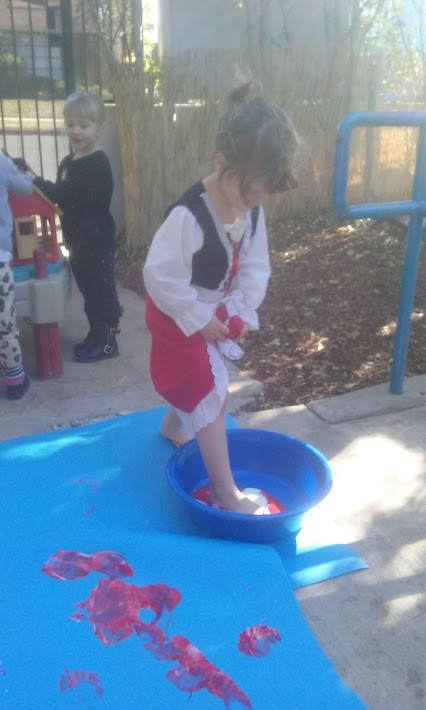
 Activities that require manipulation and touch enable children to heighten the adaptive response through their senses.
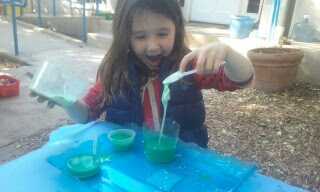 They are an integral component in early childhood education. They not only engage the child, but stimulate cognitive development.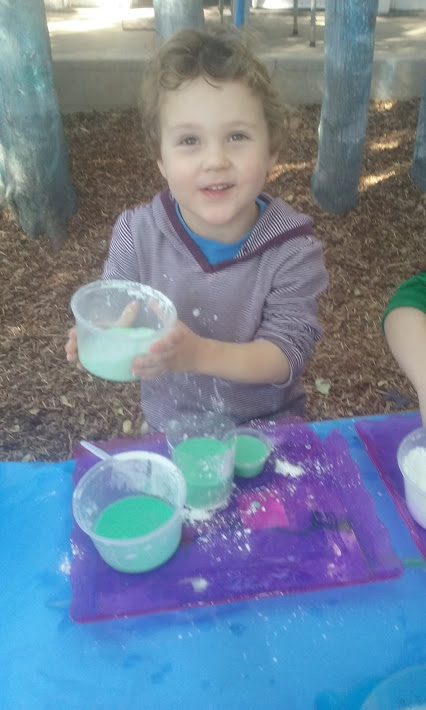
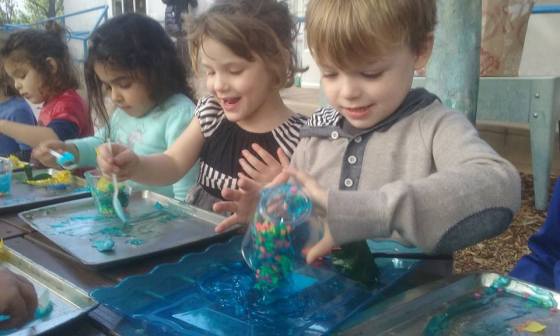
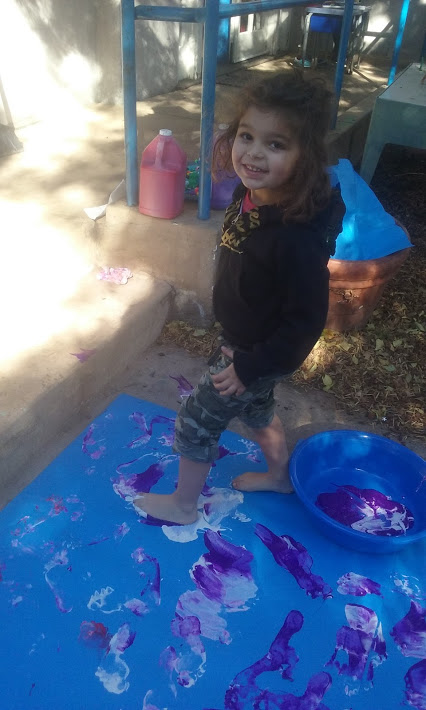
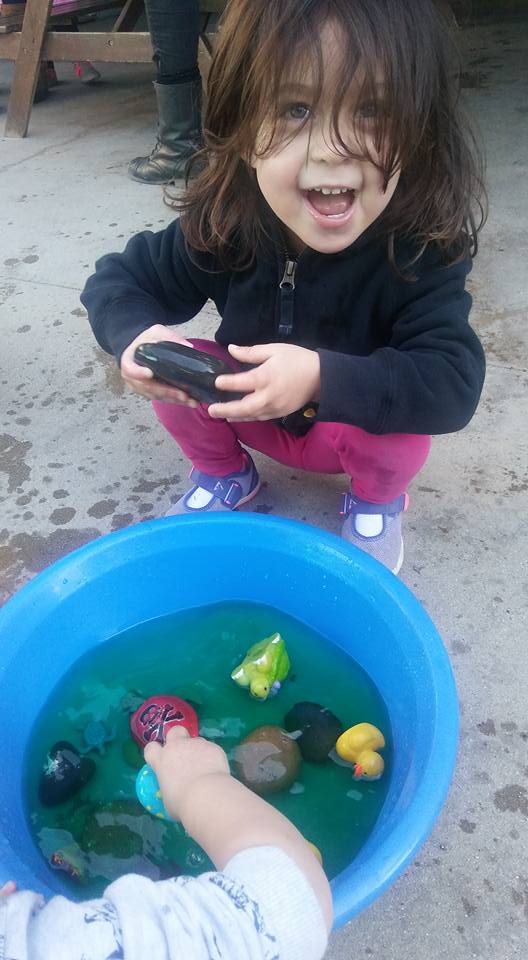
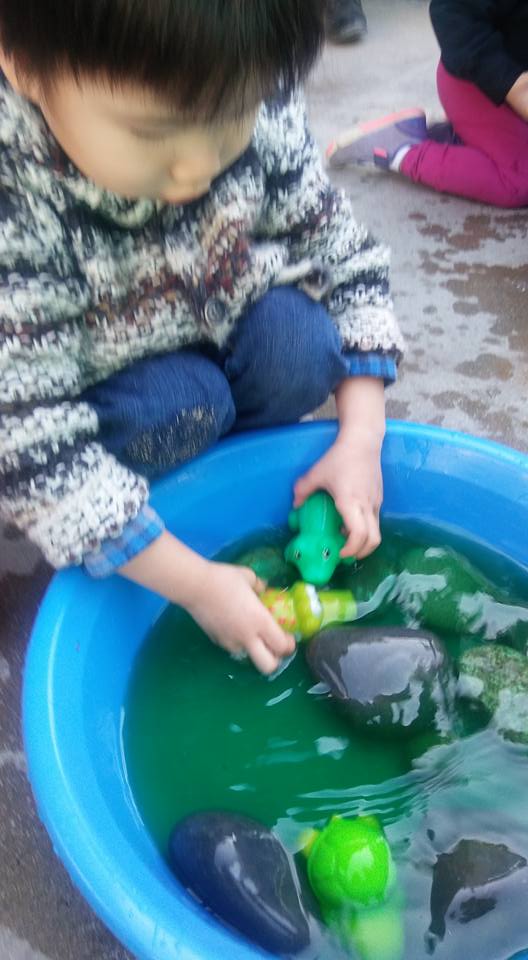
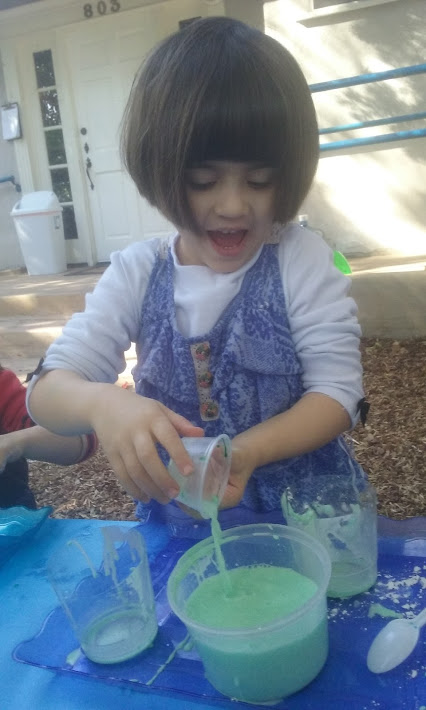 Using corn starch, food coloring, and water, we manipulated and created various combinations to create the perfect consistency for our goo!







 misscarriescorner