The Visual Perceptual Menorah

Research has shown that young children learn best through active, hands-on experiences.
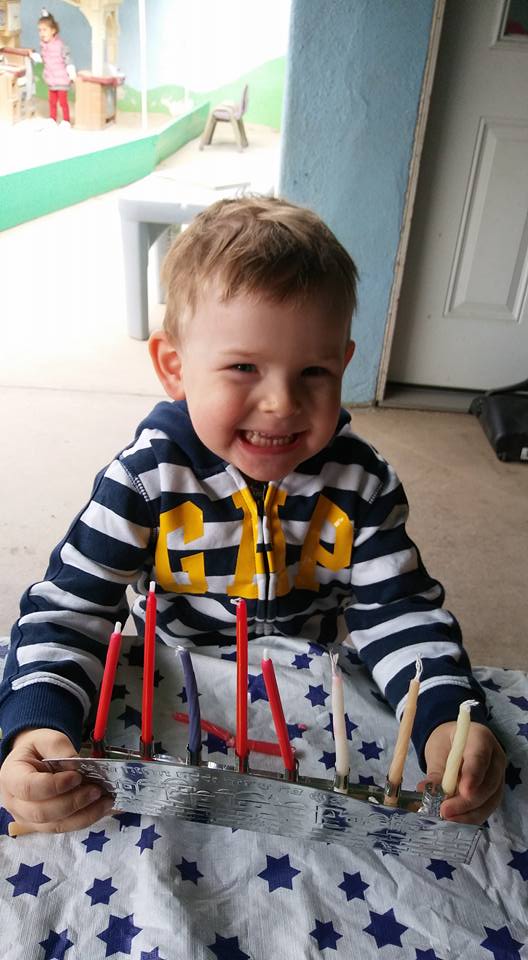
menorah

In other words, children learn by doing. Play provides the foundation for academic learning.
img_20191217_102711068

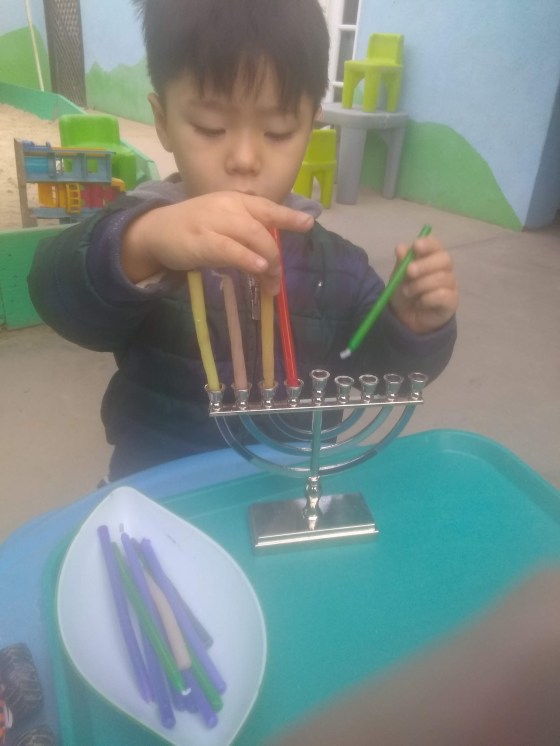
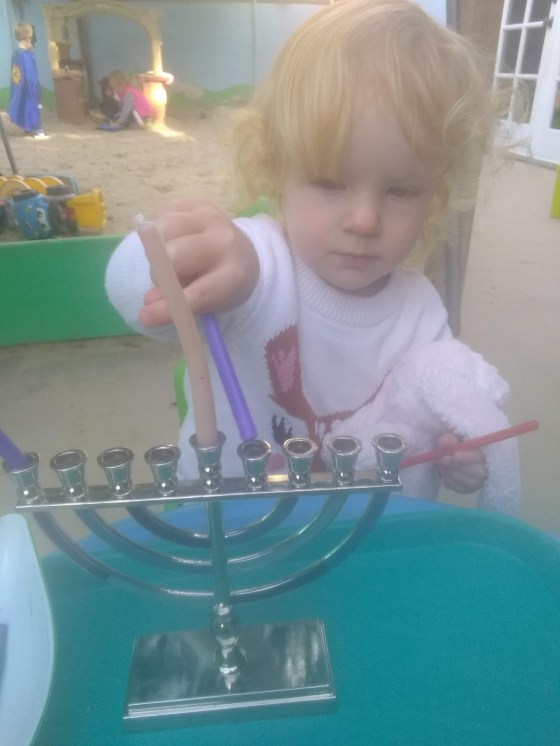
To incorporate the menorah into our Hanukkah theme, we placed candles into real menorahs!

menorah2

This activity accessed several developmental areas.
img_20191217_102245060

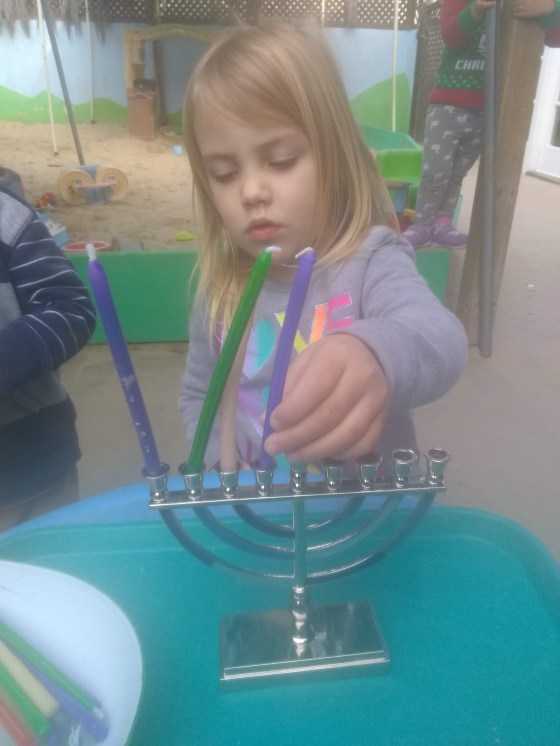
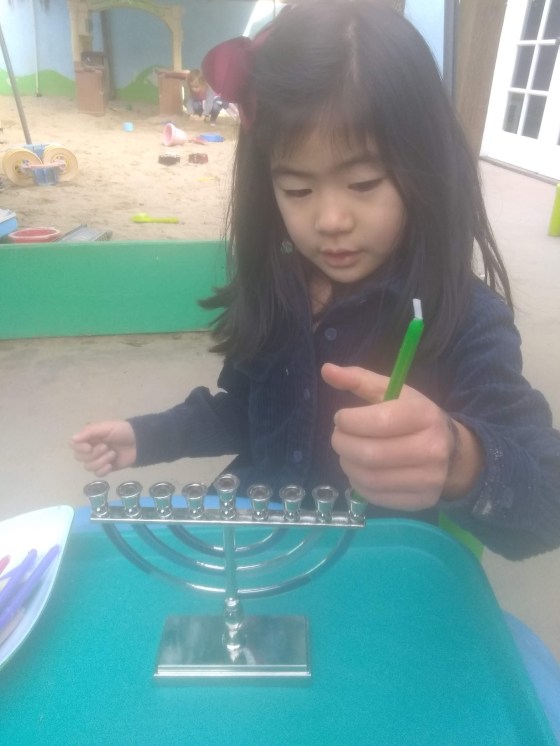
Each candle was color-coded to match a corresponding cavity on the menorah.
img_20191217_103319250

By discerning between an array of different colors, students exercised their matching and visual perceptual skills.

img_20191217_100432745


This experience also encouraged your little ones to investigate, discover, and learn new ideas related to a culture different from their own.
img_20191217_100115268

By collaborating with their classmates, they also fostered their decision-making skills, supporting their emerging social-emotional development, as they best problem-solved how to share supplies to meet a common goal.

 

D is for Dreidel and Dinosaur

We have been learning about the many words that begin with the letter D, because our word for the week is Dreidel! We began our week with the words dreidel, dirt, and dinosaur.

20141202_100020

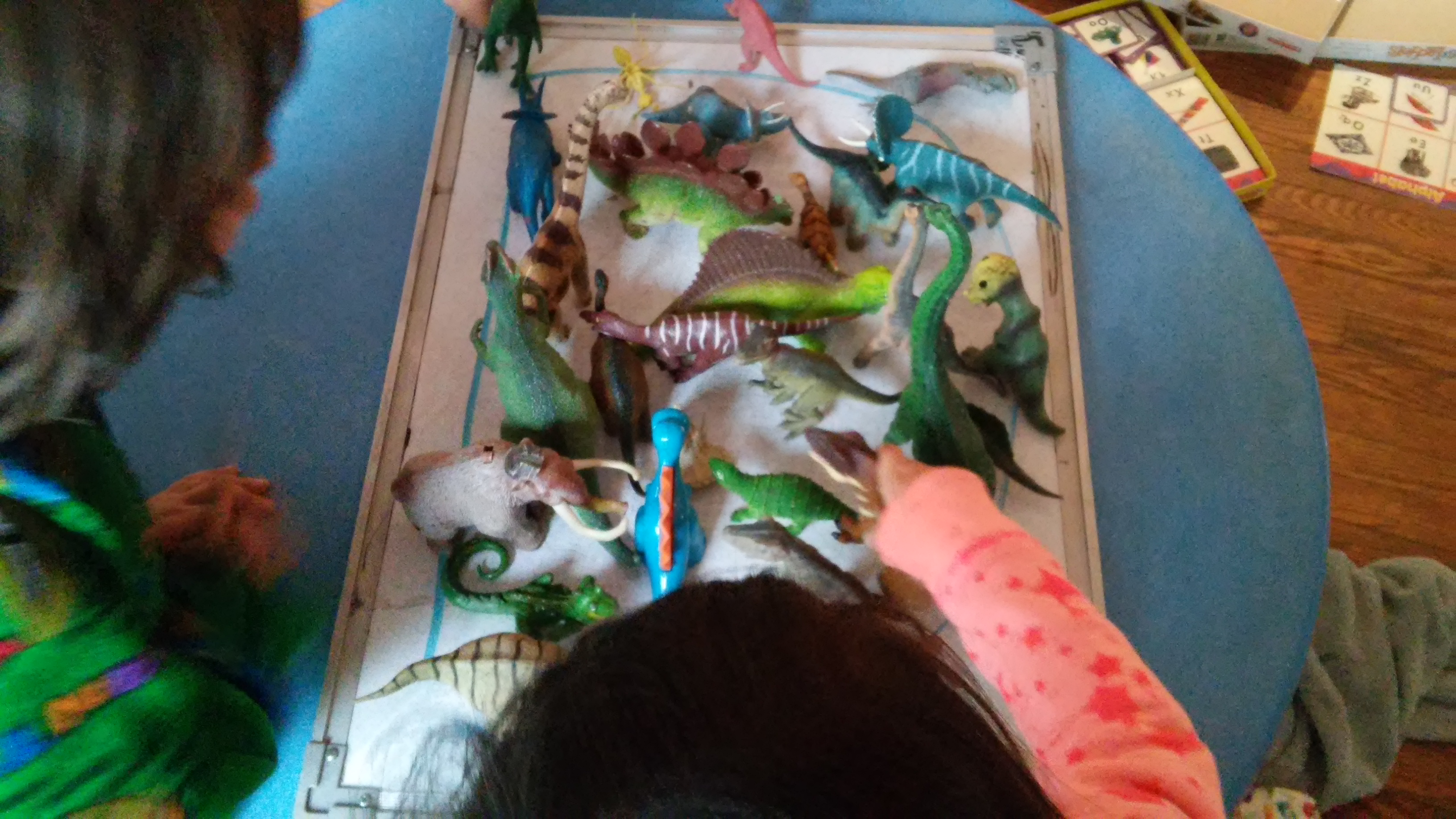
To help make this activity fun and memorable, our task was to place dinosaurs inside a large letter D. By doing this, your little one incorporated several developmental domains. They not only accessed their ability to evaluate space (How many blocks will fit?), but were given an opportunity to work with their peers.

20141202_100130 (1)

Social development is an essential component to many of our activities. They build self-esteem, create community, and encourage conflict resolution, which is essential as your little ones continue to grow and flourish!

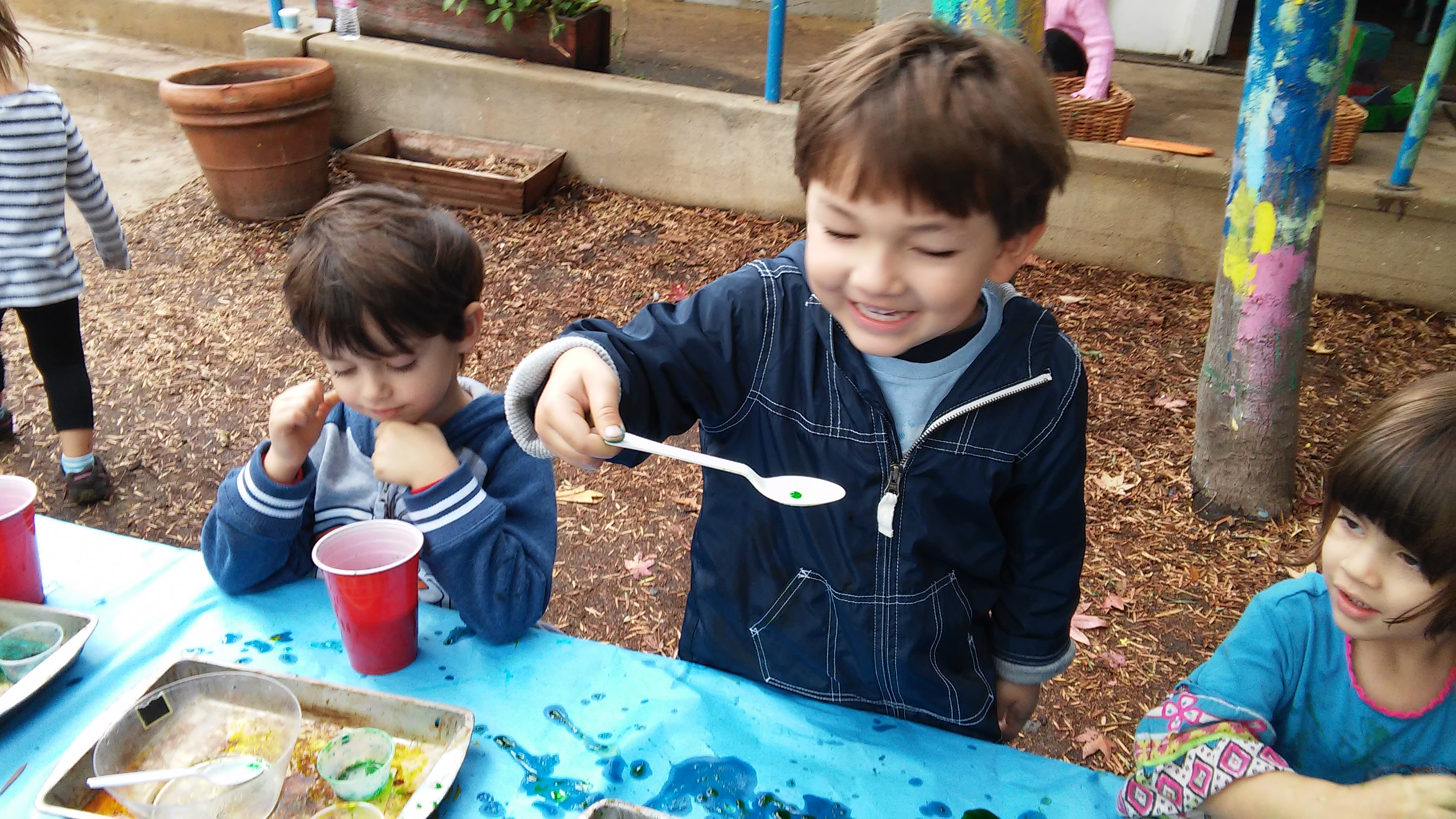
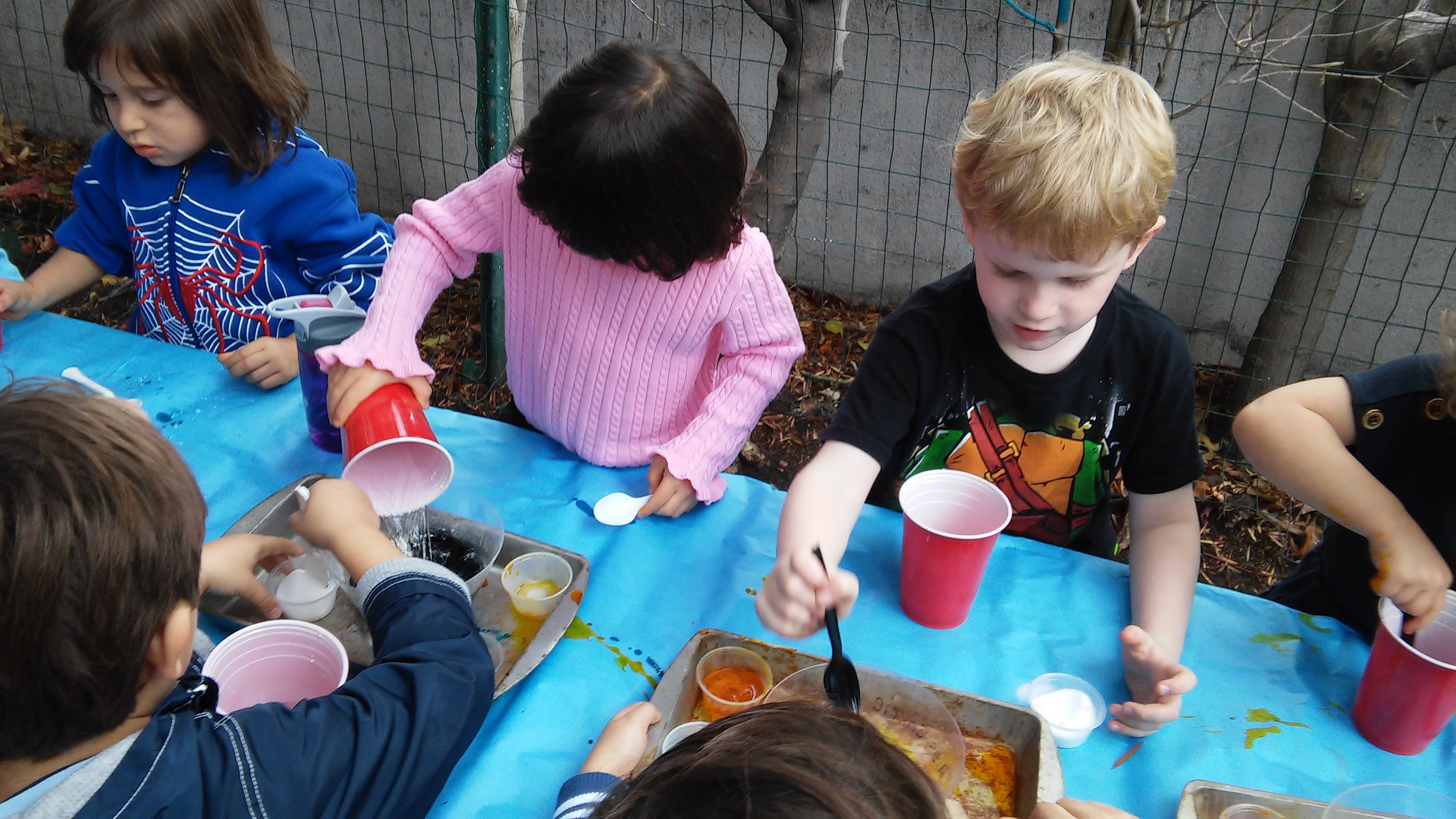
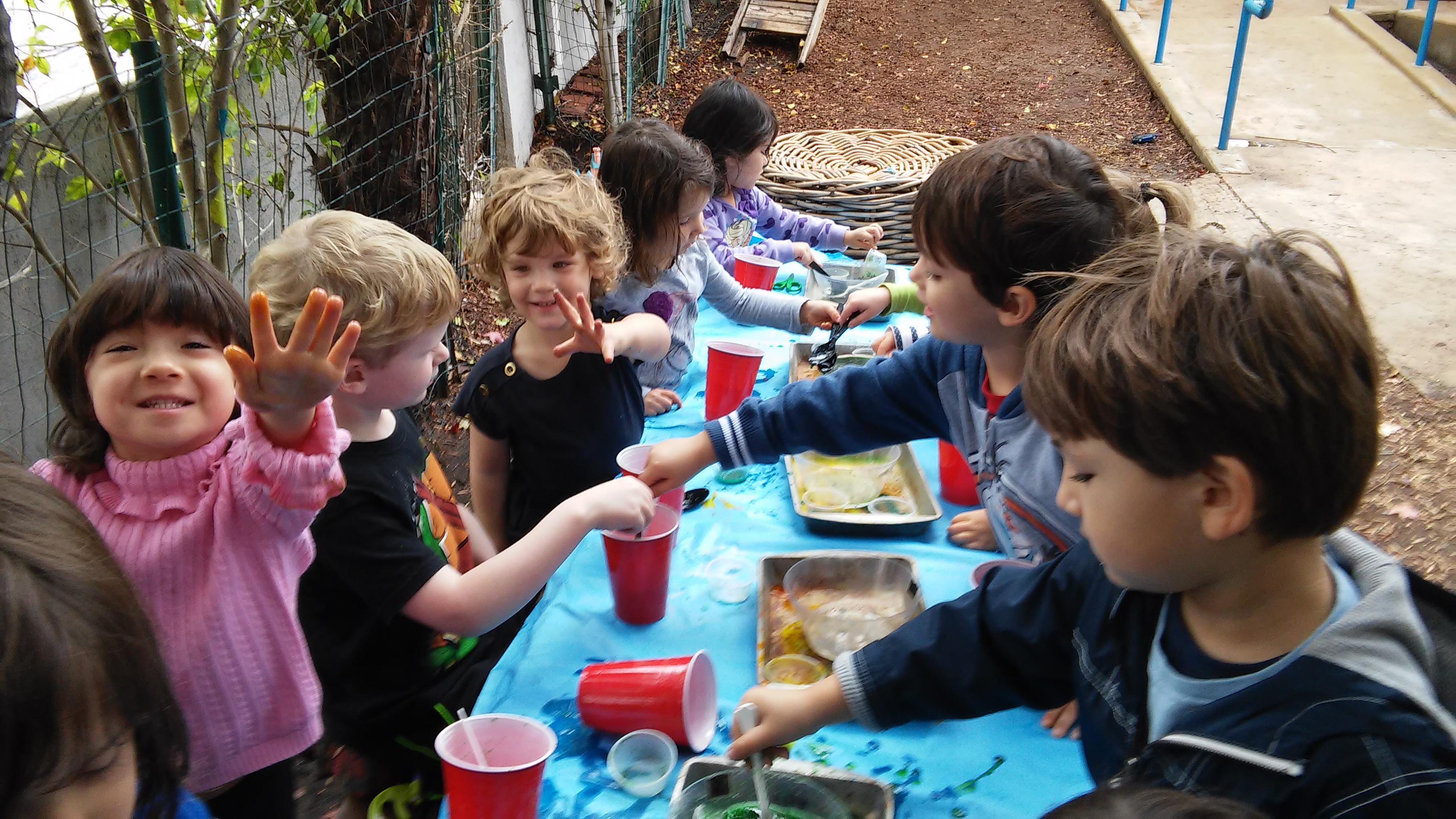
Oil and Water Density Experiment

According to tradition as recorded in the Talmud; at the time of rededication, there was very little oil left that had not been defiled by the Greeks. Oil was needed for the menorah in the Temple, which was supposed to burn throughout the night, every night.

20141201_111041

There was only enough oil to burn for one day, yet miraculously, it burned for eight days, the time needed to prepare a fresh supply of oil for the menorah.

20141201_111055

An eight day festival was declared to commemorate this miracle.  To incorporate this into our week of our Hanukkah festivities, we conducted an oil experiment with oil, water, food coloring, molasses, and honey.

20141201_110404

Doing so enabled your little one to acquire new language (words like density, heavy, viscous, cloudy water) as they applied their knowledge of science concepts such as observation, speculation, and implementation.

20141201_110419

20141201_11074520141201_110716

Letter D Beading

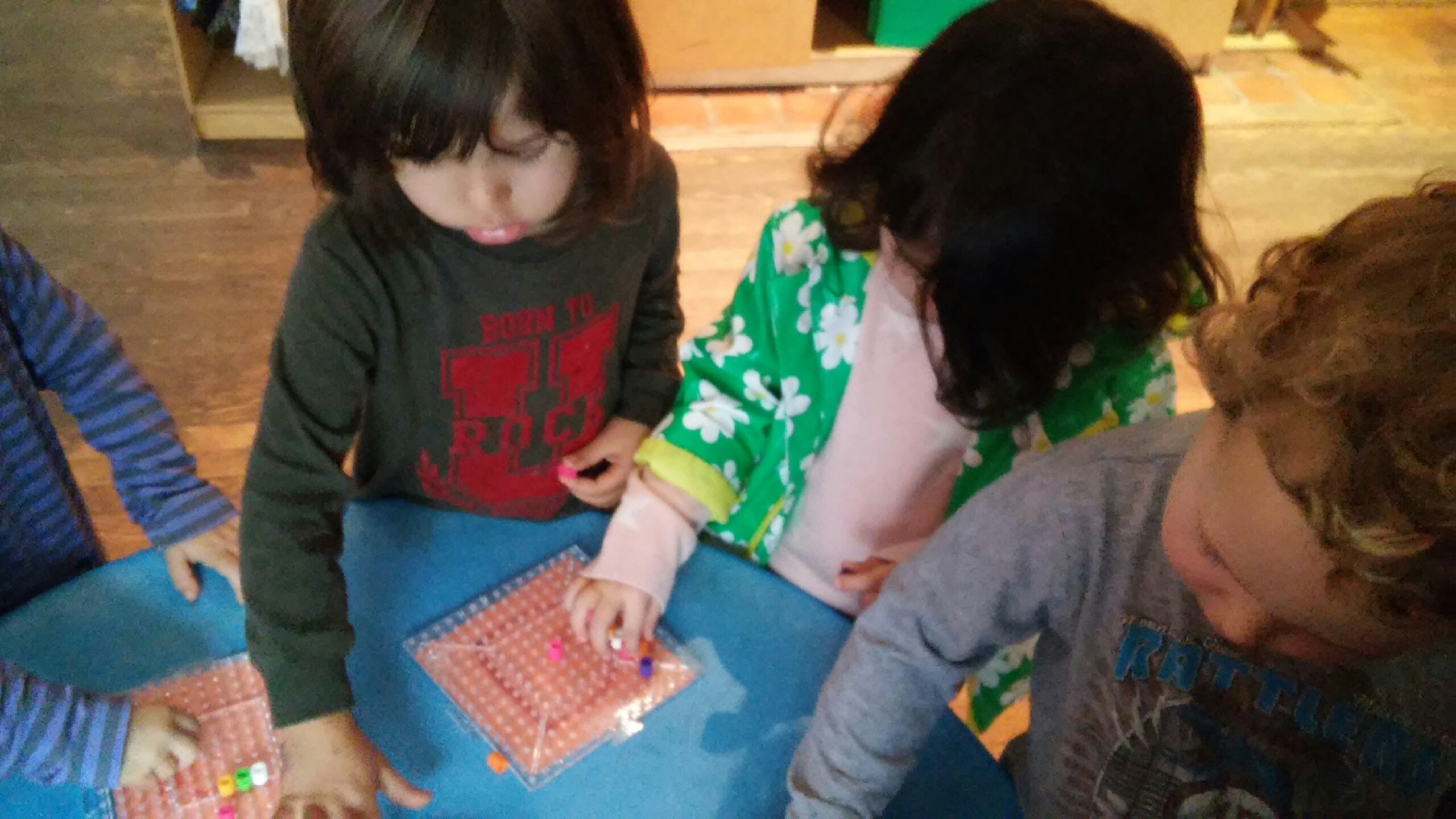
Manipulatives increase strength and coordination in the small hand and finger muscles. For this activity, we added beads to a peg board to create the letter D for dreidel.

20141203_100107 (1)

Picking up the bead and manipulating it in your child’s hand until it was pinched between their thumb and forefinger, involved translation, shift and rotation movements of the bead within the hand. This promoted the tripod grasp.

20141203_1001521

Maneuvering the beads into the shape of a D fostered visual discrimation as your budding writer selected the pattern that fit their mental image of the desired letter. Lastly, this activity was self-correcting, which encouraged creative thinking, problem solving skills, and spatial reasoning.

Hanukkah Latkes

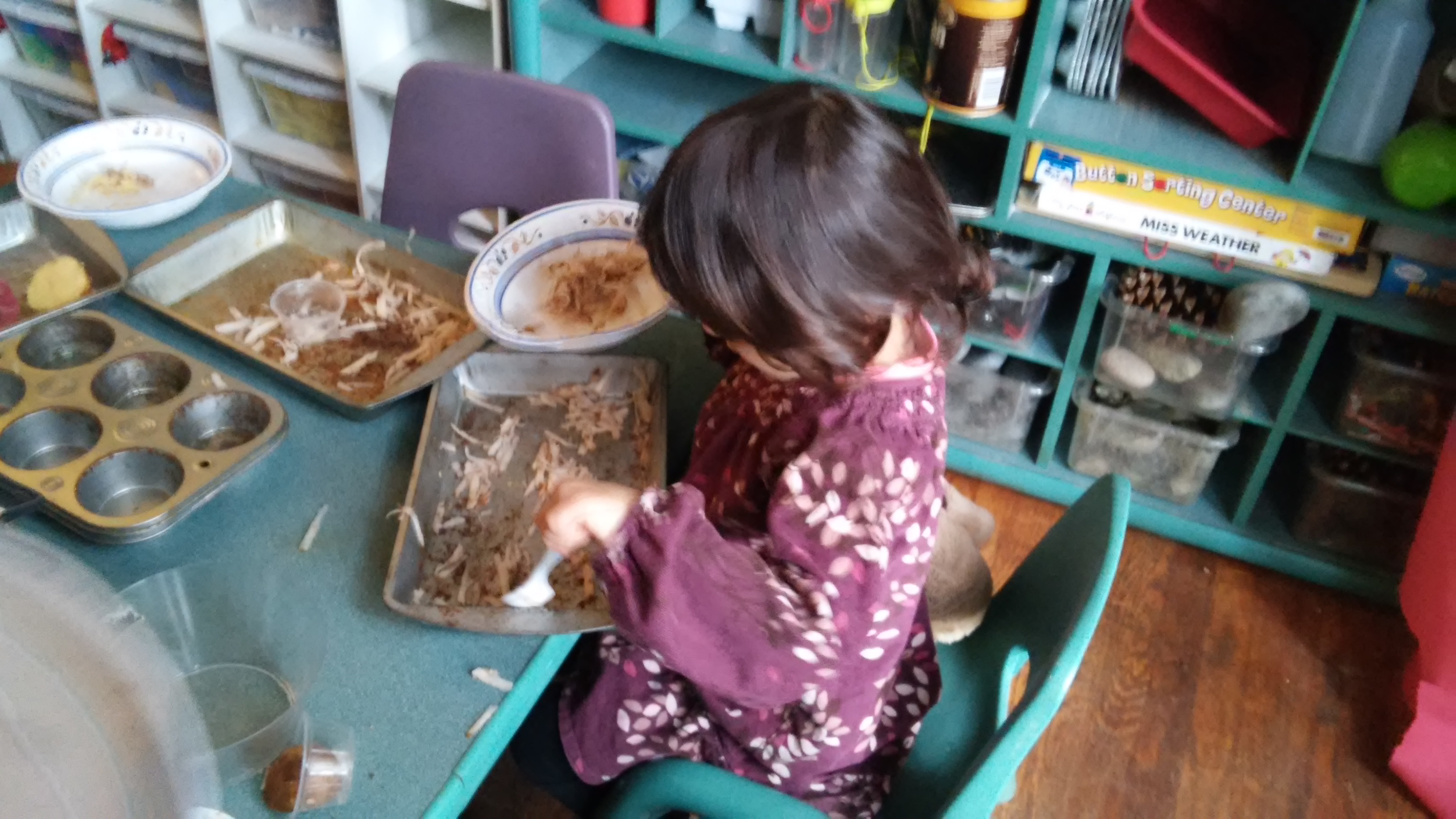
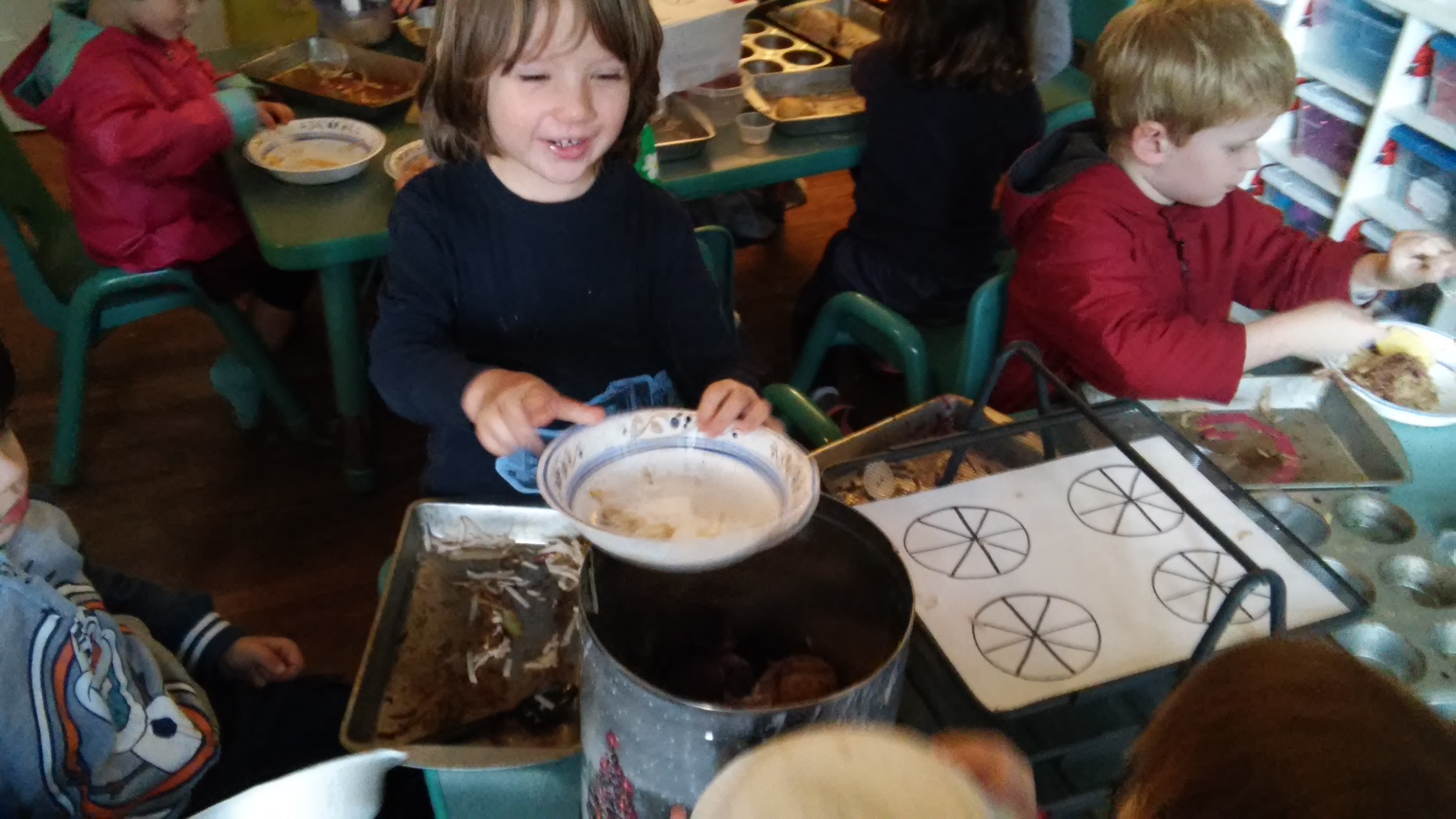
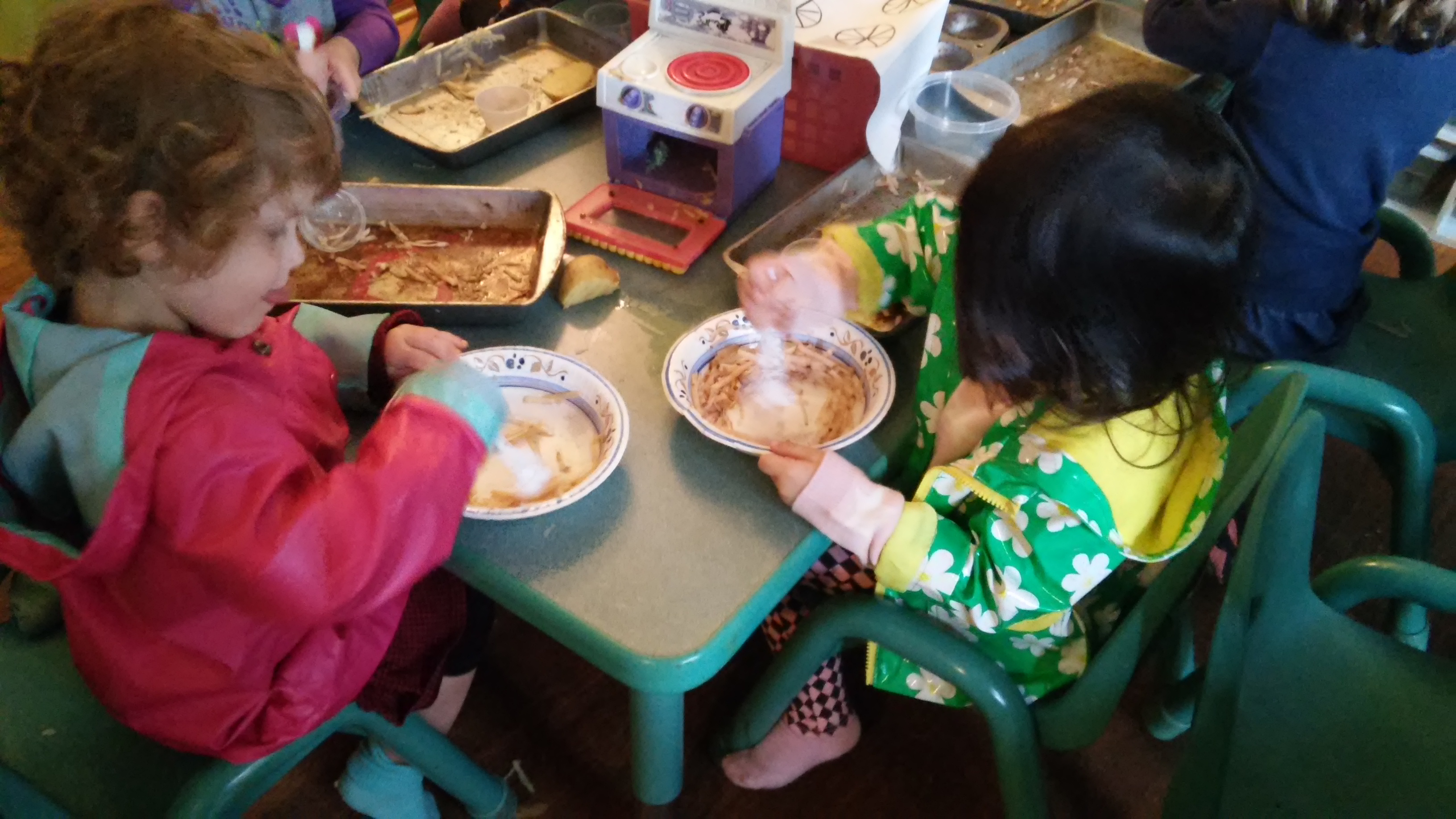
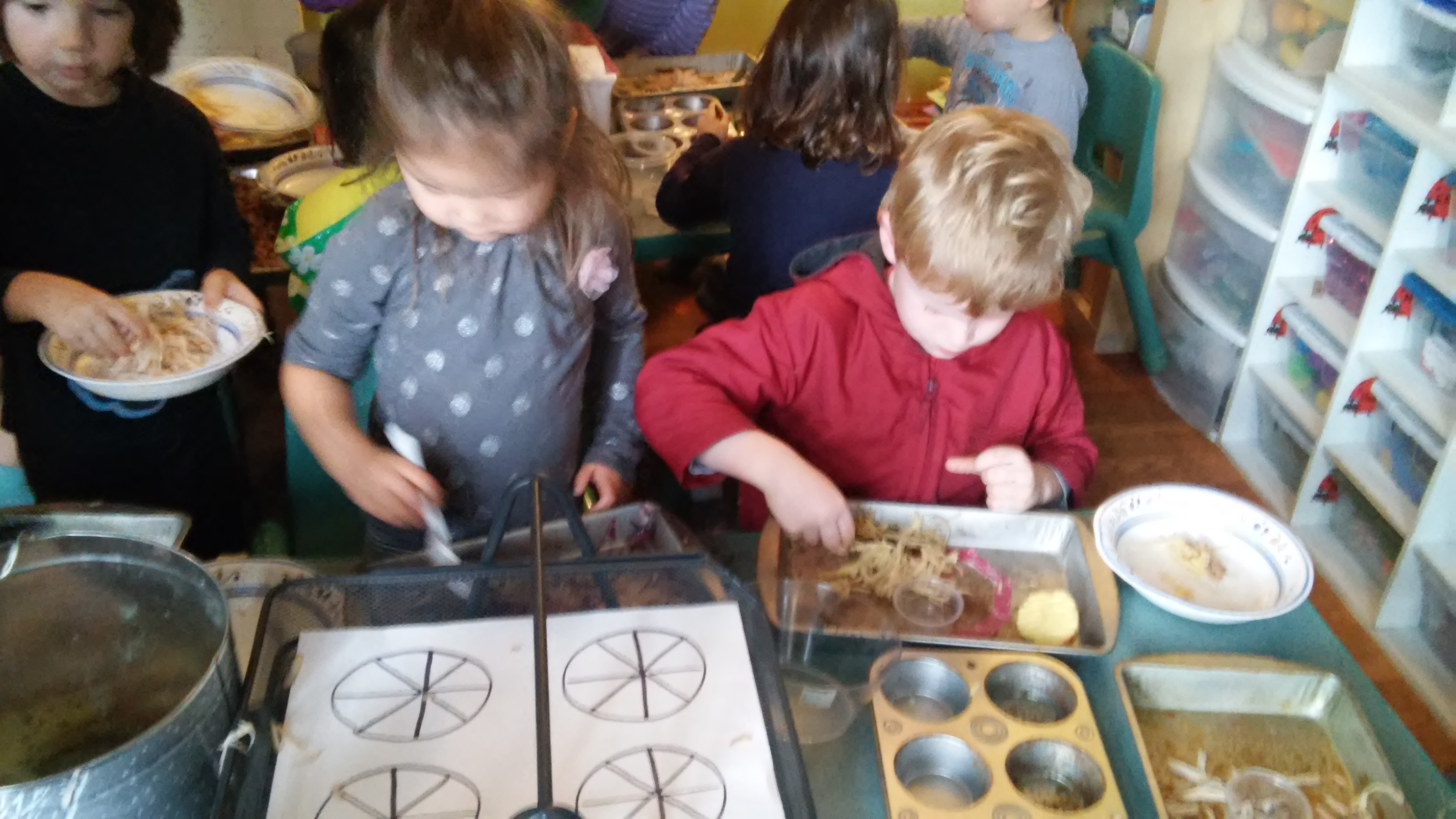
Potato latkes are also known as potato pancakes. They are a loved addition to the Hanukkah palate. Latkes are traditionally eaten during the Jewish Hanukkah festival. To continue our celebration of this most exciting holiday, we created latkes for a dramatic play activity.

20141203_105407

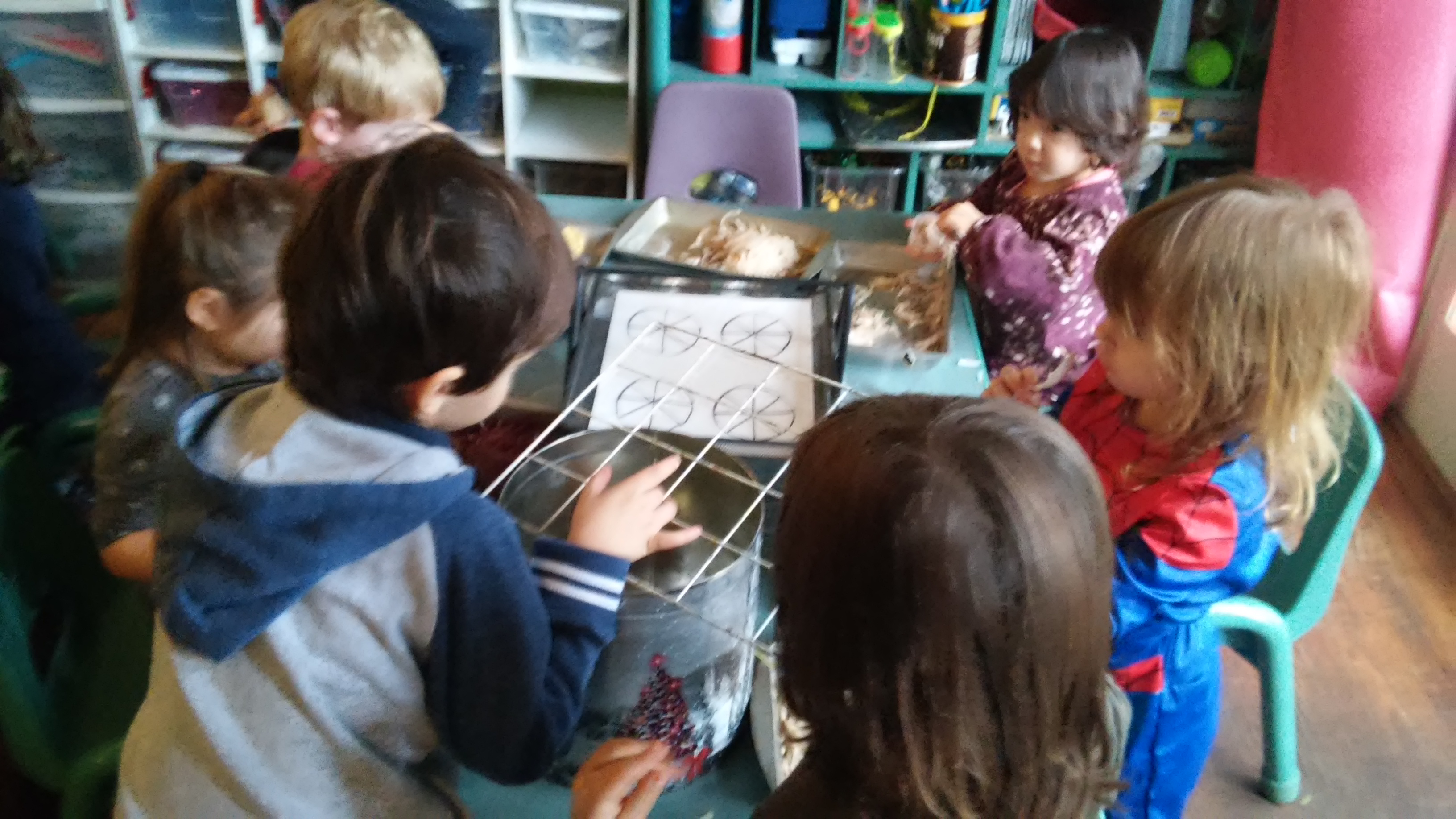
To do this, we used cheese graters and potato peelers to slice up potatoes. We then added these potatoes to muffin trays, plastic frying pans, and other cooking accessories that we later cooked in pretend ovens. We then served to these to our friends!

20141203_105544

Cooking activities are not only a fun, engaging activity for children, but one that can be used as an important teaching and development tool for all ages. The act of following a recipe can encourage self-direction and independence, while also teaching children to follow directions and use thinking skills to problem solve. Such actions support cognitive development.

20141203_105550

Chopping, mixing, and grating the potatoes required for our latkes are also skills that help develop your child’s small muscle control and eye-hand coordination. The strengthening of these muscles are critical for the manipulation of writing implements.

20141203_104754

Creating our latkes also fostered language development. With its own vocabulary, Hanukkah is a great opportunity for acquiring new words and meanings. This takes advantage of opportunities for your budding chefs to match pictures to words and articulate questions inspired by their new experiences.

20141203_105411

20141203_105225

Adobe Houses

Adobe houses (also known as pueblos) are Native American house complexes used by the Pueblo Indians of the Southwest. Adobe pueblos are modular, multi-story houses made of adobe (clay and straw baked into hard bricks) or of large stones cemented together with adobe.

20141117_1015501

Each adobe unit is home to one family, like a modern apartment. The whole structure, which can contain dozens of units, is often home to an entire extended clan. Adobe houses are good homes to build in a warm, dry climate where adobe can be easily mixed and dried.

These are homes for farming people who have no need to move their village to a new location. In fact, some Pueblo people have been living in the same adobe house complex, such as Sky City, for dozens of generations.

20141121_1601201

Dream Catchers

Dream catchers are one of the most fascinating traditions of Native Americans. The traditional dream catcher was intended to protect the sleeping individual from negative dreams, while letting positive dreams through.

20141114_1054461

The positive dreams would slip through the hole in the center of the dream catcher, and glide down the feathers to the sleeping person below. The negative dreams would get caught up in the web, and expire when the first rays of the sun struck them.

20141112_1116361

The Inuit People

Inuit people are the most widely dispersed group in the world still leading a partly aboriginal way of life. They live in a region that spans more than 3,500 miles. This region includes Greenland, the northern fringe of North America, as well as a sector of eastern Siberia. Inuit are racially distinct from the North American Indians. In fact, the Inuit are closely related to the Mongolian peoples of eastern Asia. The Inuit – Aleut languages are unrelated to any American Indian language groups. At no time did the Inuit possess a national or well – defined tribal sense. The Inuit emphasis was always on the local and familial group rather than on associations based on land and territory.

20141120_1727531

20141117_1608271

Chumash Cave Paintings

Chumash Cave Paintings are among the most elaborate and colorful in the world.

20141121_1603481 (1)

Shamans, or Chumash priests, are thought to have made these paintings to influence supernatural beings and forces to intervene in human affairs.

20141107_1553021

The earliest Chumash used charcoal for their drawings, but as their culture evolved, they colorfully decorated caves using, red, orange, black, white, and yellow pigments.

20141107_1546371

These colorful yet simple cave paintings included human figures and animal life.

20141110_101511120141107_160958120141110_1007051