Native American Pouches

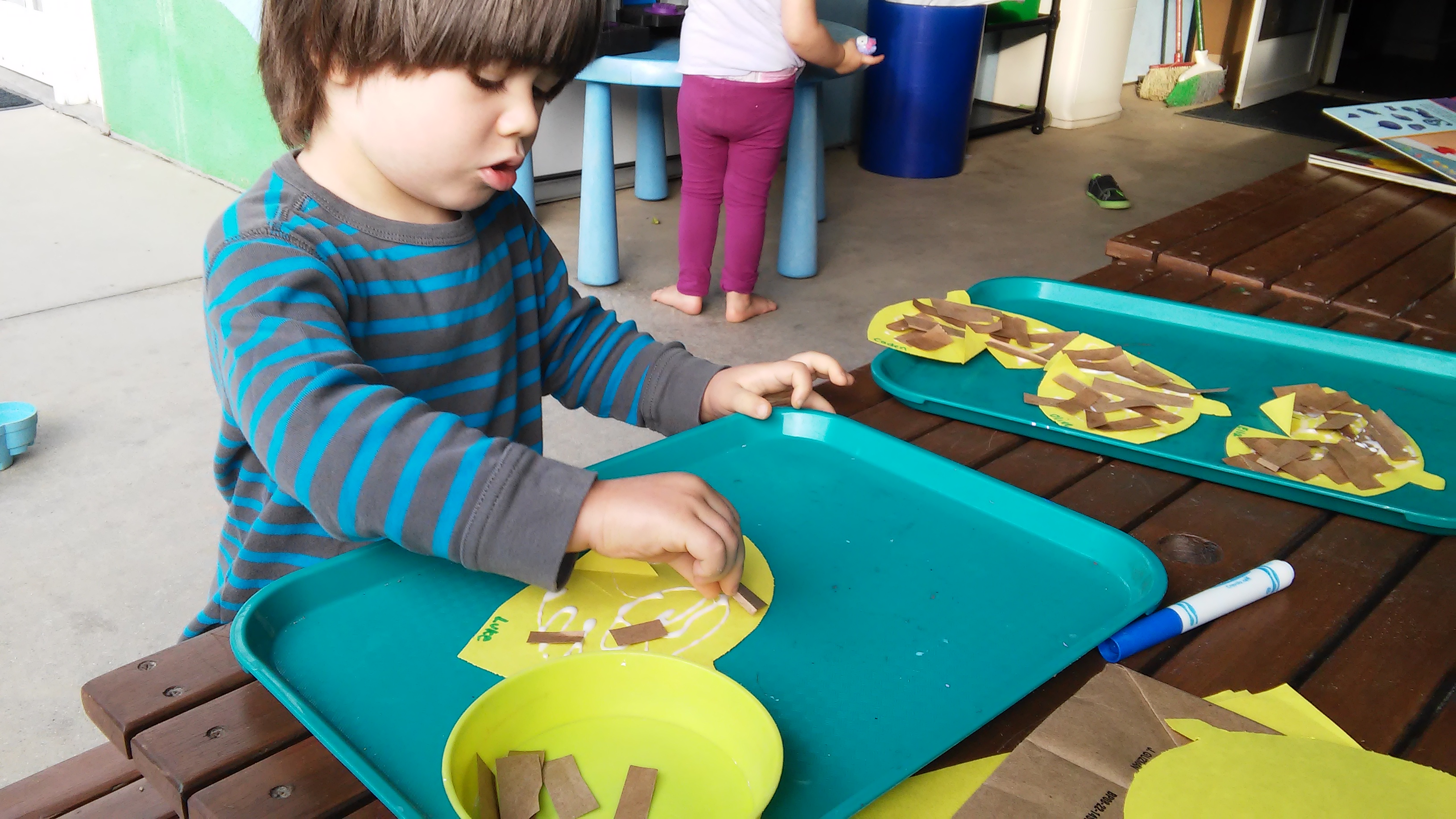
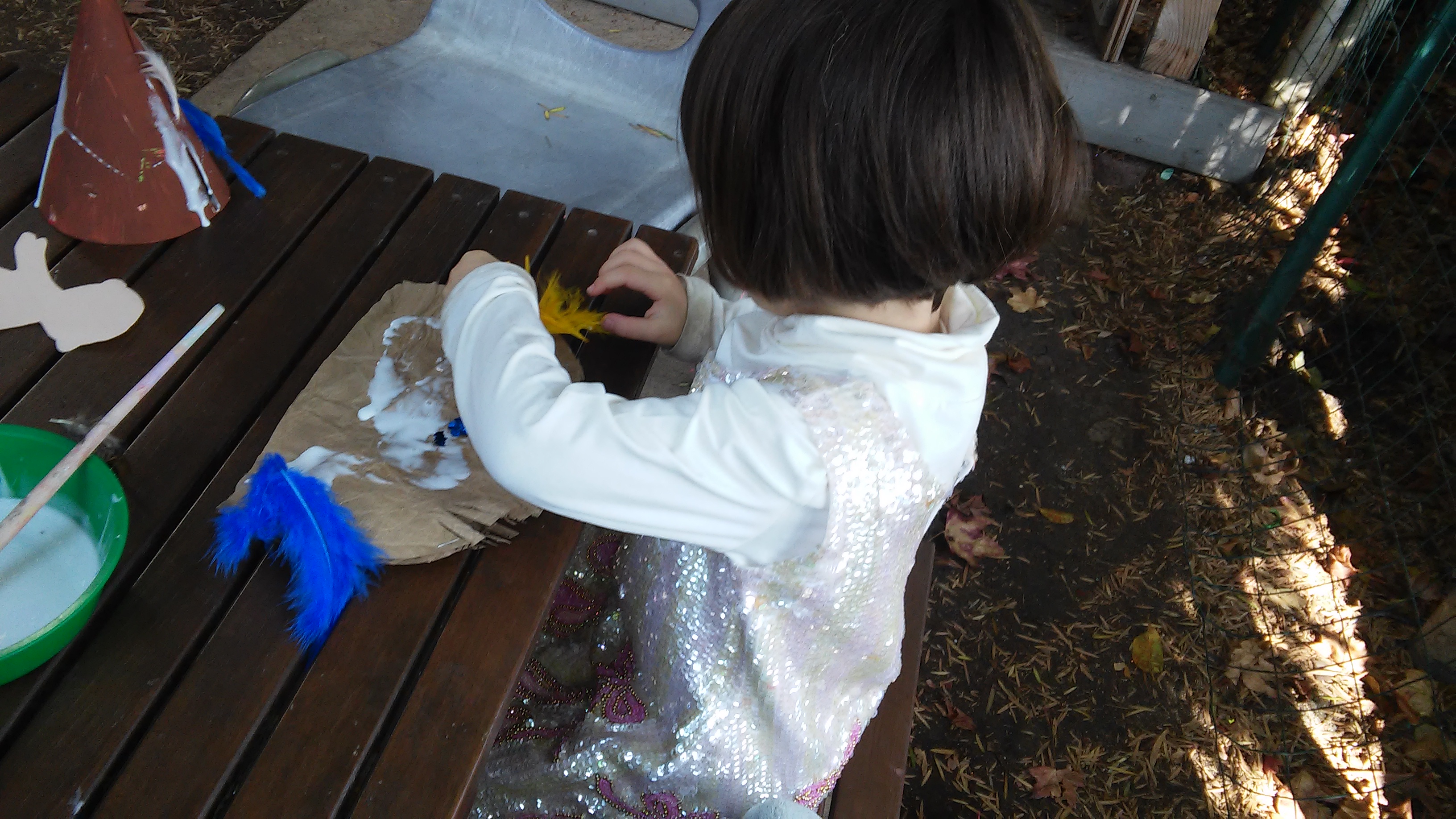
Native American pouches were used for carrying certain objects like a pot or basket is, and native North Americans tended to place great importance on how well-matched a carrying case was to its contents. Not only were native bags specially sized and shaped to hold an individual type of object, they were often decorated to indicate precisely what belonged inside of them.

20141113_102209

There were two very basic styles of American Indian bags: soft pouches, made of tanned animal hides (usually deerskin or elkskin), and parfleche, made of stiff rawhide.

20141113_102144

Caribbean Canoes

Canoes were developed over the course of thousands of years by the native peoples of North America. The word ‘canoe’ originiated from the word ‘kenu’ – meaning dugout. These seagoing boats were used by the Carib Indians of the Caribbean islands, and were made of large tree trunks which were shaped and hollowed, and were strong enough to travel between the islands.

20141113_090054

Wig Wams

A wigwam was a round building with a round top. It was made from tree logs, covered again with bark. Some were additionally covered with mats or hide. Some were quite large – about 6 feet long. There were huge rush mats in front of the fire, and brightly dyed mats on the walls. The women made the wigwam as colorful as they could. Extended families – kids, parents, and grandparents – all lived together in one wigwam.

20141113_153439

Shapes and Emergent Writing

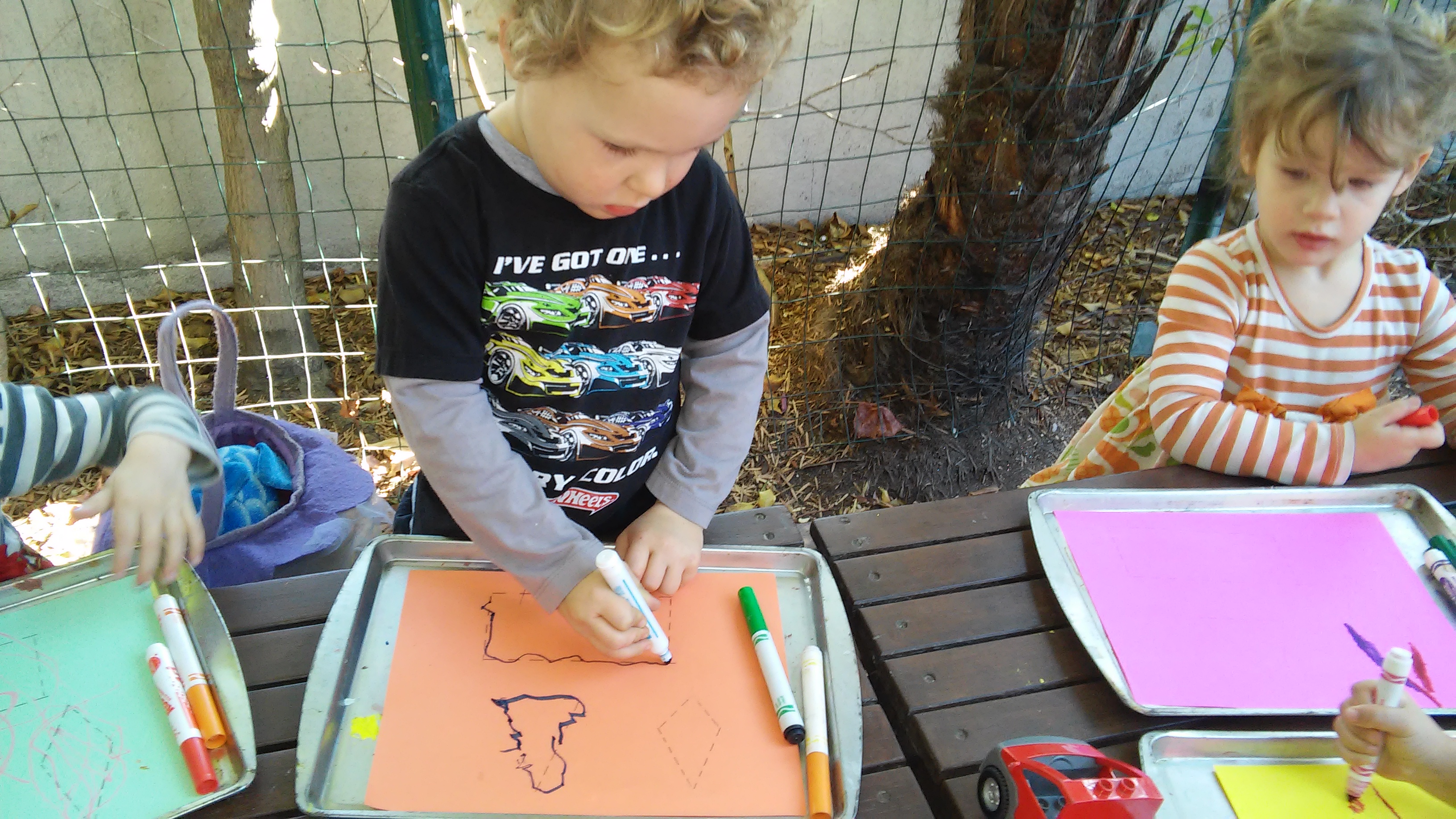
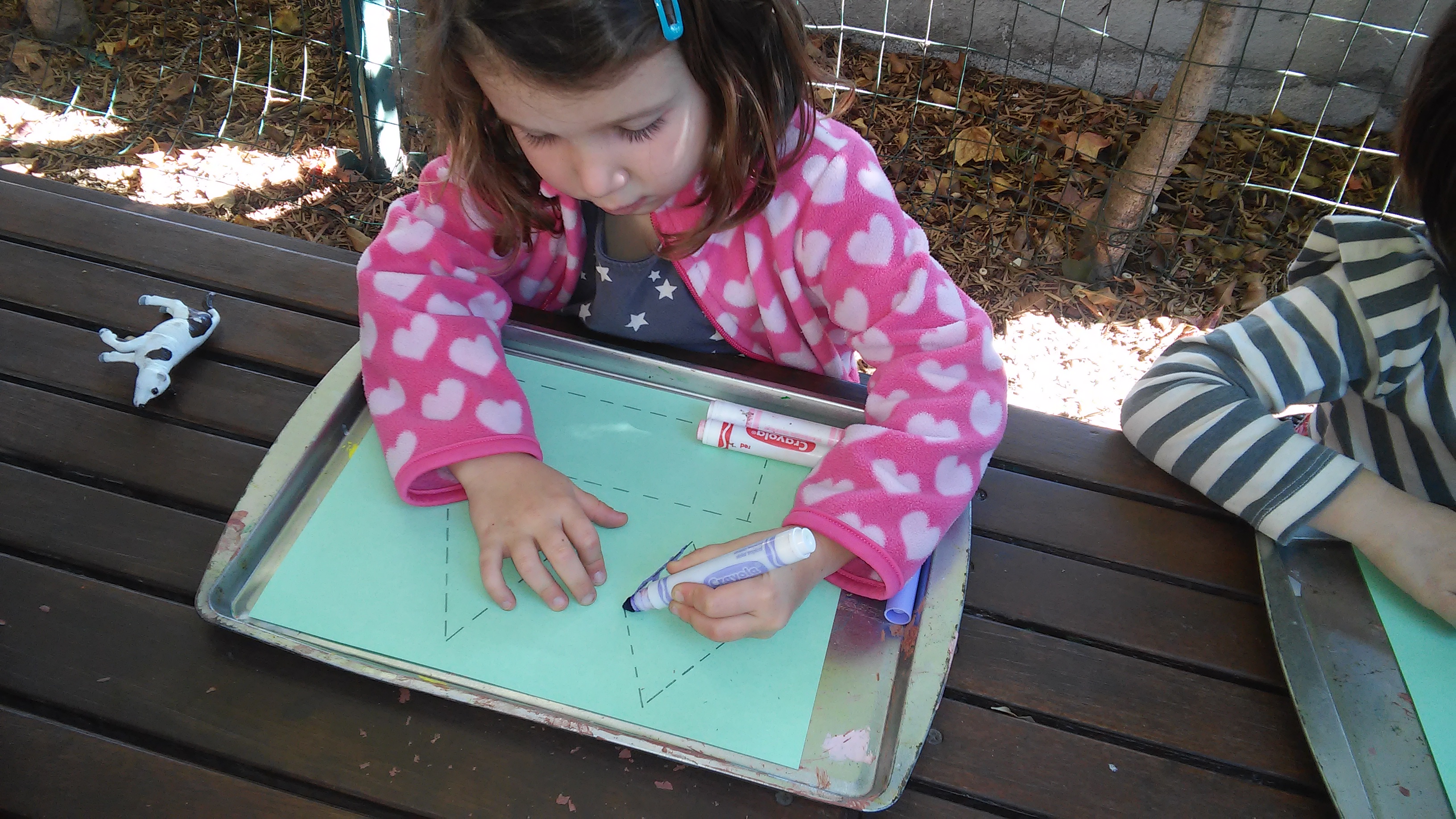
Early writing encompasses the manual act of producing physical marks, the meanings children attribute to these markings, and understandings about how written language works. Early writing is one of the best predictors of children’s later reading success. Specifically, early writing is part of a set of important foundational literacy skills that serve as necessary precursors to conventional reading, including developing understandings of both print and sound (i.e., phonological awareness). Print knowledge includes general understandings of how print works and the names and sounds of the alphabet. Knowledge about sound, or phonological awareness, includes the ability to attend to and manipulate sound structure of language.

20141105_100842

These early skills work together to lay a foundation for later reading success. As children integrate their knowledge of print and sound, they begin to grasp the alphabetic principle, a critical achievement in early literacy. The alphabetic principle is the understanding that oral language is made up of smaller sounds and that letters represent those sounds in a systematic way. Children can grow in their understanding of how print and sound work together through experimenting with writing. Writing serves as a type of laboratory, in which even very young children are actively creating and testing hypotheses about how writing works. The key to carry out these hypotheses is to present a variety of scenarios that enrich the writing experience. For this activity, we used markers (an easy utensil for small fingers to grasp) to create shapes. We focused on proper grasp, control, and left to write sequencing.

20141105_100801

Phonemes and Music

Music allows your little learners to acquire information naturally. It does this by presenting information as parts and wholes. A song gives students a chance to reduce the information into parts yet work with it as a whole. Learning music is an important developmental activity that may help improve the ability for preschoolers to carry out spatial-temporal tasks. Research in this area has concluded that singing even produces long-term modifications in the underlying neural circuitry of the brain. Music also benefits children’s oral communication.

20141027_103836

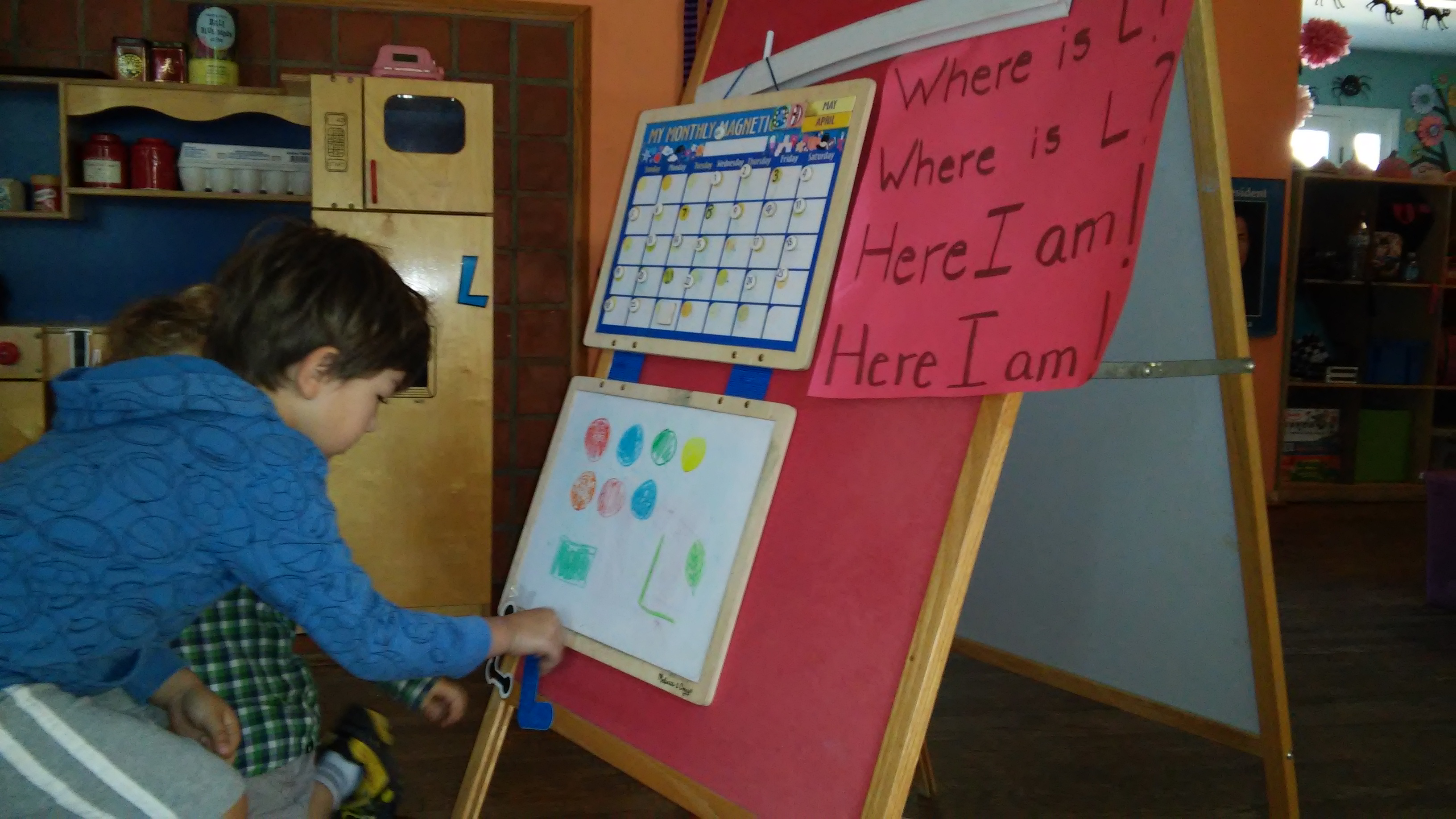
They learn to be attentive listeners, which is a skill that helps their phonological awareness, phonemic awareness, and overall fluency. When used in the classroom, music expands vocabulary, promotes sight words, identifies rhymes and retells stories. To help increase our understanding of the letter L, we played a musical game that required your little one to not only sing about the letter L, but recognize what it looks like, understand its function, and cooperate with their classmates with the goal of finding the L in mind.

20141027_104034

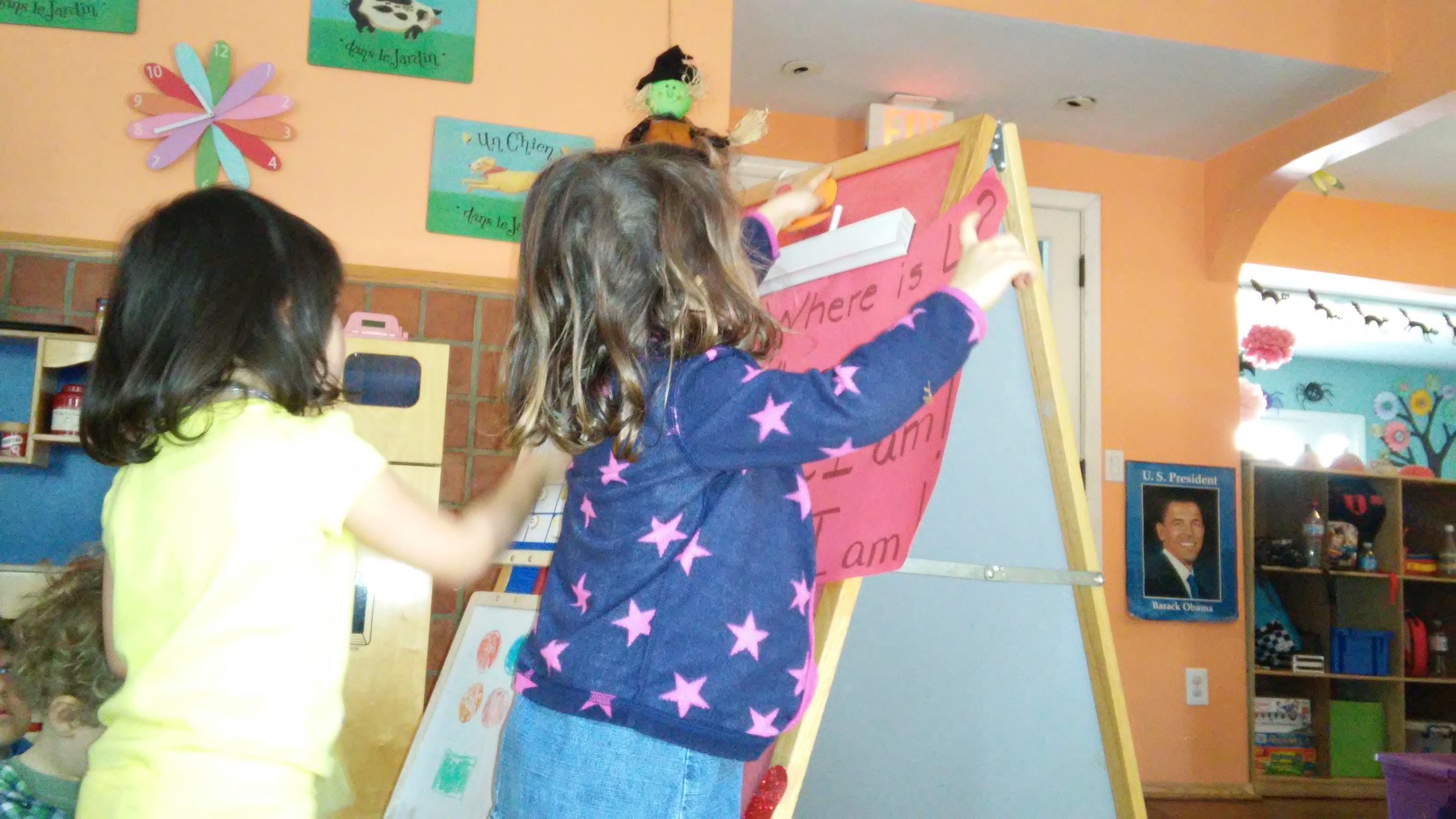
We started with a song that included the lyrics, “Where is L, where is L? Here I am! Here I am!”. While singing this song, your little one scoured the room for hidden Ls. With the help of their classmates, they located one L, brought it to the board, and finished the second half of the song. The lyrics for this second half consist of “How are you today, L? What sound do you make, L? La la la. La la la”. Your budding vocalists enjoyed searching for their letters, and cheering their classmates on as they learned about this most exciting phoneme!

Expanding Ghost Experiment

Young children are naturally curious and passionate about learning. In their pursuit of knowledge, they’re prone to poking, pulling, tasting, pounding, shaking, and experimenting.

20181012_120141_HDR

From birth, children want to learn and they naturally seek out problems to solve.

ghost9

Young children should learn science (and all other areas of study) through active involvement – that is, through first-hand, investigative experiences.
20181012_114906

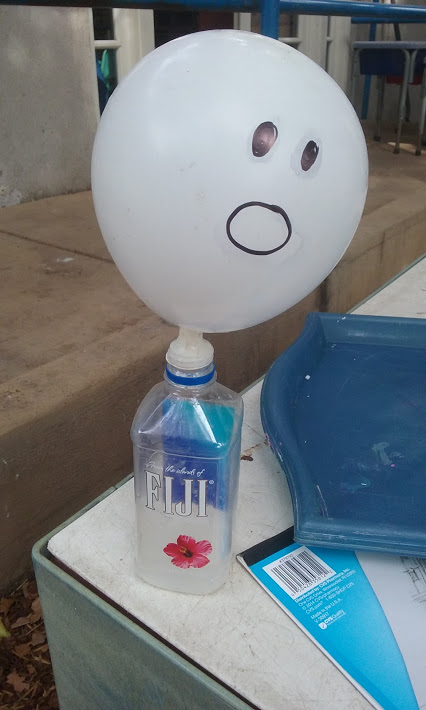
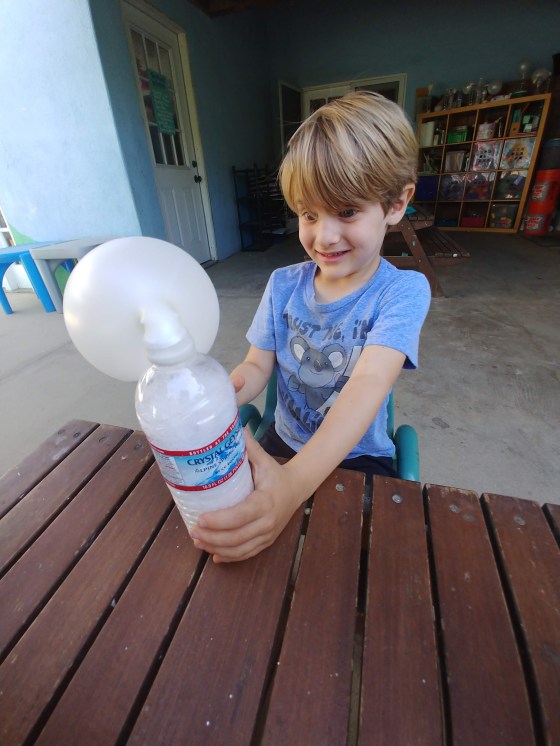
For this activity, we learned about the interaction between carbon dioxide and oxygen. Through our Expanding Ghost experiment, your little ones observed, predicted, and explored the physical properties of these two gases. We began by pouring a half cup of vinegar into an empty water bottle.
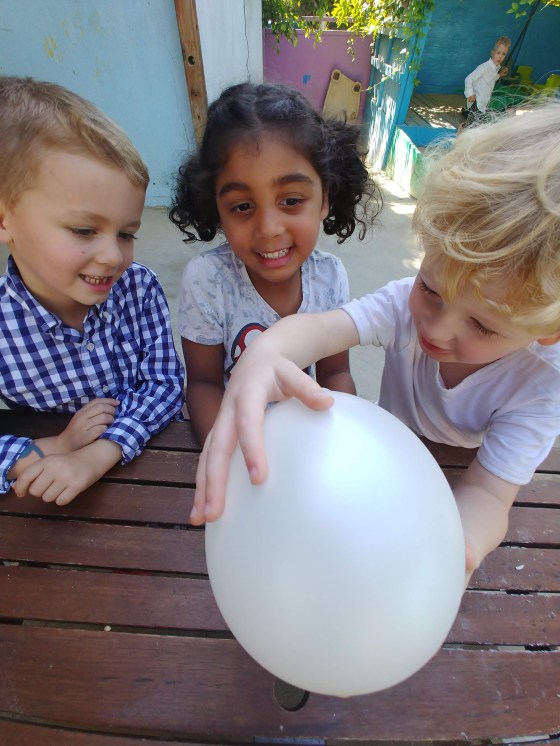
20181012_114329

We than drew a face onto our deflated balloons.
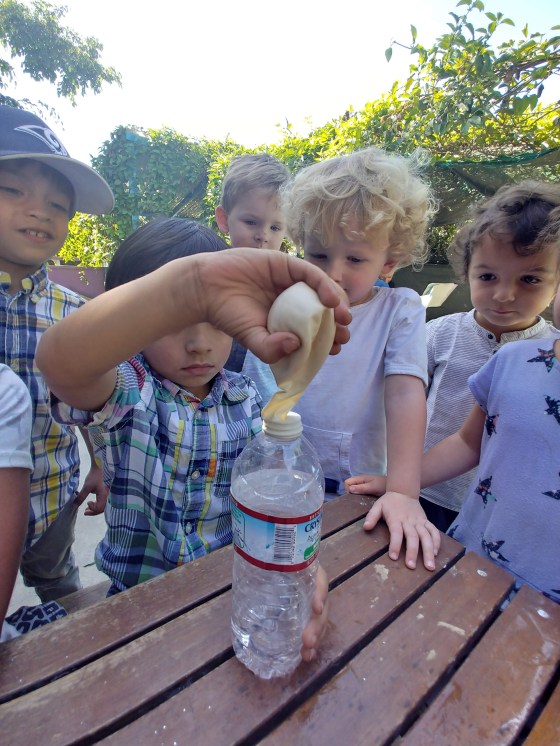
20181012_113617_HDR

Next, we placed the funnel into the open end of the deflated balloon and poured in baking soda.
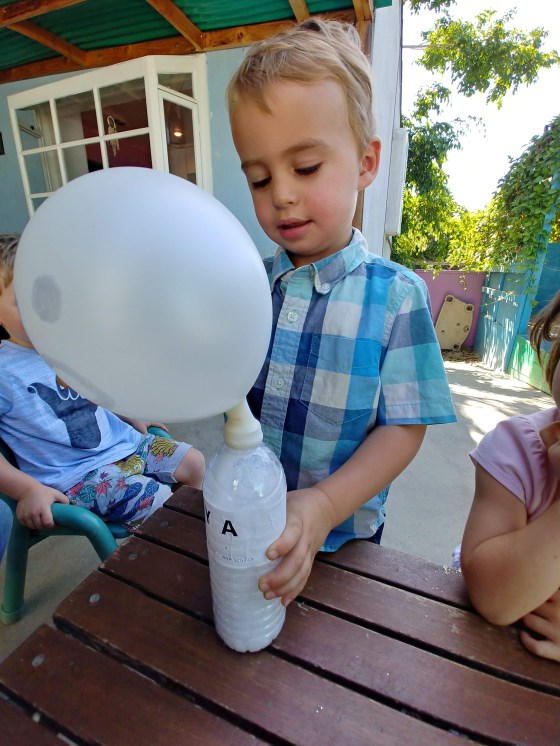
20181012_115704_HDR

After that, we secured the open end of the balloon onto the top of the bottle, careful not to dump the contents of the balloon into the bottle quite yet. Finally, we held the balloon upright, allowing the baking soda to fall into the bottle and mix with the vinegar. The result is an expanding ghost! How does it work? The product of the vinegar and baking soda is carbon dioxide, a gas present when we breathe out. The carbon dioxide inflates the balloon.
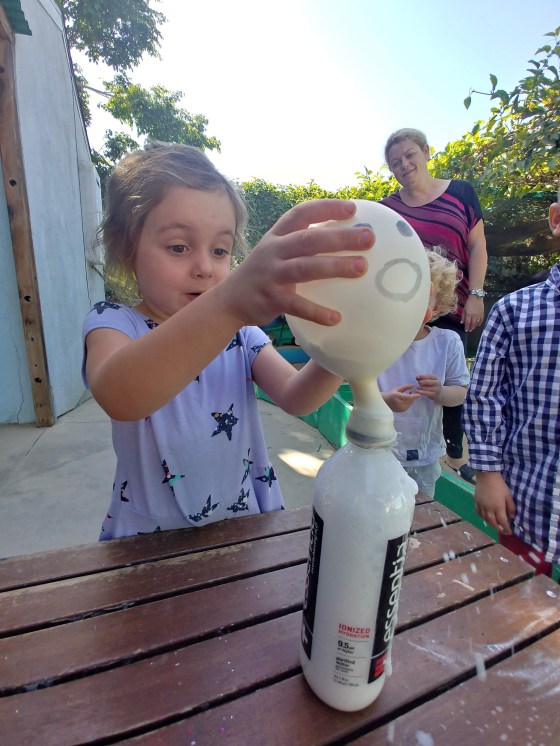
20181012_113157_HDR

Science activities benefit your child in several ways. It involves asking questions, probing for answers, conducting investigations, and collecting data.

20181012_114637_HDR

Science, rather than being viewed as the memorization of facts, becomes a way of thinking and trying to understand the world. This approach allows children to become engaged in the investigative nature of science and to experience the joy of having wonderful ideas.
Circle Color Matching

A lot of activities help in the development of fine motor and writing skills, including weight bearing on the hands, postural control and shoulder stability, and muscle development. There are also many components of fine motor skills, some of which are, development of the arches of the hands, the thumb and its webspace, separation of the two sides of the hand, which helps with in-hand manipulation, bilateral integration, and the development of hand and finger strength.

20141030_101203

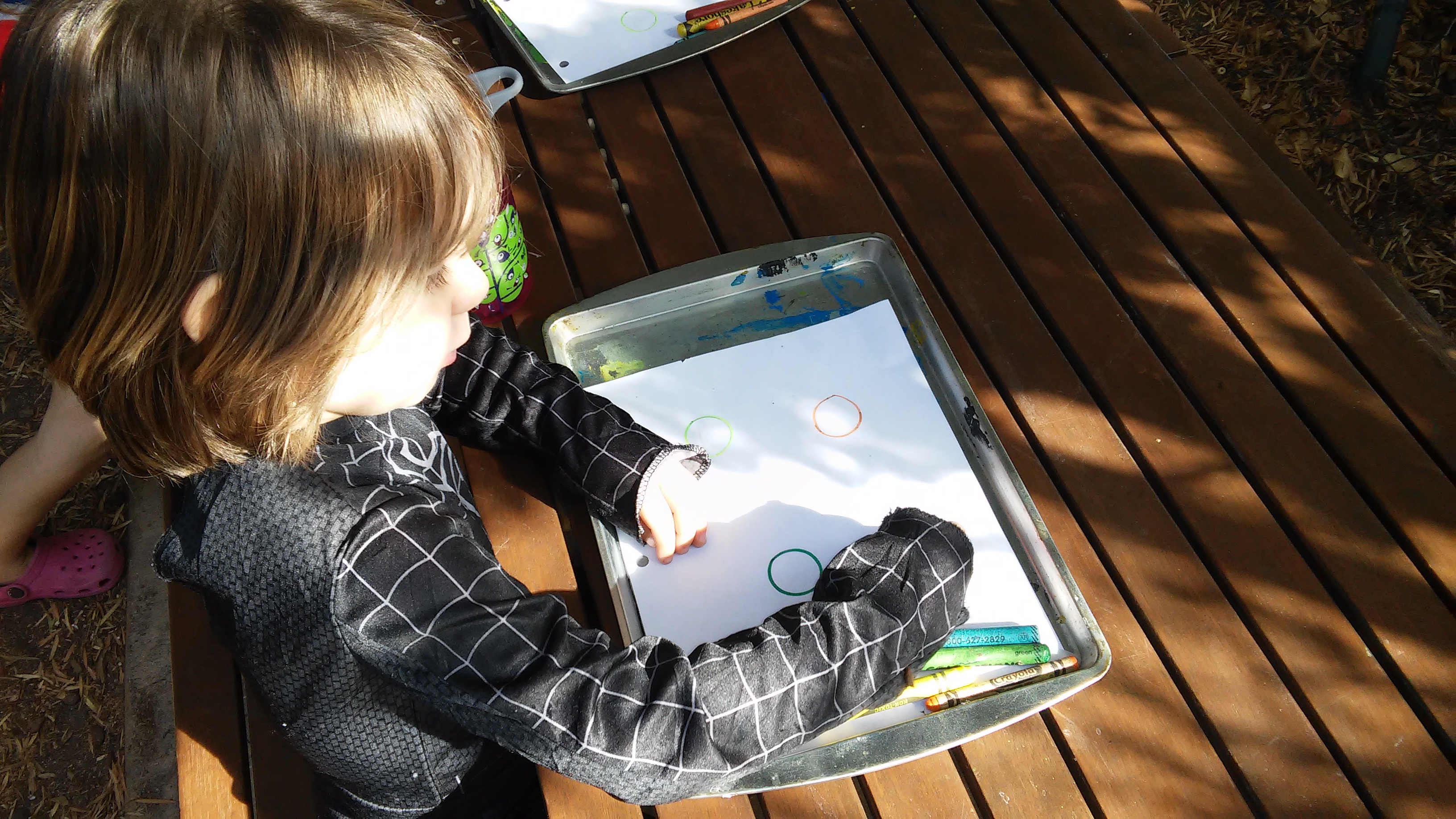
This activity required your budding writers to fill in different colored circles with a crayon. Holding a crayon is self-corrective, which means that there is only one way to grasp it properly, Because we are continuing to promote the tripod grasp, we are constantly doing activities to develop this.

20141030_101358

Your little ones were also directed to form concentric circles, which aided the progression of hand strength and finger grip. Lastly, they were given five different crayons to match the five different circles on their papers, which involved significant pre-math skills, such as recognizing visual patterns, sorting objects, and one-to-one correspondence.

20141030_101151

Playdough Learning: Straws and the Letter L

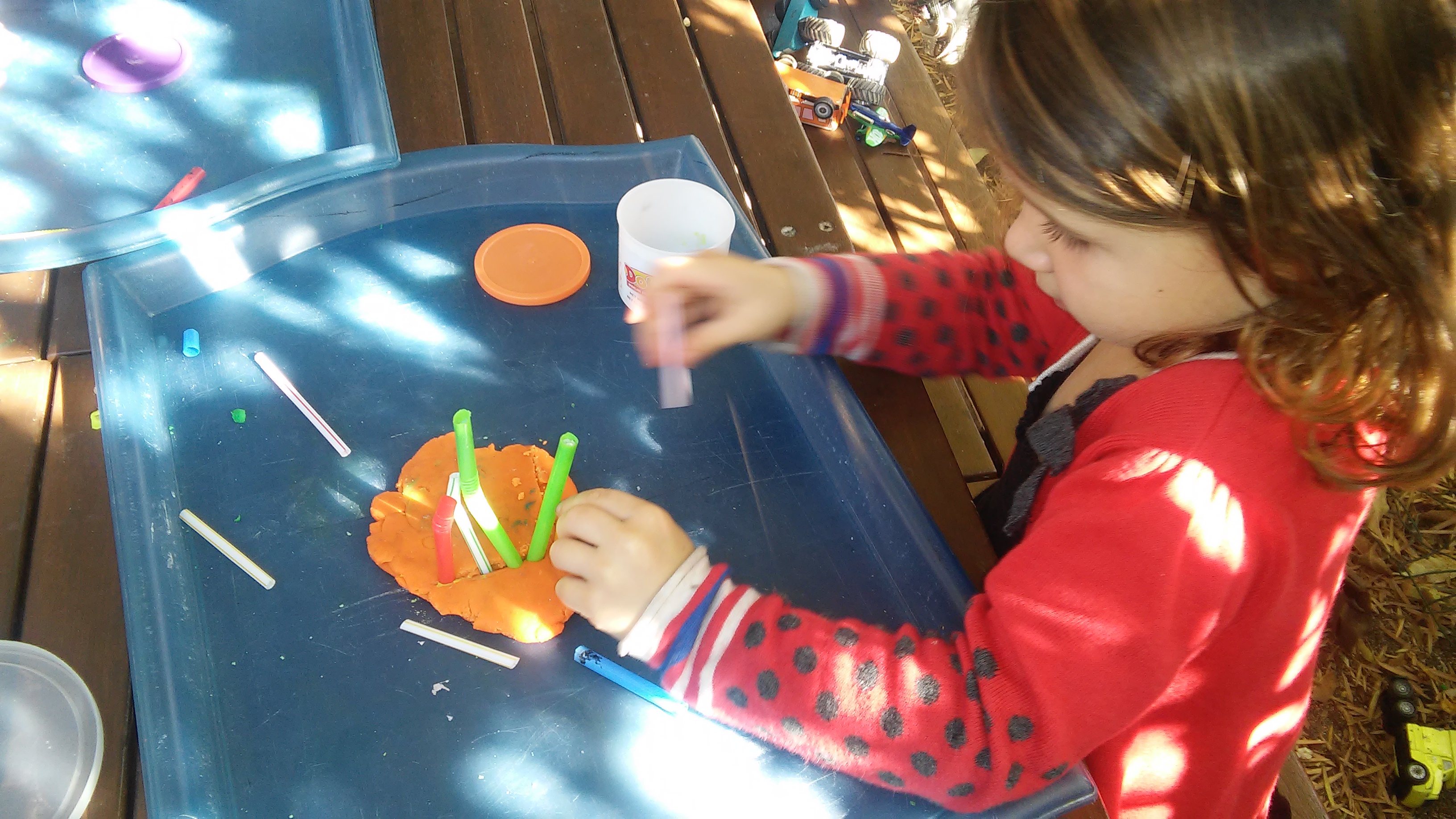
Many children feel that practicing handwriting is a chore, an unwanted burden and something they dislike spending time on. With all the technology and electronic devices we have today, it almost seems like handwriting is becoming irrelevant. In our class, it isn’t. There are several ways to form letters, and in our class, we learn to construct them properly without even using a pencil! As your children are introduced to letter formation, they benefit most from a hands-on approach using manipulatives. Even before children can properly grasp a pencil they can practice this way and get a feel for the way a letter should be formed. Miss Carrie models the correct formation with the children and then lets them explore and in essence “create” letters. For this particular activity, we practiced creating letter Ls with Playdoh and straws. Each child poked straws into the Playdoh to create the letter L.
20141029_100539

Practicing writing doesn’t mean you have to sit at a table. Many younger children are resistant to sitting and practicing. Those same children may delight in writing in dirt with a stick while playing outside. You’d be surprised at how much more fun writing is when you simply do it at a different time or place than expected. Try it!

20141029_100546

Leaves of Grass (and Playdough!)

In order to be ready to write, children need to have developed hand skills. This means they need to have the strength and dexterity to handle, and control, small objects with their hands. But, they will also need to develop the muscles in their forearm and upper body to provide the strength and stability that will allow them to use their hands to manipulate and control writing instruments.

20141028_101635

Eye-hand coordination is another pre-writing skill, as is the ability to process sensory information. The brain coordinates tactile and movement sensations as a child is writing, which allows him to make changes as needed to maintain muscle control. One of the best ways to prepare your child for the exciting world of writing is to provide lots of opportunity to work with Play-Doh and clay which helps develop finger and hand strength and control.

20141028_101536

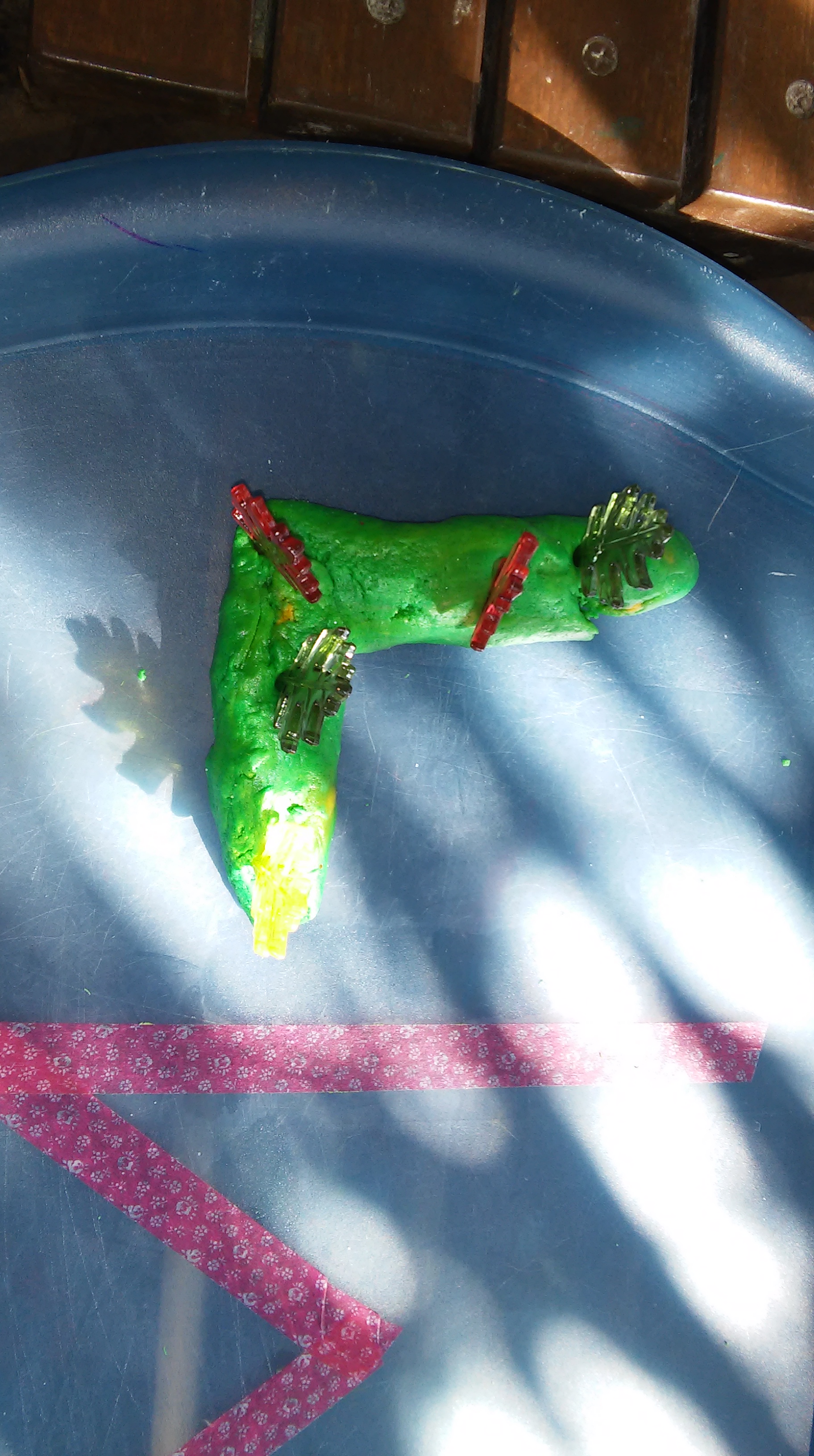
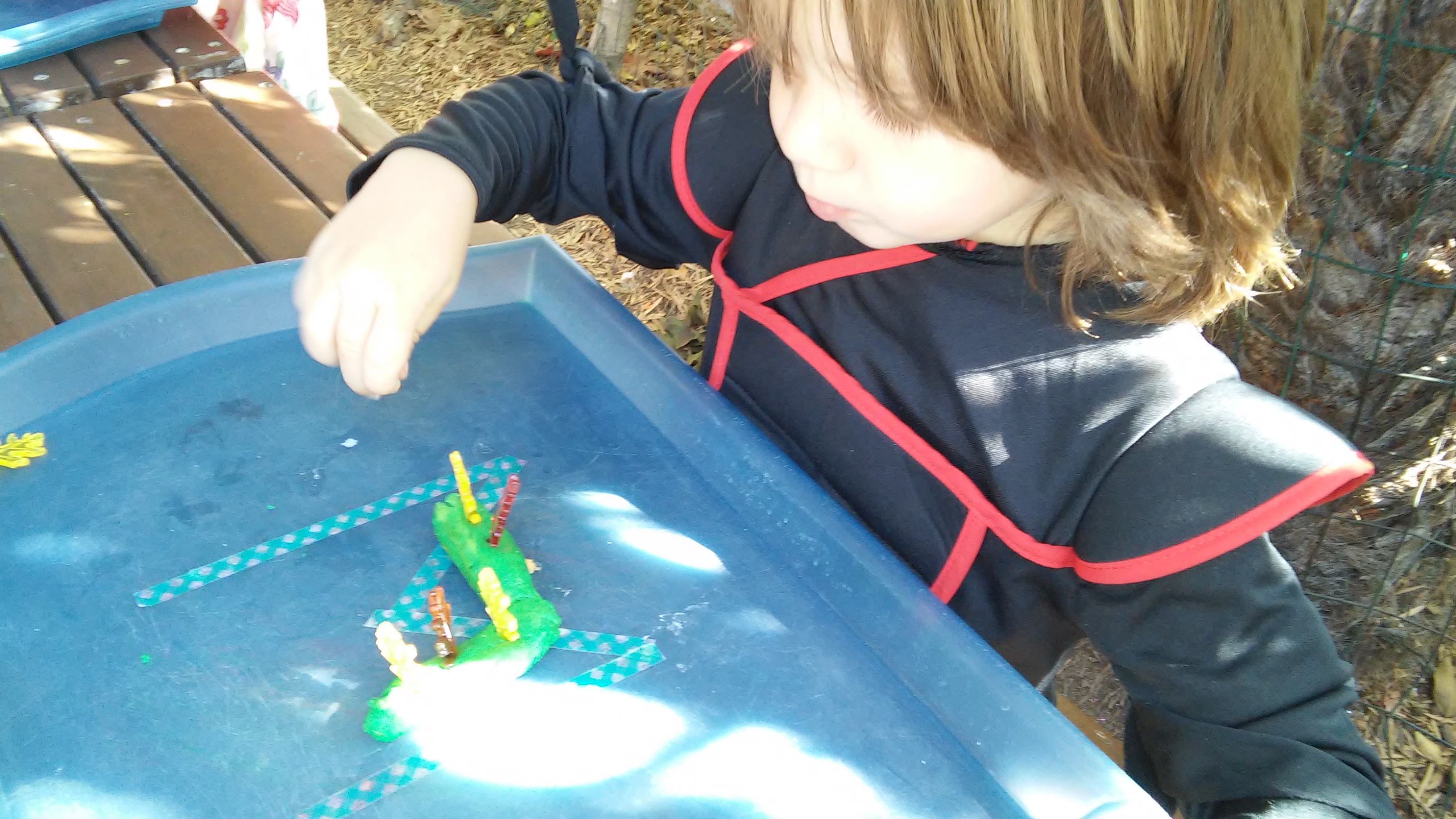
When they are playing with these materials, children are squeezing and kneading, poking and pinching, rolling and pressing – all excellent strength building movements. For this activity, we talked about the letter L. We initially learned a song about this letter, which included silly words that reinforced the sound that L makes. We then discussed a variety of words that began with this letter. Lastly, we stuck plastic “leaves” into green Playdoh. As they shaped their Playdoh into the letter O, they were strengthening the small muscles required for writing. The muscles in the palm of our hands control the movements of the thumb and fingers. When a child has developed strong fine motor skills, he is able to control the thumb and fingers individually, rather than just grasping items with his entire fist as an infant does.

20141028_101601

Blocks and the Letter O

When learning about letters, it is important that preschoolers only focus on one sound at a time. The letter O, for example, has many different sounds. For this week, we chose to focus on its short vowel sound. Your child learned, initially, that this is the first letter in the word October. We then came up with other words containing the same ah sound.

20141010_101435

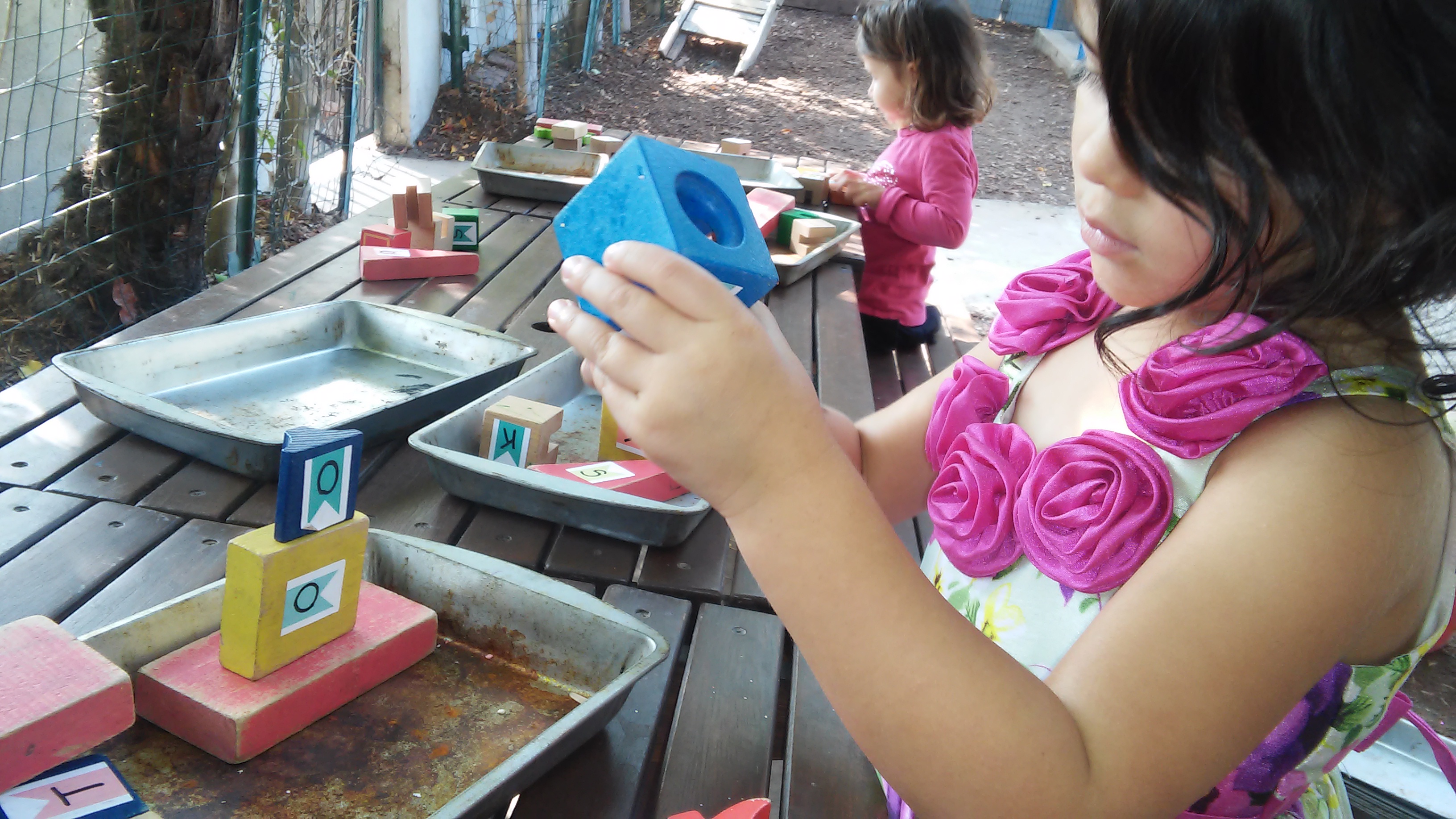
The second component in this activity involved classifying letters and building a block tower. Regular blocks were affixed with a variety of letter stickers. Some contained O, while others held other letters. Your child was then encouraged to separate the Os from the rest of the letters. They then took their “O” blocks and constructed a tower. One building block of reading is learning that each letter has a corresponding sound. This doesn’t need to be dull or full of repetitive exercises. Your little scholar can have fun  and learn at the same time!

20141010_101218