Tag Archives: cooking
Graham Cracker Tectonics
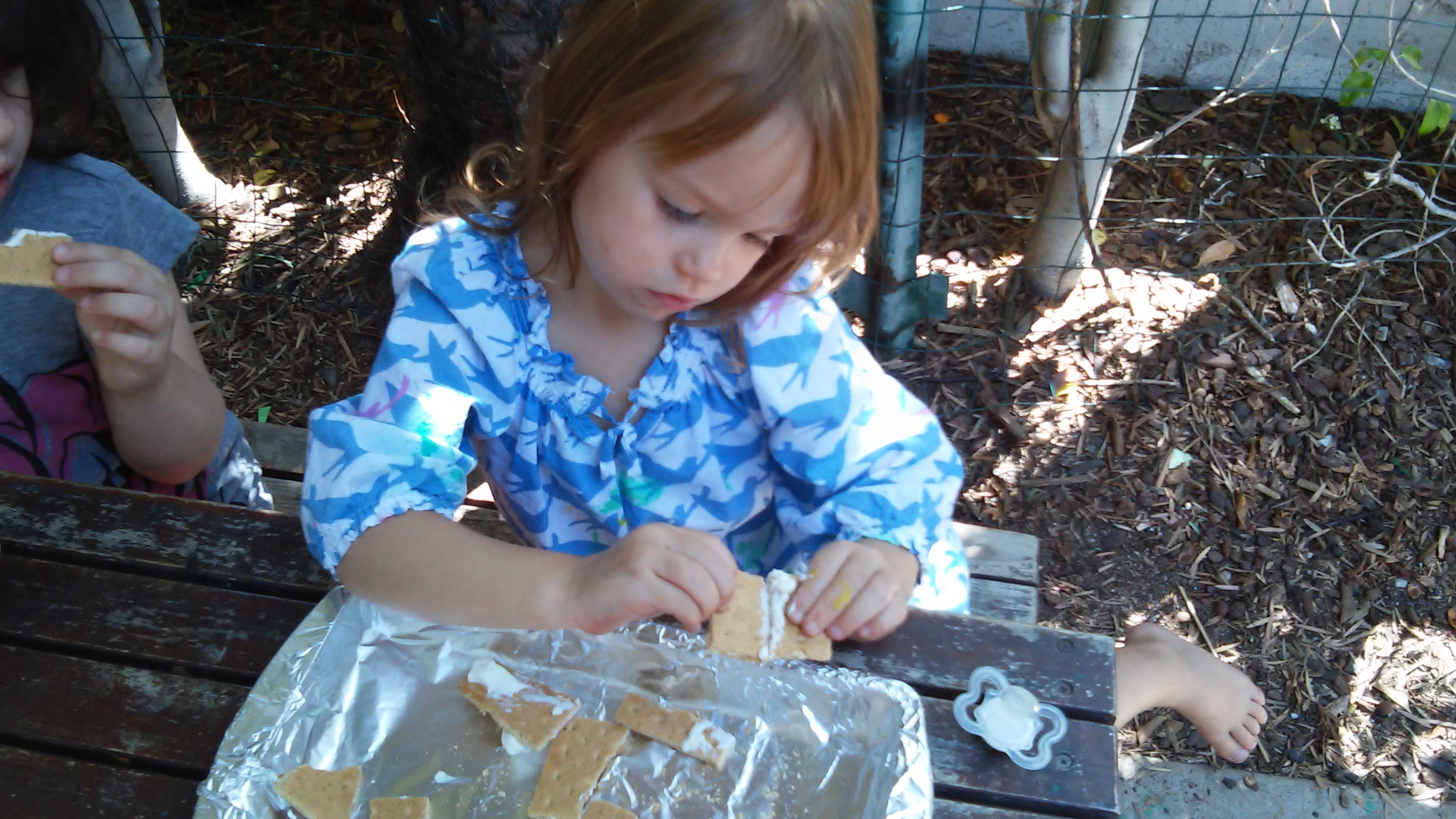
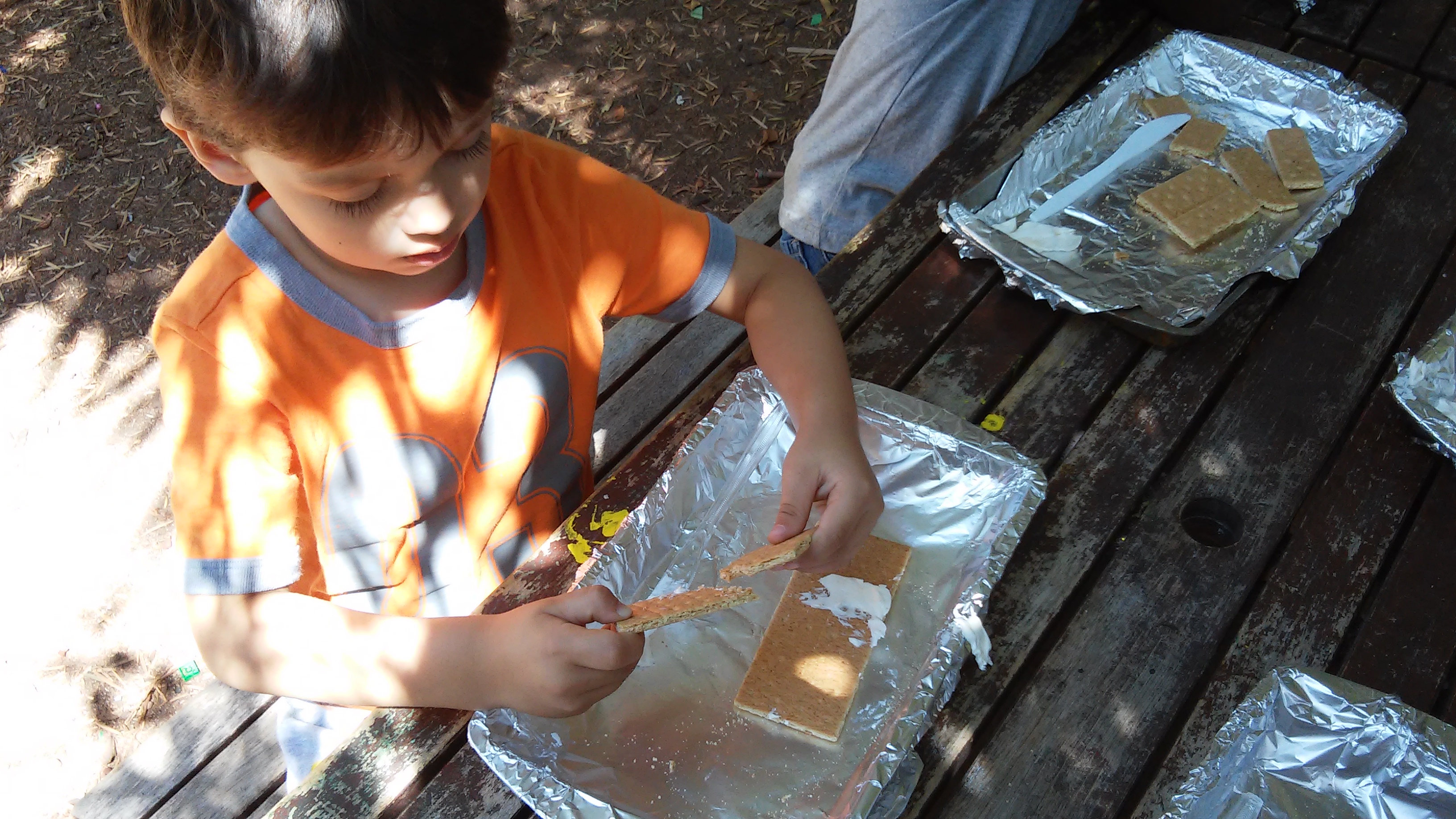
Earthquakes occur to relieve the tension caused by colliding plates beneath the ground. To demonstrate the physical impact of these collisions, we rubbed graham crackers together. This enabled your little one to observe how the friction of this movement altered the shape of the cracker, and how this relates to earthquake formation.
Though the concept of plate tectonics may be problematic to the preschool learner, experiences that provide them with a three dimensional reproduction of the the desired idea may assist them in understanding what it is that they are seeing. As they perceive the cause and effect of their actions, they can use their words to describe what they perceive as they seek out additional support.
Tadpole Cucumbers
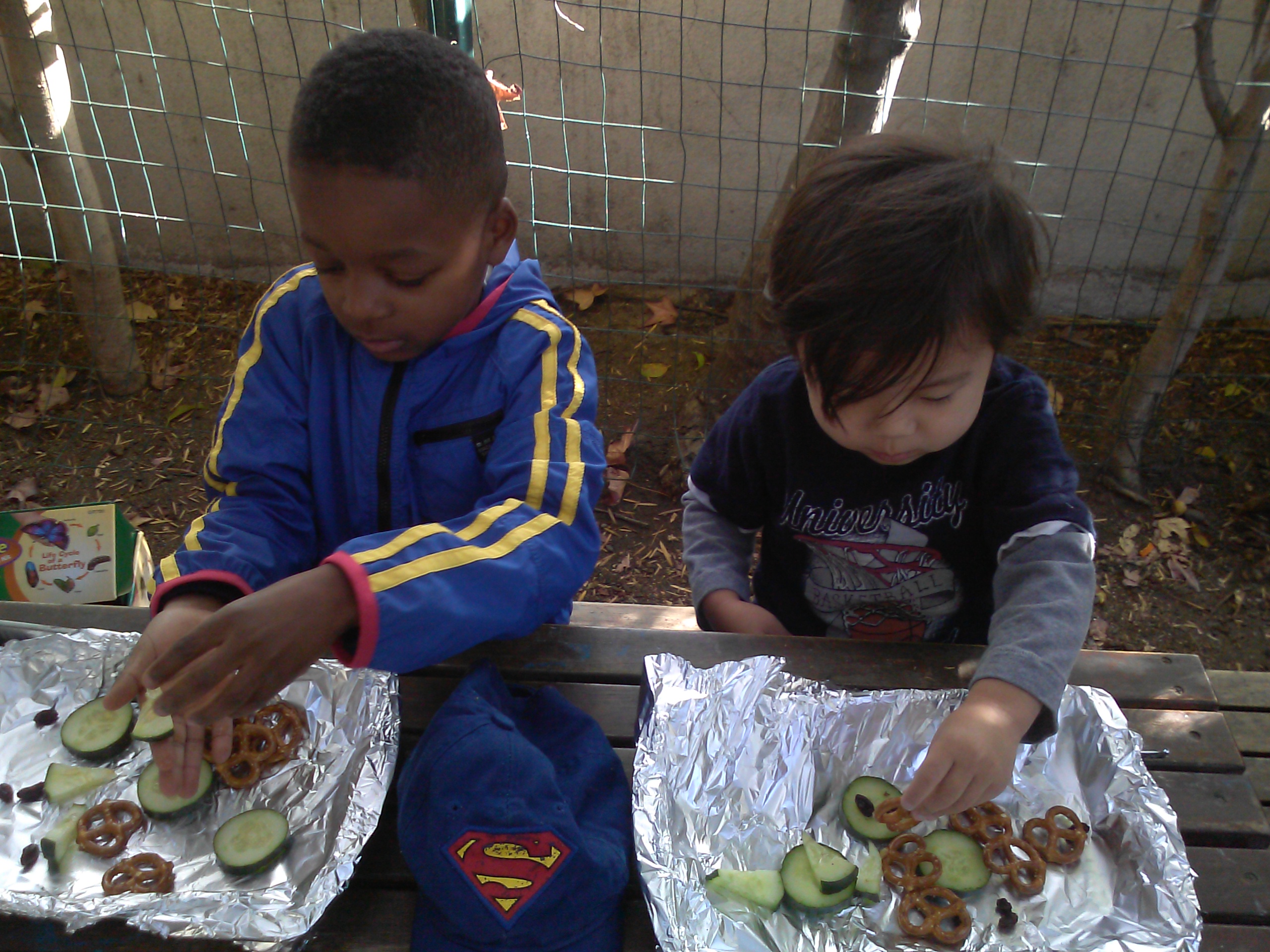
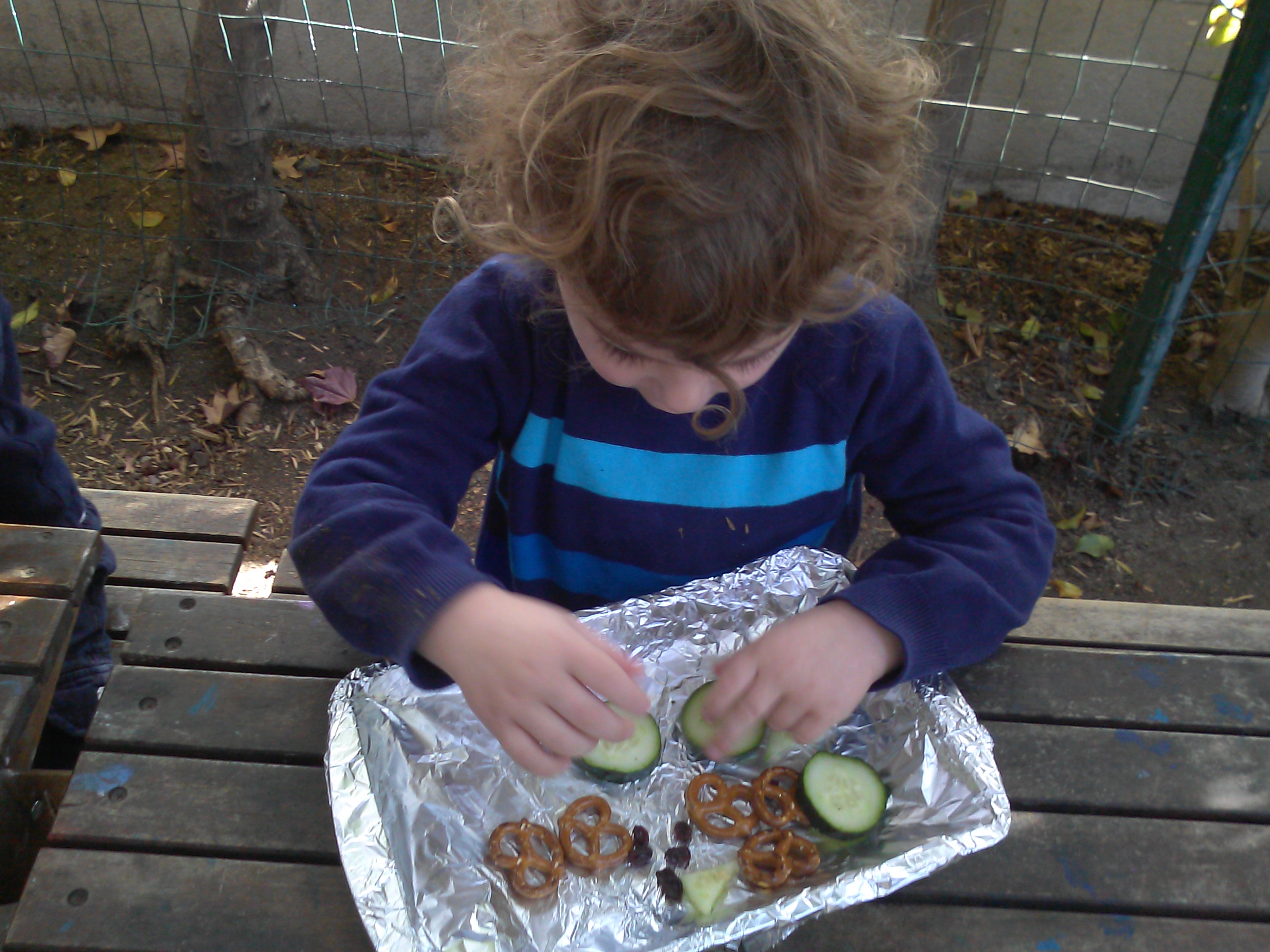
Throughout the week, we have been talking about the life cycle of the frog – from its transformation as an egg to a tadpole, a tadpole with two legs to a froglet, and its final progression to becoming an adult frog. To foster an understanding of the various life cycles, your little one combined cucumbers, raisins, and pretzels as a means to create their very own amphibians! When children construct their own version of recently acquired material, they learn invaluable lessons that stay with them throughout their lives. As they mix their ingredients, and see their creation come to life, the sense of ‘I did it’ is a very important lesson they learn. As they receive the credit for their creation, they become proud of their actions, and have increased self-regard as a result. Lastly, working together encourages creativity, bonding, planning, thinking, and time management.
Banana Ghosts
Strong counting skills will help your preschoolers progress as mathematical concepts become more complex.

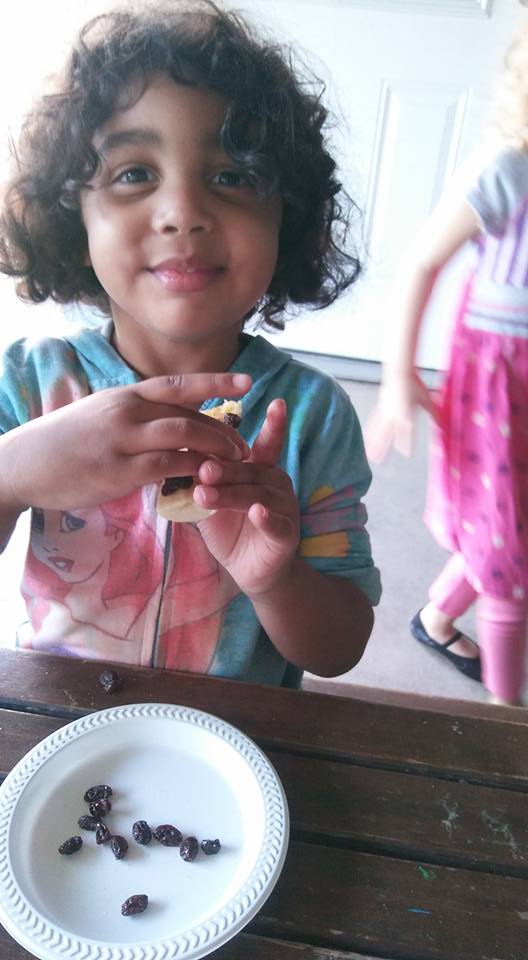
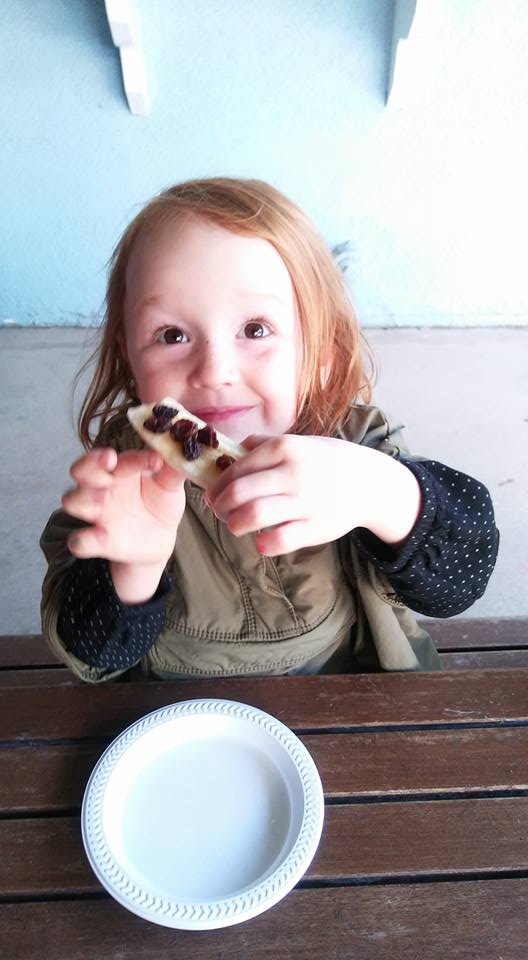
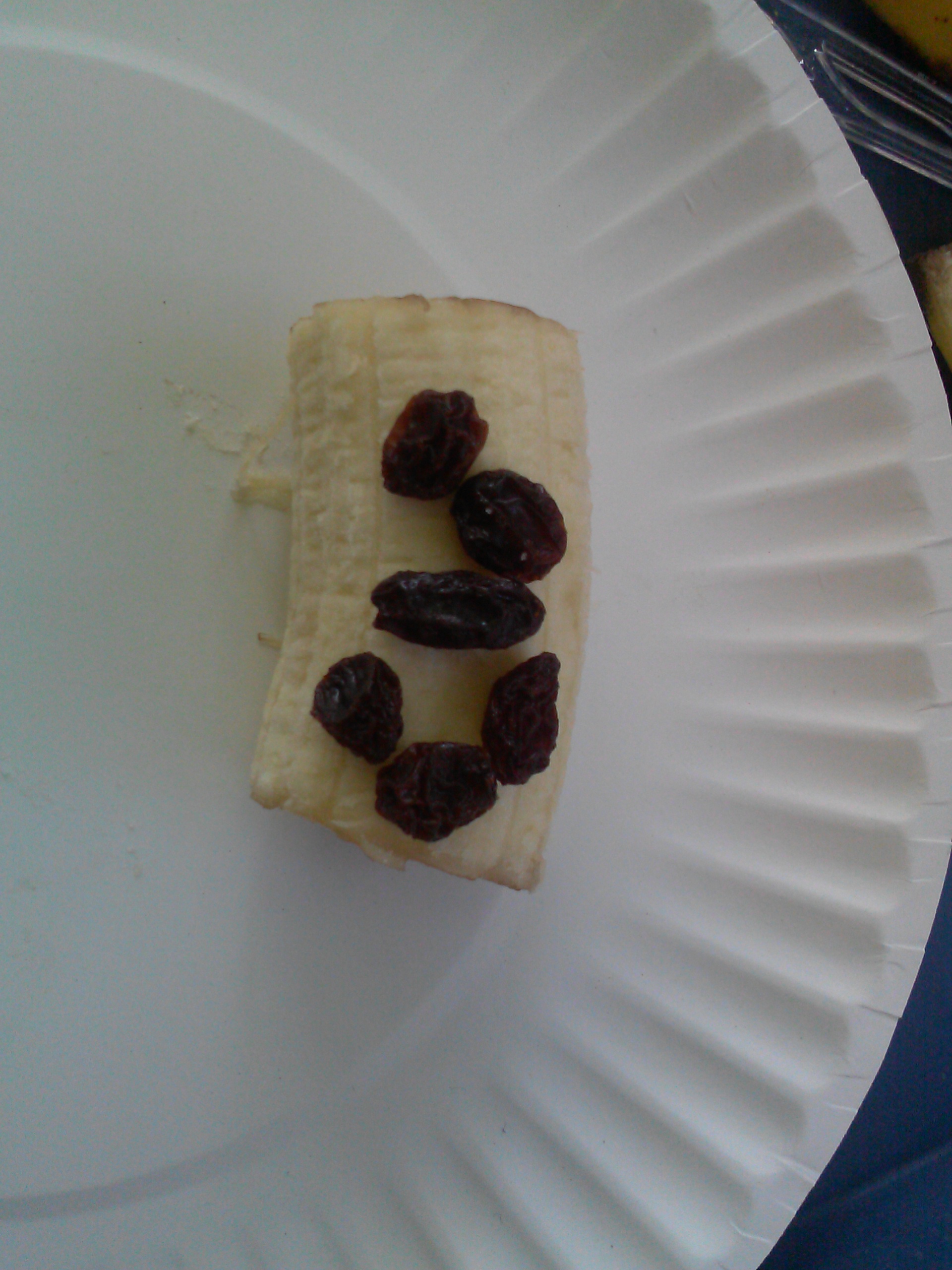
There are several ways to practice counting. To integrate this task into our theme, we created ghosts out of bananas and raisins.

We discussed how many eyes the ghost should have and then counted the number on our fingers.

We then acknowledged that we all have only one nose, and that more raisins would be required to create a mouth.

Mastering number facts, such as sequencing and its application to real world experience, are necessary for the continual development of pre-math skills.
Mead
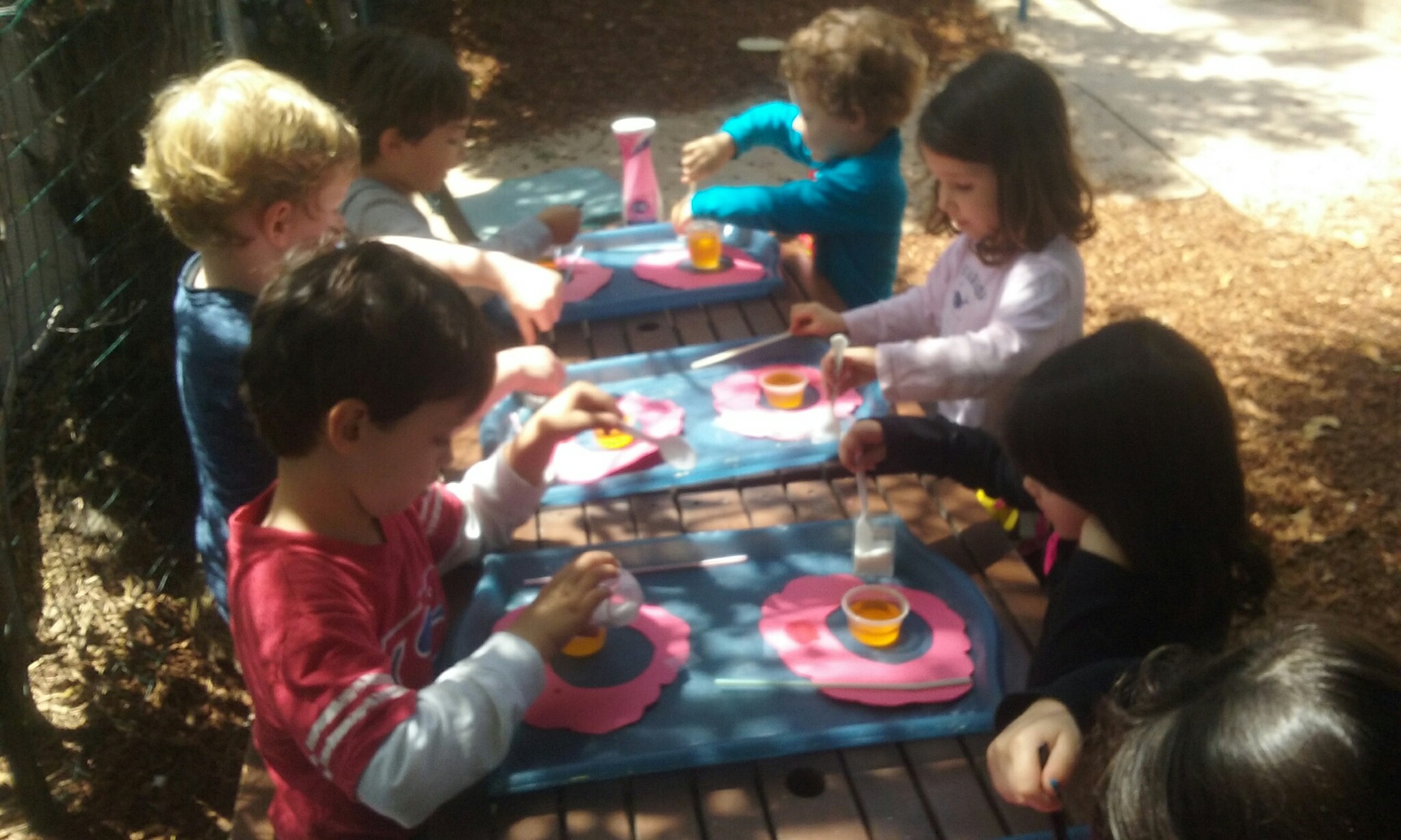
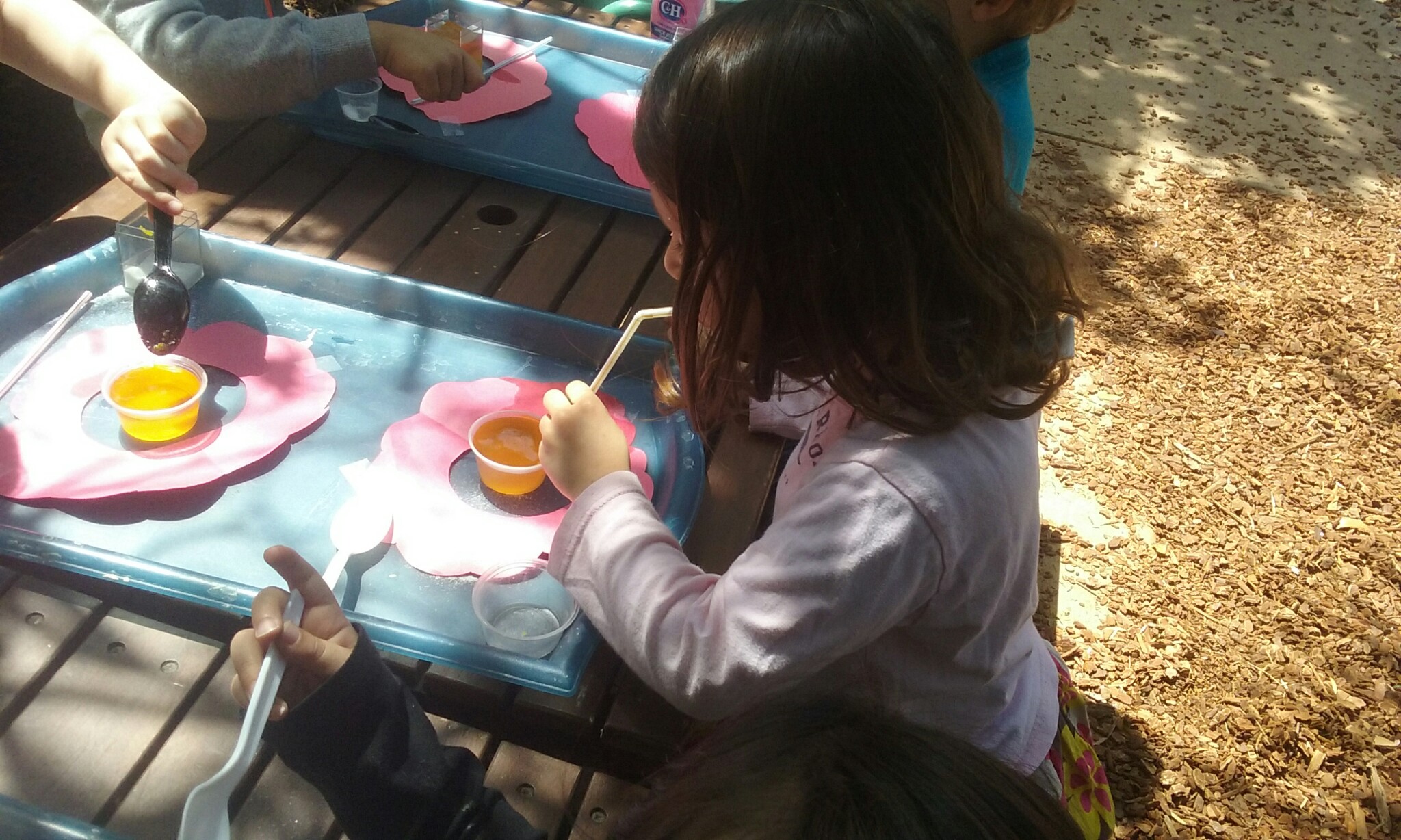
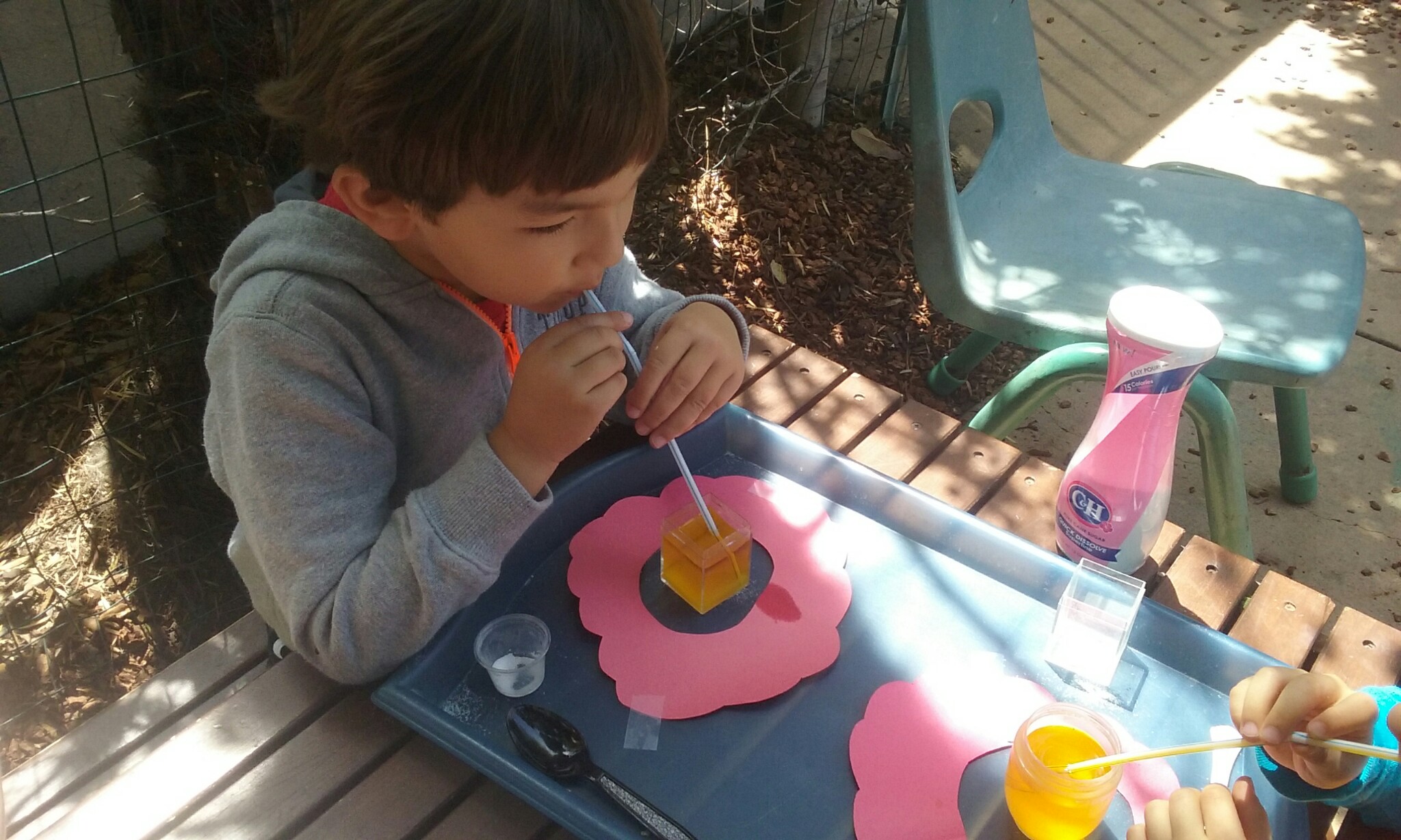
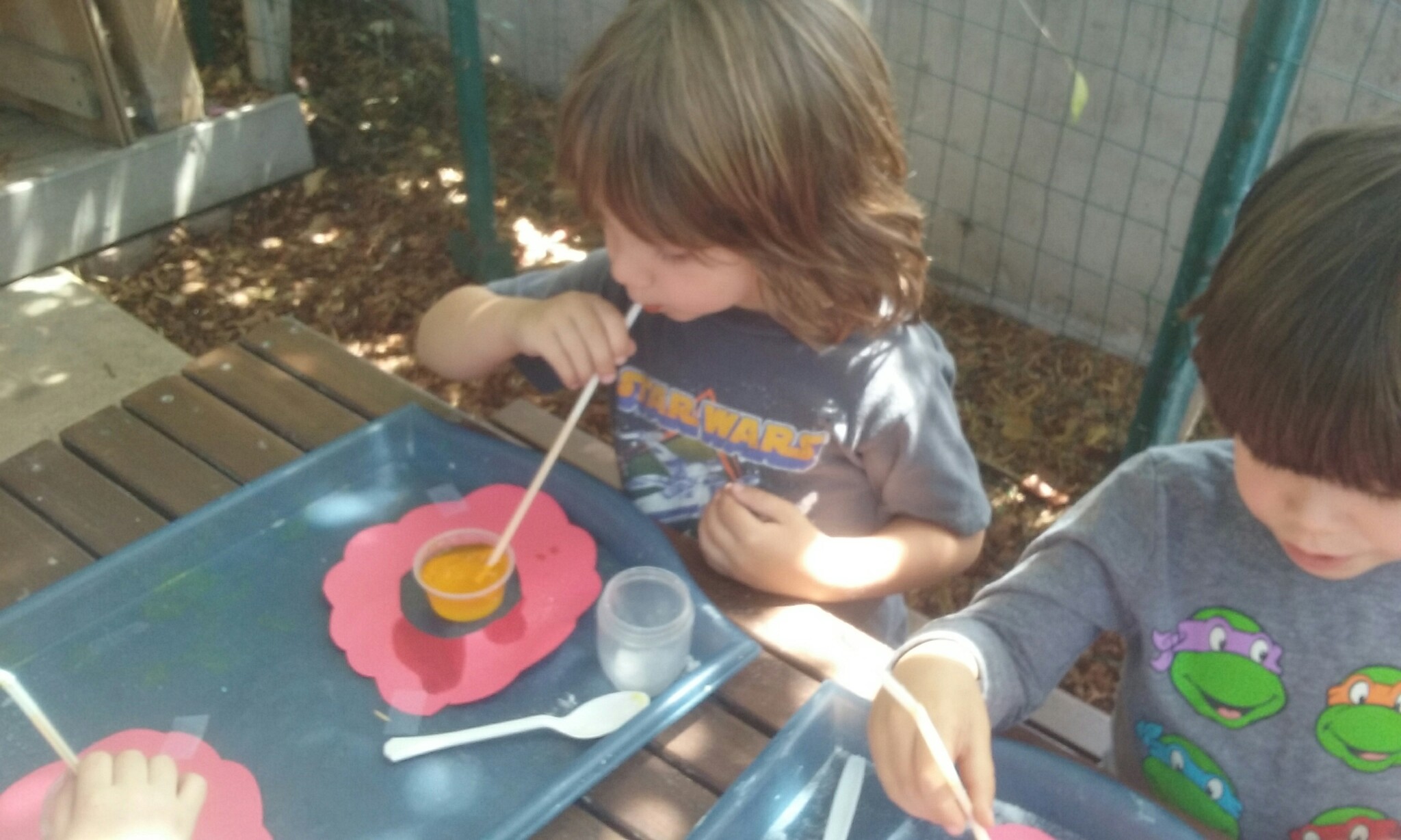
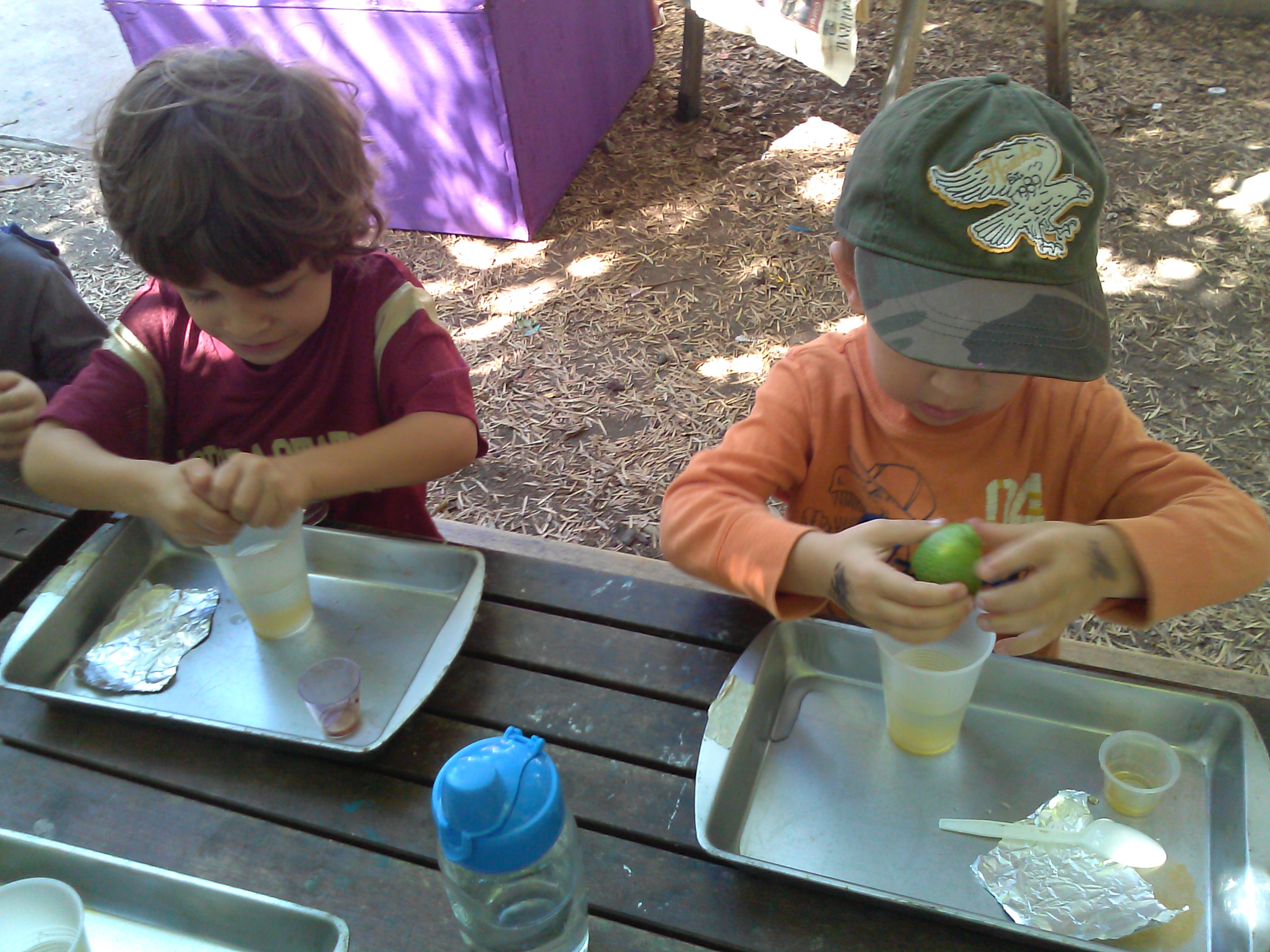
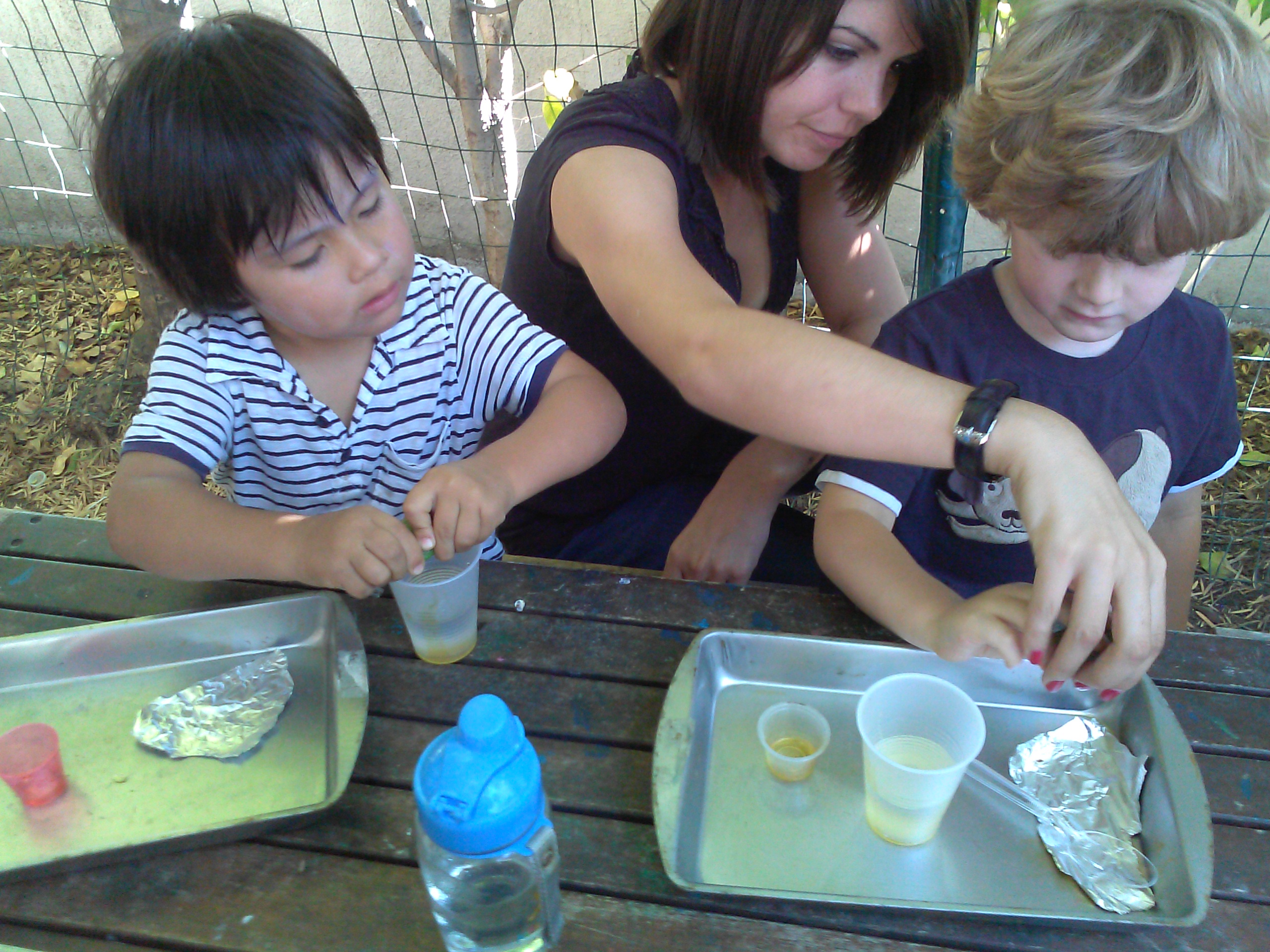
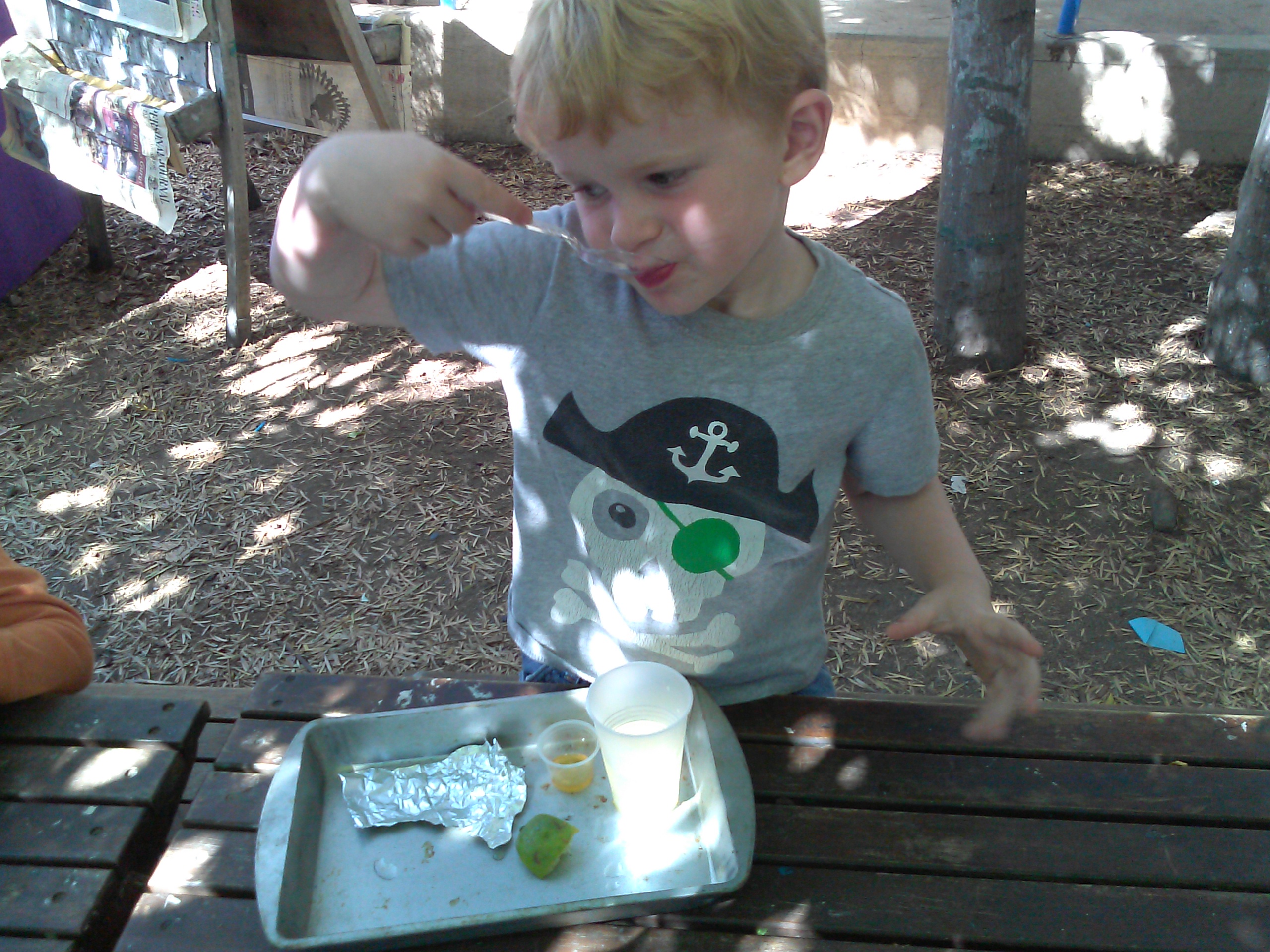
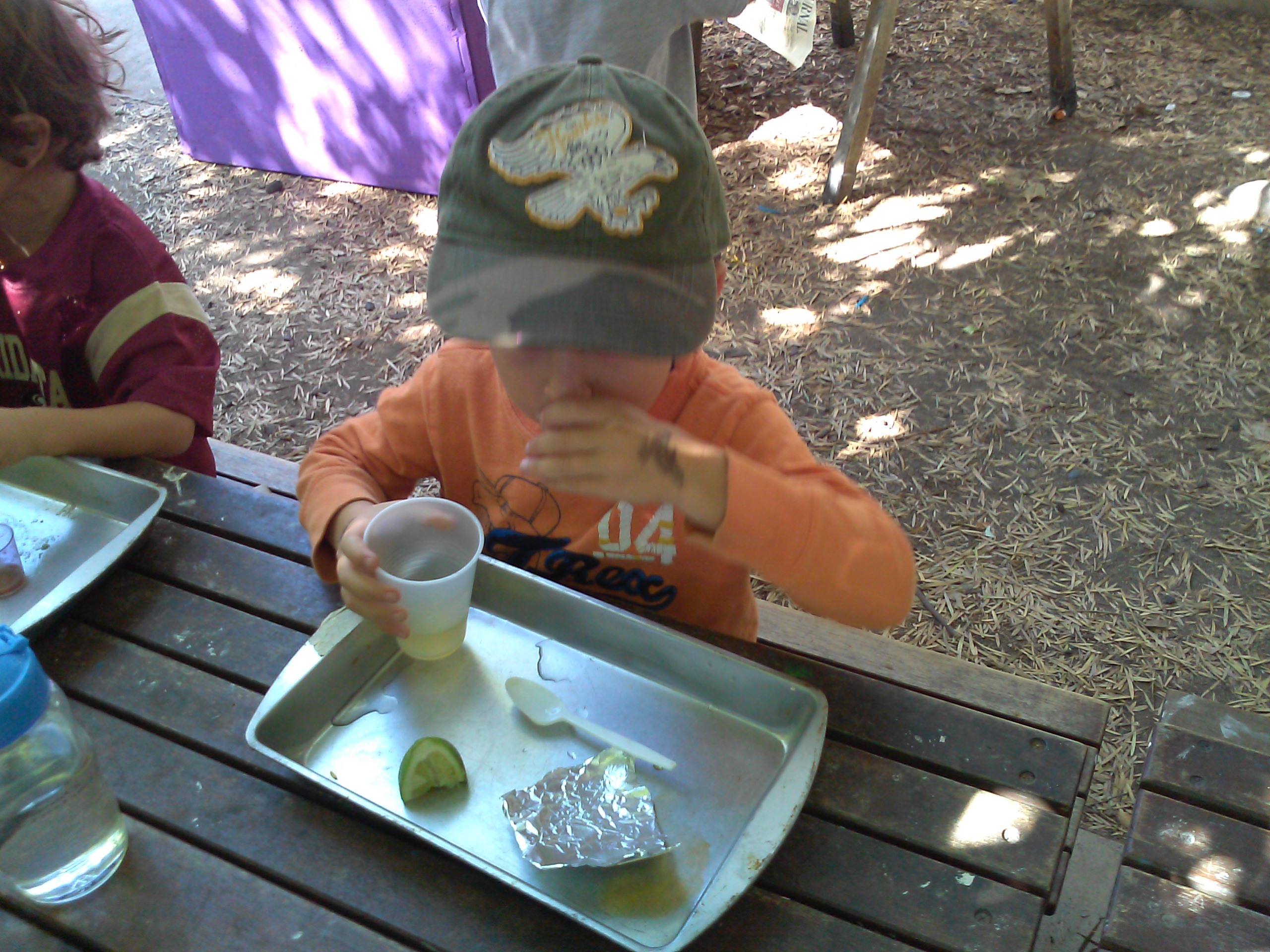
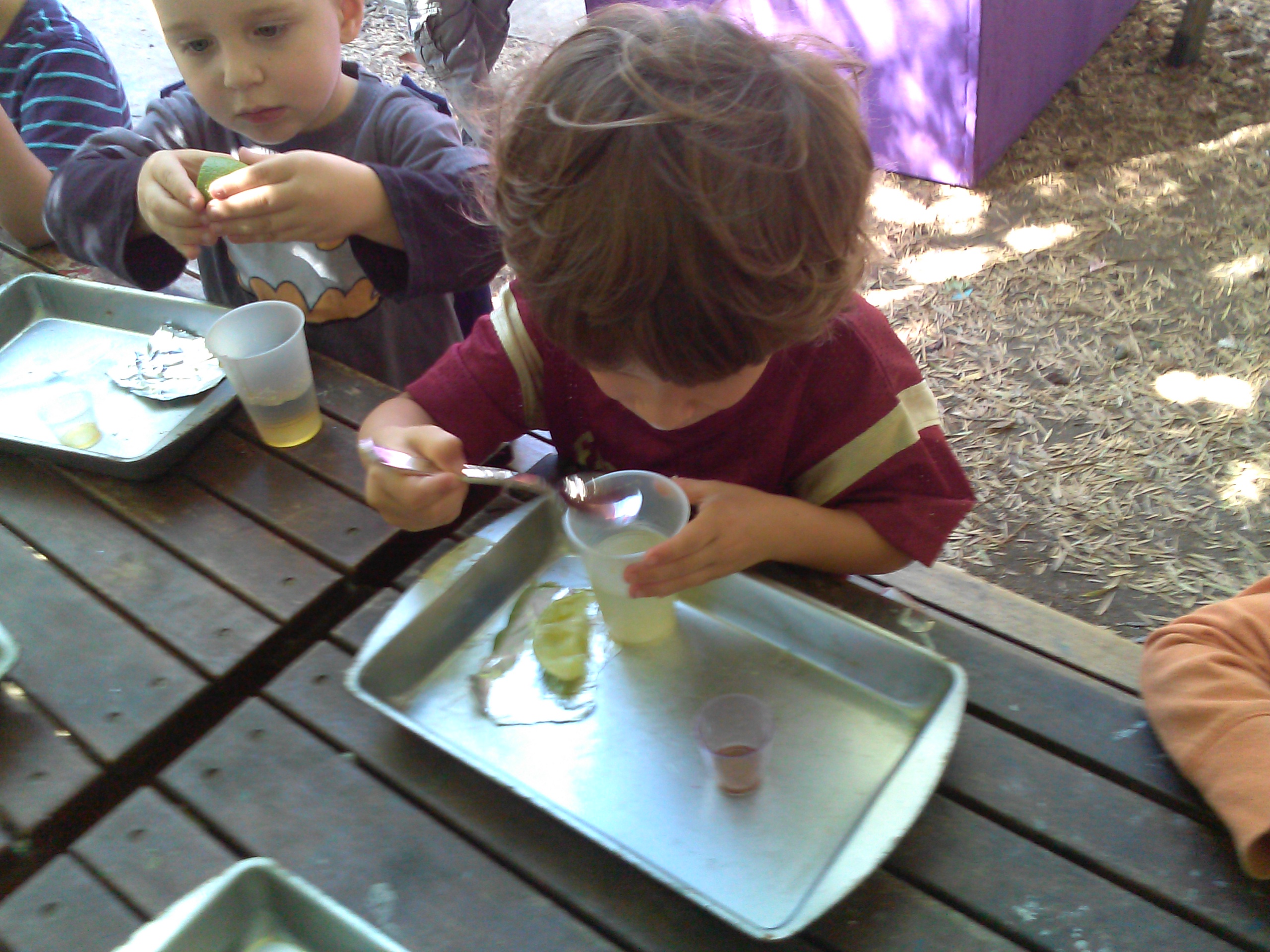
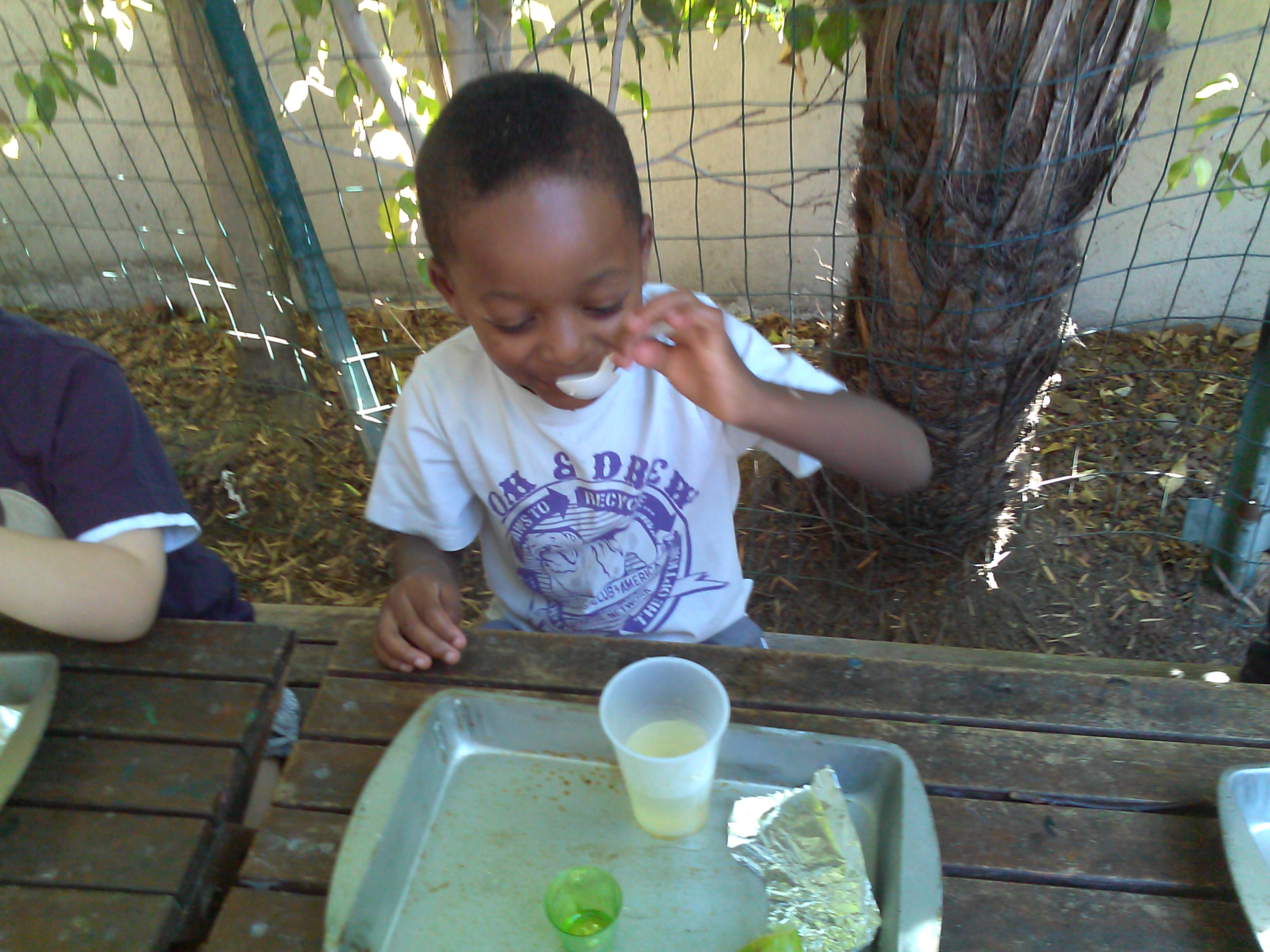
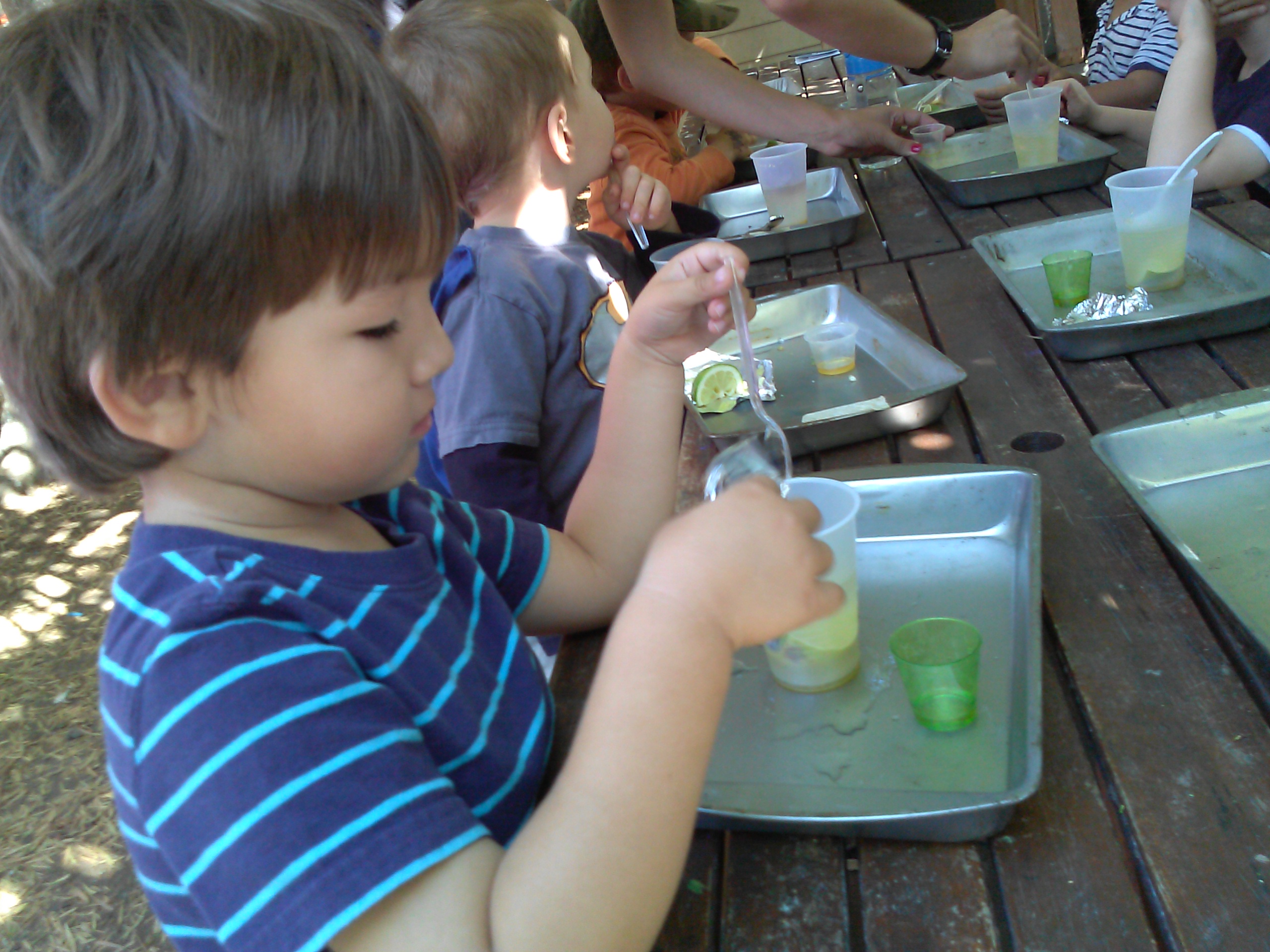
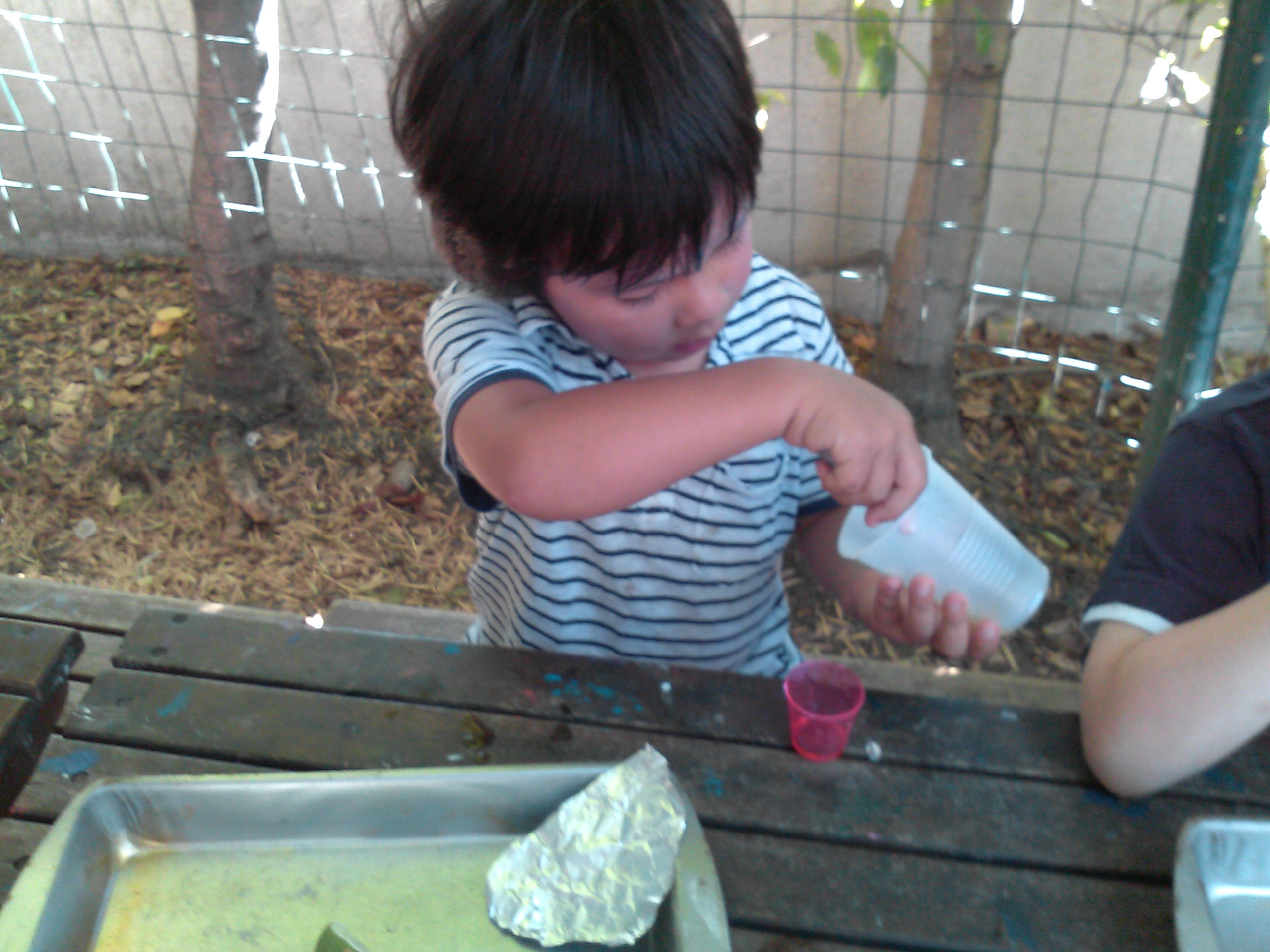
The people of the medieval ages did not enjoy water as we do today. Most citizens received their water from wells and other communal sources. This water was almost always tainted with bacteria, caused by human waste and poor sanitation. To compensate, people would add alcohol, honey, and other fruits to the water to make it “cleaner” for consumption. Using honey, limes, and water, we created our own version of mead. Before we began this activity, we discussed what germs were and how important it is to exercise proper hygiene. Your budding historian also learned about why medieval water was so dirty, and how they can ensure cleanliness in their own lives. When young children are active in creating their learning experiences, they foster meaningful connections between new information and their understanding of it. This is an important component in the capacity to problem solve. As they add and manipulate levels of ingredients, they amplify their ability to think creatively, as they create new and unique combinations of ideas and materials.

Custard Tarts
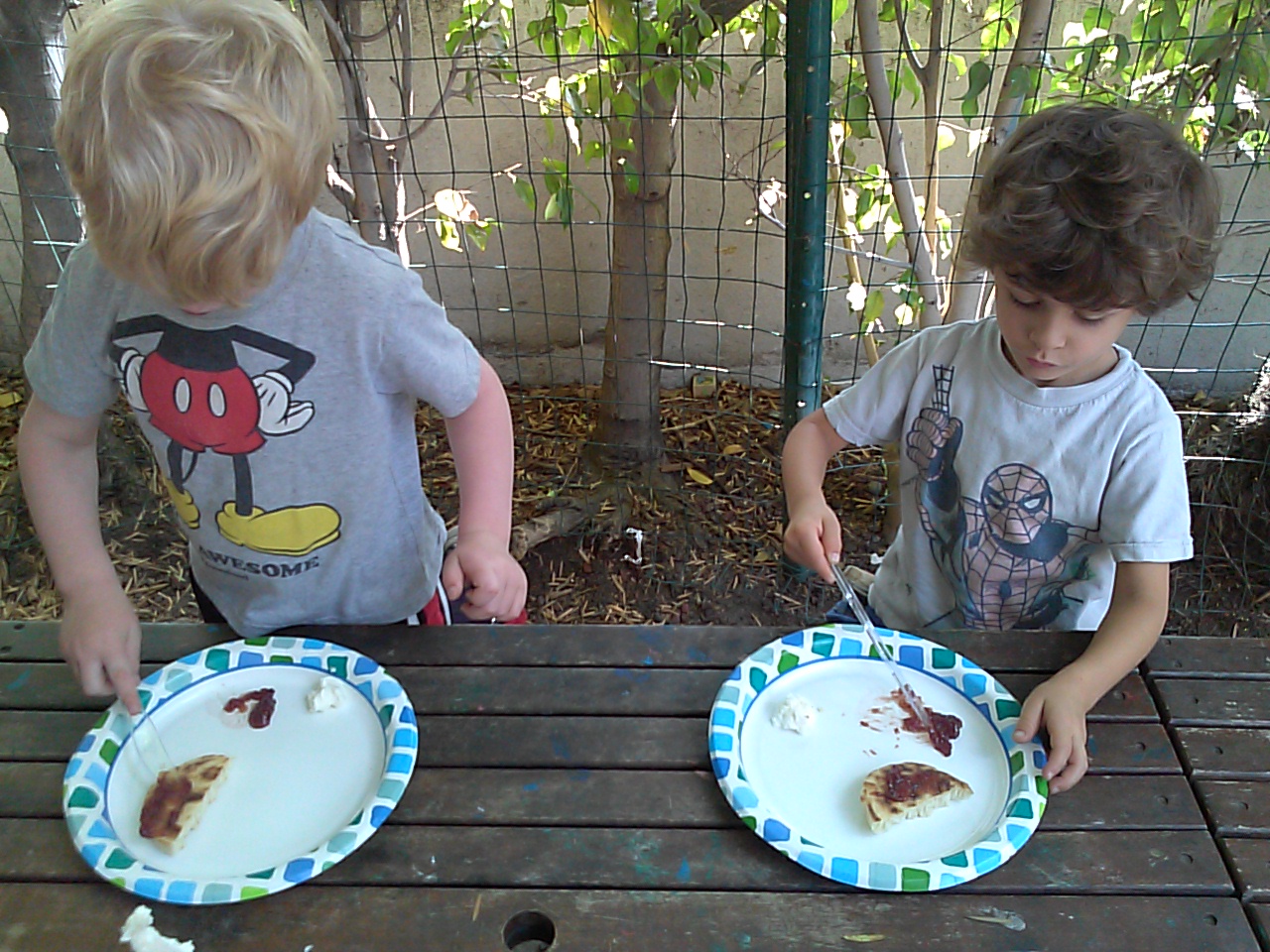
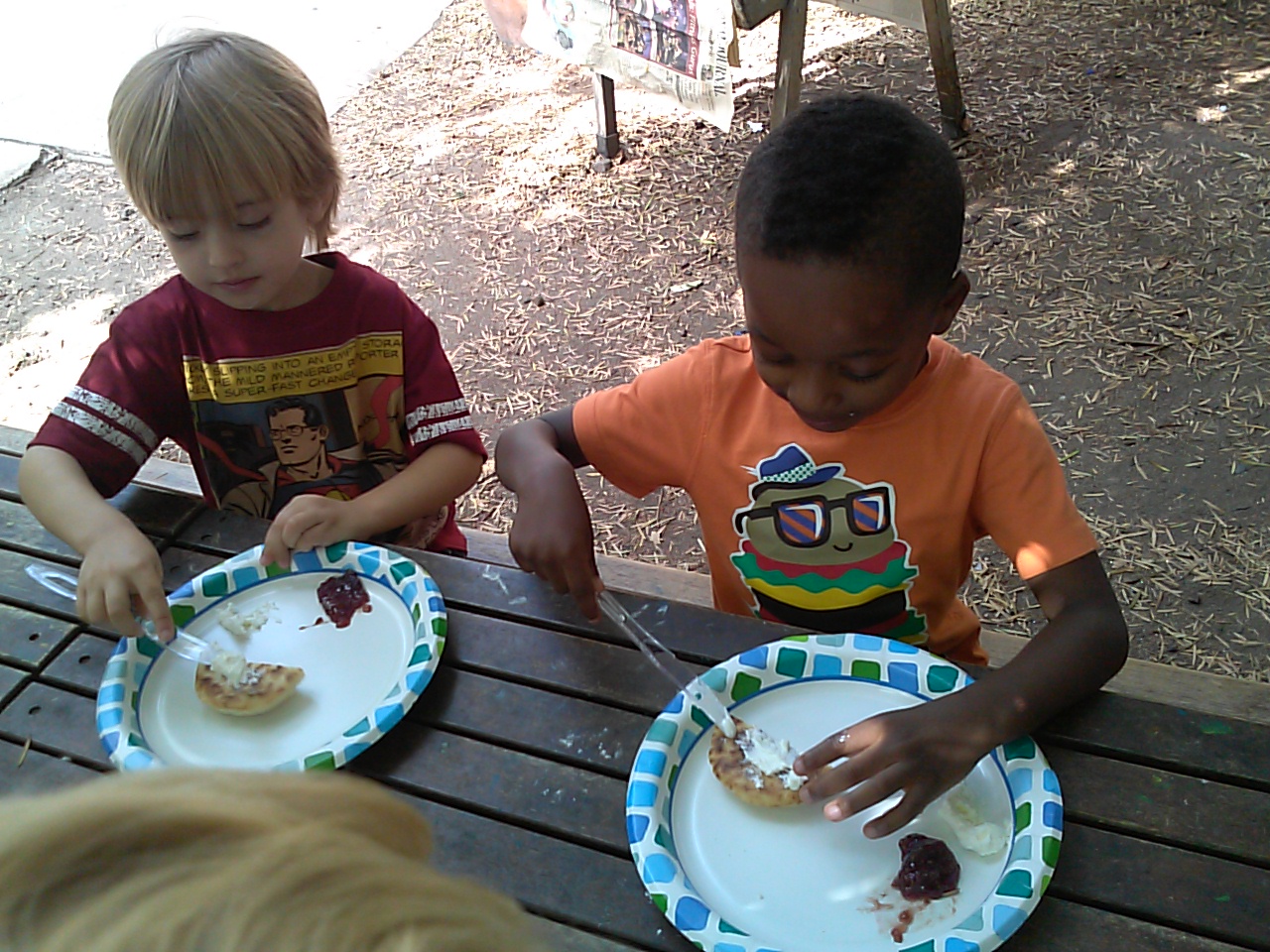
Custard tarts first emerged in Britain during the middle ages. They were a popular treat among people of all classes, and were flavored in several different ways. To enable your budding historian to grasp a better understanding of the middle ages, we explored the ingredients in this tasty treat. Using crumpets, jam, cream cheese, and plastic knives, we made our own custard tarts! When young children are given opportunities to prepare food, they are practicing a host of important life skills. When they are given the ingredients to create their masterpiece, they are practicing listening skills. As they are instructed to add ingredients to create their treat, they are learning order of operations. Lastly, as they learn about new foods, they are acquiring new vocabulary, which promotes literacy.