Treasure Hunt

Saint Patrick’s Day is celebrated every year on March 17th, honoring the Irish patron saint, St. Patrick. The celebrations are largely Irish culture themed and typically consist of wearing green, parades, and spending time with friends.

435

People all over the world celebrate St. Patrick’s Day, especially places with large Irish-American communities.

778

Feasting on the day features traditional Irish food, including corned beef, corned cabbage, coffee, soda bread, potatoes, and shepherd’s pie.
10828093_10152792003545954_2084022358355445607_o (1)

Many celebrations also hold an Irish breakfast of sausage, black and white pudding, fried eggs, and fried tomatoes.

799

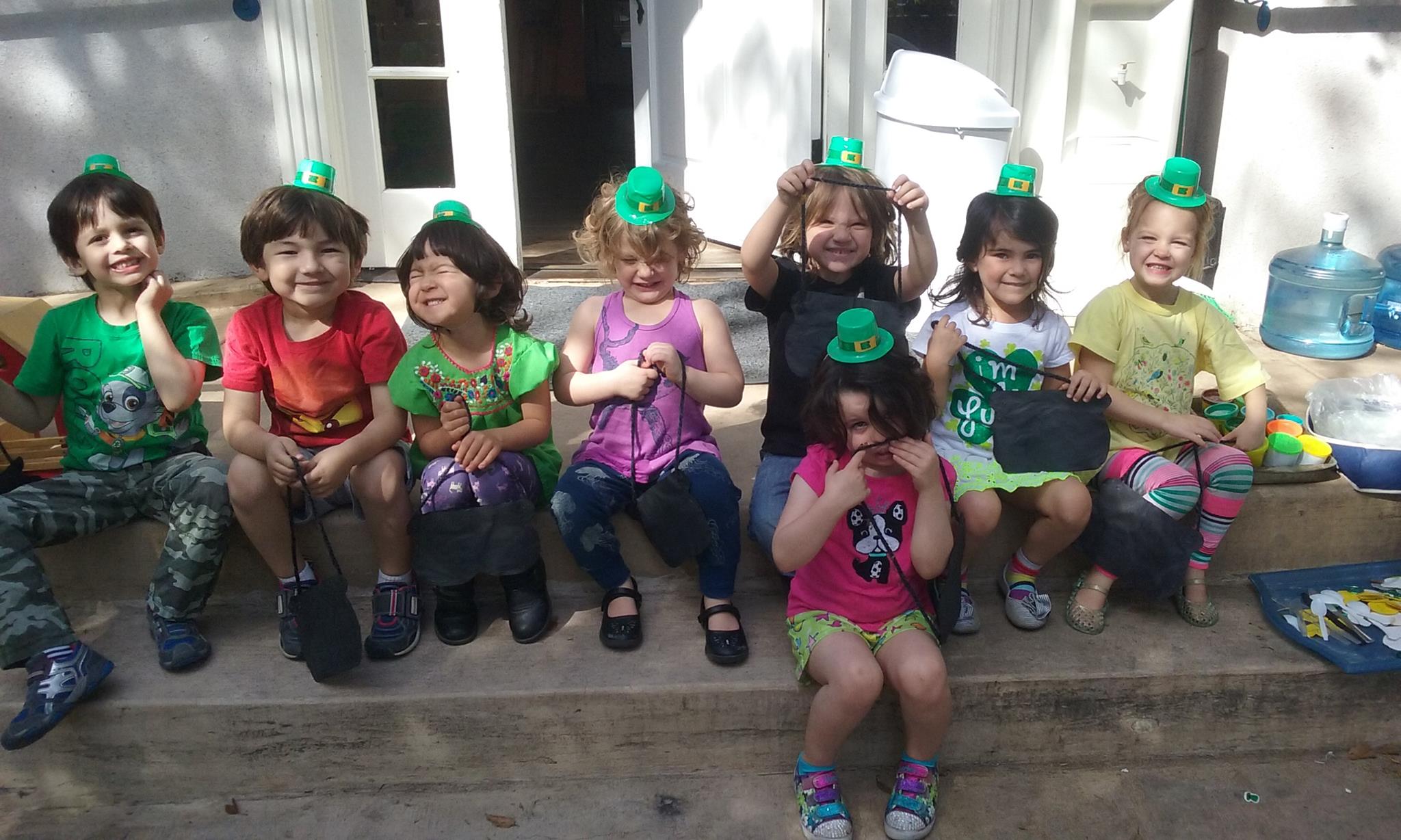
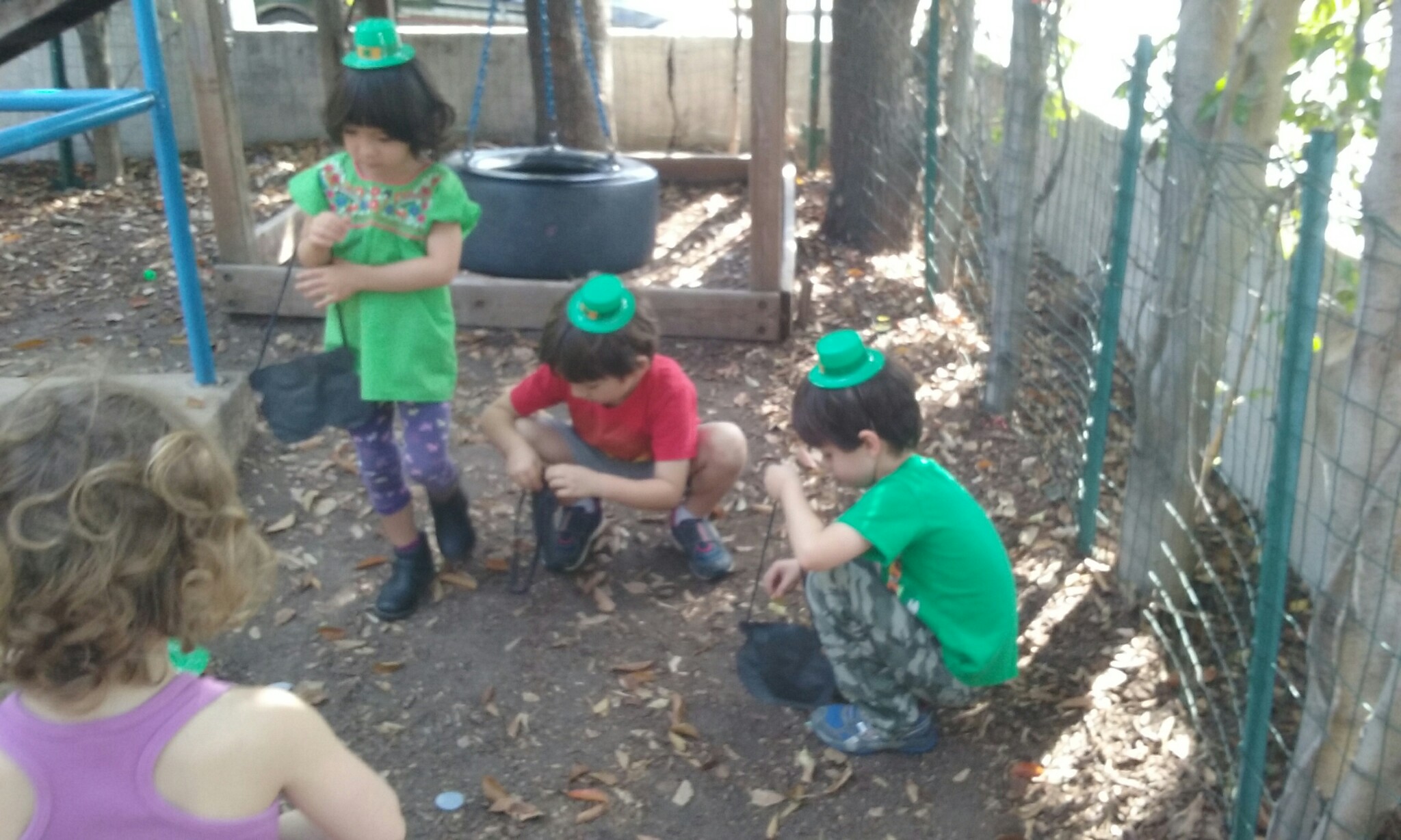
For this activity, we pretended to be leprechauns looking for gold! Using black paper “pots of gold”, green hats, and “gold” coins, your little one scurried around the front yard to retrieve their treasure from the end of the rainbow!
655

In America, the little bearded sprites known as leprechauns have become synonymous with St. Patrick’s Day and Irish culture. The original Irish name for these figures of folklore is lobaircin, meaning small-bodied fellow. In Irish mythology, a leprechaun is a type of male fairy said to inhabit the island of Ireland. They are a class of “fairy folk” associated in Irish mythology and folklore, as with all fairies, with the Tuatha Dé Danann and other quasi-historical peoples said to have inhabited Ireland before the arrival of the Celts.

443

Monster Collage

In cooperative learning, students are organized into small groups to which they share a common goal.

000

During the course of the activity, children work together for a shared benefit, realizing that all members share that goal and the rewards of achieving it.

999

Cooperative learning goes hand in hand with social and emotional learning.

676

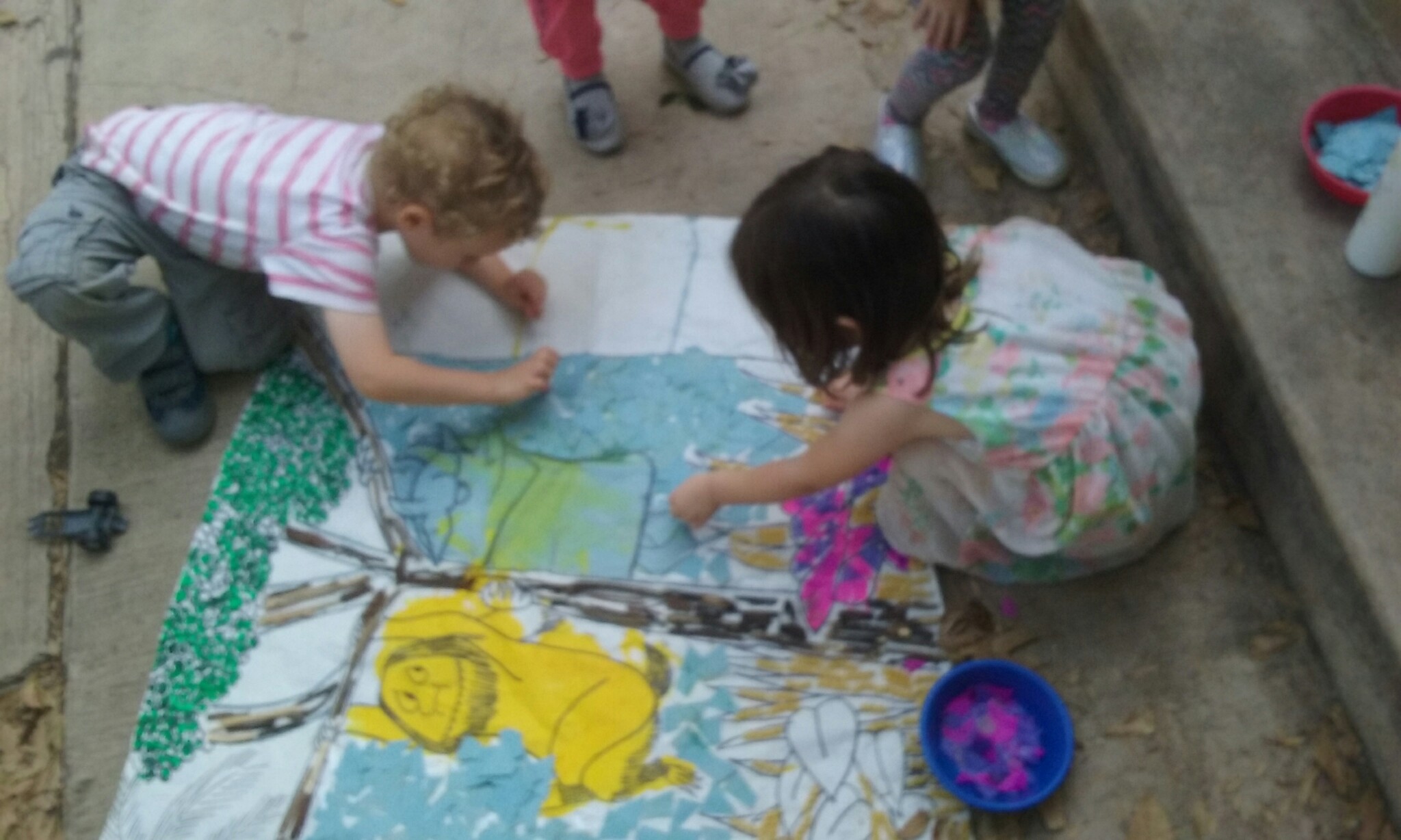
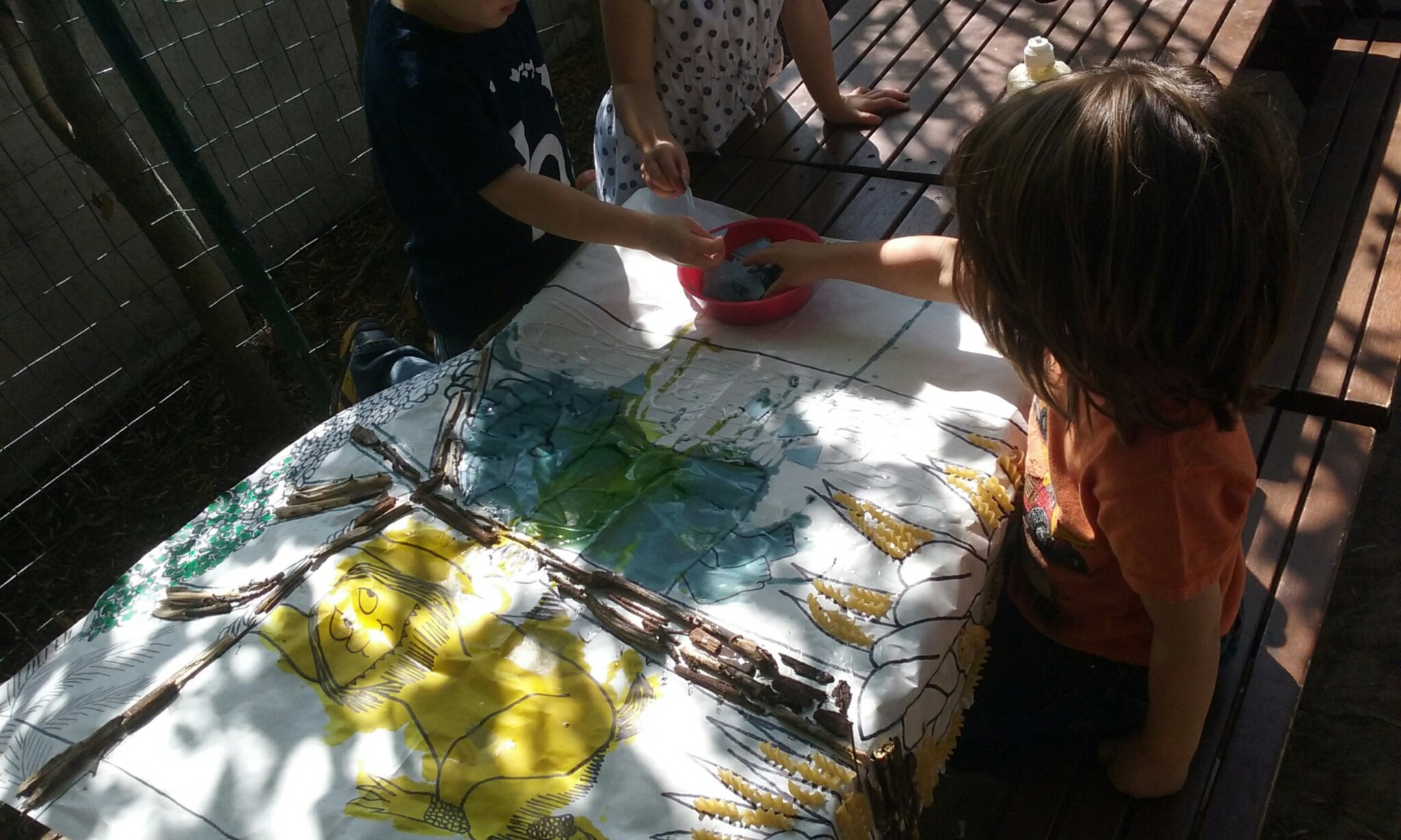
For this activity, we created a Where the Wild Things Are collage.

343

Students painted and added a variety of items to the poster that we later hung up in our classroom!

Roll and Cover Monster Dice

There are a plethora of skills your preschooler accesses when they use a die.
The math skills your preschooler practices include subitizing (looking at the dots and knowing right away what number they represent instead of counting each dot), number recognition, counting, matching, comparing, and adding.
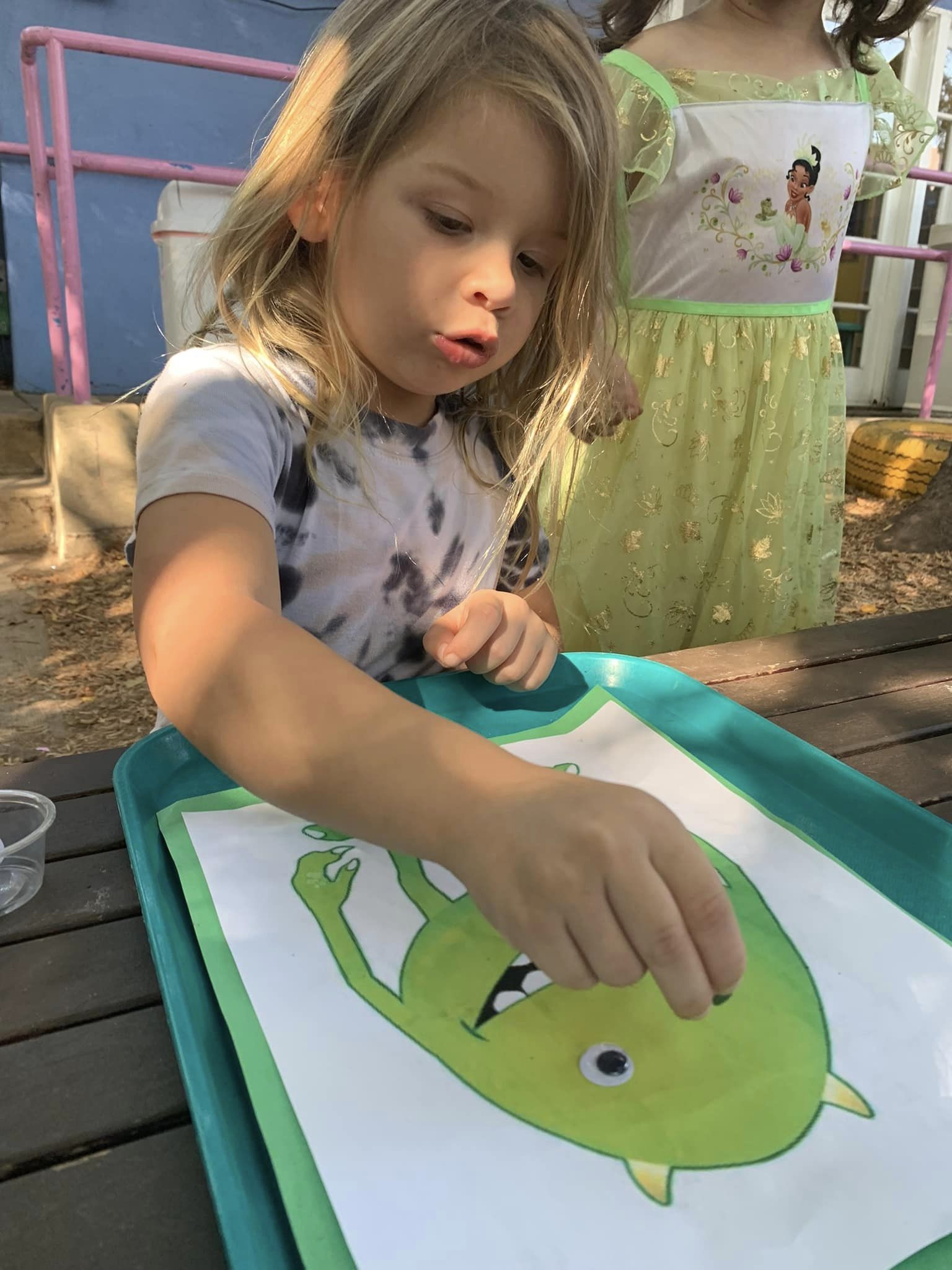
This game involved rolling a die and counting the number that was rolled. Once the numeral was recognized, your little one placed the corresponding amount of eyes onto their monsters.
We love dice around here.  We love them so much that they’re always disappearing! This week we incorporated the mathematical developmental domain with a roll and count game.
There are a plethora of skills your preschooler accesses when they use a die.
The math skills your preschooler practices include subitizing (looking at the dots and knowing right away what number they represent instead of counting each dot), number recognition, counting, matching, comparing, and adding.
This game involved rolling a die and counting the number that was rolled. Once the numeral was recognized, your little one placed the corresponding amount of eyes onto their monsters.

Dot-to-Dot Monsters

Good visual perception is an important skill, especially for school success.

IMG_20170215_095549 (1)

Children need to understand visual perception to discriminate well, copy text accurately, develop visual memory of things observed, develop good eye-hand coordination and integrate visual information while using other senses in order to perform tasks like recognizing the source of a sound.

15 - 1

Visual perception is a complex process. It includes color perception and color constancy, shape perception and shape constancy, spatial relations, visual analysis and synthesis, visual closure, visual figure-ground distinction, and visual sequence.

Dot Monster (2)

Visual closure is the ability to complete an incomplete image e.g. a dot-to-dot picture or a puzzle. Because we are learning about monsters, we used black markers and crayons to create our own monsters. This was an open-ended activity, so there was no right or wrong way to complete their creatures! Visual perception skills (through activities such as these) can be developed and improved with practice, until they become skills that are performed almost effortlessly.

2536

Shape Monsters

Children delight in making choices. The ability to name a favorite color of paper to make a drawing empowers a child. When he can ask for a square or triangle-shaped block by name during a game, he has a sense of control over his environment.

MonsterShape1

In preschool, children can learn to identify and name circles, triangles, squares, rectangles, and ovals. By using materials such as posters, blocks, books, and games, teachers expose children to various shapes and help them analyze two- and three-dimensional shapes in various sizes and orientations.

MonsterShape

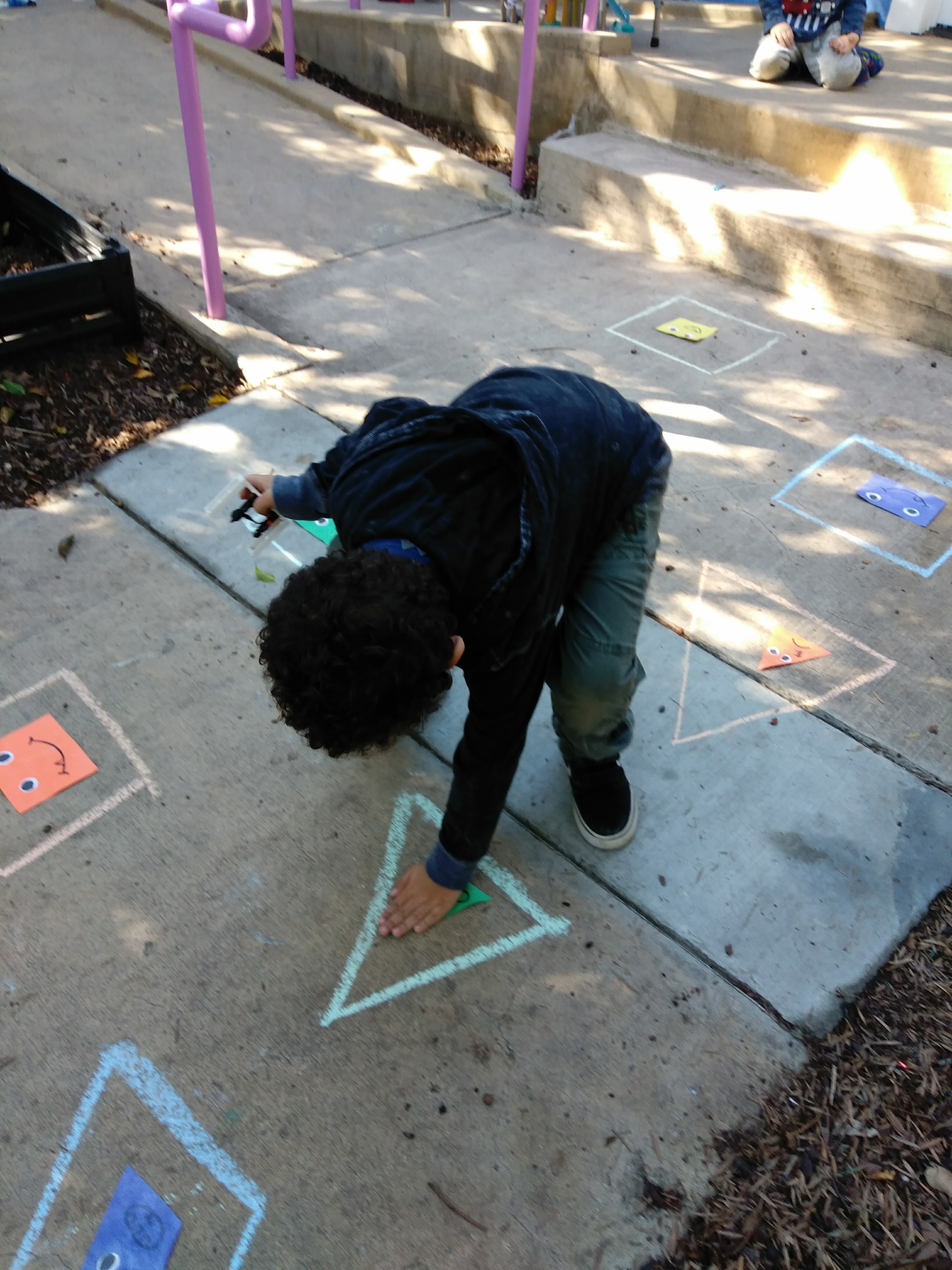
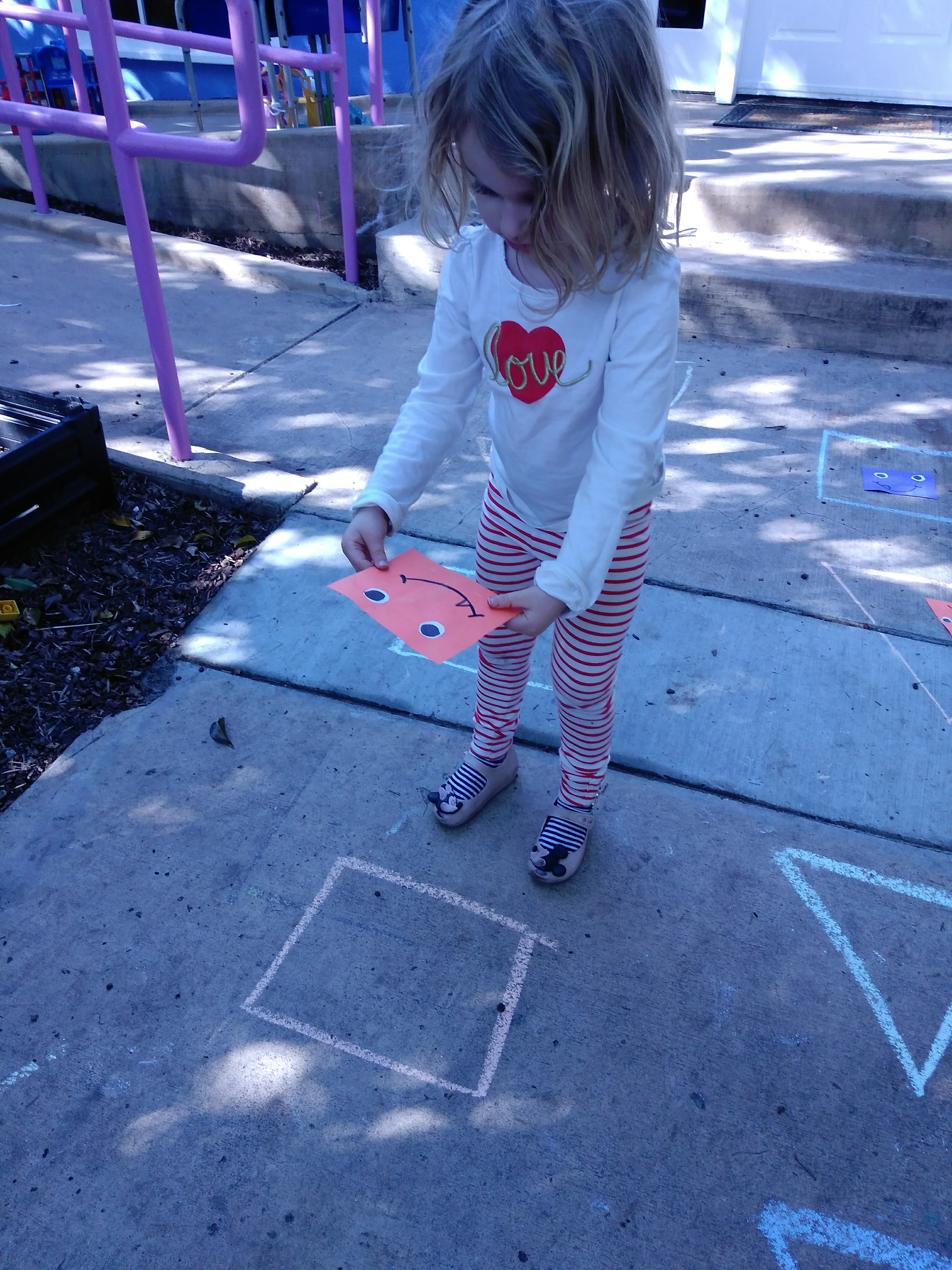
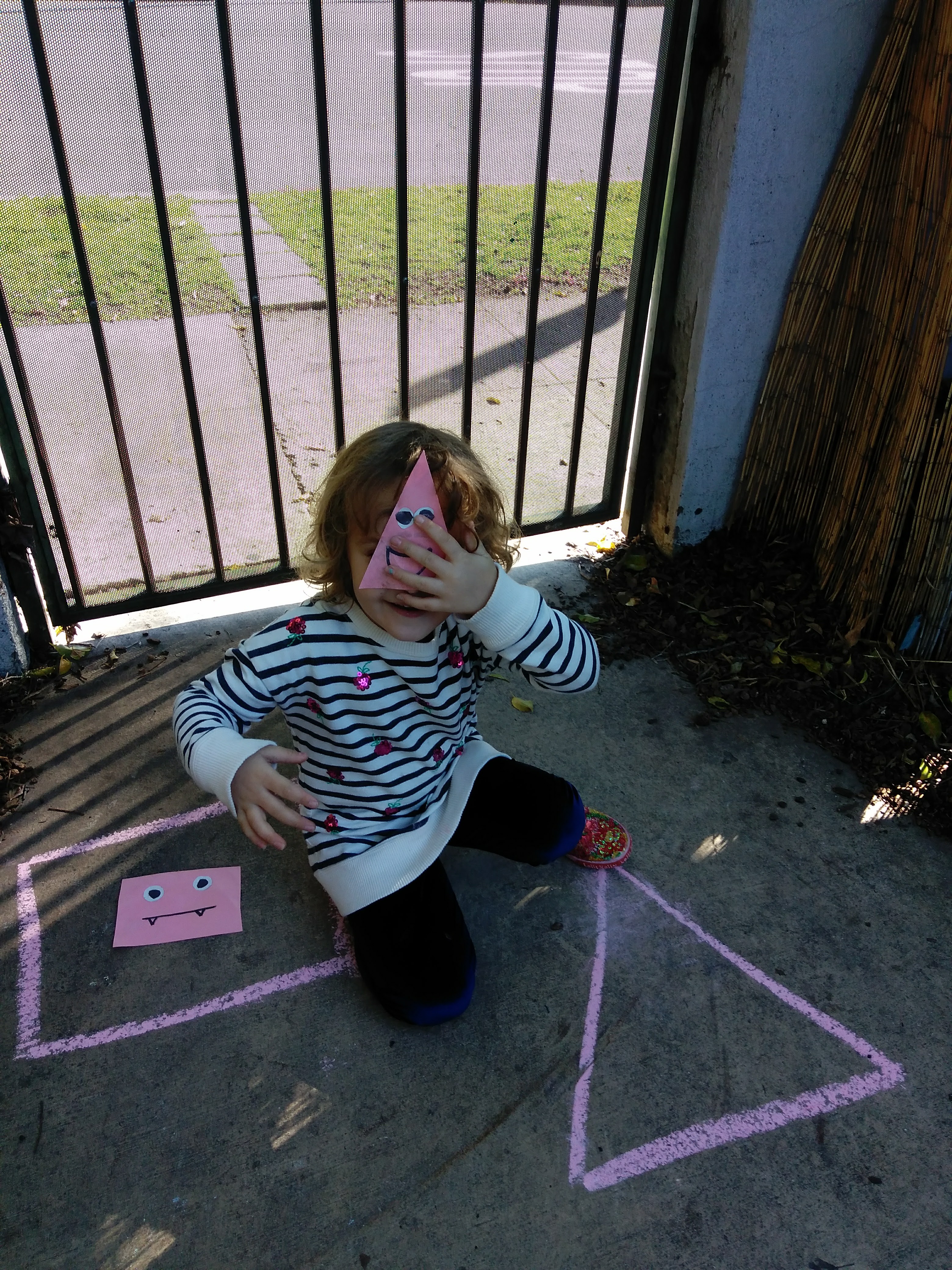
For this reason, we are constantly incorporating shapes into our schedule. During circle time, we may sing a song about trapezoids. For gross motor play, we may jump onto triangle-shaped chalk outlines.

MonsterShape6

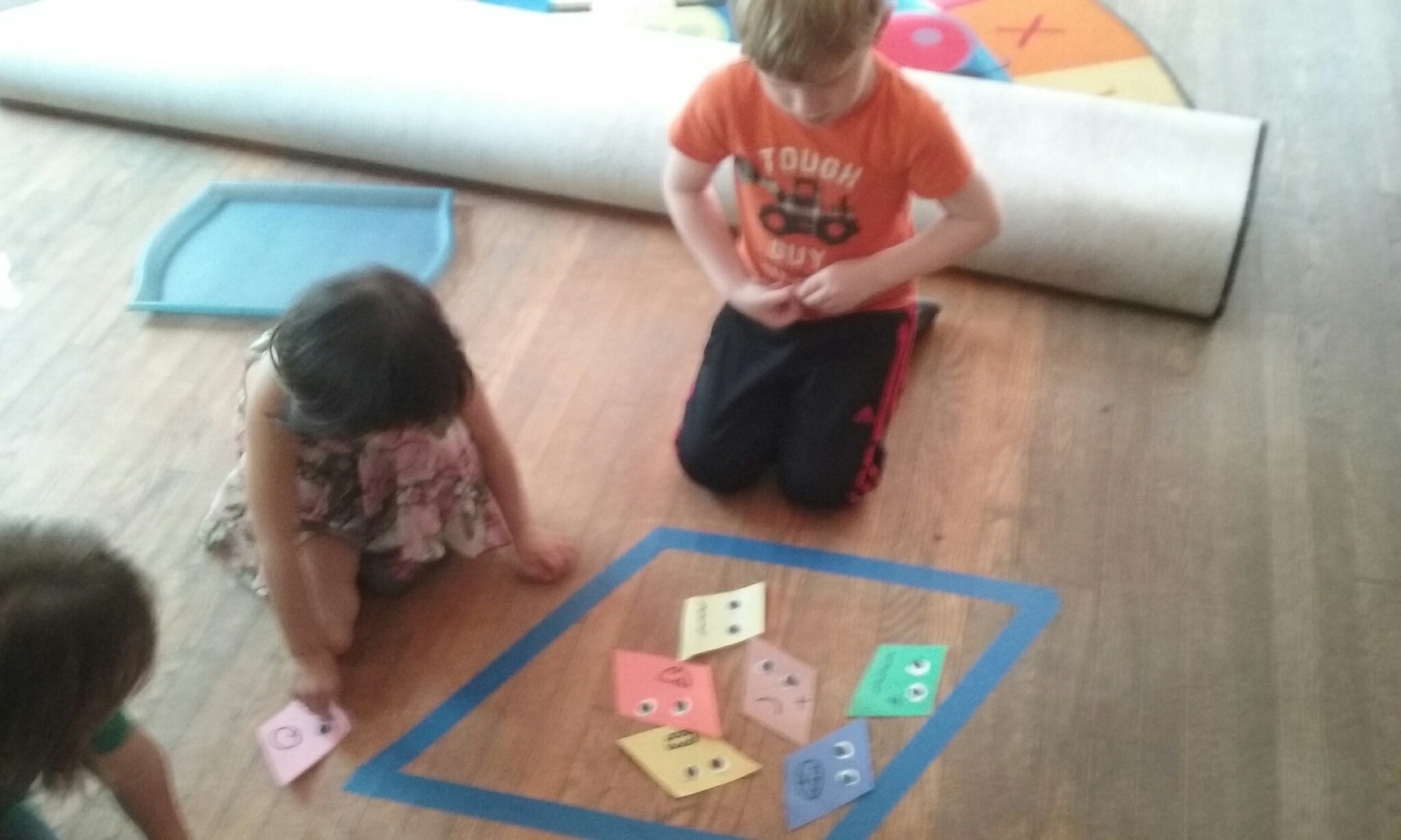
For this activity, we broke up into groups to categorize a variety of monster “shapes”. We learned about the word rhombus, diamond, triangle, rectangle, and square.

15 - 1 (100)

Encouraging preschoolers to slide, flip, or turn shapes promotes problem solving and an understanding of transformations.

MonsterShape3

These transformations are crucial to developing spatial visualization abilities and understanding geometry, which involves matching shapes through visualization.

MonsterShape2

As preschoolers learn to identify objects, they can use spatial orientation vocabulary to describe the relative positions of objects.

Expanding Monsters

Activities that stimulate curiosity, teach science concepts, and avoid overwhelming or boring children with lessons are developmentally appropriate for the preschool classroom.

15 - 1 (96)

When done well, preschool science is exciting and intellectually meaningful.

15 - 1 (88)

The right preschool science activities can nurture your child’s natural sense of adventure and curiosity, help your child develop his own understanding of the natural world, encourage your child to be a persistent problem solver, and introduce your child to basic elements of scientific reasoning (seeking evidence; testing predictions).

15 - 1 (93)

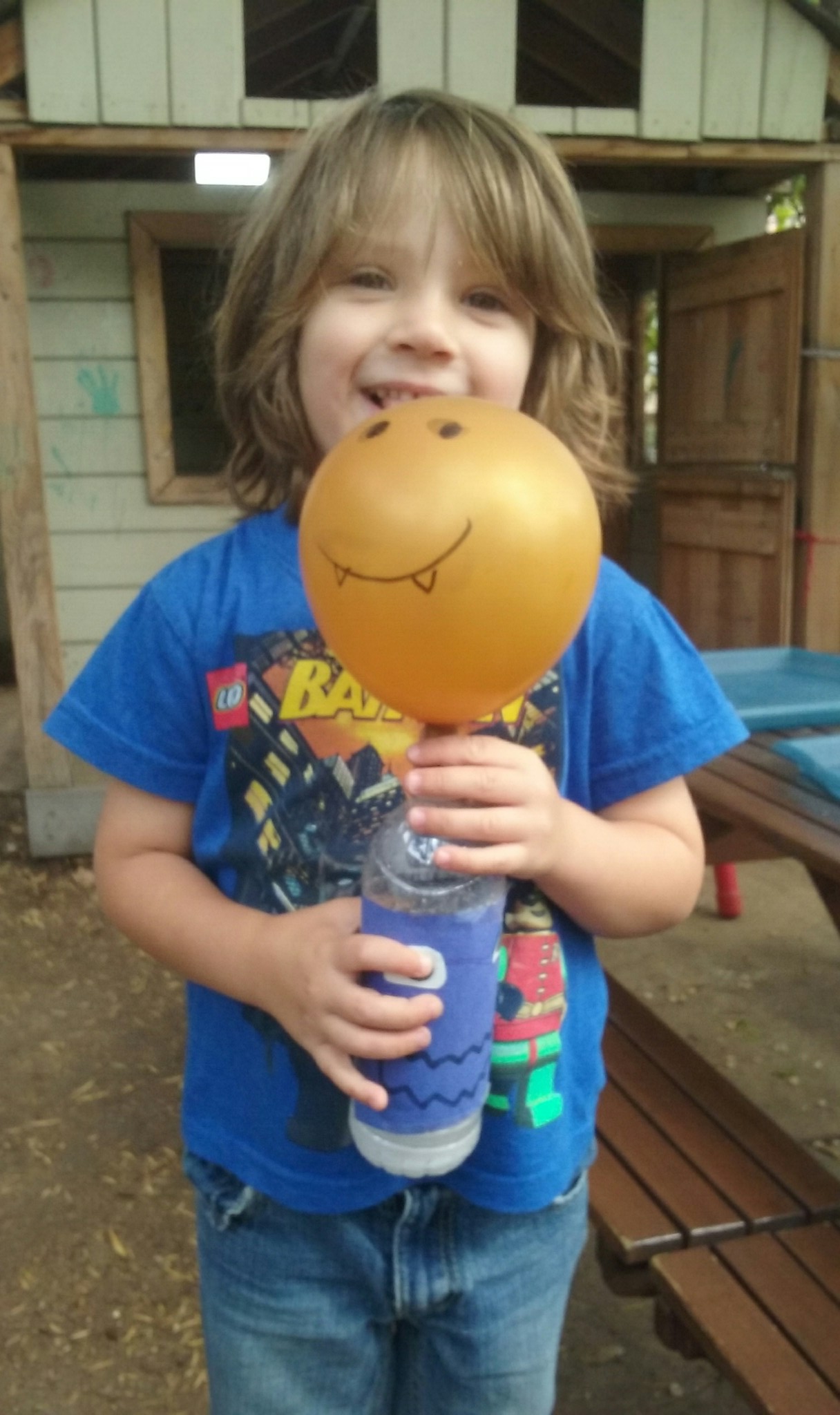
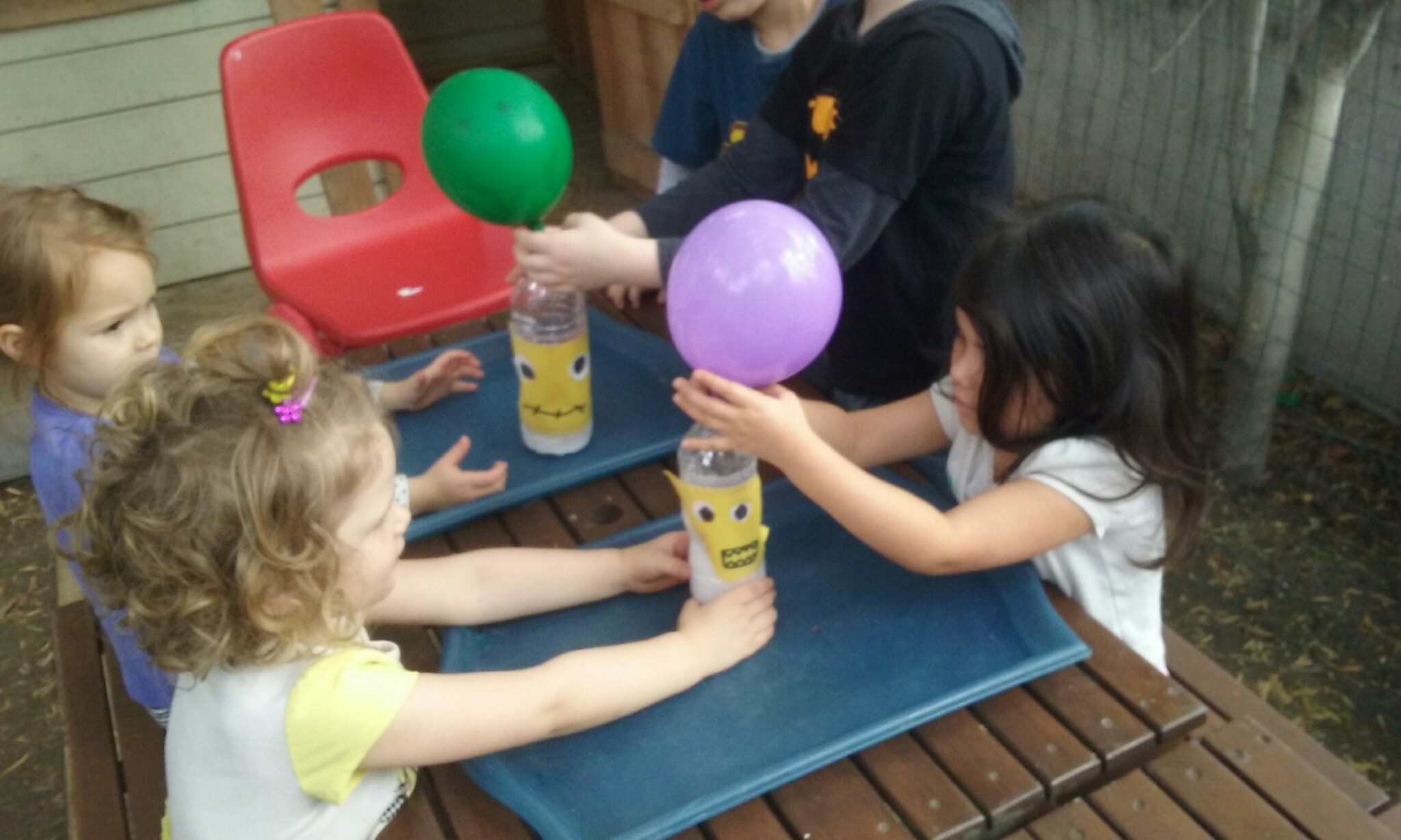
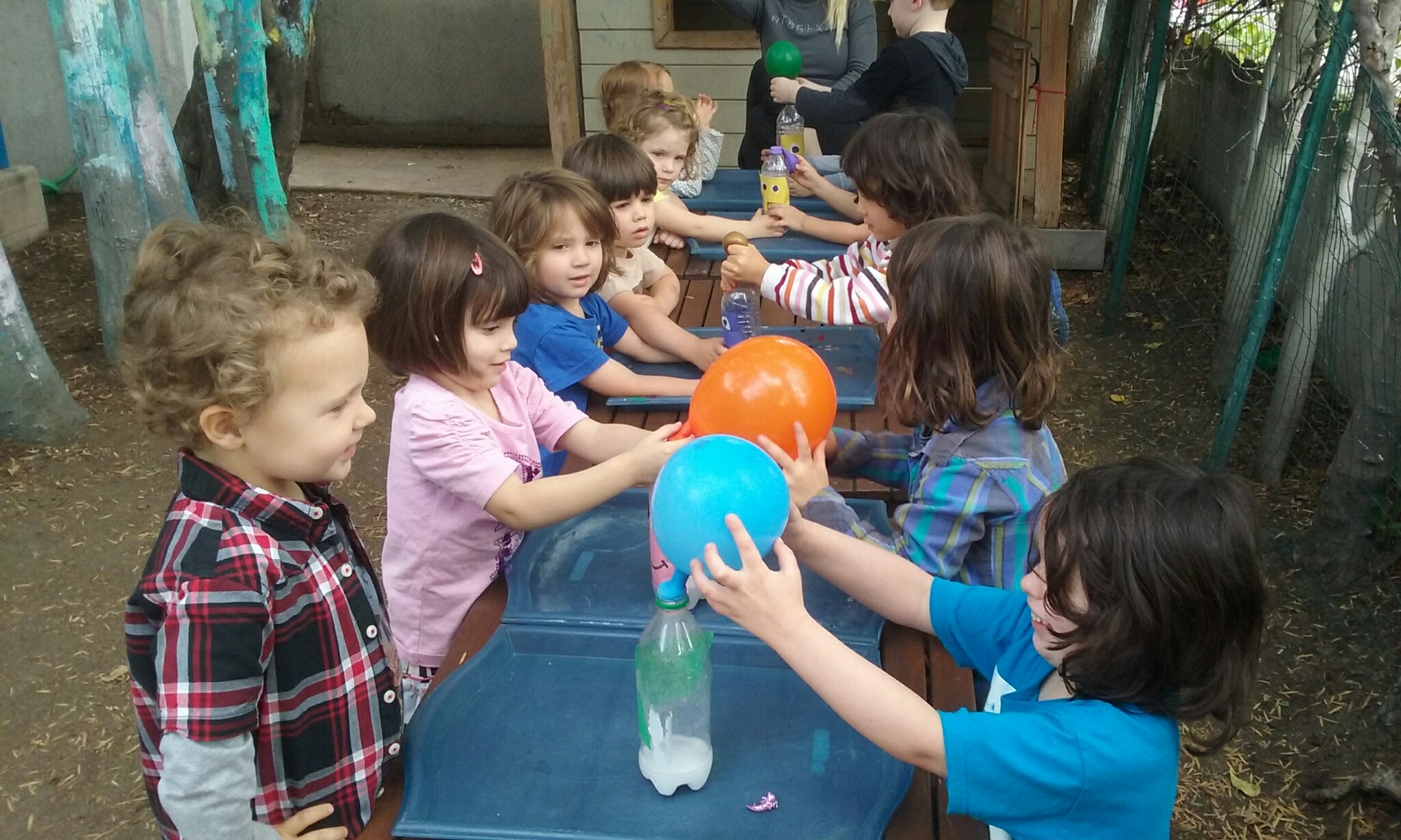
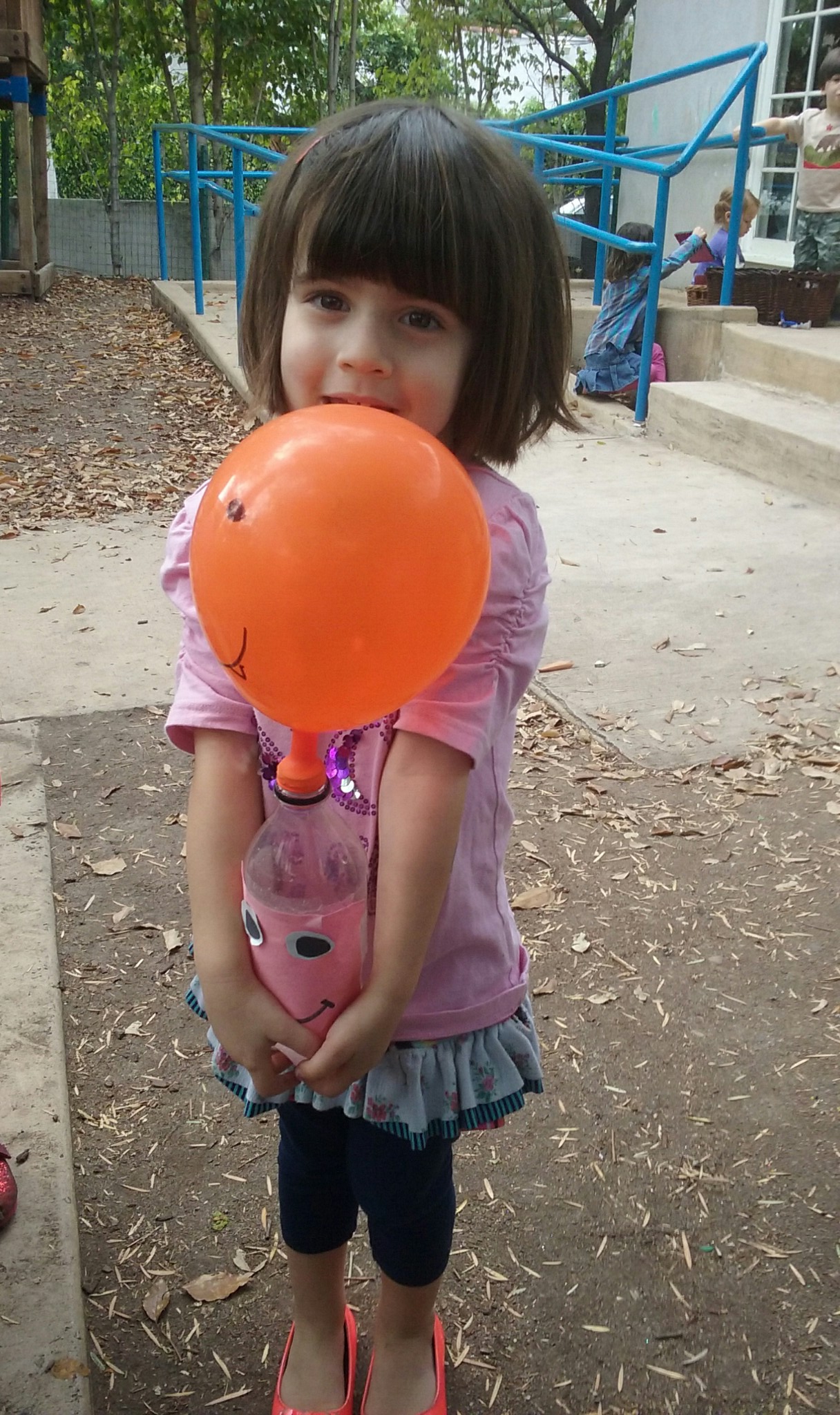
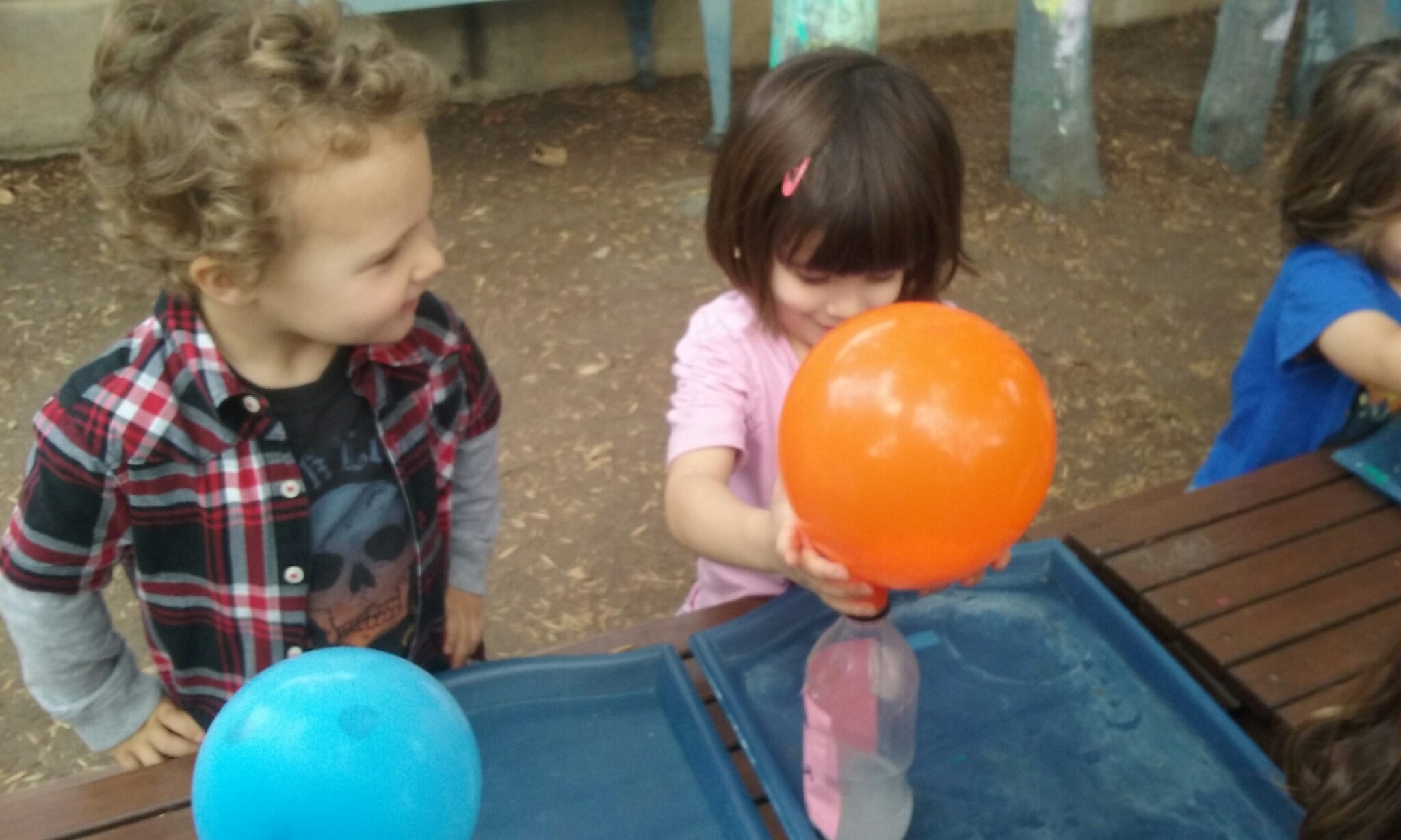
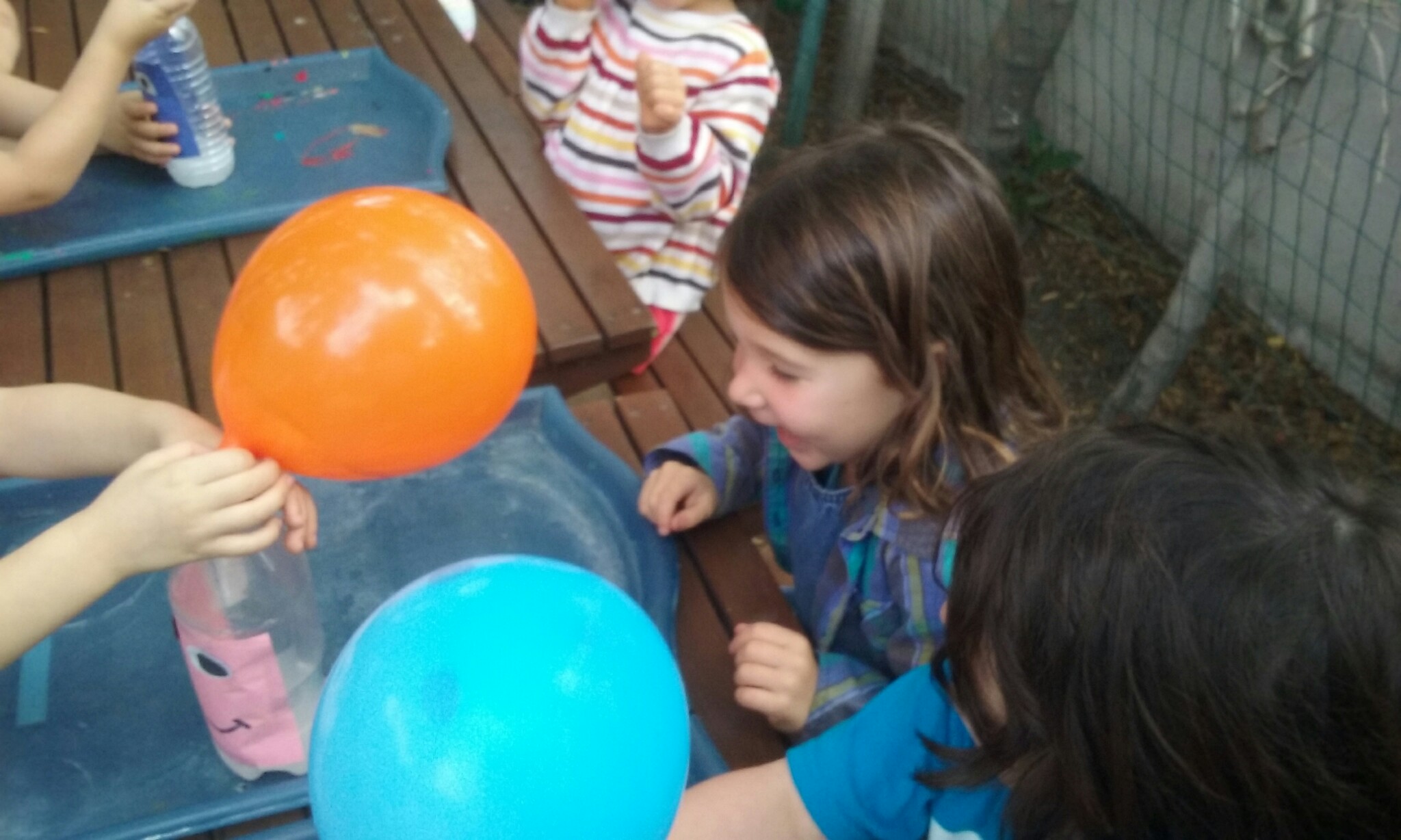
Because we are learning about monsters this week, we decided to combine vinegar and baking soda to create monster faces!

15 - 1 (90)

We first poured 1/2 cup of vinegar into an empty water bottle.

15 - 1 (97)

Then, we drew a face on the balloons while they were deflated.

15 - 1 (99)

After that, we placed the funnel into the open end of the deflated balloon and poured in the baking soda.

15 - 1 (94)

Following, we secured the open end of the balloon onto the top of the bottle being careful not to dump the contents of the balloon into the bottle quite yet.

15 - 1 (91)

Finally, we held the balloon upright, allowing the baking soda to fall into the bottle and mix with the vinegar!

15 - 1 (92)

So, why does this work? Your little one learned that the product of the vinegar and baking soda is carbon dioxide, a gas present when we breathe out. The carbon dioxide inflates the balloon. It’s that simple!