Parking Lot Numbers

We are always striving to improve our counting and math skills! Using toy cars, a piece of craft foam, and our thinking minds, we created our very own parking lot!

lot

We began the lesson with a review of numbers one through eight. We then practiced tracing the numbers with our fingers. Following that, we counted each numeral, one at a time.

lot1

Lastly, we parked our cars onto the correct numbers. Experiences that allow the application of mathematical principles are an integral factor in the development of mathematical concepts. This activity also fostered sequencing skills, as many of our budding mathematicians found pleasure in arranging their cars by color.

lot2

Lego Matching

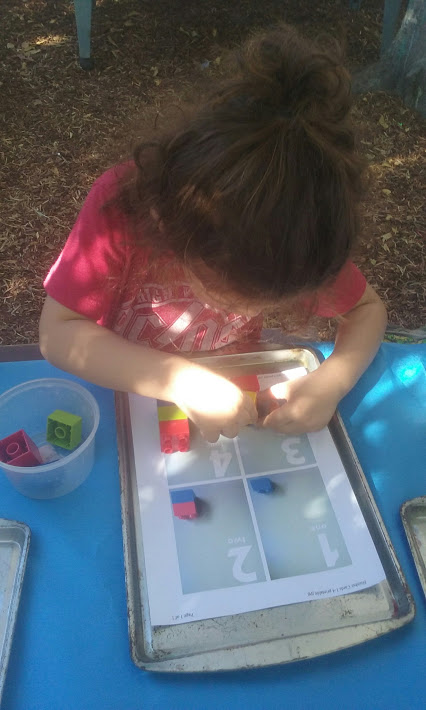
Using Legos and number boards with illustrations, we learned and revisited counting and Arabic numerals! Each child was given a group of Legos, and a number board with different illustrations of Legos on it.

legostackThe children were then asked what the number was, to put their Legos on the quantity, and to count their Legos as they did so. These Legos ranged from 1-4. Once again, we are using things that our little ones are naturally interested in to teach about counting, numeral recognition, and patterns!
legostack1

Not limited to just numbers, preschool math incorporates a broad range of skill sets and knowledge including sorting, colors and recognizing groups and patterns. These activities teach our little ones about problem solving and using logic. This activity also involved fine motor skills, as they manipulated their Legos and attached them to their rows.

legostack2

Fishing for Numbers

We are having so much fun playing and learning with numbers.

numfish

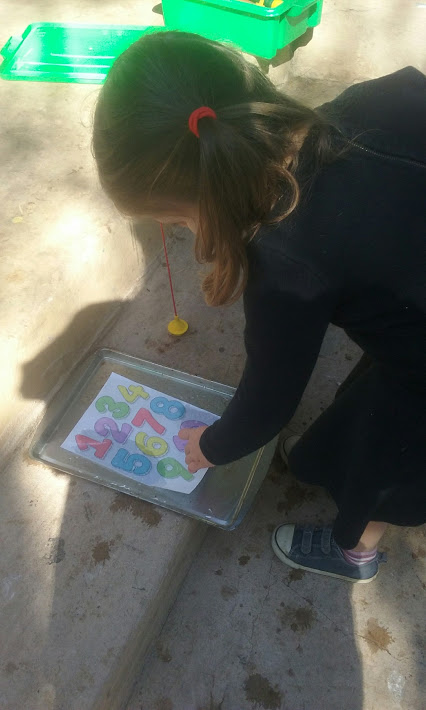
Today we fished for magnetic numbers in our water table!

numfish4

Each child used a fishing pole to catch a number and transfer it to its matching mat.

numfish1

As they caught each number, they were encouraged to say the name of the number.

numfish2

They then placed it on a mat, and continued to catch numbers until all of them were gone!

numfish3

This fun challenge enabled your little one to practice their number recognition and pre-math skills!

numfish5

Number Match

Counting in its various forms is an integral component in your child’s daily life.

countMost educators agree that counting is the single most effective element in your little one’s emerging mathematical development.

count2Not only is counting essential in everyday routines, but a significant factor in the development of number and arithmetic concepts and skills.

count3

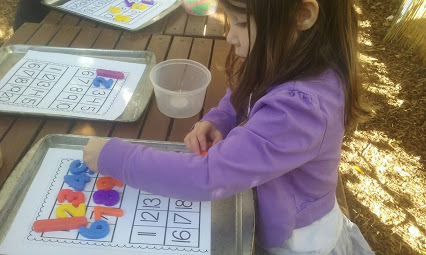
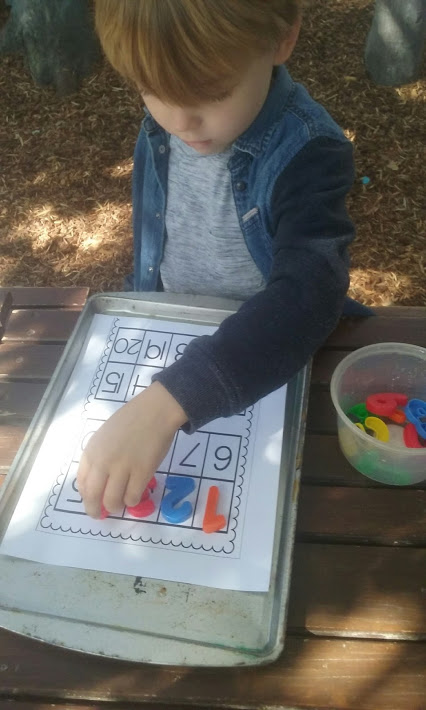
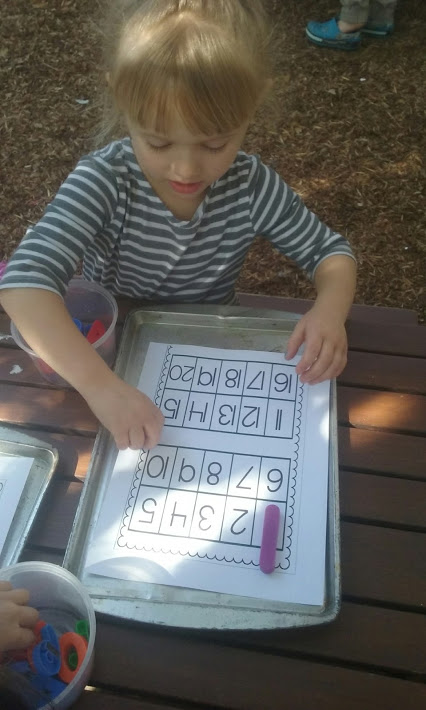
For this particular activity, your budding mathematician was instructed to place plastic numbers onto a number board, counting as they did so from one to twenty.

count4

Carrot Top Math

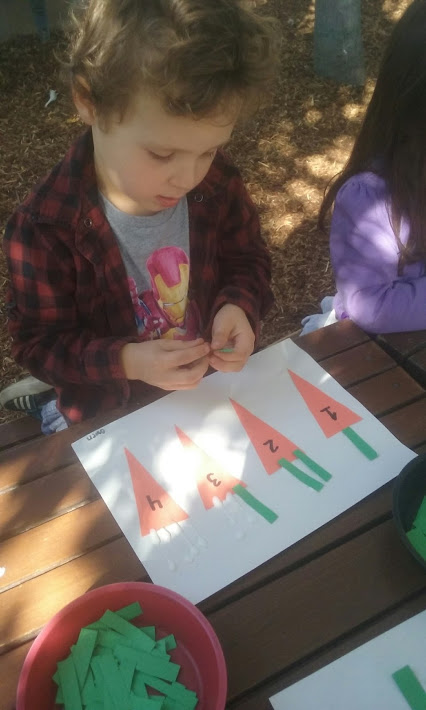
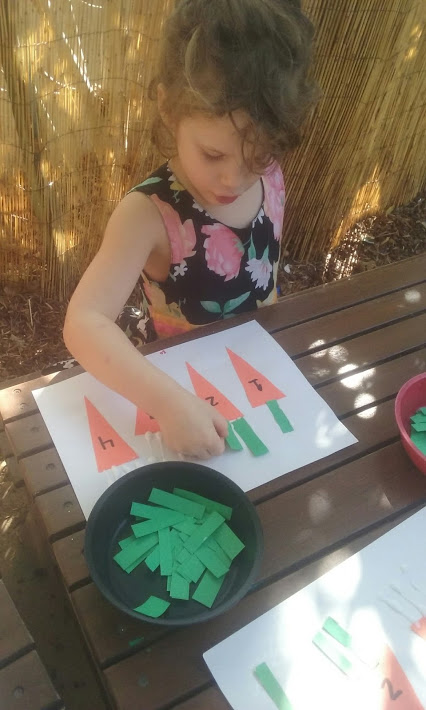
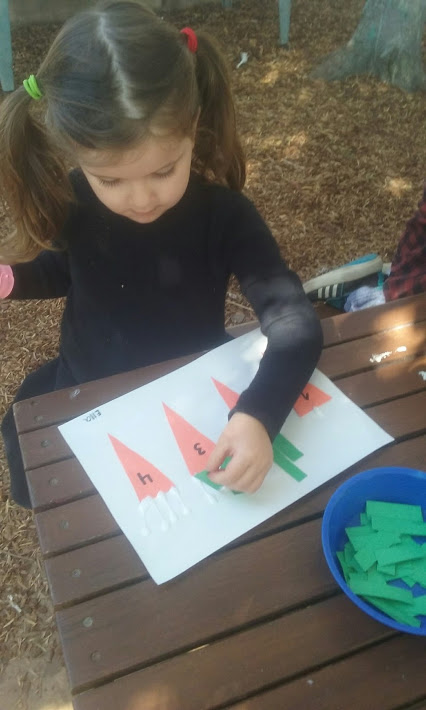
Understanding the one-to-one correspondence of object to object is necessary before young children can carry out meaningful counting and higher calculations. Children can find many opportunities in their daily life to experience one-to-one correspondence.
carrot
They can place one sock inside one shoe or one shoe on one foot; they can get one napkin or snack for each member of the family or class; they can place one lid on each of several containers; they can place pieces in one-piece puzzles. Once children understand these relationships, they can link one number with one object and then count with understanding.
carrot1
When students are ready to develop the skill of counting, they can benefit from learning several counting strategies to increase their accuracy and efficiency. Students sometimes develop one or more such strategies on their own, but it is to their benefit to provide training in this area.
carrot3
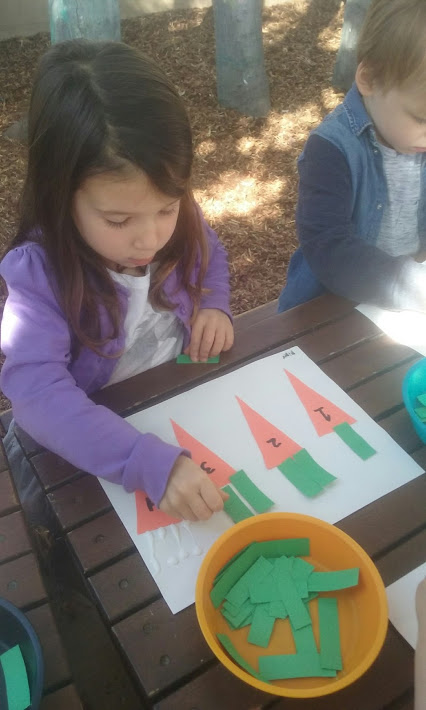
As with any concepts or skills, it is important to start working with real objects and manipulatives and to continue providing these as learning aids. For this particular activity, we placed a predetermined number of leaves on four different carrots. We practiced adding and subtracting the various leaves, noticing the changes in quantity.
carrot2

Play Dough Math

As part of simple, tactile play – play dough can be squashed, squeezed, rolled, flattened, chopped, cut, scored, raked, punctured, poked and shredded!

tactile

Each one of these different actions aids fine motor development in a different way, not to mention hand-eye coordination and general concentration. It is for these reasons that I use play dough so often, and for some many different learning experiences. Many young children are tactile learners and require the sense of touch to interact with the world around them.

tactile1

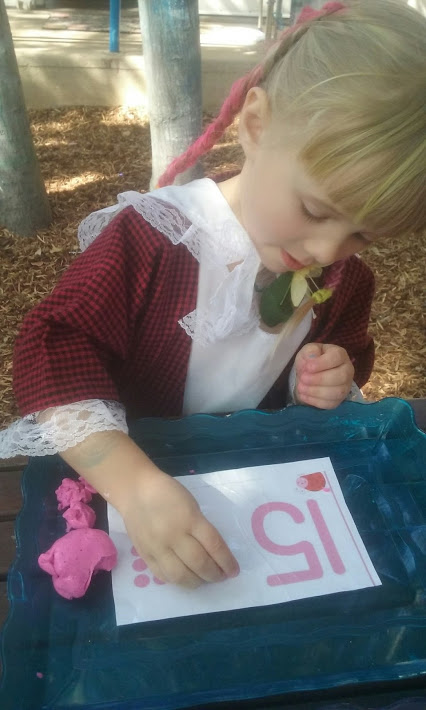
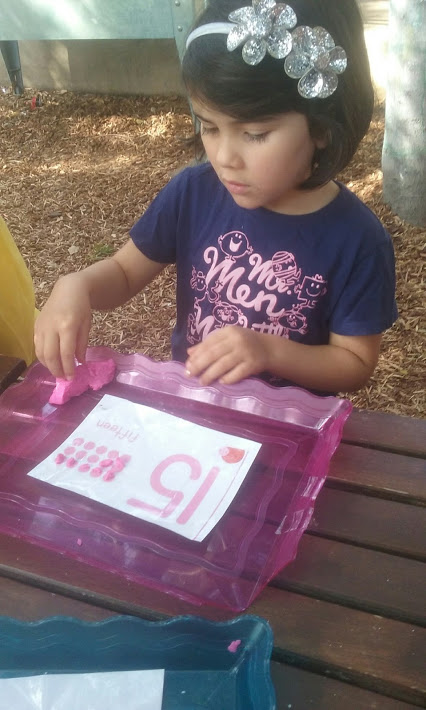
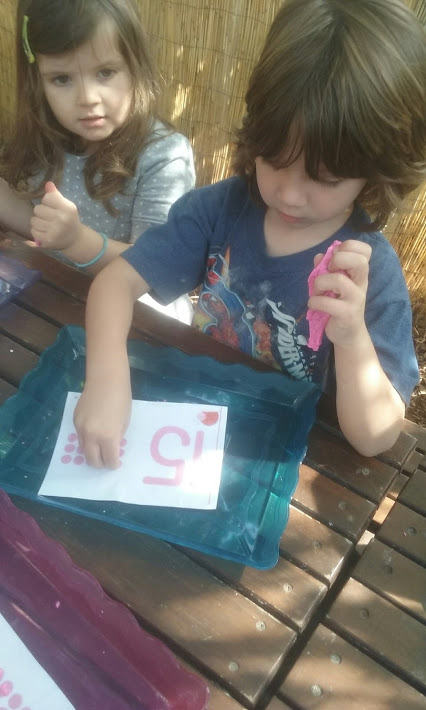
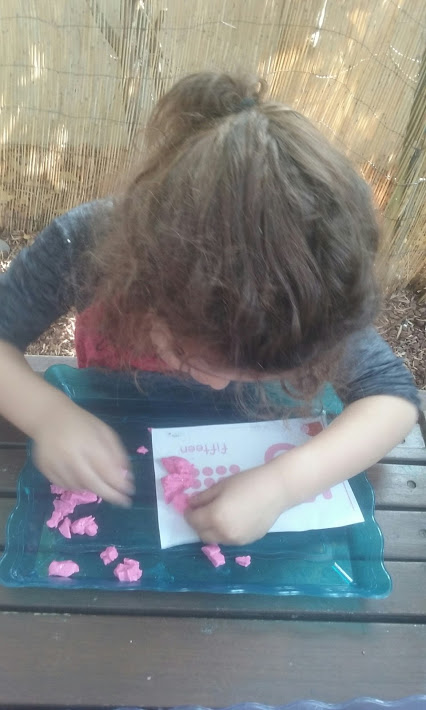
Because we are learning about all things related to numbers, I combined play dough, a number mat, and our thinking minds to learn more about counting! There were two components of this activity. Students first traced the number fifteen (on the number mat) with their fingers. They then clapped and chanted the number.

tactile2

Lastly, they pinched off fifteen small pieces of play dough and placed them on fifteen spots. Allowing so many opportunities for learning (clapping, chanting, listening, and speaking) enables all learners to connect with the material, and ensures their success. When children feel successful, they are more motivated to learn.

tactile3

Counting Jars

Early math is not about the rote learning of discrete facts like how much 5 + 7 equals. Rather, it’s about children actively making sense of the world around them. Unlike drills or worksheets with one correct answer, open-ended, playful exploration encourages children to solve problems in real situations. Because the situations are meaningful, children can gain a deeper understanding of number, quantity, size, patterning, and data management.

babyjars

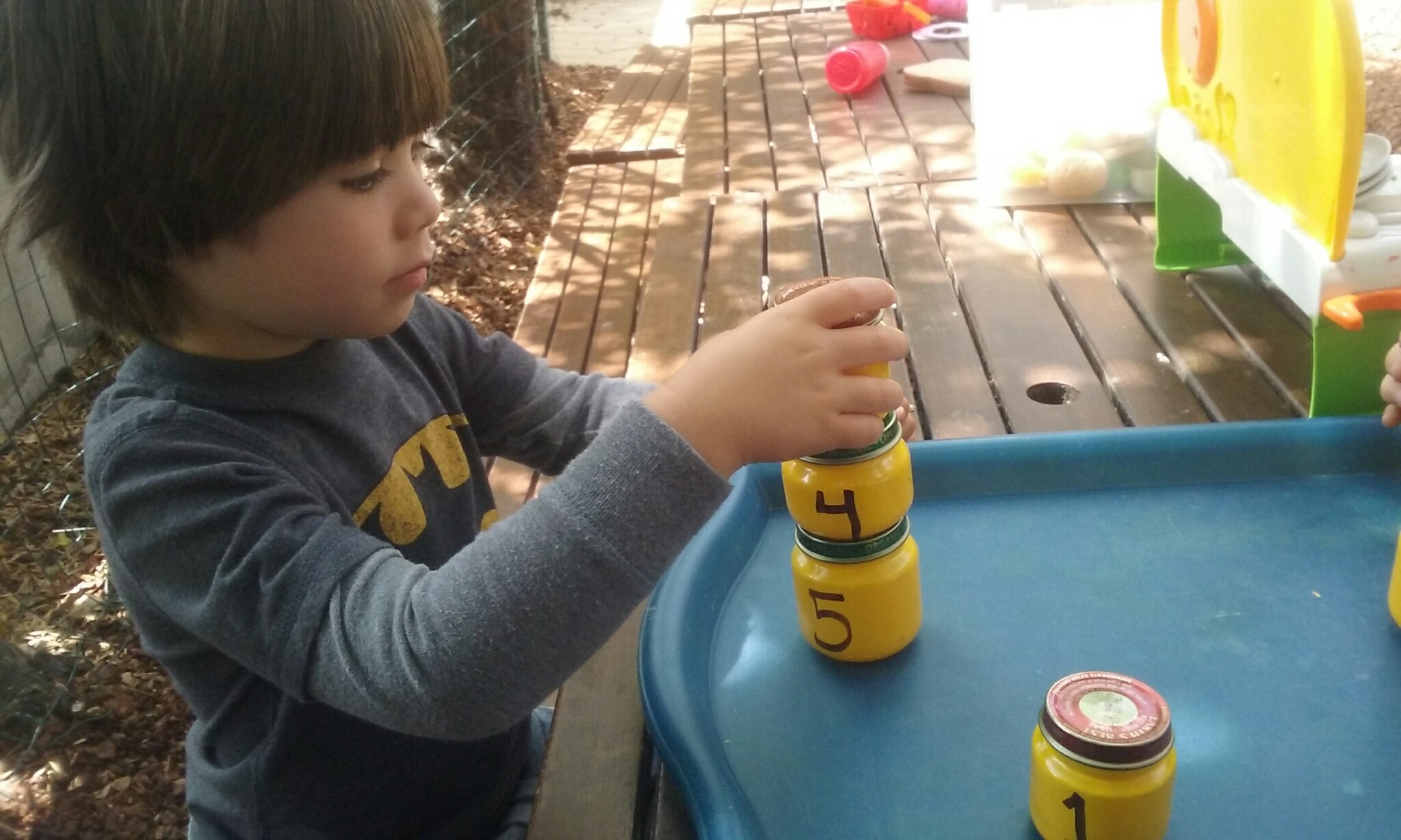
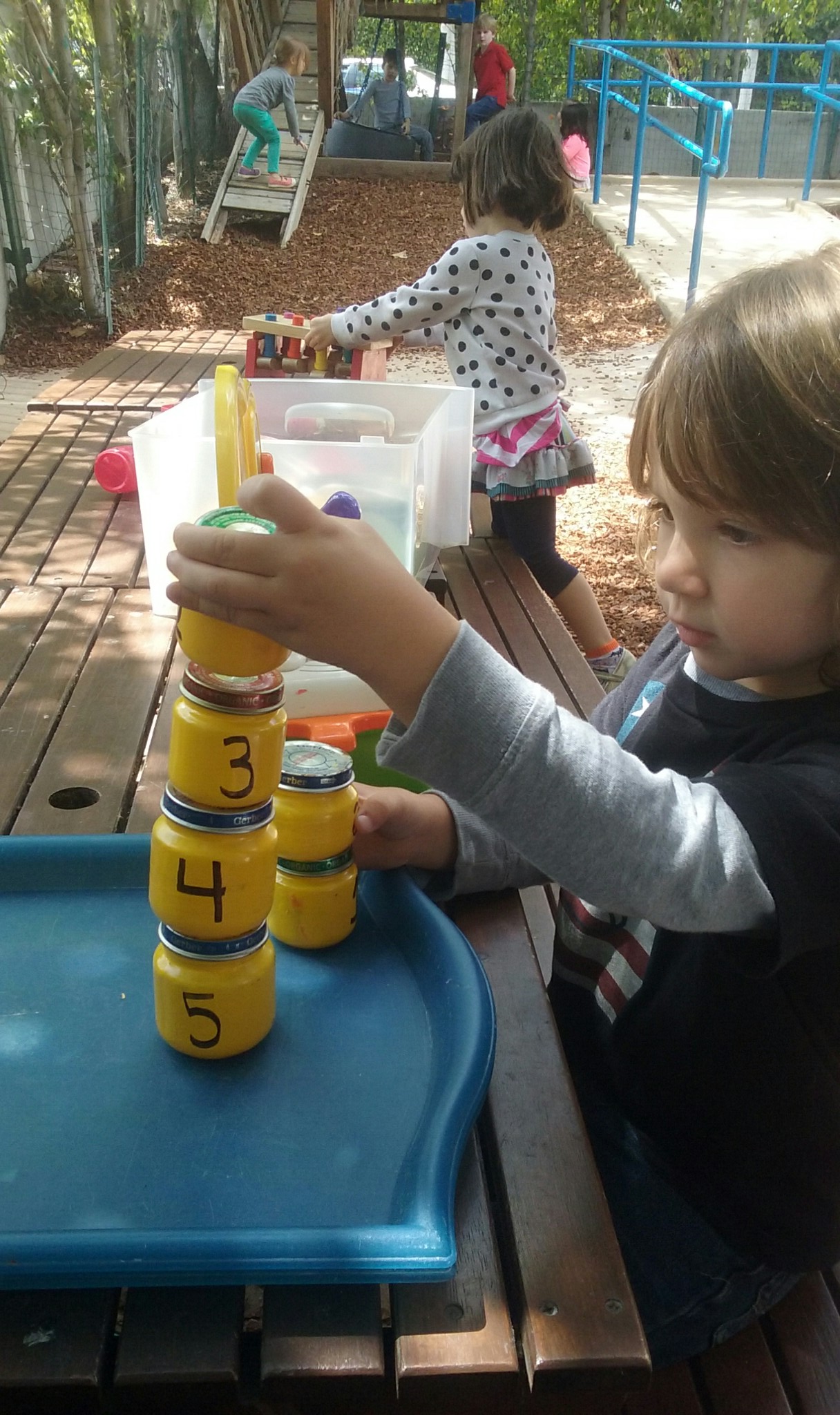
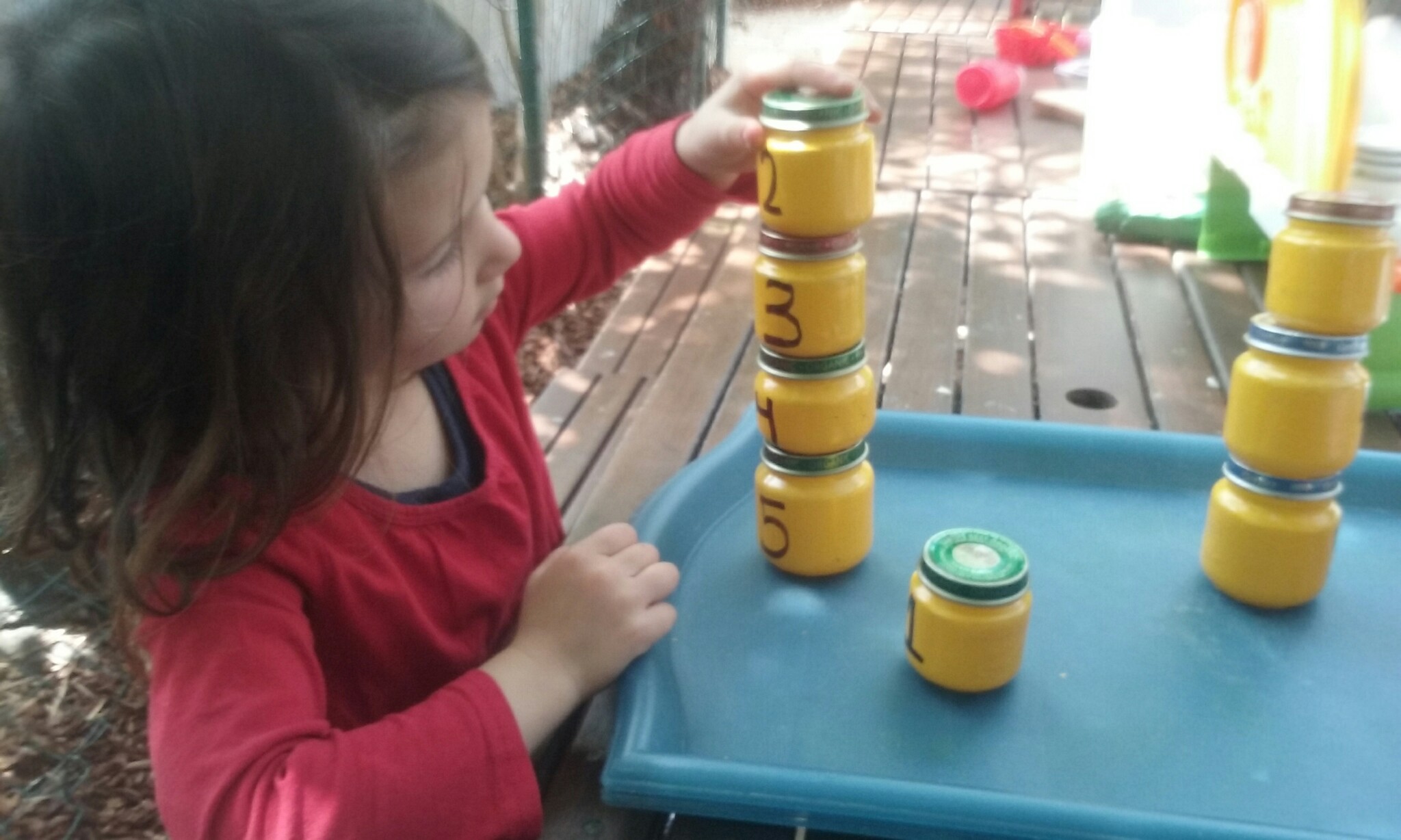
For example, it is easier to understand what six means when applied to a real-life task such as finding six beads to string on a necklace or placing one cracker on each of six plates. It is for this reason that we used baby jars, the color yellow, and numbers to practice our counting, adding, and subtracting. To fit this into our bug theme, we used baby jars painted yellow, and numbered 1-5.

babyjars1

These symbolized a beehive that your little ones made by stacking them on top of each other. They started by stacking the jars in no particular order. Once they mastered this task, they stacked them (while counting out loud) with the number one on the bottom and the number five on the top. Then they stacked them with the number five on the bottom and the number five on the top. Next, they practiced adding and subtracting different jars and counting them.

babyjars2

Waltzing Threes

Recent research tells us that young children are naturally curious about math in the world around them. Preschoolers love to learn by doing — engaging their minds, connecting with their senses, and tapping into their enthusiasm. Research reinforces the value of letting them learn about math through hands-on games and activities they enjoy.

waltz

One surprising research finding is that, while young children appear to learn to read best by mastering skills in an orderly, linear fashion (e.g., print awareness first, then phonics, etc.), the “normal” learning curve in math can vary from one child to the next.

waltz2

In fact, some children seem to be able to understand and engage in certain math activities without first having mastered other, simpler counting and math-related tasks. Since we have been learning about the number 3, your little one participated in an activity designed to strengthen their understanding of it.

waltz3

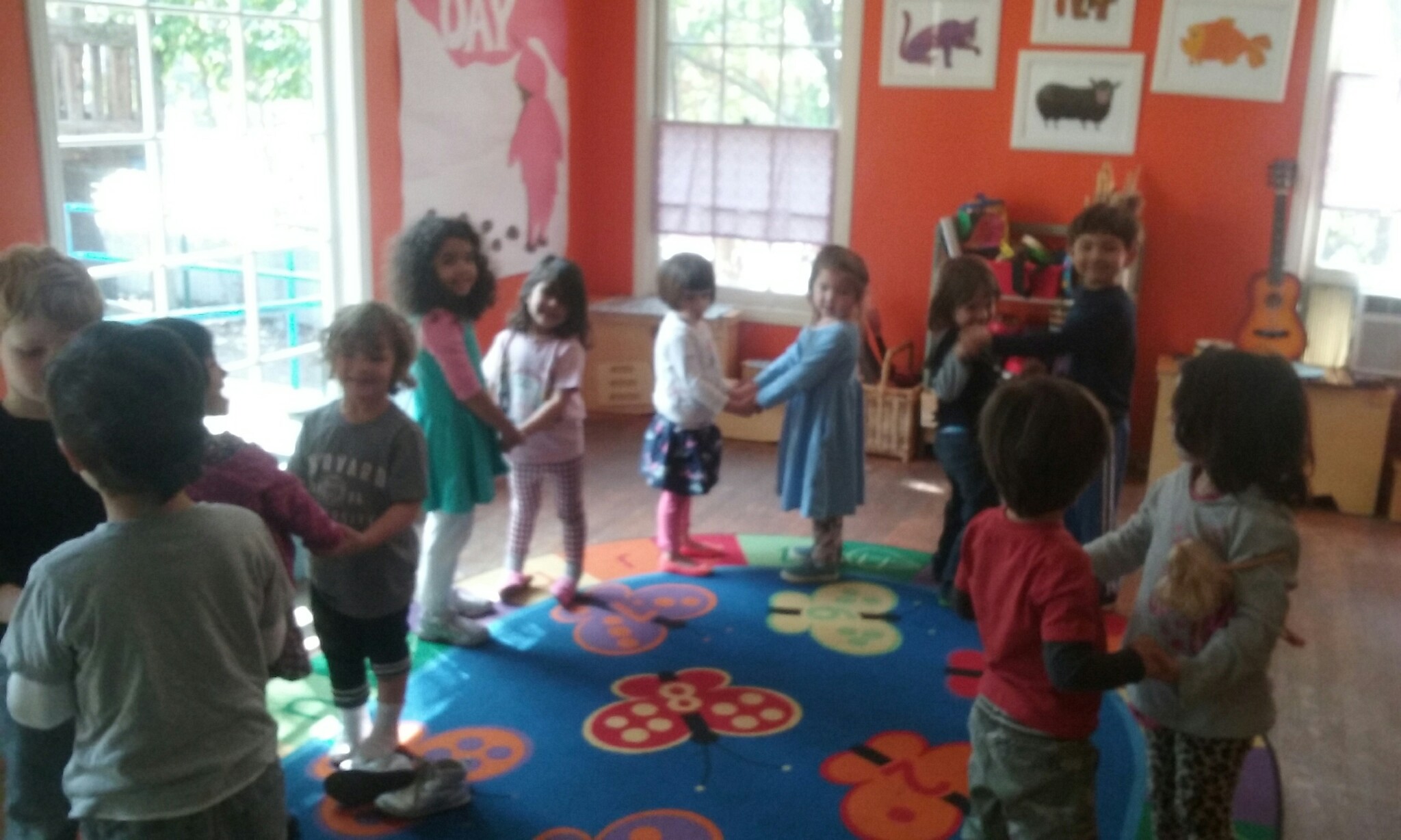
We learned about the waltz, and how it is composed of the beats 1-2-3. With a partner, your little ones practiced chanting “1,2,3” as they danced around the room to the Blue Danube Waltz.

waltz4

Rainbow Loom Sorting and Patterning Activity

A loom is a tool used in weaving to help knit threads together to make a single piece of cloth. Loom technology is ancient, dating back at least to ancient Greek society. Since the invention of mechanized looms, large scale fabric production has become much more common.

20150128_103342

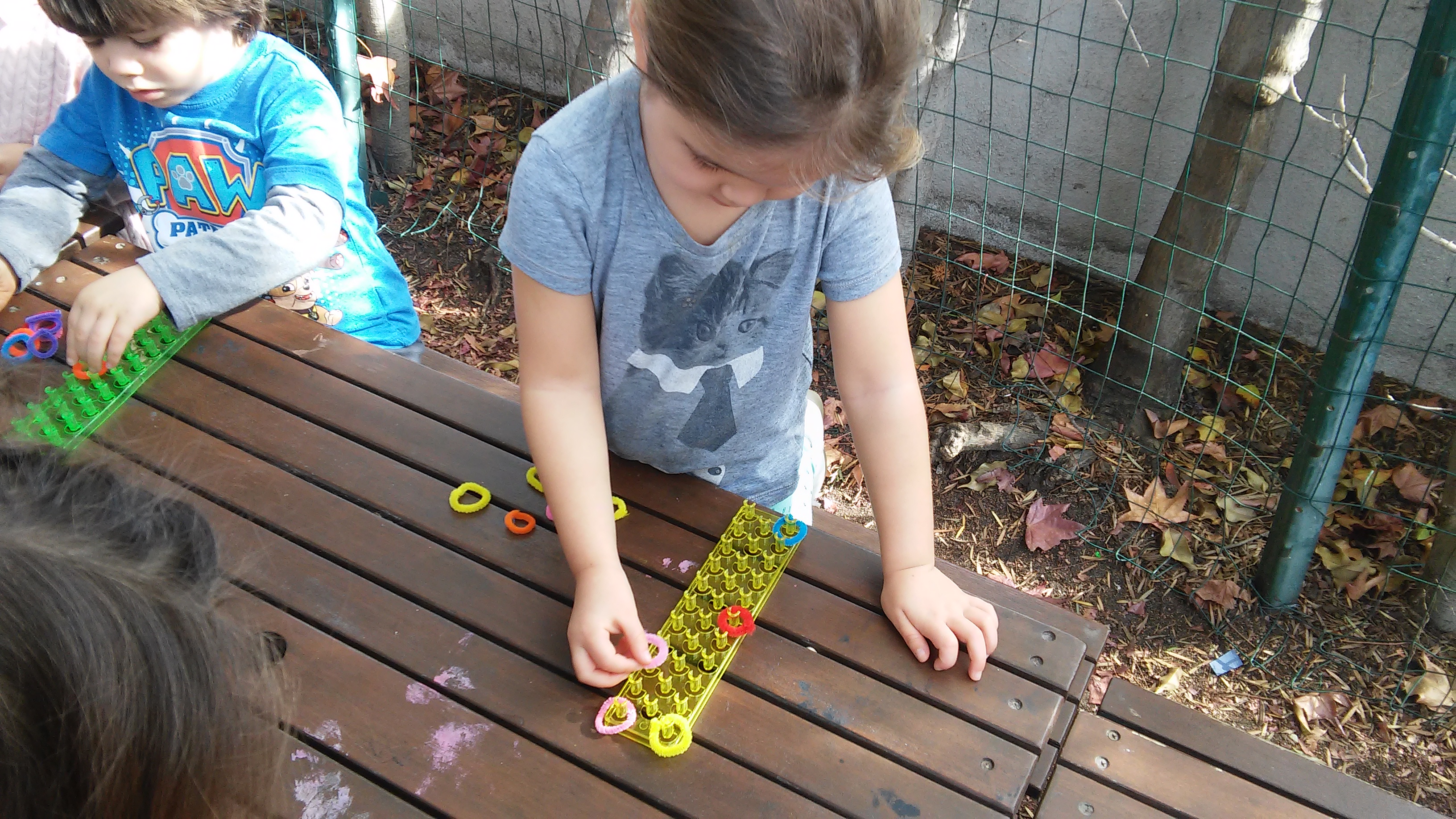
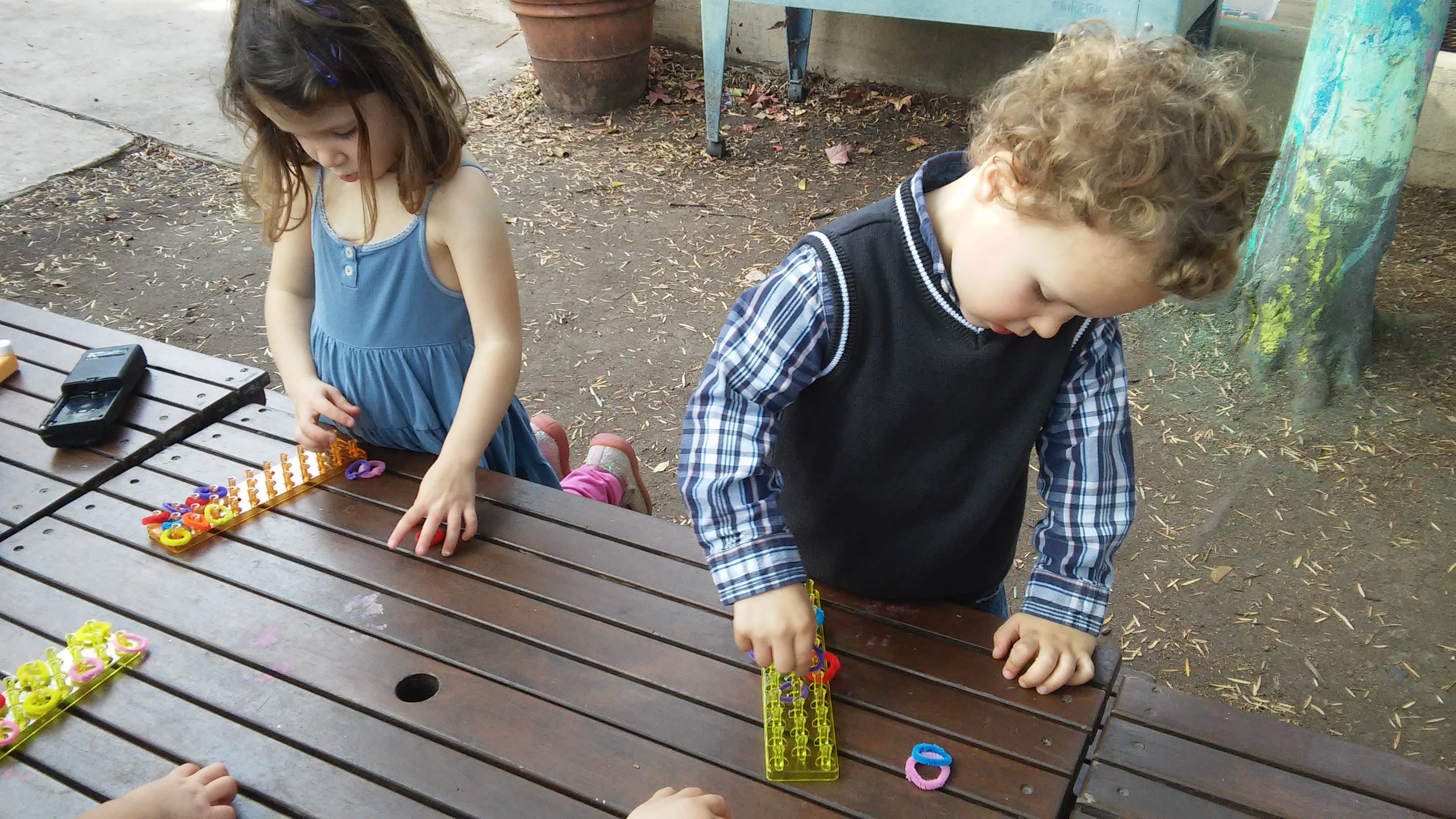
With a little creativity, the loom serves several developmental purposes for the preschool child. Using pipe cleaners adjusted into the shape of a circle, your little one sorted and created patterns on their looms. This taught your little ones important skills like focusing on a task and following directions.

20150128_103142

And planning color combinations and deciding how to use them in different patterns also stimulated creativity. This goes along with persistence, and it’s an important skill for young children to have as they enter their school-age years.

20150128_103158

As children learn, they will rarely succeed the first time, and will need to be patient to keep trying again. Not becoming frustrated and knowing how to work through setbacks–which can definitely happen as learn how to make different and more complicated patterns on the loom–is an important skill for preschoolers to develop.

20150128_103154

Putting all those tiny pipe cleaners together also requires some good fine-motor coordination.  What will something look like when it’s created using a pattern? How does an object or a shape appear when it’s turned upside down, sideways, and rotated? When working with the loom, students developed all these skills as they created the patterns they wanted to make. And being able to visualize things is an important skill in math, which makes the loom a deceptively fun math-related activity.

20150128_103145

Large Shape Sorting

Preschool shape activities help your child develop early math skills.

20150129_105832

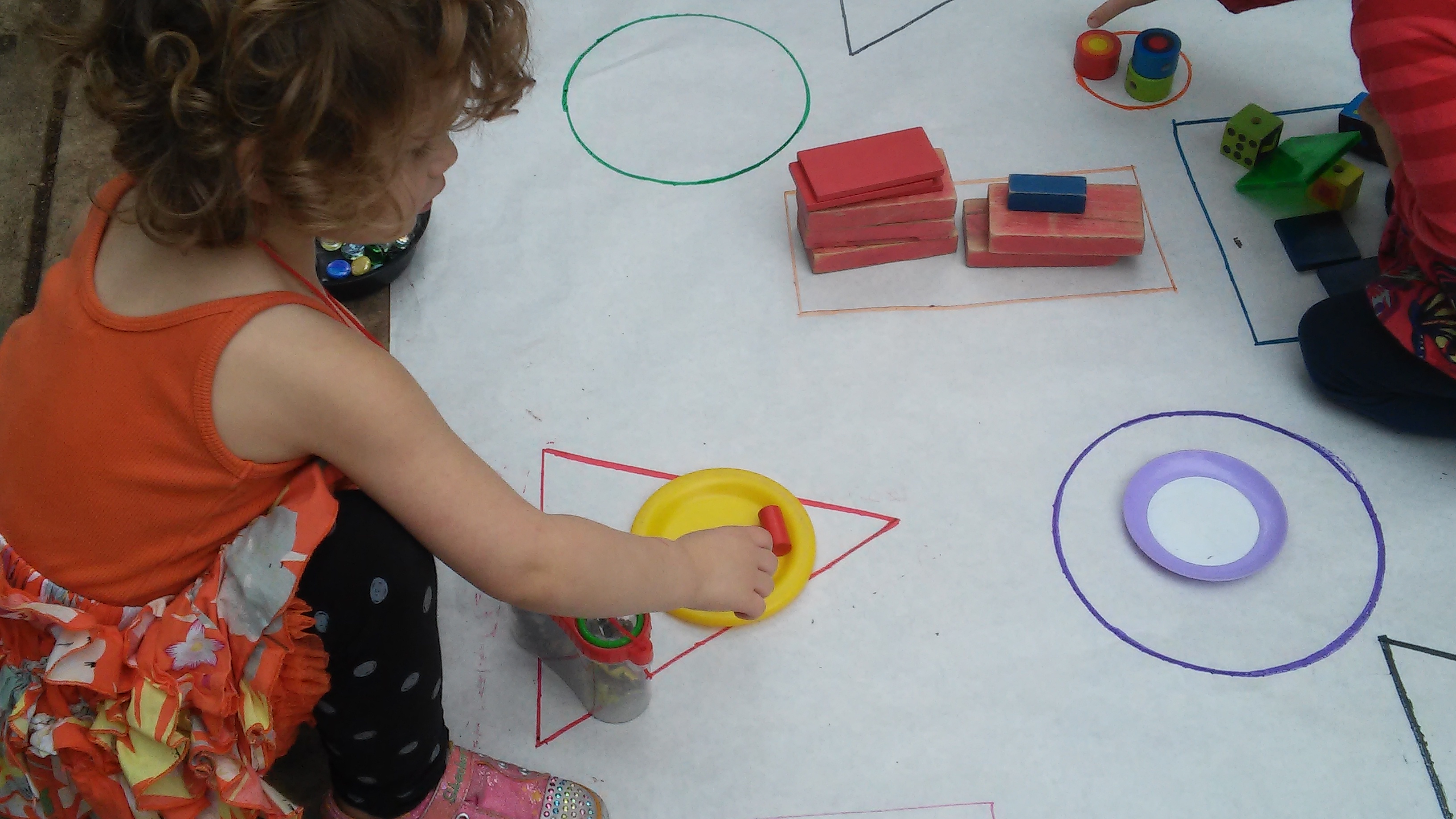
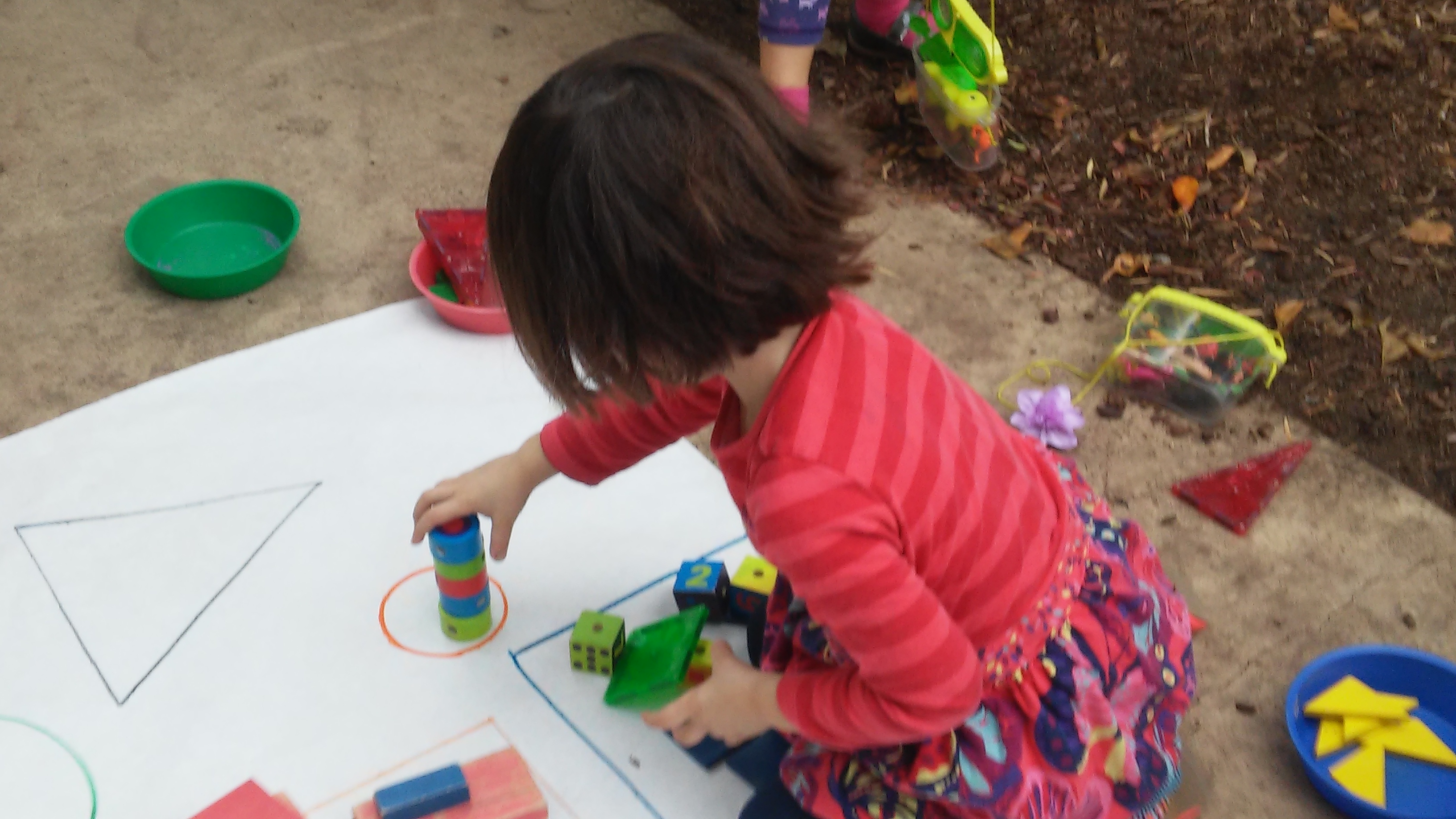
Although recognizing objects as red or blue, round or square might seem like child’s play, it’s actually integral to a young child’s cognitive development, and sets the stage for math concepts from sorting and patterning to geometry, and beyond!

20150129_105632

For this activity, we used a variety of objects, such as blocks, legos, plates, jewels, and beads in a sorting activity. Sorting is a beginning math skill. It may seem that a big chunk early math is about learning numbers and quantity, but there’s much more to it. By sorting, children understand that things are alike and different as well as that they can belong and be organized into certain groups.

20150129_105736

Getting practice with sorting at an early age is important for numerical concepts and grouping numbers and sets when they’re older. This type of thinking starts them on the path of applying logical thinking to objects, mathematical concepts and every day life in general.

20150129_105637

Studies have even been shown that kids who are used to comparing and contrasting do better in mathematics later on.

20150129_105650