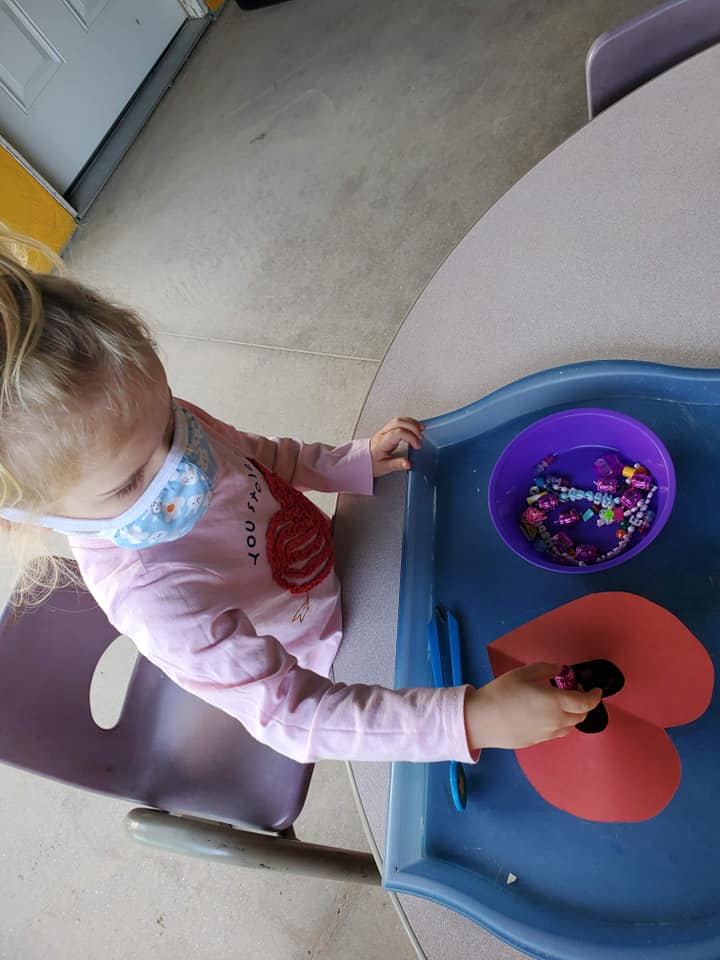
Shaving Cream and the Letter V

Prewriting activities for preschool children below are a great way to build essential, foundational fine motor skills.

20150203_100950

These skills will include hand strength, directional movement patterns, and effective hand position, which will then facilitate making lines, letters, and shapes.

20150203_100912

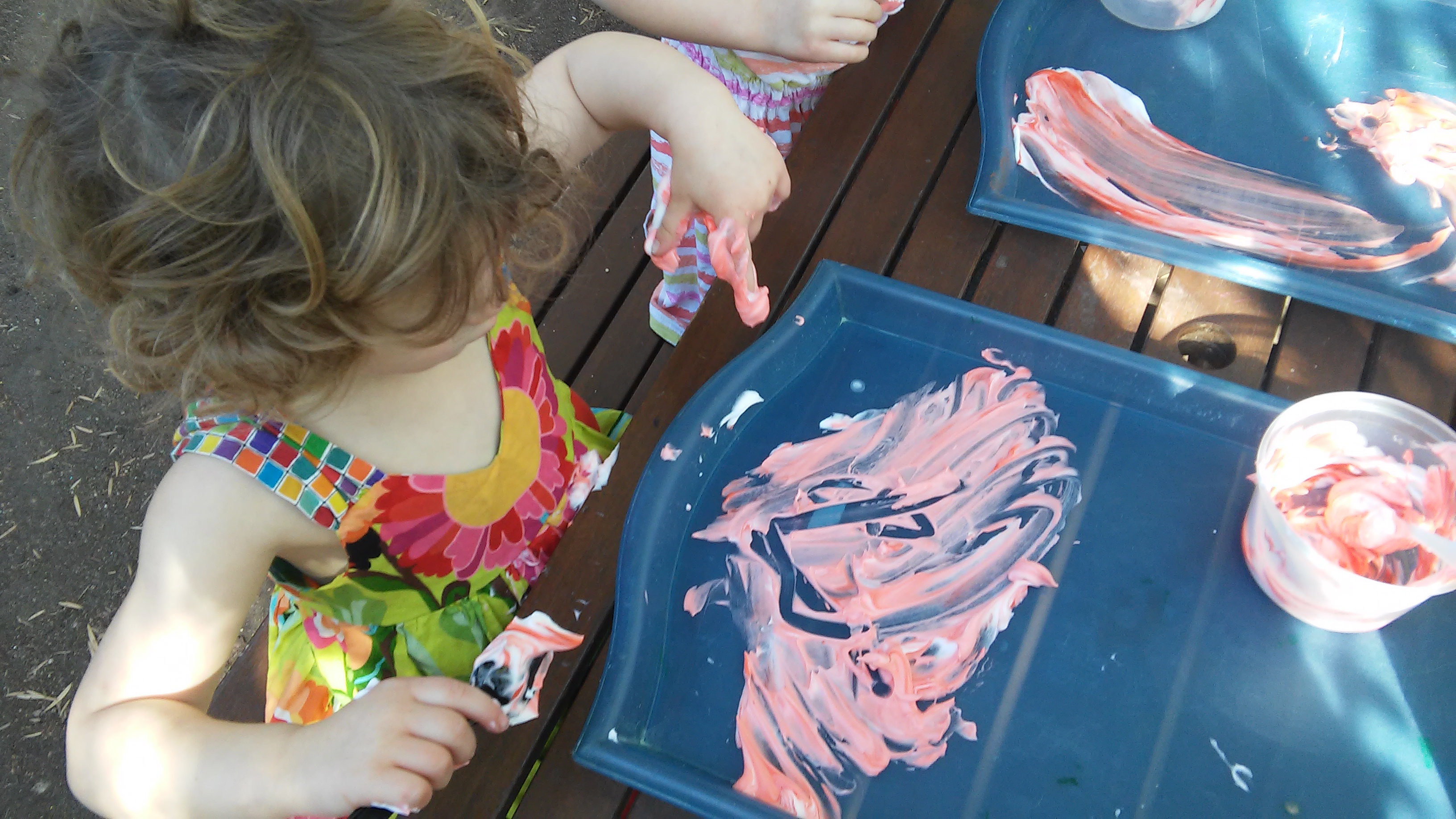
All development comes in predictable stages. Before a child can write, he must have the prerequisite fine motor skills necessary to use his wrist and hands properly and effectively. For this activity, we used shaving cream, food coloring, and our fingers to trace the letter V, for valentine! Students initially combined the shaving cream with their food coloring, and then added this mixture to their trays. Using their fingers, they traced the letter V, going from up to down and left to right.

Exploding Hearts

Preschoolers are actively engaged in scientific learning, both inside the classroom and out. As they ask questions and seek answers to their “how” and “why” questions, they are beginning to practice scientific investigation. Science is also a way to find out about the world through exploration. Children are investigators by nature. When their natural desire to investigate is nurtured,  young children develop scientific minds.

20150204_105539

In our classroom, we create environments that engage the senses of our young students and allow them to sort and classify, handle, observe, and ask questions, which is how they construct ideas about the physical and natural world.

20150204_105505

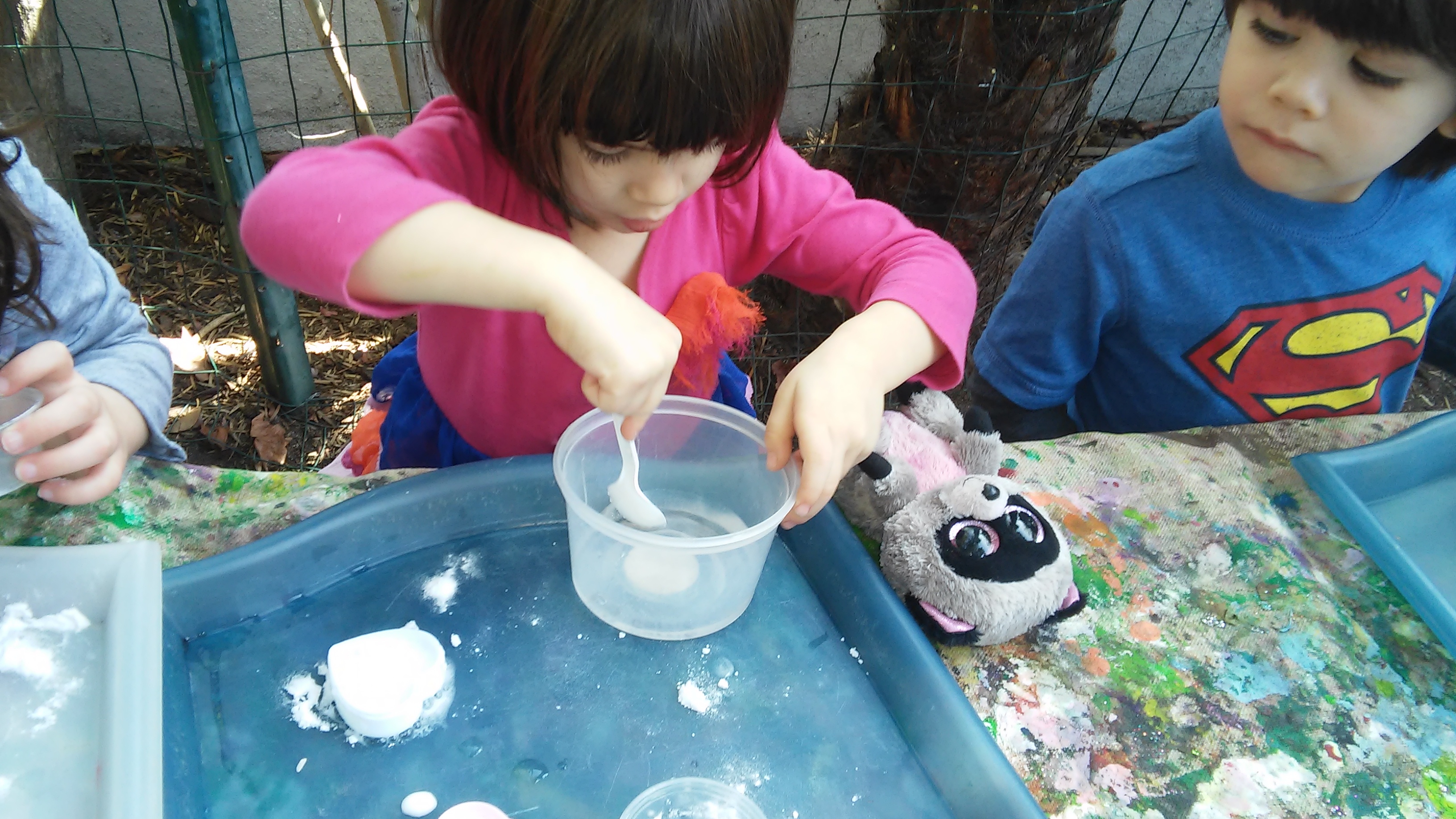
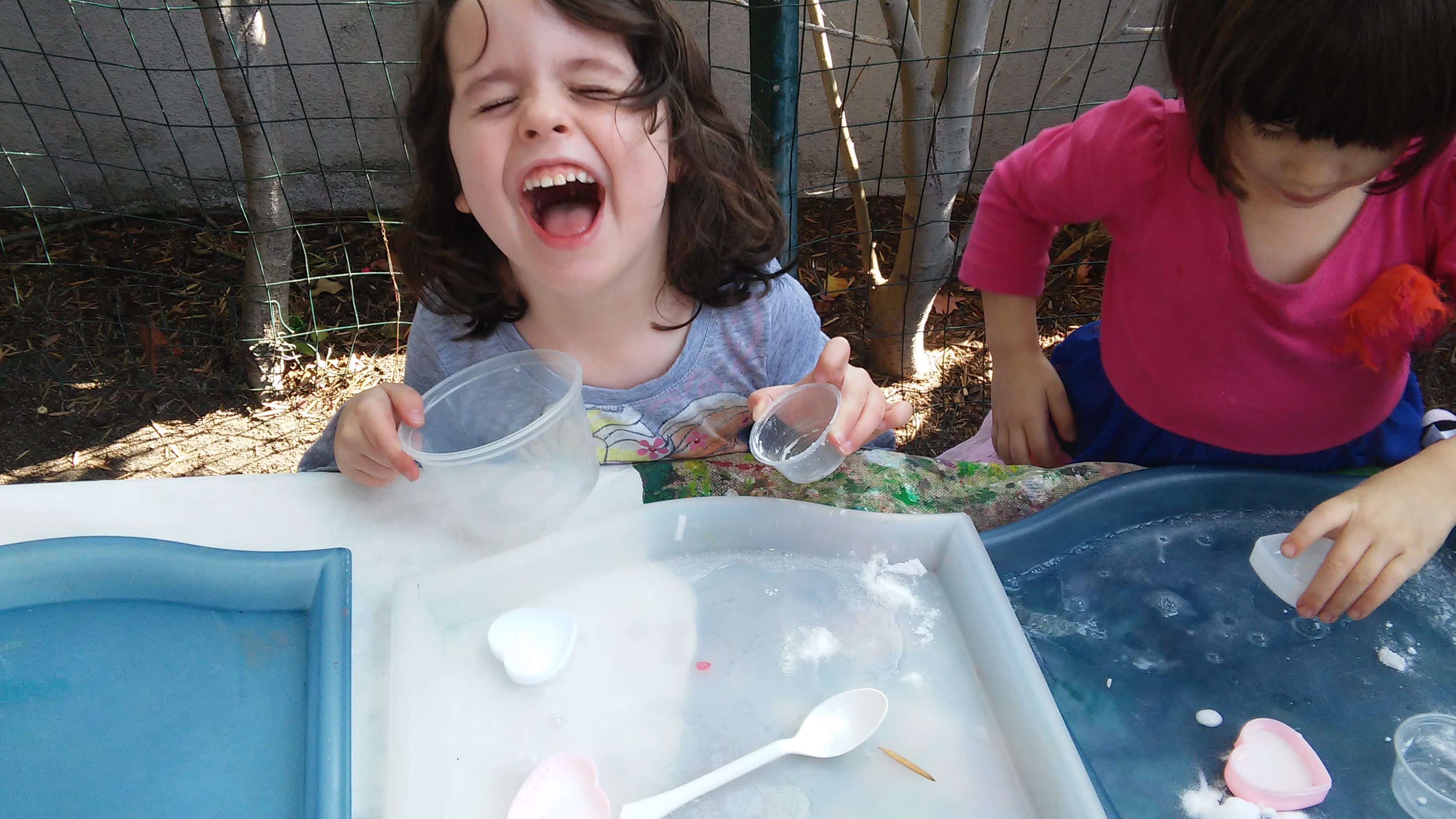
For this activity, we used vinegar, baking soda, and plastic hearts to create exploding hearts! Introducing chemistry to young children at the beginning of their academic journeys is very exciting and aids their capacity to grasp more elaborate scientific concepts later on. Chemistry also provides an exciting supplement to their learning as they perceive and learn about predictable actions. Lastly, experiments conducted independently make them more meaningful to your little scientist!

20150204_105606

Valentine’s Playdough

You can squish it through your fingers. You can roll it into a ball. You can do pretty much anything with it! It’s playdough! But did you know, playdough can also provide valuable hands-on learning experiences to support your child’s growth in the classroom? Playdough can provide enjoyable and satisfying experiences for young children, but it is not just a “fun” activity. In our classroom, we use this pliable learning tool to address early learning standards and observe your little one’s progress in numerous areas of development.
20150202_105521

When young children manipulate playdough, they compare and contrast objects, actions, and experiences. In their experimenting, children come up with their own ideas, satisfy their curiosity, and analyze and solve problems. These are all skills that help children learn and succeed in school.
20150202_105541

This seemingly simple material can also provide integrated learning experiences in the following cognitive areas.

20150202_105343

Because of the interactive nature of playdough use, children need to listen, understand the communication of others, speak, and practice their oral communication skills as they mold and manipulate their playdough constructions.

20150202_105530 (1)

The tactile experience of manipulating playdough helps children develop a deeper understanding of how matter changes (physics) and encourages them to use scientific thinking as they observe changes, make predictions, and talk through differences in the materials they are using.

20150202_105458

Mixing up a new batch of play dough with adults is one way in which playdough engages children in mathematical learning as they measure and count recipe ingredients.
20150202_105314

Discussions about shape, relative size (greater than, equal to, or less than), height, length, and weight provide additional opportunities for children to develop mathematical understandings.

20150202_105512

The fine motor skills needed for writing and drawing are refined as children roll, poke, and shape their playdough creations.

20150202_105331

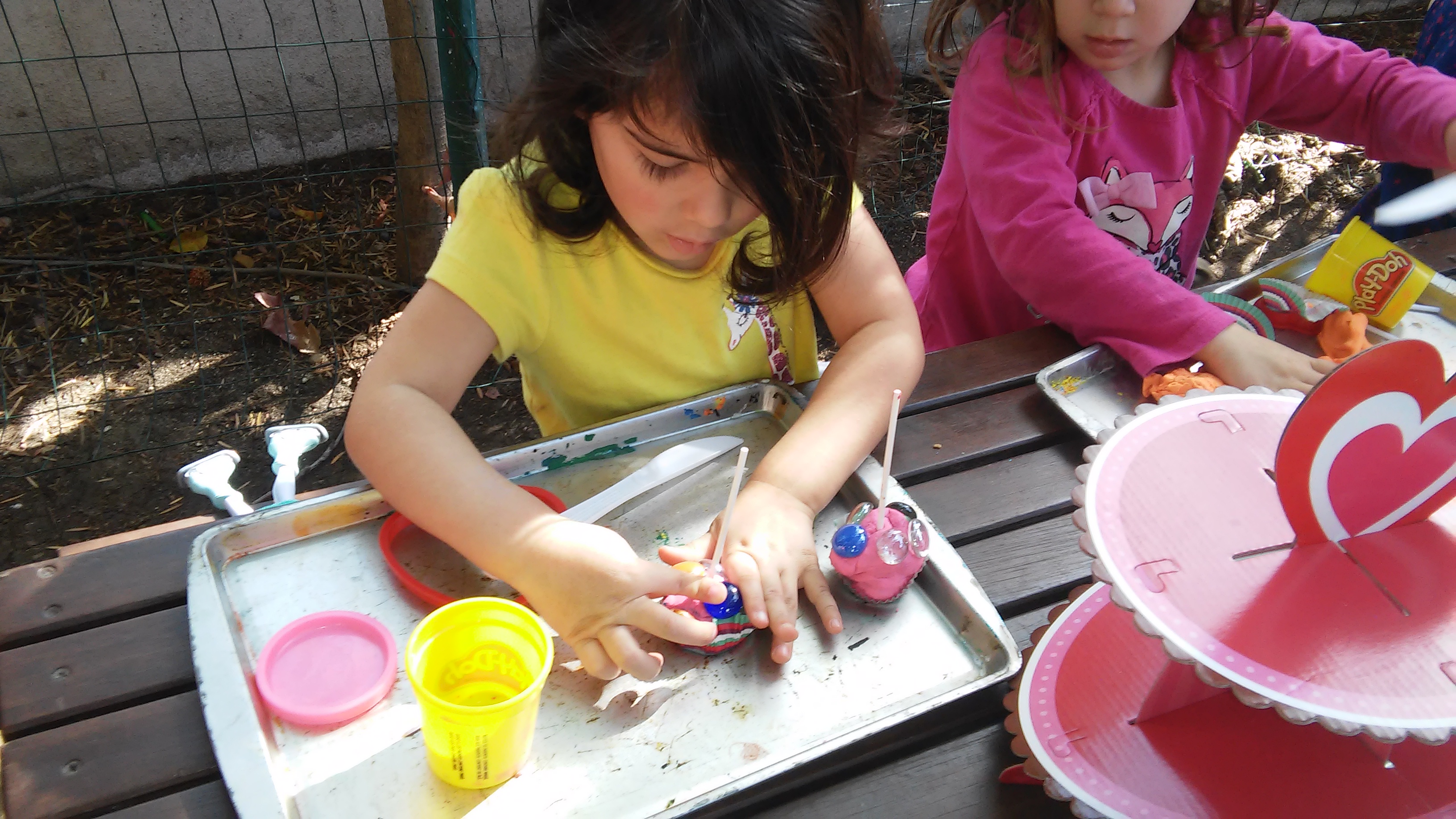
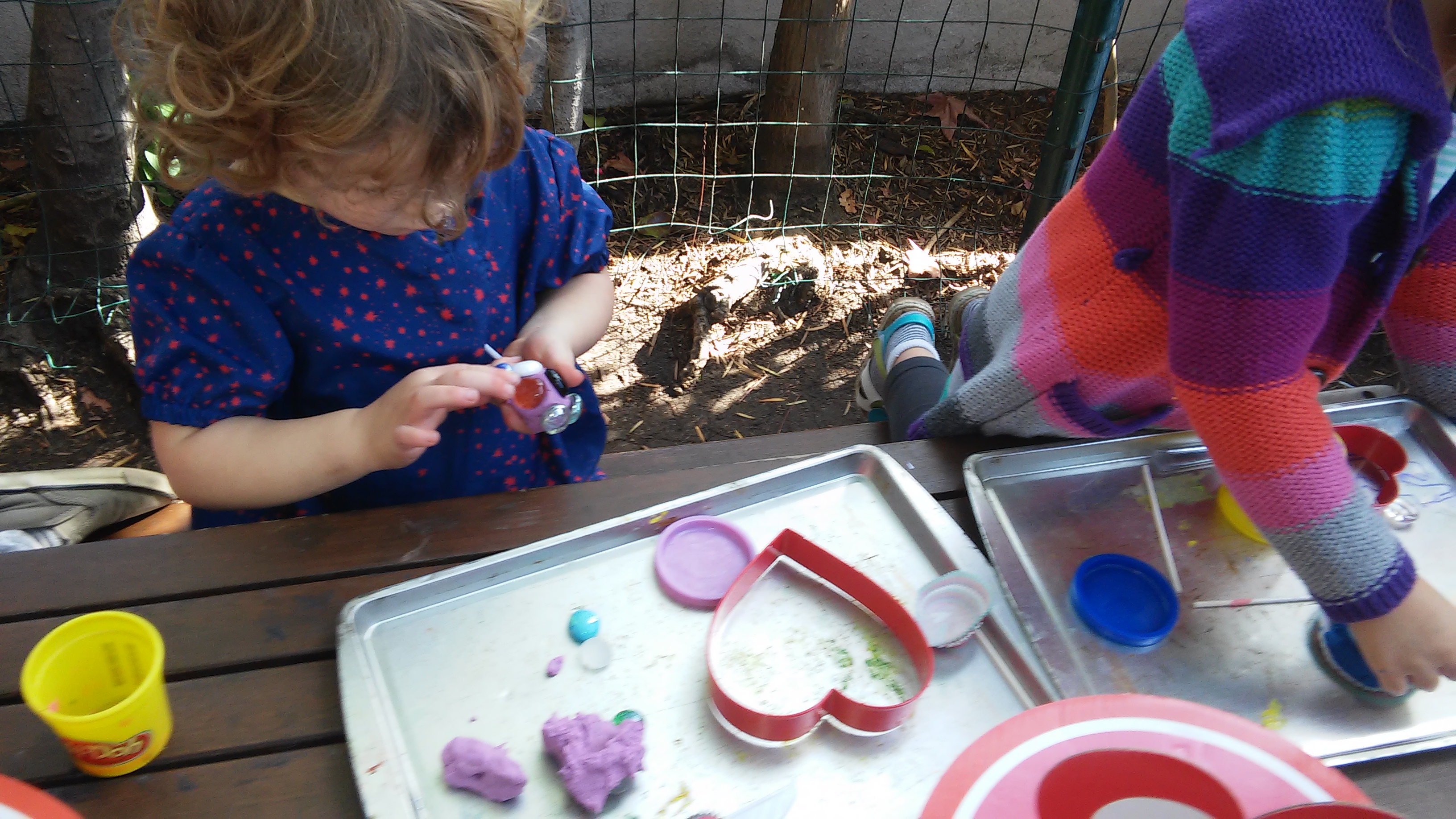
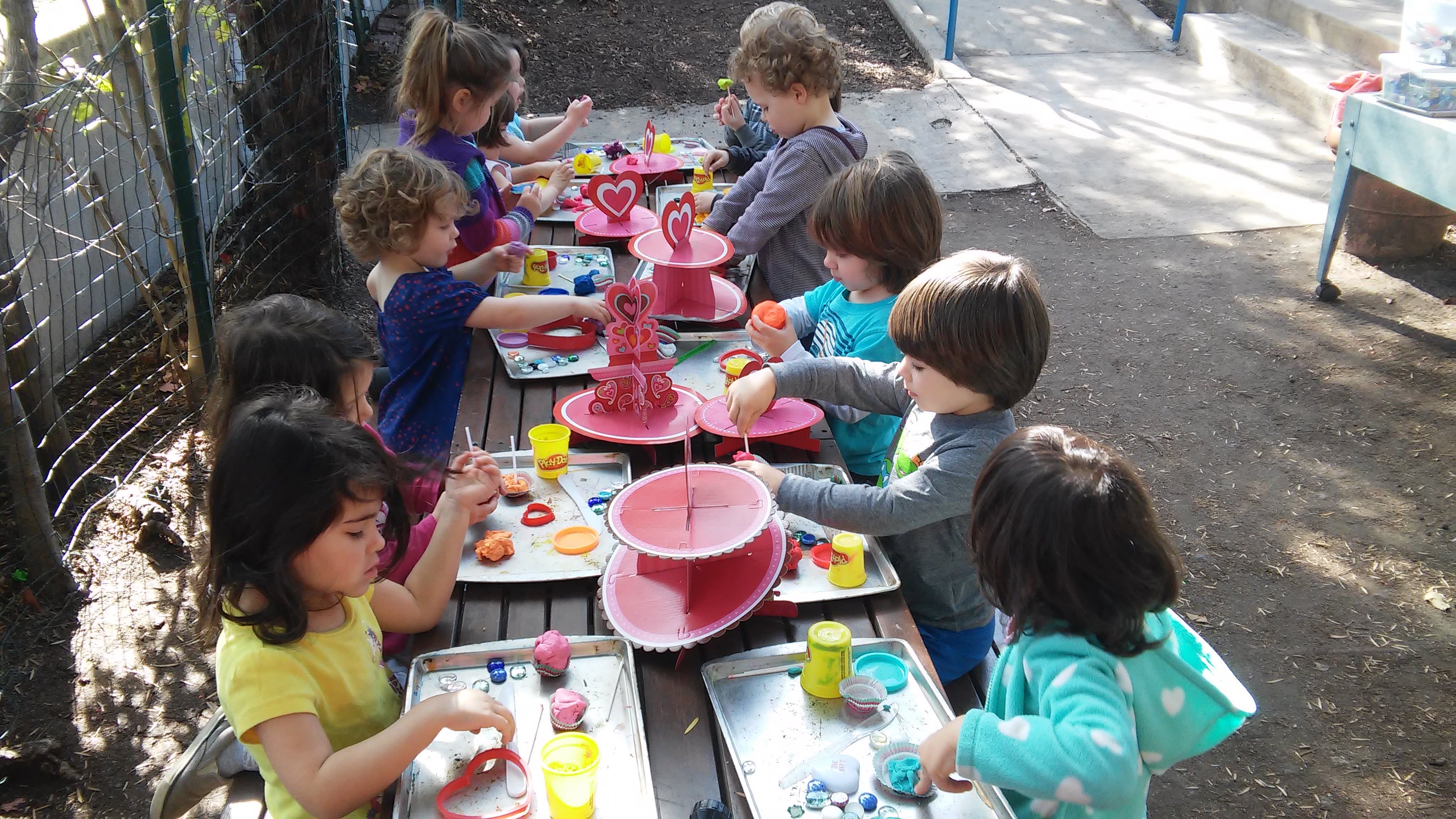
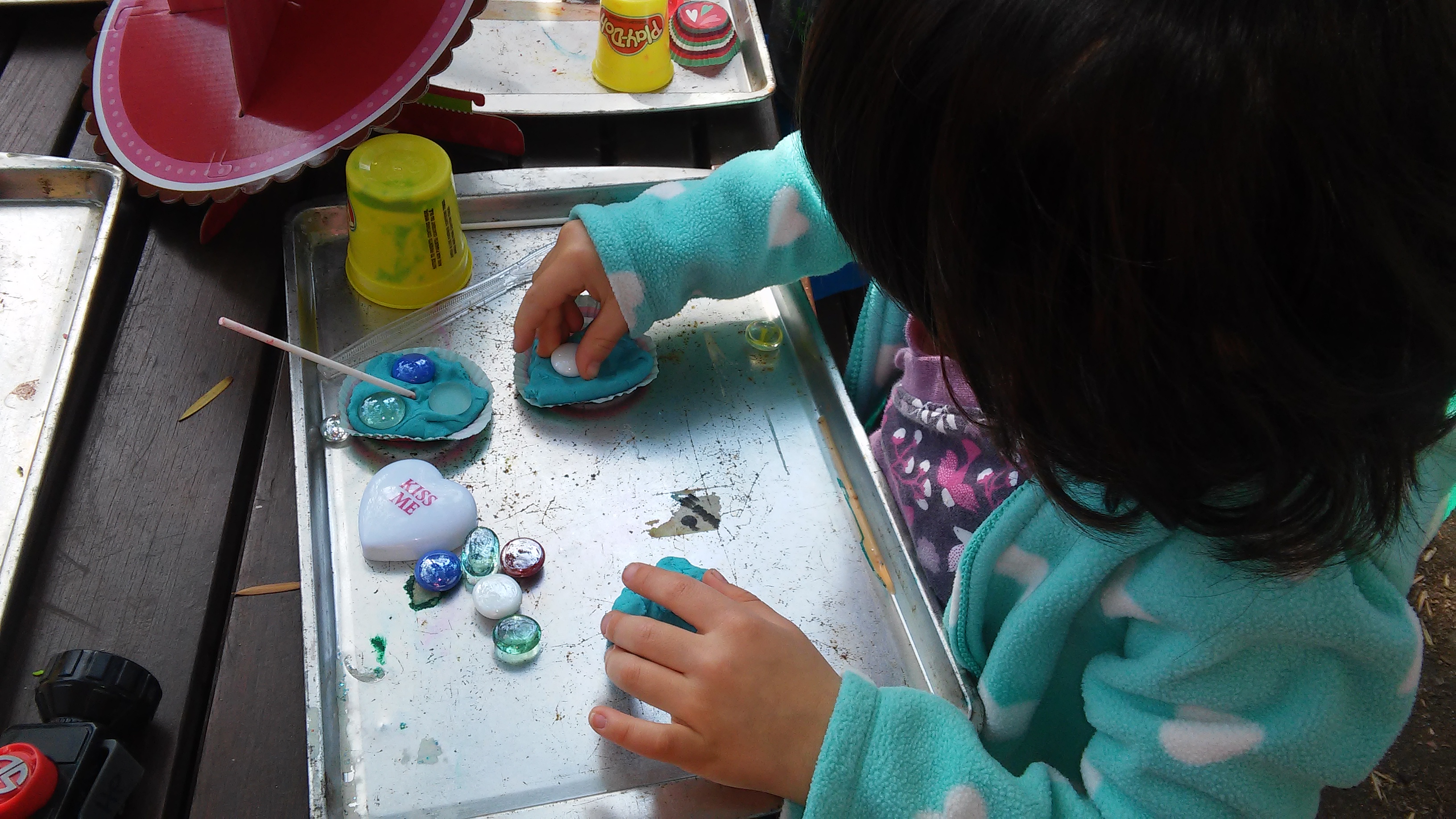
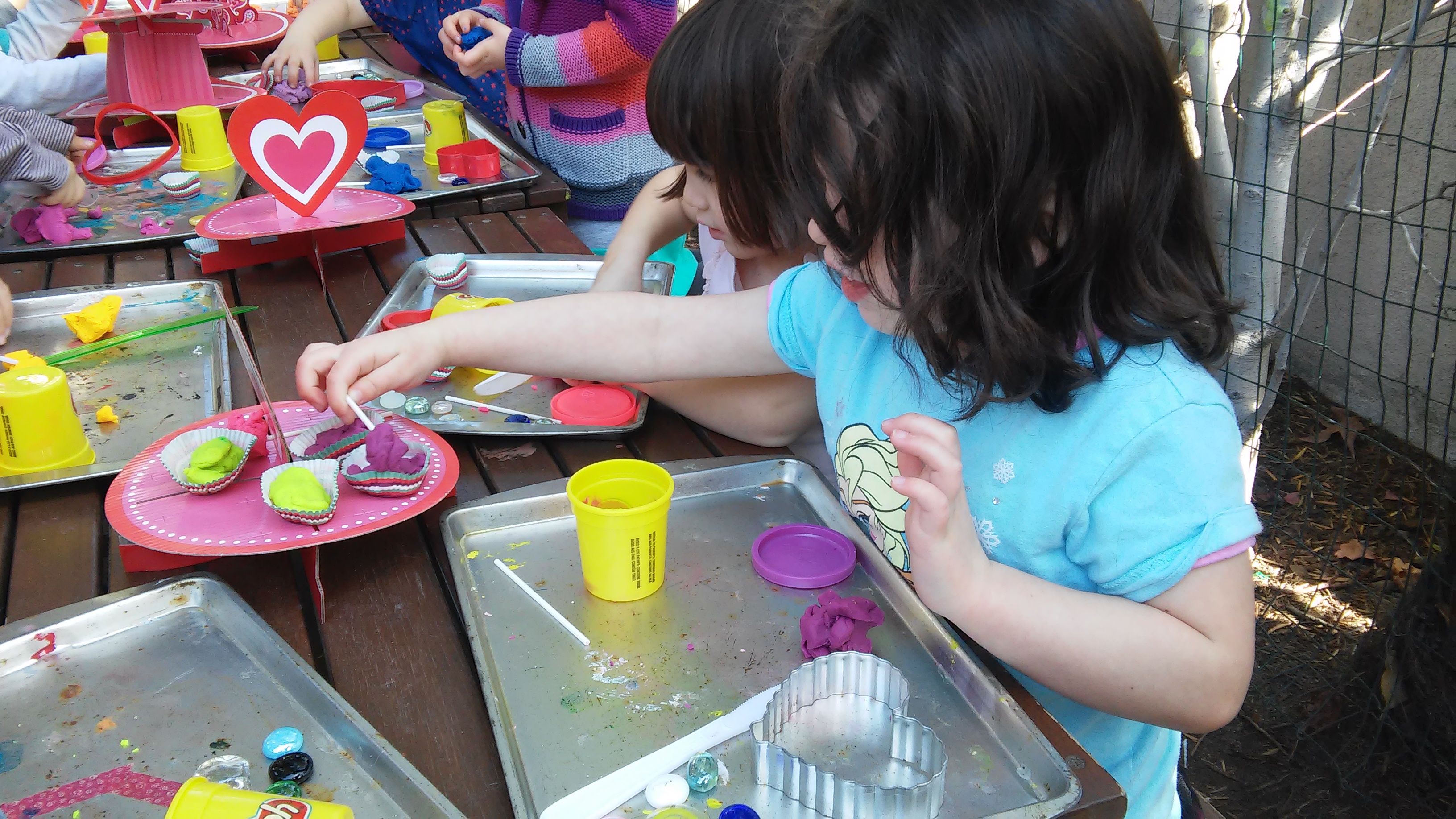
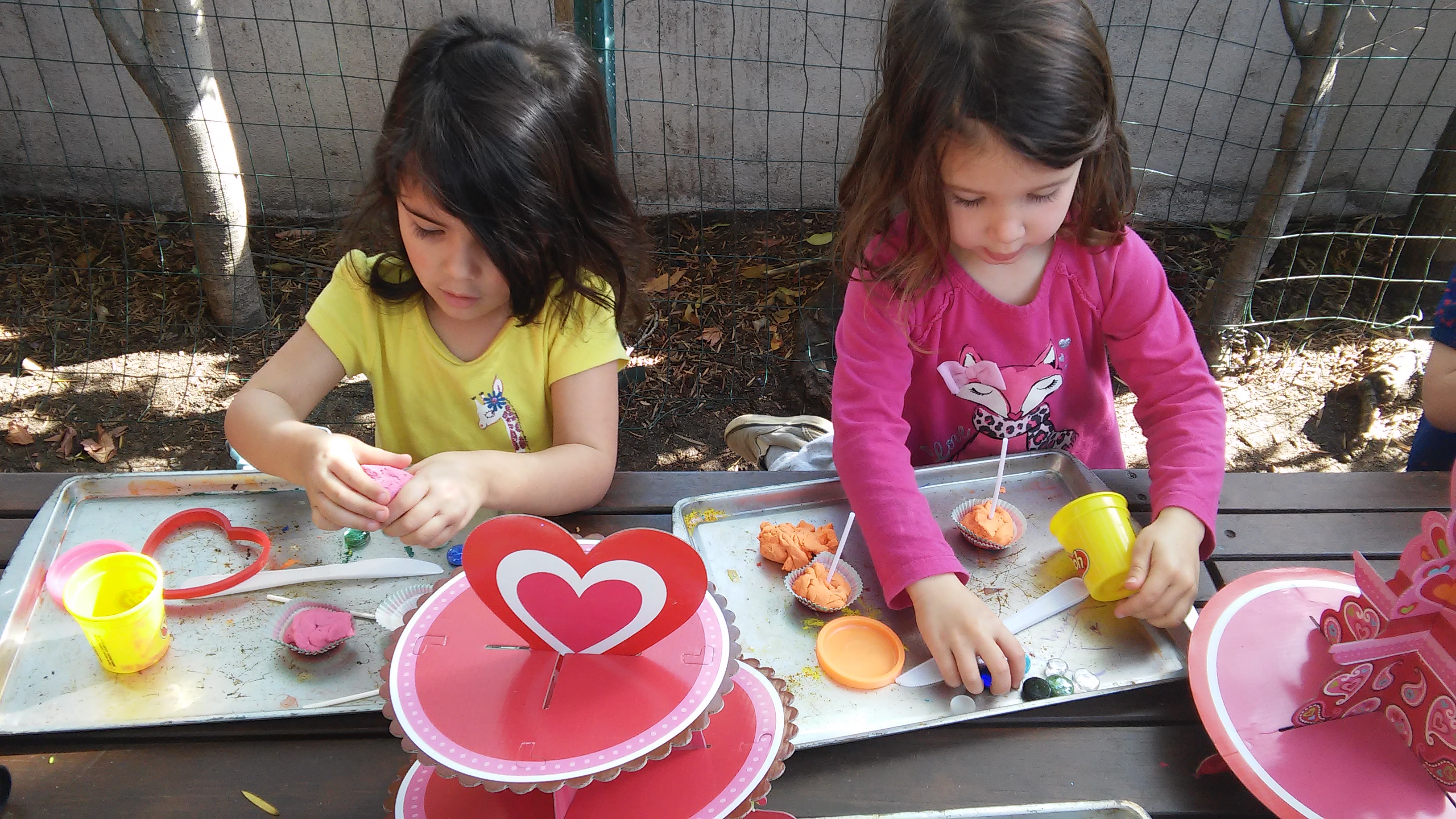
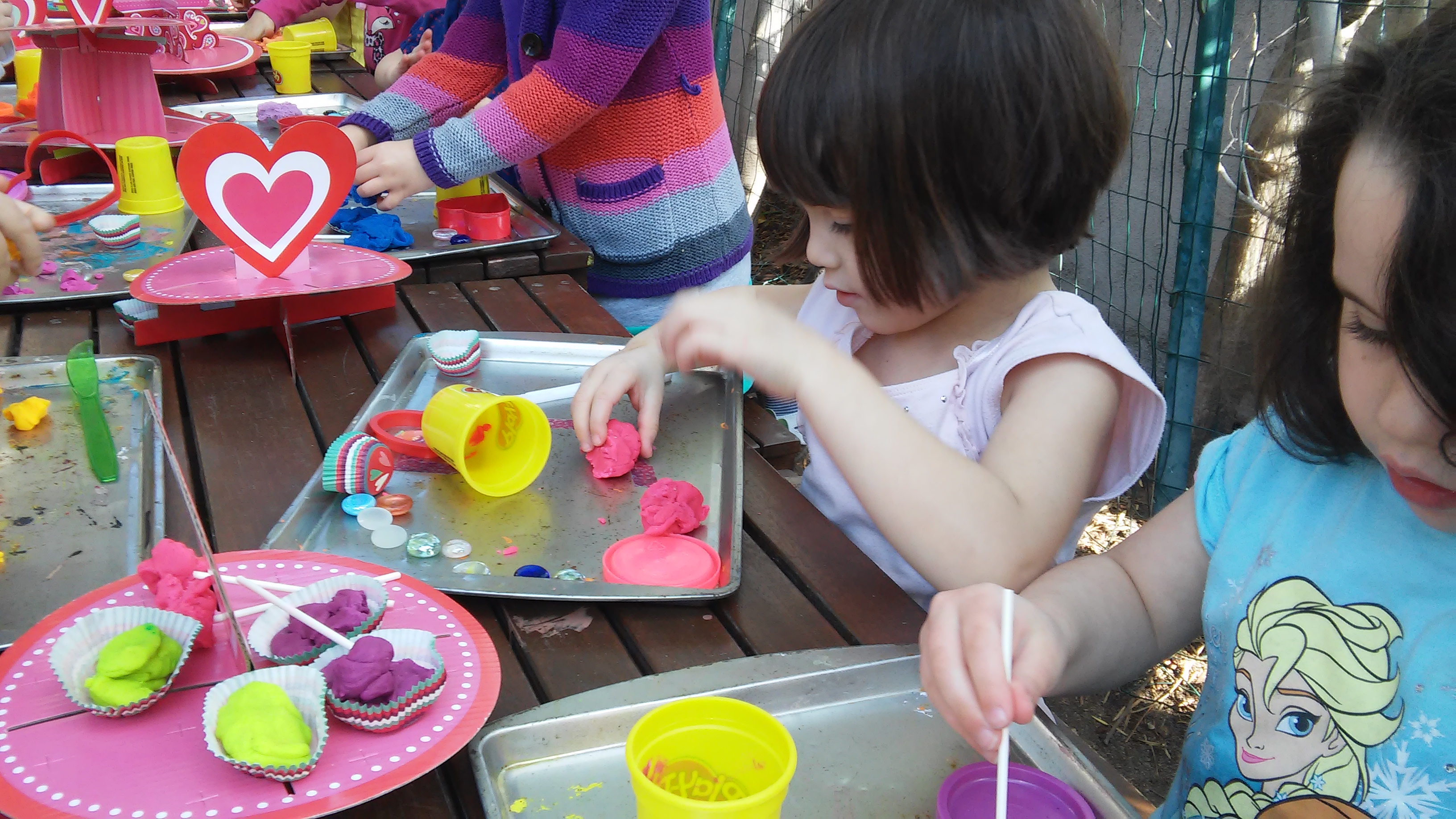
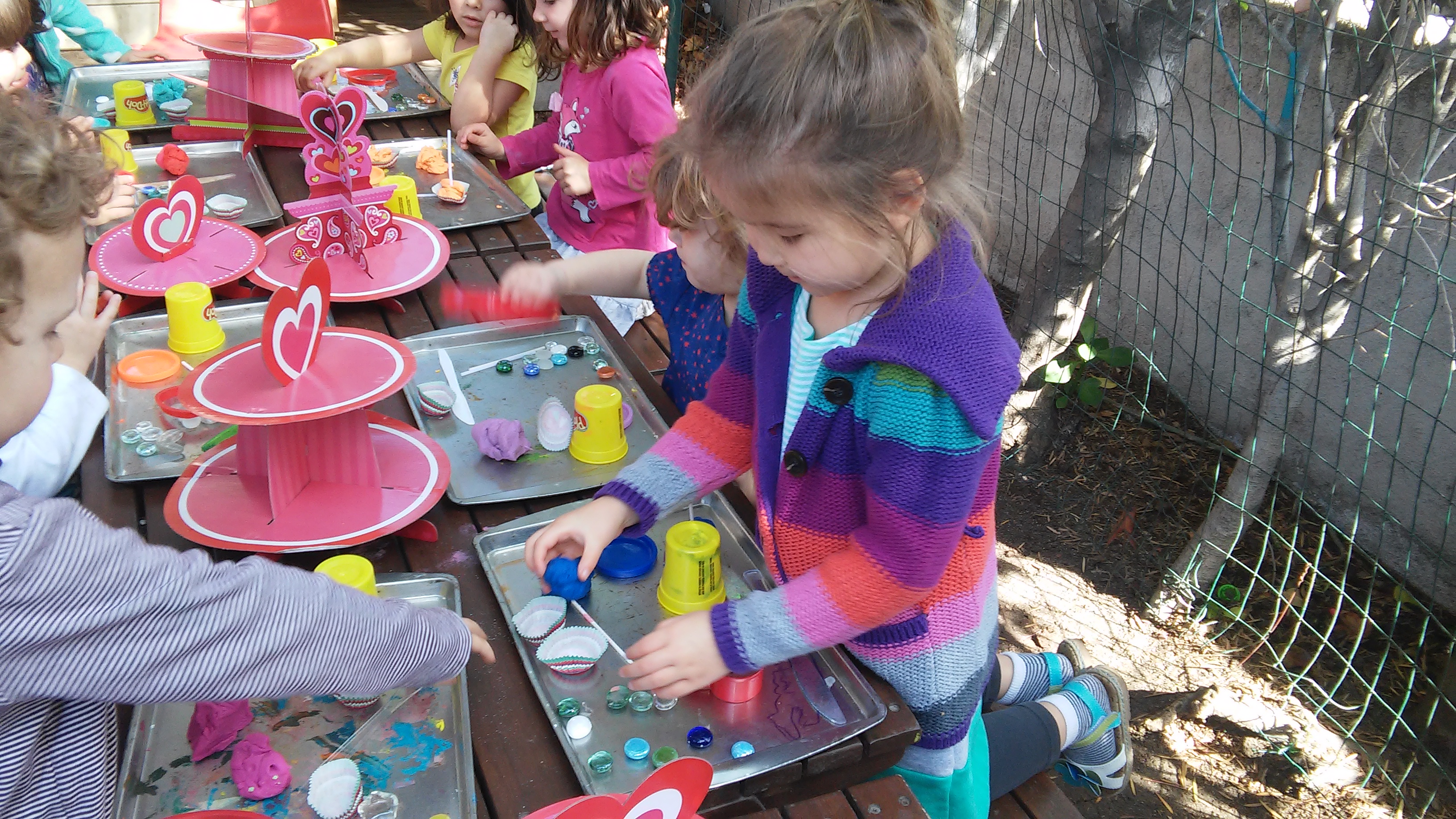
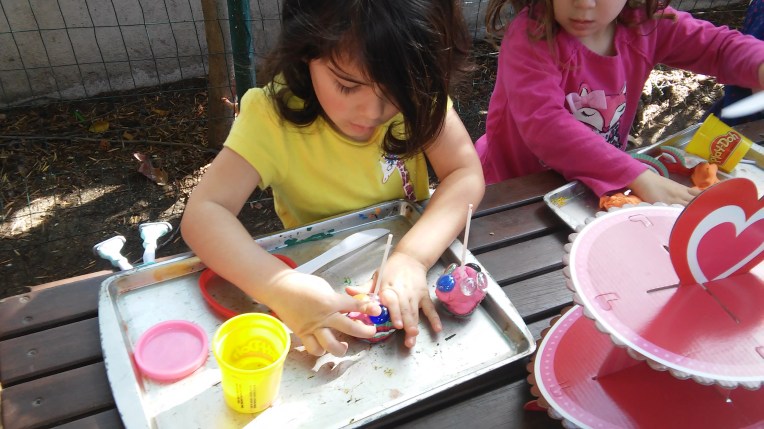
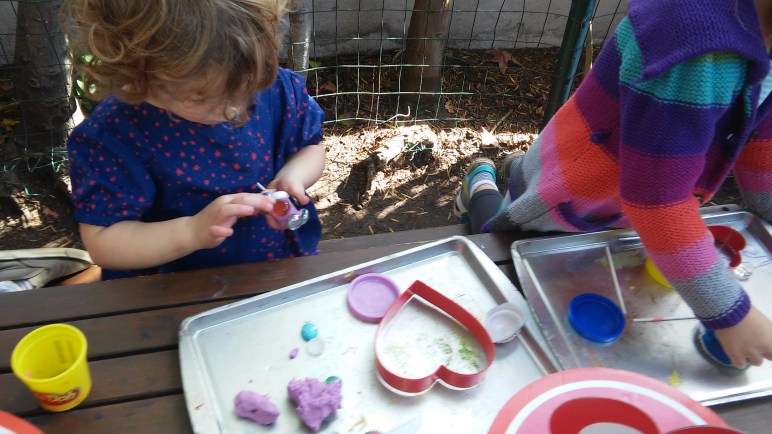
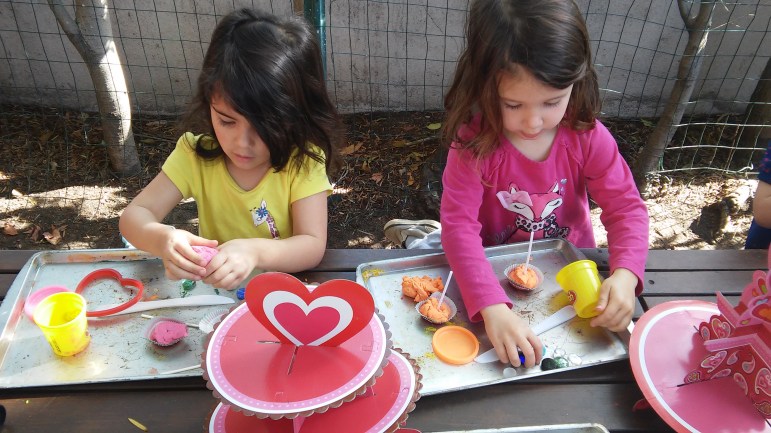
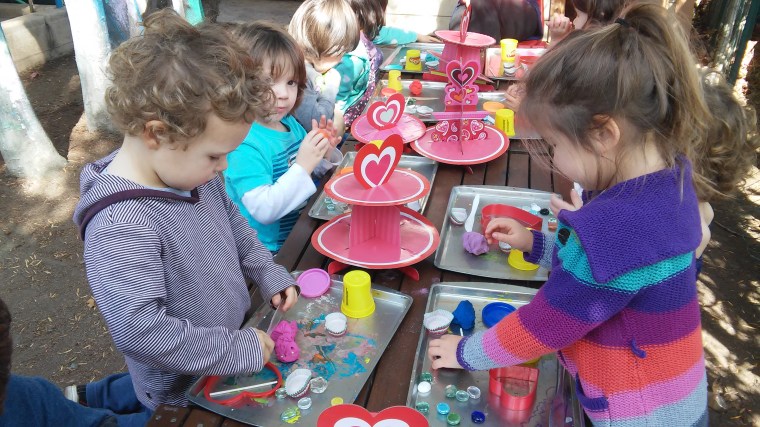
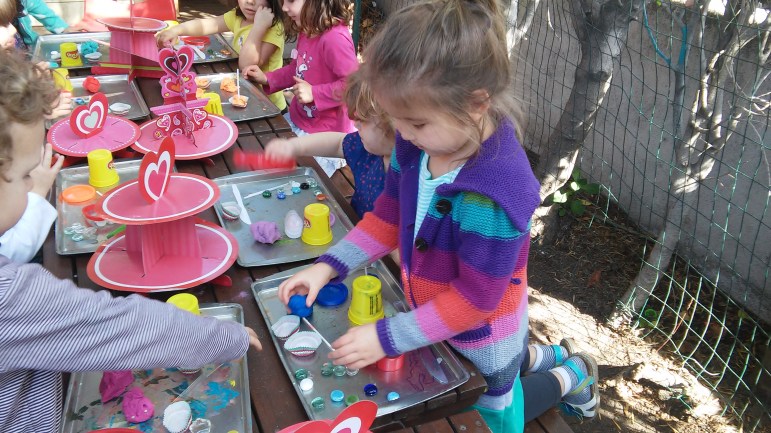
For this particular activity, we used playdough to create a variety of Valentines-themed baked goods.
20150202_105305

Students were given cookie cutters, plastic knives, cupcake holders, cake stands, jewels for “sprinkles”, and their imaginations to bring about an array of delicious goodies! We worked with our friends, displayed our creations, and did it all over again!
20150202_105300

Valentine Heart Sequencing

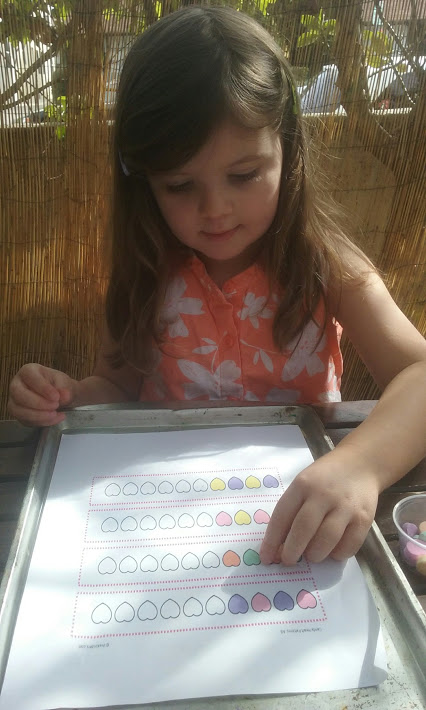
Using candy hearts, colored sequencing worksheets, and our minds, we learned about what a sequence is! We used colored hearts to demonstrate this. Your little one would name the order of colors, and then complete the sequence on their own!

20150209_160420

Young children can learn about sequencing by putting familiar events, ideas, and objects into their logical order. Key vocabulary words for sequential order are “first”, “second”, “next”, “then”, and “finally”.

vheart

Ordinal numbers are also important vocabulary words for sequential order.

vheart1

Helping children understand the concept of sequence develops math skills, literacy, and scientific inquiry skills.

20150209_160352

Fine Motor Hearts

Using beads, tweezers, and heart-shaped vases, we continued to hone our fine motor skills!

Using the tweezers helps your little ones continue their mastery of the pincer grasp, and placing the hearts into the vase encourages concentration, and hand eye coordination.

Young children often have difficulty in manipulating a variety of utensils required for fine motor control, but providing them with this variety helps improve awareness of their hand.