Searching for Chicks

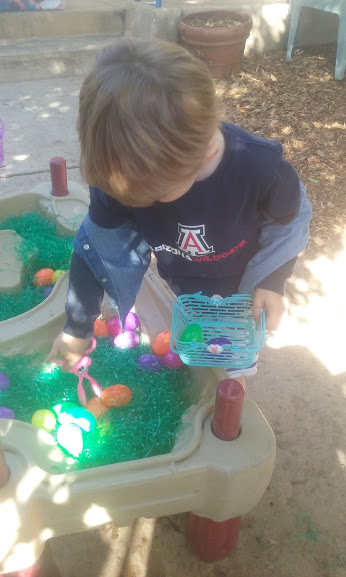
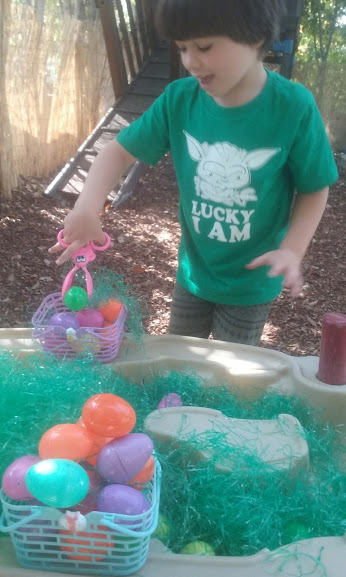
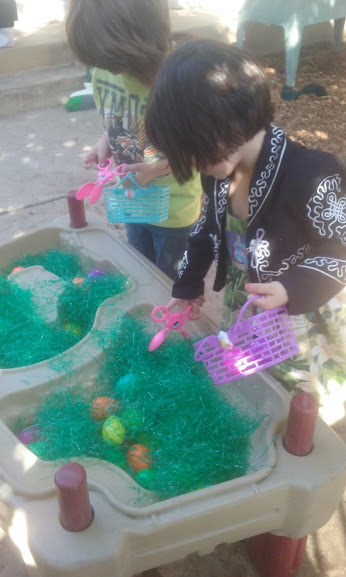
Children love sensory activities, so we hid baby chicks in little sensory tubs while everyone searched for them!

egg3

Our little ones delighted in finding their baby chicks (and eggs) laughing, and gleefully announcing their discoveries!

egg

Sensory play gives our students the opportunity to explore and engage in meaningful experiences.

egg2

As we share dialogue with them about what they are observing and sensing, we give them new language tools to connect with these more familiar sensory tools, building language as well as supporting cognitive concepts specific to the experience.

egg1

Chicken Puzzles

From toddlers to adults, people love to solve puzzles. Puzzles are intriguing, the goal is clear and when you solve them, you get that sense of accomplishment that makes us all feel good about ourselves. Preschoolers can play with puzzles without even realizing how many skills they are developing. In order to solve a puzzle of any kind, your child needs to stop and think about how to go about reaching her goal. When using a board puzzle, she develops a strategy on how she will try to place each piece in the correct space in order to make all of the pieces fit.

45g

She uses her problem-solving skills by developing solutions in order to accomplish completing her goal, just as she will use these skills during the course of her adult life. Puzzles can help a preschooler develop important cognitive skills. Your child will be asked to take step-by-step directions during his impending school career, and puzzles help him develop the ability to accomplish goals one step at a time and to understand why certain tasks need to be done in this manner. They can also help your preschooler develop visual spatial awareness because of the many colors, shapes and themes they come in. This activity involved your preschooler in putting pieces of a chicken together. There were a variety of puzzles, so each time your little one attempted to put the pieces together, he had to start all over again with the same puzzle broken into different shaped pieces.

324

Four Leaf Cupcakes

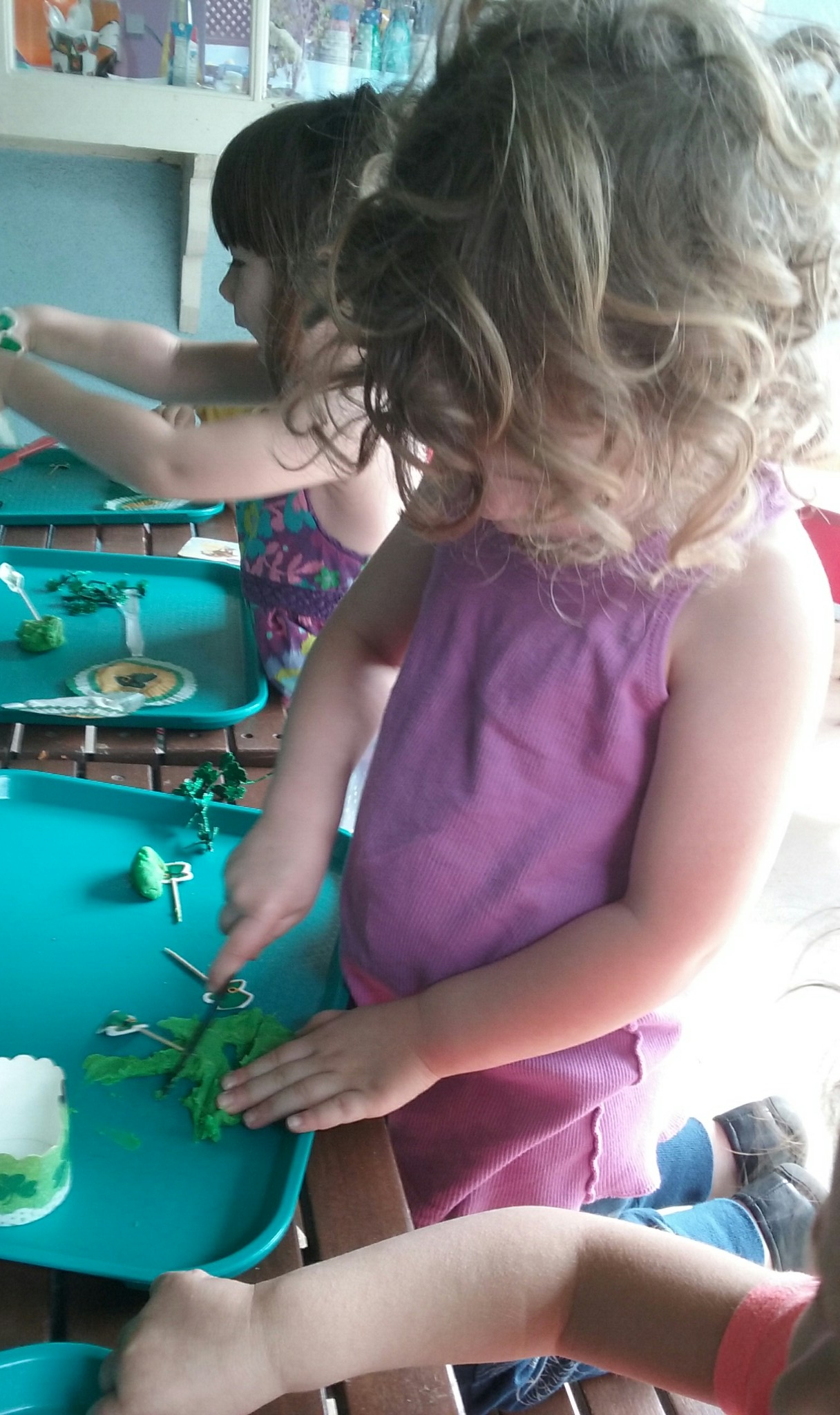
Playdough play at home or school supports development and learning in many areas. When children use playdough, they explore ideas and try different approaches until they find one that works.

366

They compare and contrast objects (“Mine’s a fat pancake and yours is skinny”), actions (“No, don’t cut it! Scrape it, like this”), and experiences (“We’re not making a snake—we’re making a road”).

765

In their experimenting, children come up with their own ideas, satisfy their curiosity, and analyze and solve problems.

674

These are all skills that help children learn and succeed in school.

755

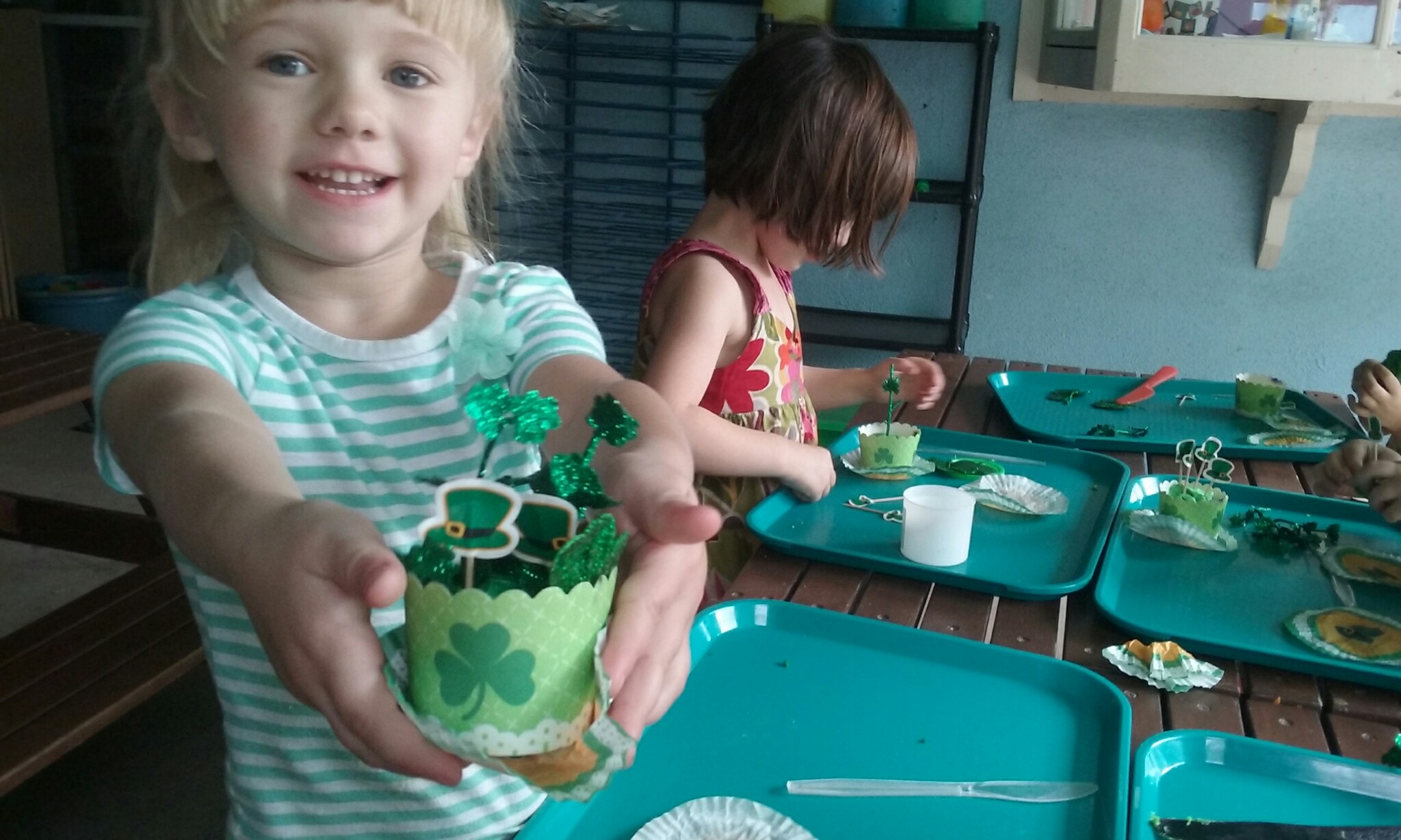
For this activity, we combined playdough with a variety of Saint Patrick’s accessories to create the perfect Saint Patrick’s Day cupcake.

343

Leprechaun Letter Match

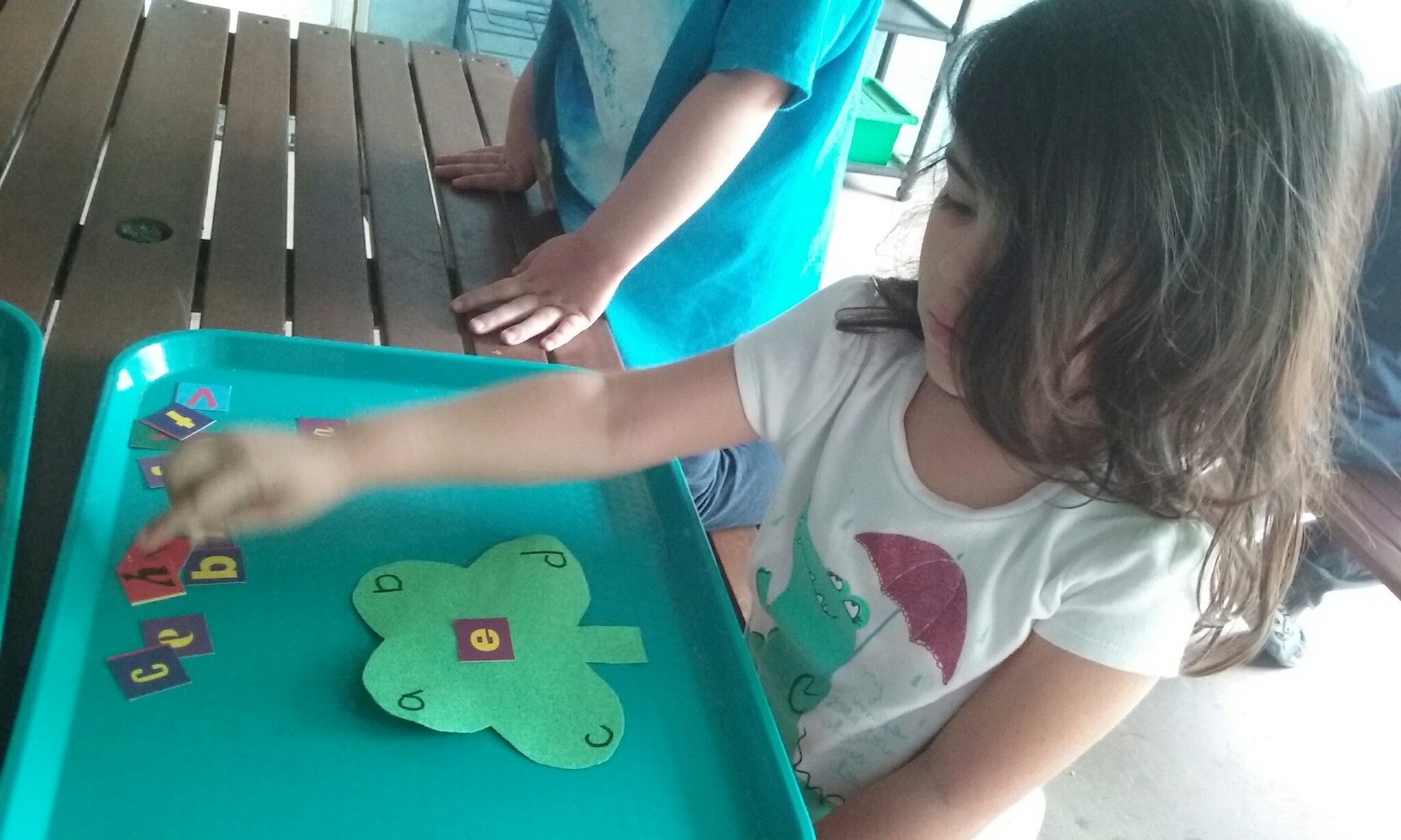
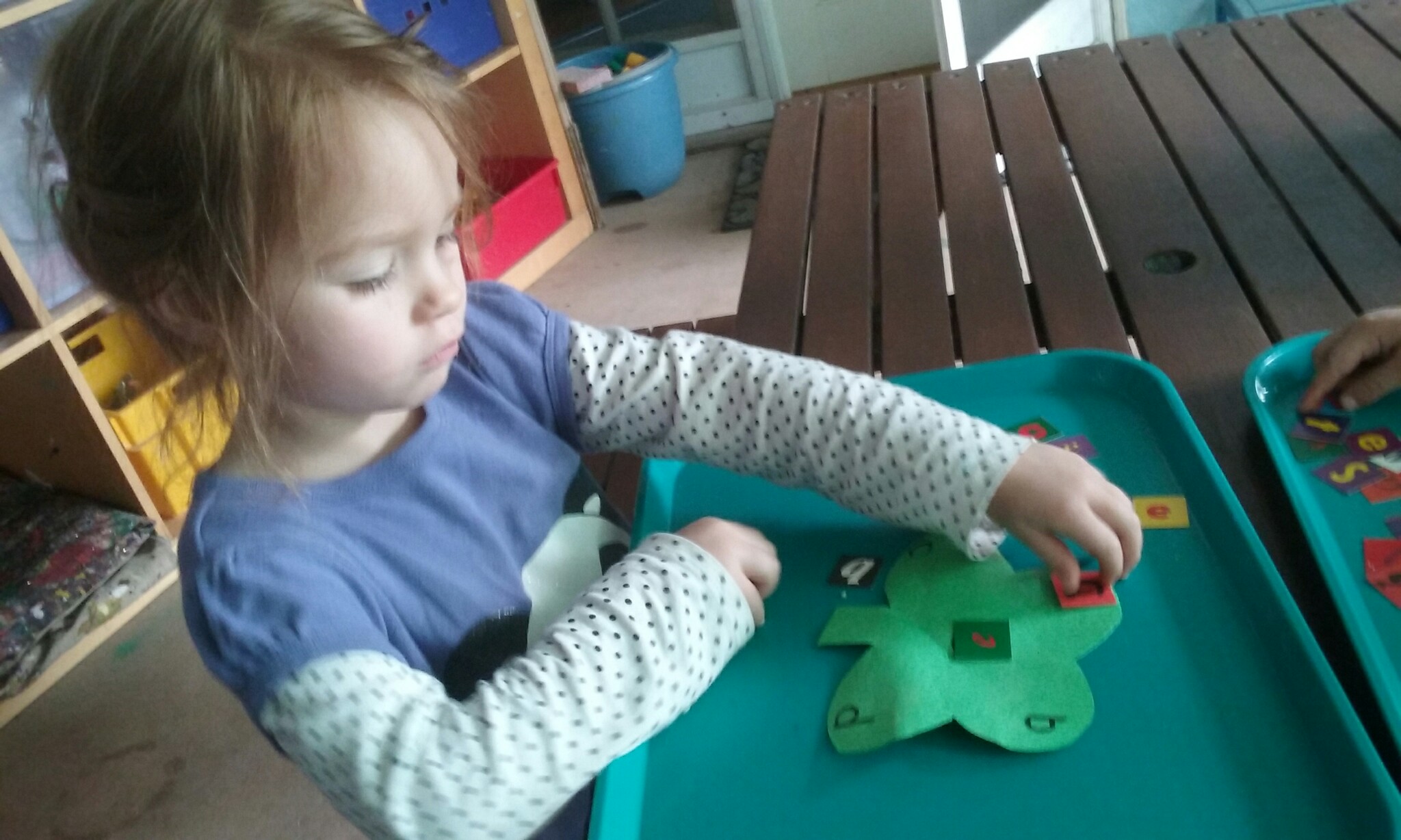
Many children have problems learning the letters of the alphabet. Since letter recognition depends on understanding a sequence of features, the best way to teach children the sequence of features in making a letter is by guided practice.

665

Because of this, we partake in a variety of letter “games” that encourage your child to recognize, enunciate, and match the concept of a letter to its print form.

444

Young children learning letters need vivid, concrete language to understand the abstract component of the written word. For this activity, we practiced matching cardboard cutouts of letters to letters written on a four leaf clover.

765

Leprechaun Shapes Puzzles

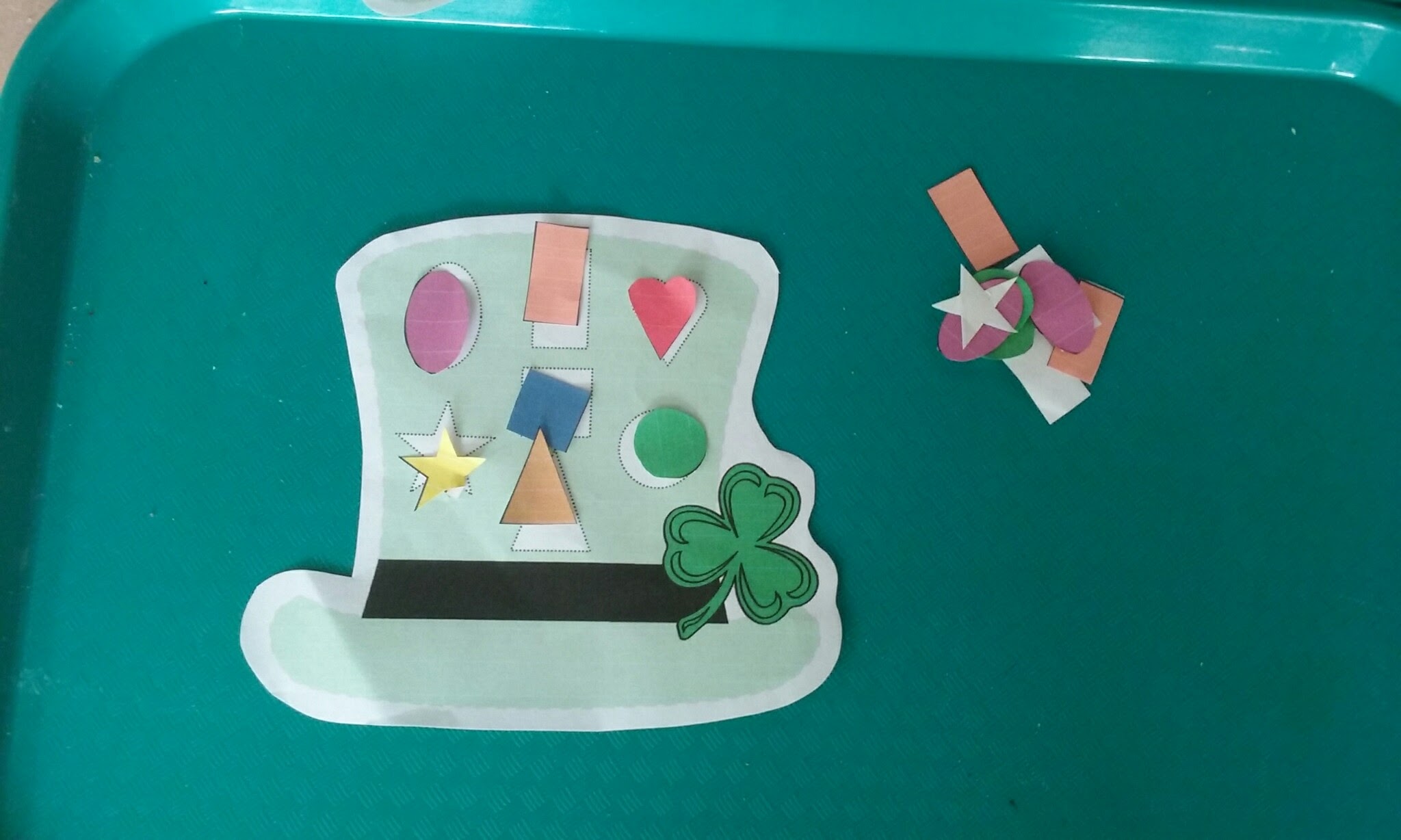
Puzzle games are an early learning favorite for educators and children alike! By matching the shapes to complete the picture, students enjoy themselves while developing important skills such as problem solving and shape, pattern and color recognition. This game is intuitive and fun, with a variety of shapes designed to help your preschooler think critically.

312

The skill of effective problem solving is a valuable and important one. As a child looks at various pieces and figures out where they fit or don’t fit, he or she is developing this vital skill.

111

A puzzle, after all, can’t be completed by cheating! It either works and fits or it doesn’t. So puzzles teach children to use their own minds to figure out how to solve problems and think in a logical way.
789

Treasure Hunt

Saint Patrick’s Day is celebrated every year on March 17th, honoring the Irish patron saint, St. Patrick. The celebrations are largely Irish culture themed and typically consist of wearing green, parades, and spending time with friends.

435

People all over the world celebrate St. Patrick’s Day, especially places with large Irish-American communities.

778

Feasting on the day features traditional Irish food, including corned beef, corned cabbage, coffee, soda bread, potatoes, and shepherd’s pie.

10828093_10152792003545954_2084022358355445607_o (1)

Many celebrations also hold an Irish breakfast of sausage, black and white pudding, fried eggs, and fried tomatoes.

799

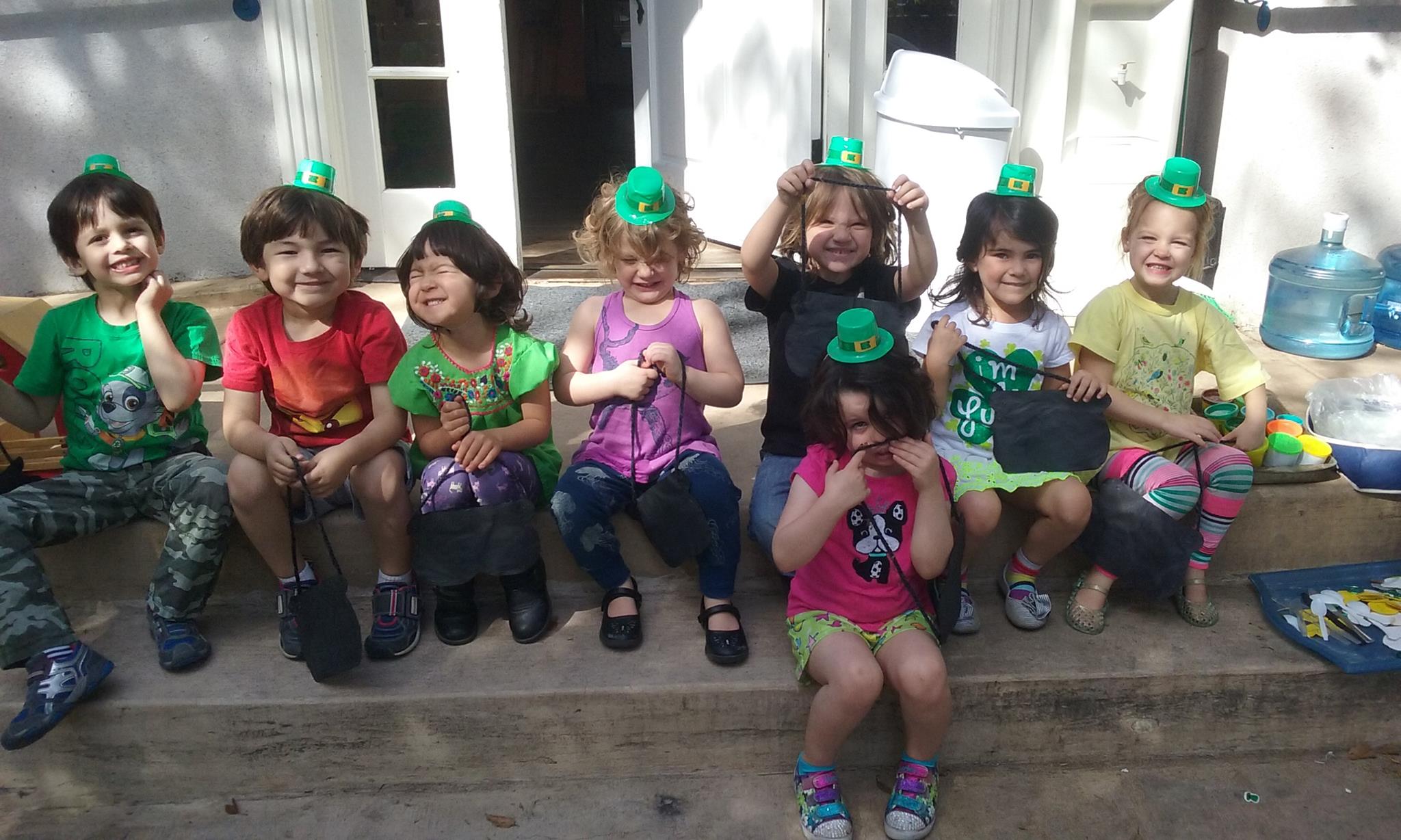
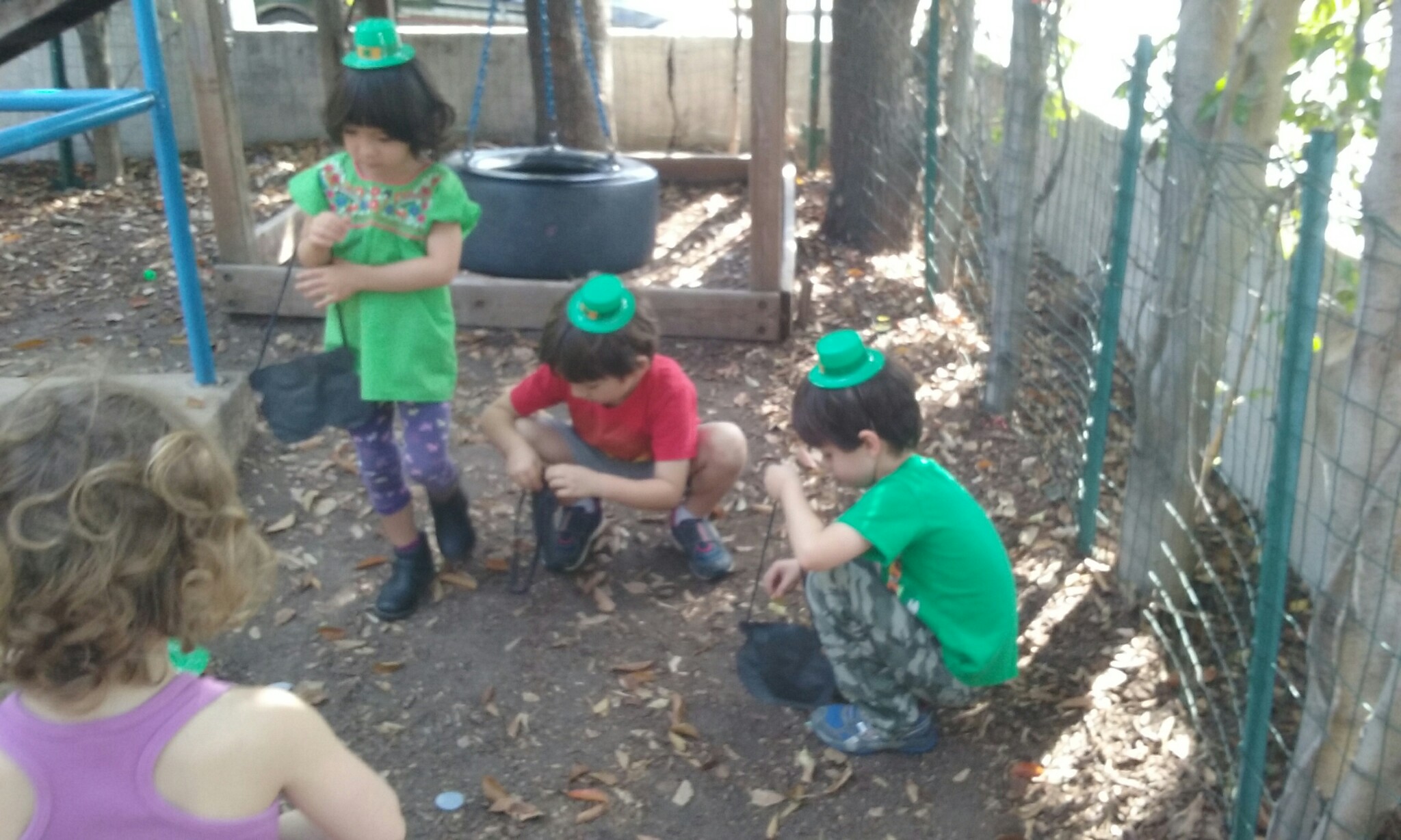
For this activity, we pretended to be leprechauns looking for gold! Using black paper “pots of gold”, green hats, and “gold” coins, your little one scurried around the front yard to retrieve their treasure from the end of the rainbow!

655

In America, the little bearded sprites known as leprechauns have become synonymous with St. Patrick’s Day and Irish culture. The original Irish name for these figures of folklore is lobaircin, meaning small-bodied fellow. In Irish mythology, a leprechaun is a type of male fairy said to inhabit the island of Ireland. They are a class of “fairy folk” associated in Irish mythology and folklore, as with all fairies, with the Tuatha Dé Danann and other quasi-historical peoples said to have inhabited Ireland before the arrival of the Celts.

443

Monster Collage

In cooperative learning, students are organized into small groups to which they share a common goal.

000

During the course of the activity, children work together for a shared benefit, realizing that all members share that goal and the rewards of achieving it.

999

Cooperative learning goes hand in hand with social and emotional learning.

676

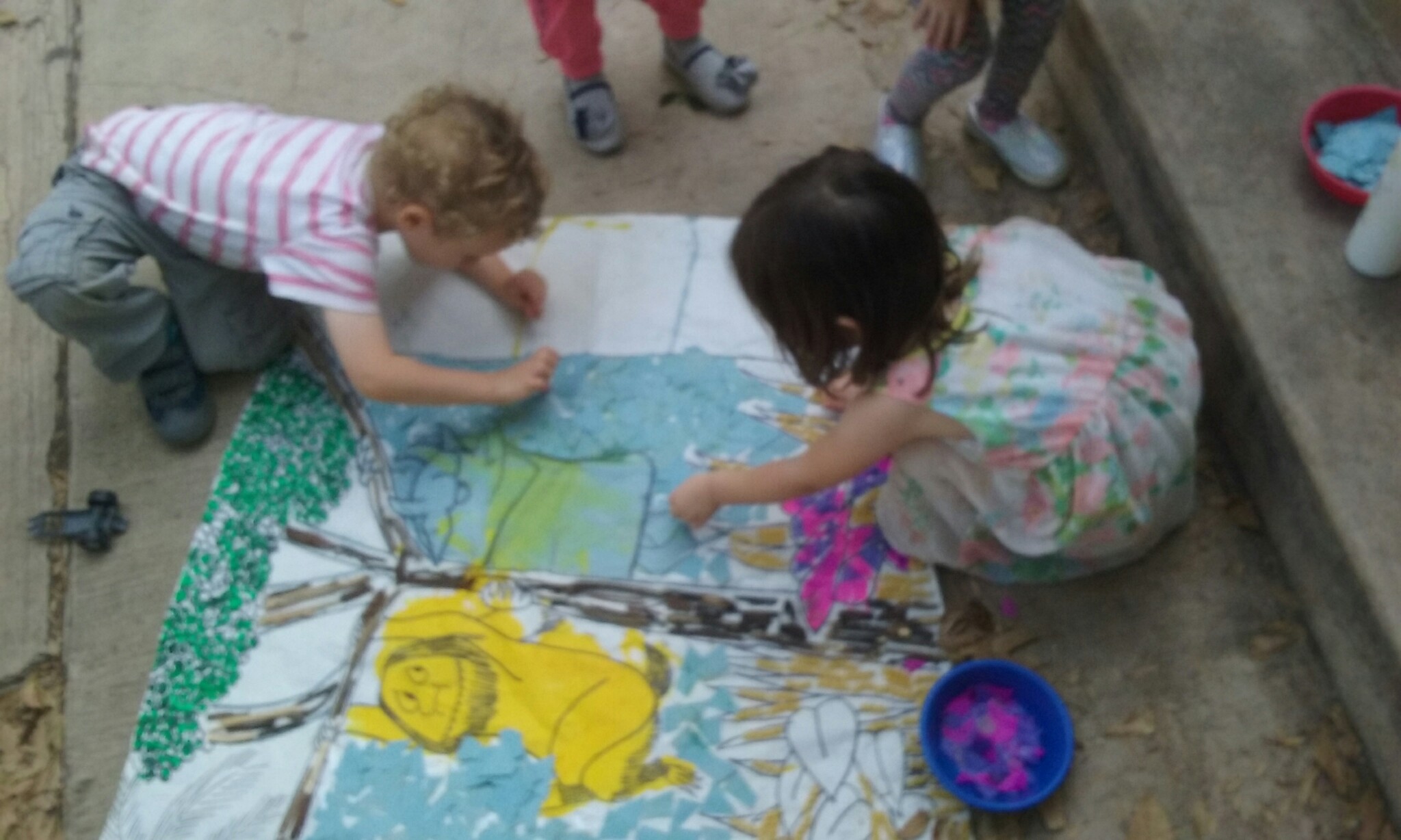
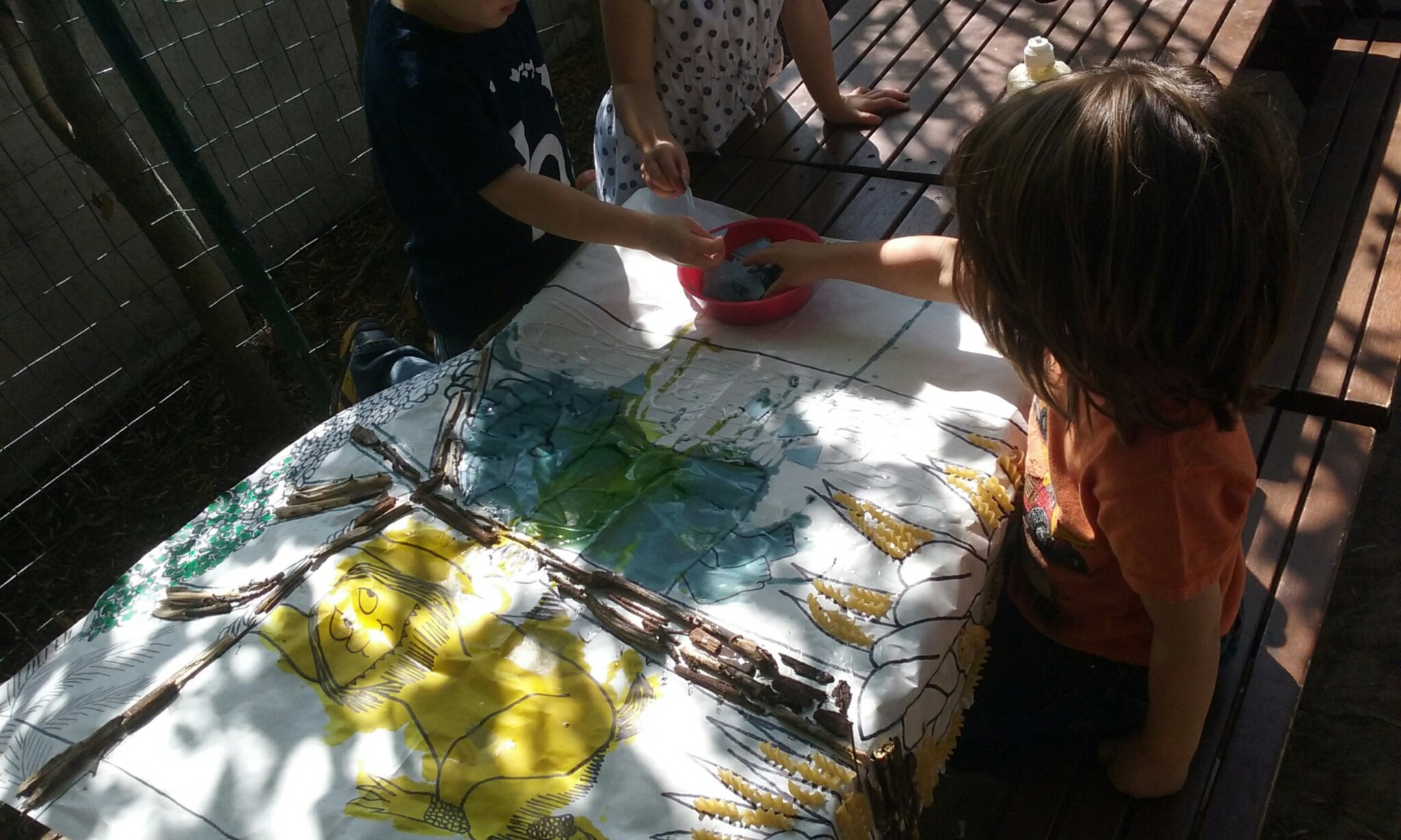
For this activity, we created a Where the Wild Things Are collage.

343

Students painted and added a variety of items to the poster that we later hung up in our classroom!

Roll and Cover Monster Dice

There are a plethora of skills your preschooler accesses when they use a die.
The math skills your preschooler practices include subitizing (looking at the dots and knowing right away what number they represent instead of counting each dot), number recognition, counting, matching, comparing, and adding.
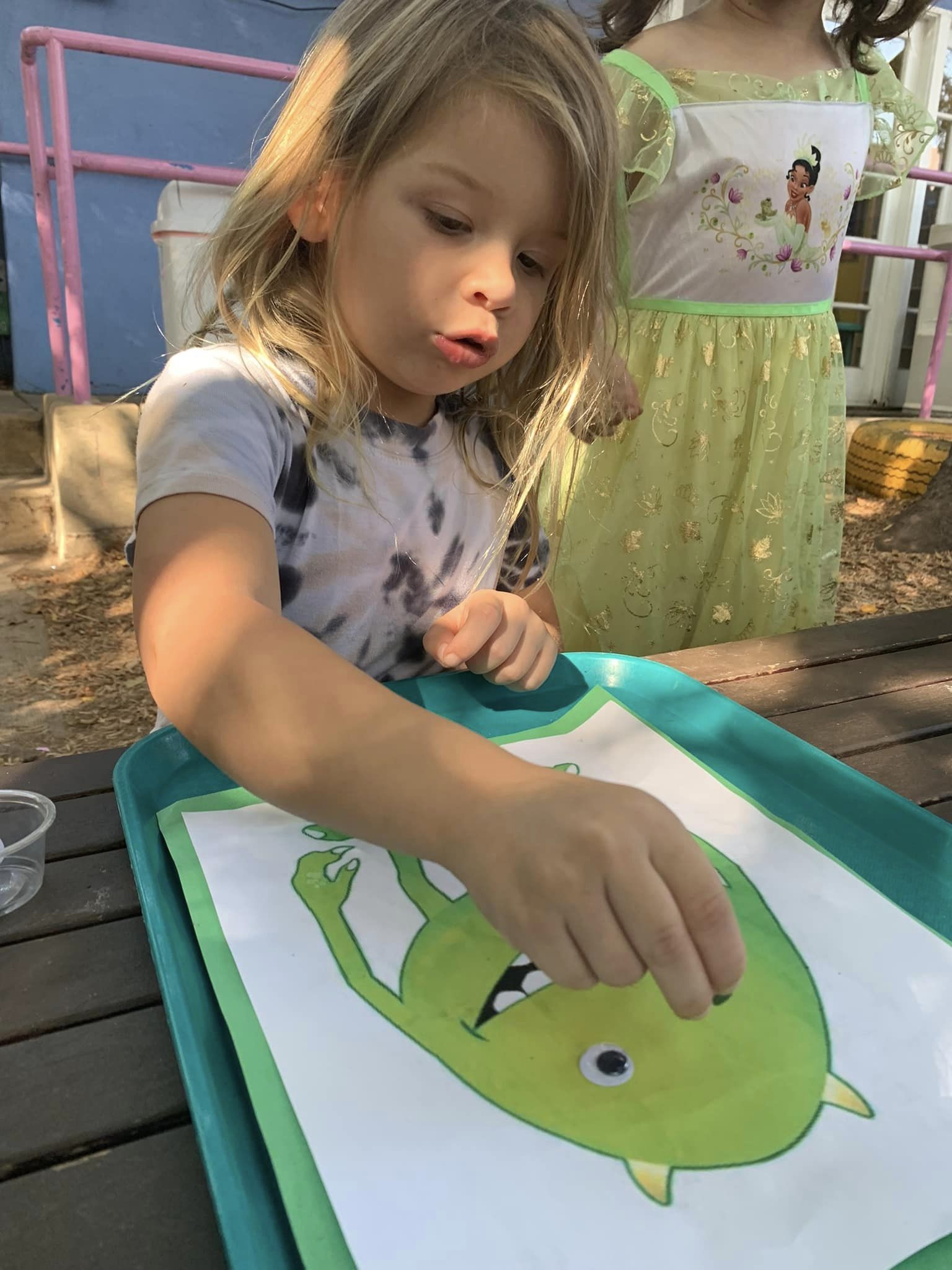
This game involved rolling a die and counting the number that was rolled. Once the numeral was recognized, your little one placed the corresponding amount of eyes onto their monsters.
We love dice around here.  We love them so much that they’re always disappearing! This week we incorporated the mathematical developmental domain with a roll and count game.
There are a plethora of skills your preschooler accesses when they use a die.
The math skills your preschooler practices include subitizing (looking at the dots and knowing right away what number they represent instead of counting each dot), number recognition, counting, matching, comparing, and adding.
This game involved rolling a die and counting the number that was rolled. Once the numeral was recognized, your little one placed the corresponding amount of eyes onto their monsters.

Dot-to-Dot Monsters

Good visual perception is an important skill, especially for school success.

IMG_20170215_095549 (1)

Children need to understand visual perception to discriminate well, copy text accurately, develop visual memory of things observed, develop good eye-hand coordination and integrate visual information while using other senses in order to perform tasks like recognizing the source of a sound.

15 - 1

Visual perception is a complex process. It includes color perception and color constancy, shape perception and shape constancy, spatial relations, visual analysis and synthesis, visual closure, visual figure-ground distinction, and visual sequence.

Dot Monster (2)

Visual closure is the ability to complete an incomplete image e.g. a dot-to-dot picture or a puzzle. Because we are learning about monsters, we used black markers and crayons to create our own monsters. This was an open-ended activity, so there was no right or wrong way to complete their creatures! Visual perception skills (through activities such as these) can be developed and improved with practice, until they become skills that are performed almost effortlessly.

2536

Shape Monsters

Children delight in making choices. The ability to name a favorite color of paper to make a drawing empowers a child. When he can ask for a square or triangle-shaped block by name during a game, he has a sense of control over his environment.

MonsterShape1

In preschool, children can learn to identify and name circles, triangles, squares, rectangles, and ovals. By using materials such as posters, blocks, books, and games, teachers expose children to various shapes and help them analyze two- and three-dimensional shapes in various sizes and orientations.
MonsterShape

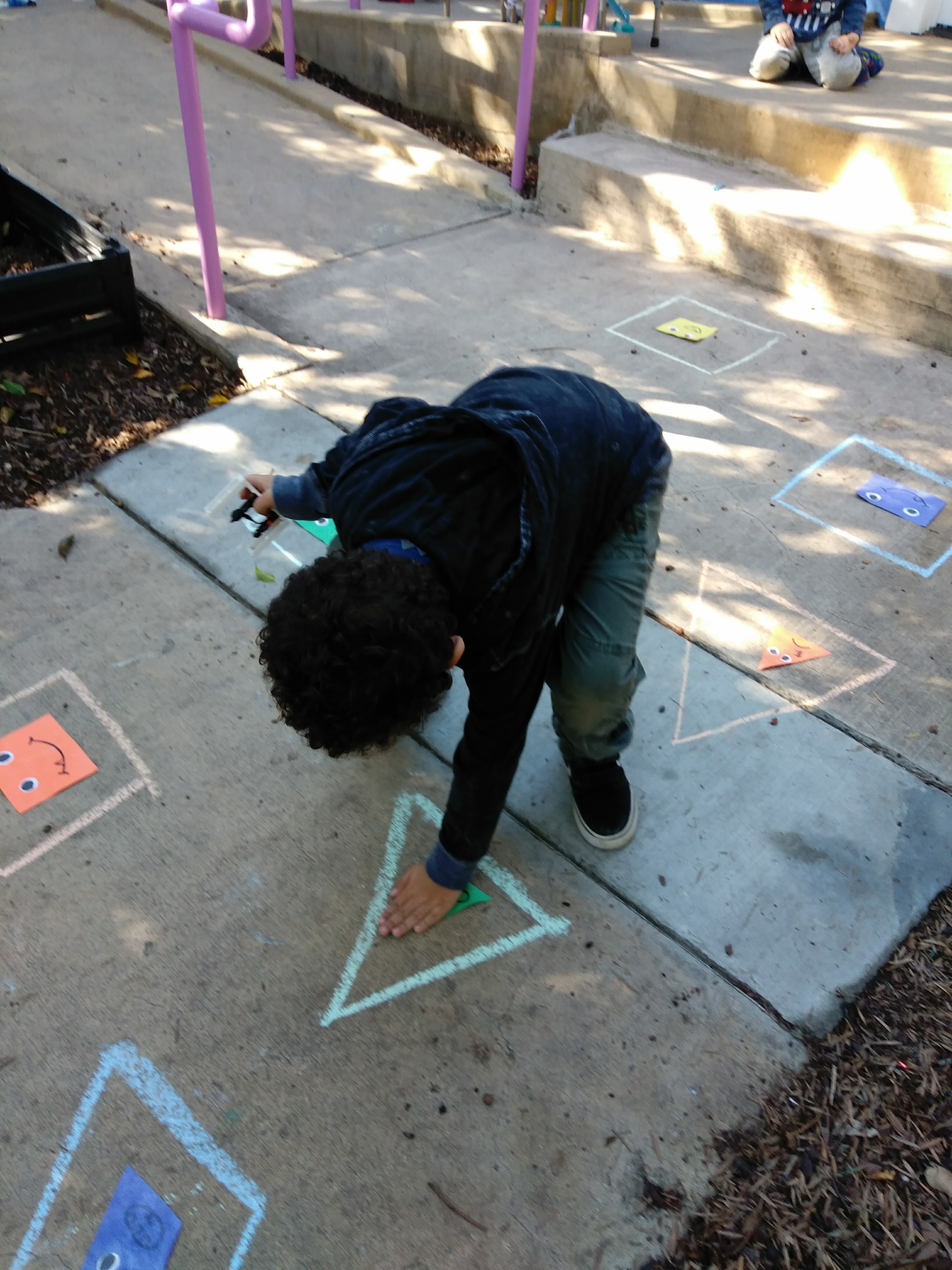
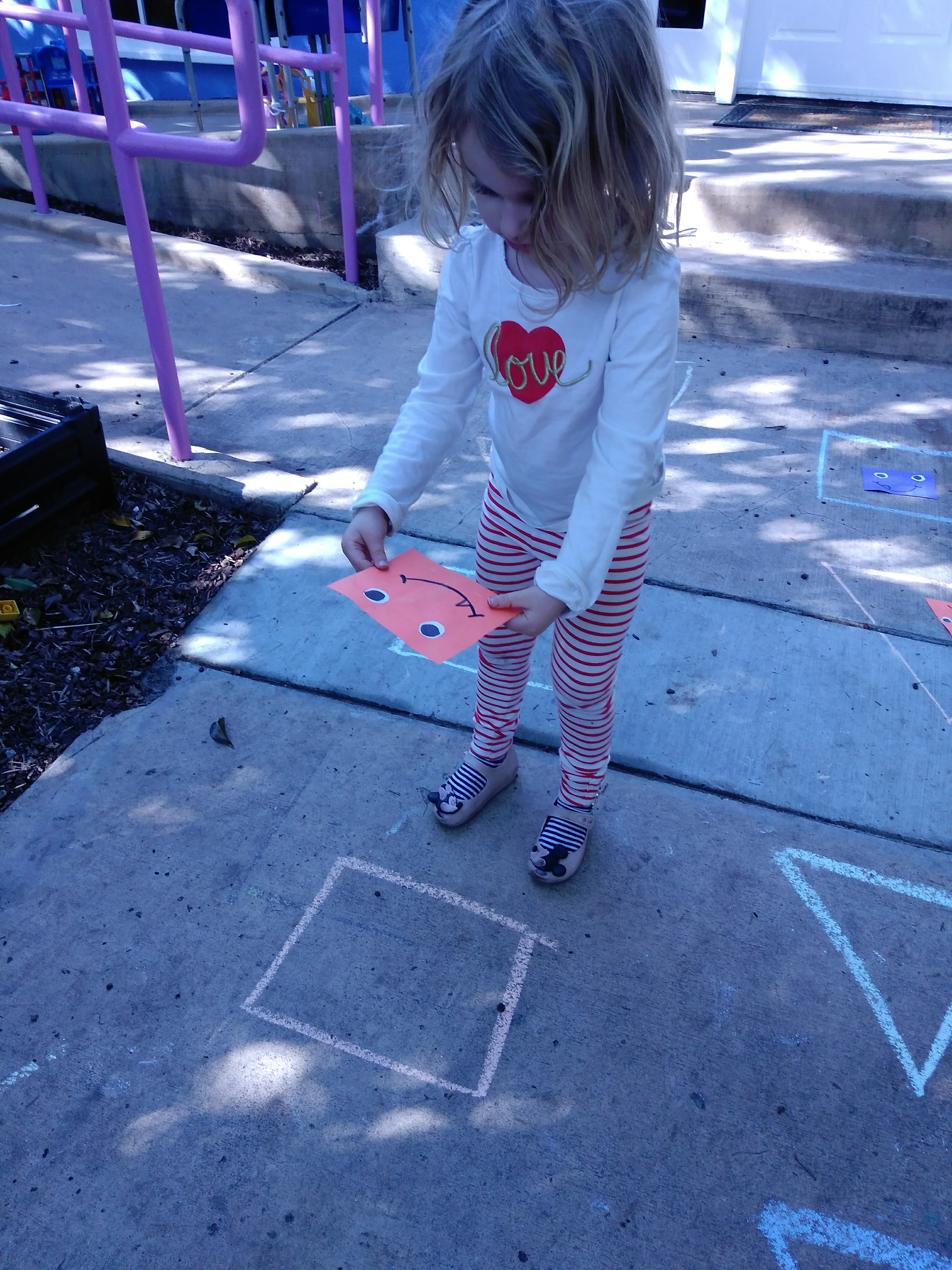
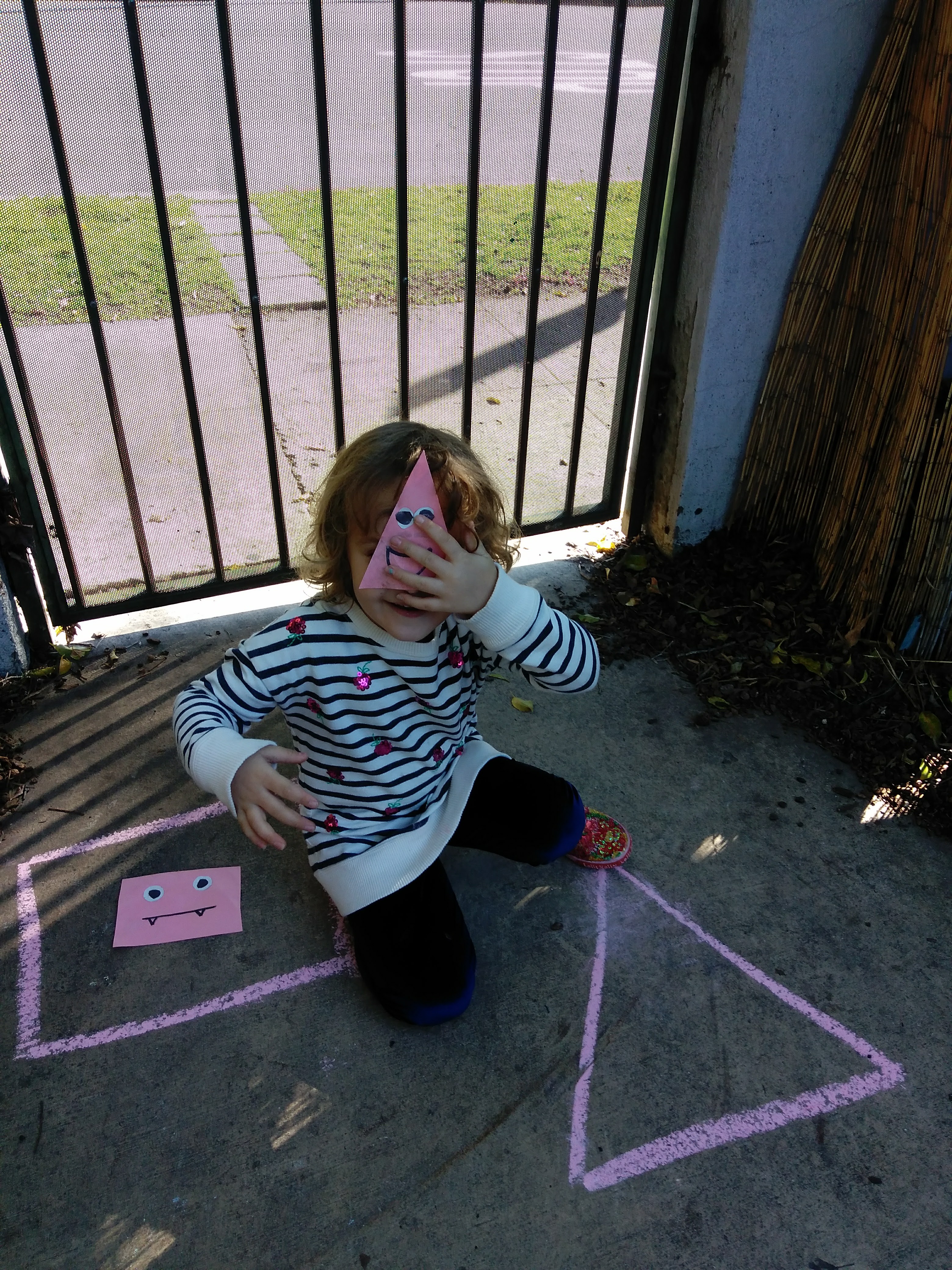
For this reason, we are constantly incorporating shapes into our schedule. During circle time, we may sing a song about trapezoids. For gross motor play, we may jump onto triangle-shaped chalk outlines.

MonsterShape6

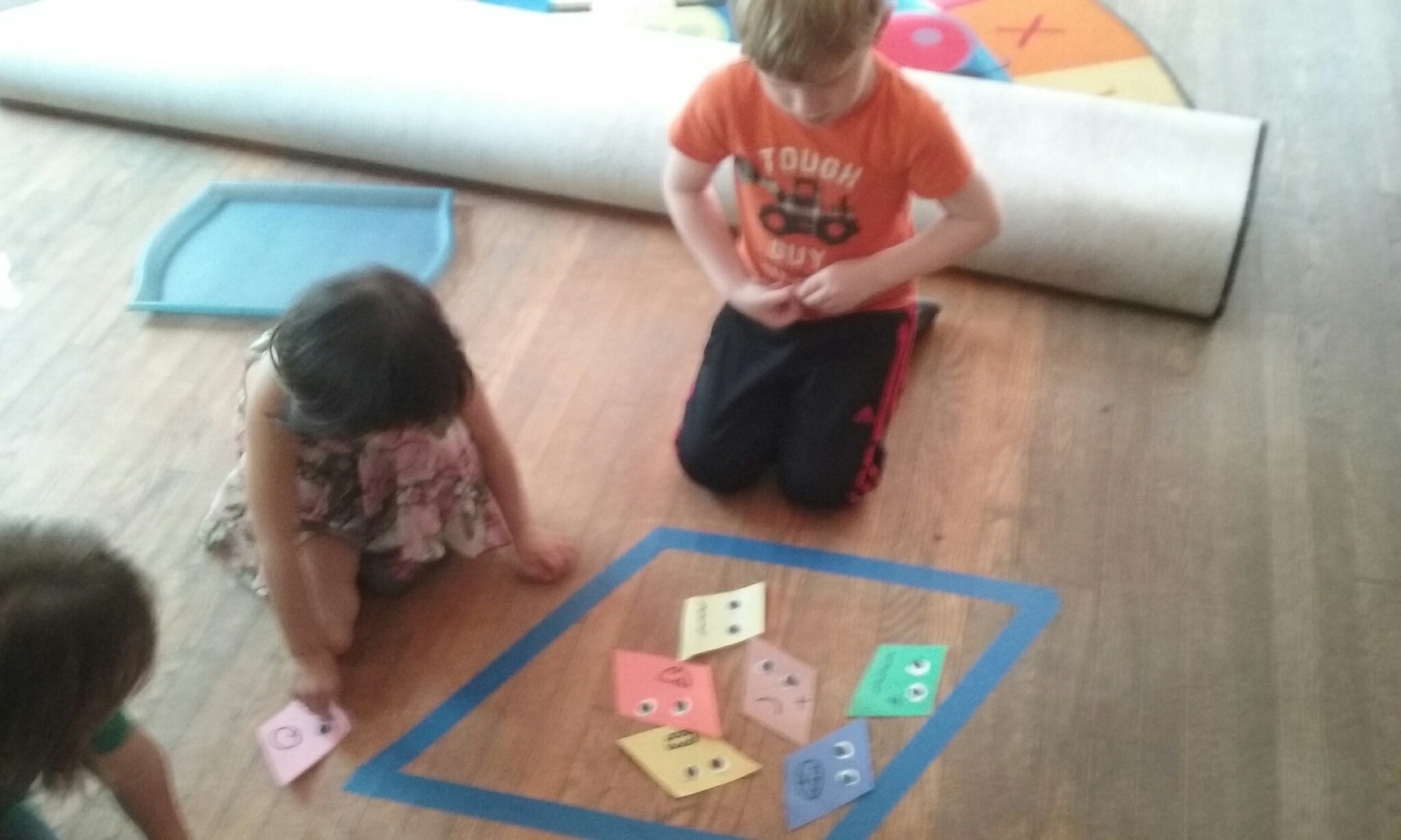
For this activity, we broke up into groups to categorize a variety of monster “shapes”. We learned about the word rhombus, diamond, triangle, rectangle, and square.
15 - 1 (100)

Encouraging preschoolers to slide, flip, or turn shapes promotes problem solving and an understanding of transformations.
MonsterShape3

These transformations are crucial to developing spatial visualization abilities and understanding geometry, which involves matching shapes through visualization.
MonsterShape2

As preschoolers learn to identify objects, they can use spatial orientation vocabulary to describe the relative positions of objects.