Dot to Dot Letter Writing

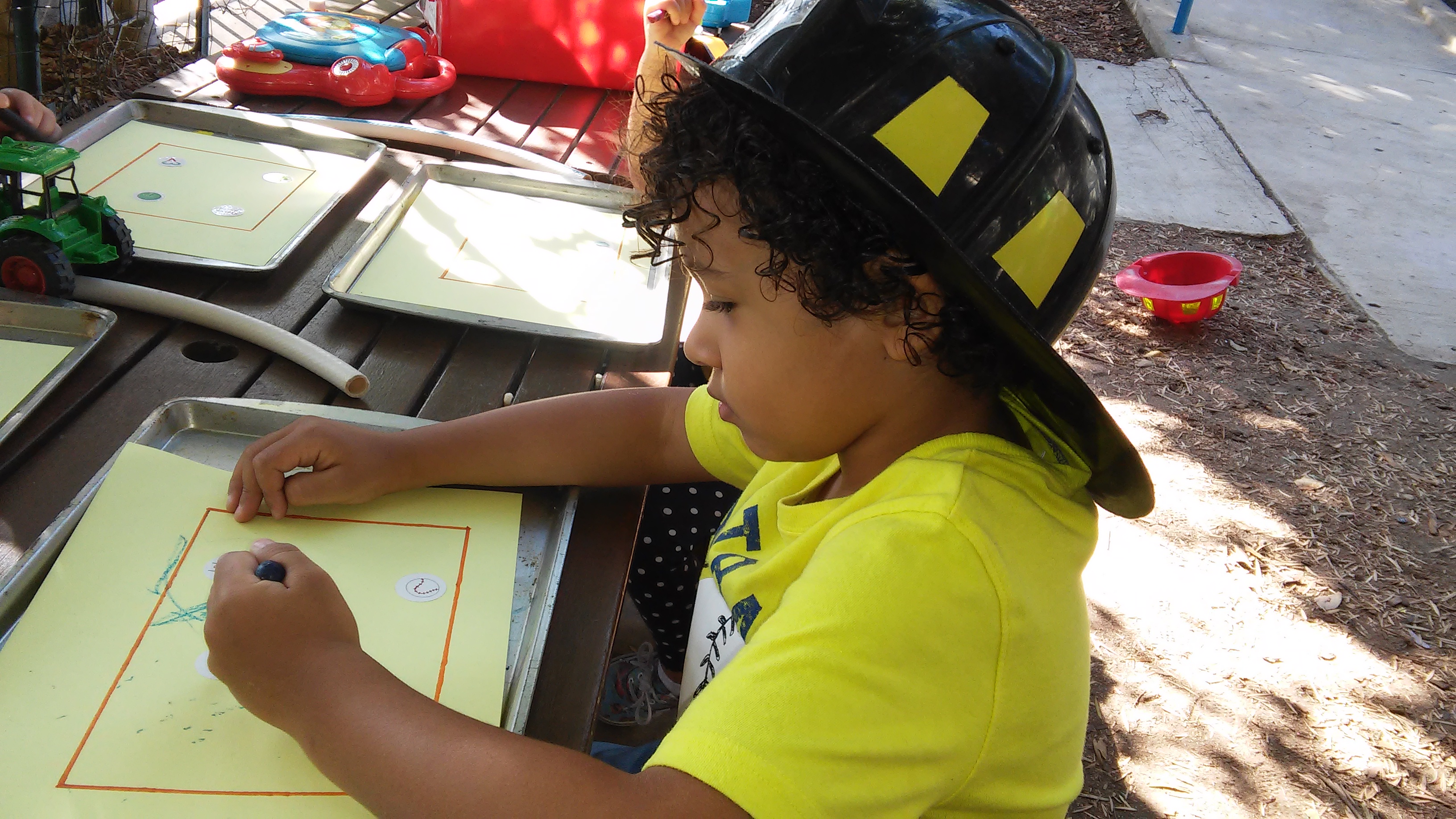
Dot-to-dots (connect the dots) are excellent vehicles to encourage pre-writing skills, number order or letter recognition and problem solving. To incorporate this into our week of learning about the letter G, we created  the letter G using stickers as our “dots” and crayons to form straight lines from one dot to another. Each point enabled your little one to create their Gs correctly (from top to bottom, and left to right). Working on dot-to-dots teaches children number order and helps with counting.

20141027_151752 (1)

Little ones may need a little help, but as they get older, completing this type of pre-writing activity all by themselves is a great confidence booster. Dot-to-dot games are also wonderful for improving hand-eye co-ordination. There’s a lot of concentration that goes into completing a dot-to-dot! Visual motor control is developed through this type of task. In addition to these benefits, doing dot-to-dot activities really helps improve handwriting skills and are a valuable pre-writing teaching tool. Children learn how to create shapes, focus their writing implement and learn how much pressure to apply to the paper.
20141021_100724 (1)

Diamonds and Rhythm Sticks

Your child was born ready to learn math. As she explores her environment, plays with different objects, and moves her body in different ways, she is learning about shapes and developing a sense of her body in relation to objects and people around her – also known as spatial sense. An awareness of shapes and spatial sense will help your child get ready to learn about geometry.

20141021_103657

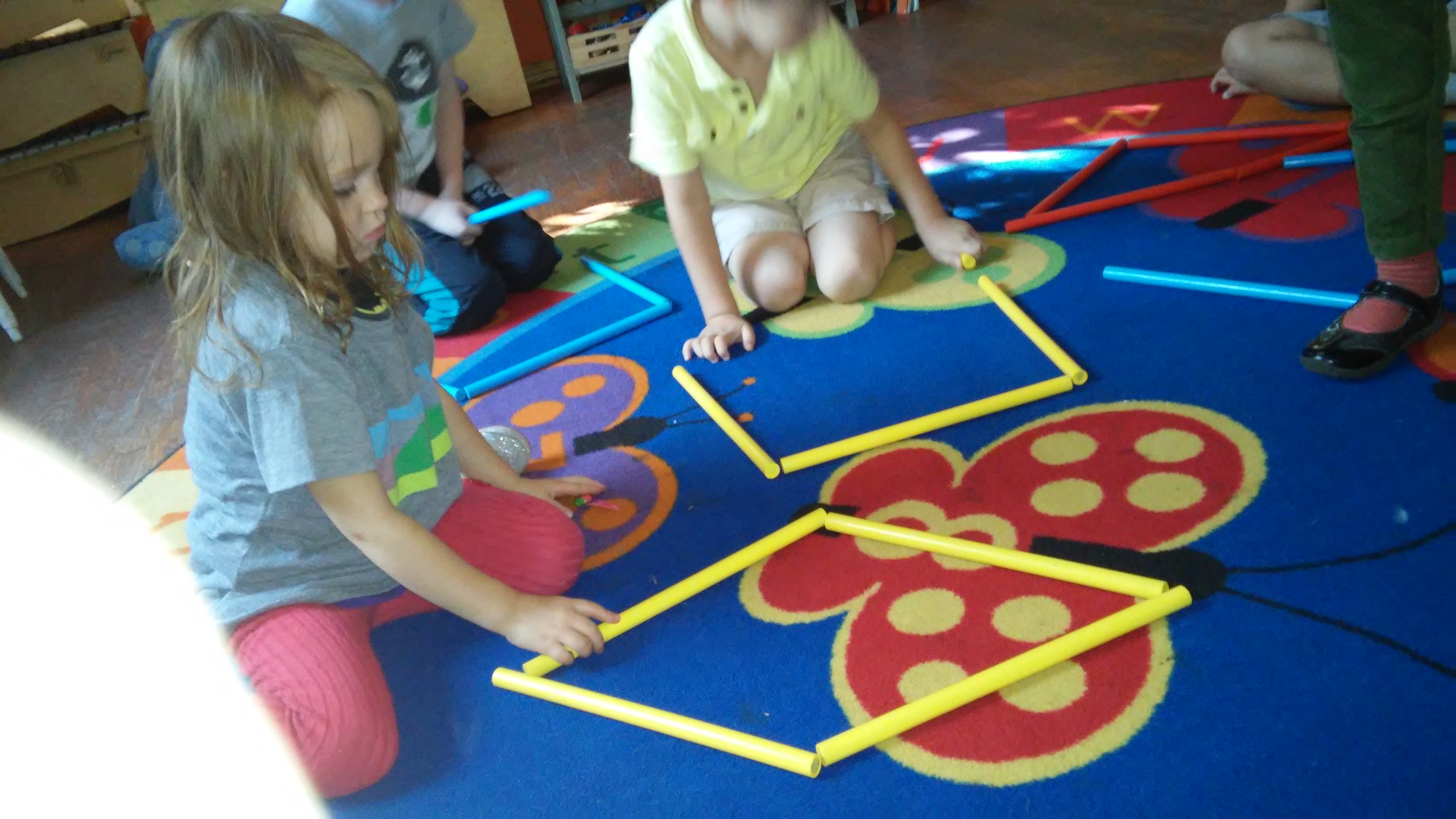
Geometry is the study of mathematics that involves shape, size, position, direction, and movement and describes and classifies the physical world that we live in. Learning about geometry will also help your child learn about numbers and measurement.  For this activity, we created diamonds and squares with rhythm sticks. Your budding mathematician learned that both shapes contain four sides. They also learned that if you make a square and turn it onto its side, it creates a diamond! We then applied our understanding of these shapes by making them for ourselves!

20141021_103513

Goo Goo G

All too often, young children are given writing tools to use before they are ready for them. Young children from three to five years of age use their hands to explore and learn about the environment and themselves. By developing good hand skills and other pre-writing skills young children will be prepared for the next step, which is writing. Working on hand skills will also assist older children who are experiencing writing difficulties. This week we have been learning about the letter G, and words associated with it. We not only discussed the words, but the different sounds that G makes. In our discussions, your budding writers were also asked to use their own thinking minds to come up with words that have any G sound in it. For this activity, we discussed the “ga” sound that G makes. We then conversed about what goo is then brainstormed to make up silly words, such as “Goo Goo Grandma, Goo Ghost Gaga”. Following this, your child used the small muscles in their hands to create “goo” that they eventually scooped and pinched to place onto a taped letter G. Doing so created a visual representation that aided their understanding.

20141022_100415


Halloween Playdough – Imaginative and Sensory Play

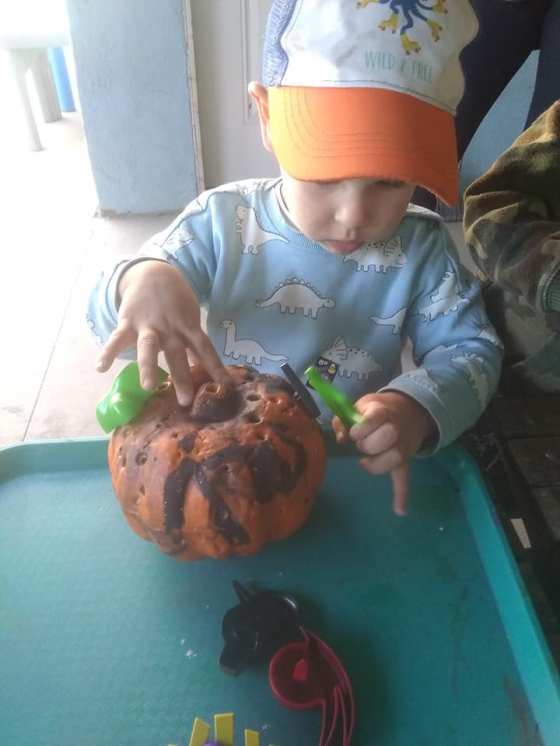
Squishing, rolling, sculpting, molding . . . young children love to play with playdough. Add some props from around the home and playdough play becomes a powerful way to support your child’s learning.

20141017_102045

This simple preschool staple lets children use their imaginations and strengthen the small muscles in their fingers—the same muscles they will one day use to hold a pencil and write.

20141017_101518

Using playdough with you, a friend, or siblings supports your child’s social skills such as sharing, taking turns, and enjoying being with other people.

20141017_101454

Playdough also encourages children’s language and literacy, science, and math skills—all at the same time! For this activity, we used orange playdough, plastic knives, rolling pins, ovens (made from boxes), and baking accessories to create Halloween treats!

20141017_102105

An Ensemble of Pots and Pans

Two-, three-, and four-year-old children need an environment that includes a variety of sound sources, and opportunities for free improvised playing.  An exploratory approach, using a wide range of appropriate materials, provides a rich base from which conceptual understanding can evolve in later years.

20141020_165246

A variety of individual musical experiences are important for children at this age. As a result of their experiences with music, young children should initiate both independent and collaborative play with musical materials, and they should demonstrate curiosity about music. To continue our exploration of sound, we experimented with pots and pans.

20141020_110621

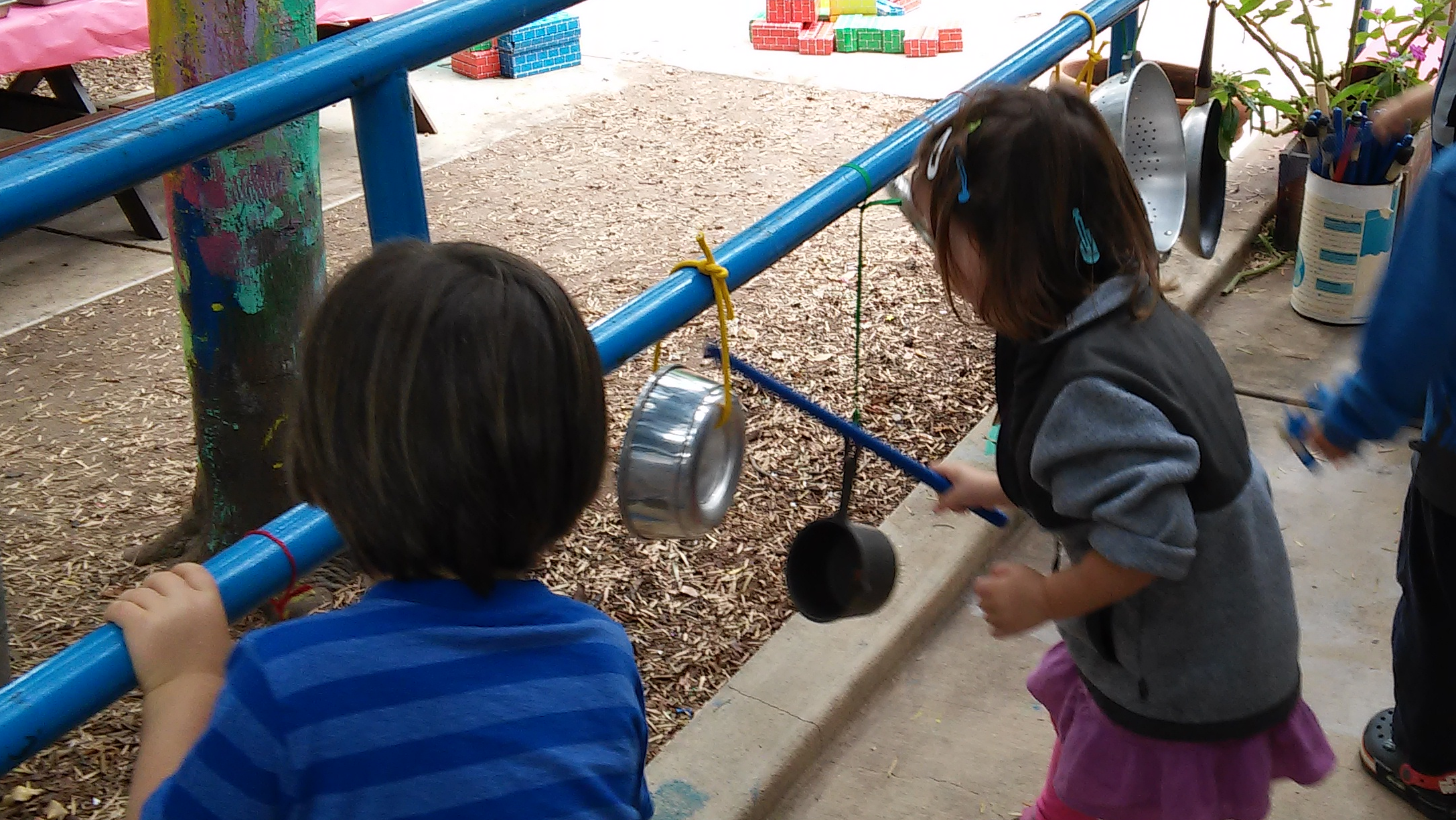
Using rhythm sticks and pans suspended from the bars outside, we practiced making noise! As they banged happily, your budding musicians learned that sound changes. In addition to this open-ended play, Miss Carrie initiated and call and response game. Using our listening ears, we listened to Miss Carrie play to rhythmic phrase on our new instruments. We then repeated this sequence!

20141020_165817

By doing so, students accessed a variety of developmental skills. By watching their teacher, they practiced reading visual and verbal cues. By creating their own  sounds, they experimented with cause and effect. Lastly, by collaborating, they enjoyed the social benefits of performing as a group.

Monster Masks

Art activities stimulate the preschool child’s imagination and creativity, aiding their physical and mental development. Research has shown that art activities develop brain capacity in early childhood. Art engages children’s senses in open-ended play and supports the development of cognitive, social-emotional, and multi-sensory skills. For this activity, we created monster masks. As your child explored the materials (glue, paper eyes, and paper ovals), it was noticeable how involved they got creating masks. They delighted in applying the glue themselves. This experience enabled them to build important life skills. While creating this mask, we focused on the letter M, and the many words that begin with it.

20141015_104340

This activity also targeted specific fine motor skills, as your child glued and adhered pieces of paper to their creations. We introduced this activity by reading and discussing the book Go Away, Big Green Monster! by Ed Emberley. Following our discussion, students were informed that they would be creating their very own monsters.

20141015_104350

As a class, we brainstormed what our monsters might look like. How many eyes will they have? Will they have horns? Hair? Warts? What colors will they be? Each child was then given a pre-cut mask, and covered it in ovals. As a result, we learned that monsters do not have to be scary! By creating and proudly displaying their art, each student was able to access their own sense of individuality, self-respect, and an appreciation for others’ work.


Exploring Emotions with Jack-O-Lanterns

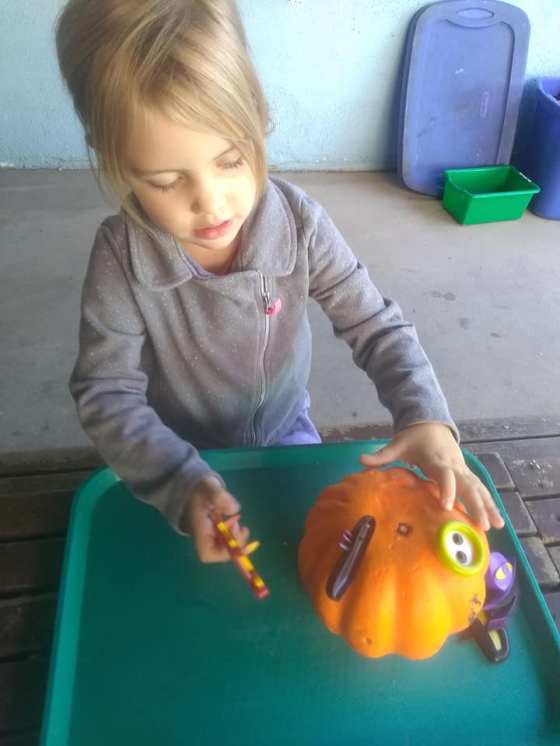
Exploring feelings and emotions with children is powerful learning!

72710784_2748502408516910_5342725405377822720_n

These investigations give us insight into how we interact with the world around us.

71792389_2748502305183587_5863328226801090560_n

Often children do not have the vocabulary to explain how they feel.

71592770_2748502131850271_3853599517312024576_n

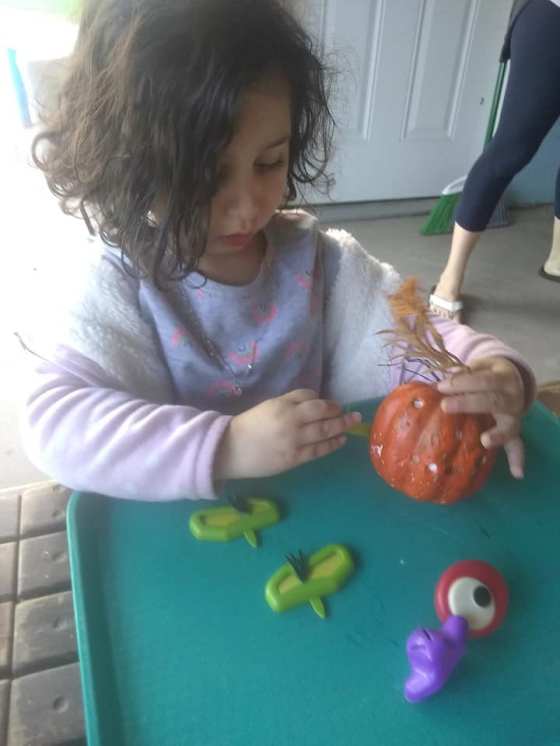
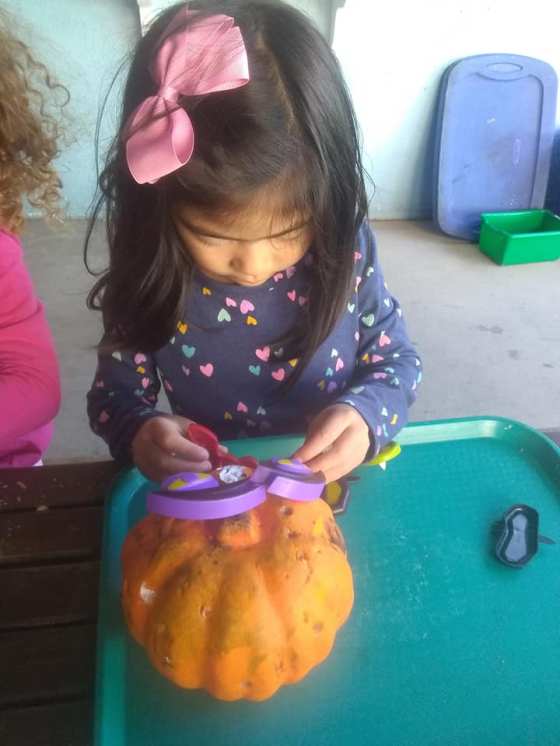
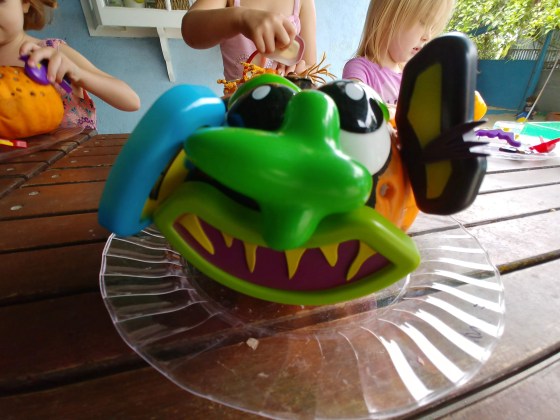
By using plastic pieces on a jack-o-lantern as a means to create an array of facial expressions, children learn, discuss, and explore different feelings and emotions.

20181003_101832_HDR

As a result, they learn how to give a voice to the many emotions they experience.

71495997_2748502058516945_8049468672114163712_n


Collaborative Haunted House

Collaborative learning is a teaching style that has evolved over the last thirty years and is still evolving.

haunt

There are three primary aims that encompass the collaborative process.

haunt1

First, by working together, learners are empowered, as they collaborate with every other learner in the class in a playful, but purposeful way.

haunt3

Second, collaborative projects communicate increasingly complex ideas by presenting them in concrete, visual and tactile ways.

haunt5

They do this by removing abstract thinking out of heads and giving it a physical presence. Third, collaborative projects encourage exploratory talk in the classroom.

haunt2

There is increasing evidence that new meanings are developed by the combination of thinking and communicating with others.

haunt4

There is also evidence that talk has been neglected in our classrooms and this has widened the gap in attainment.

haunt6

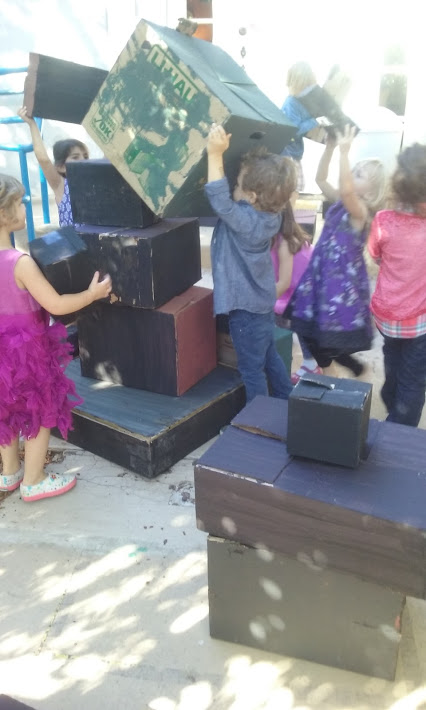
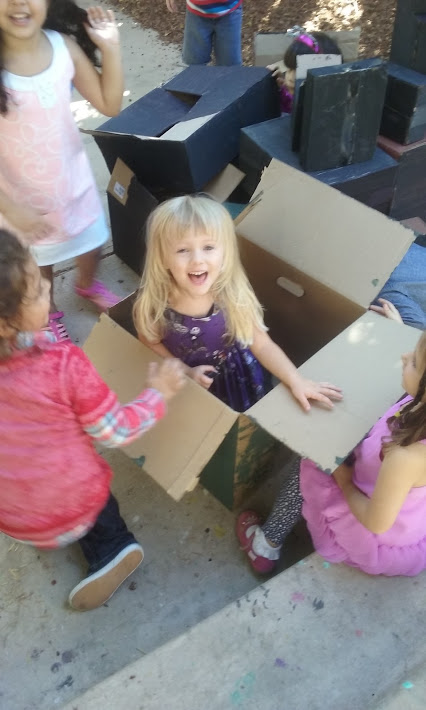
For this activity, we collaborated to construct a haunted house!

haunt7

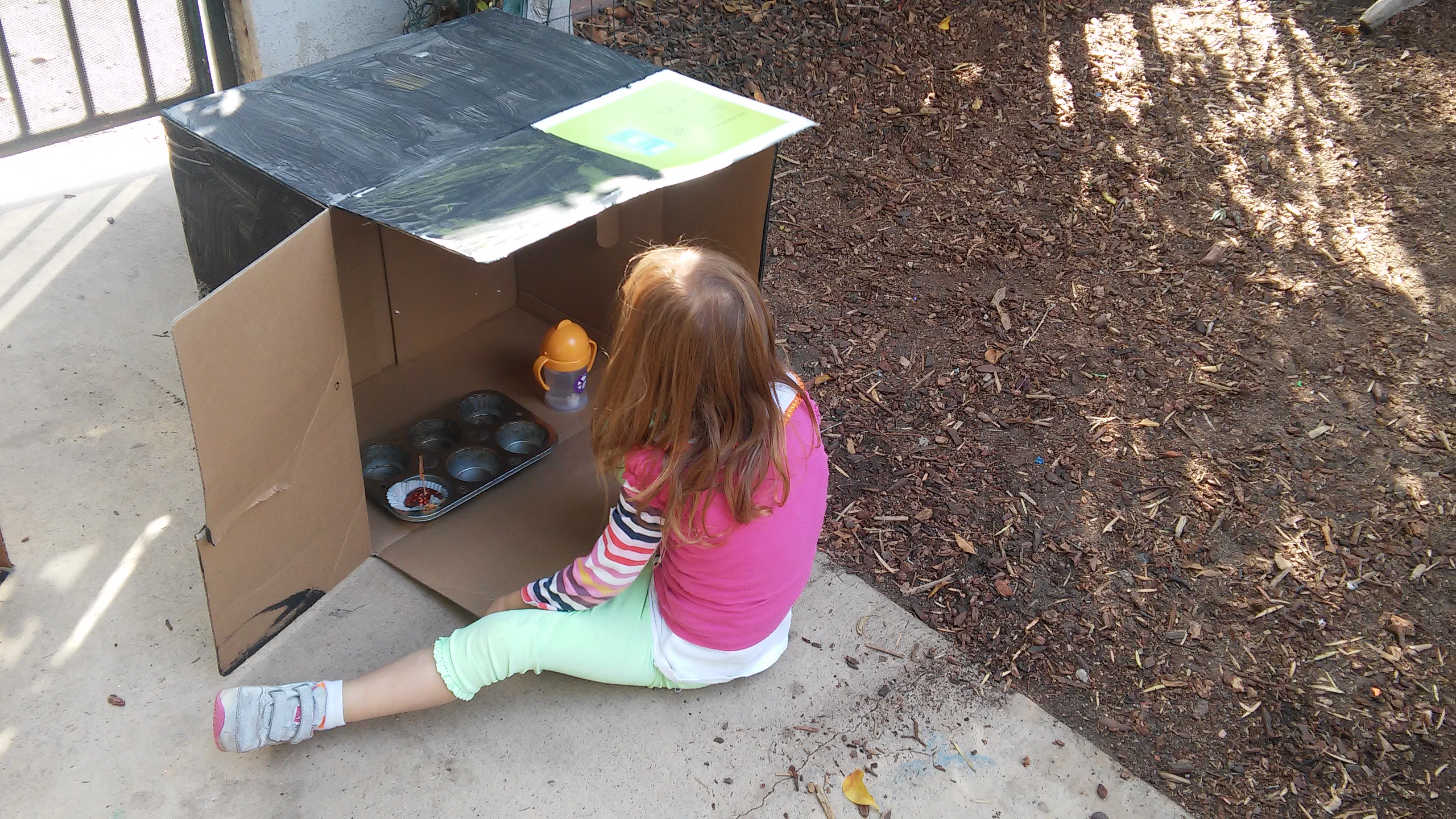
Using boxes and black paint, we all created the building blocks, and then, worked together to make our structure come alive!

haunt8

Monster Charades

Young children are brimming with passionate energy, and have a need to expel the creative images forever simmering within their minds. Often times the wild play that preschoolers can engage in comes from the need to externalize their imagination. In the context of the preschool classroom, a great way to help a child reach their full creative self is to guide them through different theater games.

20141017_105415

Age appropriate games help the child to explore the depths of their own creations as well as open themselves up to the ideas and thoughts of others. For this particular activity, we used monster masks that we had previously created in class, to play a silly form of the game Charades. Each child acted out the kind of monster they wanted to emulate, as their classmates cheered them on. Some of our favorite monsters were the cow monster, baby monster, and grandpa monster.

20141017_105322

Exploding Pumpkins

Your little ones love to explore with the many science activities that we do throughout the week.

20141009_112049

These activities not only engage your child, but explain the physical properties of objects, teach cause and effect, and provide the necessary hands-on experience most conducive to learning.

explode

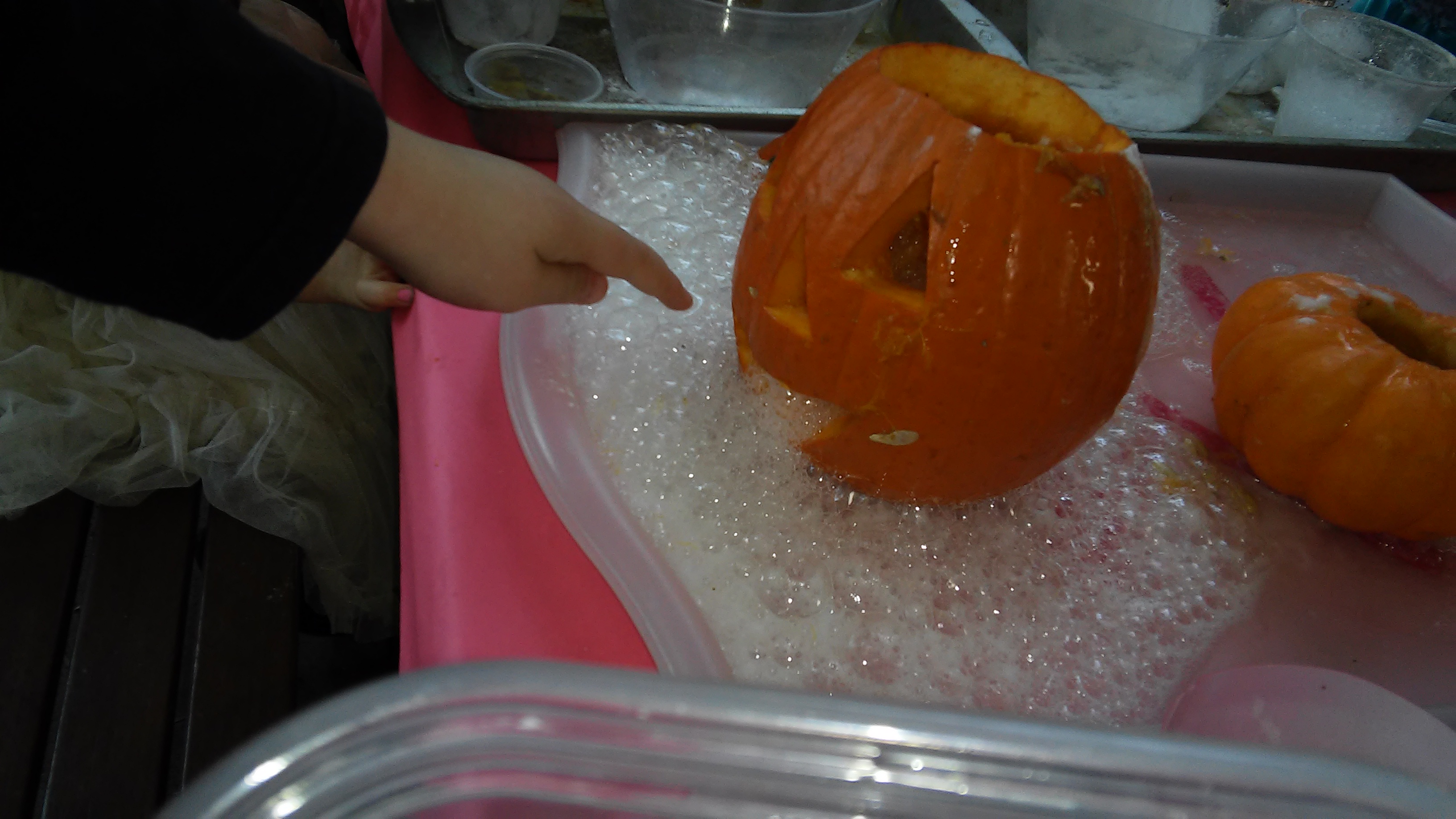
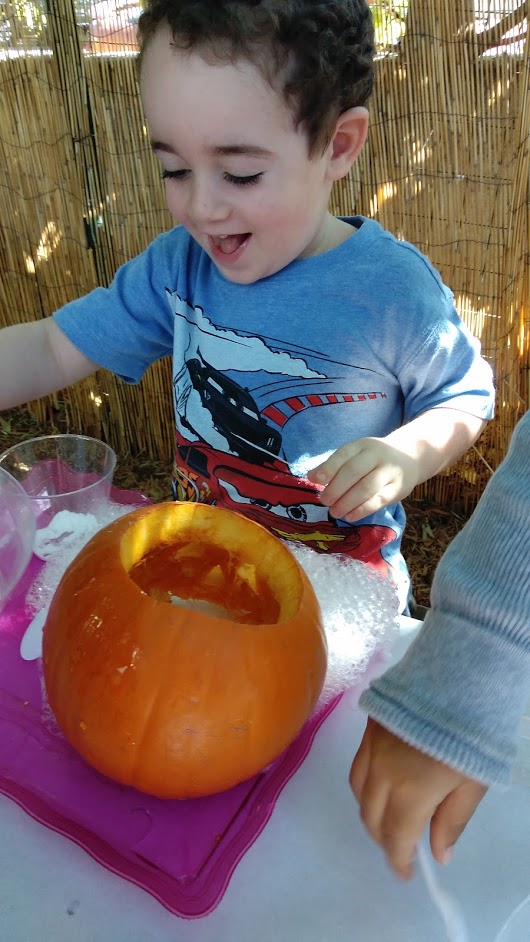
Using baking soda and vinegar, we mixed the ingredients, and poured them into our jack-o-lanterns.

explode1

This was the favorite of the week, and everyone enjoyed watching the fizzing bubbles, as they oozed out of the pumpkin faces.

explode2