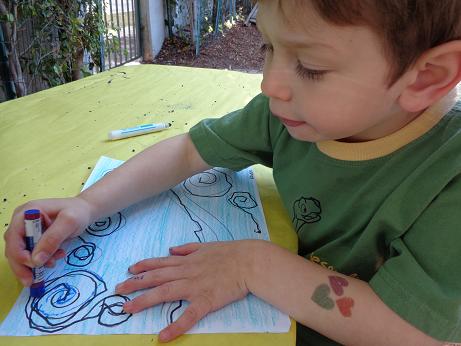
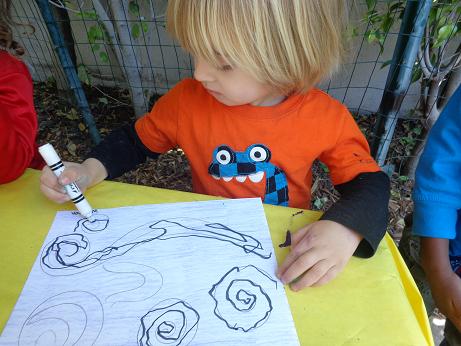
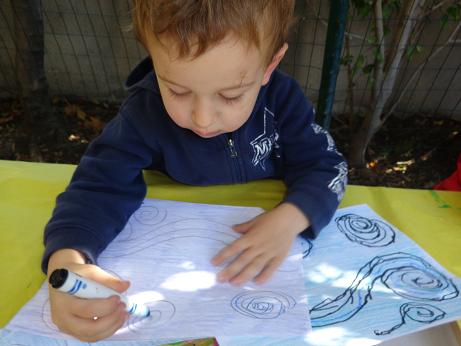
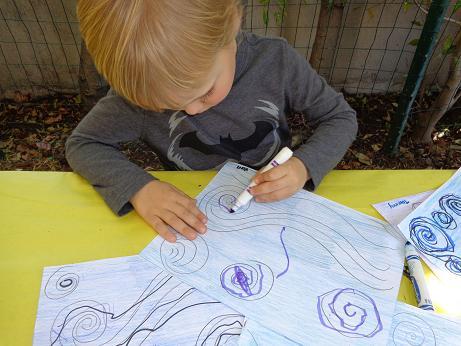
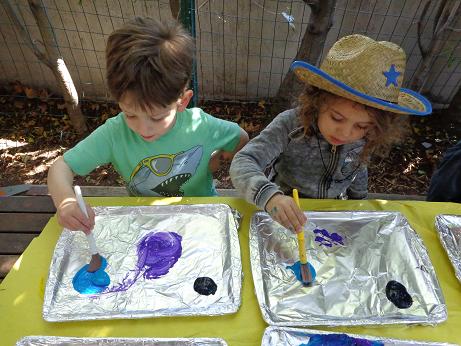
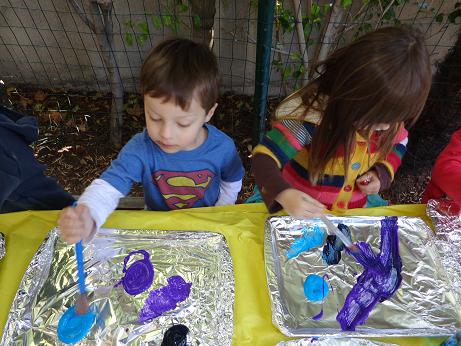
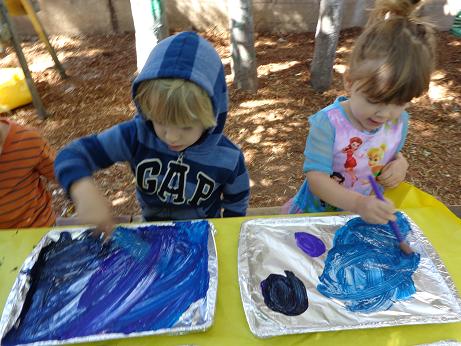
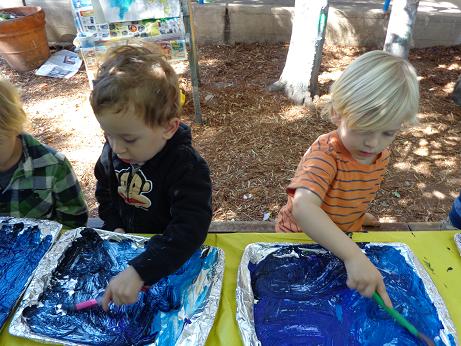
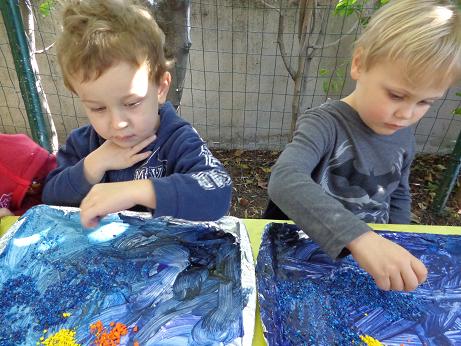
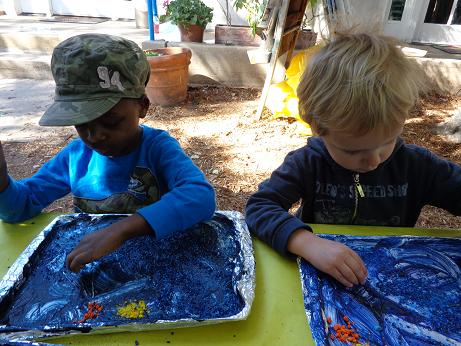
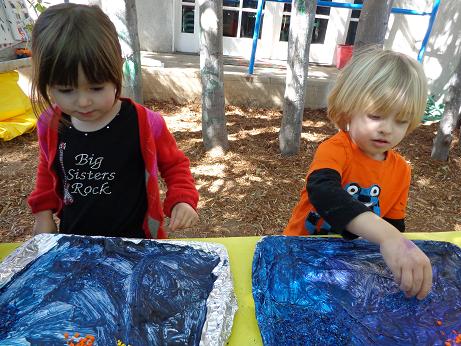
Starry Night with Foil, Crayon Shavings, and Paint
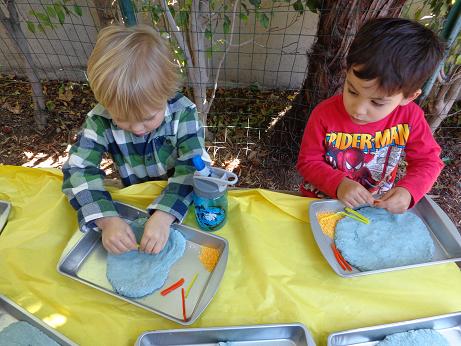
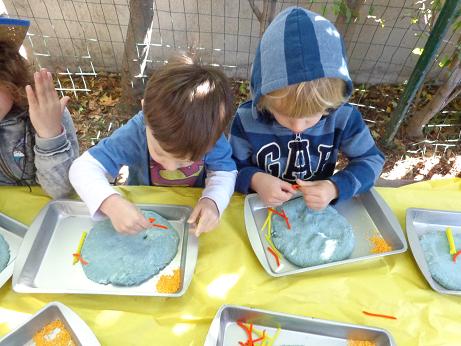
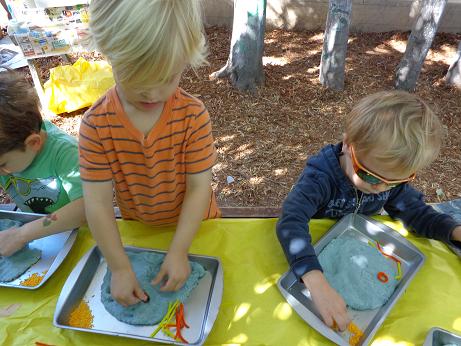
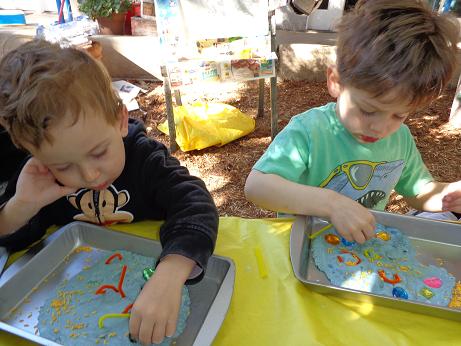
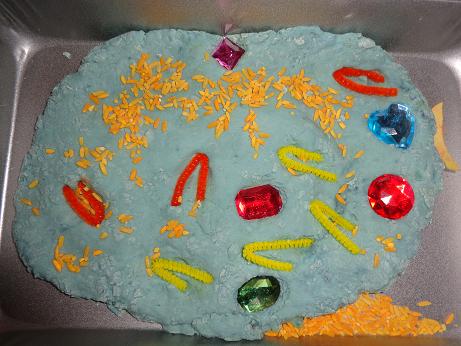
Creating Starry Night with Playdoh, Pipe cleaners, and Jewels
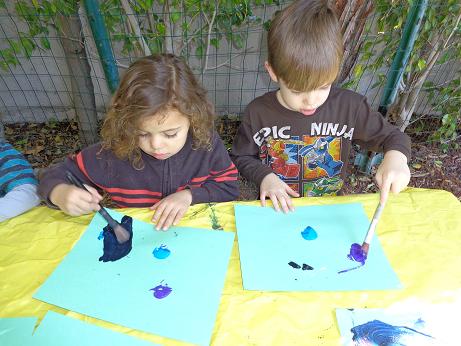
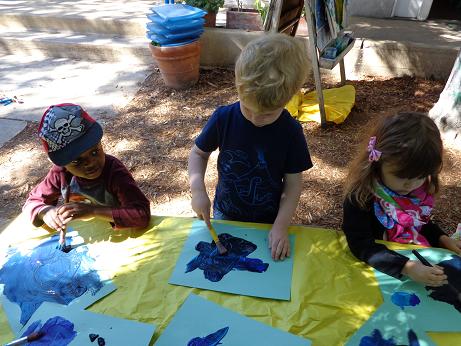
Picasso’s Blue Period
Picasso Geometric Shape Collage
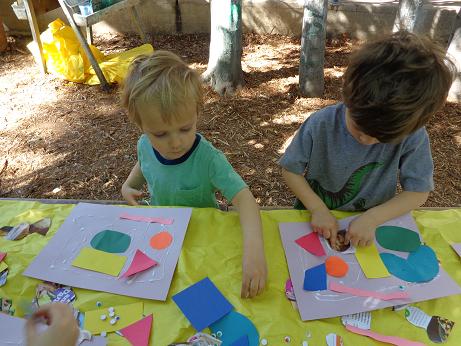
With its significant focus upon geometric themes, Cubism serves as an important avenue for young artists to learn about mathematics and the artistic process. Picasso often used geometric shapes to represent parts of the body. Using “Three Musicians” as our inspiration, we identified the various shapes within this masterpiece, and discussed the body parts that they resembled. Using pictures from a magazine, plastic eyes, and pre-cut shapes, we created our very own geometric shape collage!
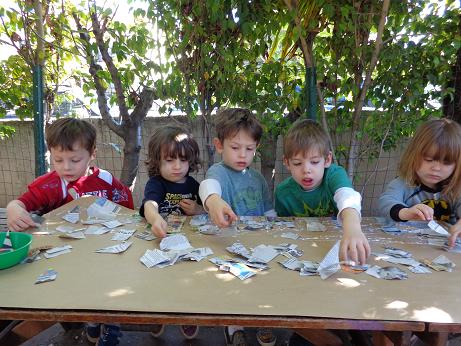
Picasso Newspaper Collage
Art projects that imitate the many styles of Pablo Picasso provide an opportunity for all young artists to be successful. The vast array of his works include surreal, abstract, monochromatic, and Cubist themes. This variety inspires experienced and inexperienced artists to perceive the world in new ways. Such awareness furnishes a gracious medium for beginning artists to replicate his unique slant on reality. Using newspapers and glue, we created buildings out of newspaper! Picasso was fond of using abstract components such as newspaper and cut paper, that when combined, formed a unified composition. Your little ones enjoyed creating enormous skyscrapers, houses, and buildings that reached to the sky!
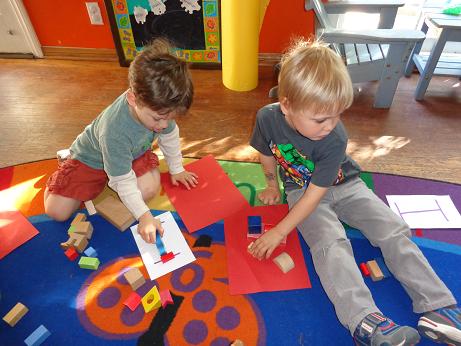
A Creative Way to Learn About the Letter I
Using blocks, a picture of the letter I, and our learning minds, we created our very own letter I! In young children, gross motor skills are the first to develop, therefore creating a need to continually introduce your budding writer to an array of fine motor activities. These activities build a foundation for the later manipulating of various writing utensils. Playing with Lego building blocks, cutting paper with scissors, and putting puzzles together all serve a developmental purpose. They not only promote coordination, but improve dexterity and hand control.
Fine Motor Hearts
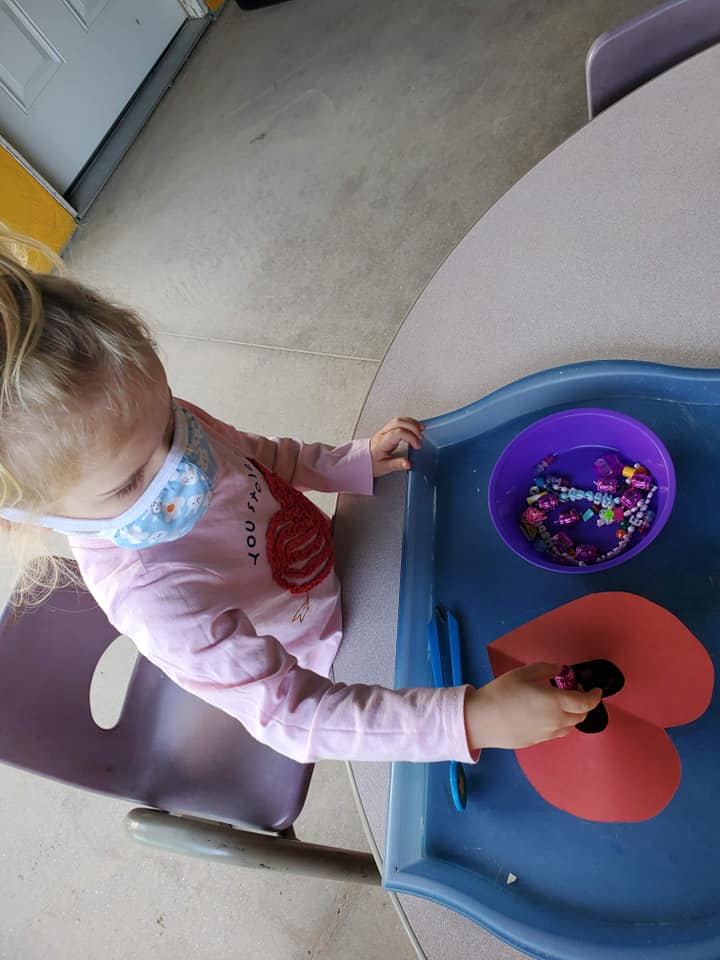
Using beads, tweezers, and heart-shaped vases, we continued to hone our fine motor skills!

Using the tweezers helps your little ones continue their mastery of the pincer grasp, and placing the hearts into the vase encourages concentration, and hand eye coordination.

Young children often have difficulty in manipulating a variety of utensils required for fine motor control, but providing them with this variety helps improve awareness of their hand.