Keyboards in “Kolor”

Instrumental music helps build important cognitive and motor skills which are just starting to develop in the young child. For example, left and right are concepts that are essential in life as well as the piano, and the keyboard is a fun way to demonstrate ideas like these (plus an endless array of other developmental tasks). Our piano classes are so fun, your little ones don’t even realize that they are learning!
20141007_103747

During circle time, we incorporate a color-coded teaching method that uses color-coded notes on a traditional music staff to teach beginning piano to our students!

20141007_103751

A color strip sits on the keys and guides the child to the correct key for each note.

20141007_103808 (1)

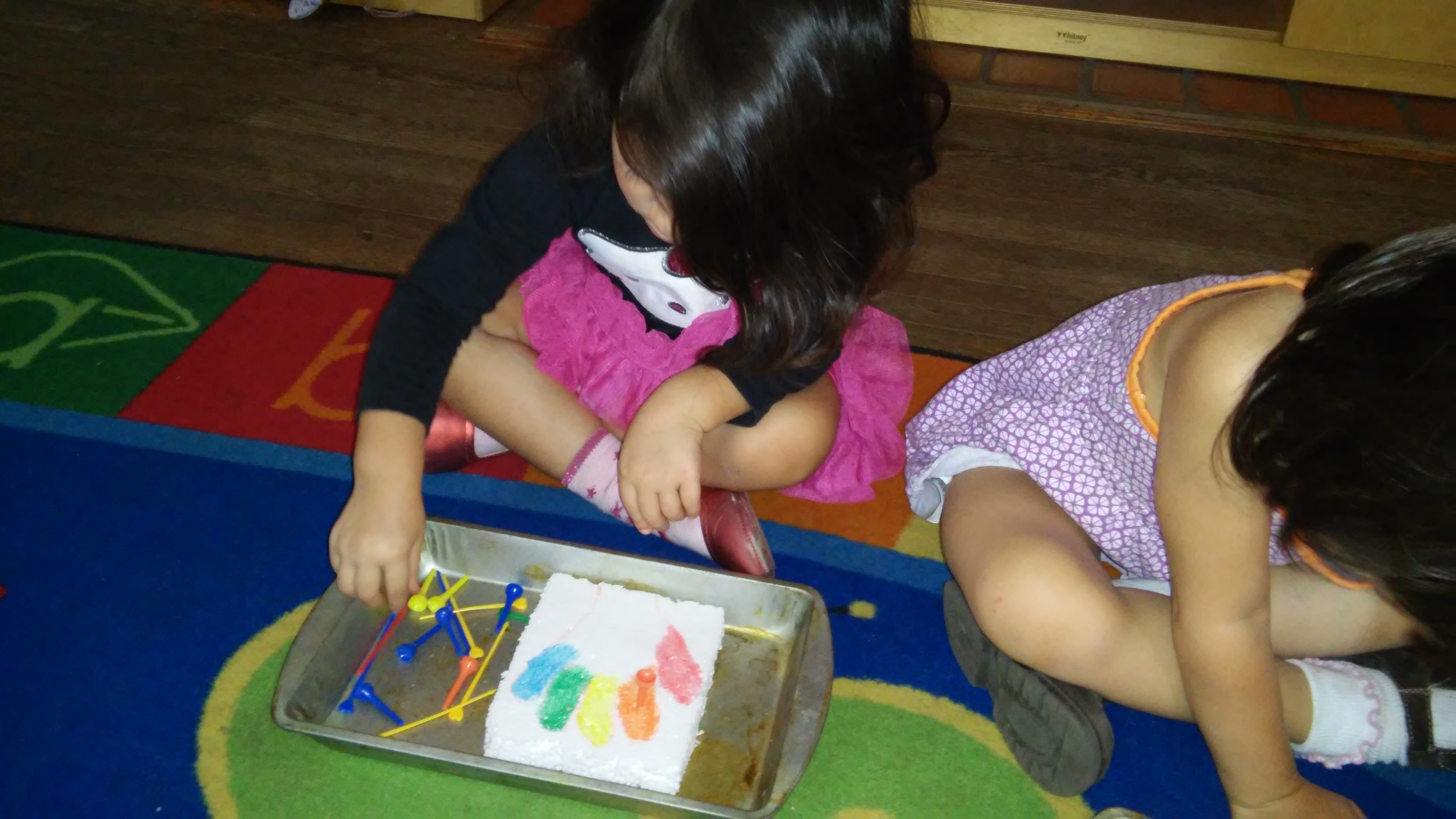
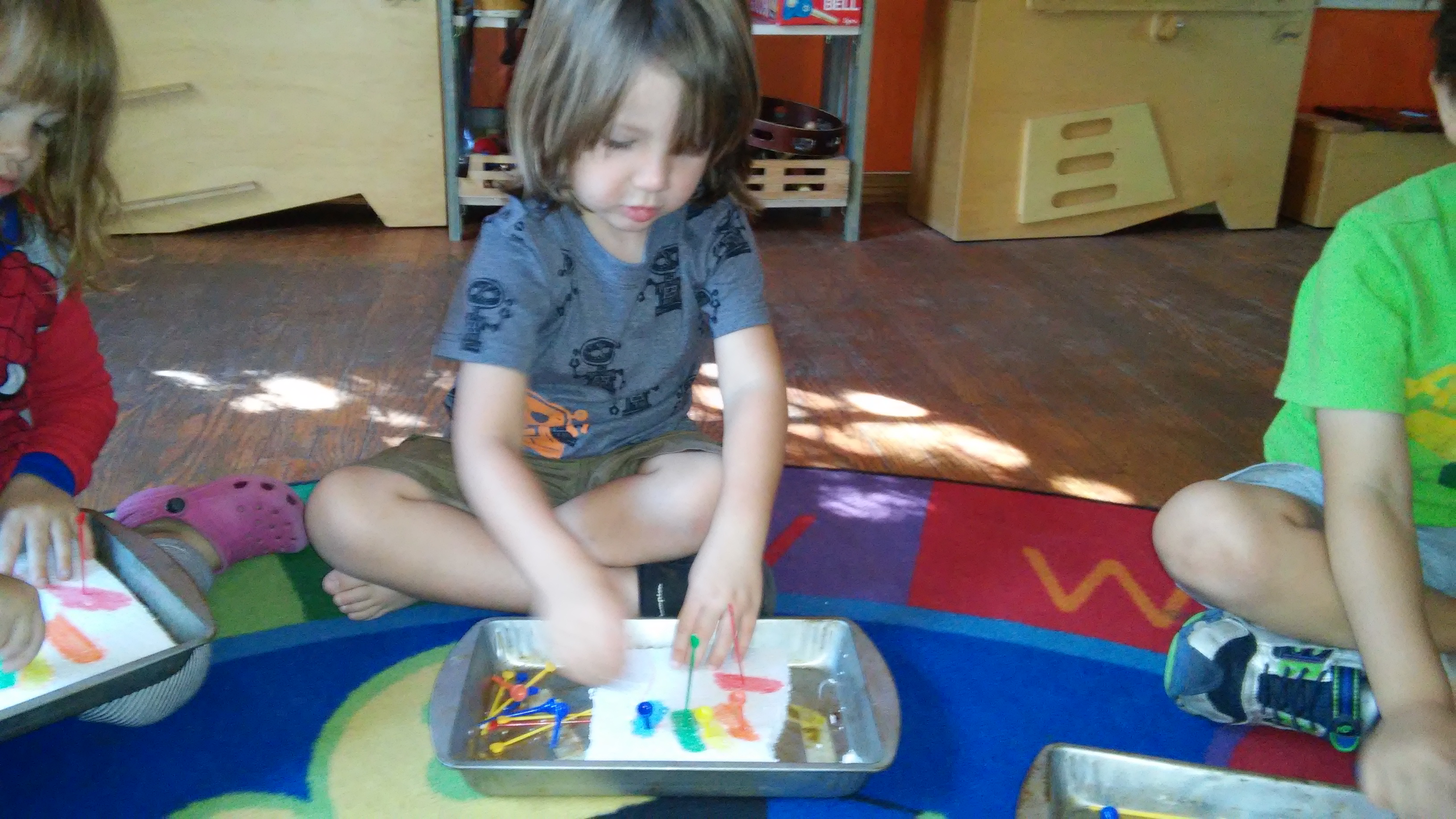
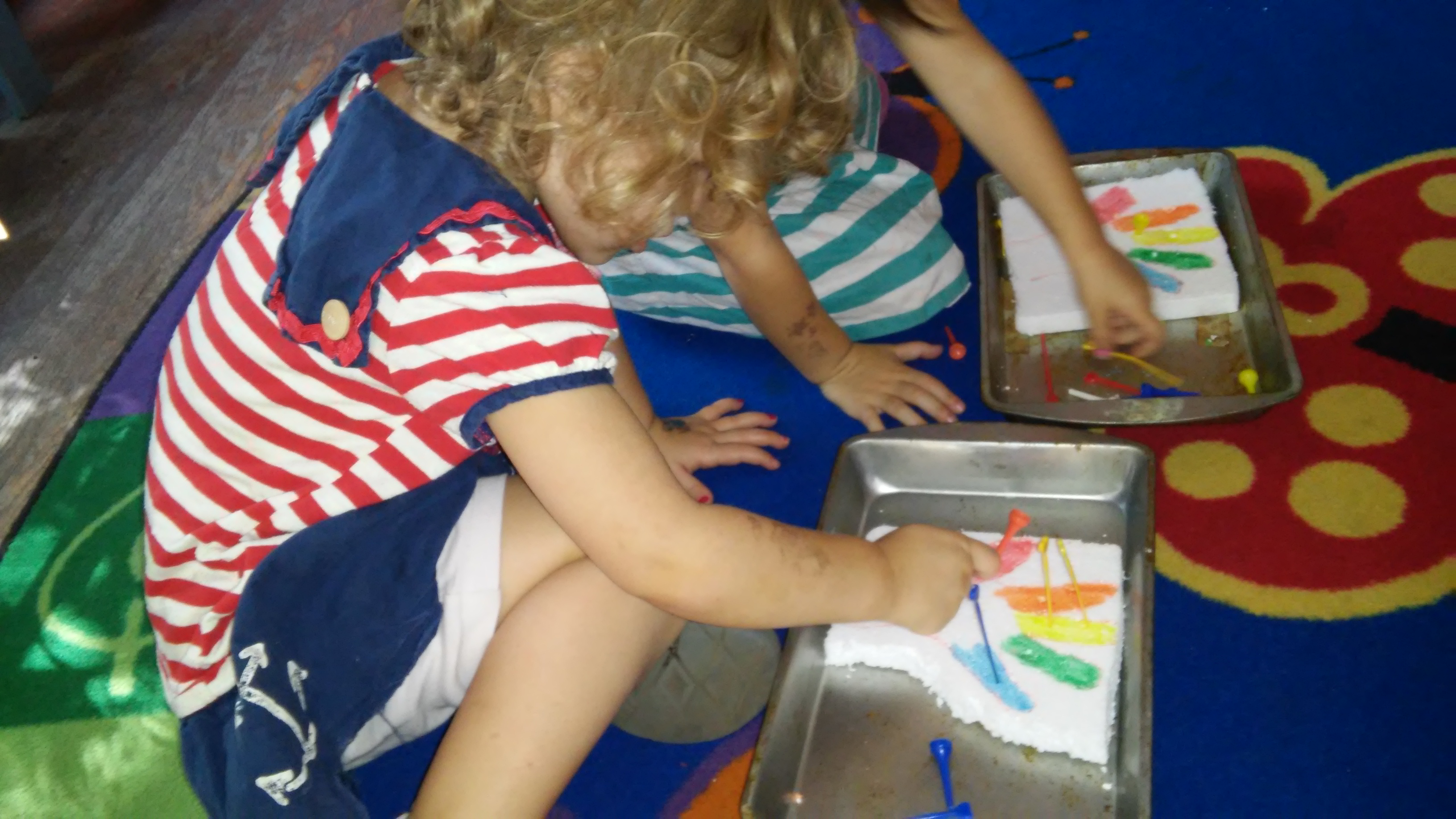
This method of teaching preschool music allows children to begin playing piano as soon as they know their colors. To acquaint your little one with the various colors and their associated fingers, we matched and inserted color-coated golf tees into a styrofoam “hand”.
20141007_103831

This reinforced that our thumb presses the red key, our index finger presses the orange, our middle finger presses the yellow key, the ring finger presses the green key, and the pinkie presses the blue key.
20141007_103836

Piano could, and should be the starting point of the music education beginning from the age of two years old, because the piano is considered to be the ‘king’ of all instruments.  Considering its advantages, we will continue to hone our musical skills on this most wonderful instrument.
Pom Pom Dictation

Musical dictation involves the ability to hear a piece of music and quickly play it back (on an instrument) or write down the notes of a melody. One of the main goals of ear training is to harness one’s power of visualization – being able to hear a phrase and immediately anticipate how it will look and feel on your instrument.

20140930_103600 (1)

To begin building this musical skill, we started with very short fragments. Because we use a color system to play the notes on our pianos, we began with these tones and their associated colors. The notes included were C (red), D (orange), and E (yellow).

20140930_103451

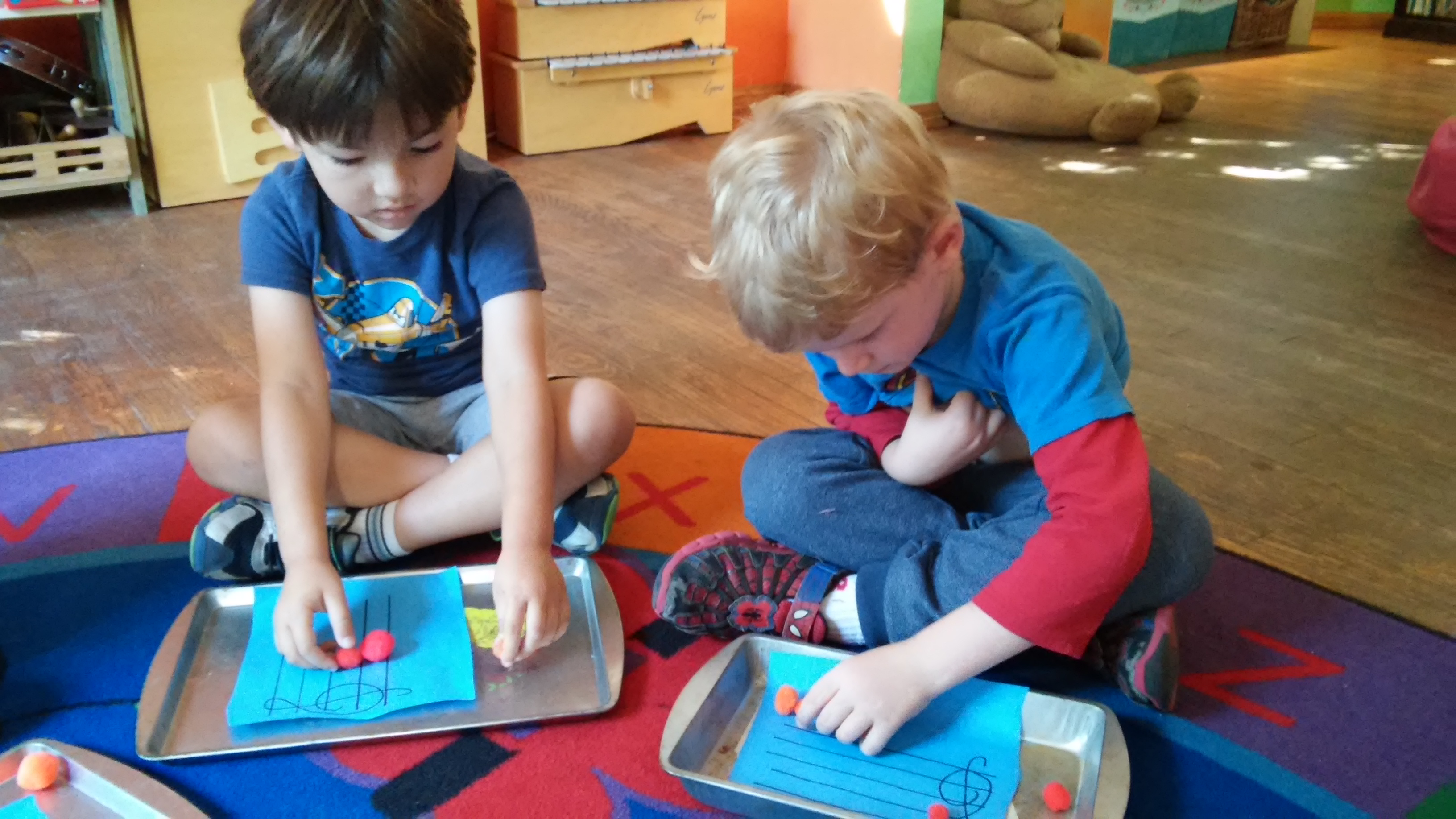
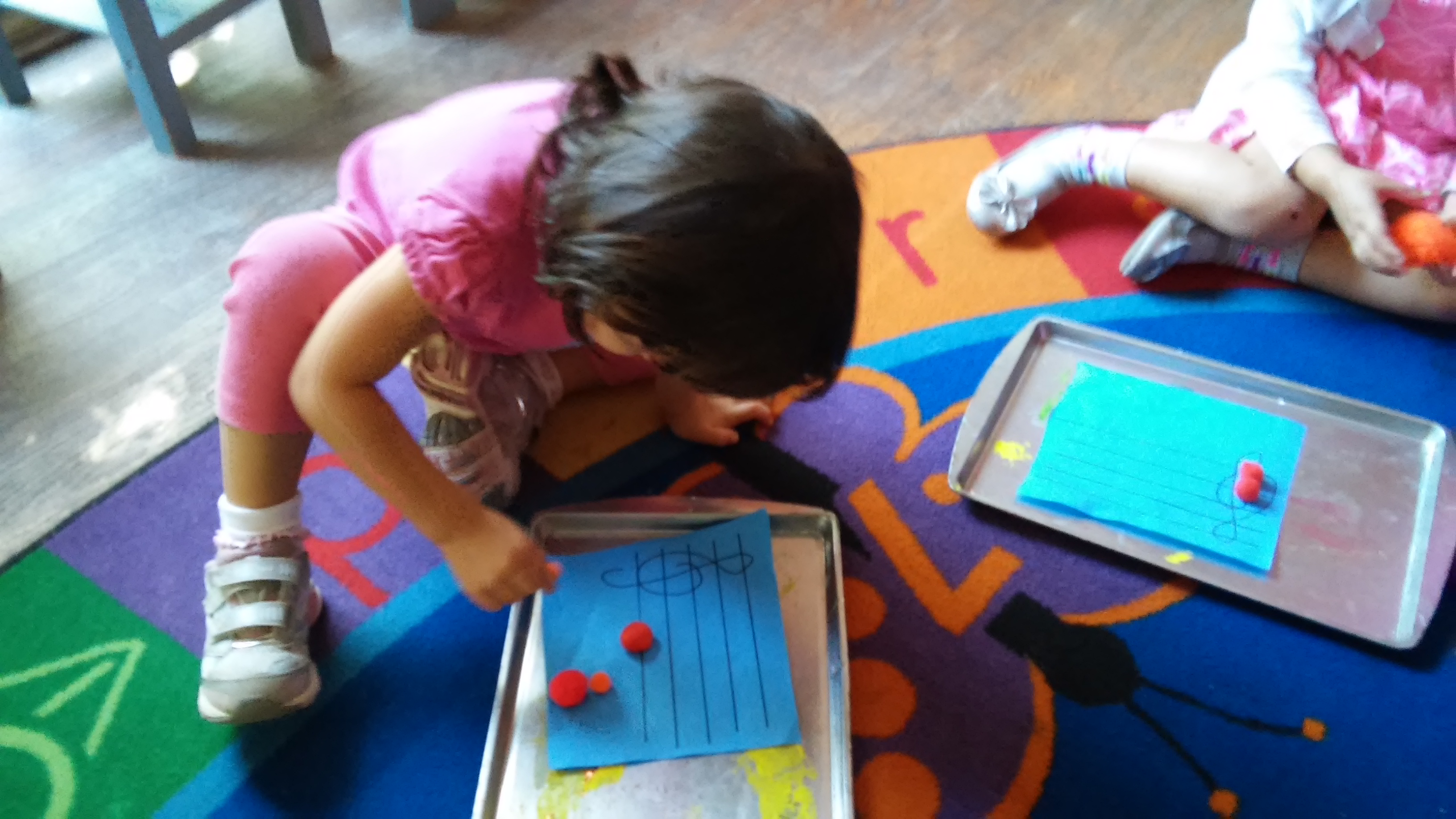
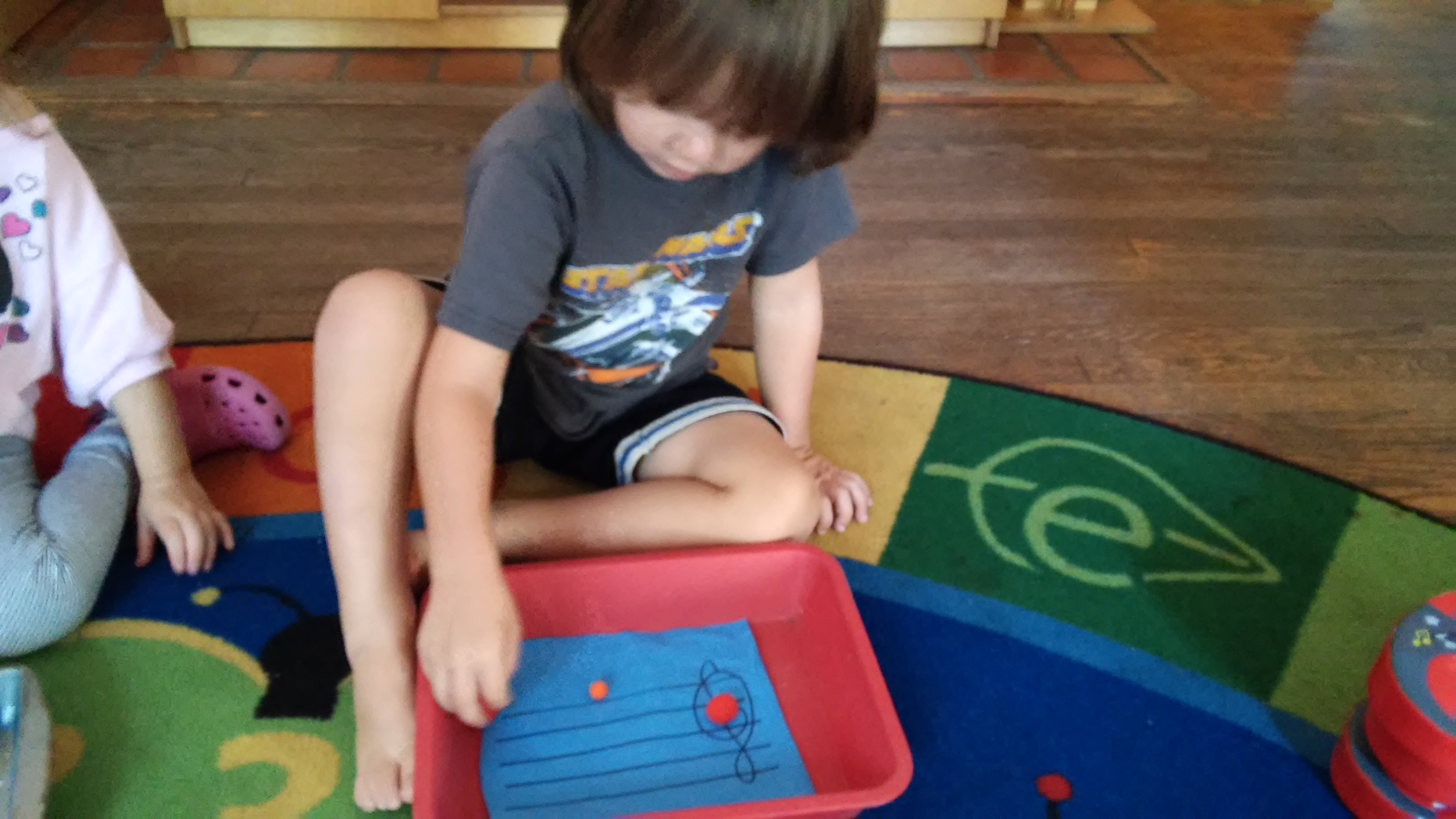
Each student was given red, orange, and yellow pom poms. They were then asked to hear a short phrase played by Miss Carrie, and then visualize what that phrase looked like in their head.

20140930_103453

Using their pom poms, they placed their selections onto a musical staff. We then reviewed our answers as a class. Soon we were able to move on to longer, more complex phrases! As your little ones’ ability increases, they will be able to mentally practice and compose music on their own!

20140930_103522

Sun in a Bottle

No space unit would be complete without some serious talk about the sun. It is the center of our solar system, after all!

20141001_110542

The first concept that students were introduced to was that the sun is not just a big ball of fire in the sky, but is actually composed of swirling gases. These gases are called plasma.

20141001_105713

To illustrate this point, we created a sun in a bottle!

20141001_110702

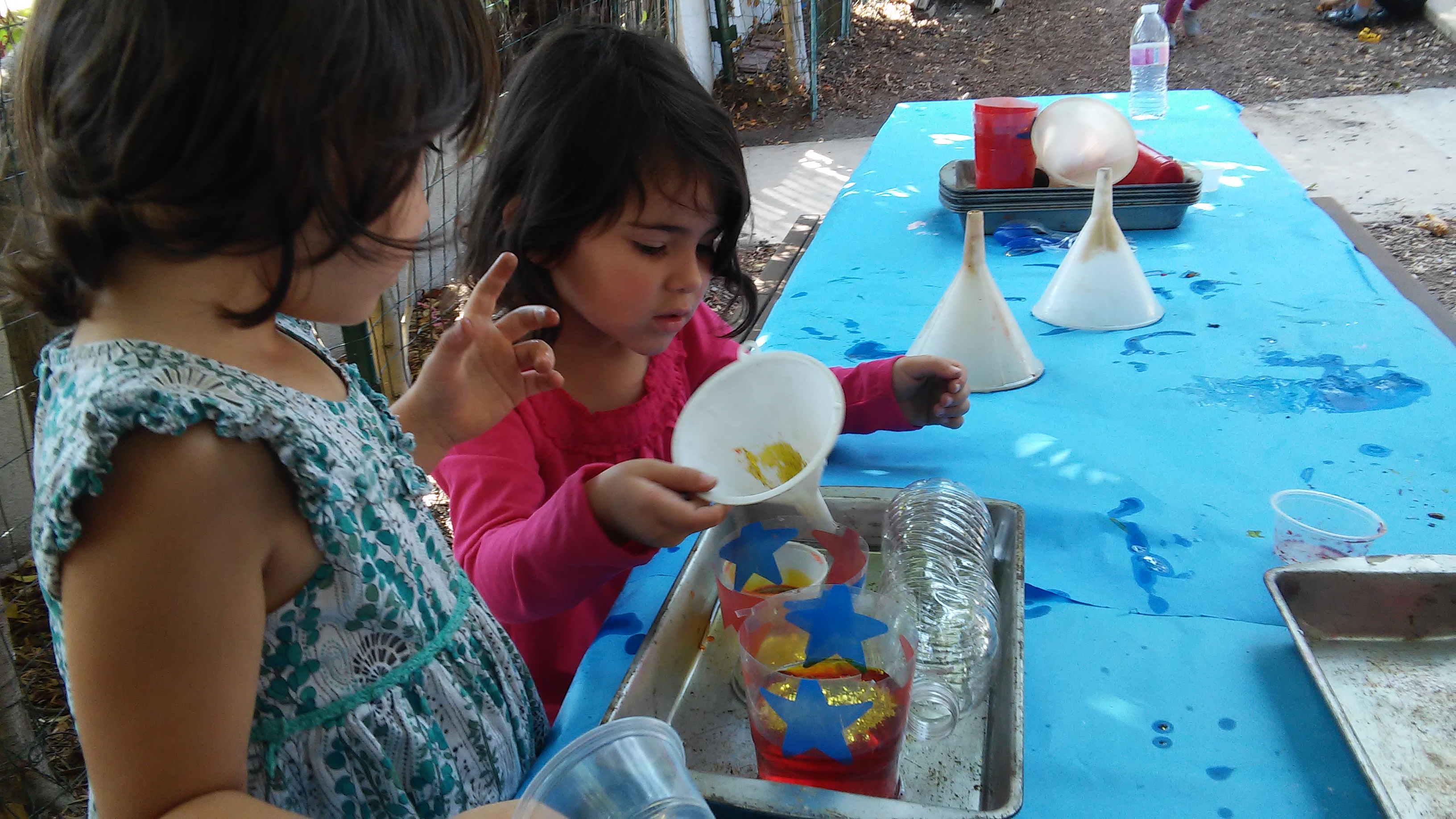
To do this, we used an empty bottle, vegetable oil, food coloring, glitter, a funnel, and water.

20141001_110132

We first filled the bottle halfway up with water.

20141001_105720

We then mixed the red and yellow food coloring with the water and filled the bottle the rest of the way up.

20141001_110530

Everyone marveled at the water and oil separating within the bottle. This activity fulfilled several developmental goals. First, by creating a a sun in a bottle, your little ones created a representation of the sun, which answered spatial and relational questions between objects in the natural world. Secondly, by adding oil and water, and observing its similarities to plasma, students were able to think critically and logically to make relationships between concept of plasma and explanation of how it works. Lastly, by narrating their results, students exchanged dialogue with their friends and were able to apply their understanding of new vocabulary.


Cyclone in a Bottle

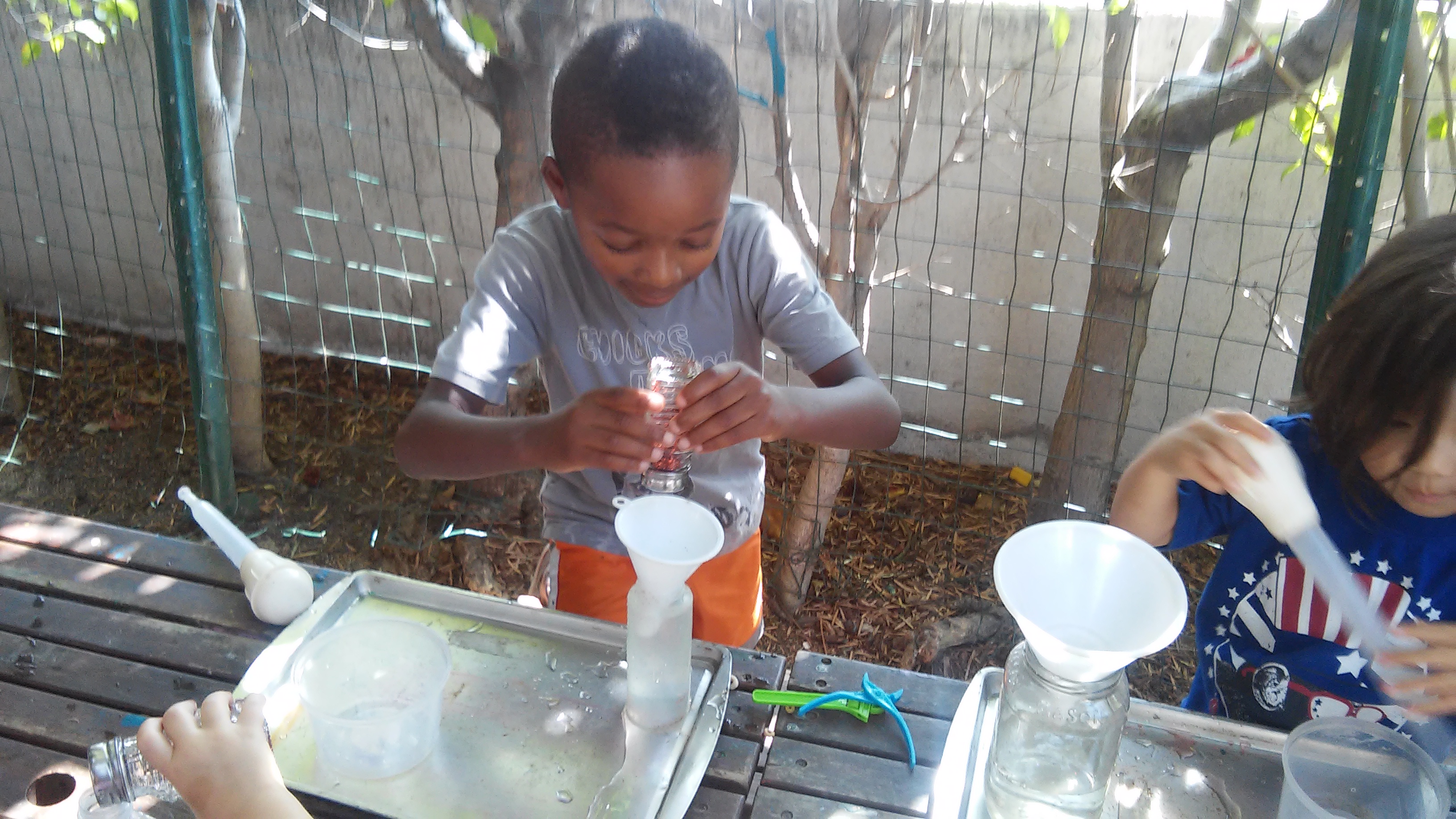
Your little scientists had a blast with this hands-on experiment. They used jars, bottles, water, a funnel, and dish soap to create a cyclone in a jar! To initiate this activity, your little one learned that tornadoes form when cold and hot air combine and spin very quickly.

cyclone4

They also learned that the swirling winds of a tornado are called a vortex. Following this brief introduction, they poured water into containers until they were about ¾ full.

cyclone

This component of the activity required teamwork. One of the students would hold the bottle, while the other one poured the liquid in. Then we added a few squirts of dish soap.

cyclone1

It really did not take much and we took the funnel off for this part so we would not have to wait for it to drip through the funnel. Then we added two drops of food coloring.

cyclone6

Next, we put the funnel back on to add in some glitter. This made the tornado easier to see. We talked about debris and how tornadoes have high winds that can break things and carry debris to other places.

cyclone2

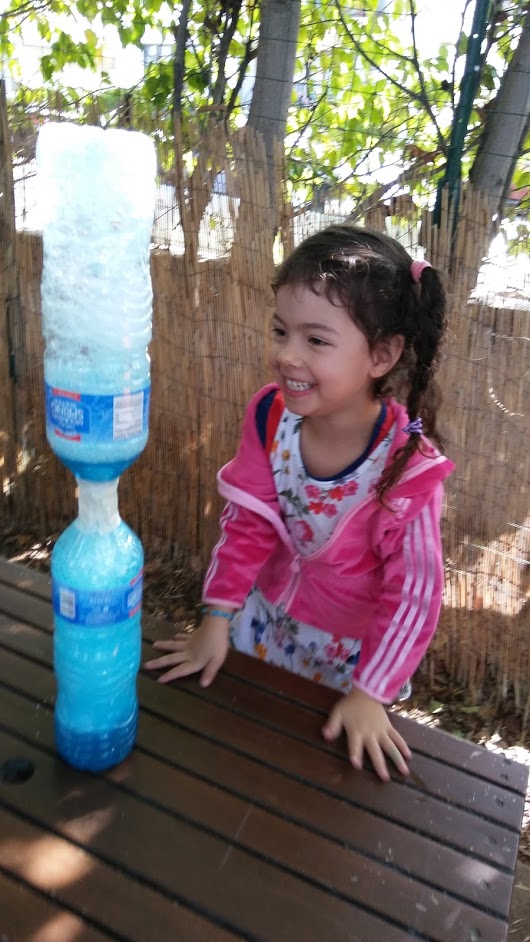
To view our tornadoes, the kids turned their bottles upside down and held them by the neck. Then they quickly spun the bottle in circular motion for a few seconds.

cyclone5

When they stopped, they were able to see a mini tornado forming in the water!As a result of this activity, your budding meteorologist experimented with the physical properties of water: density, volume, polarity, and cause and effect.

cyclone3

Students also participated in inquiry-based science, which enabled them to formulate explanations based on evidence, and then connect those explanations to the topic at hand.


Waterspout Tornadoes

Waterspout tornadoes fall into two categories: fair weather waterspouts and tornadic waterspouts. Tornadic waterspouts are tornadoes that form over water, or move from land to water. They have the same characteristics as a land tornado, are associated with severe thunderstorms, and are often accompanied by high winds and seas, large hail, and frequent dangerous lightning. Fair weather waterspouts usually form along the dark flat base of a line of developing cumulus clouds. This type of waterspout is generally not associated with thunderstorms.

20140815_105147

To help your little one grasp the idea of the waterspout tornado, we created our very own at the water table. Using pre-made funnels, constructed of paper and plastic bags, we produced whirlpools, watching with glee as our “tornadoes” sloshed the water around the water table, sucking up fish and other debris. This activity enabled your little one to explore the physical properties of water: density, volume, polarity, and cause and effect. Young children are naturally curious. To help foster their understanding of how the world works, it is essential that they learn about the various weather patterns that exist, and the interactions between them. This activity also cultivated their observation skills.

20140815_111044


Electricity and Earthquakes

Your little one learned that if you are outside during an earthquake, it is important to get away from buildings, overpasses and power lines. To help convey this concept to our class, we created little villages with power lines, and structures that we used to protect our people. Your little one began this activity by spreading dirt onto a tray. They then used sticks and yarn to create electric poles. Next, we used small branches to simulate trees, and blocks to represent houses.


20140818_104418

We then placed plastic people underneath the power lines and then underneath the blocks. Next, we shook the trays, and observed what happened. Lastly, each student was then asked what they saw, and then where they thought their people would be safest.

20140818_105914

This activity targeted several learning objectives. First, your little one simulated safe behavior during an earthquake simulation. Secondly, students executed new language skills, as they discussed hazards, used and applied action verbs, and shared information.  And finally, each child accessed their critical thinking skills as they experimented with cause and effect, observation and evaluation, and creative problem solving.


Clouds and a Cotton Ball

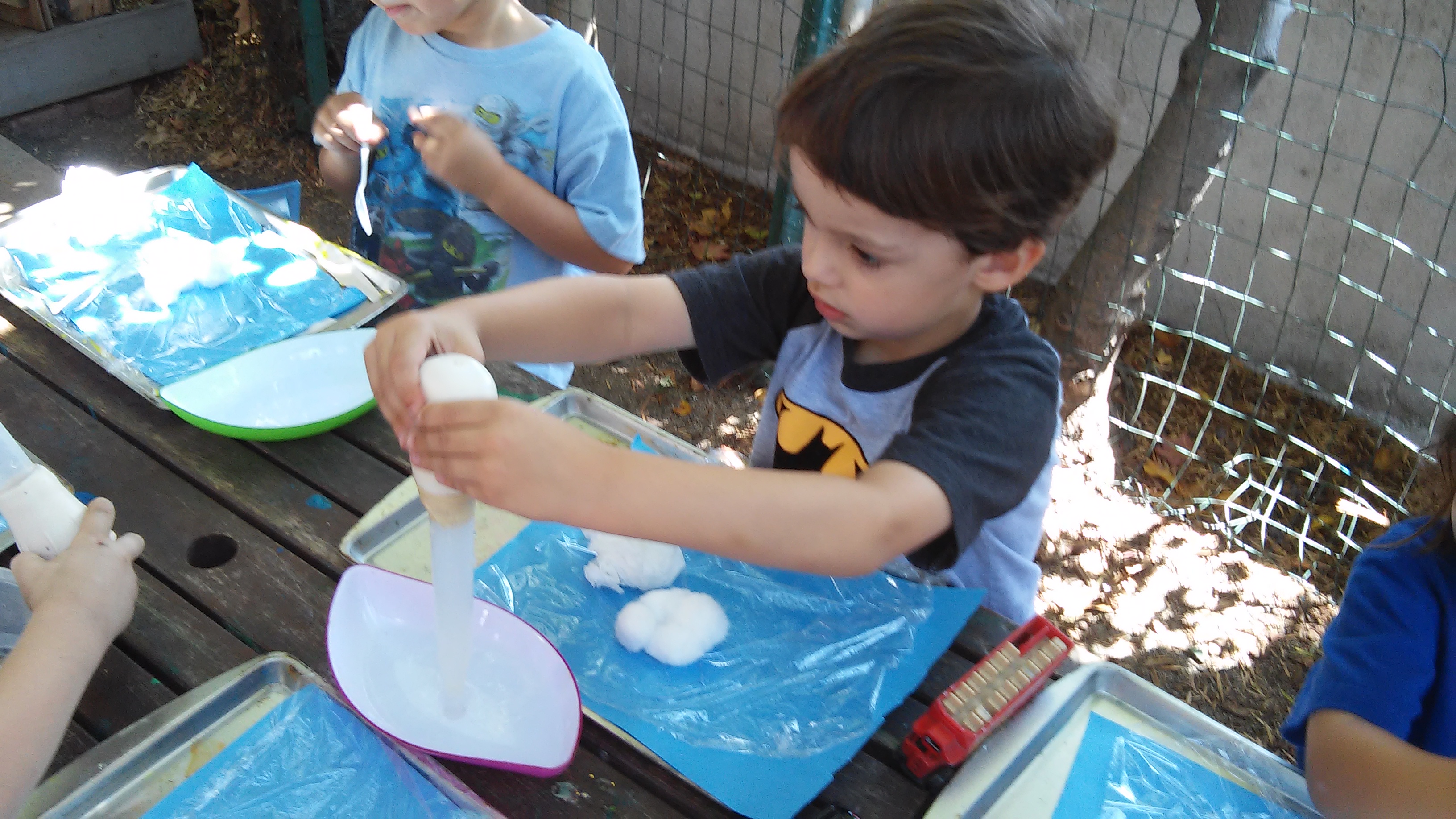
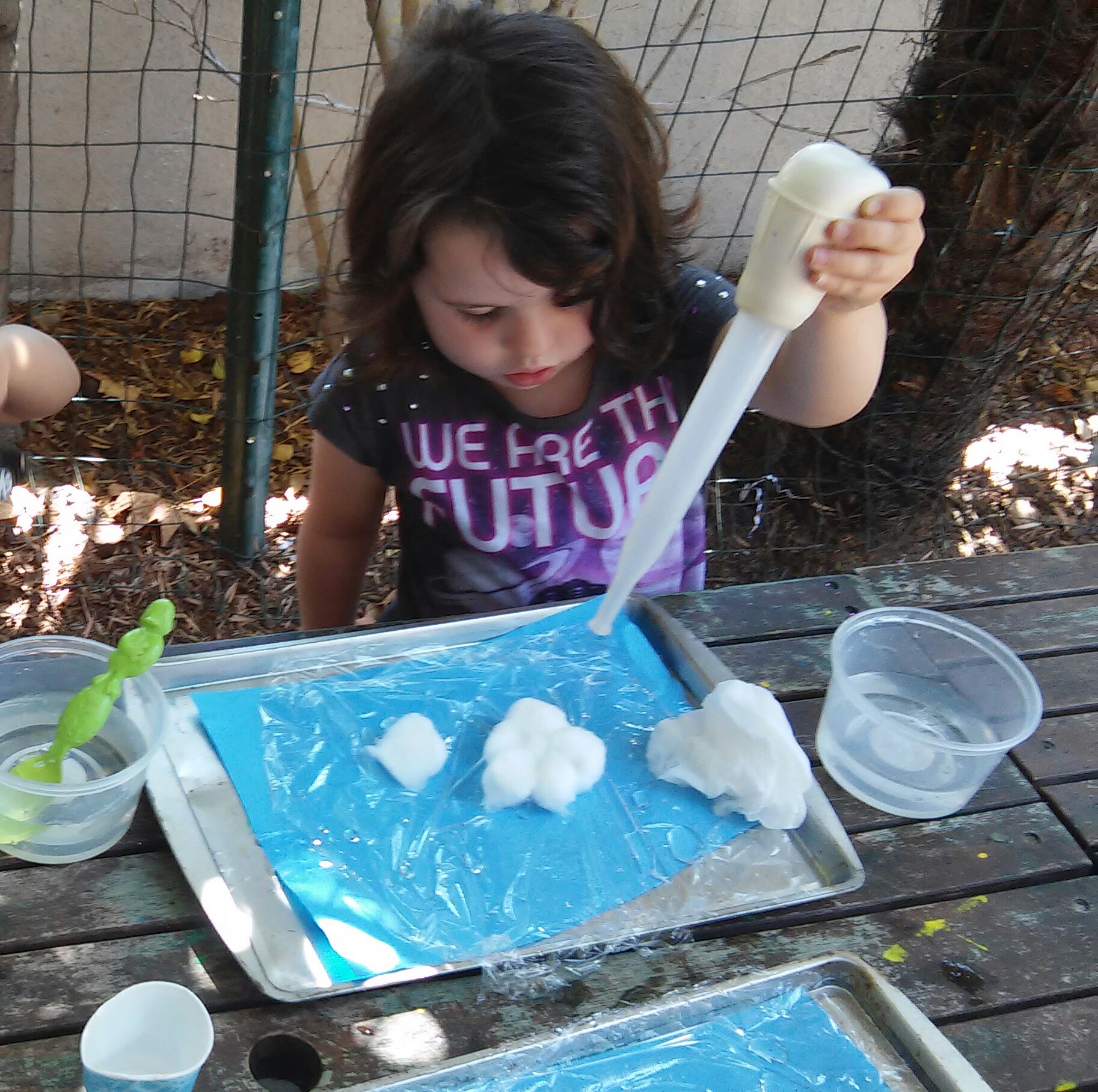
For this activity, your little one demonstrated how rain falls from clouds with the help of cotton balls, turkey basters, and water. To initiate this activity, your budding meteorologist learned about the physical properties of clouds, how they are created, hold water, and eventually form hurricanes. This activity accessed several areas of development.

cloud1

By adding water to the cotton balls, each student experimented with a variety of measurement concepts such as volume, density, and weight. As they regarded the varying amount of water seeping from their “clouds”, they experienced the physical components of cause and effect. Lastly, they acquired new language, as they discussed how their clouds changed shape with the added water.

cloud


Hurricanes, Rice, and Writing

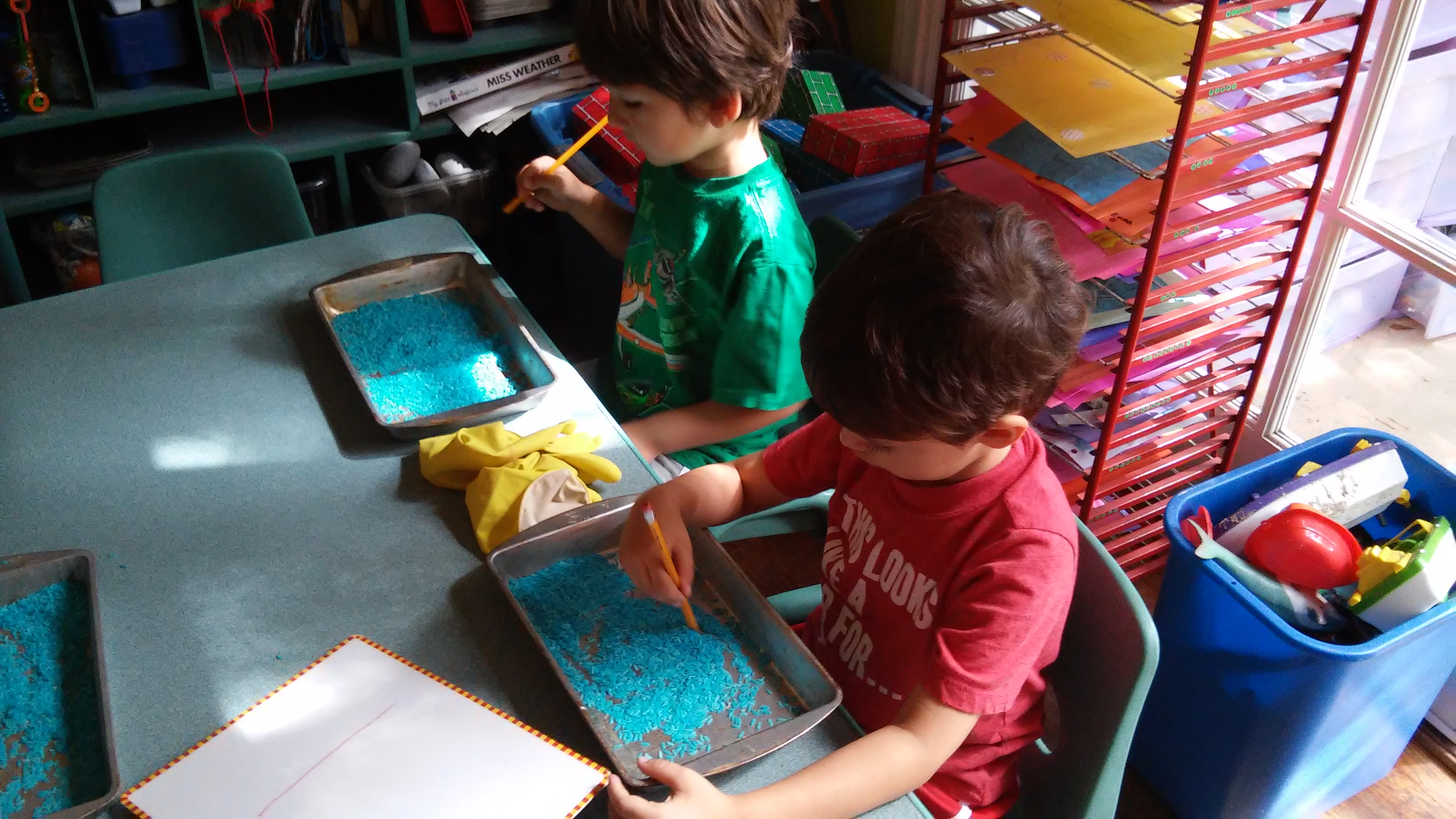
The preschool years play a key role in the development of literacy. At this age, your budding writers are engaging in the important work of preparing to read and write. Before the formal study of literacy can be acquired, pre-writing and pre-reading skills need to be mastered. One of these skills consists of phonological awareness. Phonological awareness refers to letters representing sounds, that, when strung together, make words that create meaning. There are several ways to encourage phonological awareness. One thing we do daily is a show and tell of different items that begin with the letter of the week. For this particular week, we are learning about the letter H, so each child selected a particular item begininng with the letter H out of a hat. We then discuss the “H” sound that we hear in the word. We also sing silly songs that reinforce our understanding of this letter. For this particular activity, we used unsharpened pencils to rice to create our very own H’s.

20140825_100759


Graham Cracker Tectonics

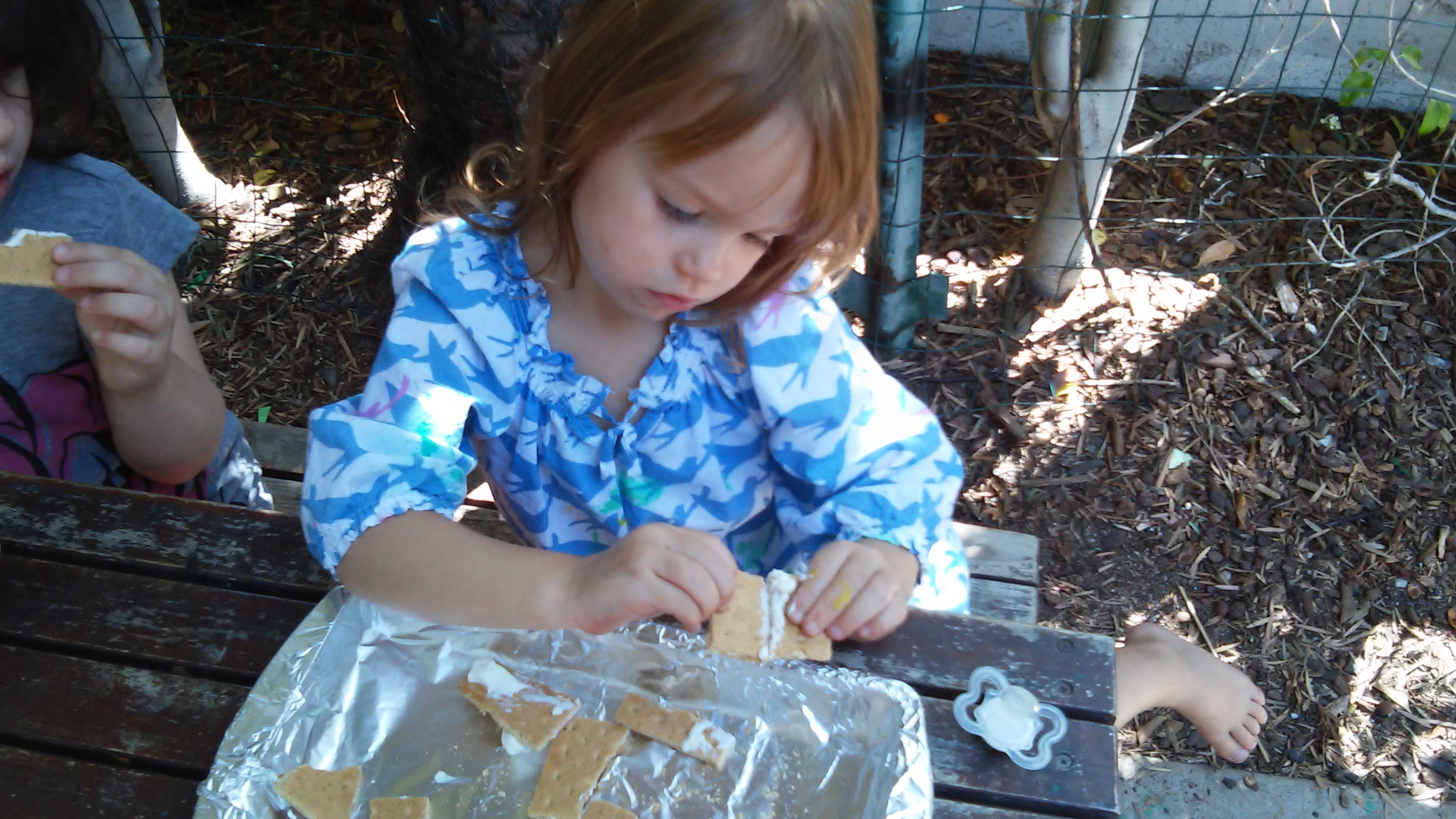
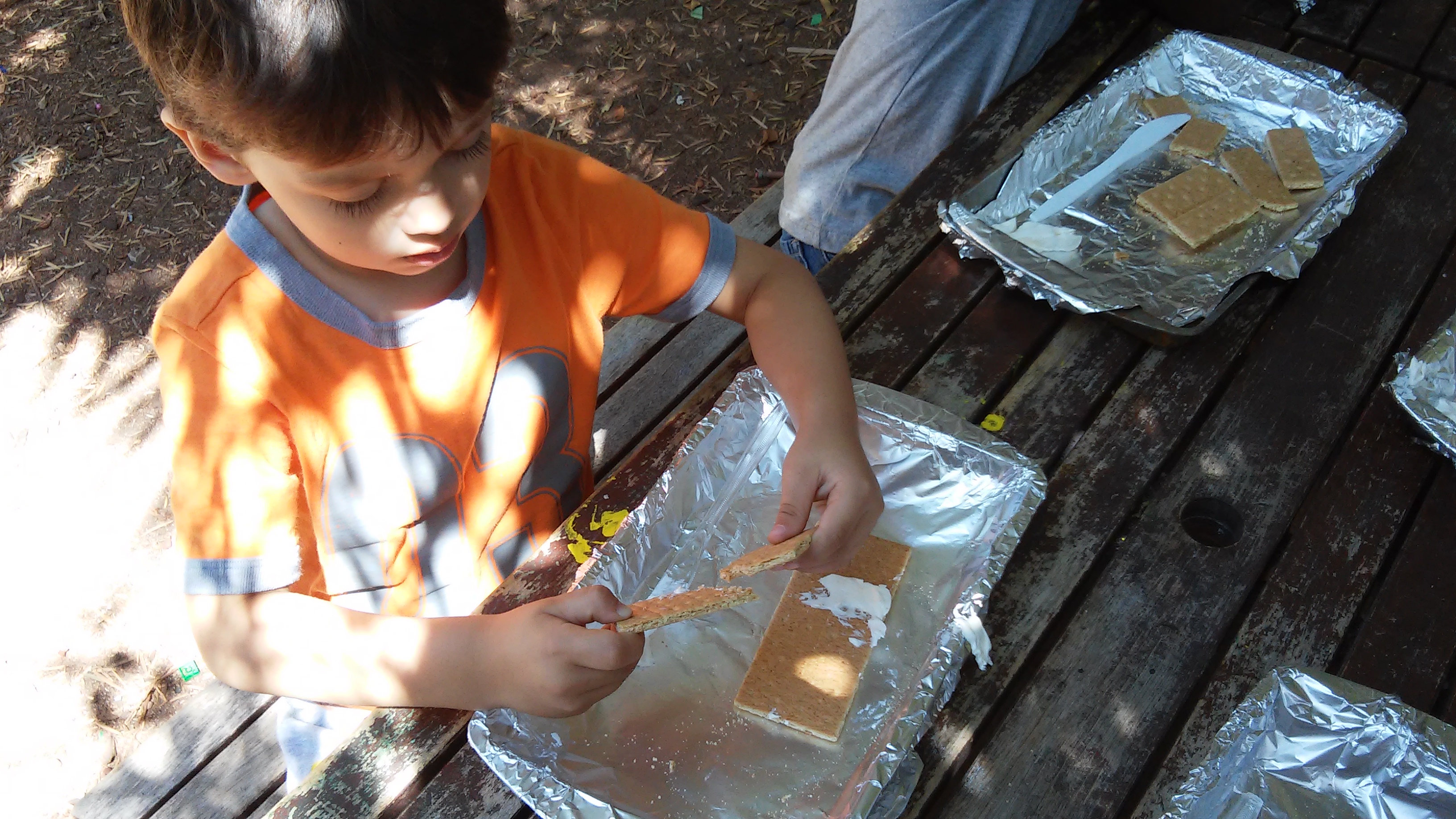
Earthquakes occur to relieve the tension caused by colliding plates beneath the ground. To demonstrate the physical impact of these collisions, we rubbed graham crackers together. This enabled your little one to observe how the friction of this movement altered the shape of the cracker, and how this relates to earthquake formation.

20140821_111439

Though the concept of plate tectonics may be problematic to the preschool learner, experiences that provide them with a three dimensional reproduction of the the desired idea may assist them in understanding what it is that they are seeing. As they perceive the cause and effect of their actions, they can use their words to describe what they perceive as they seek out additional support.

20140821_111506


Plastic Cup Towers

Children love to build. It’s something to do with the challenge, the skill and probably the knocking down, that makes it such an appealing activity for kids. As stated earlier, when your child plays with blocks, building replicas of the world around her, she is like a little scientist, experimenting with balance, structure, space, and even gravity! Have you ever watched your child attempt to build a simple tower, only to have it fall down at a particular height? Perhaps you have noticed that she tried different ways of placing the blocks until finally she created a tower that stayed up! Amazingly, what she is doing is using the scientific method of experimentation, observation, and cause-and-effect to solve the problem of the tumbling tower.

20140618_10445520140618_105303