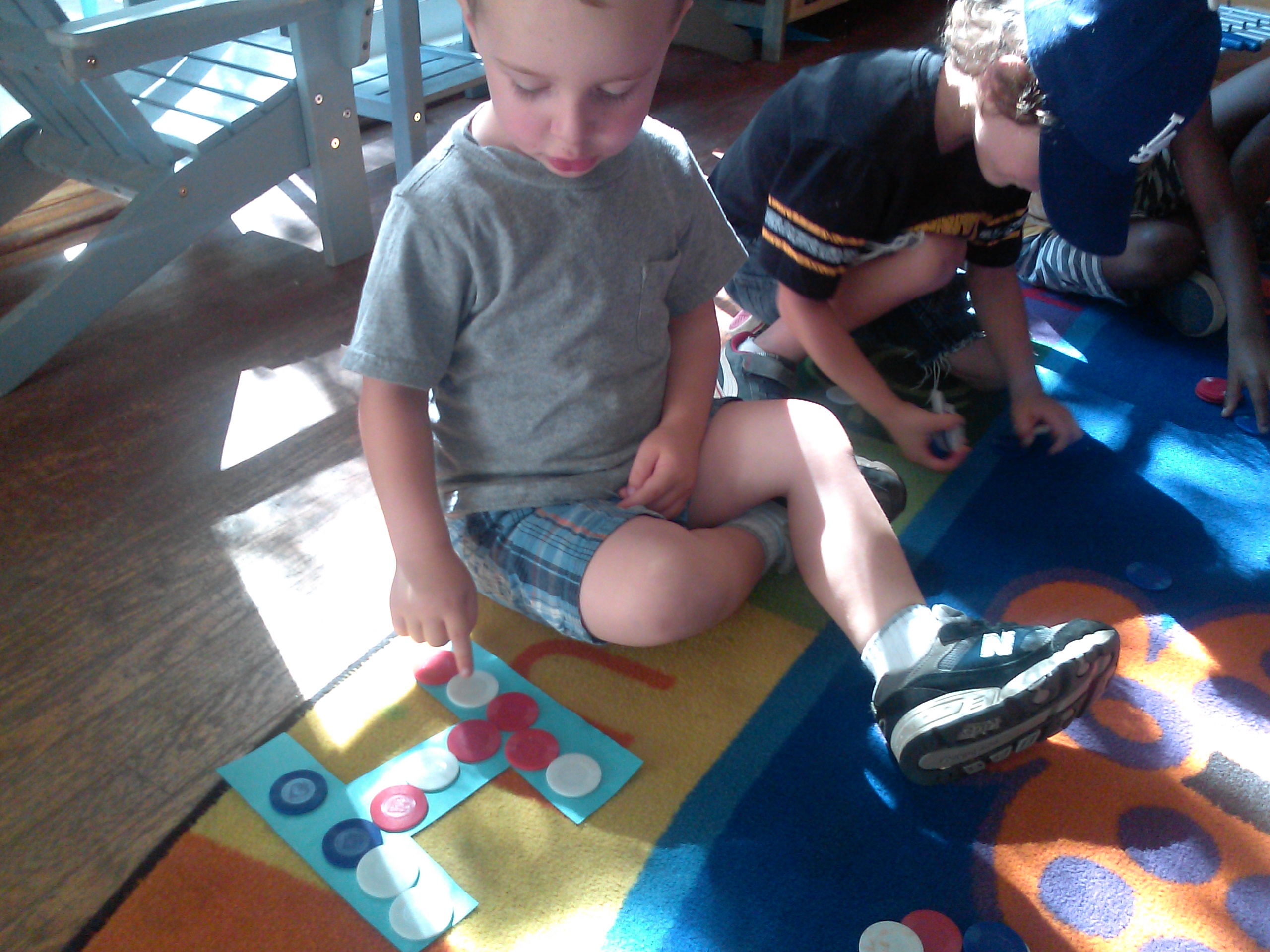
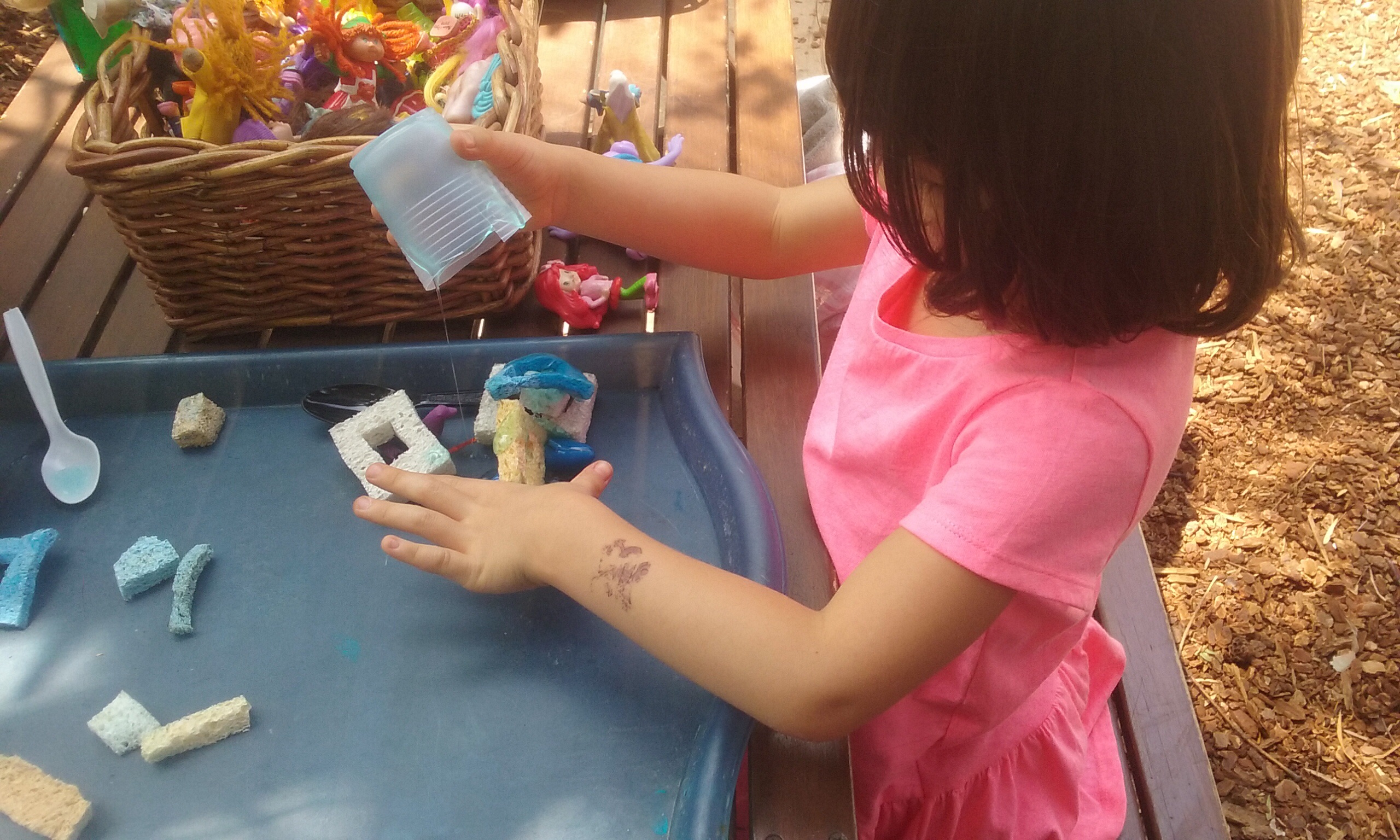
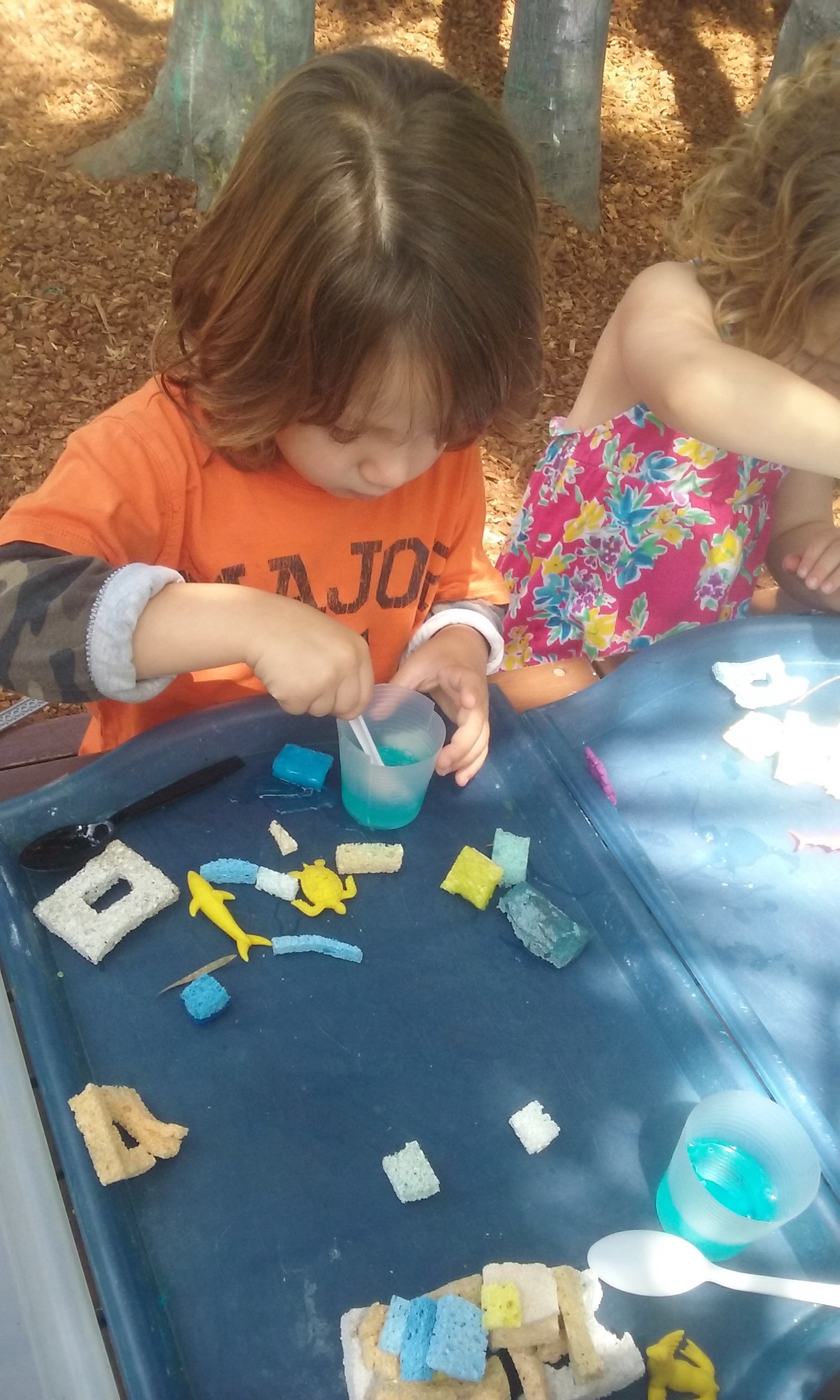
We have been talking about the letter I this week! Using silly songs, props, and a variety of learning activities, we have integrated this letter into our week of the Ichthyosaurus! Using poker chips and the letter I, we combined math and literacy to supplement our awareness of this fascinating vowel. To start, your child was given a color pattern that they were directed to replicate on their letter. They were then instructed to verbally count their items. Teaching patterns and sequencing to young children is an integral component to the concept of emerging mathematics. They facilitate an understanding of one to one correspondence (i.e. matching sets, recognizing groups) and foster one’s ability to count verbally.
Tag Archives: preschool
Ichthyosaurus Habitat
Flippers and Friction
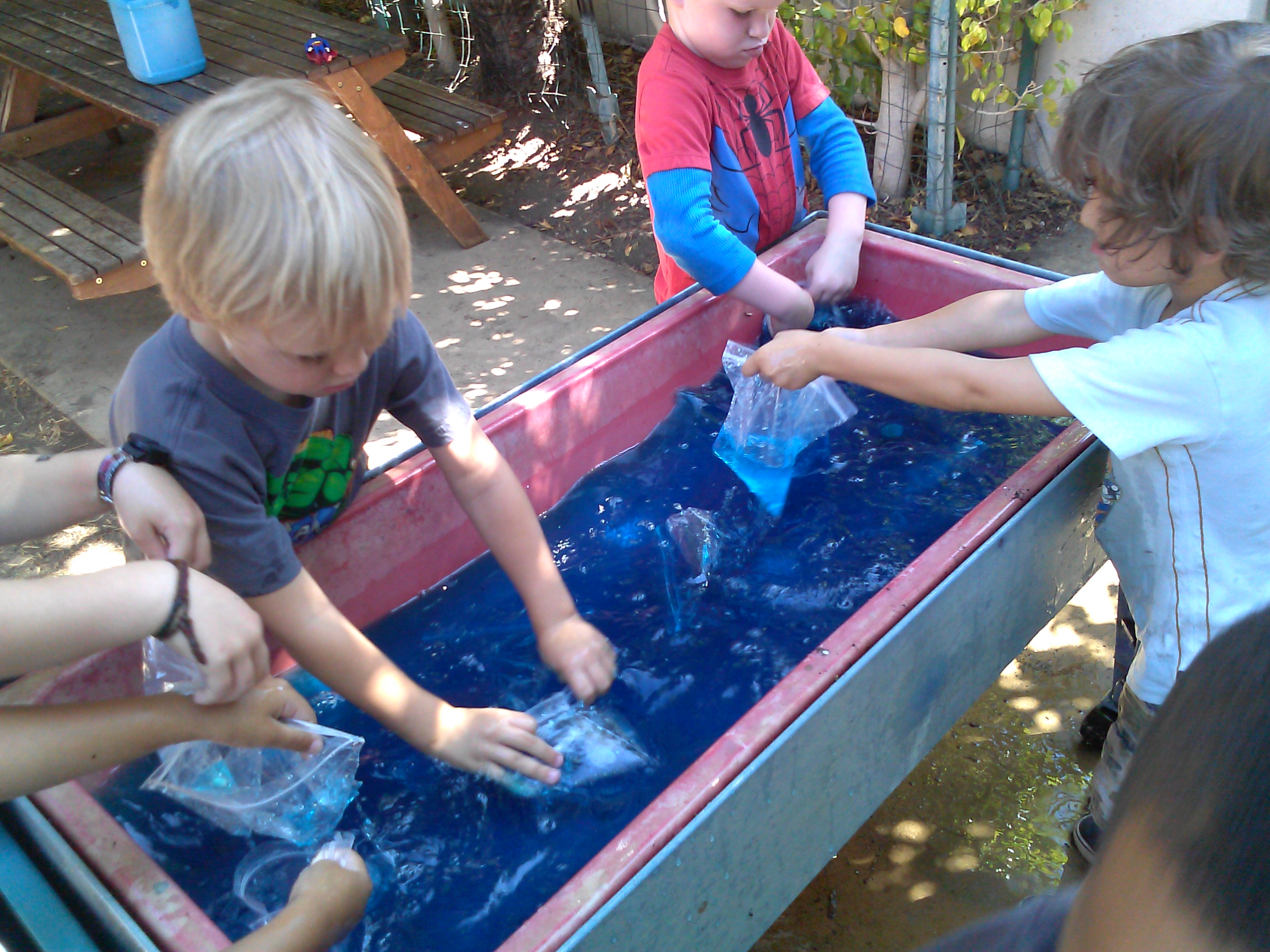
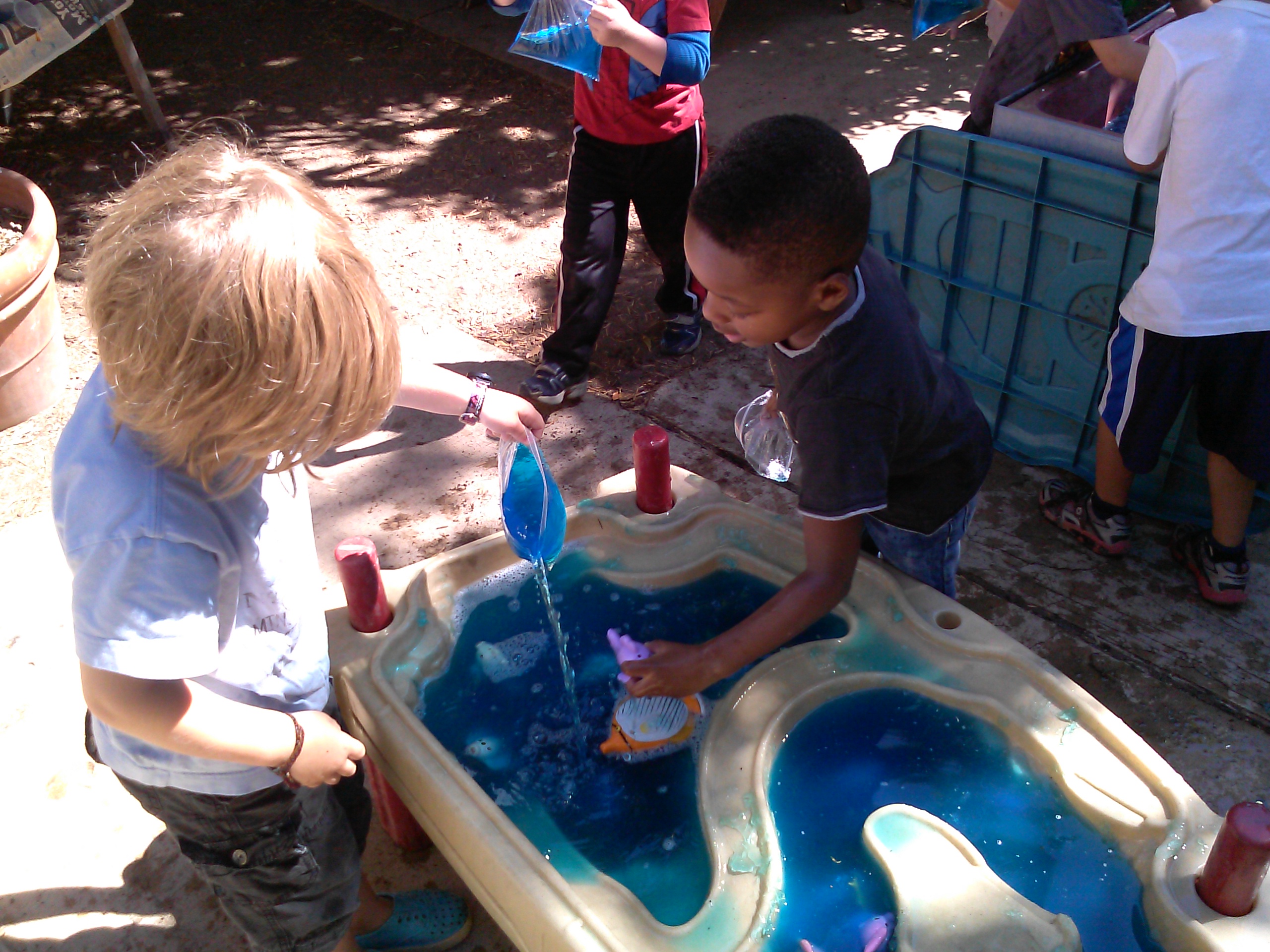
The Ichthyosaurus was a marine reptile that roamed the prehistoric seas. These massive creatures ranged from seven to thirty feet, and used their massive dorsal fin and powerful flippers to navigate. To introduce the concept of friction and its relationship to speed in the water, we swam with our very own flippers! We initiated this activity by placing our hands into some water to make waves. We then placed Ziploc bags onto our hands, and did the same thing. We followed this with a discussion of the differences between the two. Our conversation consisted of questions such as “What made bigger waves, when we had bags on our hands or when we didn’t?” and “Why do you think the bags made bigger waves?”. This activity facilitated several developmental areas, including deduction, cause and effect, and cooperative learning.


Creating Our Very Own Tar Pits!
Tar pits are pools of accumulated bitumen (asphalt) that are significant to paleontologists because they so effectively preserve fossils. Young children thrive on the application of new information, integrating the tactile with the sensory to make connections they can understand.

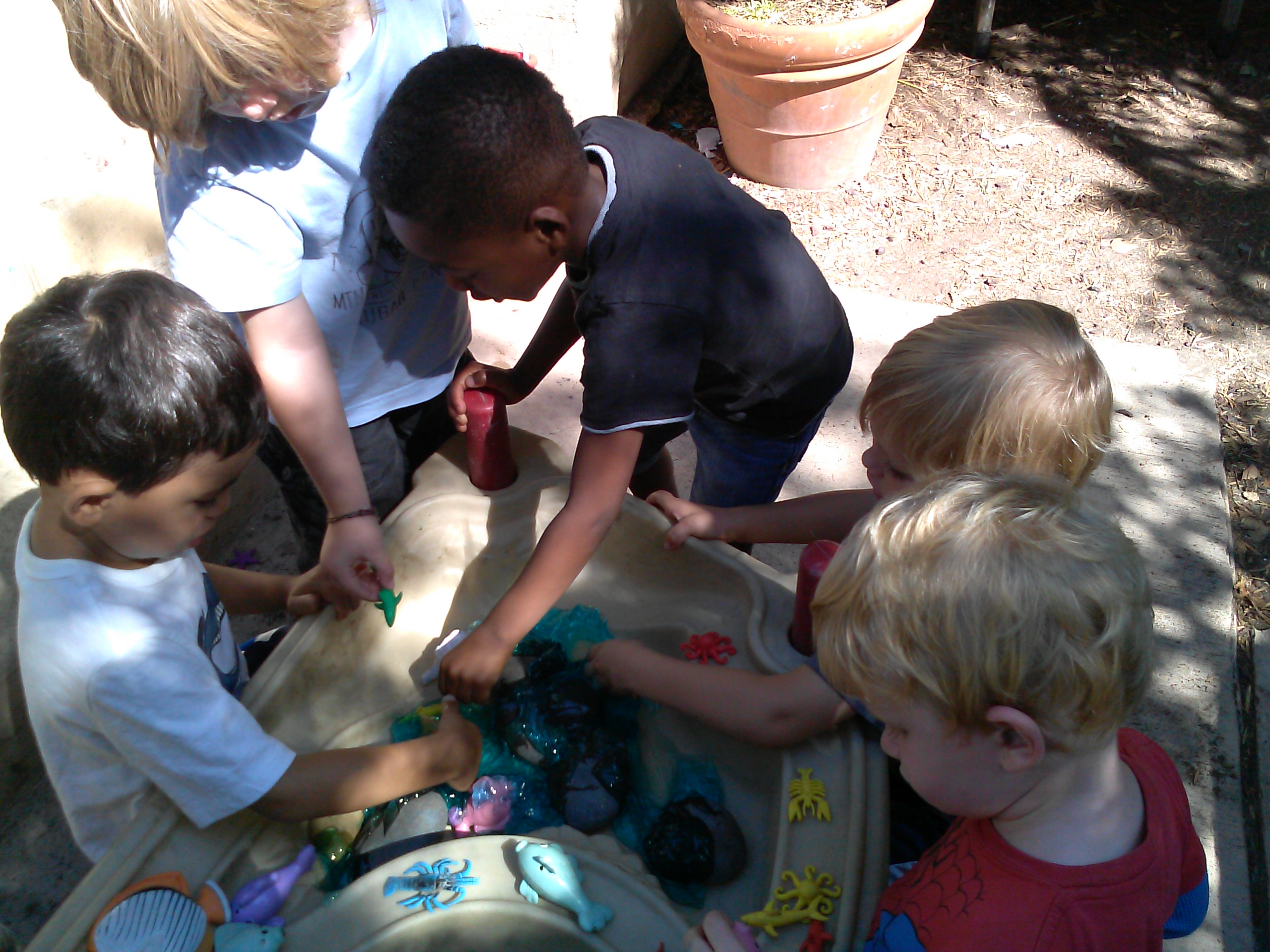
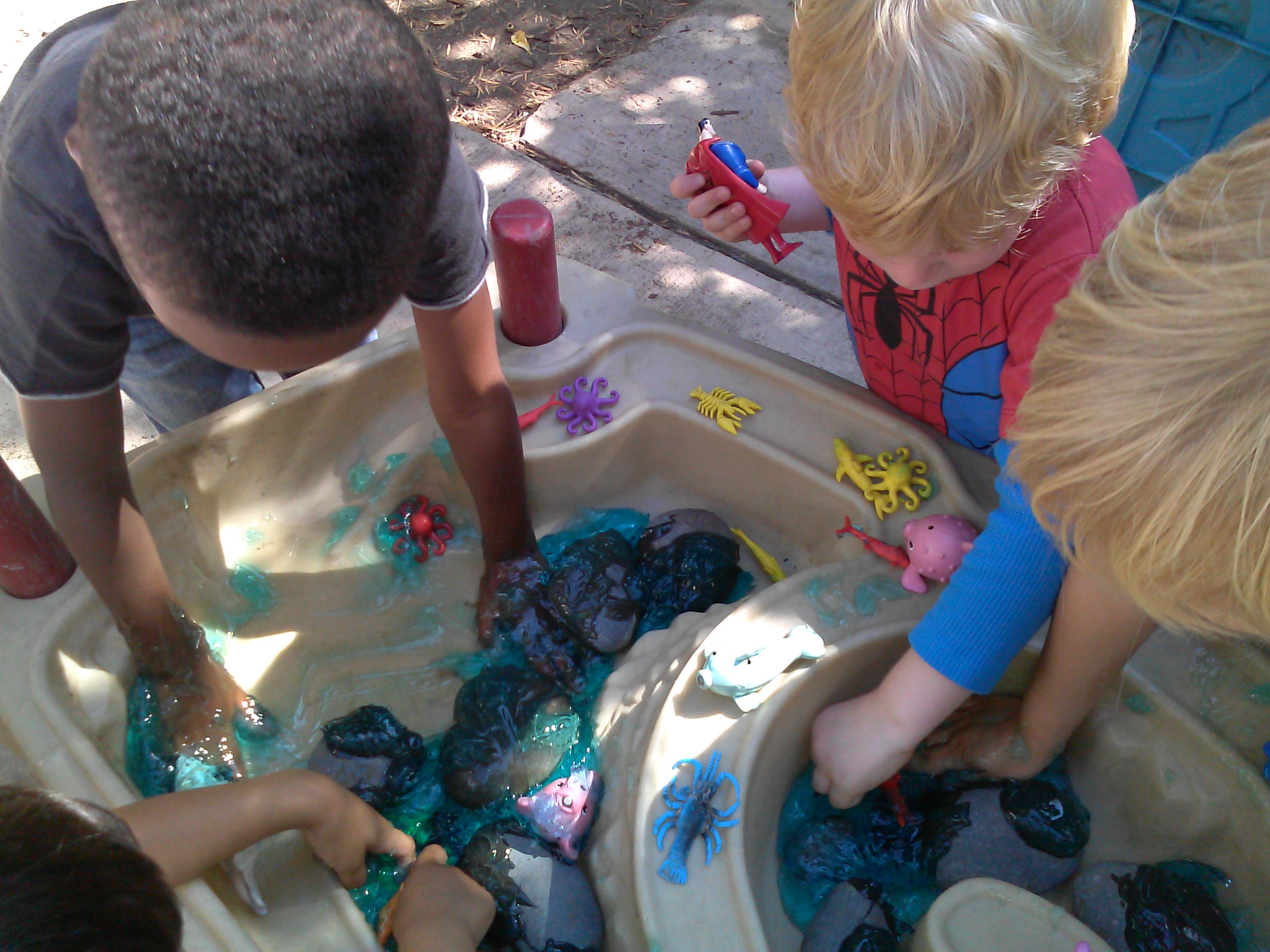
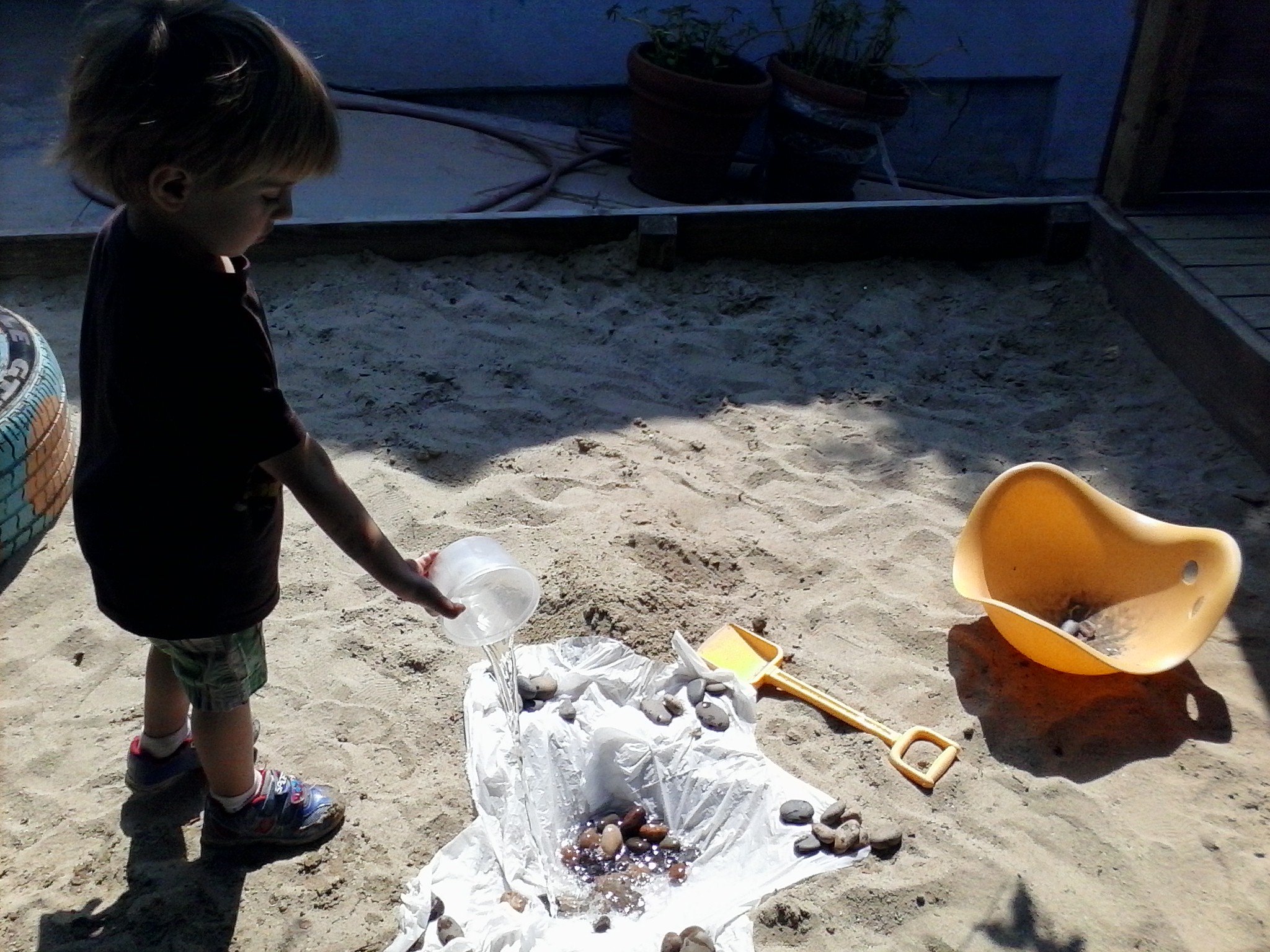
With this in mind, we constructed our very own tar pits! We accomplished this by combining rocks, black clay, water, and our favorite prehistoric animals. This activity was a collective effort as we both created and excavated our creatures from this sticky lake. Each child collaborated with their fellow paleontologists to share their vision regarding the appearance of the tar pit, and, once actualized, the most effective means to remove and observe the remains of their findings.

By working together, your little one is honing their social skills and the means with which they relate to their peers. By progressing toward a common goal, they are sharing ideas, values, and resources, which enable them to build a sense of community and pride in their work.

Octopus Ink
Children learn more by participating in their experiences than interacting with a piece of paper.


When an octopus feels threatened, it may squirt out a cloud of ink, intended to confuse any potential captors.


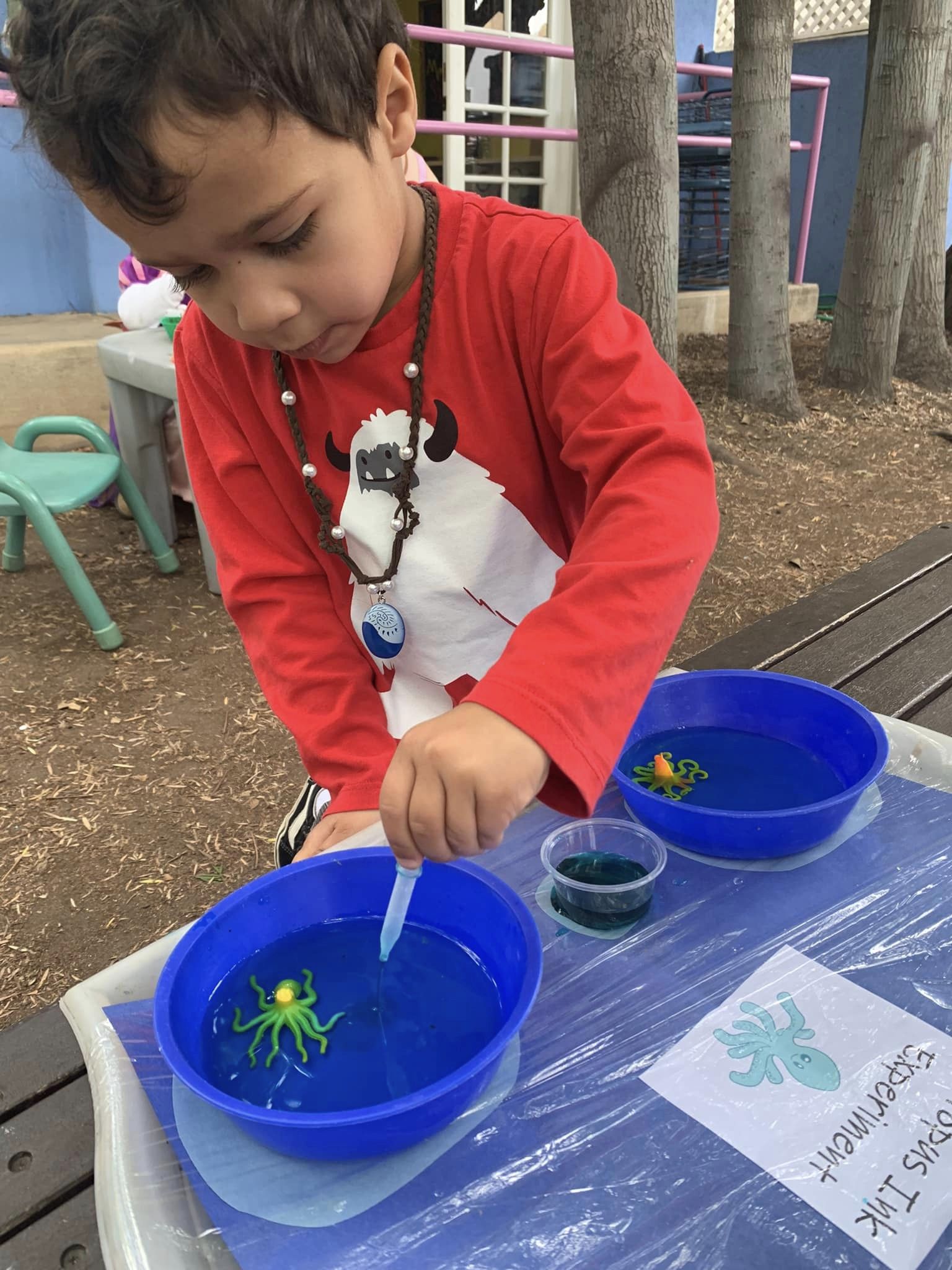
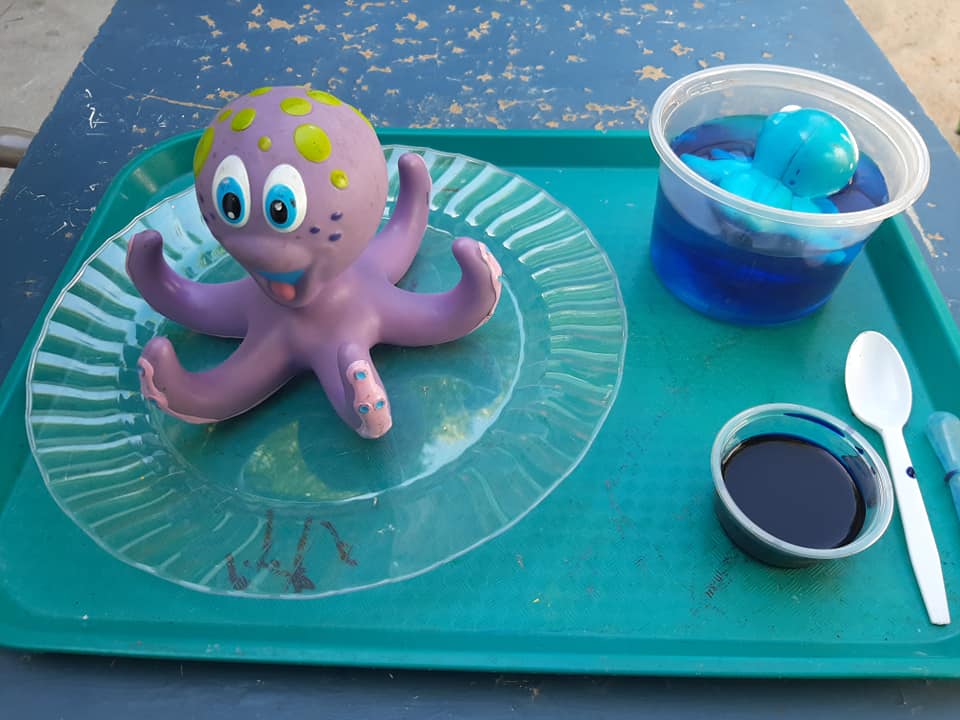
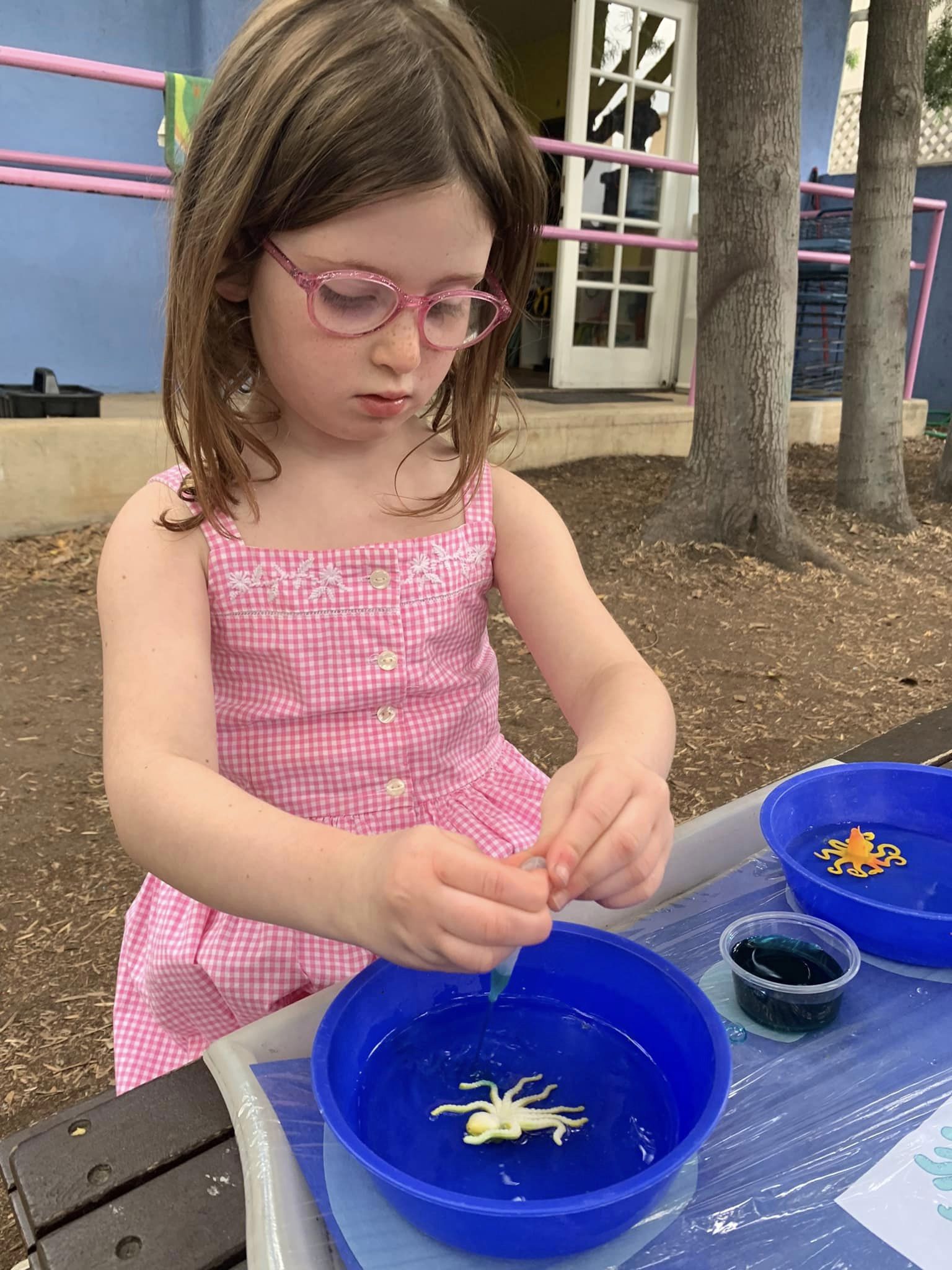
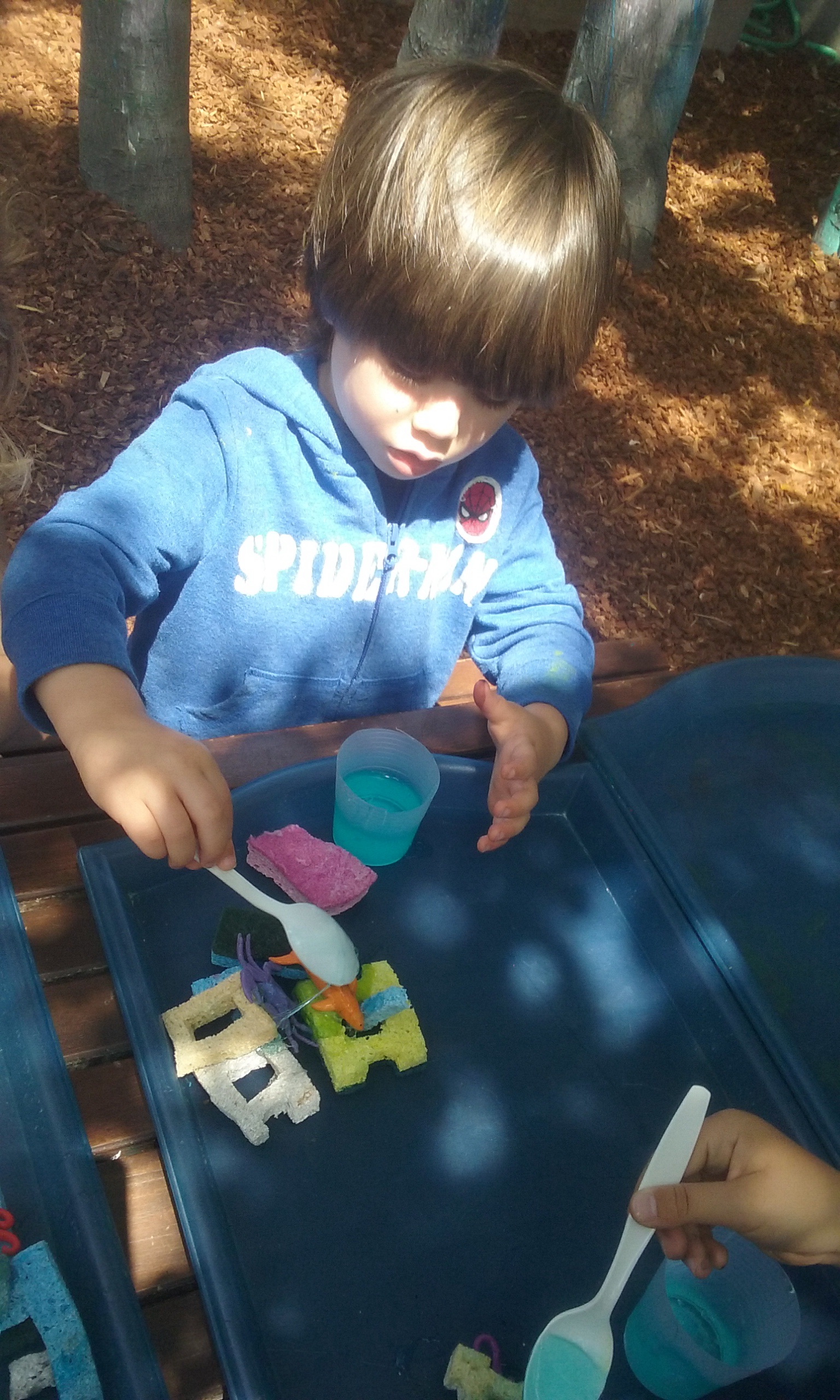
To recreate this scenario in the classroom, we used food coloring, eye droppers, water, and a plastic octopus to examine the effectiveness of this primitive defense.

This activity helped your little one formulate their own predictions about what might happen when ink is added to the water, and then compare and contrast their results as they completed the experiment.


Scuba Diving
This activity provided several opportunities for increasing our vocabulary!


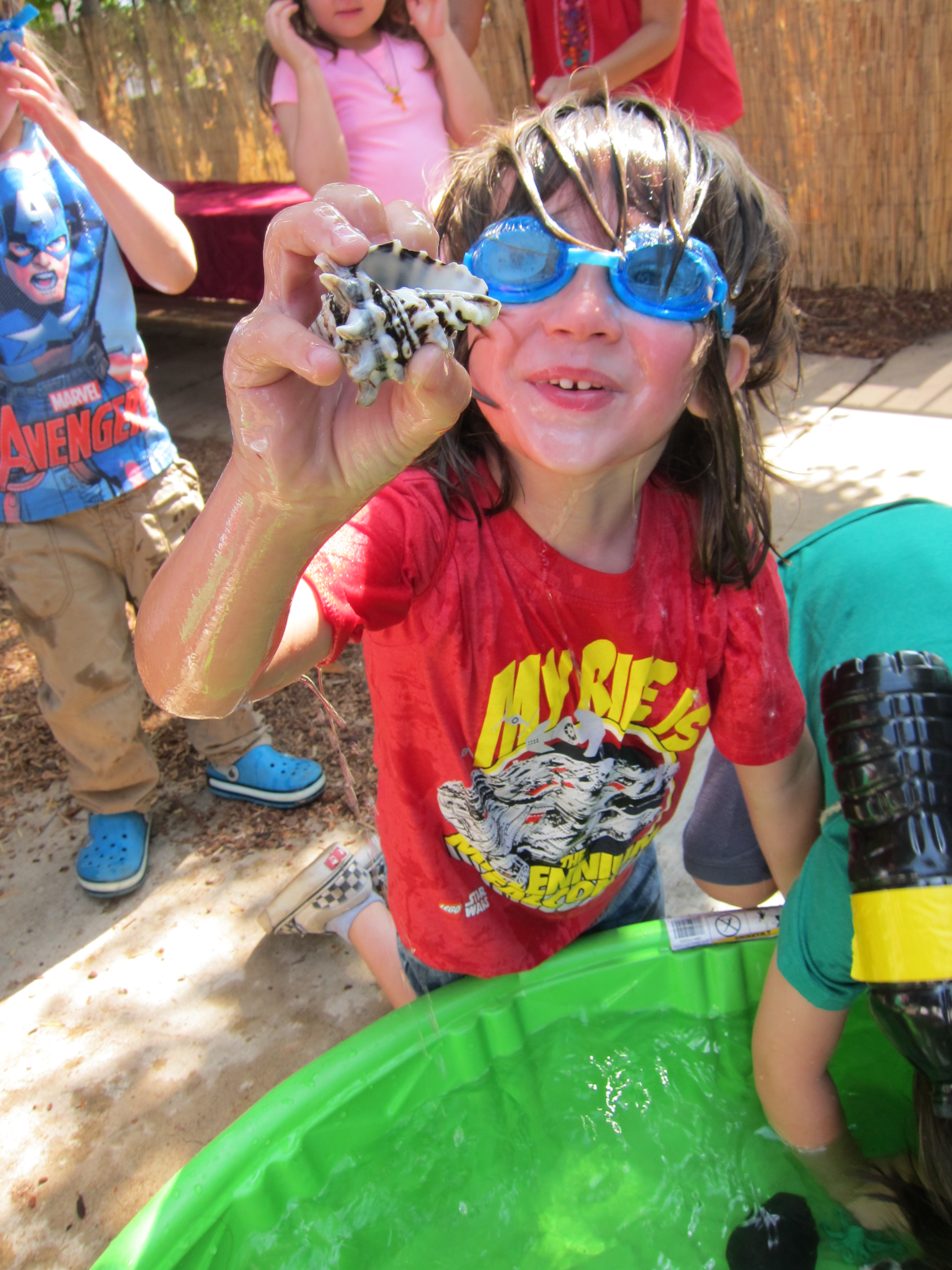
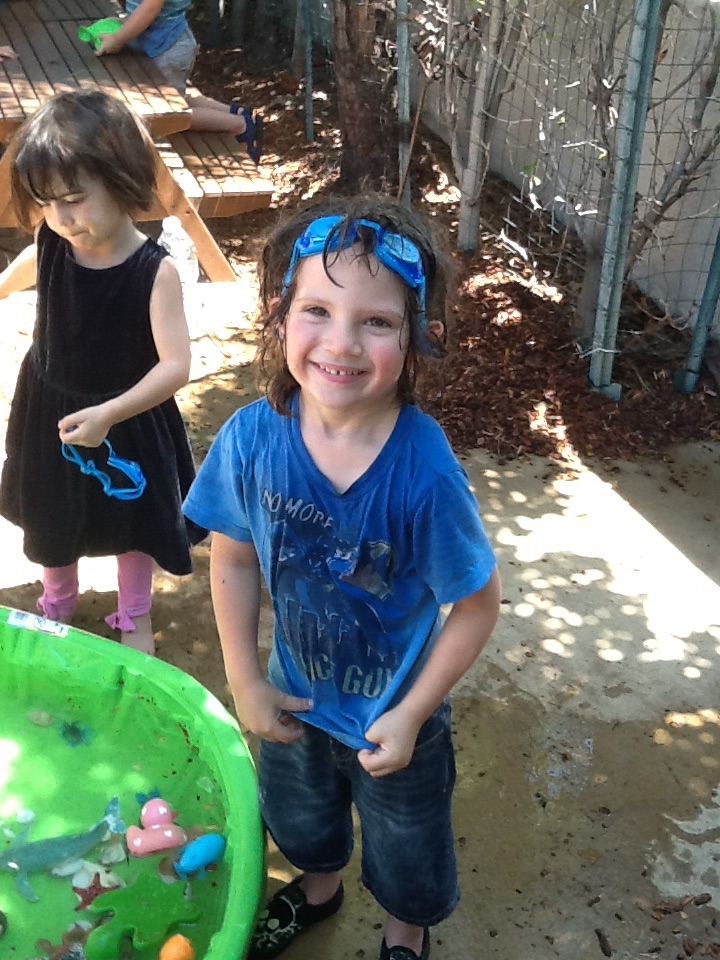
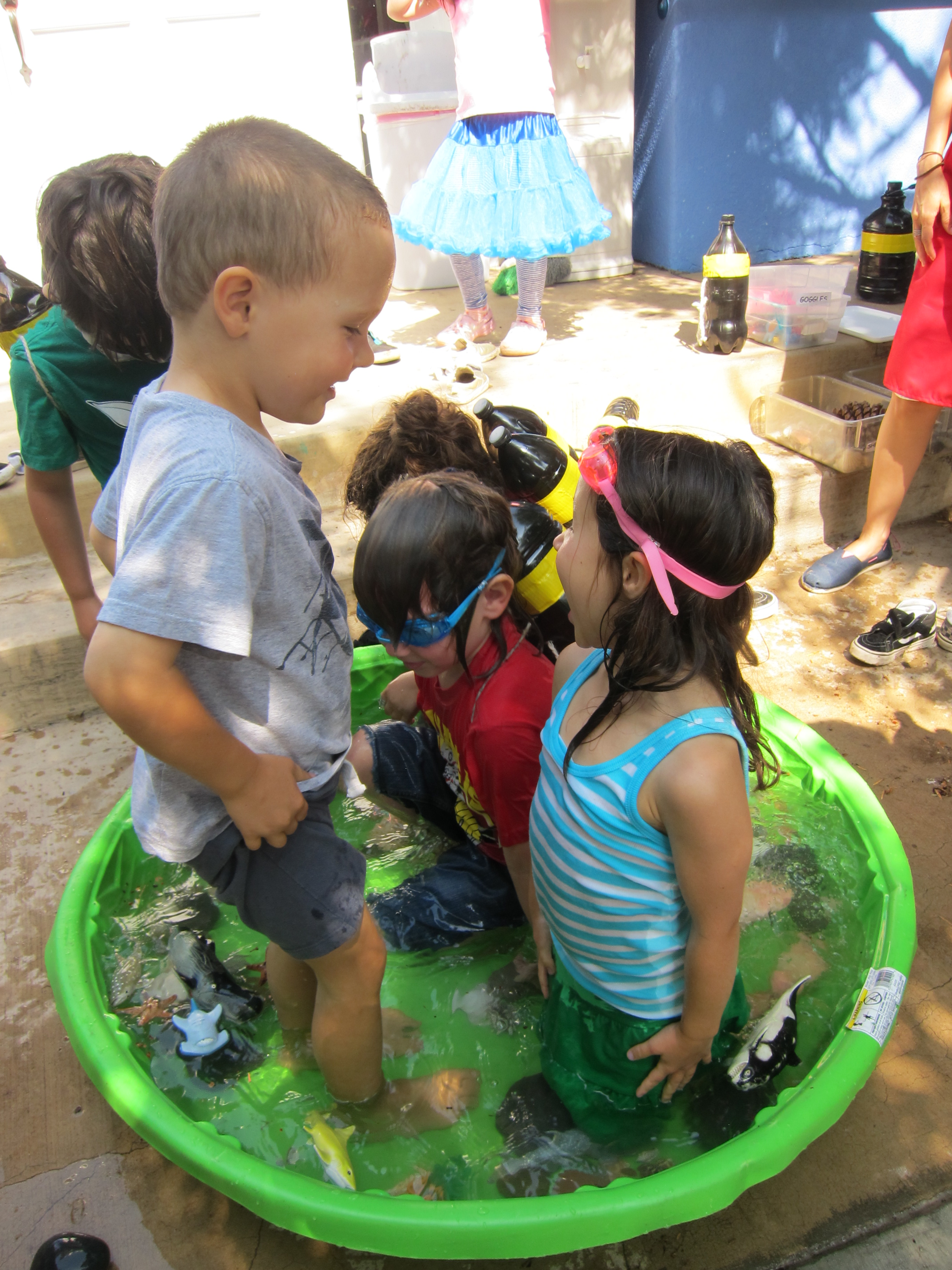
We not only learned about what pressure and compressed gas are, but applied our understanding of these words by “swimming” beneath the ocean waves.
Scuba diving is not only a fun recreational sport, but a science that integrates physics, chemistry, physiology, and oceanography.
As they placed their heads below the water’s surface, your budding divers learned about differences in air density.
As they examined an array of creatures in their inspection jars, they applied their knowledge of measurement and observation.

Lastly, as we explored the differences in the habitats our ocean friends enjoy, we learned that all creatures live and feed at different depths, so creating an ocean floor of many levels aided our understanding of this multi-dimensional concept.
Coral Reefs
Teaching young children about the importance of the coral reef in our planet’s ecosystem is an important first step to developing environmental consciousness. By providing your little one with the opportunity to construct their own coral reefs, they are learning about how these living structures function and thrive.

As your child creates their individual reef, they are formulating combinations of how shapes fit together. Open-ended play such as this also prompts them to group like objects together, an important precursor to more complicated mathematical concepts.

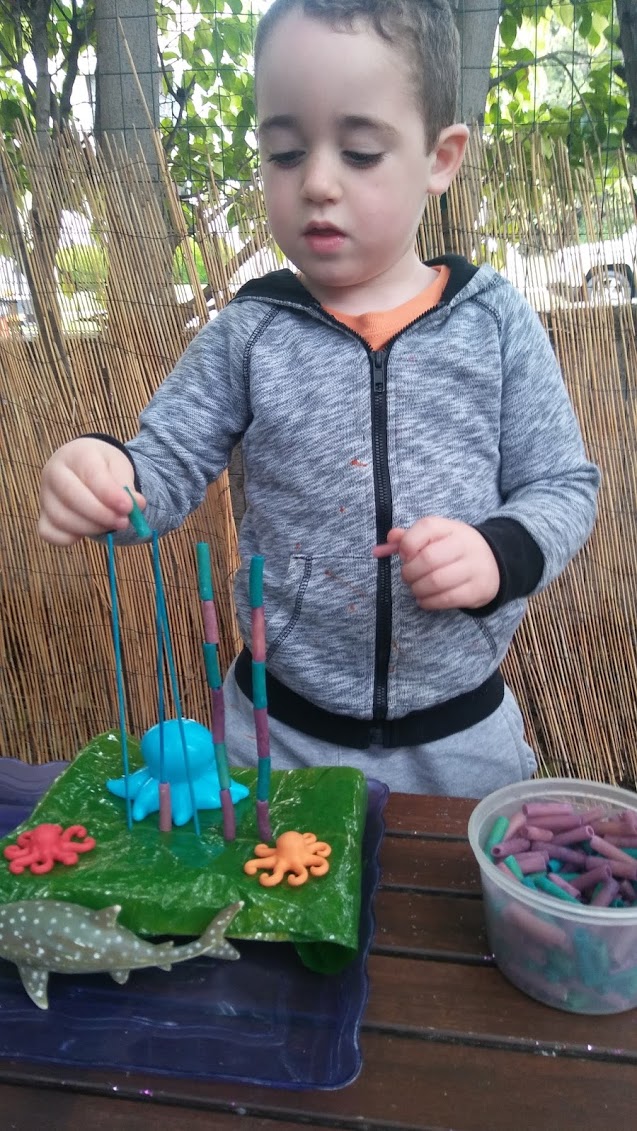
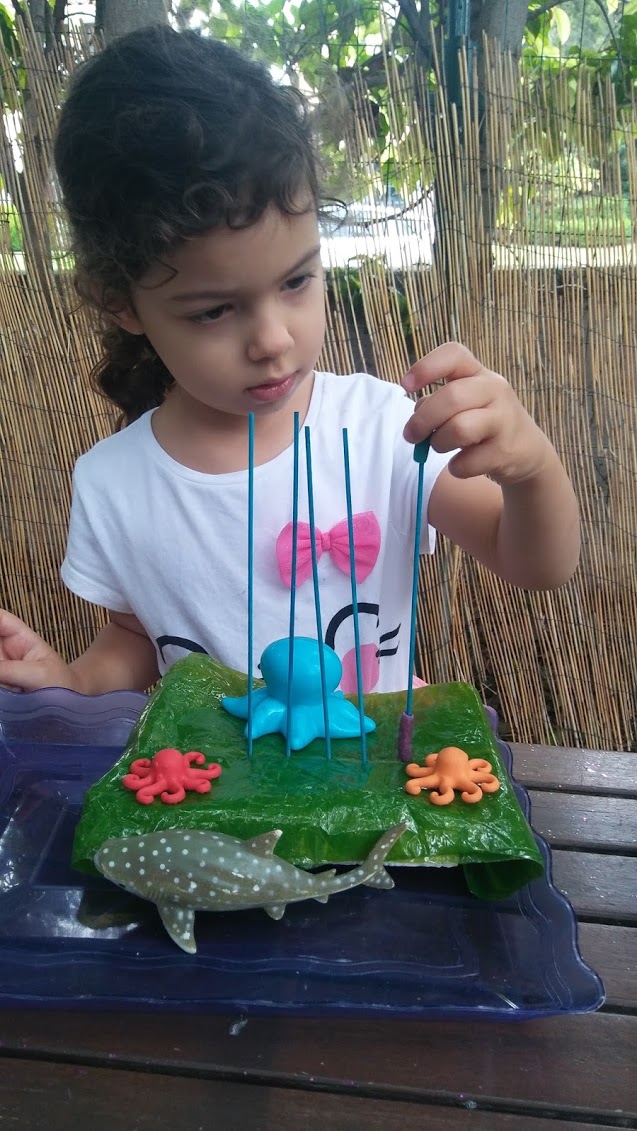
For this activity, students created their own coral reefs out of skewers, colored pasta, and flower foam. They practiced sliding the pasta onto the skewers, until their reefs contained many different colors. They finished with adding their sea creatures and participating in open-ended play with their friends.

Tide Pools
Young children do not think in two dimensions. If they are presented with a picture, they are often unable to truly grasp its meaning, because they are not yet capable of symbolic thought. It is therefore imperative that they are given every opportunity to participate in their learning on three dimensions. It is with this introduction that I present the tide pool project. Everyone worked every hard to carry out our vision, and collaborated to create a suitable home for our favorite tide pool dwellers. As they collaborated with one another, they improved their social skills and ability to resolve conflict, as they worked toward a common goal.
Painting with Fishing Poles
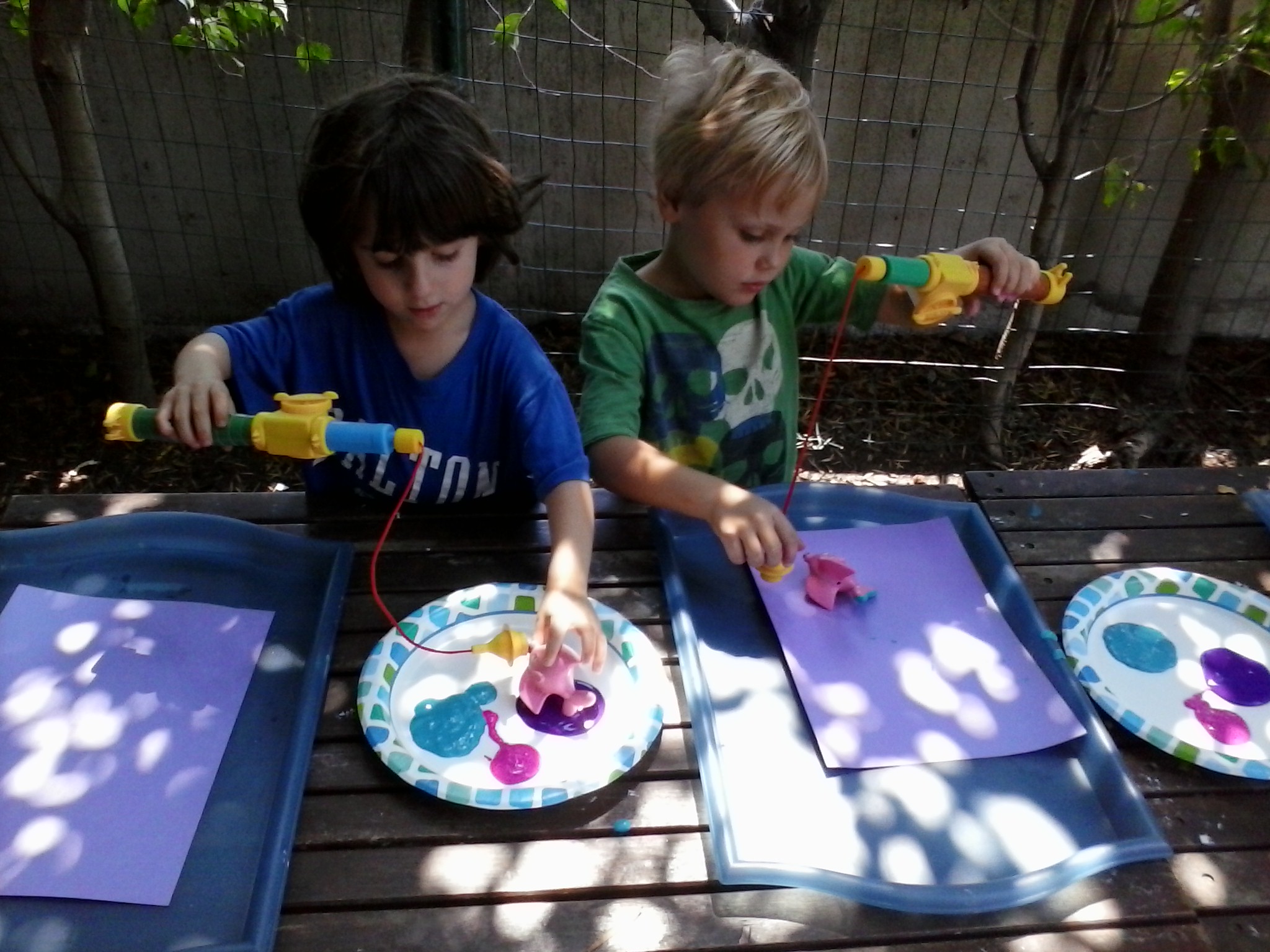
The sculpin is a fish that dwells in the tide pools. To initiate this activity, we created our own versions of a sculpin with styrofoam and papier-mâché. We then used fishing poles, plastic fish as our sculpin, and paint to make a creature! This activity required much concentration as your little one considered weight, aim, and the direction of their fish as a means to create their masterpiece. Though this experience may seem more recreational than educational, activities such as these build hand eye coordination, an integral factor in eye tracking, and eventually, reading.
Sea Urchin Math
We are always striving to improve our counting and math skills! Using colored pasta, toothpicks, and Playdoh, we created our very own sea urchins.

We began the lesson with a revisit to the number six. We then practiced tracing the number six with our fingers. Following that, we wrote the number eight. Lastly, we counted as we placed each piece of pasta onto each spiny plate.

Experiences that allow the application of mathematical principles are an integral factor in the development of mathematical concepts.

This activity also fostered their sequencing skills, as many of our budding mathematicians found more pleasure in arranging their pasta pieces by color.