Egg-spressions

Plastic eggs serve many purposes. They can be sought out, filled with goodies, and in our case, used as a teaching medium!

egg

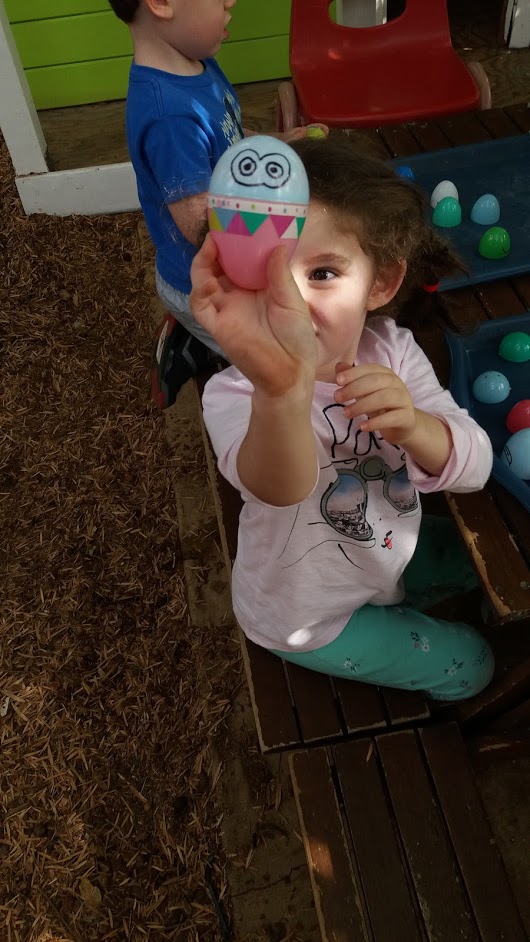
During the course of our Feelings Week, we talked about emotions, and the muscles we use in our faces to create them. We learned that one can express happiness not only with their mouths but with their eyes! To help reinforce this concept, we created a variety of emotion-faces with plastic eggs. Because plastic eggs consist of two components, the top half was affixed with eyes and a nose, while the bottom half contained a mouth. With a simple twist, your little ones created a great number of silly and not so silly expressions!
egg1

Letters On A Line

Fine motor activities are the most difficult for young children to practice on a consistent basis. Because they are mobile and constantly on the move, they tend to prefer gross motor activities such as jumping, running, pulling, and pushing.

clothespin

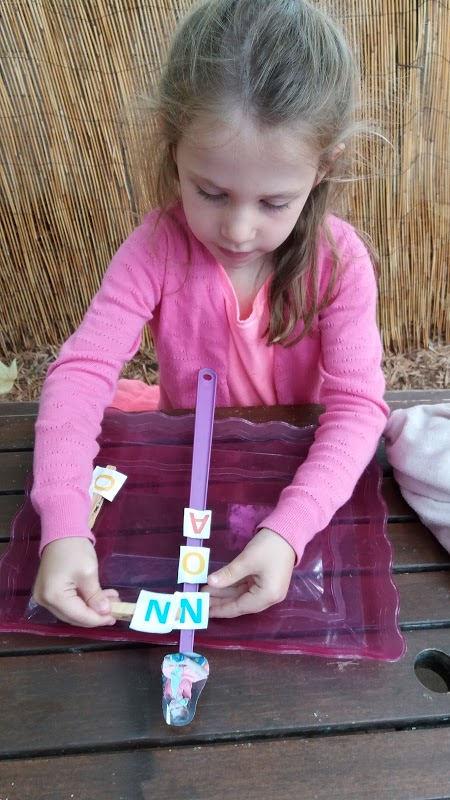
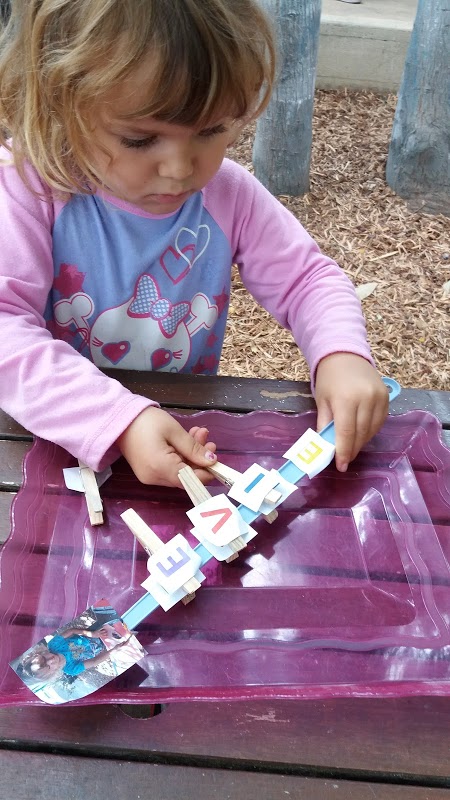
To continue to hone these necessary skills, your little one participated in a special activity designed to build and refine the small muscles in their hands. Experiences such as these aid your little one’s ability to grasp a writing instrument, manipulate tiny objects, and handle scissors.

clothespin1

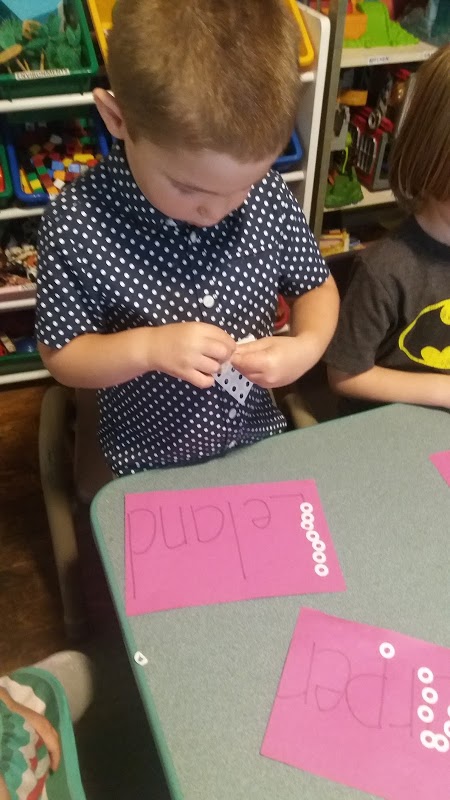
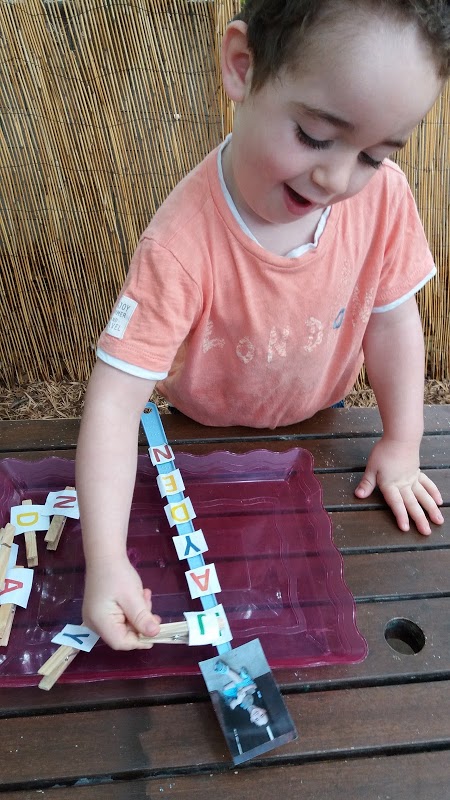
For this activity, your little one was directed to grab the letters of their name with a clothespin. Their task was to maintain a firm grip on the clothespin as they placed it into a matching letter.

clothespin2

All letters were vertical, so they worked from top to bottom, enjoying themselves in the process!

clothespin3

Magnetic Names

During our week of name-based activities, we used a variety of mediums to compose our names.  To help your little one identify the letters in their names in a new way, a sensory component was added to our curriculum for the week.

magnet

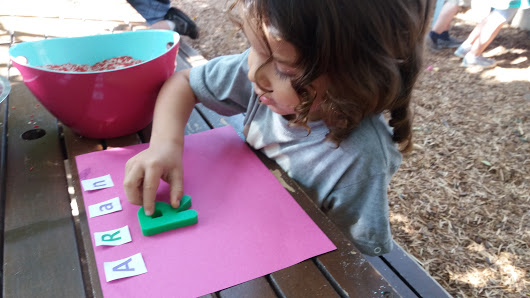
Using rice, magnetic letters, and paper letters, your little one spelled their name, yet again! With their thinking minds, they dug around in a bowl of rice, searching for magnetic letters, and matching them to paper ones. After finishing this task, they were asked to both name and enunciate the letters in their names, laughing as they did so!

magnet1

Rainbow Tracing

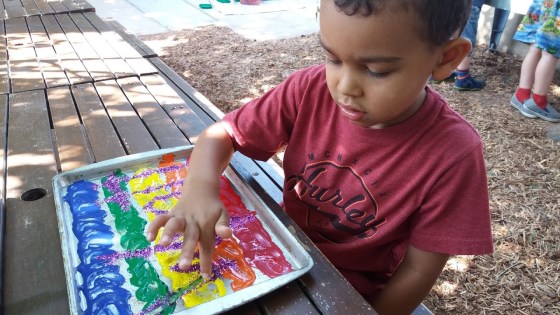
The tactile experience (touching a letter with your finger) is important for building a memory trace. This enables students to acquaint the name of each letter with a visual representation for the letter sound.

rainbow

For a child who is struggling with their letters, the sooner they can integrate the sound of the letter with what it looks like, the sooner their writing contains more meaning for them. For this activity, we talked about the letters in our names.

rainbow1

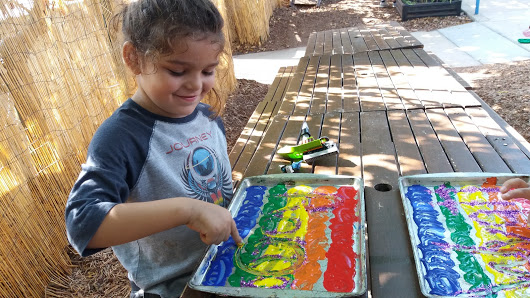
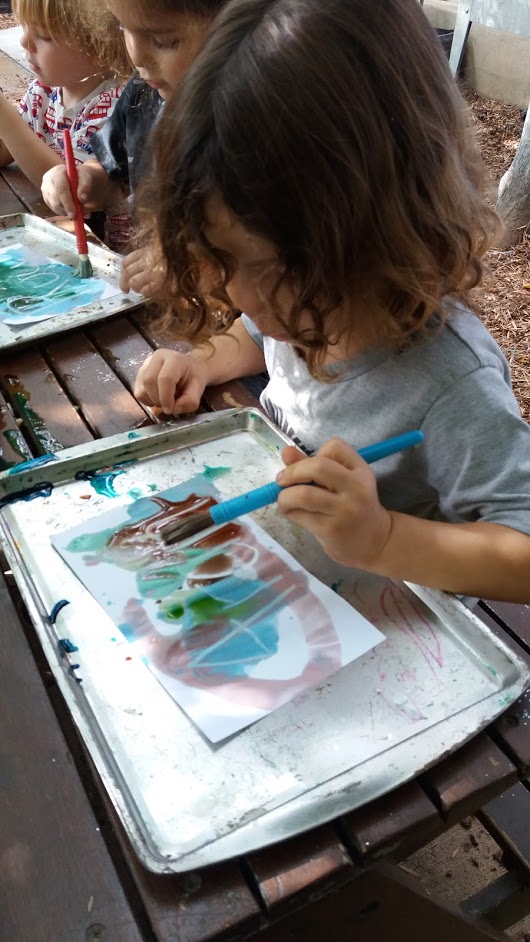
We discussed words that begin with the first letter;  and then broke up additional letters into their component parts. Using our fingers, we moved to our writing trays, where we traced (with some help from Miss Carrie) the letters in our name, using rainbow paint and glitter.

rainbow2

I Like Me Story Board

Circle time is an important daily activity in the preschool classroom. There are so many things that happen during circle time. Children listen to a story, learn who is present and absent, discuss the daily schedule, talk about special happenings in their lives, find out about new materials in the classroom, and perhaps, sing a song or do a movement activity.

ilikeme

In our daily circle times, we are constantly learning together! This special time helps establish a sense of community among members of our class, and enables us to officially start the day!

ilikeme1

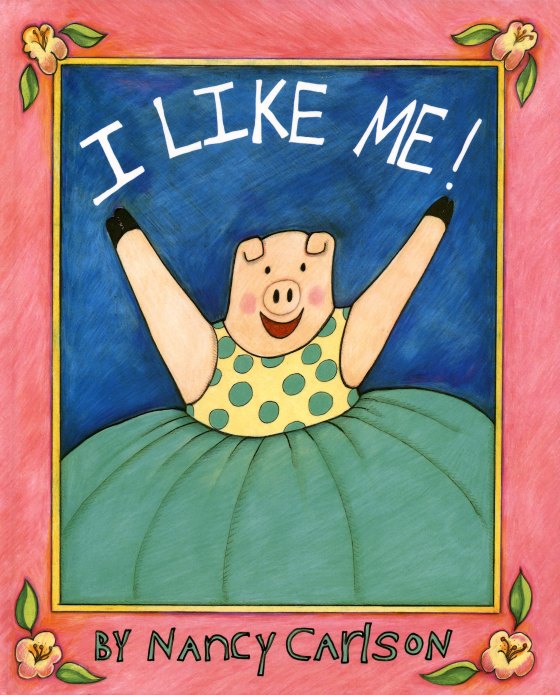
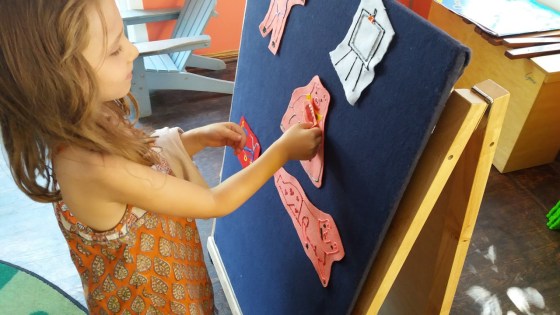
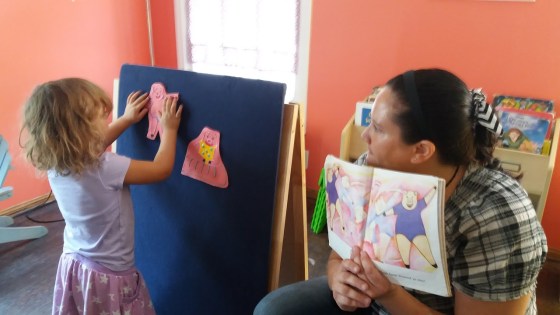
For this activity, we used a story board to tell the story of I Like Me. Before we started, each child was given a piece of the story made of felt.

ilikeme2

As the story was read, students would bring their part of the story up to the board. This enabled each child to identify different sections, relate to plot details, and become a part of the story!

ilikeme3


School Bus Names

One of the first things children learn to write is their name.

bus

It’s the easiest for them to learn and you’ll find they want to learn because it’s the one word they hear most often.

bus3

It is a word all their own because it represents their identity. During the course of our Name Week, we wrote our name in several different ways.

bus1

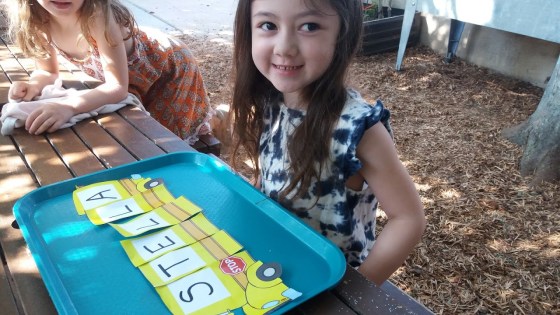
For this activity, we wrote our names using school buses! Using pre-cut puzzle pieces, students placed name letters in order, spelling their names in the process!

bus2

Name Books

This week, we focused on the many ways we write our name! Using paint brushes, markers, and other writing implements, your little ones identified the correct way to spell their name! All of their work was compiled into name books.

namebook

In our classroom, we are constantly documenting things: what we do, how we learn, and the processes that define our week. Documentation does just that, and is important for several reasons. For one, an effective piece of documentation tells the story and the purpose of an event, experience or development.

namebook1

It is a product that draws others into the experience – evidence or artifacts that describe a situation, tell a story, and help the viewer to understand the purpose of the action. Secondly, documentation displays a child’s progress throughout the course of their academic careers. Lastly, documentation extends the learning process beyond the classroom to the home.

namebook2

When a child brings their work home, they are able to discuss it with parents and siblings. When two or more people discuss an event, each brings a new perspective and level of depth. This is so important for the preschool experience!

namebook4

Carnivore Toss

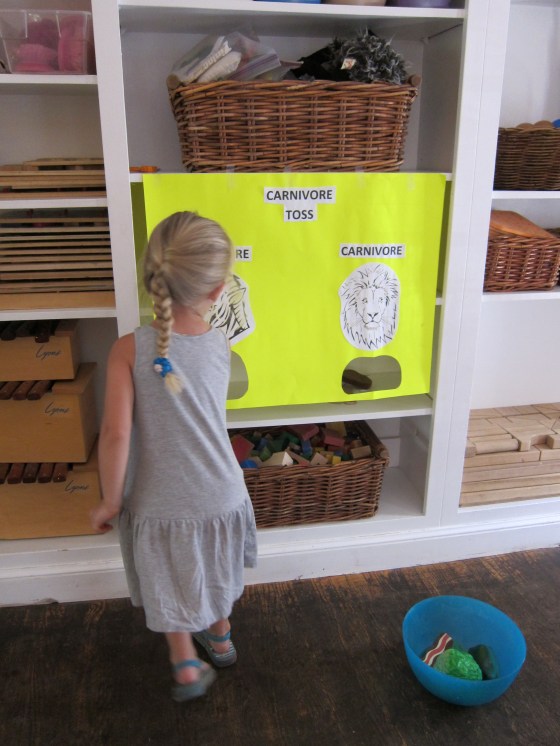
Throughout the week of our lion-themed activities, we talked about what herbivores and carnivore were. We talked about what they were, the different kinds of teeth and anatomy required for each particular diet and coupled that with new vocabulary (lions, zebras, herbivore, carnivore).
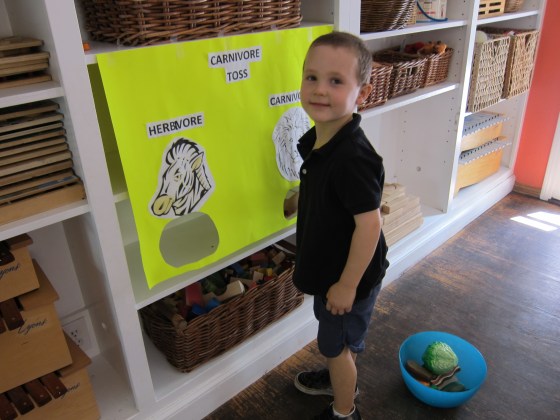
IMG_3200Using play food, we tossed them into a poster board, onto which a picture of a zebra and student were affixed. Each student cheered on their friends, and everyone was given a chance to participate. This activity helped us integrate our discussion of the lion diet, names of other carnivores and extended previously relayed information by discussing anatomy and eating characteristics.
IMG_3203
IMG_3204

Group Savannah

Cooperative building activities provide one of the most valuable learning experiences available for young children.

IMG_3216

Play such as this stimulates learning in all domains of development, including intellectual, physical, and social-emotional and language.

IMG_3227

In fact, current research shows that this type of instruction is fundamental for later cognitive success in mathematical and critical reasoning skills.

IMG_3229

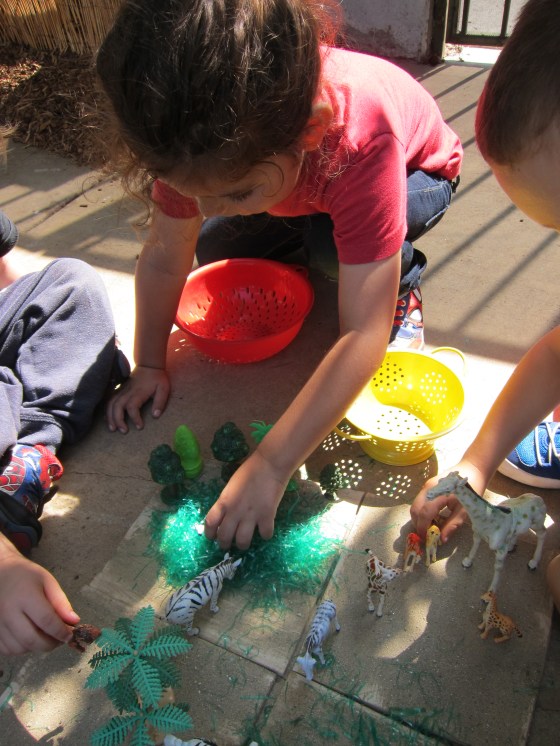
For this activity, we constructed a savannah out of wood planks, toy animals, and plastic grass.

IMG_3233

Students worked together in small groups, constructing elaborate animal scenes that they played with alongside their friends!

IMG_3241

Pride Rock

When young children are given clay, they are instinctively motivated to explore its responsive sensory qualities. As they poke it, squeeze it, and pound it, the clay responds. For a preschooler, this empowers them to continue experimenting!

20180822_102454_hdr

As they experiment, they recognize that their actions have consequences. Their curiosity continues to empower their learning experience, as they construct and reconstruct a variety of shapes and forms. Before we began this activity, we discussed the story of the Lion King and the Lion Guard.

20180822_102601_hdr

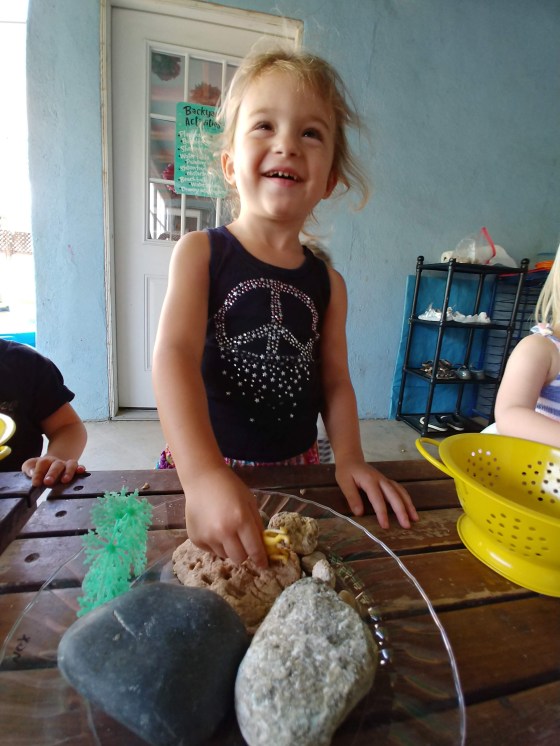
With pictures and two short stories, your little one was introduced (or perhaps reintroduced) to the regal home of Simba and Mufasa, called Pride Rock. They were then encouraged to use clay and rocks to create their own version of Pride Rock! By doing this, they applied their understanding of a concept, and continued to develop their hand eye coordination and the small muscles in their hands.

IMG_3196