Guacamole

Cooking is not only a fun, engaging activity for children, but one that can be used to teach a variety of life skills. The first of these are the fine motor skills associated with working with food. Chopping, squeezing, spreading, and mixing are all fine motor skills that help develop a child’s small muscle control and eye-hand coordination.

guac

The next of these involve cognitive skills. Cooking inspires children’s curiosity, thinking, and problem solving, offering new opportunities to make predictions and observations.  Additionally, cooking offers authentic opportunities for students to understand and apply their knowledge of measuring, one-to-one correspondence, numbers, and counting.

guac1

As they follow a recipe, children organize ingredients, follow a sequence, and carry out multiple directions. Lastly, are the language skills one acquires through the act of food preparation. With its own vocabulary, cooking is a great opportunity for language development. In our classroom we take advantage of opportunities for children to match pictures to words and articulate questions inspired by their new experiences.

guac2

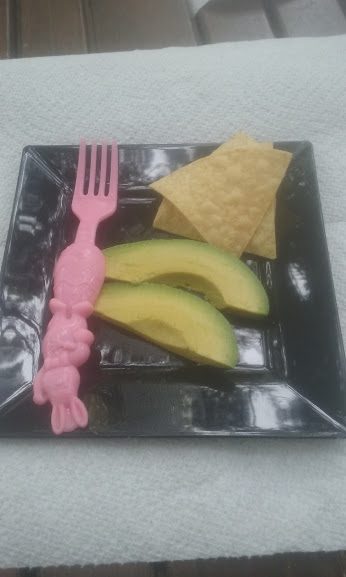
For this activity in particular, we created a very simple dish of guacamole. In every activity I do, I create numbered directions, so that students can figure out the process on their own. The key vocabulary words for this activity were “mash”, “guacamole”, and “spicy.”
Zapotec Ruins of Monte Albans

Your little one learned about the ancient city of Oaxaca with this fun activity. Perchep atop a hillside, the Zapotec Ruins of Monte Albans house a city of Meso-American pyramids. These flat-topped structures provided shelter for the ancient Aztec peoples of Mexico.

zap

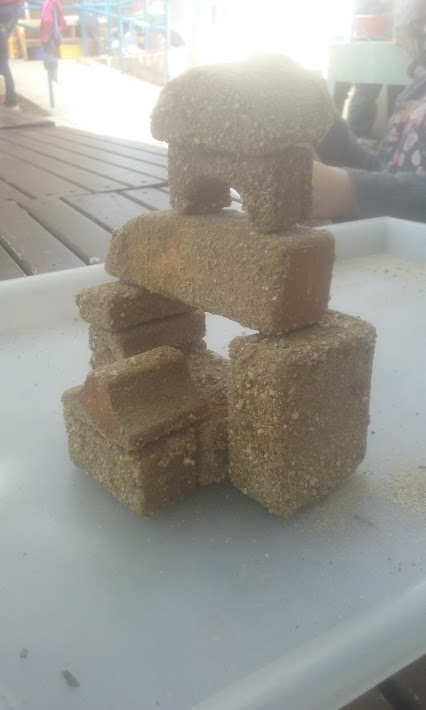
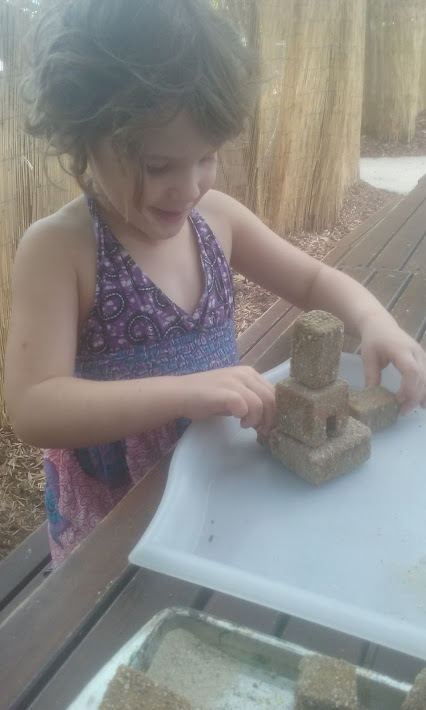
To help your little one connect to this fascinating culture, they created their own pyramids out of specially-made blocks. One of the characteristics that contributes significantly to your little ones’ cognitive development, is the ability to fabricate an image they can replicate through construction.

zap1

Nurturing this form of symbolic representation plays a major milestone in your budding builder’s development. Building, balancing, and ordering through play provides a foundation for more abstract mathematical reasoning.

zap3

The Rio Grande River of Foil

For this activity, we created the Rio Grande! To introduce this activity to your little one, we talked about what rivers are. Your little one learned that rivers provide excellent habitat and food for many of the earth’s organisms.
rio
They were also told that many plants and trees grow by rivers. To tie this in to our Mexico theme, we used tin foil, rocks, plastic trees, and animals to construct our very own rivers! To accomplish this, we laid out foil onto the slope in the front yard. We then folded the edges of the foil upwards.
rio1
Following this, students placed trees, bushes, and animals around the river. Lastly, each child was given an opportunity to “pour” water down the river, watching it slosh through the foil. This activity accessed a variety of scientific concepts, such as physics (flow and motion), biology (plant an animal life), and mathematics (measurement and volume).
rio2
 

The Chihuahuan Desert

Mexico’s fantastically varied climatic regions mean that as well as the flourishing forests and jungles of the south, one can also experience the enjoyment of magnificent mountains and deserts in Mexico.

chih

For this activity, we talked about the Chihuahuan Desert.

chih5

Stretching from the southwestern United States deep into the Central Mexican Highlands, this desert is one of the largest and most biologically diverse deserts in North America.

chih1

Pronghorn antelope, mule deer and grey fox roam the vast grasslands of the northern desert, while roadrunners, reptiles, jackrabbits and eagles live in the desert scrub.

chih6

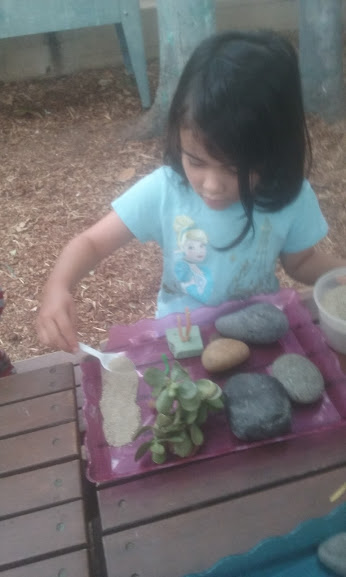
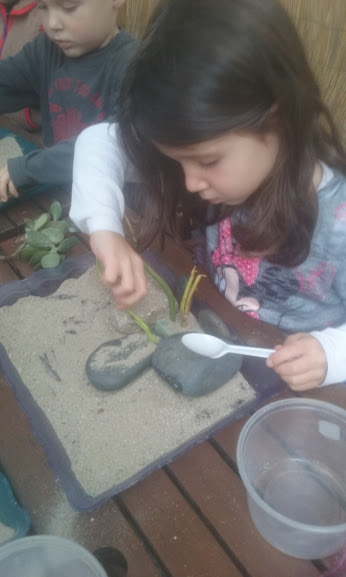
To introduce the concept of a desert to your little one, we talked about what makes up a desert.

chih2.jpg

We used different vocabulary, such as “dry” and “hot”. We then discussed the different animals and plants that live there.

chih3

Finally, we created habitats for a variety of desert creatures, using sand, rocks, cacti, and toy creatures.
chih4

Taco Party

Tacos are a traditional staple in the country of Mexico.
abc
They are among the most versatile food around, enjoyed in increasing popularity.
taco
Using pictures with numbered instructions, taco shells, shredded cheese, pinto beans and lettuce, your little one created their very own taco snack!
tacotaco
This activity incorporated several areas of development for your little one to enjoy.
taco2
The numbered instructions fostered pre-reading skills, as each child followed the pictures from left to right.
taco3
Manipulating the materials into the taco shells accessed self-help and fine motor skills, which are imperative for autonomy, confidence, and future writing endeavors.
taco4
Lastly, following the instructions in order allowed your little one to understand sequencing (the order in which things happen) and strengthened their counting skills!
taco5

Los Arcos Rock Formation

Materials have the potential to draw you in, make you want to stay a while, explore a little (or a lot), try new things, create and wonder. In our classroom, materials are carefully selected  for their potential to enhance learning and discovery.

arcos

Many of these materials come from natural sources such as pine cones, sand, rocks, etc. Children are experts at seeing the potential in these objects, and can use them to create glorious structures and pieces of art.

arcos1

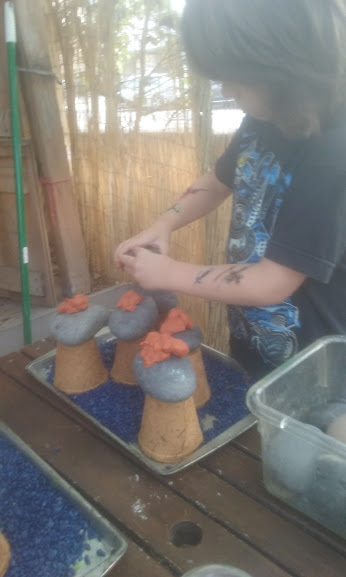
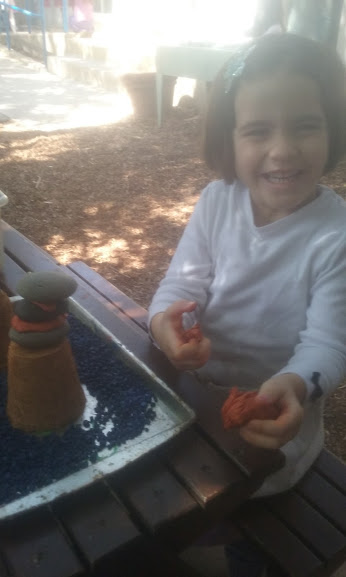
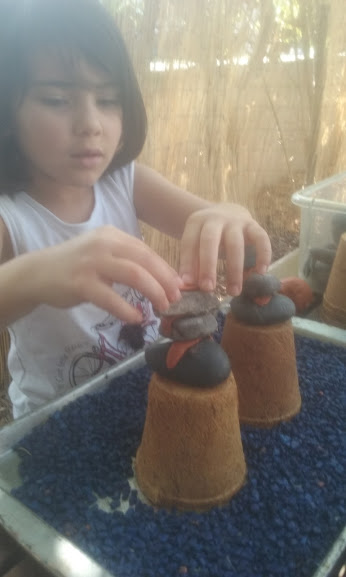
For this activity, we recreated the rock formation of Los Arcos, near Puerta Vallarta. This beautiful rock formation rises out of the ocean, and is the home of several birds.

arcos3

It has been designated a marine sanctuary by the government of Mexico, and is a source of local pride. Using clay, planting cups, and rocks, we constructed our own version of it!

arcos2

The Pyramid of the Sun

Deep within the jungles of Mexico and Guatemala and extending into the limestone shelf of the Yucatan peninsula lie the mysterious temples and Mayan pyramids.

CUPS3

One of these pyramids is The Pyramid of the Sun. The Pyramid of the Sun is the largest structure in Teotihuacan, and the second largest in Mesoamerica.

CUPS

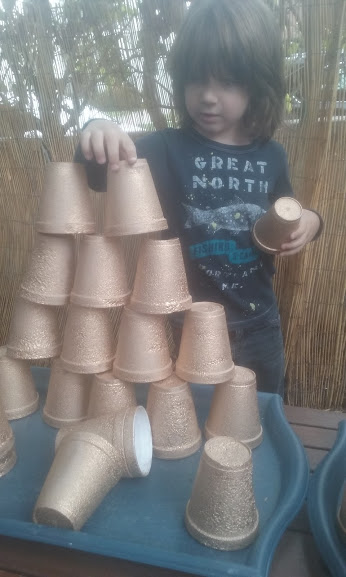
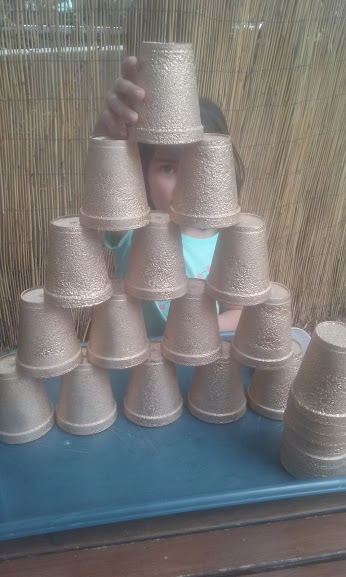
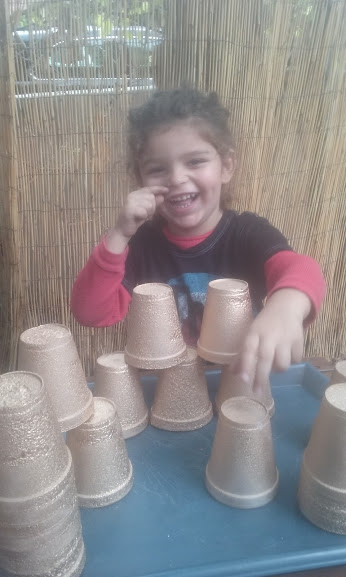
It is also the third largest pyramid in the world. The original purpose of the Pyramid of the Sun is unknown, though archaeologists believe it originally had an altar on top of the Pyramid. Therefore, it most likely was built to honor a deity. For this activity, we constructed our very own pyramids out of painted Styrofoam cups.

CUPS1

By giving your little one the opportunity to construct their own buildings, they are encouraged to practice their problem solving skills. Building activities also help your child to develop motor skills and hand-eye coordination, spatial skills, a capacity for creative, divergent thinking, and increased language.

CUPS2

Moreover, children can integrate their own constructions into pretend play scenarios. There is also evidence that complex construction play is linked with advanced math skills in later life.

CUPS4

Sorting Sombreros

When young children categorize items by number, they are beginning to perceive the relationships between them.

sortingsombreros5

As they evolve in their ability to recognize and count the written numeral, they start to understand how they work together.

sortingsombreros4

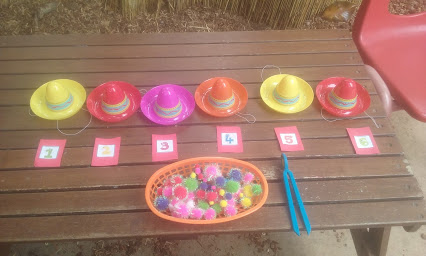
In this activity, your budding mathematician learned how to recognize and count pom poms within the scope of our Mexican theme.

sortingsombreros2

Using pom poms and sombreros, students placed these items into six different sombreros, counting and naming the numbers while doing so.

sortingsombreros

Collaborative Totem Poles

Cooperative building activities provide one of the most valuable learning experiences available for young children.

totem

Play such as this stimulates learning in all domains of development, including intellectual, physical, and social-emotional and language.

totem1

In fact, current research shows that this type of instruction is fundamental for later cognitive success in mathematical and critical reasoning skills.

totem2

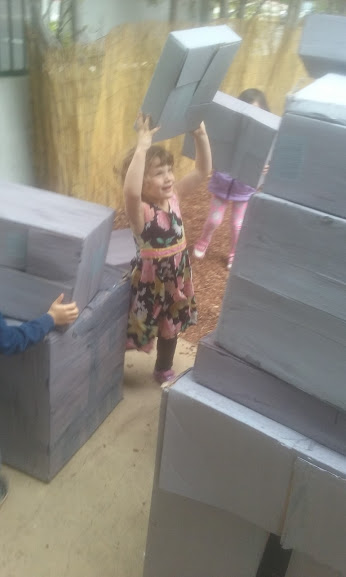
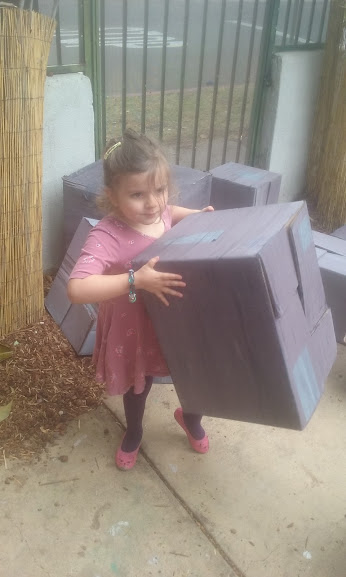
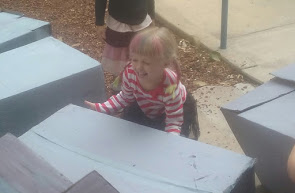
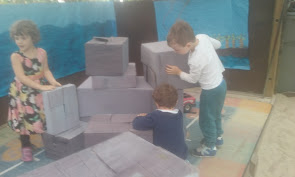
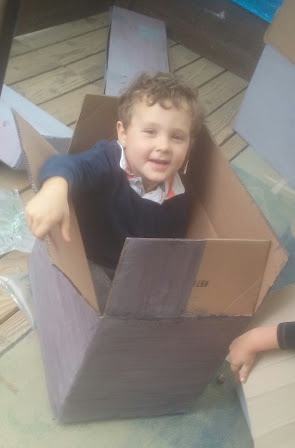
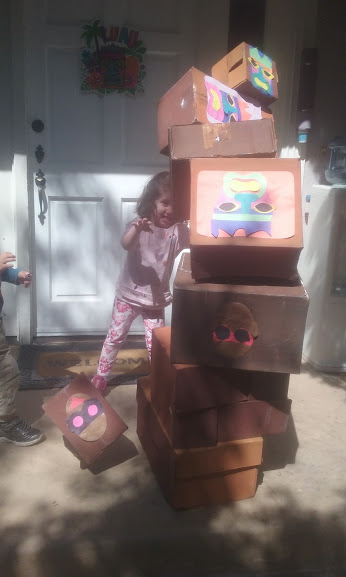
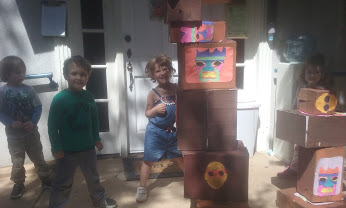
For this activity, we constructed totem poles out of boxes.

totem3

Students worked together in small groups, constructing elaborate totem poles that they enjoyed knocking down!

totem4

The Double-Hulled Canoe

Polynesia began with the voyaging canoe. More than three thousand years ago, the uninhabited islands of Samoa and Tonga were discovered by an ancient people called the Polynesians. With them were plants, animals, and a language with origins in Southeast Asia; and along the way they became a seafaring people.

canoe

Arriving in probably a few small groups, and living in isolation for centuries, they evolved distinctive physical and cultural traits. The islands of Samoa and Tonga became the cradle of Polynesia, and the center of what is now Western Polynesia.

canoe6

Following their discovery of the West, Polynesians began exploring eastward (during times when winds shifted away from the prevailing easterlies) and discovered the Tahitian and Marquesas Islands.

canoe1

From these centers of diffusion, explorers reached outward as far as Hawaii to the north, Easter Island to the east, and New Zealand to the southwest. The Polynesians’ primary voyaging craft was the double canoe made of two hulls connected by lashed crossbeams.

canoe4

The two hulls gave this craft stability and the capacity to carry heavy loads of migrating families and all their supplies and equipment, while a central platform laid over the crossbeams provided the needed working, living, and storage space.

canoe2

Sails made of matting drove this ancient forerunner of the modern catamaran swiftly through the seas, and long steering paddles enabled Polynesian mariners to keep it sailing on course. To help your little ones learn more about this, we created and played with our own double-hulled canoe!

canoe3

Your little ones enjoyed stacking their Polynesian people (in our case, superheros and princesses) onto the “canoes” to see how many they would hold. After their vessels sunk, they would laugh and do it all over again!