Pumpkin Carving

Young children benefit most when they have experiences with objects they can manipulate.
pumpkincarve2
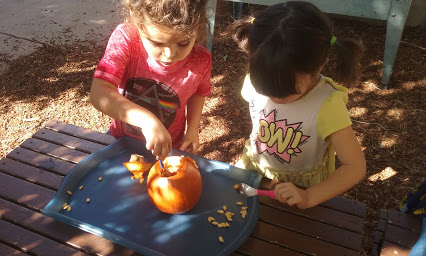
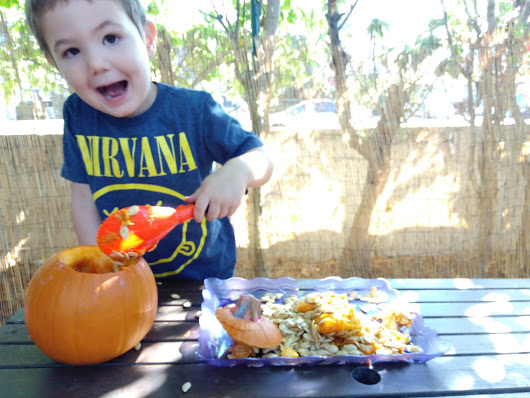
By carving pumpkins, your little ones learn about handling utensils, and the physical properties of a pumpkin!
pumpkincarve1
Each child was given their own small pumpkin, and with a spoon, scooped out the insides!
pumpkincarve3
This activity was significant because it fostered goal-oriented behavior, and encouraged creative reasoning, as the seeds were, at times, tricky to scoop out, and your little ones had to figure out how to do it!

Melodic Bean Bag Toss

Running, jumping, throwing, climbing, and running – and all kinds of active play – are very important for young children’s development. Young children are not only strengthening their muscles and improving their coordination when they engage in physical play; every game and physical activity is a chance to learn concepts and to practice getting along with others. To incorporate these skills into our curriculum, we looked at it’s connection to music.

20141009_110234Music involves both the large and small muscles of the body. Music also includes a cognitive component that is significant to your child’s growing critical thinking skills. Incorporating and facilitating musical development through planned opportunities for play enables your little one to integrate these gross motor skills with their budding sense of melodic awareness (the cognitive component).

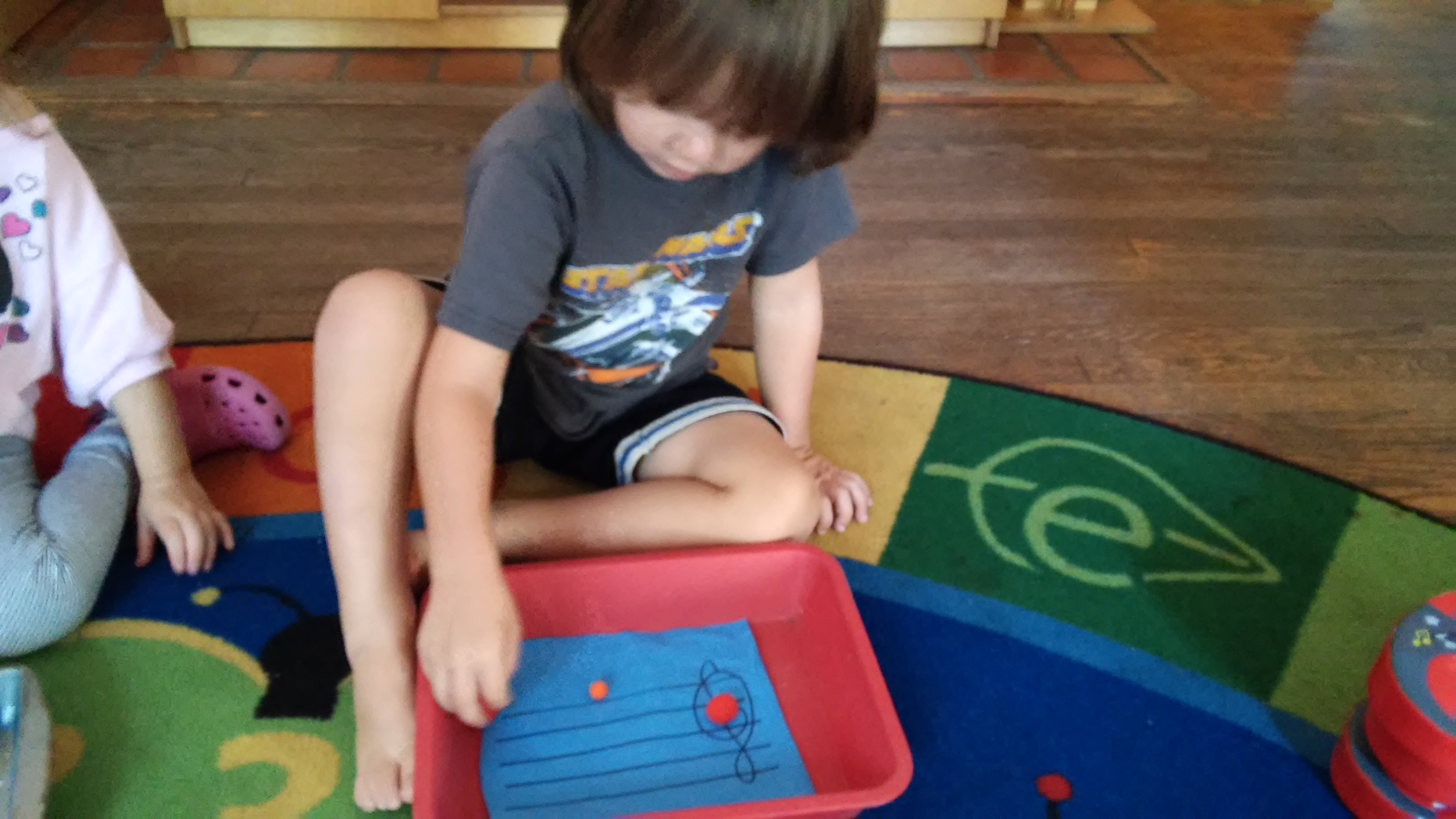
20141009_110148For this activity, one child would play one of three notes (C, D or E), while a second child would listen. Once they heard that tone, they discriminated between the three different notes. After their selection was chosen, they tossed a bean bag onto a musical staff with pre-drawn notes in red, orange, and yellow.

20141009_105854

As a result of this activity, students were able to collaborate and work on positive social skills. Through listening, they were able to access their ability to process linguistic cues and body language, as they experienced the benefits of working together toward a common goal.

Keyboards in “Kolor”

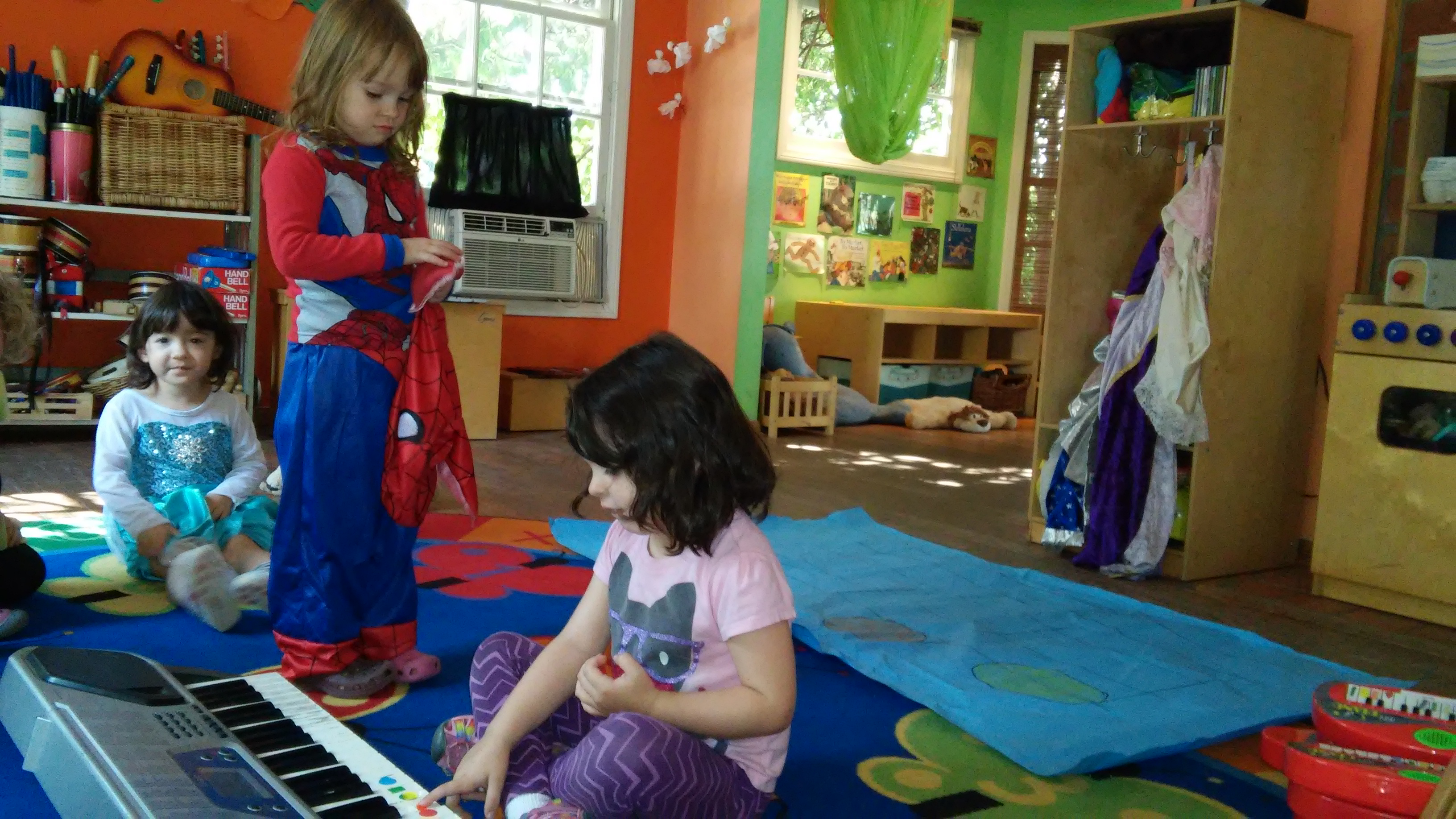
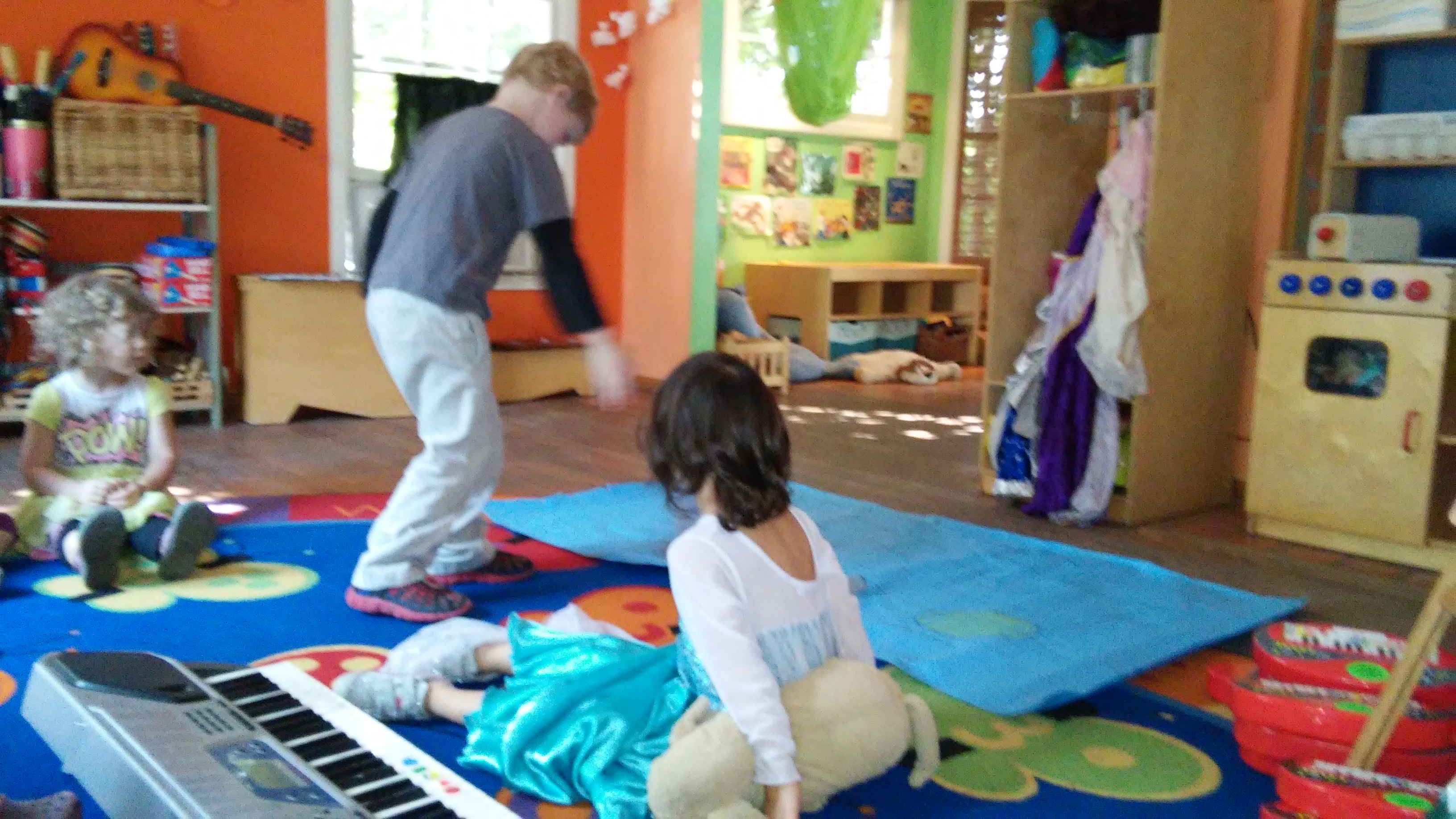
Instrumental music helps build important cognitive and motor skills which are just starting to develop in the young child. For example, left and right are concepts that are essential in life as well as the piano, and the keyboard is a fun way to demonstrate ideas like these (plus an endless array of other developmental tasks). Our piano classes are so fun, your little ones don’t even realize that they are learning!

20141007_103747

During circle time, we incorporate a color-coded teaching method that uses color-coded notes on a traditional music staff to teach beginning piano to our students!

20141007_103751

A color strip sits on the keys and guides the child to the correct key for each note.

20141007_103808 (1)

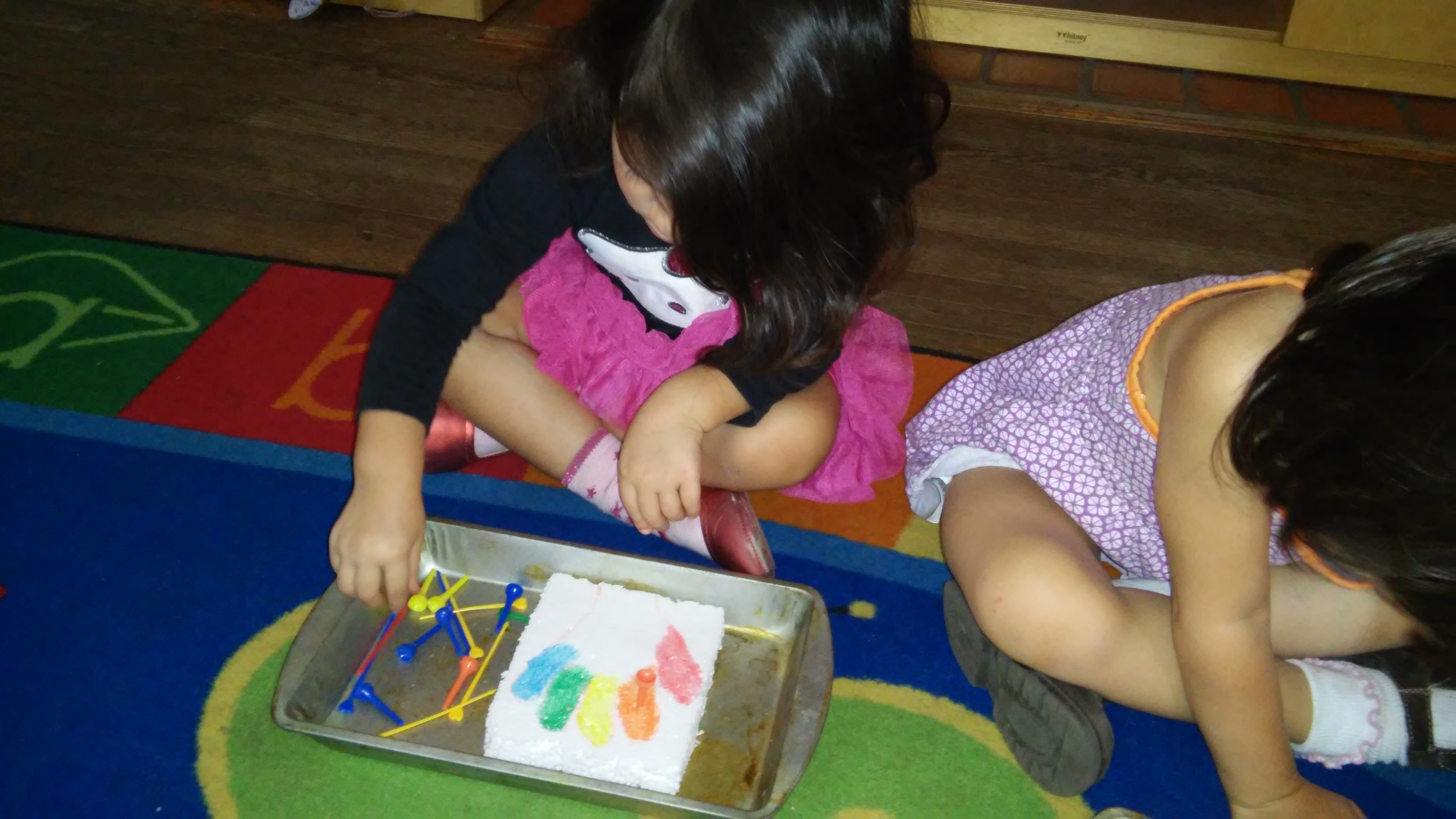
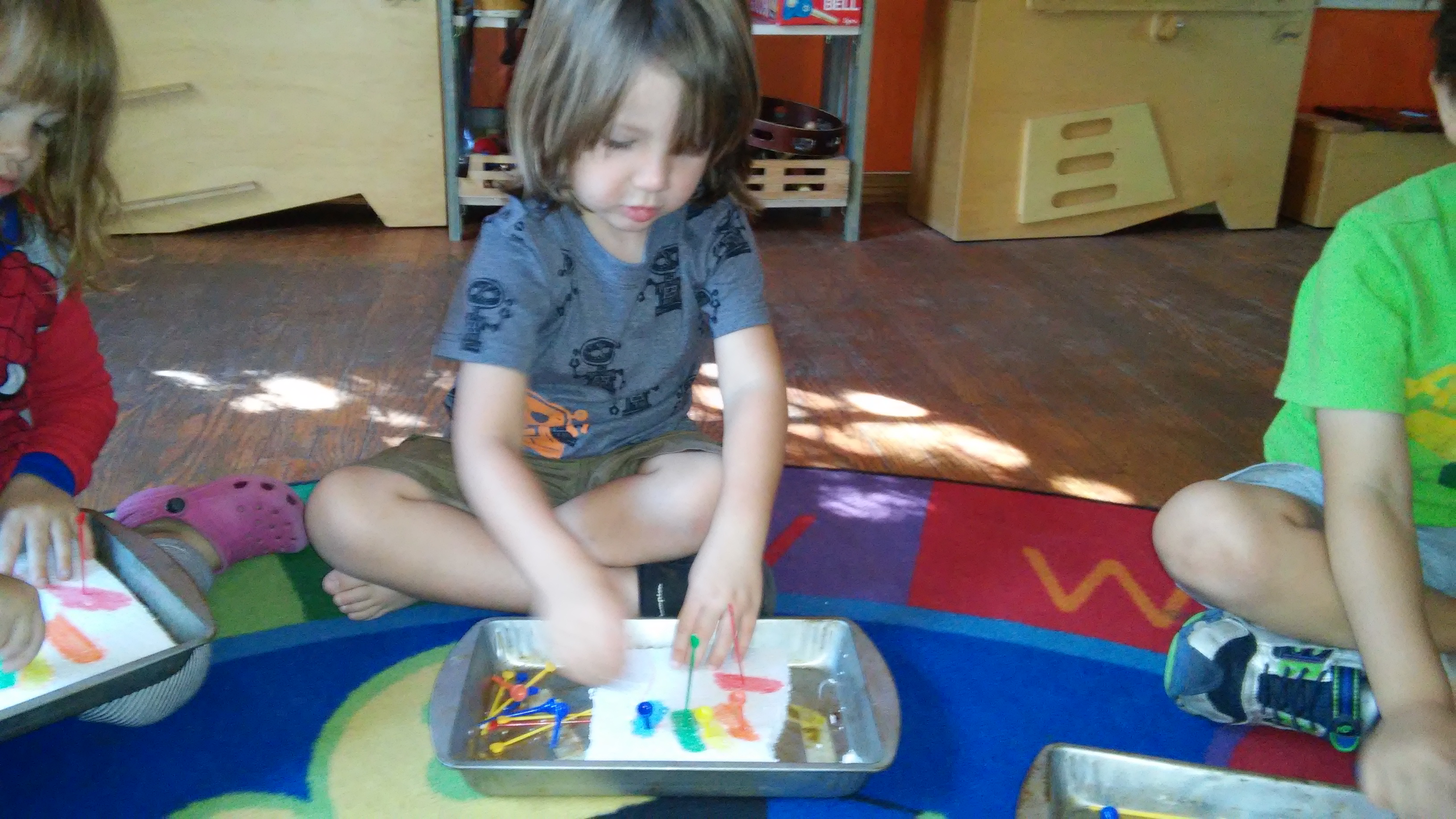
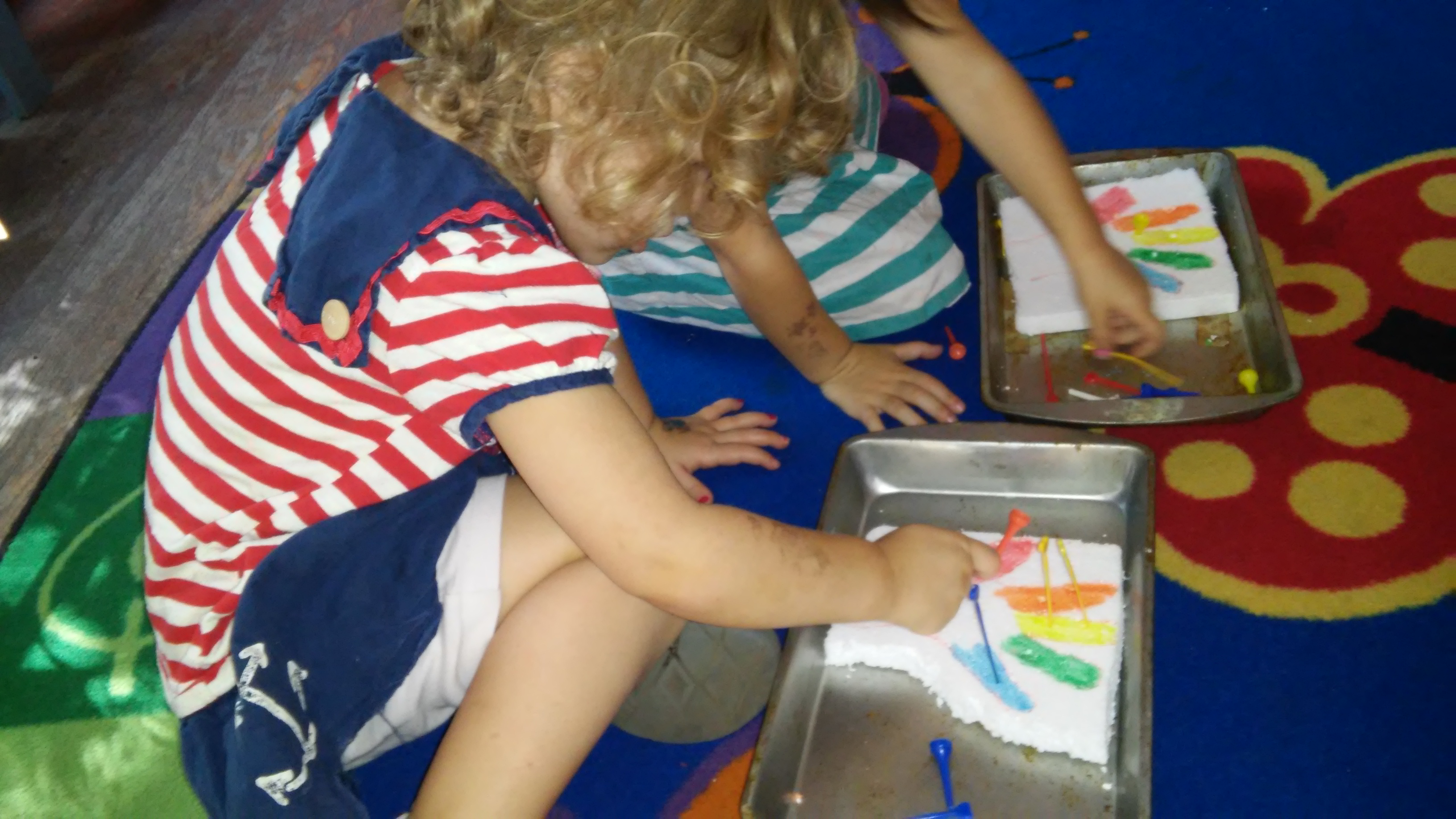
This method of teaching preschool music allows children to begin playing piano as soon as they know their colors. To acquaint your little one with the various colors and their associated fingers, we matched and inserted color-coated golf tees into a styrofoam “hand”.

20141007_103831

This reinforced that our thumb presses the red key, our index finger presses the orange, our middle finger presses the yellow key, the ring finger presses the green key, and the pinkie presses the blue key.

20141007_103836

Piano could, and should be the starting point of the music education beginning from the age of two years old, because the piano is considered to be the ‘king’ of all instruments.  Considering its advantages, we will continue to hone our musical skills on this most wonderful instrument.

Rainbow Acoustics

The presence of music in young children’s lives can sometimes be taken for granted. In most early childhood classrooms, children and teachers sing a song or two at circle time. Parents often sing lullabies and traditional rhymes to their young children. Nevertheless, there is a growing awareness that music is underused and underaddressed in early childhood education. In the early years, musical aptitude is still developing. Infancy and early childhood are prime times to capitalize on children’s innate musical spontaneity, and to encourage their natural inclinations to sing, move, and play with sound.

20141006_112320-1

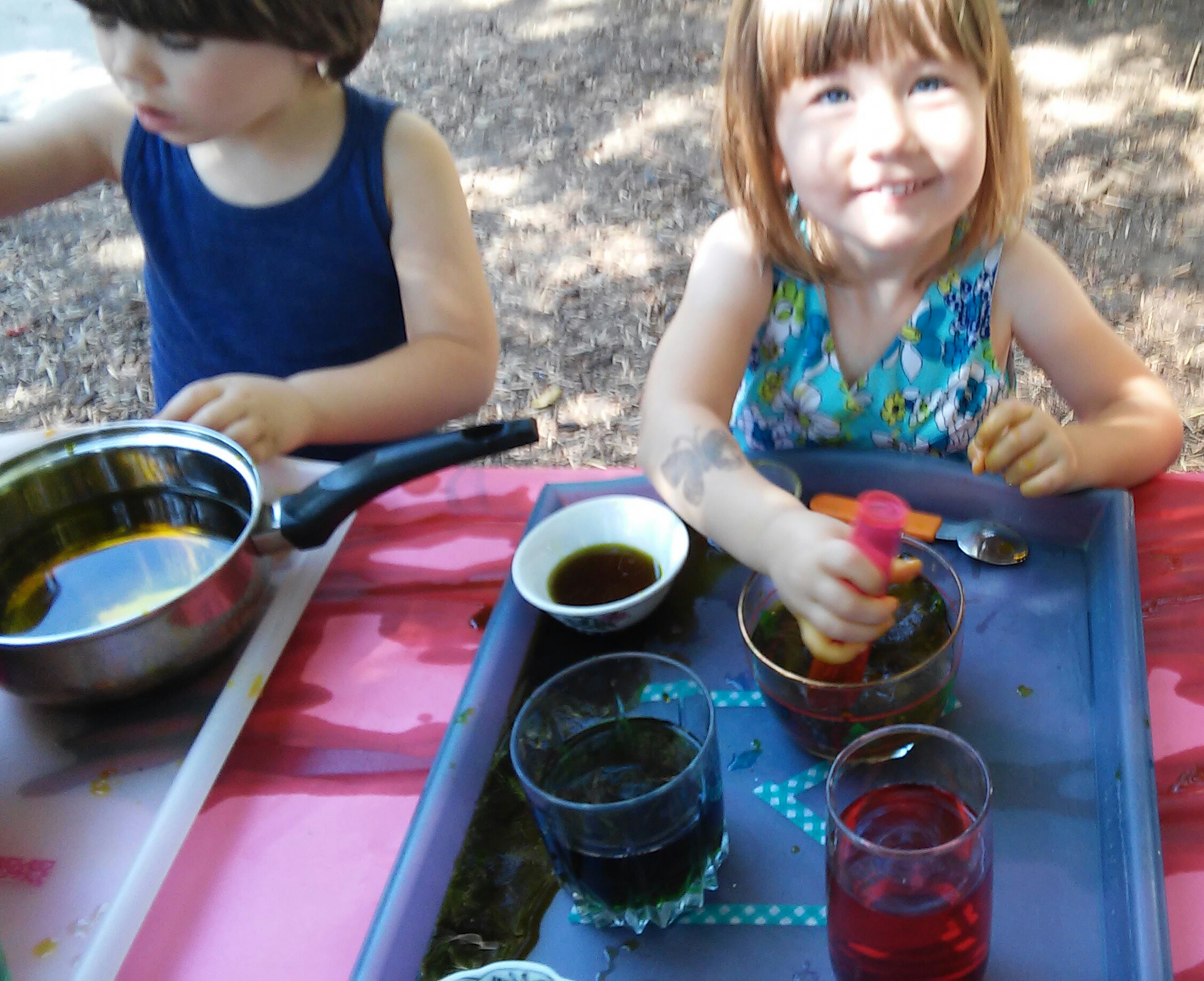
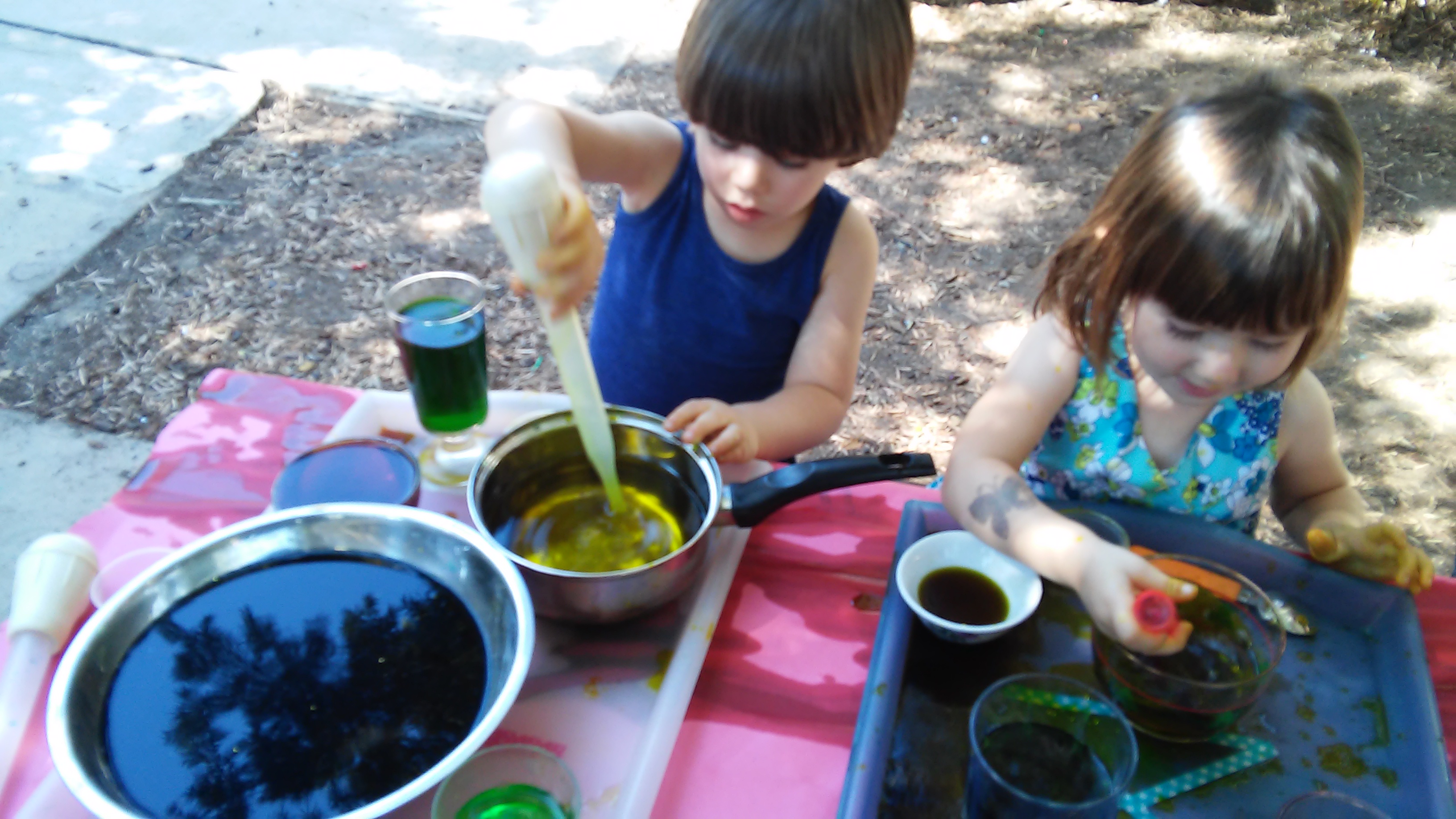
When offered a variety of implements, children play with the different tones they hear. For this activity, we poured water into different containers. Some were made of glass; some of metal, and some were made of plastic. We also experimented with quantity. Some of our containers had only a small amount of water, while others were filled to the top. Using a metal spoon, they gently tapped each container. Our final component involved the fun and “messy” portion of our activity. Using turkey basters, spoons, small cups, and bowls, we mixed our colored water among the different containers. In addition to its musical advantages, this segment invited your child to experiment with math concepts such as more/less, same/different, empty/full, before/after, greater than/less than, and counting.  By exploring and “messing around,” your budding musicians discovered that they can make one sound by hitting one container and a different sound while hitting another!

20141006_112420 (1)


Pom Pom Dictation

Musical dictation involves the ability to hear a piece of music and quickly play it back (on an instrument) or write down the notes of a melody. One of the main goals of ear training is to harness one’s power of visualization – being able to hear a phrase and immediately anticipate how it will look and feel on your instrument.

20140930_103600 (1)

To begin building this musical skill, we started with very short fragments. Because we use a color system to play the notes on our pianos, we began with these tones and their associated colors. The notes included were C (red), D (orange), and E (yellow).

20140930_103451

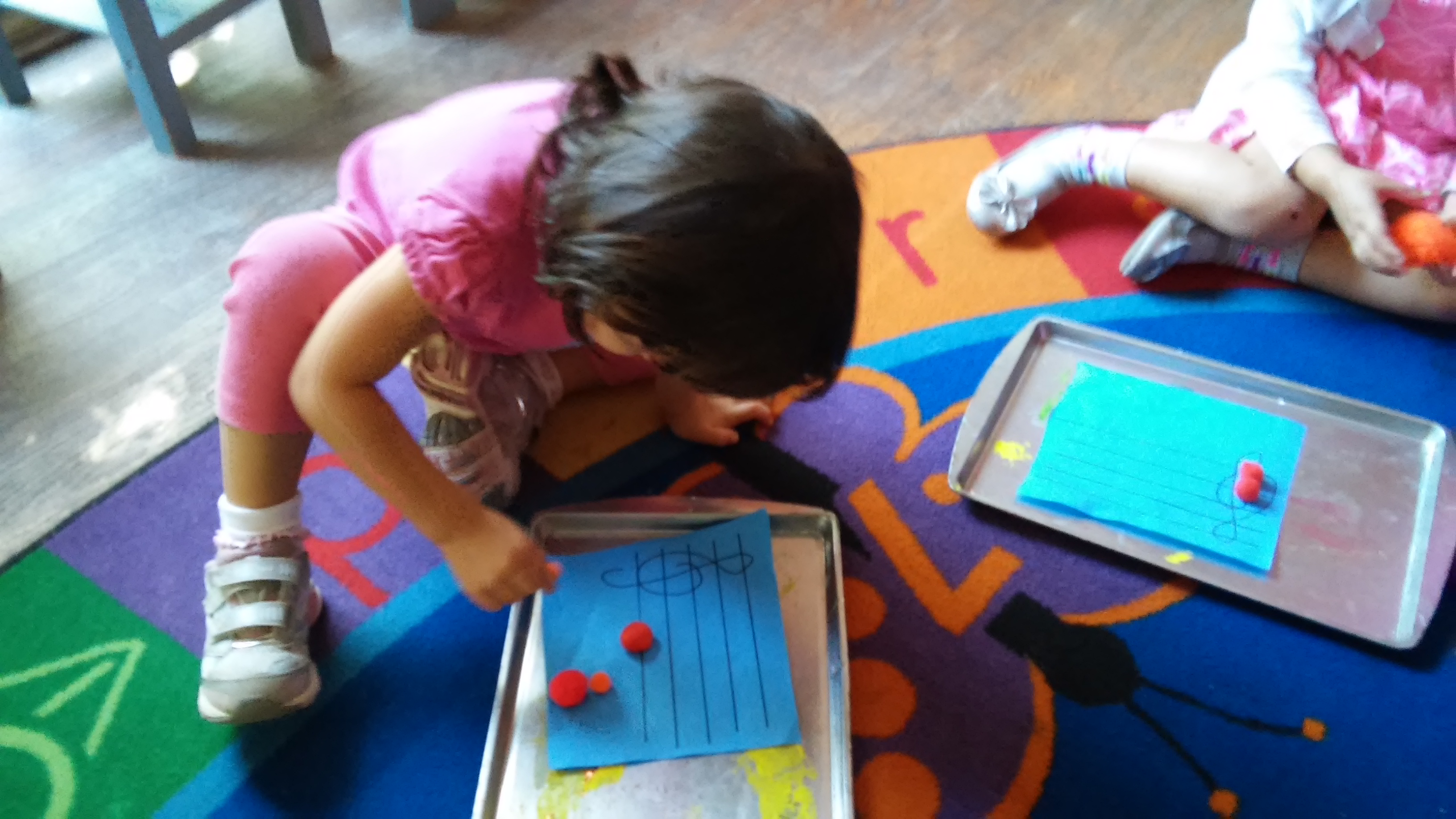
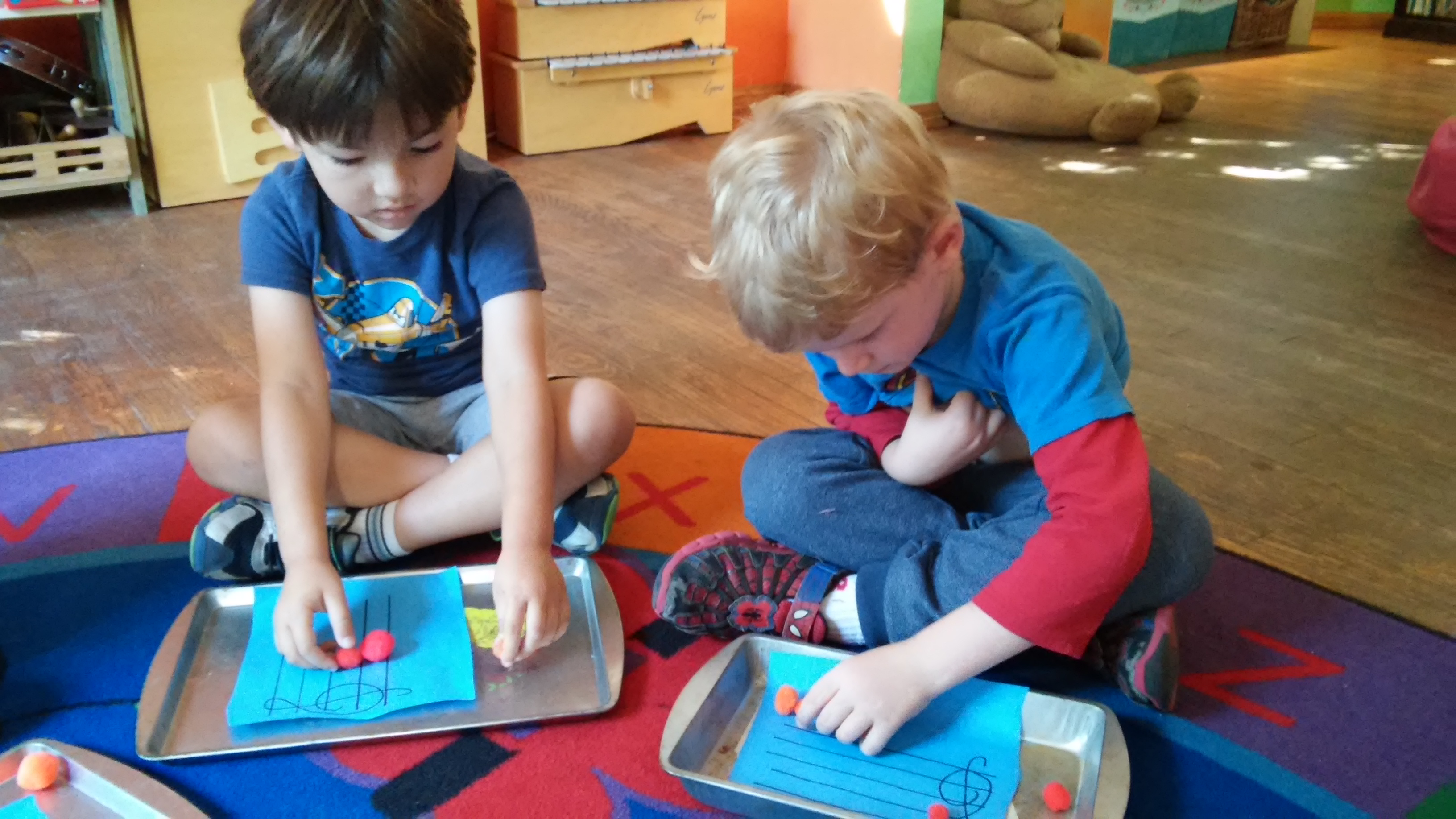
Each student was given red, orange, and yellow pom poms. They were then asked to hear a short phrase played by Miss Carrie, and then visualize what that phrase looked like in their head.

20140930_103453

Using their pom poms, they placed their selections onto a musical staff. We then reviewed our answers as a class. Soon we were able to move on to longer, more complex phrases! As your little ones’ ability increases, they will be able to mentally practice and compose music on their own!

20140930_103522

Sun in a Bottle

No space unit would be complete without some serious talk about the sun. It is the center of our solar system, after all!
20141001_110542

The first concept that students were introduced to was that the sun is not just a big ball of fire in the sky, but is actually composed of swirling gases. These gases are called plasma.

20141001_105713

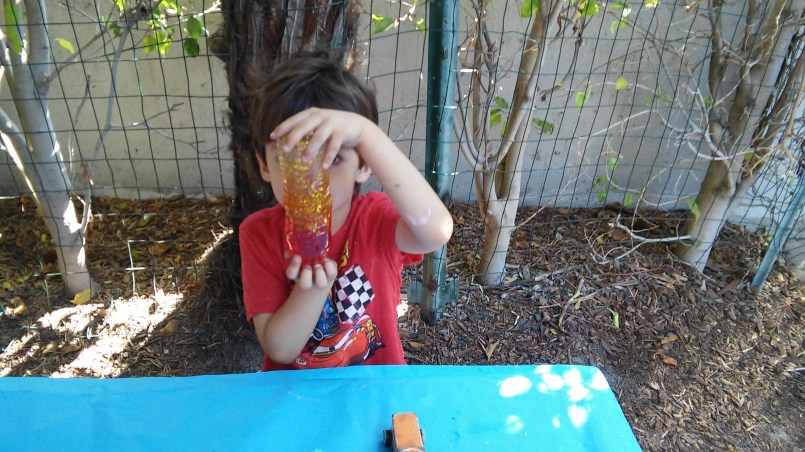
To illustrate this point, we created a sun in a bottle!

20141001_110702

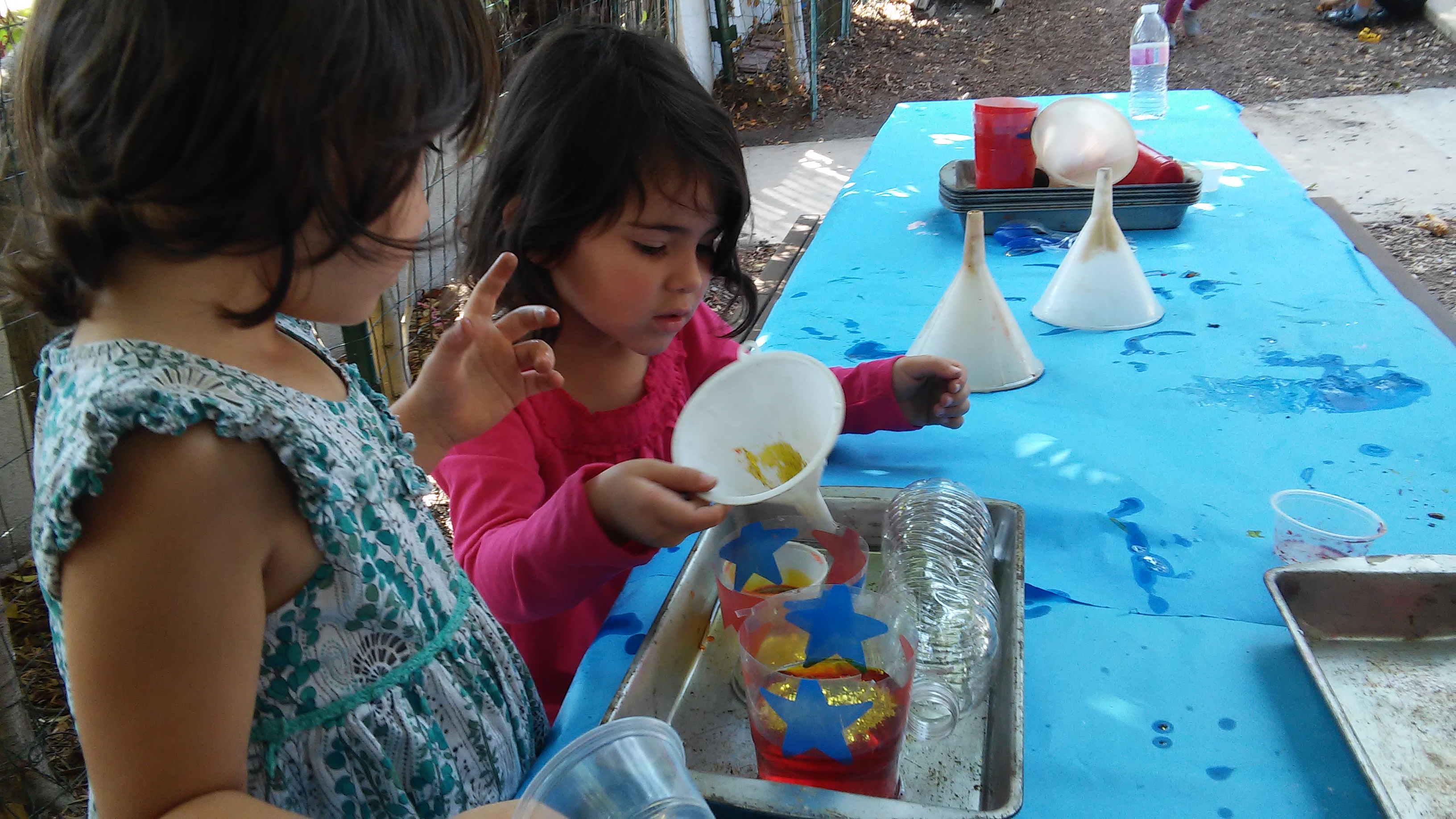
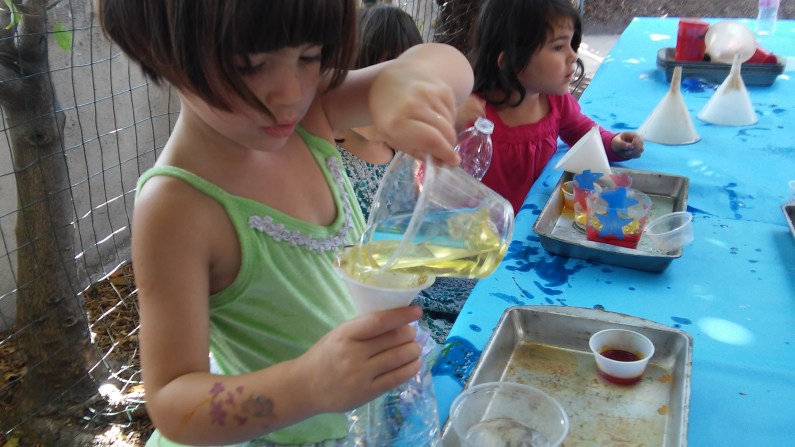
To do this, we used an empty bottle, vegetable oil, food coloring, glitter, a funnel, and water.
20141001_110132

We first filled the bottle halfway up with water.

20141001_105720

We then mixed the red and yellow food coloring with the water and filled the bottle the rest of the way up.

20141001_110530

Everyone marveled at the water and oil separating within the bottle. This activity fulfilled several developmental goals. First, by creating a a sun in a bottle, your little ones created a representation of the sun, which answered spatial and relational questions between objects in the natural world. Secondly, by adding oil and water, and observing its similarities to plasma, students were able to think critically and logically to make relationships between concept of plasma and explanation of how it works. Lastly, by narrating their results, students exchanged dialogue with their friends and were able to apply their understanding of new vocabulary.
 

Constellation Engineers

20180711_102453Project-based learning allows students to control the direction and pace of their learning.
CONST2

Activities that promote investigation, critical thinking, and hands-on subject matter are also central to project-based learning.

20180711_101946

These project-based activities focus on basic principles of physics, structural, and mechanical engineering.

CONST

By using a variety of materials to construct constellations, your little one is creating a physical model to help them gain a greater understanding of the natural world. To initiate your little astronomer into the realm of the constellations, we read a book about people who lived long ago.

CONST4

These people did not have telescopes and computers to tell them about the stars they saw in the sky, and so they created images based on the patterns they perceived.

20140926_112116

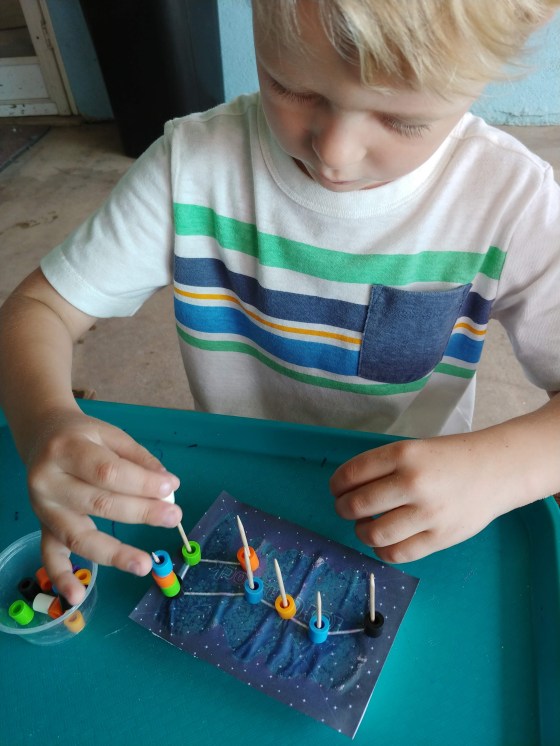
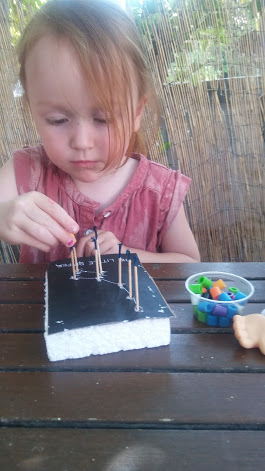
To apply our understanding of these fascinating images, we created the Ursa Major, Ursa Minor, and Andromeda constellations using a variety of materials.

CONST6

Our first project consisted of lacing cards and perler beads, and the second contained a combination of rocks and chalk.

20180711_102458


Space Dust Sensory Table

Sensory activities provide children with another meaningful avenue for learning.

spacedust1

Sensory tables rotated regularly with wondrous materials are worthwhile investments for hours of  learning, exploring, and fun.

20180710_102000

This project activated the senses to include some of our younger astronauts into our voyages through the cosmos.

20140919_114043 (1)

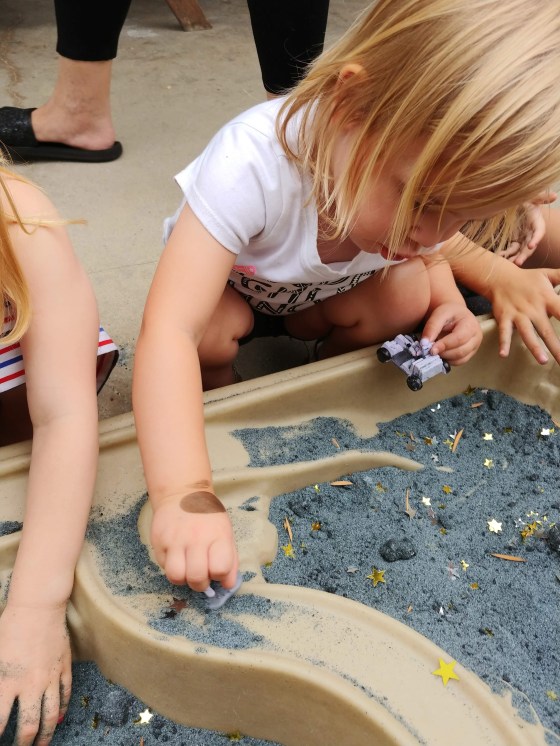
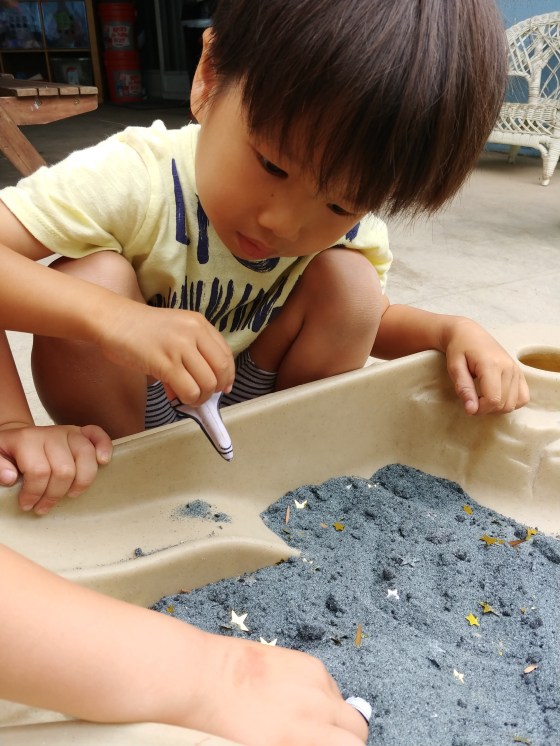
Using dyed salt as our space dust, small Earth shaped balls, confetti stars, jars, and space toys, we engaged our hands and hearts to learn more about outer space!

20180710_102816

Science concepts, such as cause and effect (what happens when materials are combined) and gravity (space dust comes down the funnel, not up) were explored throughout this activity.

spacedust

Students also had the opportunity to work on their problem-solving and decision-making skills as they determined how to manipulate and use the materials.

20180710_101848

Lastly, this activity provided an open-ended opportunity for your little one to enjoy the process rather than the product – how she used the space dust was much more important than what she made.

20180710_1026231

Using creative thinking skills and expressing one’s creativity are important self-esteem builders.

20180710_101940


Moon Rock Walk

Children imitate what they see and hear through their play. Because astronomy is a multifaceted subject, there are so many new words and actions to remember!

20180712_155255

This can be confusing to the young learner, and so creative learning experiences can help them integrate all of this new information.

moonwalk6

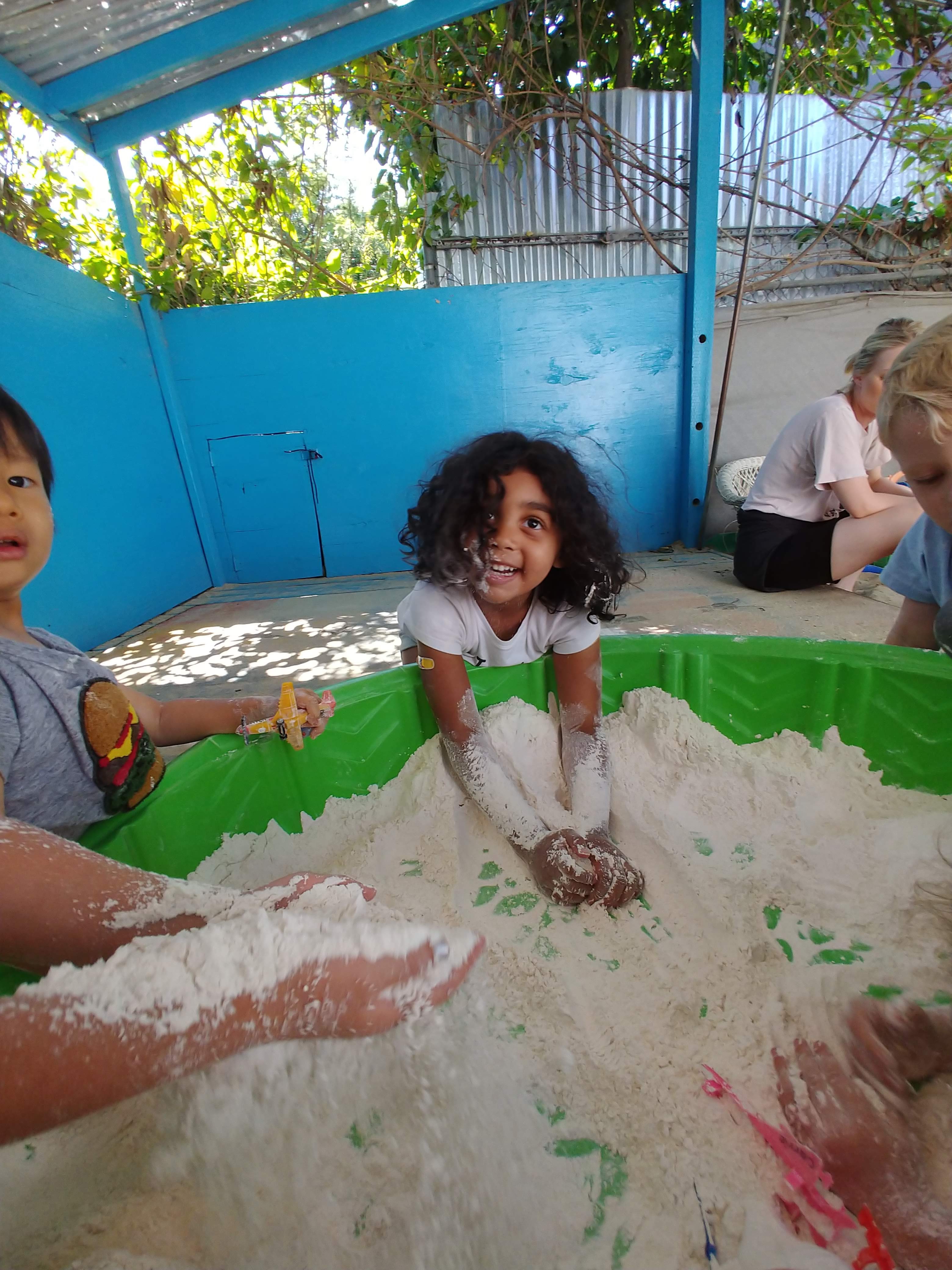
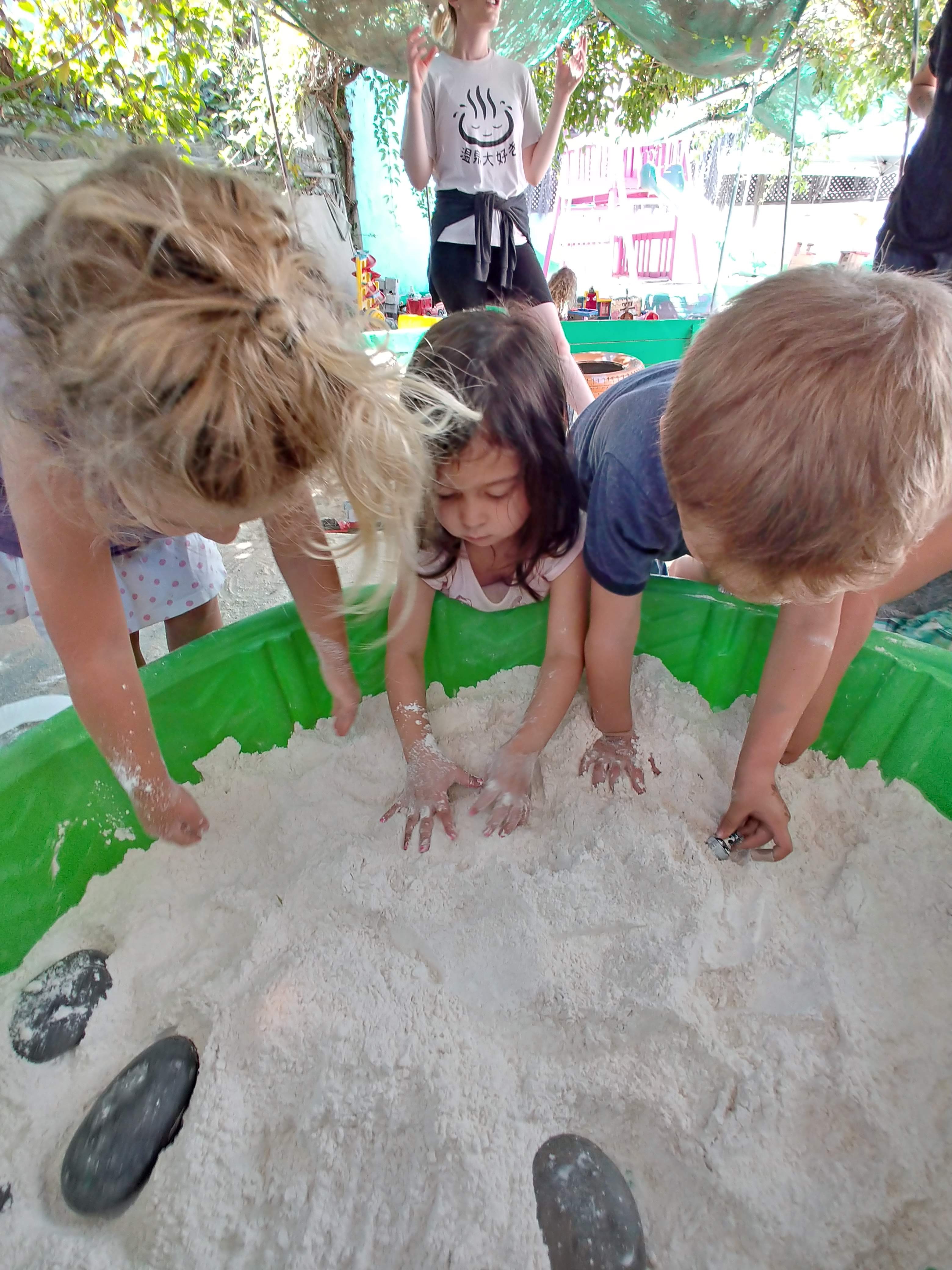
For this activity, we combined dramatic and sensory play with science to collect moon rocks from our closest planetary neighbor.

moonwalk1

A good way to recall and reflect on these new experiences is to have your little ones re-create the actions and sounds that were meaningful to them.

20180712_153916

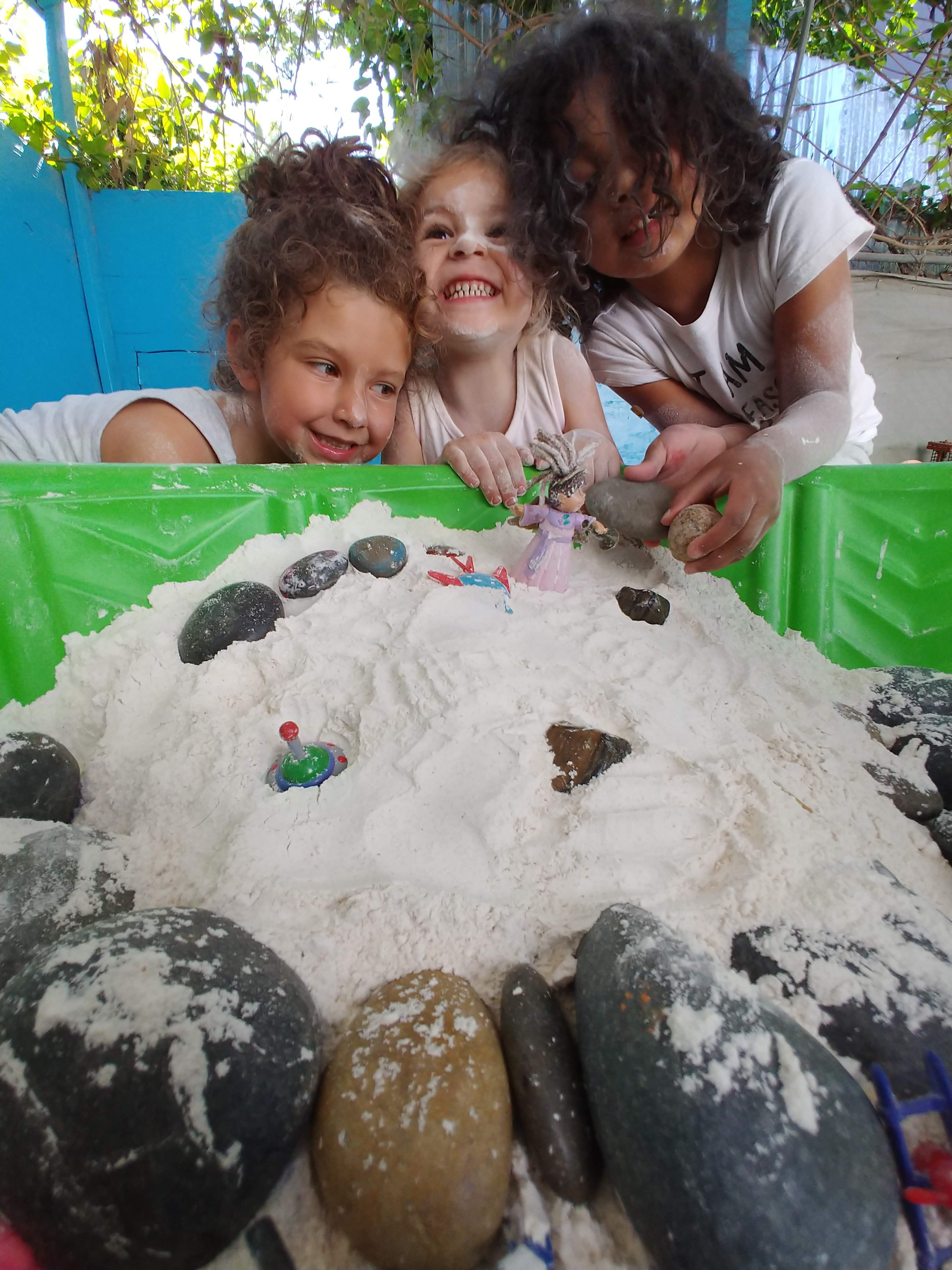
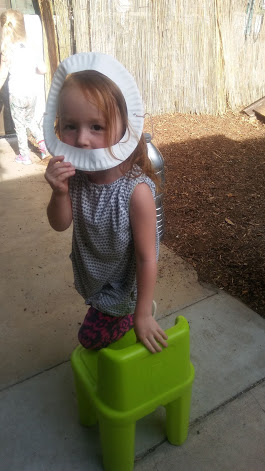
Using rocks and flour as our moon, paper plates as our helmets, dish gloves, and plastic bottles as our oxygen tanks, we not only collected moon rocks from the surface of the moon, but analyzed them in our “lab”.

20180712_154048

These two different “situations” enabled your budding astronaut to practice new vocabulary, problem solve with a variety of materials, and role play with their friends!

20180712_153644_hdr


Big, Bigger, Biggest

Preschool is an important time for young children to begin developing the skills needed to describe their experiences.  Beyond a strong vocabulary, children can grow to observe, remember, and give an independent account of their thoughts. To help your little ones grow in their descriptive abilities, we talked about the size of the planets and their relation to one another. Using Playdoh, and a diagram of the eight planets, we discussed words such as big, large, heavy, small and their associated forms (bigger, larger, heavier, smaller). By manipulating the Playdoh into spherical shapes, students were able to experience a range of sensations that provided a context for them to clearly distinguish sensory stimuli. This project also provided the opportunity to reinforce the different forms of these descriptive words so they could narrate the physical act of what they were doing.

20140922_095714