Pool Noodle Sculptures

Using toothpicks, and pool noodles, your little architects constructed their very own structures! Playing with a variety of building materials is critical for the development spatial thinking, or envisioning where different items go in relation to each other as they build. Deciding whether their pool noodle goes over or under another pool noodle, or whether it is aligned or perpendicular to it, are just the kinds of skills that support later learning in science, technology, engineering and math.

20140619_105746 (1)20140619_105658

Toilet Paper Roll Tinker Toy

For this activity, we used toilet paper rolls, pipe cleaners, and straws to create our very own structures. Given the many shapes that these building materials come in, they were the perfect tool for hands-on learning about basic math concepts: shape, size, area, geometry, measurement, and equivalencies. While playing with the toilet paper rolls, your child naturally began to sort them by a particular attribute, such as shape and size. He may have noticed that short toilet paper rolls made much better bases than the longer ones, or that the straws need to be bent in order to fit inside the holes.  This exploration into the nature of shapes prepares your child for later geometric understanding.

20140707_105752


Beth Sholom Synagogue

Beth Sholom Synagogue in Elkins Park, Pennsylvania is considered by many critics to be Wright’s most expressive building. The structure is anchored to the ground by concrete walls that incorporate the foundation buttresses for the three steel tripod girders which support the steeply inclined walls, allowing the full upper floor freedom from internal supports. The woven walls of the sanctuary are composed of translucent layers of wire glass and plastic with air space between them for insulation. During the day, the interior is lit by natural light entering through the translucent walls overhead. At night, the entire building glows from interior artificial lighting. For this particular activity, we used popsicle sticks covered in foil (to simulate steel) and white clay to create our version of this magnificent structure. When playing with a diverse array of materials, children come across new experiences with each tower, structure, and building they create. At the preschool age, your child is learning to develop sophisticated use of language, stringing sentences together using larger vocabulary and in-depth thought processes. For this activity, your little one was encouraged to use adjectives such as “humongous” and “sturdy,” as opposed to simpler words like “big” and “strong.” Your budding architect was also asked open-ended questions about their structure, which inspired them to have new ideas, as well as nurture confidence in creativity.

20140707_154719 (1)20140609_103209 (1)

Fallingwater House

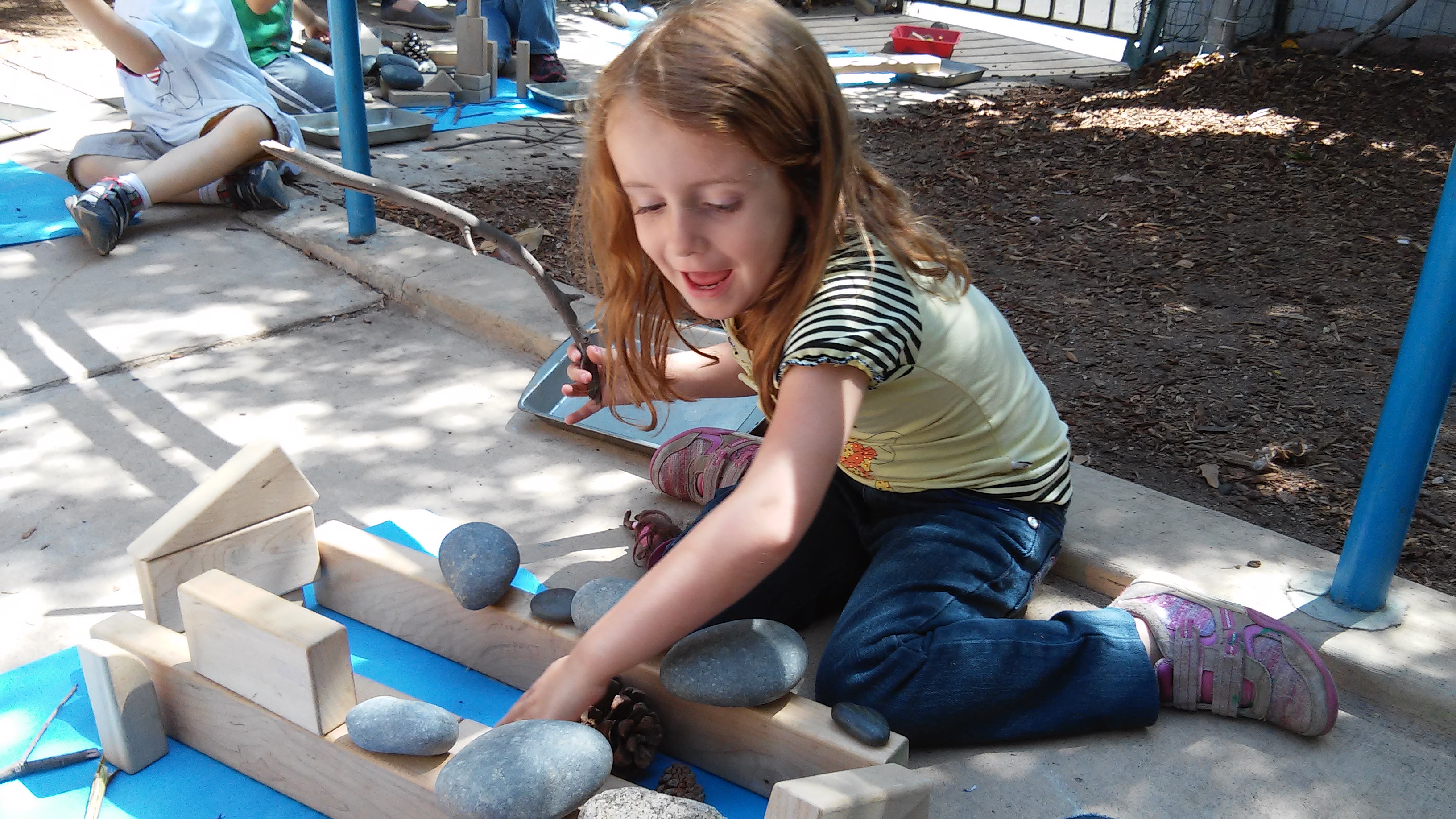
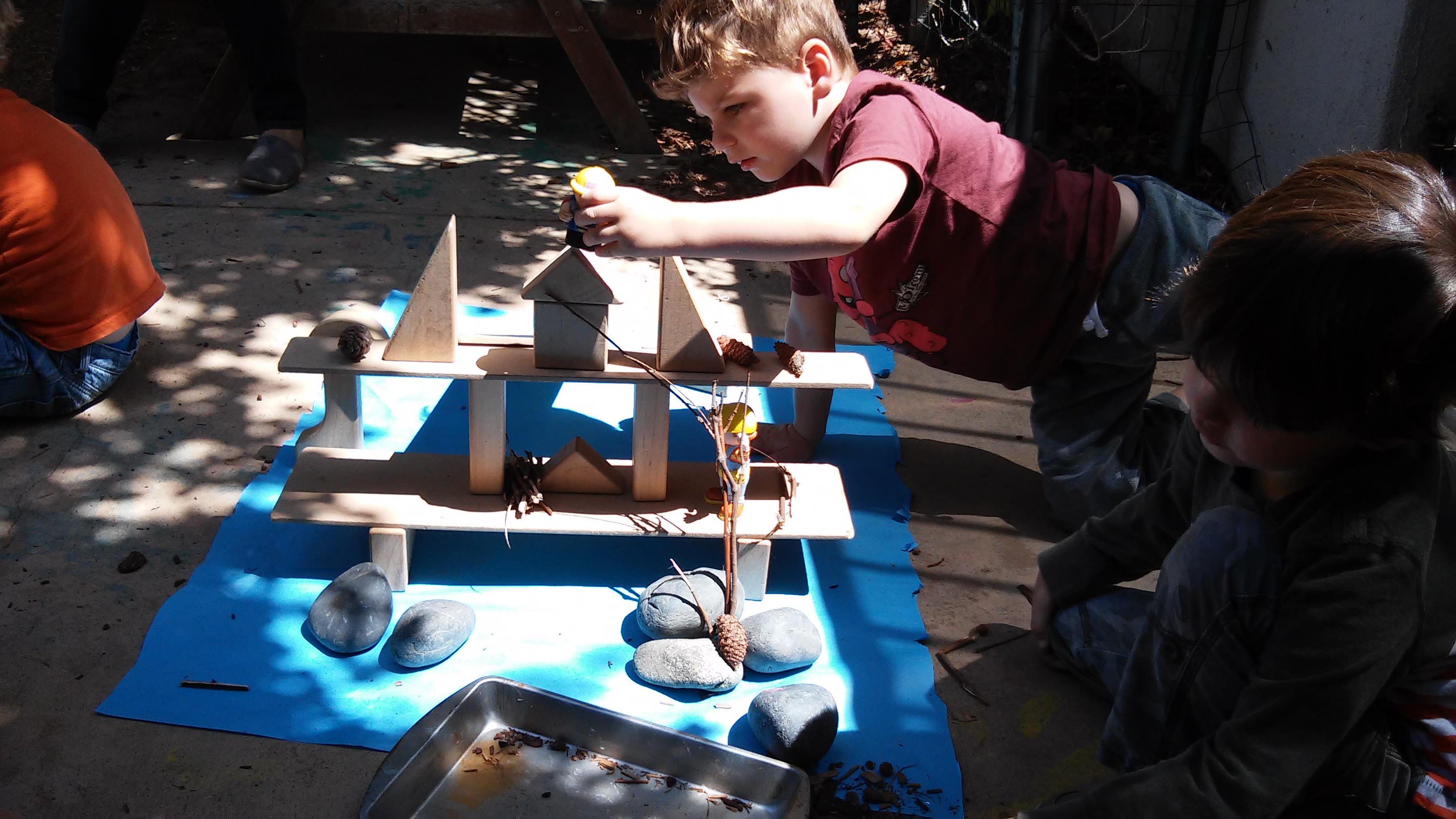
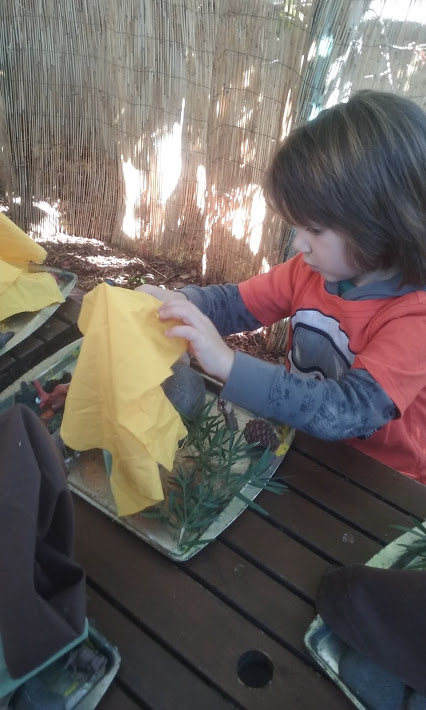
Fallingwater House is located in southwestern Pennsylvania. It hangs over a waterfall using the architectural device known as the cantilever. Wright described his architectural style as organic – in harmony with nature. Though Fallingwater reveals vocabulary drawn from the International style in certain aspects, this country house exhibits so many features typical of Wright’s natural style – the house very much engaged with its surroundings. When Wright created this masterpiece, he envisioned the powerful sound of the falls, the vitality of the young forest, the dramatic rock ledges and boulders; these were elements to be interwoven with the serenely soaring spaces of his structure. He understood that people were creatures of nature, hence an architecture which conformed to nature would conform to what was basic in people. For this activity, we combined a variety of natural materials to create our own version of the Fallingwater House. When your child plays with these elements, building replicas of the world around them, they are like little scientists – experimenting with balance, structure, space, and even gravity!

20140617_103737 20140617_104840

Anasazi Cliff Dwellings

The Ancient Pueblo People, or the Anasazi, are the cultural group often recognized as the ancestors to the modern day Pueblo people.

anasazi1

They were a populous and thriving civilization that resided in cliff dwellings, comprised of adobe bricks, and constructed atop mesas, or against the edges of natural caves as the bases of canyons.

anasazi2

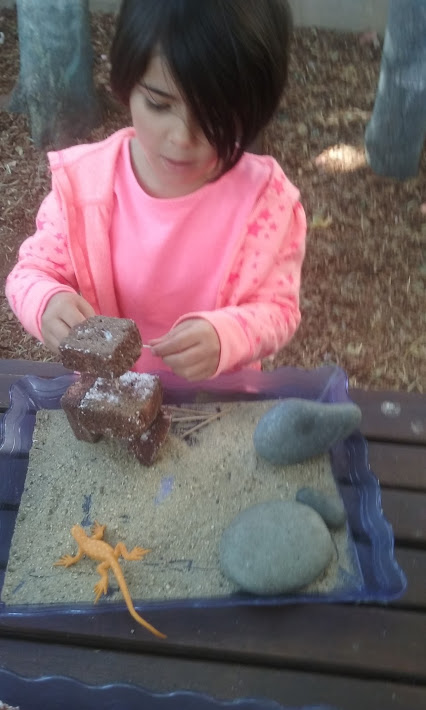
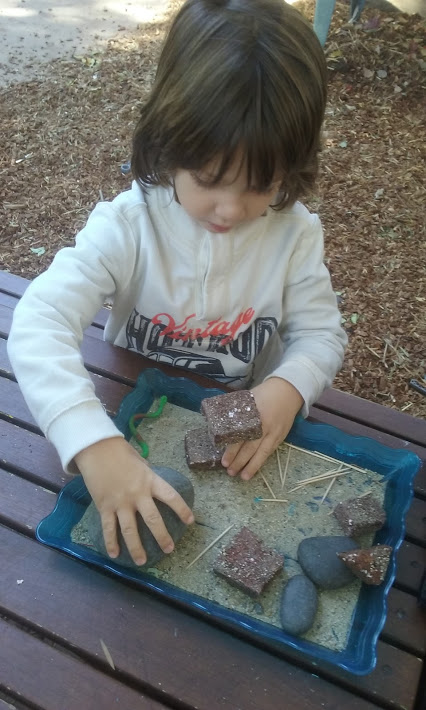
To help solidify our understanding of this fascinating civilization, we created our very own Anasazi village!

anasazi3

As your little ones participated in this activity, they were given several opportunities to converse with their classmates, and discuss the best way to manipulate their three dimensional habitats.

anasazi4

Creating  historical structures provides a medium for learning that younger learners enjoy.

anasazi5

These environments allow them to tell a story, stimulate inquiry and depict reality!

anasazi6


L is for Longhouse

The Wampanoag tribe shared the first Thanksgiving feast with the Pilgrims. After arriving in Massachusetts, the Pilgrims were exhausted, following a two month voyage from England.

longhouse8

Being severely weakened, many pilgrims did not survive.  They were unfamiliar with the harsh weather of the New World and relied on the Wampanoag Indians to teach them the land.

longhouse7

This tribe combined bark and other plant materials to make their homes, called longhouses.  The inside of these longhouses had a dirt floor. The dirt permitted the use of a small fire to keep warm.

longhouse1

To convey the complex history of the Wampanoag Indians, we created our very own longhouses.

longhouse3

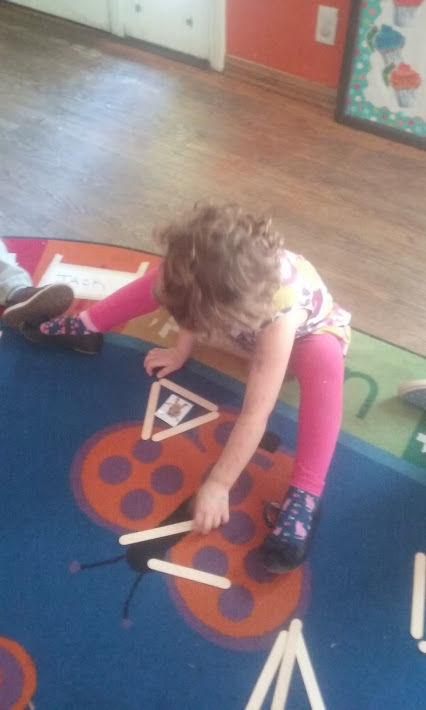
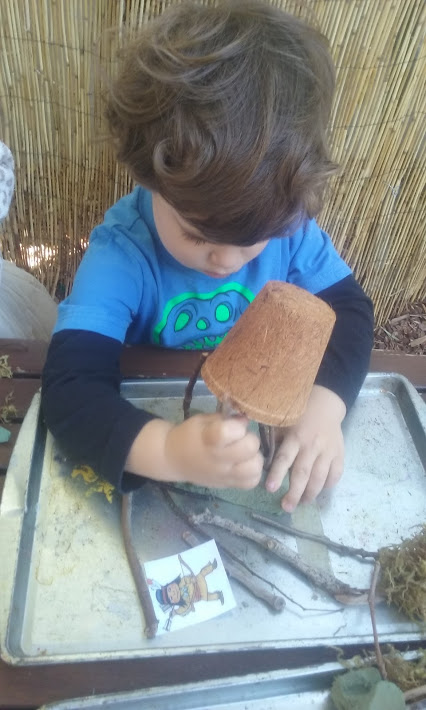
We first discussed the construction of the longhouse during circle time. Students then built two-dimensional longhouses out of craft sticks. Following, your little ones used flower foam, sticks, and wicker planters to create three-dimensional longhouse structures.

longhouse4


Burlap Teepees

Young children are fascinated by the many dwelling places of the various American Indian tribes, and love to recreate the things they learn through dramatic play.

tipi5

tipi4

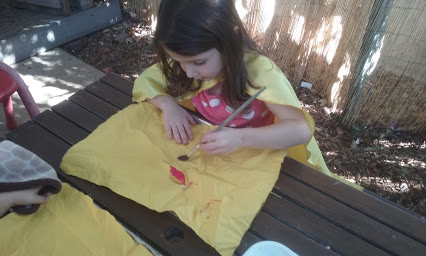
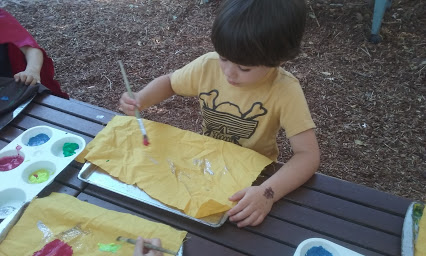
What they enjoy more, however, is creating the materials that they use for the imaginary worlds they create. For this activity, we decorated teepees. Following their creation, your little one participated in small world dramatic play. Doing so contributes to their development in several ways.

tipi3

tipi2

For one thing, it helps them work together toward a common goal. As they played with their teepees, they combined their worlds. Working together  like this teaches teamwork, fuels creative thinking, and also exercises your little one’s ability to use make believe as a means to integrate the information they have been introduced to at school.

tipi1

Lily Pad Math

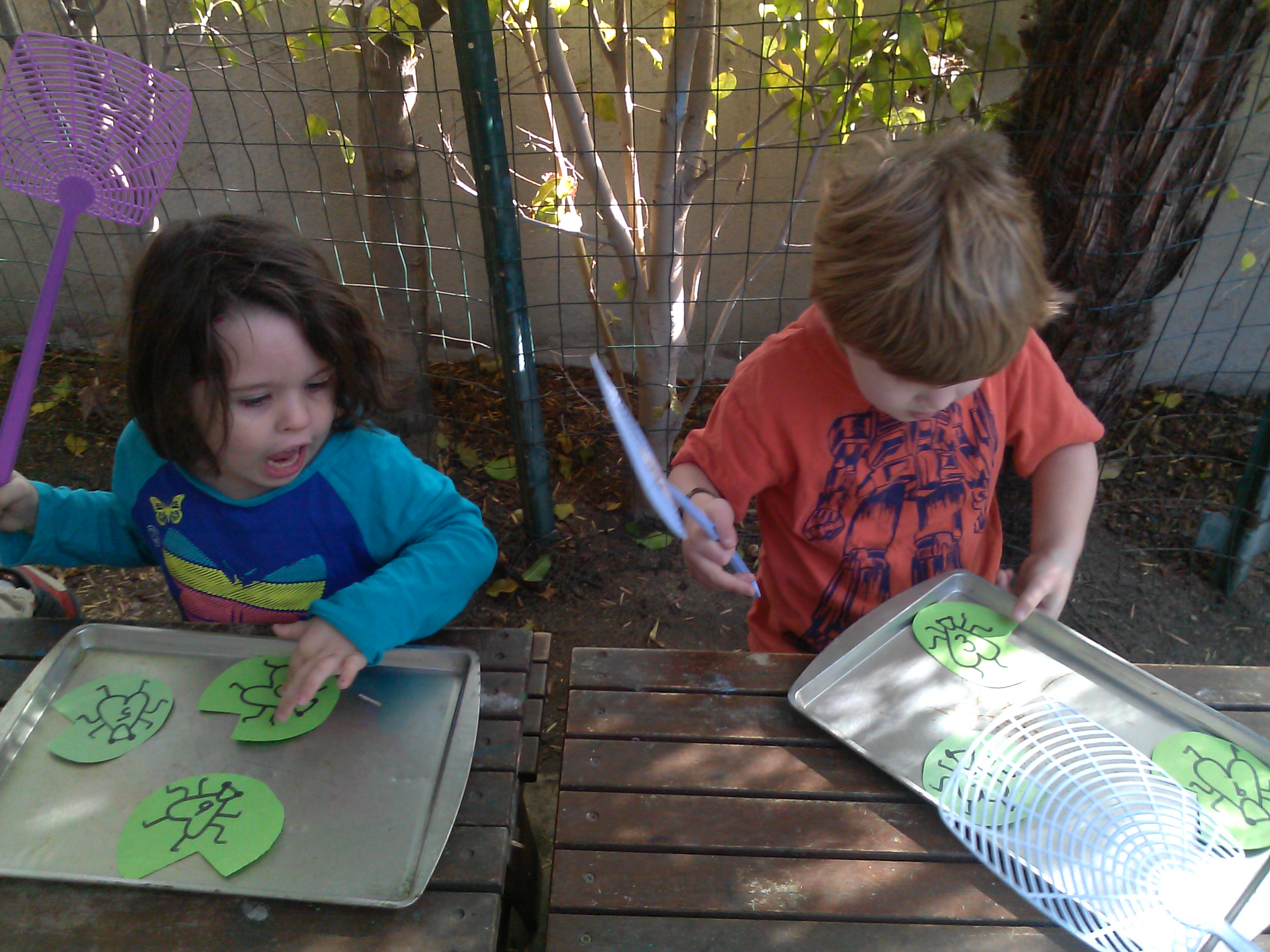
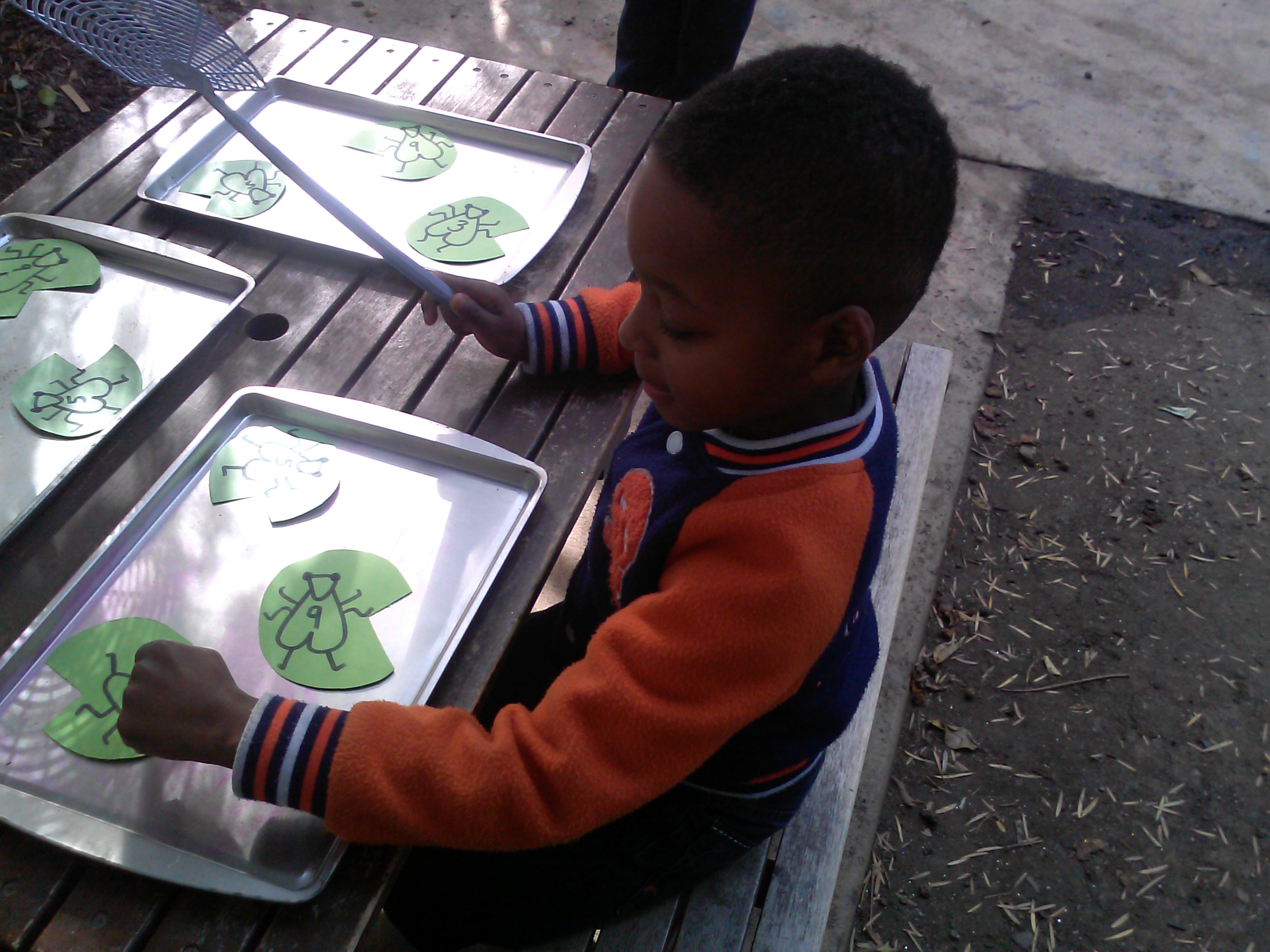
With fly swatters and paper lily pads, we practiced counting with this exciting math activity! Each child was given three lily pads with flies drawn on them. Various numbers were affixed to each fly. We initiated this activity with a discussion of the numbers involved, and then clapped the amount of each.  Your budding mathematician was then shown a card with a number on it. They were then directed to hit their “flies” with the amount displayed on the card.  This provided a forum for talking about “more” and “less”, counting to nine, concepts such as adding and subtracting, and more vocabulary associated with the frog! By relating mathematical concepts to things that children are naturally curious about, such as animals, they are more engaged and intrinsically motivated to learn!

ImageImage

Image

Tadpole Cucumbers

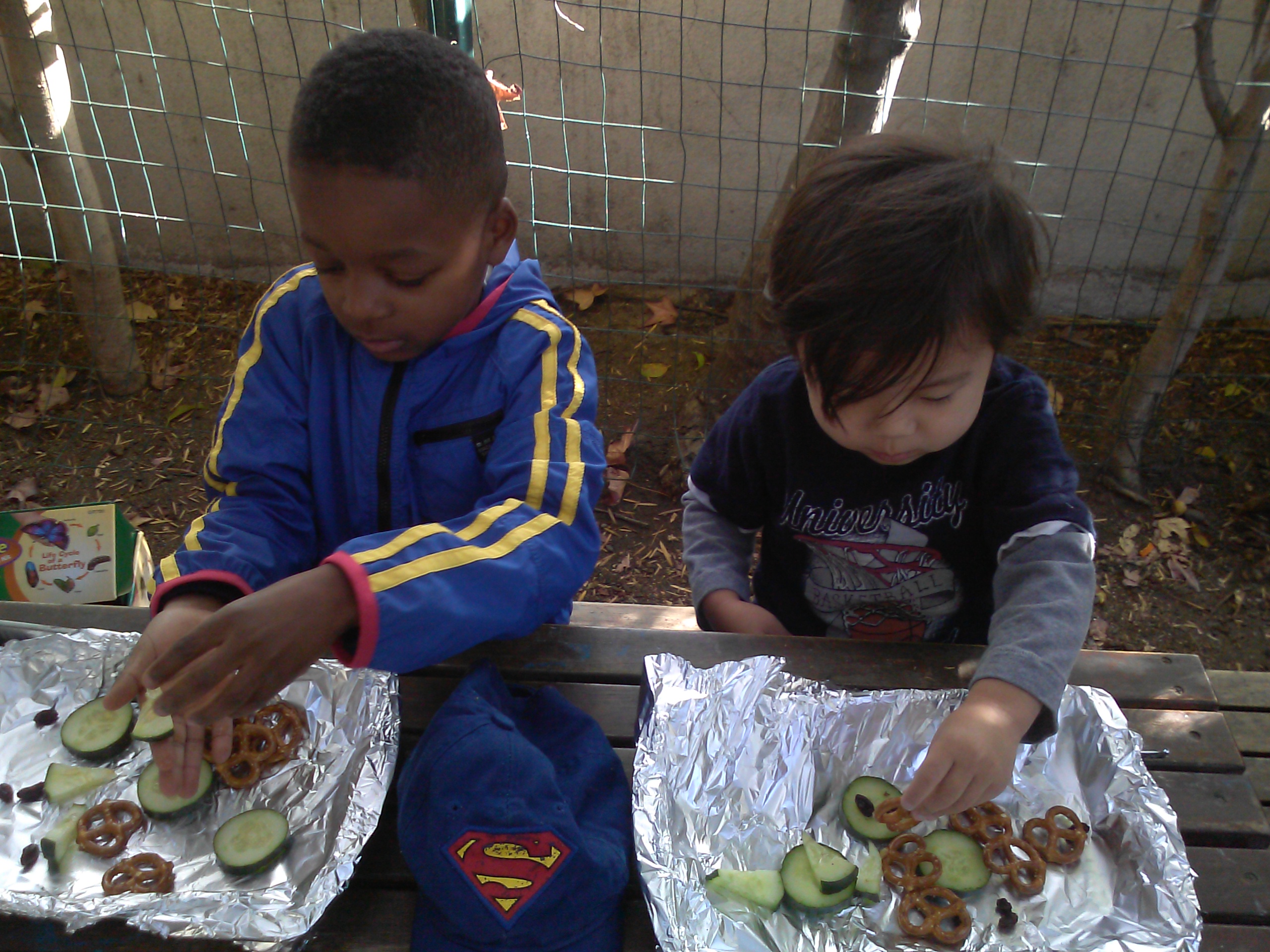
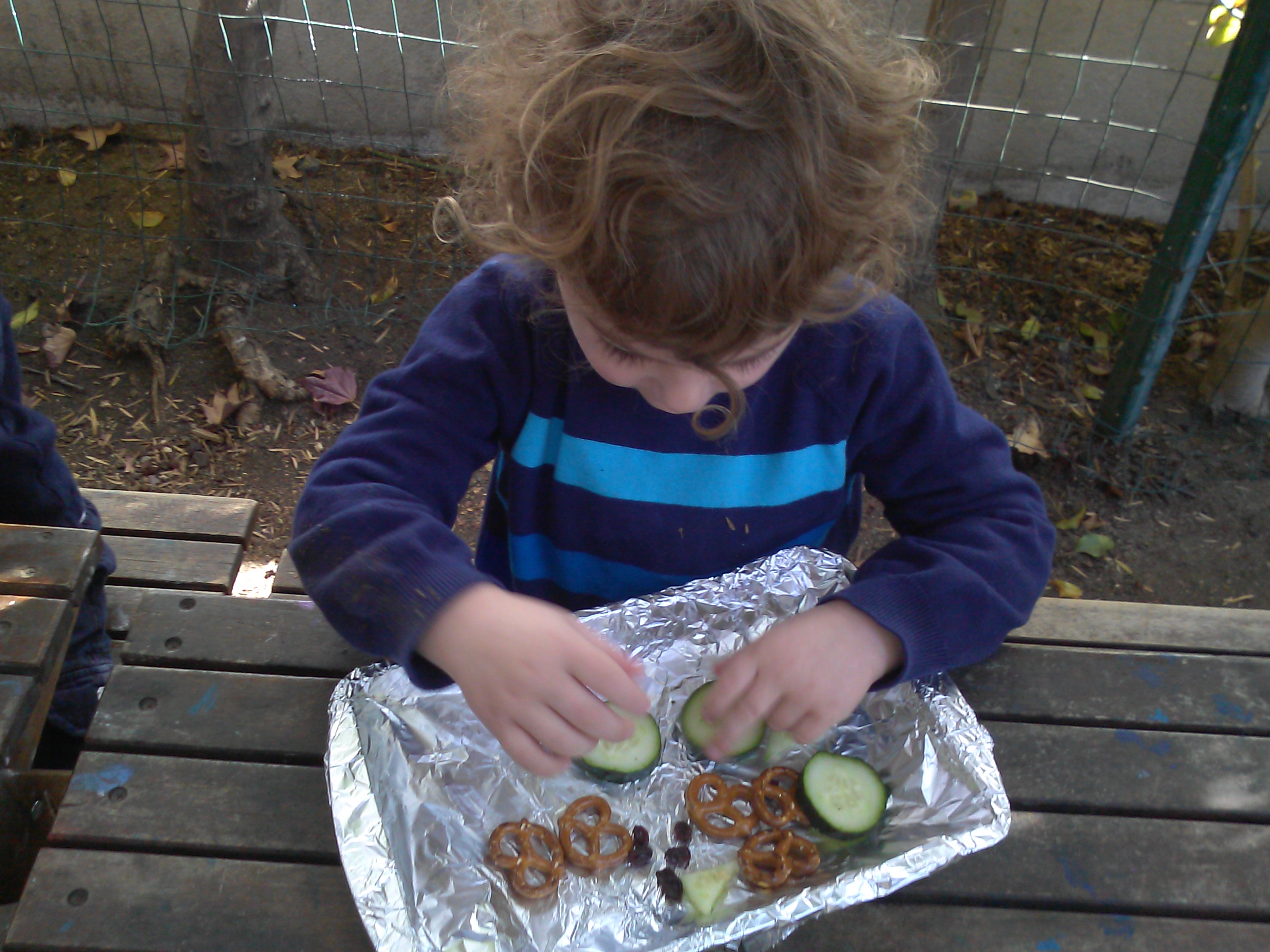
Throughout the week, we have been talking about the life cycle of the frog – from its transformation as an egg to a tadpole, a tadpole with two legs to a froglet, and its final progression to becoming an adult frog. To foster an understanding of the various life cycles, your little one combined cucumbers, raisins, and pretzels as a means to create their very own amphibians!  When children construct their own version of recently acquired material, they learn invaluable lessons that stay with them throughout their lives. As they mix their ingredients, and see their creation come to life, the sense of ‘I did it’ is a very important lesson they learn. As they receive the credit for their creation, they become proud of their actions, and have increased self-regard as a result. Lastly, working together encourages creativity, bonding, planning, thinking, and time management.

Image

ImageImage

Pond Habitat and Sensory Play

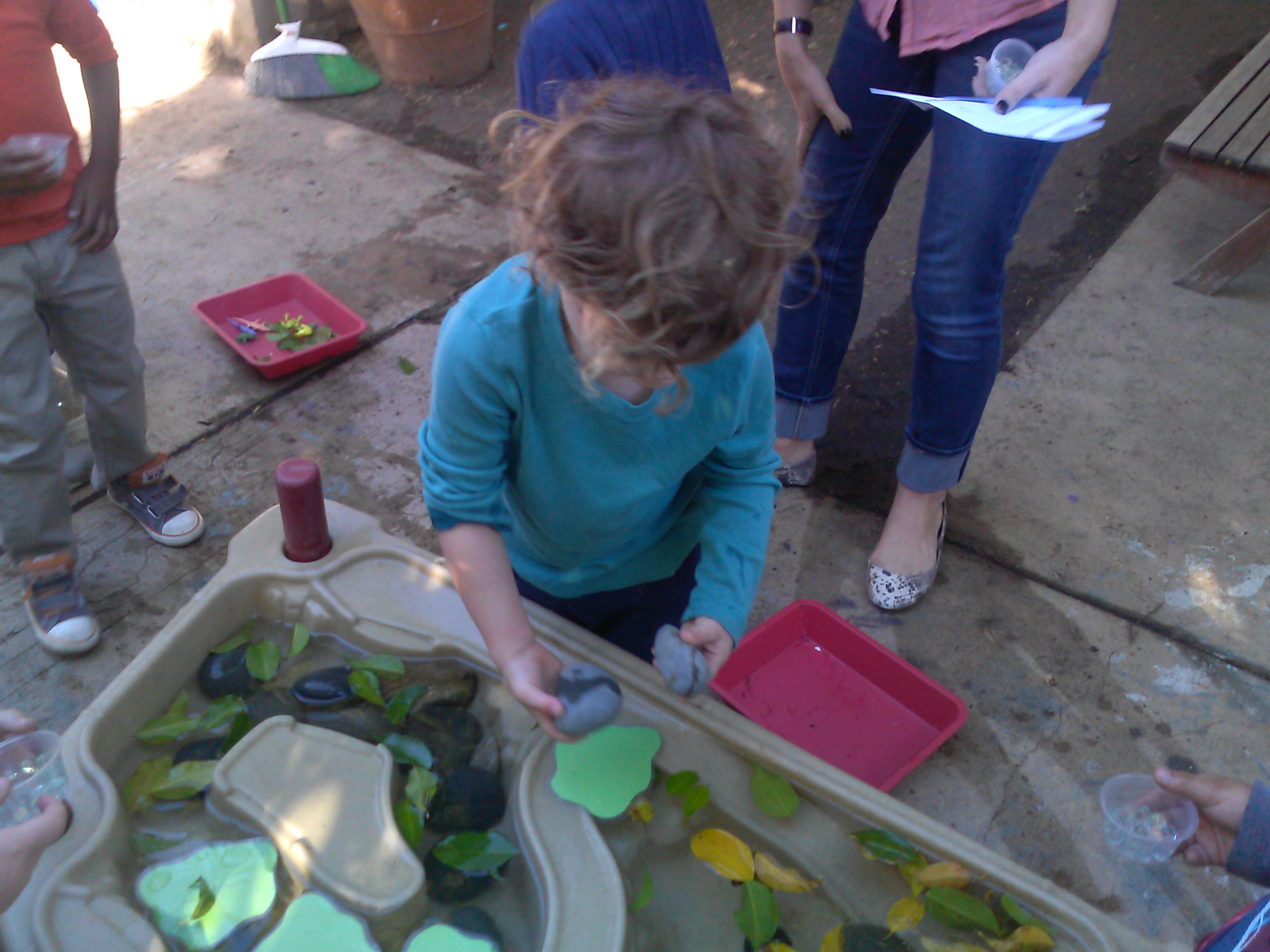
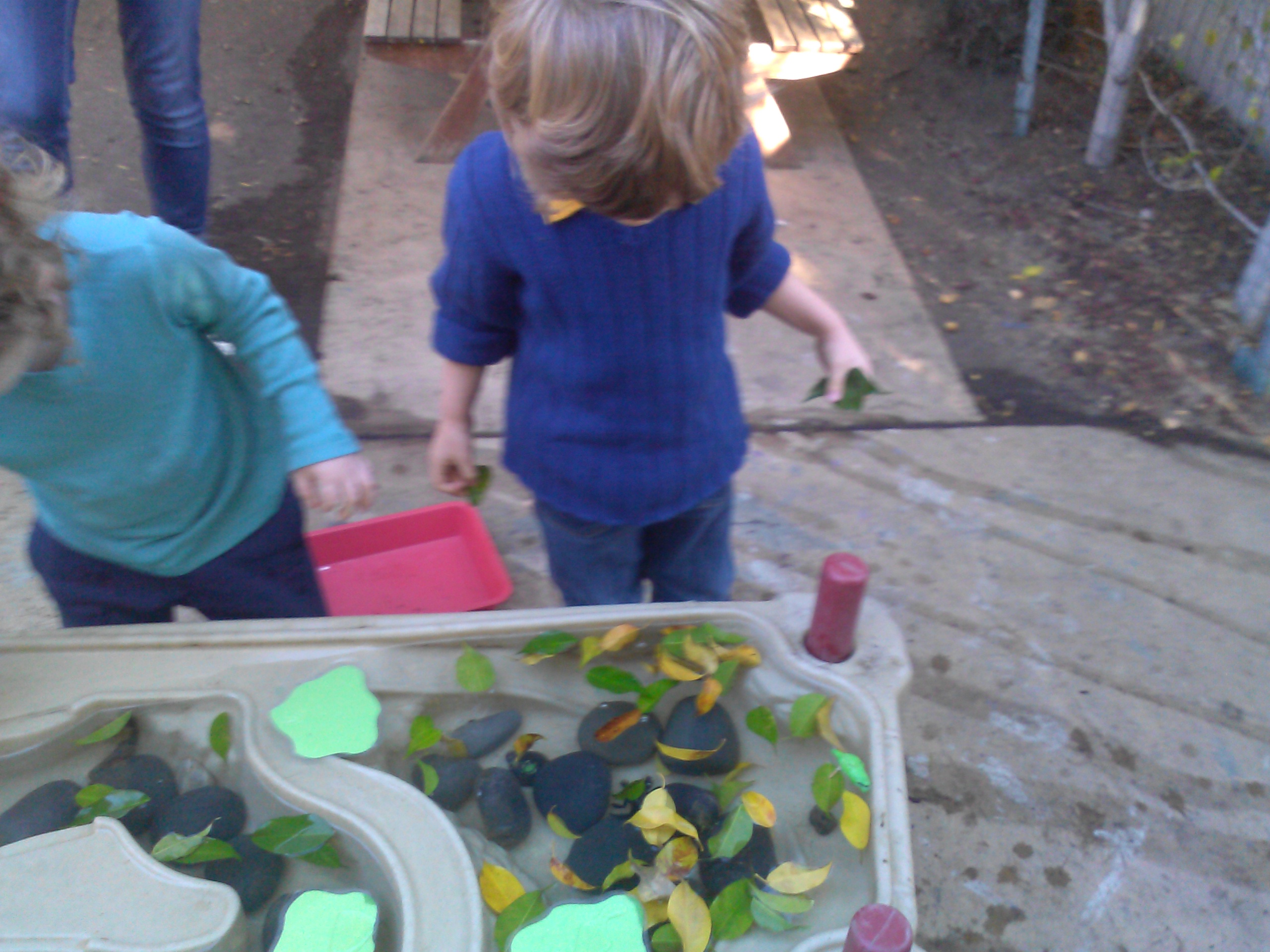
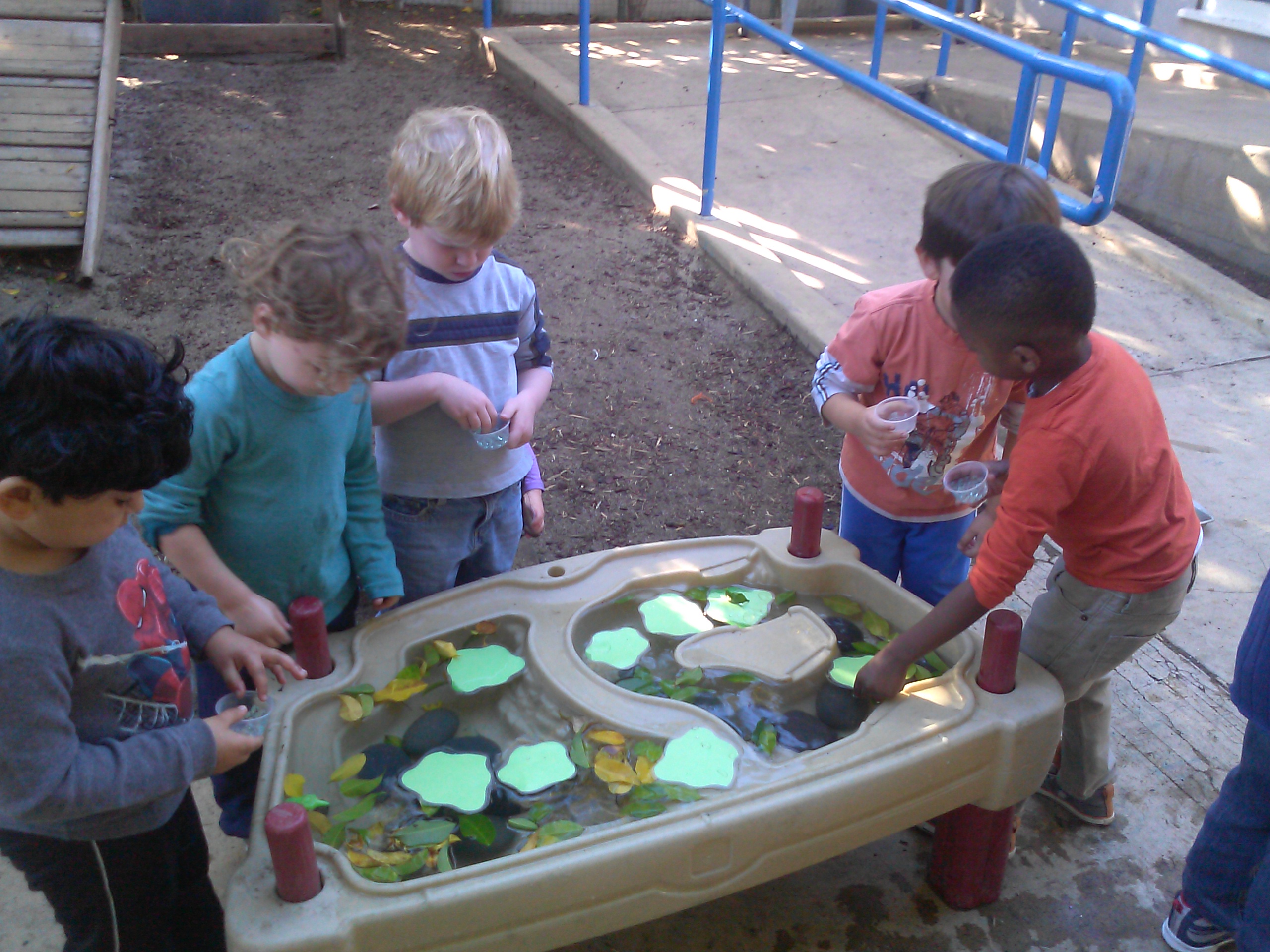
Using paper lily pads, leaves, water, plastic frogs, and “frog eggs”, we created a pond habitat for some of our favorite amphibians! We discussed the life cycle of the frog, where different frogs live, what they eat, and how they survive within their slippery environments! Sensory play allows children to form mental images about what they are seeing. Adults already do this naturally, but in young children, it is still developing. Combining water, “frog eggs”, and the lily pads also provides a forum for the scientific exploration of cause and effect. Your little ones discovered that the vulnerable frog eggs can be hidden by creating nests from foliage as they enjoyed manipulating and creating little “houses” for their favorite tadpoles and frogs. Lastly, prosocial interactions are fostered as children discuss and share their experiences with one another.

Image

ImageImage

Image